A parliamentary Committee has called for urgent legal reforms and proper alignment of funding to end a long-running dispute over the management and student placement process at the Kenya Medical Training College (KMTC).
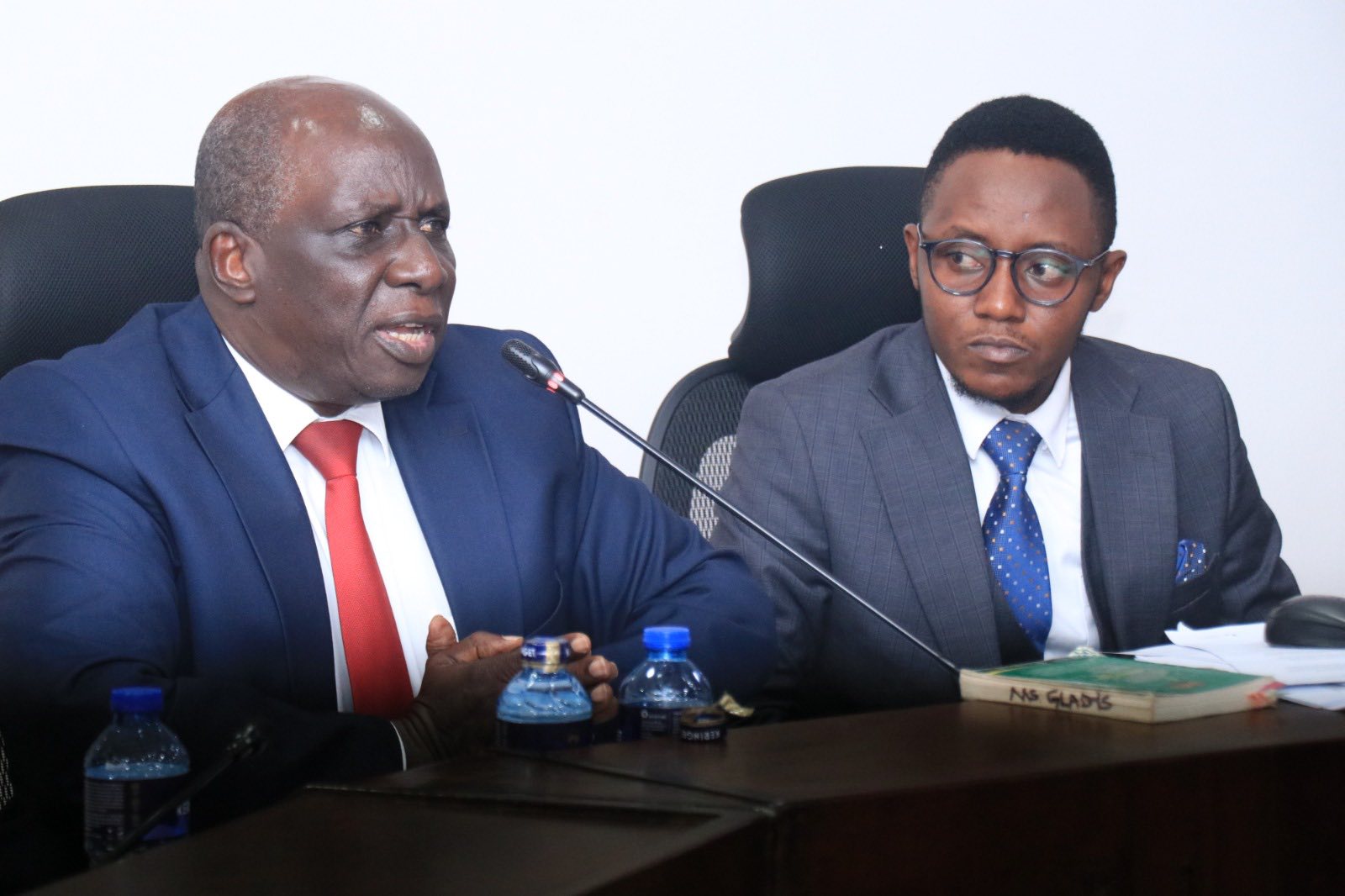
The National Assembly Departmental Committee on Health, while considering the Budget Policy Statement (BPS) told Health Cabinet Secretary Aden Duale that persistent back-and-forth between ministries and institutions was undermining training, staffing and service delivery.
Seme MP Hon (Dr.) James Nyikal who chairs the committee said the country could no longer afford policy inconsistencies on critical health training matters.
“We can’t keep moving back and forth as a country,” Dr Nyikal told the CS. “The question is simple: who carries the function and who carries the money?”
The KMTC matter, which has lingered for nearly a decade, revolves around control, admissions and oversight of health training institutions, and the broader question of how health sector training is coordinated between the Ministries of Health and Education.
The standoff centres on overlapping mandates between the Ministries of Health and Education. Currently, placement of KMTC students is handled by the Kenya Universities and Colleges Central Placement Service (KUCCPS), which falls under the Ministry of Education.
However, admissions and oversight of KMTC institutions are managed by the Ministry of Health through the State Department for Public Health and Professional Standards.
Dr. Nyikal observed that the dual system has created confusion, administrative delays and policy inconsistencies that are affecting training and planning in the health sector.
“In your office Honourable CS, there is an advisory letter indicating that KMTC should admit students. That advice followed a formal inquiry to the Attorney General,” Dr Nyikal said. “It is now for you to execute at Cabinet level what is already lawful, unless the law is changed.”
He emphasized that concurrence at Cabinet level would not amount to a policy shift, but rather implementation of an existing legal position.
The committee, he noted, had previously engaged the Ministry of Education on the matter and established a common understanding.
“Without clear legal and financial alignment, disputes over control will persist, undermining the training of health professionals at a time when the country faces staffing shortages,” Nyikal held.
However CS Duale described it as a “hot potato” requiring collective political responsibility.
“This matter has been there for about 10 years. If you want me to touch this hot potato, we must share it,” he said. “Unless Parliament changes the law, what the courts are doing is legal and it will not just disappear.”
He said he would formally seek and circulate advice from the Attorney General, copy the Education Ministry and the Head of Public Service, and involve Parliament in resolving the legal impasse.
“The people who change the law are you,” he told MPs. “If you say we will change it, then we will align accordingly. Until then, we must operate within the law.”
The CS also disclosed that he had engaged the Education Cabinet Secretary on harmonising control over health training.
“There is no way the entire training of the health sector can be run by the Ministry of Education alone. They own the institutions, yes, but we own the curriculum and the health ecosystem. There must be a link,” he said.
Mr Duale warned against allowing commercial interests to drive medical training, cautioning that compromised standards could damage the country’s reputation internationally.
Beyond KMTC, the Committee turned its focus to the training and remuneration of medical registrars in public referral hospitals.
Dr Nyikal said Parliament had previously resolved that registrars should be admitted strictly according to approved training positions based on national health needs.
“Registrars must be admitted according to the needs of the facility and the country. We create training positions at Kenyatta, at Moi and in other referral hospitals. When they finish, they leave and are replaced. The positions rotate. That is the only fair system,” he said.
He opposed any policy that would allow financial capacity to determine access to public training facilities.
“Once you create a policy that favours money in a public institution, you create an imbalance against those who cannot afford. We rejected that principle before, and we must reject it again,” he said.
The Chairperson also urged the Ministry to provide a specific budget line for training slots.
“I don’t want to hear about a registrar working 24 or 48 hours and not being paid. That is wrong. It is a human rights issue. If they work as they train, that work must be paid for,” he said.
Moyale MP Guyo Jaldesa backed the collegiate training model, saying it was introduced to address specialist shortages in counties.
“When we started the collegiate system, it was to address specialist gaps. Doctors train while working. For the years they are in training, they are offering services. Previously, the Ministry paid their salaries and fees. Now that is no longer happening, and that is questionable,” he said.