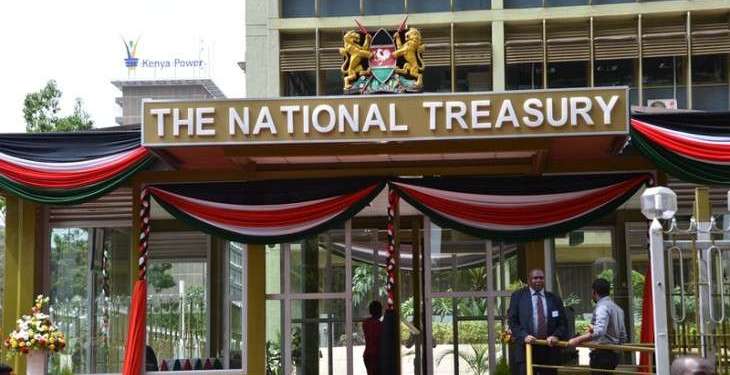
Members of Parliament have raised concerns over the National Treasury’s new borrowing framework, warning that the government’s growing appetite for domestic debt could strain the economy and crowd out the private sector.
The concerns emerged when National Treasury Principal Secretary Chris Kiptoo appeared before the Public Debt and Privatization Committee on Tuesday, February 24.
The proposed strategy outlines a net financing plan comprising 78 percent domestic borrowing and 22 percent external borrowing.
Kiptoo defended the approach, maintaining that the government remains on the right fiscal path despite the heavy tilt toward domestic financing.
However, lawmakers questioned the sustainability and rationale behind the strategy, arguing that domestic borrowing remains costly and risks limiting access to credit for businesses and households.
Kinangop MP Thuku Kwenya challenged the government’s borrowing levels, especially in light of earlier proposals to divest from key state assets such as Safaricom and privatize Kenya Pipeline Company.
“Looking at your debt strategy and the level at which we are borrowing, it doesn’t reflect what we envisaged by the sale of these critical assets. I thought we would now go slow on borrowing, but domestic debt is now growing to unprecedented heights,” he said.
Samburu North MP Eli Letipila expressed concern over the cost of servicing domestic debt, noting that repayment projections show it could consume 41 percent of ordinary revenue.
He warned that this level of obligation could further burden an already strained economy.
“Settling for domestic debt with all the indications of its financial implication is an indicator of the external market no longer favoring us, or is it our debt appetite?” he asked.


Mosop MP Abraham Kirwa also questioned the government’s motives in selling national assets while debt levels continue to rise.
“What is the motivation of selling the national assets? I thought it was to reduce our debts, but instead it is going up, and assets are being sold,” he stated.
In response, Kiptoo maintained that the Treasury carefully evaluates borrowing options by weighing costs and risks.
He argued that although domestic debt has historically been expensive, interest rates are now declining sharply and are approaching the 7 percent rate associated with foreign loans.
“We do weigh both options and consider what is happening now and in the future. We are certain we can raise funds from the domestic market rather than the external market. We also need to remember, domestic borrowing circulates money within our economy,” he responded.
Addressing fears that government borrowing is crowding out private sector access to credit, Public Debt Management Office Director General Rafael Otieno told lawmakers that sufficient credit exists within the economy.
He attributed limited lending to high interest rates rather than government borrowing levels.