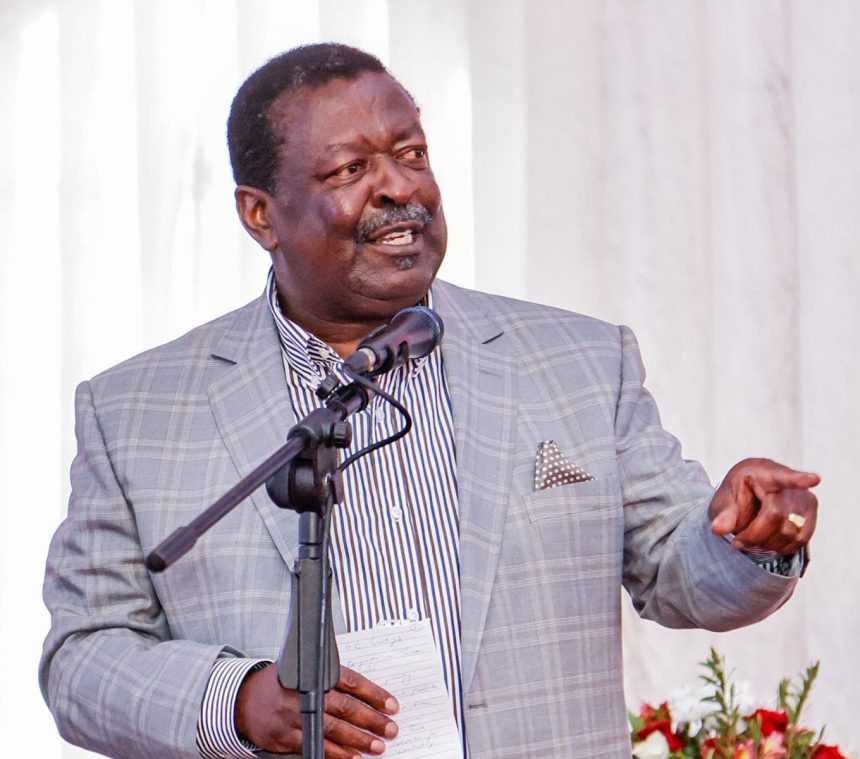
Prime Cabinet Secretary Musalia Mudavadi has hinted at having the 2027 general election alongside a constitutional referendum.
Mudavadi said some of the constitutional issues that need to be resolved can be canvased into a referendum question to be subjected on a vote by Kenyans.
“We can use the 2027 election as the first example to have those issues that have never been resolved crafted well into sensible referendum questions that will help amend our 2010 constitution. Kenyans should buy into this idea and we begin this discussion in 2026 ahead of the 2027 general election. If you can vote for six people on one ballot paper, I think we are now mature enough to include maybe two or three constitutional questions that can be dealt with so that we move forward.” Mudavadi states.
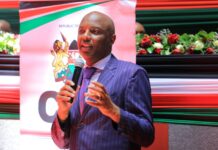
The PCS Mudavadi was speaking during an end year media interview at CHAMS Media in Nairobi on Tuesday.
Mudavadi Noted that the reason for such debate in public is because Kenya don’t want to have arguments constantly on some issues that parliament may not want or manage to resolve. Same to the courts, and thus the voice of Kenyans must prevail.
He added that the implementation of the NADCO report could be one of the main anchors of such debate.
“For instance, the NADCO report. We are not hearing much about it but Parliament was tasked to resolve the issues in there. Now that there is too much back and forth, why can’t we take this to IEBC and they craft a question or two to be subjected to a constitutional referendum?” Mudavadi stated.
“There were issues of inclusivity or lack of inclusivity being raised. Perhaps when one wanted to talk about introducing it in the NADCO report plus the issue on whether we need to have a substantive Prime Minister, this could be a time to resolve it through a referendum ballot.” he noted.
Mudavadi defended the concerns about logistical and budgetary implications saying, nothing will change much in terms of the cost of the election as the two exercises will run simultaneously.
He added that once the questions are well crafted and the ballot for the referendum is availed Kenyans are mature and intelligent enough to vote for the political leadership and put their voice on a YES or NO question on the constitutional issues to be canvased.
“I think this is the time. We have other issues like how to deal with the Constituency Development Fund, this matter has been a subject of back and forth between Parliament and the Courts, and we need to put it to rest and anchor it on our constitutional framework.” noted Mudavadi.
Mudavadi who is the former ANC Party leader and a key player in the formation of the current administration said most of the issues that arise after an election and call for the review of governance structures create a lot of debate making the country to be on an election and political mood over and over again.
“Kenyans have been subjected to this debate of people being short-changed after elections, we have questions of structures that have to be negotiated, and to resolve these issues once and for all for them to become constitutional and avoid wasting more time after the general election, this proposal stands the test of time.” Mudavadi pointed out.
“It is time now that we also resolve the issue on gender, this debate on 2/3rds gender rule has remained to be an endless discussion, and when people ask for public participation, what could be the biggest public participation if not a referendum,” he added.
Mudavadi said an approach to have the general election and a referendum if well managed will yield greater results and save the tax-payer a lot of money as well as save the country time to focus on other critical issues including development, job creation and turning around the economy at the expense of continuous politicking.
“First, we’ll solve issues that our parliament has been unable to resolve. Two, we will get a higher voter turnout. And three, we will be moving the country away from constant bickering on an issue to now moving to the next phase of implementing some of those critical issues,” he explained