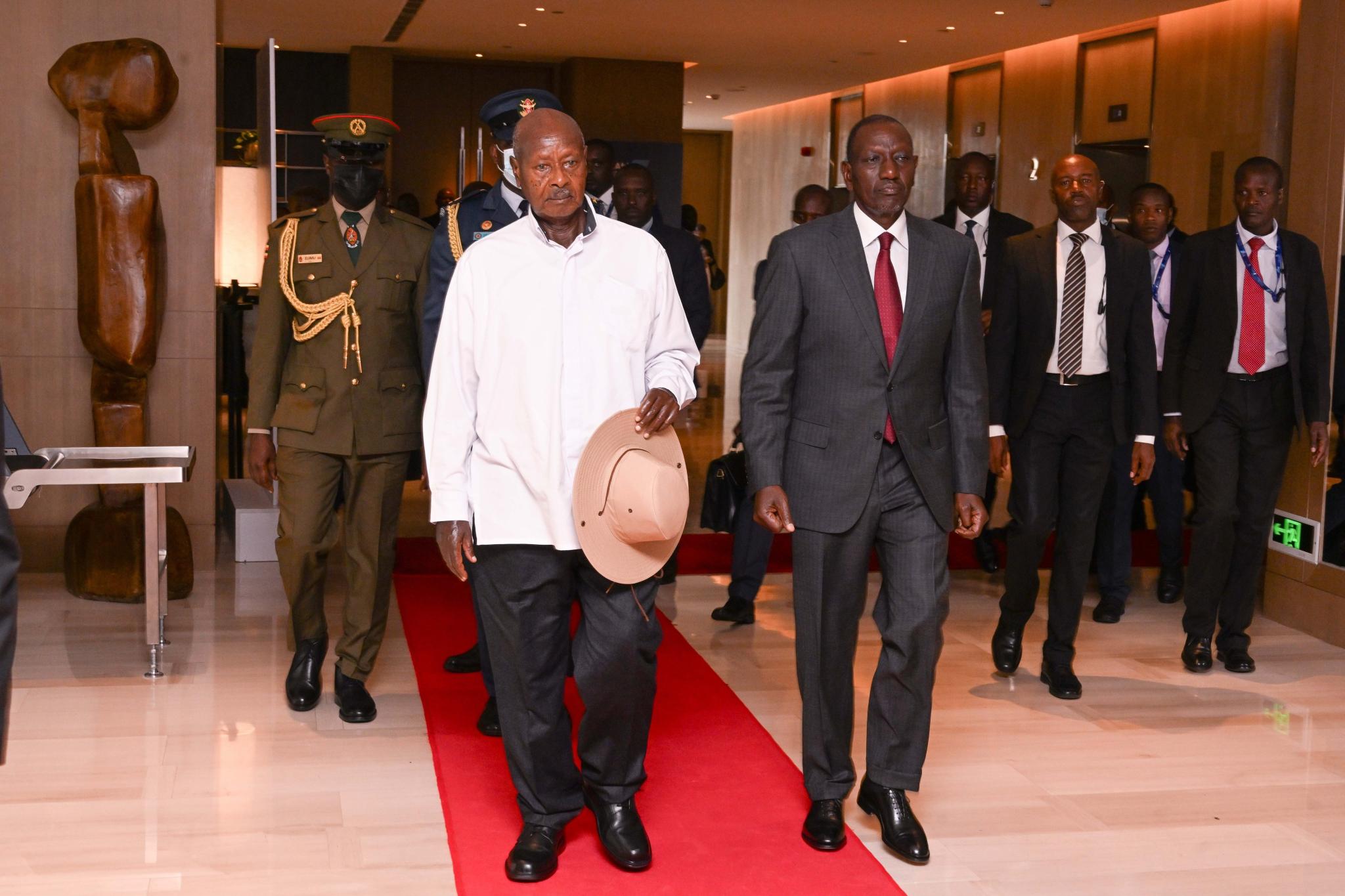
Uganda’s President Yoweri Museveni and Kenya’s President William Ruto have called for a major shift in how Africa approaches its economic development, warning that the continent’s slow growth is being driven by weak institutions, poor policy choices, and continued dependence on exporting raw materials instead of finished products.
Speaking at the Africa We Build Summit 2026 in Nairobi on Thursday, Museveni said Africa’s economic struggle is not only about lack of money but also deeper issues tied to leadership thinking and state systems, which he described as “ideological disorientation” and weak structures that have held back progress for decades.
He said Africa continues to lose out because it mainly exports raw materials while importing finished goods, despite having vast natural resources and a population of about 1.5 billion people.
“All of us together, in terms of wealth, are only 10% of the wealth of the United States,” he said, comparing the continent’s combined gross domestic product, estimated at about $3.6 trillion, with the United States’ $32 trillion economy.
Museveni insisted the challenge facing Africa goes beyond finance and is rooted in how states are organised and how leaders think about development.
“It is ideological. It’s not just money,” he said, pointing to China as an example of a country that managed to transform its economy through discipline, long-term planning, and consistent investment even when it was still poor.
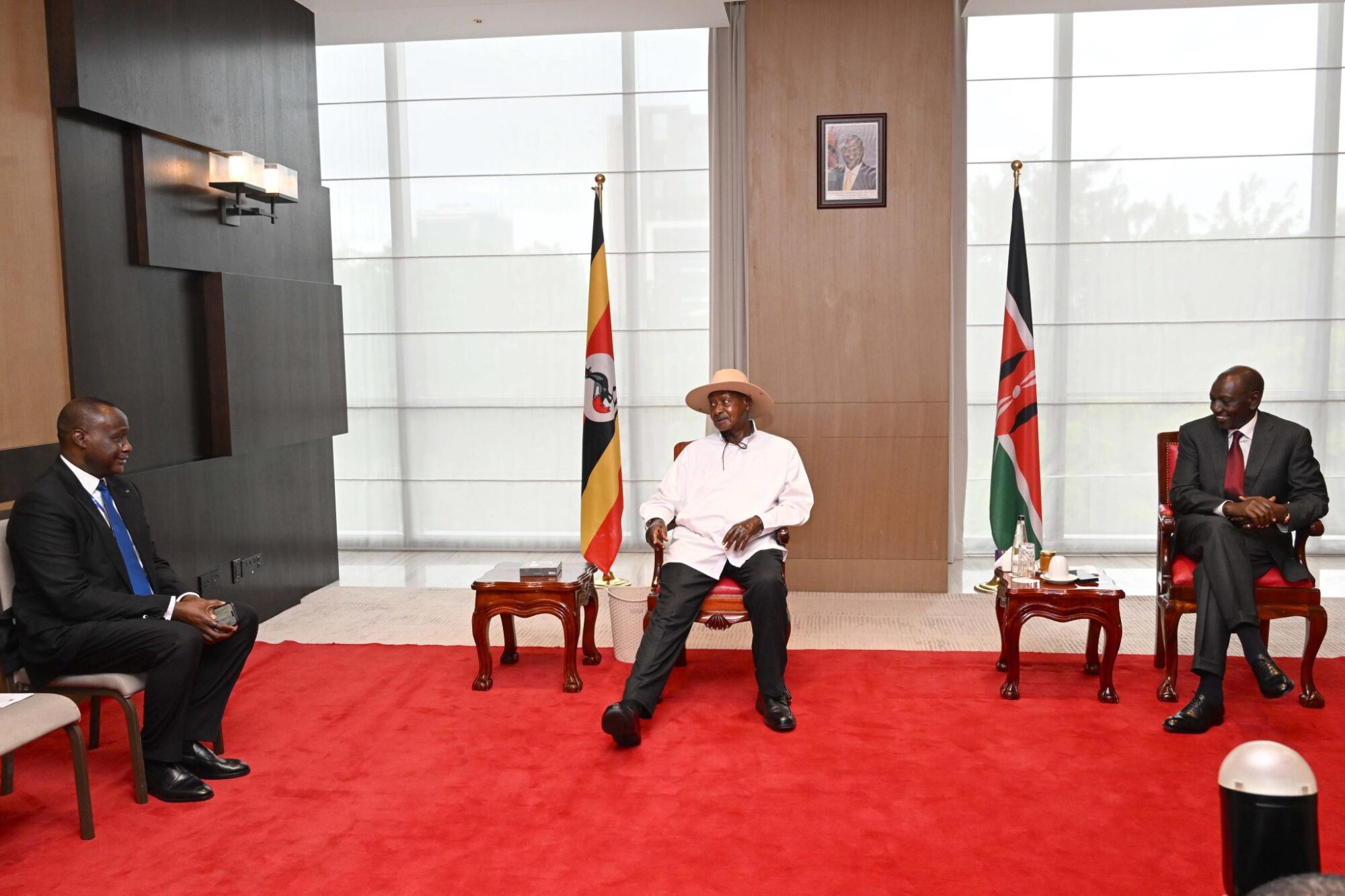

President Ruto, who also attended the summit, echoed concerns about Africa’s position in global trade, saying the continent continues to rely heavily on exporting raw materials, minerals, and agricultural produce while importing finished products, a model he said limits industrial growth and job creation.
“Africa’s place in global trade is defined by attention,” Ruto said, noting that this structure has left Africa at a disadvantage despite its resource wealth.
He warned that the current system has led to massive losses in potential income, especially in sectors such as agriculture.
Ruto explained that Africa’s food production alone is valued at about $270 billion annually, but could rise to more than $500 billion if more goods were processed and exported as finished products.
“This presents forgone income of about $230 billion which is nearly 7.5% of our GDP from just one resource,” he said.
He also raised concern that manufacturing across the continent has remained stagnant at about 10% of GDP over the past two decades, warning that continued dependence on raw exports leaves African economies exposed and limits their ability to grow stronger industries.
Museveni further argued that Africa’s development is being slowed by ongoing conflicts and identity-based politics, which he said continue to weaken states and block regional cooperation.
“How will you have inter regional infrastructure if there are wars, and these wars are based on ideological bankruptcy,” he said, pointing to instability in regions such as the Democratic Republic of Congo and South Sudan.
He added that such divisions have resulted in weak institutions and poor public services, including underfunded security systems, which further reduce state effectiveness.
Museveni also linked economic challenges to high operating costs across African economies, especially in transport, electricity, and finance, saying these make it difficult for industries to compete.
“If you have got very high cost of transport, how would you compete? How will the companies make money?” he asked, also pointing to electricity pricing and high interest rates as major barriers to industrial growth.
He criticised Africa’s continued export of unprocessed materials such as cotton, saying it deprives the continent of much higher earnings that come from value addition.
Museveni urged African leaders to focus more on industrialisation, regional integration, and investment in key infrastructure such as railways, roads, and energy systems. However, he cautioned that these efforts would not succeed unless deeper political and ideological problems are also addressed.
“We should not look at these issues in isolated ways,” he said, calling for a coordinated approach that connects politics, economics, and security in planning development.
He added that Africa must move beyond discussions and adopt long-term development strategies similar to those used by countries like China and Japan, which achieved rapid transformation within a generation through consistent planning and strong policy direction.