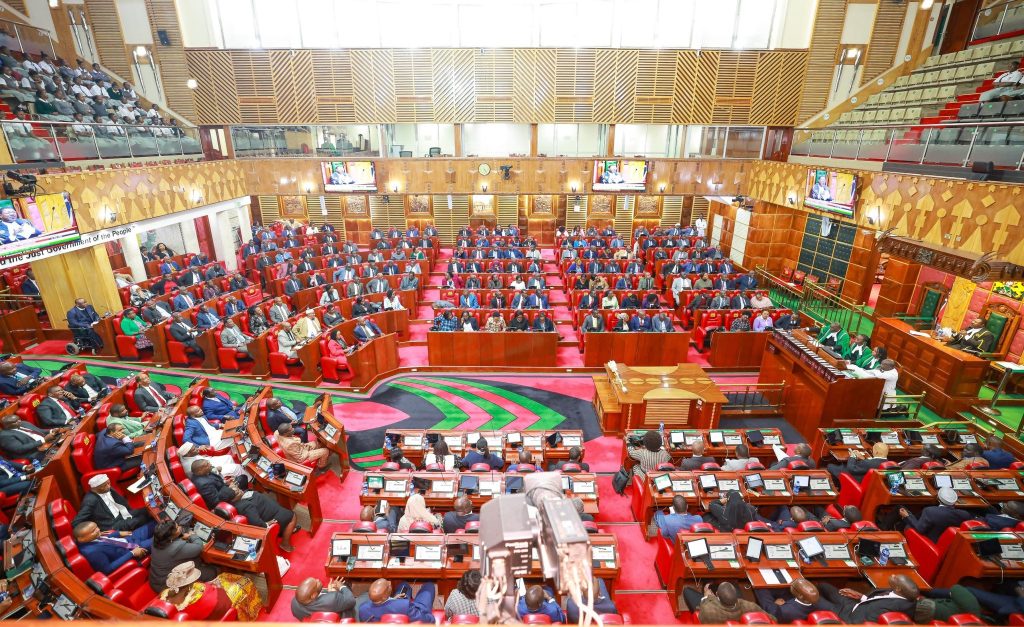
The National Assembly has approved the Estimates of Revenue and Expenditure and the Medium-Term framework for the Financial Year 2026/2027, setting out a people-centred budget focused on strengthening social protection, expanding essential services, and reinforcing fiscal discipline.
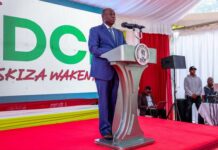
Moving the motion, the Chairperson of the Budget and Appropriations Committee, Samuel Atandi, said the framework was anchored on public participation and prioritised investments in key sectors including health, education, housing, agriculture, and environmental resilience.
“This budget is structured to strengthen Universal Health Coverage, improve primary healthcare services, and expand specialized healthcare infrastructure,” Atandi said, noting that the health sector has been allocated Sh175.5 billion.
To advance Universal Health Coverage (UHC), Members of Parliament approved Sh19.1 billion for the Primary Healthcare Fund to strengthen community health systems and improve access to local health facilities. The Emergency, Chronic and Critical Illness Fund received Sh4 billion to cushion families from catastrophic health expenses associated with severe illnesses.
In addition, the Global Fund Programme was allocated Sh18.5 billion to support ongoing interventions targeting HIV/AIDS, malaria, and tuberculosis.
Education remained the largest recipient of the budget, with Sh781.4 billion allocated to basic, tertiary, and university education programmes.
Of this allocation, Sh4.9 billion has been set aside to facilitate the conversion of 20,000 intern teachers into permanent and pensionable terms. Higher education also received a boost, with Sh56.7 billion allocated to the Higher Education Loans Board (HELB) to support access to university education for students from needy backgrounds.
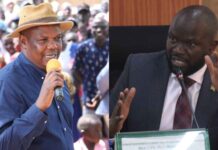
Seconding the motion, Kisumu County MP Dr Robert Pukose commended the budget’s grassroots orientation, particularly the introduction of stipends for village elders.
“For the first time, the Committee has approved Sh3.5 billion for stipends for village elders. We are hoping that the NGAO will now be able to pay Sh3,000 monthly to these important community leaders,” Dr Pukose said.
The housing sector also received significant funding, with Sh138.2 billion allocated, including Sh50 billion for the Affordable Housing Programme aimed at accelerating housing delivery and creating employment opportunities for young people across the construction value chain.
“This allocation will support the Affordable Housing Programme as well as urban infrastructure and informal settlement upgrading,” Atandi said.
Energy development was further strengthened through an allocation of Sh16.3 billion for rural electrification and Sh7.5 billion for national grid expansion to improve electricity access across the country.
The digital economy also received targeted support, including funding for ICT hubs, completion of the Konza Data Centre, and cybersecurity systems to enhance ongoing government digitisation efforts.
To support vulnerable groups, MPs approved Sh25 billion for elderly cash transfers, Sh8.9 billion for orphans and vulnerable children, and additional allocations for disability support programmes and the Hunger Safety Net Programme.
Youth-focused initiatives also received increased funding, including Sh12.5 billion for the National Youth Service (NYS) and additional resources for employment creation and enterprise development programmes.
“These interventions are intended to enhance youth employability, entrepreneurship, skills development, and access to financing,” the Budget and Appropriations Committee noted in its report.
On fiscal sustainability, legislators expressed concern over the widening budget deficit and rising debt-servicing obligations, calling for stronger measures to enhance efficiency and accountability in public spending.
To improve transparency, the House endorsed the mandatory rollout of the Electronic Government Procurement (e-GP) system, which has already reduced administrative inefficiencies and generated estimated savings of Sh36.9 billion.
Parliament also called for improved coordination in Exchequer releases to reduce pending bills and ensure timely implementation of government programmes.
Lawmakers further backed strict adherence to statutory fiscal requirements, including ensuring that development and capital expenditure account for more than 30 percent of the total budget to support infrastructure-led growth.
Following approval, the Estimates will now form the basis of the Appropriation Bill, which will authorise government expenditure for the new financial year.