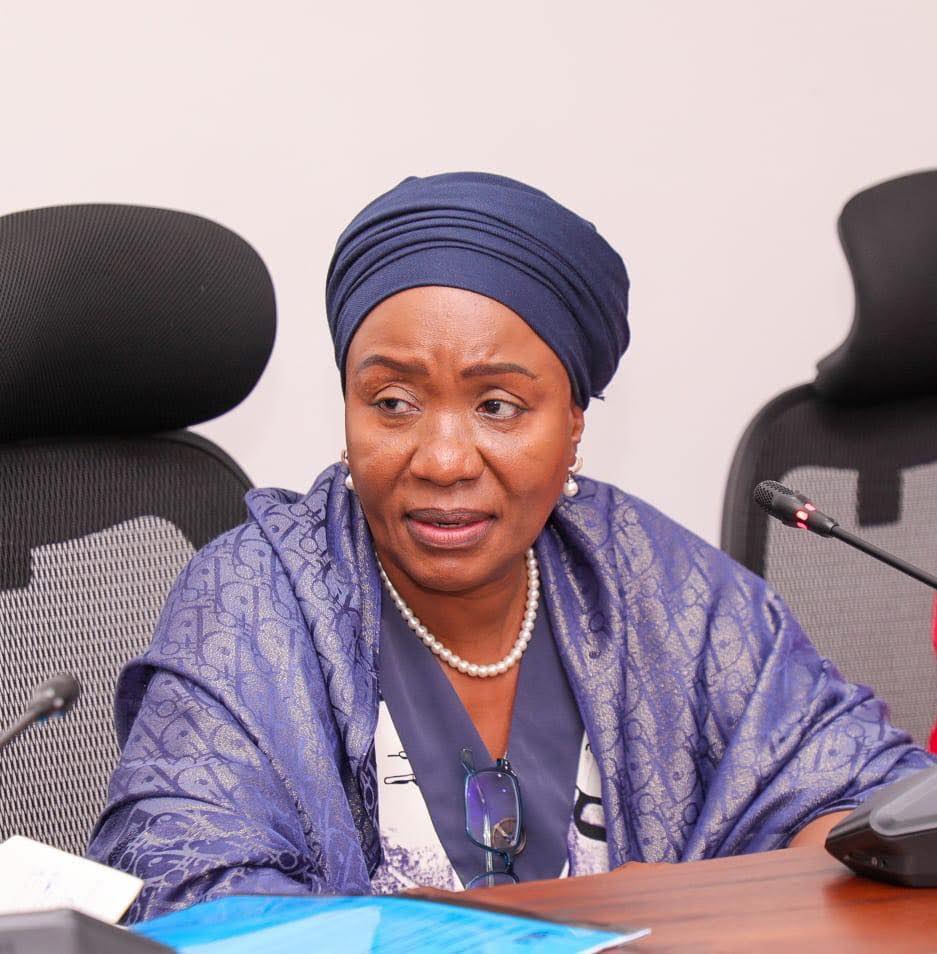
Senator Hamida Kibwana (Nominated) has called for urgent intervention on two pressing public concerns, urging relevant Senate Committees to address the growing burden of uterine fibroids among women in Kenya and the recurrent flooding caused by drainage failures and poor urban planning in Nairobi City County.
The Senator noted that uterine fibroids non-cancerous growths in the uterus are increasingly affecting Kenyan women, particularly those aged between 35 and 39 years. She observed that the condition is associated with severe health complications including heavy menstrual bleeding, chronic pelvic pain, anaemia and infertility.
According to the Senator, available estimates indicate that between 10 and 20 percent of Kenyan women may be affected by fibroids. She further raised concern over the high cost of treatment, which ranges between KES 100,000 and KES 500,000, placing effective care beyond the reach of many patients who lack comprehensive health insurance coverage.
Sen. Kibwana requested the Standing Committee on Health to provide updated data on the national prevalence and distribution of uterine fibroids, including age-specific trends and the county-level burden across the country.
She also asked the Committee to outline measures being undertaken by the Ministry of Health to enhance public awareness and promote early screening in order to encourage timely diagnosis and reduce complications associated with the condition.
Further, the Senator sought clarification on government efforts to fund research into the causes, prevention and treatment of fibroids, including initiatives aimed at expanding access to modern and minimally invasive treatment options.
She additionally called for details on the affordability and accessibility of fibroid diagnosis and treatment under the Social Health Insurance Fund (SHIF), including the extent of coverage available and any plans to make treatment more affordable and accessible to women nationwide.
The Senator also asked the Committee to outline policy measures being implemented to strengthen reproductive health services in public health facilities in order to ensure comprehensive, equitable and sustainable support for women’s health across the country.
In a separate request to the Standing Committee on Roads, Transportation and Housing, Sen. Kibwana raised concern over recurrent flooding in Nairobi City County linked to drainage failures, encroachment on riparian reserves and weak urban planning controls.
She noted that heavy rainfall experienced on March 6, 2026 resulted in widespread flooding across several parts of the city, leading to road closures, property damage, displacement of residents and disruption of economic activity.
The flooding reportedly affected several neighbourhoods including Embakasi, Pipeline, Mukuru, Kibra, Mathare, Huruma, South B and C, Lang’ata, Umoja, Njiru, Ruai, Utawala, Roysambu, Githurai, Loresho and parts of Westlands.
Major road corridors were also rendered impassable during the rains, including sections of the Central Business District, Uhuru Highway, Mbagathi Way, Mombasa Road, Thika Superhighway, Jogoo Road, Lunga Lunga Road, Enterprise Road and Lang’ata Road.
Sen. Kibwana asked the Committee to outline immediate actions being undertaken by the Nairobi City County Government and relevant national agencies to manage the flooding, including drainage clearance, rescue operations, reopening of roads and measures to protect residents and property.
She further requested details on areas identified as chronic flooding hotspots, the status of any audits conducted on Nairobi’s storm-water drainage system and the corrective measures being implemented to improve its capacity.
Additionally, the Senator called for information on steps being taken to remove illegal developments on riparian reserves, waterways, road reserves and drainage corridors, as well as measures to prevent further encroachment.
She also asked the Committee to clarify the planning and development control measures currently in place to ensure that future infrastructure projects incorporate adequate drainage systems, flood mitigation mechanisms and climate-resilient urban planning.
Sen. Kibwana emphasized that as the country’s capital and economic hub, Nairobi requires resilient infrastructure systems capable of safeguarding lives, protecting property and sustaining mobility and economic activity during periods of heavy rainfall.
By Anthony Solly