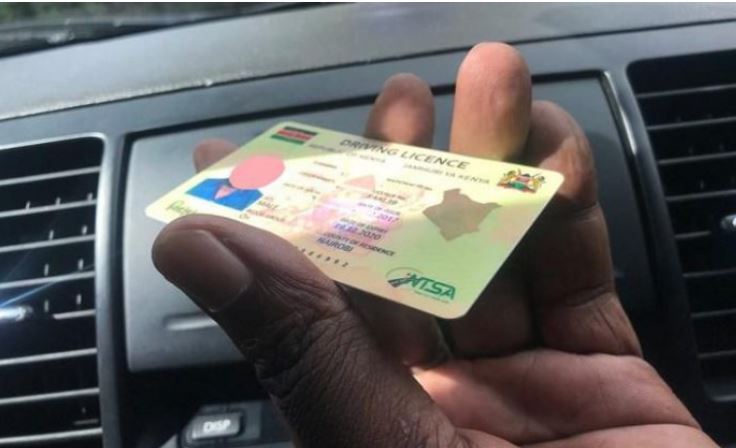
Star -The National Transport and Safety Authority (NTSA) has announced a major Public-Private Partnership (PPP) project aimed at transforming driver licensing, strengthening traffic law enforcement and improving road safety across the country.
In a public notice published in the weekly myGov newspaper, NTSA disclosed details of a strategic partnership with KCB Bank Kenya Limited and Pesa Print Limited for the design, supply, delivery, installation and maintenance of second-generation smart driving licences and associated digital enforcement services.
The ambitious project, valued at an estimated Sh42 billion in its initial phase, is expected to be financed entirely through private debt and equity over the first two to three years.
The partnership will run for 21 years under a strategic model provided for in the Public Private Partnerships Act.
NTSA said the project is part of the government’s broader digital transformation and road safety agenda anchored in Kenya Vision 2030, the Bottom-Up Economic Transformation Agenda (BETA), the National Road Safety Action Plan 2024-28 and the Fourth Medium-Term Plan (2023-27).
Established under the National Transport and Safety Authority Act of 2012, NTSA is mandated to regulate road transport, register and license motor vehicles, oversee driver training and testing, enforce road safety standards and advise government on transport policy.
The authority noted that the initiative responds to growing concerns over Kenya’s worsening road safety record and inefficiencies in the current driver licensing system.
“Kenya’s road transport and safety record is characterised by high levels of road fatalities, road indiscipline, poor driver licensing systems and weak enforcement of traffic violations,” NTSA said.
According to the agency’s statistics, road fatalities have risen sharply from 3,875 deaths in 2019 to more than 5,100 in 2024.
Beyond the human toll, road crashes are estimated to cost the economy about Sh450 billion annually, equivalent to nearly five per cent of the country’s Gross Domestic Product, through medical expenses, lost productivity and damage to property.
The authority also cited weak enforcement systems, inadequate speed monitoring infrastructure, low uptake of smart driving licences and persistent corruption as major challenges undermining road discipline.
Out of an estimated five million drivers in the country, only about 1.3 million have so far acquired smart driving licences, largely due to limited enrolment centres and equipment.
Under the new PPP arrangement, the consortium will modernise driver licensing through the production and nationwide distribution of secure electronic driving licences (e-DLs).
The project will involve the production of five million high-security polycarbonate smart cards every three years over the contract period.
To support enrolment, more than 102 centres will be established across the country, supported by over 390 enrolment kits and modern production systems capable of delivering licences within 24 to 48 hours.
In addition to card issuance, the project will introduce a comprehensive digital driver management system that tracks a driver’s lifecycle, including training, licensing history and a merit and demerit points system.
The digital platform will also support a mobile driving licence wallet, enabling motorists to access their credentials electronically and receive notifications related to compliance and enforcement.
A major component of the project is the automation of traffic law enforcement through the installation of 700 fixed speed cameras and 300 mobile speed enforcement units on major highways and urban roads.
These systems will be linked to a National Command and Control Centre to enable real-time monitoring of violations and improve enforcement efficiency.
Motorists found committing minor traffic offences will be issued instant fines under the Traffic (Minor Offences) Rules, 2016.
Payments will be integrated into digital platforms, including USSD, mobile money and banking systems.
The e-DL wallet will also support financial services such as payments, transfers, deposits, mobile money top-ups and balance enquiries through tokenised systems.
The authority said user charges for the electronic driving licence will remain at Sh3,000 for issuance, replacement or duplication, while fine amounts will be based on existing legal provisions.
Responsibilities under the partnership have been clearly defined.
Pesa Print will handle card design, pre-printing, personalisation, production management and system connectivity. KCB will support enrolment, distribution and issuance, while NTSA will oversee enforcement, regulatory compliance and data governance.
The project will be implemented in collaboration with key government agencies, including the National Treasury, the Ministry of Roads and Transport, the Ministry of Interior and National Administration, the National Police Service, the Office of the Director of Public Prosecutions and the Judiciary.
NTSA said the initiative is expected to deliver multiple benefits, including improved road discipline, enhanced enforcement, reduced corruption and faster service delivery.
The authority also anticipates a reduction in road crashes and related medical costs, decongestion of courts through automated penalties, improved management of public transport operations and enhanced government revenue collection.
At the end of the 21-year contract period, the project company will transfer ownership of core infrastructure, including speed cameras, command centre systems and enrolment equipment, to NTSA.
However, the private partners will retain ownership of non-core assets such as smart poles, vehicles and certain software components.
Implementation of the project will be guided by several laws, including the Constitution of Kenya, the NTSA Act, the Traffic Act, the Public Private Partnerships Act, the Public Finance Management Act and the Access to Information Act, among others.
The authority said the disclosure is intended to enhance transparency and public awareness regarding the project, in line with legal requirements governing PPP arrangements.
Motorists, boda boda riders, public service vehicle operators, cyclists and pedestrians have been identified as the primary end users and beneficiaries of the system.
Through the initiative, the government hopes to leverage private sector expertise and financing to modernise road safety management and reverse the rising trend of traffic fatalities.
NTSA urged the public and stakeholders to familiarise themselves with the project details as the country moves towards a more technology-driven, efficient and accountable road transport system.