Sponsored Ad

Ad 1
Ad 2
Ad 3
Ad 4
Ad 5
Ad 6
25.3 C
Kenya
Sunday, May 24, 2026
Home Blog Page 1371

KCB Breaks Bank Record with Historic Sh13bn Payout

KCB Group has delivered an 8% rise in half-year profits, shrugging off a tough regional climate to hand shareholders a record interim and special dividend totalling Sh13 billion – the largest in its history.

The lender’s net profit hit Sh32.3bn for the six months to June, up from Sh29.9bn a year earlier, fuelled by higher interest income and steady customer deposits despite selling its subsidiary, National Bank of Kenya, in May.

The disposal freed up capital for what the board has dubbed a “thank you” to investors: an ordinary Sh2 per share payout, plus a one-off Sh2 linked to the NBK sale.

Chief executive Paul Russo insisted the group’s focus on “customers first” was paying off, even as inflation, high interest rates and political uncertainty weighed on key markets.

Subsidiaries outside Kenya now contribute a third of group earnings, with investment banking, asset management and insurance also pulling their weight.

Revenue climbed 4.3% to Sh98.6bn, powered by a rise in lending yields, while 99% of transactions now take place on digital channels.

KCB’s latest tech gambit is a unified mobile app launched last week, promising instant account opening, AI-driven services and a suite of “mini-apps” ranging from payments to investments.

Costs crept up just 2.4%, keeping the cost-to-income ratio steady at 46%. Non-performing loans eased slightly to 18.7% of the book, but the figure remains high by industry standards. Capital buffers are well above regulatory floors, with a liquidity ratio of 47.2%.

Beyond the balance sheet, the bank has been flexing its brand muscle – from sponsoring the Safari Rally and athletics trials to issuing Sh26.9bn in green loans. It also added six new branches across Kenya, Tanzania and Rwanda.

The strong showing brought a clutch of awards, including African Bank of the Year, and even a U.S. Congressional commendation for Russo.

“We’re building for the long term,” said chairman Joseph Kinyua, hinting at “ambitious growth goals” despite what he called “a regional environment prone to growing uncertainties”.

For now, KCB’s shareholders have 13 billion reasons to be cheerful.

Uganda Opposition Challenges Law Restoring Military Trials for Civilians

Uganda’s largest opposition party has lodged a petition in the Constitutional Court to overturn a controversial new law that reinstates the power of military tribunals to try civilians, in defiance of a recent Supreme Court ruling.

In January, the Supreme Court declared such trials unconstitutional, citing the inability of military courts to guarantee fair and impartial proceedings.

The decision was hailed by rights groups as a victory for judicial independence. But in May, parliament passed legislation restoring the practice, which President Yoweri Museveni signed into law in June.

The National Unity Platform (NUP) – led by pop star-turned-politician Robert Kyagulanyi, widely known as Bobi Wine – says the law undermines the rule of law and was passed without adequate public consultation.

“This legislation not only erodes hard-won constitutional safeguards, it risks returning Uganda to an era of politically motivated prosecutions,” said NUP lawyer George Musisi.

Rights organisations have long accused Museveni’s government of using military courts to silence dissent, alleging that opposition members and activists are frequently charged with security-related offences to justify detention.

Officials reject the claims, insisting that only civilians implicated in armed political violence are brought before military tribunals.

Among those previously targeted is former presidential candidate Kizza Besigye, whose treason case was transferred to a civilian court after the Supreme Court’s January ruling.

Besigye, a prominent opposition figure and four-time challenger to Museveni, remains in custody nine months after his arrest and has repeatedly been denied bail.

The reinstatement of military trials has sparked concern among human rights advocates, who warn it could be used to intimidate critics ahead of future elections. “This law is a step backwards for justice and democracy in Uganda,” said one Kampala-based activist.

The Constitutional Court is yet to set a date for hearing the petition.

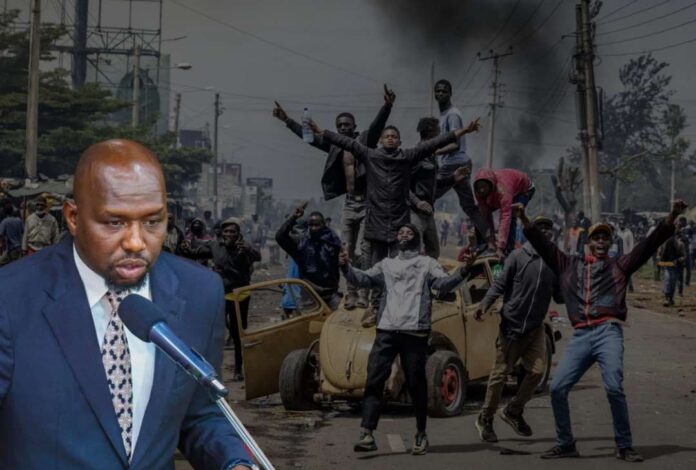
Murkomen Defends Police Crackdown After Deadly June and July Protests

Kenya’s Interior Cabinet Secretary Kipchumba Murkomen has outlined sweeping measures to bolster public safety following nationwide protests in June and July that left 42 people dead, more than 600 injured, and widespread damage to property.

Speaking in the National Assembly on Wednesday in response to a question from Molo MP Kimani Kuria, Murkomen described the demonstrations of 25 June and 7 July as “well-orchestrated and coordinated by certain actors” seeking to incite unrest and undermine national stability.

Murkomen said the violence on 25 June claimed 42 lives, injured nearly 600 people – including 496 police officers – and saw the torching of 16 police stations, vandalism of supermarkets, and attacks on hospitals and government offices.

In Dagoretti, armed criminals looted guns and set fire to residential buildings for police officers and their families.

He accused organisers of mobilising protesters via social media without giving the legally required advance notice to police, in violation of the Public Order Act.

Although Article 37 of the Constitution guarantees peaceful assembly, Murkomen stressed that the right is “not absolute” and may be limited to protect public safety.

The minister said the government had ramped up mobile and foot patrols, expanded CCTV and drone surveillance, improved intelligence networks, and engaged community leaders through Nyumba Kumi structures to prevent future violence.

Public advisories, he added, were being issued ahead of planned protests to encourage lawful conduct.

Murkomen revealed that police are investigating financiers and organisers of the unrest, with financial records and registrations of companies, NGOs, and societies under forensic review.

About 1,500 people have been arrested on charges ranging from terrorism and unlawful assembly to arson and possession of ammunition. Fifteen individuals linked to planning and mobilisation have already been charged.

The Interior CS said multiple agencies, including the National Intelligence Service and the Financial Reporting Centre, were involved in the probe. He promised continued efforts to identify and prosecute those behind the violence.

Kuria, whose constituency saw the destruction of the Molo Ward Administrator’s office and Molo Railway Station, welcomed Murkomen’s report but urged swift prosecution to deter future unrest.

Flaqo Raz’s New Skit Angers FX Traders

Screenshot

Kenyan comedian Flaqo Raz has once again demonstrated his knack for poking fun at the country’s most image-conscious professions.

This time turning his gaze to forex traders, with a skit that has left the internet split between laughter and cries for respect.

The video, staged as a parody “forex trading masterclass,” features Flaqo cycling through his familiar cast of personas.

In his role as an eccentric instructor, he announces to “students”: “Kila mtu atoe shorts tulearn forex. Kama umevaa jeans, toa ukalie bathtub.”

The joke escalates as his other characters express confusion, only to be met with another line: “Kama hutaki kuendesha GLE na Mark X, toka uende.”

Flaqo peppers the lesson with industry terms like “fluidity,” “spread,” and “fundamental analysis”, but twists them into cheeky double entendres, hinting that some traders may profit more from romantic exploits than currency fluctuations.

FULL VIDEO https://www.instagram.com/reel/DNGgUb8N-yM/?igsh=ZzRtdGp5cDV6OXZ4

It’s easy to see why the sketch resonated and why it ruffled feathers. The forex trading scene in Kenya is something of a cultural phenomenon: a blend of online hustle, aspirational lifestyle branding, and the occasional controversy over legitimacy.

However, not everyone took it in stride. Influential trader Kafuri FX reposted the skit on Instagram with the remark, “It’s time we respect people’s careers,” before adding a jab at Flaqo’s own earnings, noting the comedian drives a Nissan Note allegedly worth less than a day’s trading profit. Another trader, Sammyboy, was more succinct: “We demand respect.”

The pushback drew its own pushback.

Many online commenters suggested the outrage only proved the skit’s accuracy. “If it’s not true, why the offense?” one asked. “You dont have to answer to everything”.

Eddie Butita, a content powerhouse, said it speaks volumes that the traders are complaining about the video. That it validates the assumptions.

Whether the forex community ultimately laughs along remains to be seen. But in a media landscape that thrives on quick reactions, Flaqo’s latest upload has again proven his ability to turn an everyday cultural trope into a trending conversation.

Uganda to Hold First-Ever Rhino Naming Ceremony

Uganda will host its first Rhino Naming Ceremony next month, in a landmark event aimed at boosting conservation efforts and drawing international attention to the country’s growing rhino population.

The Ministry of Tourism, Wildlife and Antiquities, together with the Uganda Wildlife Authority (UWA) and Uganda Tourism Board (UTB), announced the ceremony will take place on 22 September at Ziwa Rhino Sanctuary in Nakasongola District. President Yoweri Kaguta Museveni is expected to preside over the event.

The initiative forms part of the five-year, $11 million (£8.7 million) “Name A Rhino” campaign, launched in 2024 to fund habitat expansion, veterinary care, anti-poaching operations and community conservation programmes.

Attendees – from philanthropists to corporate sponsors – will have the opportunity to symbolically “adopt” and name one of 17 calves and juveniles at Ziwa, with all proceeds supporting the species’ survival.

“This will be a celebration of how far we have come – from extinction in the wild in the 1980s to now having 48 rhinos in Uganda,” said UWA executive director Dr James Musinguzi.

Rhinos were once widespread across Uganda before poaching and habitat loss wiped them out in the wild. The breeding programme at Ziwa, launched in 2006 with just six Southern White Rhinos, has since produced 40 calves.

The government plans to reintroduce rhinos into Ajai Wildlife Reserve later this year, expanding their range and linking the West Nile region to the national tourism circuit.

“This is more than a naming ceremony – it’s a legacy,” said state minister Martin Mugarra Bahenduka. “When you name a rhino, you’re securing its future.”

Uganda’s National Rhino Conservation Strategy aims for a 5% annual population growth rate by 2028, underpinned by stronger protection, habitat management and public engagement.

CDC Chief Blames Misinformation for Deadly Shooting at Agency Headquarters

A bullet hole is visible in the door of a CVS pharmacy on Saturday, August 9, 2025, near where police say a man was shooting at the headquarters of the U.S. Centers for Disease Control and Prevention in Atlanta. (AP Photo/Jeff Amy)

The director of the US Centers for Disease Control and Prevention (CDC) has directly linked the spread of misinformation to last week’s deadly shooting at the agency’s Atlanta headquarters, calling the attack a “tragic consequence” of falsehoods undermining public health.

In a message to more than 10,000 staff on Tuesday, Dr Susan Monarez said, “The dangers of misinformation and its promulgation has now led to deadly consequences. I will work to restore trust in public health… through science, evidence, and clarity of purpose.”

Her remarks followed a chaotic all-staff meeting earlier in the day, cut short by technical problems, in which Monarez told employees, “Public health should never be under attack.”

Authorities say the gunman, identified as 30-year-old Patrick Joseph White, fired almost 500 rounds during Friday’s assault, killing DeKalb County police officer David Rose and striking CDC facilities with about 200 bullets. White, who died from a self-inflicted gunshot wound, reportedly held deep resentment towards the COVID-19 vaccine, blaming it for health problems. Investigators recovered written materials from his home expressing distrust of vaccination, though no direct threats were made.

Neighbours told ABC News White had complained of severe weight loss, swallowing difficulties and gastrointestinal issues following his vaccination. The CDC has repeatedly stressed that serious side effects from COVID-19 vaccines are rare.

The Georgia Bureau of Investigation recovered five firearms from the scene and said White’s parents, from whom he obtained the weapon used, are cooperating fully.

In her note, Monarez urged staff to “check in on colleagues” and assured them of increased security and mental health resources. “We will face the challenge together. United in purpose, grounded in truth, and committed to protecting one another,” she said.

The investigation, involving both state and federal agencies, remains ongoing.

WHO Names SC Johnson’s Spatial Repellents as Game-Changer in Malaria Control

The World Health Organisation (WHO) announced a policy recommendation for spatial repellents to be used as an innovative tool to help fight insect-borne diseases like malaria.

SC Johnson, maker of household brands such as OFF!®, Baygon® and Raid® and leaders in insect science, has been working towards this achievement for more than a decade and has already been distributing millions of its own company-developed and manufactured spatial repellents – SC Johnson Guardian™ and SC Johnson Mosquito Shield™ – to communities most in need via various global public health partners.

This recommendation strengthens confidence in Guardian and Mosquito Shield, further enabling SC Johnson to deploy these insect-borne disease prevention tools to the world’s most vulnerable communities at a much larger scale. The company’s spatial repellents are not for profit.

“I’m thrilled that the World Health Organization has announced a policy recommendation for spatial repellents as an innovative prevention tool for fighting insect-borne diseases.

This important milestone comes after more than 10 years of SC Johnson efforts and more than $100 million invested in the development, testing, production and deployment of our spatial repellent products,” said Fisk Johnson, Chairman and CEO of SC Johnson.

“From day one, this has been a not-for-profit initiative driven by our commitment to combat diseases that threaten hundreds of millions of people.

An achievement like this doesn’t happen overnight but because of the passion and dedication of thousands of SC Johnson people around the world, we’re now able to see this vision come to life. The impact we’ve made together this far is only the beginning.”

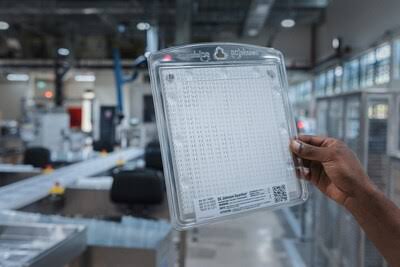
Spatial repellents are tools that, when used, release an active ingredient which repels mosquitoes from a room, preventing mosquitoes from biting people and ultimately lessening the transmission of disease.

They can be hung in semi-enclosed spaces, including homes and schools, and are about the size of a sheet of paper. They are easy to use, low-cost, long-lasting and effective.

Already, SC Johnson has been distributing, implementing and educating about the important role of spatial repellents in humanitarian settings and working with global public health partners such as The MENTOR Initiative, Society for Family Health Rwanda, United to Beat Malaria and Ministries of Health of several countries.

The WHO’s approval bolsters the ability for the company to strengthen confidence in these tools and work even more closely with global public health partners and country governments to get spatial repellents in the hands of more people to help save and improve lives.

In addition, the WHO has given prequalification listings for Guardian and Mosquito Shield spatial repellents, naming them specifically as recommended insect-borne disease prevention tools and signaling their ability to be procured through different channels. While SC Johnson partners have already been deploying and using these tools, the prequalification listings demonstrate further their safety, quality and efficacy.

“There are over a billion people that would benefit from the SC Johnson Guardian™ and SC Johnson Mosquito Shield™ spatial repellents,” said Richard Allan, CEO of The MENTOR Initiative. “People want a tool that works for how they live. Frankly, these are the first tools I’ve seen in 36 years that have the promise of doing that. These could be a real game changer.”

Spatial repellents are one of the first new categories of vector control tools to receive a policy recommendation from the WHO for malaria prevention within the last 25 years. This recommendation will help reach and protect even more families from disease who may not have access to other interventions.  

In order to receive a policy recommendation and prequalification listing, the WHO requires ample proof of efficacy, safety and quality. Over the years, SC Johnson has worked with Unitaid and The Gates Foundation to conduct and fund thorough clinical trials of its spatial repellents.

Clinical trials have shown that proper use of spatial repellents can reduce risk of disease by up to 33 percent, with Guardian able to provide protection for up to one year. Trials have been conducted in Indonesia, Peru and Kenya, which offered promising results to help secure the recommendation, and the company continues to test their tools to ensure efficacy.

Earlier this year, SC Johnson opened two high-speed manufacturing lines to produce its Guardian spatial repellent at the company’s plant in Nairobi, Kenya. At capacity, these new lines will be able to produce up to 20 million units annually. Early next year, the company plans to open a new line at its plant in Pilar, Argentina, to manufacture Guardian, which will produce another 20 million units annually, reaching 20 million people.

Since 2013, SC Johnson has reached more than 110 million people via public health initiatives, education tools and distributing life-saving repellents in the fight against insect-borne disease.

Learn more about what SC Johnson is doing in the fight against malaria and other insect-borne diseases here

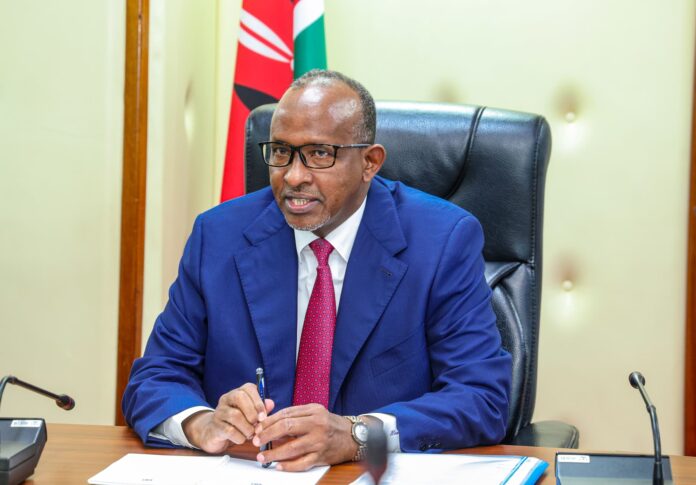
NHIF Pending Claims Committee Declared Unconstitutional Over Privacy, Legal Breaches

The High Court in Eldoret has declared unconstitutional the Pending Medical Claims
Verification Committee formed by Health Cabinet Secretary Aden Duale to audit claims
against the defunct National Hospital Insurance Fund (NHIF).

Justice Reuben Nyakundi ruled that the 19-member committee, established through
Gazette Notice No. 4069 of March 28, 2025, had no constitutional or statutory basis and
contravened Article 31 of the Constitution as well as the Social Health Authority (SHA)
Act. He found that the powers conferred on the CS by legislation had been used “for a
purpose different from that envisaged by the law,” rendering the decision void from
inception and without legal effect.

Nyakundi held that the CS had no authority under the Constitution or the National
Government Coordination Act to empanel such a body, declaring it “unconstitutional in
its entirety.” He also warned that the committee’s mandate risked exposing patients’
personal medical data, as verifying claims would inevitably require access to identifiable
medical records, infringing the right to privacy.

The petition was filed by Nakuru-based medic and activist Dr. Magare Gikenyi,
alongside Eliud Karanja, Dishon Keroti, and Philemon Abuga. The four argued that
hand-picking individuals who were neither NHIF nor SHA employees, public servants,
nor staff of the Auditor-General to review sensitive and confidential medical records in
the name of claims verification was a violation of Article 31 of the Constitution. They
said such access would unlawfully expose private patient data and details of their
medical conditions.

The petitioners further contended that the committee duplicated the constitutional
mandate of the Auditor-General under Article 229(4)(g) and Section 7 of the Public
Audit Act, usurped the powers of independent oversight offices, and violated the Public
Finance Management Act and Digital Health Authority regulations. They argued that if
an audit was necessary, the CS should have engaged the Auditor-General rather than
creating a parallel structure, and that the move breached Kenyans’ legitimate
expectation that state officers will act within constitutional and statutory limits.

Justice Nyakundi, in granting the orders sought, stated:

“Upon considering the pleadings, submissions, replying affidavits and attendant
authorities, I find that the petition is merited. In the premises, the petition succeeds.”

The court issued an order of certiorari quashing the committee’s formation, barred any
reliance on its work, and directed that any funds spent on its operations be refunded to
the Consolidated Fund.

The ruling means that any verification of NHIF’s pending medical claims will have to be
handled by constitutionally recognised oversight bodies such as the Office of the
Auditor-General and the Directorate of Internal Audit not specially appointed
committees.

Written by Joyce Nzomo

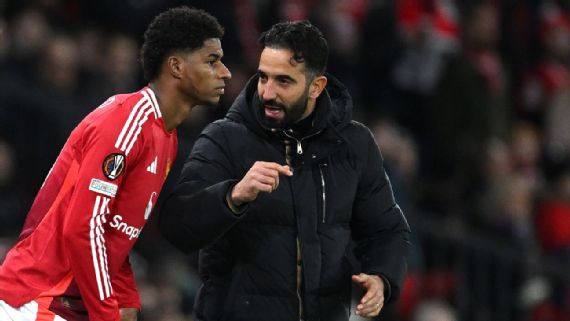
Rashford: ‘Reactionary’ Man United Stuck in ‘No Man’s Land’

Marcus Rashford left United just two months into Ruben Amorim's time at the club. Justin Setterfield/Getty Images

Former Manchester United forward Marcus Rashford has criticised the club’s strategic direction since Sir Alex Ferguson’s retirement, describing it as “reactionary” and saying the team has been left in “no man’s land” due to constant managerial changes.

Speaking on The Rest is Football podcast, Rashford, who joined United’s academy at the age of seven but is now on a season-long loan at Barcelona from Aston Villa, said Ferguson’s era was defined by clear principles that extended from the first team to the academy.

“You could pick players from 15 years, a full generation, and they’d all understand the principles of playing the Manchester United way,” he said.

United have appointed seven permanent managers since Ferguson stepped down in 2013, with Ruben Amorim replacing Erik ten Hag last November. Ole Gunnar Solskjær remains the club’s longest-serving post-Ferguson boss, lasting three years.

In that time, United have failed to win the Premier League, enduring their worst-ever campaign last season when they finished 15th.

Rashford said the lack of a consistent football philosophy has undermined United’s ability to build for long-term success.

“People say we’ve been in a transition for years. To be in a transition, you have to start the transition… At times I feel like United have just been hungry to win, so we’ll always try to adapt and to sign players that fit this system. But it’s reactionary,” he explained.

The England international contrasted United’s approach with Liverpool’s patience under Jürgen Klopp, who went three seasons without a trophy before delivering the club’s first league title in 30 years.

“To start a transition, you have to make a plan and stick to it,” Rashford said, adding that frequent changes in direction make sustained league success impossible.

Asked if United’s struggles have been painful to watch, Rashford admitted: “Yeah, 100%. But not only as a player, just as a United fan.”

Written By Rodney Mbua

Nairobi Securities Exchange Shows Steady Trading Amid Mixed Investor Sentiment

The Nairobi Securities Exchange (NSE) recorded steady trading activity today, with mixed investor sentiment influencing the overall market performance.

Key indices experienced modest fluctuations as investors weighed corporate earnings reports, economic data, and regional developments in their trading decisions.

The NSE 20 Share Index, which tracks the performance of the top 20 companies by market capitalization, showed slight gains, supported by strong performances in sectors such as banking and telecommunications.

These sectors continue to attract investor interest due to their resilient earnings and strategic positioning within the economy.

Meanwhile, the broader All Share Index experienced minor declines as some mid-cap and small-cap stocks faced selling pressure amid cautious investor behavior.

Market turnover remained moderate, reflecting a balanced approach by traders who are digesting recent market news and awaiting further clarity on both domestic and global economic conditions.

Foreign investor activity was mixed, with some inflows recorded in blue-chip stocks, offset by occasional sell-offs in other segments. The Kenyan shilling’s relative stability against major currencies helped maintain investor confidence in the market’s prospects.

Listed companies are gearing up for the release of quarterly financial results, which are expected to drive market momentum in the coming weeks.

Analysts note that strong corporate earnings could potentially boost market performance, especially if supported by positive macroeconomic indicators.

Sectoral performance varied, with the banking sector showing resilience due to improved loan growth and stable interest margins. Telecommunications firms benefited from increased data usage and expanding customer bases.

Conversely, some agricultural and manufacturing stocks struggled due to external supply chain disruptions and fluctuating commodity prices.

Overall, market participants remain cautiously optimistic about the NSE’s direction, anticipating that ongoing reforms aimed at enhancing market transparency and liquidity will encourage more investor participation.

Looking ahead, investors are advised to monitor global economic developments, commodity prices, and policy changes that could impact the regional market environment.

The NSE continues to be a focal point for capital raising and wealth creation in the East African region, maintaining its role as a key driver of economic growth.

Written By Ian Maleve

Create a free account, or log in.

Gain access to read this content, plus limited free content.

Yes! I would like to receive new content and updates.

Sponsored Ad

Ad 1
Ad 2
Ad 3
Ad 4
Ad 5
Ad 6