Sponsored Ad

Ad 1
Ad 2
Ad 3
Ad 4
Ad 5
Ad 6
27.3 C
Kenya
Sunday, May 24, 2026
Home Blog Page 1375

U.S. Embassy Warns Kenyan Students of Visa Revocations Over Missed Classes

Written by Lisa Murimi

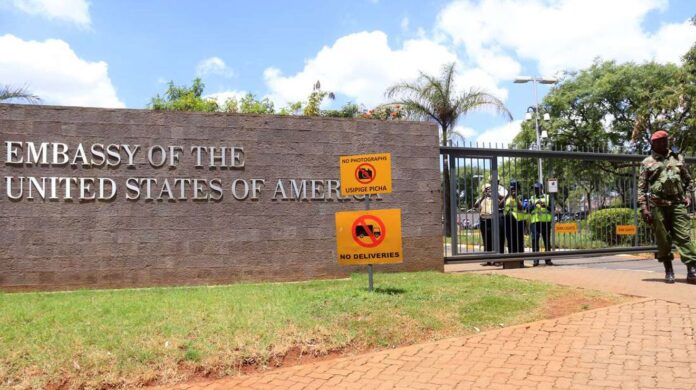
Kenyan students studying in the United States risk losing their visa status for missing classes or withdrawing from academic programs without notifying their schools, the U.S. Embassy in Nairobi has warned.

The caution, issued on Wednesday, August 13, targeted both current and prospective Kenyan students holding or seeking U.S. student visas.

“Heading to the U.S. on a student visa? Ensure you stay on track! Skipping classes or leaving your program without notifying your school could impact your visa status and future travel plans,” read part of the embassy’s statement.

The embassy added that dropping out without formally informing the institution could also lead to losing eligibility for future U.S. visas.

The warning comes amid a tougher immigration stance under President Donald Trump’s second term. 

Since taking office in 2025, Trump’s administration has tightened vetting procedures, increased visa enforcement, and expanded grounds for denial — including reviewing applicants’ social media history.

Kenyan students have come under increased scrutiny following reports of individuals using student visas to seek employment or start businesses in the U.S. In other cases, financial challenges have forced students to skip semesters or abandon classes.

In April, Trump’s administration cancelled more than 4,700 international student visas. According to NBC News, many affected students received little or no explanation, prompting criticism over due process. 

Reports have also emerged of U.S. Immigration and Customs Enforcement (ICE) officers appearing on campuses to enforce removals.

In July, a Kenyan student was denied a visa renewal at the Nairobi embassy for “insufficient ties” to Kenya. 

In another case, a student was detained for failing to update his school’s international office after changing his major — a requirement under the Student and Exchange Visitor Information System (SEVIS).

The embassy urged all Kenyan students to remain compliant with visa regulations to avoid sudden revocation or deportation.


International Left-Handers Day 2025: Celebrating the 10% Who Live in a Right-Handed World

“If the left half of the brain controls the right half of the body then only left-handed people are in the right mind.” – W.C. Fields.

Every August 13, the world marks International Left-Handers Day, a celebration of the roughly 10% of people who navigate daily life in a world designed primarily for right-handers. The observance was first introduced in 1976 by Dean R. Campbell, founder of the Left-Handers Club, to highlight the unique challenges and achievements of left-handers.

Left-handedness has carried an unfair reputation for centuries. In medieval Europe, left-handed individuals were sometimes accused of witchcraft and even burned at the stake. Religious and cultural traditions often favored the right hand, with the “right hand of God” portrayed as virtuous. Even language reflects this bias, the Latin sinister means “left” and has come to mean “evil,” while the French gauche means both “left” and “clumsy.”

Left-handers were once accused of being witches in the Middle Ages. Photo/Courtesy

For generations, left-handed children were forced to switch to using their right hand for writing, sometimes by having their left hand tied behind their backs. A 2007 study in Taiwan found that nearly 60% of naturally left-handed children had been compelled to convert.

In parts of South Asia, the Middle East, and Africa, the left hand is still considered unclean, making it culturally inappropriate to eat or pass items with it. In Islamic practice, the left hand is traditionally reserved for personal hygiene.

Men are statistically more likely to be left-handed, with a 2008 meta-analysis showing 23% more male left-handers than female. Research also links left-handedness to a slightly higher risk of migraines, allergies, and autoimmune conditions. However, brain imaging studies reveal that left-handers often have stronger connections between brain hemispheres, particularly in areas related to language and movement, a trait some believe contributes to creativity.

Notable creative left-handers include Leonardo da Vinci, Charlie Chaplin, Jimi Hendrix, David Bowie, and Kurt Cobain. In modern pop culture, The Simpsons creator Matt Groening, a left-hander himself, gave Bart Simpson the same trait.

Several global leaders have been left-handed, including former U.S. presidents Barack Obama and Bill Clinton, U.K. wartime prime minister Winston Churchill, and Britain’s future king, Prince William. Sports legends Rafael Nadal, Lionel Messi, and Sir Paul McCartney also share the trait.

While most animals show no dominant side, kangaroos often favor their left paw for grooming and feeding, and 90% of parrots use their left foot to grasp objects.

Archaeological evidence suggests left-handedness stretches back over 500,000 years to Neanderthals, identified by the direction of wear marks on their teeth from tool use.

International Left-Handers Day serves both as a celebration and a reminder, of the resilience of those who adapt to a right-handed world, and of the creative, athletic, and intellectual contributions left-handers have made throughout history.

Happy International Left-Handers Day!

Written By Rodney Mbua

China Receives 54 Tonnes of Kenyan Macadamia Nuts Despite Export Ban

a pile of roasted macadamia nut

Written by Lisa Murimi

China has confirmed the arrival of 54 tonnes of macadamia nuts from Kenya, igniting questions over how the shipment cleared a ban on raw nut exports.

The timing has raised eyebrows in Nairobi, with some industry insiders suggesting the deal could point to loopholes in Kenya’s enforcement of agricultural export laws. 

Others hint at possible diplomatic arrangements, as Beijing remains one of Kenya’s largest trading partners and a major source of development loans. 

The situation risks fueling debate over whether economic ties are influencing compliance with local regulations.

According to Chinese officials, the consignment took 30 days to reach Hunan Province and was purchased directly from an African supplier. 

Du Xiaohui, Director-General of the Department of African Affairs at China’s Ministry of Foreign Affairs, said the shipment was the first batch of nut products from Africa to the province this year and that total imports could hit 2,000 tonnes in 2025.

The Agriculture and Food Authority (AFA) stated on July 18 that exporting raw macadamia nuts is prohibited under the Crops Act, 2013, and the Crops (Nuts and Oil Crops) Regulations, 2020. 

The ban is meant to protect local processors, boost value addition, and create jobs. AFA also reported intercepting several illegal shipments at the borders in recent weeks.

On social media, Kenyans demanded answers. “How is this possible when they were prohibited?” one user asked. Another wrote, “The macadamia purchases in Kenya are closed. How did you source them?”

Possible explanations include that the nuts were exported before the enforcement notice, processed in a neighboring country, or reclassified under different customs codes. For now, both AFA and the Kenyan government remain silent, leaving the controversy to grow.

Principal Secretary Isaboke Elected to Lead Africa’s Preparations for World Radio Conference

Kenya’s Principal Secretary for ICT and the Digital Economy, Eng. John Tanui Isaboke, has been elected chairperson of the African group preparing for the upcoming World Radiocommunication Conference (WRC) under the International Telecommunication Union (ITU).

The election marks a significant milestone for Kenya’s growing influence in shaping global digital and communication policies.

The World Radiocommunication Conference, which is convened every three to four years by the ITU, plays a pivotal role in reviewing and revising the global regulations governing the use of radio-frequency spectrum and satellite orbits.

These resources are critical for mobile broadband, broadcasting, aviation, maritime, space services, and emerging technologies such as 5G and satellite internet.

As chair of the African Preparatory Meeting (APM), Isaboke will coordinate regional input and consensus-building among African nations ahead of the global conference.

His mandate includes leading technical discussions, aligning policy positions, and representing Africa’s strategic interests in spectrum allocation and management. The position is not only a recognition of Kenya’s policy leadership but also a nod to the country’s robust digital transformation agenda.

Africa faces unique challenges and opportunities in the digital space, including limited spectrum availability, high demand for mobile broadband and growing interest in satellite connectivity to bridge digital divides.

Under Isaboke’s leadership, the continent is expected to adopt unified positions that reflect its developmental priorities, such as expanding internet access in rural areas, safeguarding broadcasting services, and fostering innovation through emerging wireless technologies.

Industry stakeholders have welcomed his election, viewing it as a step toward more equitable global representation in key decision-making processes.

Kenya, which has invested heavily in ICT infrastructure and innovation, is likely to use the platform to advocate for fair spectrum distribution and policies that promote inclusive digital growth across the continent.

Isaboke’s chairmanship comes at a crucial time when the global telecommunications landscape is undergoing rapid evolution, and the outcomes of WRC will influence how technologies are deployed for years to come.

The next World Radiocommunication Conference is scheduled to take place later this year, and preparations are already underway across member states.

Written By Ian Maleve

Court Orders Exhumation of GSU Officer Secretly Buried in Church Compound

Written by Nzomo Joyce

The Rongo Magistrate’s Court has ordered the exhumation of a General Service Unit (GSU) officer who was buried under mysterious circumstances in a church compound without his family’s or employer’s knowledge.

Police Constable Adan Ayoo reportedly died on March 27, 2025, in unclear circumstances. The following day, he was buried inside the compound of St. Joseph’s Missions of Messiah in Africa Church in Rongo Sub-County, Migori County.

His parents and the National Police Service say they were neither informed nor consulted about the burial.

Following an application by the Office of the Director of Public Prosecutions (ODPP), the court approved the exhumation, citing the need for further investigations into the officer’s death.

Four church directors, Michael Kus Onyango, Luka Ochieng, Everline Gemamo, and Lilian Atieno Olal, have been released on bond as police probe a possible murder.

In a separate ruling on an application by Ayoo’s family, the court ordered his widow to pinpoint the exact location of the grave within the church compound to enable a County Public Health Officer to conduct the exhumation.

The OCS Kamagambo Police Station has been instructed to provide security during the process. Once the remains are exhumed, they will be reburied at the family’s homestead in Kochieng, Nyando Sub-County, Kisumu County, in line with Luo customary law.

The matter will be mentioned again on August 26, 2025, for further directions.

Premier League 2025/26 Season Kicks Off with Liverpool vs Bournemouth Opener

By Michelle Ndaga

The highly anticipated 2025/26 Premier League season kicks off this weekend, with defending champions Liverpool set to face AFC Bournemouth in the opening match on Friday night.

Excitement is building across the football world, with fans counting down the hours to the first whistle. Social media has been abuzz with predictions, banter, and friendly rivalries, particularly after some Arsenal supporters poked fun at the league’s promotional materials in a light-hearted dig at their competitors.

Liverpool, fresh from last season’s triumph, will be looking to cement their dominance and begin their push for a potential dynasty. However, the road ahead will be challenging, with fierce competition expected from a resurgent Arsenal and perennial title contenders Manchester City.

As the new campaign gets underway, fans can expect intense battles, dramatic moments, and the kind of footballing spectacle the Premier League is famous for.

US Embeds Trackers in AI Chip Shipments to Thwart Diversions to China, Sources Say

Semiconductor chips are seen on a circuit board of a computer in this illustration picture taken February 25, 2022. REUTERS/Florence Lo/Illustration/File Photo

U.S. authorities have covertly embedded location tracking devices in select shipments of advanced artificial intelligence chips to detect and prevent their illegal diversion to China, according to two people with direct knowledge of the matter.

The tactic, previously unreported, targets high-risk shipments under investigation for potential violations of American export controls. It underscores the lengths Washington is going to enforce restrictions on China’s access to cutting-edge semiconductors, even as the Trump administration has explored easing some curbs.

Sources familiar with the operations said the trackers, sometimes hidden inside packaging or servers themselves, help build criminal cases against individuals and companies that profit from circumventing U.S. export rules.

The devices have been used in shipments from server makers such as Dell and Super Micro, which include chips from Nvidia and AMD. In one 2024 case, trackers were found both in shipping boxes and inside servers containing Nvidia processors.

The Bureau of Industry and Security, which oversees export controls, is typically involved in such operations, with support from Homeland Security Investigations and the FBI.

The agencies declined to comment, while Dell said it was “not aware” of such a U.S. government initiative, and Super Micro would not discuss its security practices. Nvidia and AMD did not provide responses.

The U.S., which dominates the global AI chip supply chain, began restricting sales of advanced semiconductors to China in 2022 to curb its military modernization.

Similar curbs apply to Russia. Proposals in Washington would mandate that U.S. chipmakers incorporate location verification technology into their products to prevent diversion to restricted countries.

China has condemned the export controls as an effort to suppress its technological rise, with regulators recently summoning Nvidia to raise concerns over alleged “backdoors” in its chips, claims the company has denied.

The use of trackers by U.S. enforcement agencies dates back decades, but their application to AI chip shipments reflects rising tensions in the tech supply chain.

A recent Justice Department case revealed that Chinese nationals accused of smuggling tens of millions of dollars’ worth of AI chips had been warned to “look carefully” for tracking devices before onward shipment.

Written By Rodney Mbua

CIPS Global Chief Visits Kenya to Champion Supply Chain Professionalism and Growth

The global Chief Executive Officer of the Chartered Institute of Procurement and Supply (CIPS) has visited Kenya as part of a broader initiative to promote professional excellence, ethical practices, and sustainable growth within the procurement and supply chain sectors across Africa.

The high-level visit underscores Kenya’s strategic importance as a hub for procurement and supply chain development, particularly in both the public and private sectors.

During his engagements, the CIPS executive met with key stakeholders including government officials, corporate leaders, procurement professionals, and members of regulatory bodies to advocate for global best practices in supply chain management.

Kenya, which has witnessed a growing recognition of procurement as a critical driver of economic performance and service delivery, is seen as a priority market for CIPS in its mission to strengthen professional standards across the continent.

The institute has been instrumental in setting global benchmarks for ethical procurement, transparency, risk management, and cost efficiency areas of growing concern for both government institutions and private companies in the country.

During the visit, discussions focused on enhancing local capacity through training, certification, and continuous professional development. CIPS aims to work with Kenyan institutions to support efforts to curb procurement-related fraud, improve value-for-money audits, and foster the adoption of digital tools in supply chain processes.

The CEO also emphasized the role of supply chains in achieving environmental, social, and governance (ESG) goals. He pointed out that building resilient and ethical supply networks is not just about operational efficiency, but also about supporting broader national goals, including industrialization, job creation, and climate resilience.

The visit comes at a time when Kenya is pursuing significant reforms in public procurement through policy updates and legislative amendments.

Stakeholders hope that the strengthened partnership with CIPS will contribute to improved accountability and professional integrity in procurement practices.

CIPS has an active presence in Kenya through its East Africa office, which supports a growing membership base made up of procurement and supply chain professionals across the region.

The visit by the global chief is expected to reinforce the institute’s long-term commitment to developing talent and shaping the future of procurement across Africa.

Written By Ian Maleve

Court Overturns Ban on Japanese Vehicle Inspection Firm in Landmark Ruling

A Kenyan court has reversed a government decision that had effectively banned a prominent Japanese vehicle inspection firm from operating in the country, offering a reprieve to importers and dealers who rely on pre-export checks for second-hand vehicles.

The ruling, delivered by the High Court in Nairobi, quashed the government’s decision to terminate the company’s contract, declaring it unlawful and procedurally flawed.

The inspection firm had been contracted to carry out mandatory roadworthiness checks on used vehicles destined for the Kenyan market, in line with regulations aimed at ensuring vehicle quality and safety.

In its judgment, the court found that the government failed to follow due process when it removed the firm from the list of authorised inspection service providers.

The judges cited a lack of sufficient notice, inadequate justification, and absence of stakeholder consultation as key violations of administrative fairness.

The Japanese firm, which had been operating in Kenya for over a decade, had its services abruptly halted earlier this year, causing disruption in the importation of used cars and concern among industry players.

Many importers depend on certified inspections from recognised third-party agencies to comply with Kenya Bureau of Standards (KEBS) requirements before landing vehicles at Mombasa port.

Following the ban, stakeholders in the motor vehicle industry raised concerns about delays, added costs, and a potential rise in the importation of substandard vehicles if inspection capacity was undermined.

Some dealers had already begun diverting their inspection services to alternative providers, though many expressed preference for reinstating the long-serving Japanese company due to its reputation and efficiency.

The court’s decision paves the way for the reinstatement of the firm’s operations, subject to regulatory compliance. It also serves as a reminder to government agencies about the legal obligations tied to public procurement and contractual decisions.

Industry watchers are now waiting to see how KEBS and the Trade Ministry will respond to the ruling, especially regarding future inspections and contract renewals. The decision may also encourage other service providers facing similar challenges to seek judicial redress.

Written By Ian Maleve

KRA and Oil Marketing Firm Head Back to Tribunal in Ksh280 Million Tax Dispute

The Kenya Revenue Authority (KRA) and a leading oil marketing company have returned to the Tax Appeals Tribunal in a renewed legal battle over a disputed tax assessment amounting to Ksh280 million.

The case, which has dragged on for several years, has now been revived after an earlier decision was overturned by the High Court and sent back to the tribunal for fresh determination.

At the heart of the dispute is whether the oil marketer correctly accounted for withholding tax and Value Added Tax (VAT) on various payments made to non-resident service providers.

KRA contends that the firm failed to deduct and remit the taxes as required by law, resulting in underpayment and a significant revenue shortfall.

The taxman is seeking to enforce the Sh280 million tax demand based on its audit findings and interpretation of cross-border tax obligations.

The oil firm, on the other hand, argues that the payments in question do not fall under the categories that attract withholding tax or VAT under the Kenyan tax code.

It maintains that the services rendered were not subject to tax in Kenya due to the nature of the contracts and the location of service provision. The company further claims that KRA misapplied provisions of the Income Tax Act and the VAT Act in its assessment.

The case had earlier been ruled in favor of the oil marketer by the tribunal, but KRA successfully appealed that decision in the High Court. The court ordered a retrial at the tribunal level, noting that certain key aspects of the dispute had not been fully considered in the initial ruling.

As the parties return to the tribunal, the case is expected to set a significant precedent on the tax treatment of international service contracts and the application of withholding tax in Kenya’s oil and gas sector.

It also highlights the increasing scrutiny by KRA of cross-border transactions, especially within capital-intensive industries where foreign technical expertise and services are regularly contracted.

The outcome could have a far-reaching impact on how other companies in the sector structure their operations and comply with local tax obligations. Tribunal proceedings are set to resume later this month, with both parties expected to submit new evidence and arguments.

Written By Ian Maleve

Create a free account, or log in.

Gain access to read this content, plus limited free content.

Yes! I would like to receive new content and updates.

Sponsored Ad

Ad 1
Ad 2
Ad 3
Ad 4
Ad 5
Ad 6