Sponsored Ad

Ad 1
Ad 2
Ad 3
Ad 4
Ad 5
Ad 6
31.3 C
Kenya
Sunday, May 24, 2026
Home Blog Page 1383

DPP Seeks to Drop Charges as Court Upholds Will in Sh500M British Tycoon’s Estate Case

Written by Were Kelly

Director of Public Prosecutions (DPP) Ingonga has sought to terminate criminal proceedings against city lawyer Guy Spencer Elms in a long-running Sh100 million Karen land dispute, after the High Court upheld the validity of the contested will of the late British billionaire Roger Bryan Robson.

Elms had been facing multiple counts, including making and uttering false documents, and demanding property through a forged testamentary instrument.

The charges stemmed from allegations that he forged Robson’s will to fraudulently acquire two prime parcels of land in Karen, Nairobi, valued at Ksh100 million.

According to charge sheets filed at the Milimani Law Courts in June 2025, prosecutors accused Elms of offences dating back to 1997, 2010, and 2013, including forging a will dated March 24, 1997, and a power of attorney dated January 24, 2010.

He was alleged to have knowingly presented the disputed documents to the Directorate of Criminal Investigations (DCI) and to have sought probate based on the will, purportedly to gain control of the Karen properties.

However, the case took a dramatic turn after the High Court affirmed that Robson’s will — which bequeathed his estate for charitable purposes — was genuine. This judicial finding undermined the basis of the prosecution, prompting the DPP to file for withdrawal of the charges under Section 87(a) of the Criminal Procedure Code.

Court records show that the properties in question, LR No. 2327/10 and LR No. 2327/117, were at the centre of a bitter legal battle that spanned over a decade. The State alleged that Elms, acting as executor of the estate, forged documents to claim ownership, a charge he consistently denied, insisting that his actions were in accordance with Robson’s wishes.

The matter is scheduled for mention on 15th September for the court to rule on the DPP’s application to withdraw. Spencer was released on a personal bond of ksh 50,000.

Kenya, California Deepen Ties in Innovation, Climate Action, and Trade.

By Michelle Ndaga

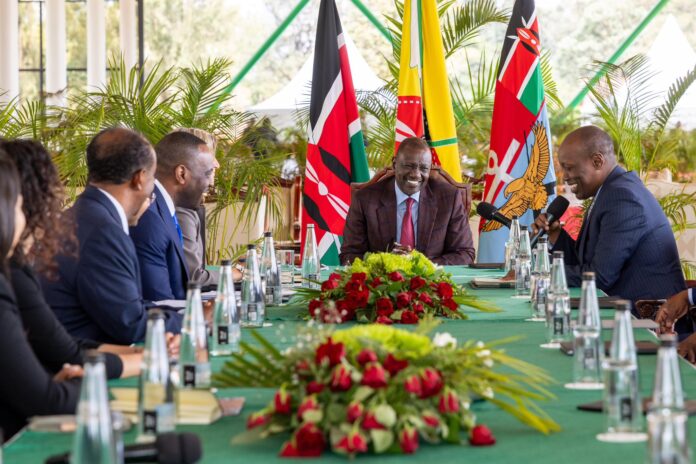
Kenya and the United States have reaffirmed their strong national and sub national ties, with California America’s wealthiest state emerging as a key partner in driving innovation, sustainability, and shared prosperity. Hosting a high-level delegation of California state secretaries and private sector leaders led by State Secretary of Transportation Toks Omishakin, President William Ruto noted that the partnership builds on California’s leadership in technology and climate innovation, and Kenya’s vibrant “Silicon Savannah,” powered by a young, digitally skilled workforce.

Kenya’s green credentials have made it an attractive ally in climate action, with a 93% renewable energy grid and ambitious targets of 100% renewable energy by 2030 and 100 GW capacity by 2040. These align closely with California’s clean energy goals. The collaboration spans clean energy systems, smart agriculture, artificial intelligence, trade, research, and clean transportation, including the upcoming Africa Clean Transportation Centre of Excellence in Nairobi.

The relationship has been steadily evolving, with early groundwork laid during the California Africa Climate and Economic Forum in San Francisco in April 2025, and earlier meetings between Secretary Omishakin and Kenya’s embassy in Washington, D.C., in 2024. These engagements have paved the way for joint initiatives on sustainable urban transport, road safety, and decarbonization. Also present during the Nairobi meeting was U.S. Embassy Chargé d’Affaires Carla Benini, underscoring the broader U.S.Kenya strategic partnership.

WHO Warns of Soaring Child Malnutrition in Gaza as Hunger Deaths Rise

Around 12,000 children under the age of five in Gaza are suffering from acute malnutrition, the highest monthly figure ever recorded in the territory, the head of the World Health Organization (WHO) has warned.

“In July, nearly 12,000 children under five years were identified as having acute malnutrition in Gaza,” Tedros Adhanom Ghebreyesus told reporters in Geneva on Thursday. “This is the highest monthly figure ever recorded.”

From January to 29 July, at least 99 people have died from hunger-related causes, including 35 children, 29 of whom were under five. Between June and July, malnutrition admissions almost doubled from 6,344 to 11,877, according to UNICEF data. More than 2,500 of those cases involve severe malnutrition.

The WHO said it is supporting Gaza’s four malnutrition treatment centres, but supplies of baby formula and therapeutic food remain critically low. “The overall volume of nutrition supplies remains completely insufficient to prevent further deterioration,” said Rik Peeperkorn, WHO’s representative for the occupied Palestinian Territory. “The market needs to be flooded. There needs to be dietary diversity.”

The crisis comes amid severely restricted humanitarian access. A global hunger monitor has warned that famine conditions are unfolding, with starvation spreading and child deaths rising.

The United Nations Office for the Coordination of Humanitarian Affairs (OCHA) reported that food consumption in Gaza has fallen to its lowest level since the war began. Eighty-one percent of households now report poor food consumption, compared with 33 percent in April.

In Khan Younis and other areas, residents queue for charity kitchen meals as aid groups warn that without sustained, large-scale relief via all possible routes, Gaza’s hunger crisis will deepen further.

Kenya’s Bourse Stabilizes Amid Mixed Trading, Sees Fresh Momentum from Renewed Investor Confidence.

The Nairobi Securities Exchange (NSE) begins trading today amid a cautiously optimistic market environment, reflecting gradual improvements in investor sentiment and underlying economic stability.

Equity indices are showing mixed movements. The NSE All Share Index is trading near its recent levels, with modest gains observed across select blue-chip stocks.

Notably, the NSE 10 Share Index, which tracks the performance of the top ten listed firms, closed recently at approximately 1,370.7 points, marking a marginal increase from the previous session an encouraging signal for investors monitoring the broader market trend. Adding to the sense of a rebound, total investor wealth at the exchange has climbed back to around Ksh 2.025 trillion, a two-year high last seen in late 2022.

This upswing has been credited largely to a stable Kenyan shilling bolstering foreign investor confidence and strong performances by counters like Kenya Airways, Kenya Power, KenGen, and I&M Group.

Despite these bright spots, market activity remains uneven. In recent trading sessions, turnover dipped, and equity indices such as NASI, NSE 20, and NSE 25 have edged lower ranging from slight losses to flat performance suggesting intermittent caution among investors.

Foreign investors have appeared notably subdued, with local market participants shouldering the bulk of trading activity.

Reflecting the exchange’s strategic direction, NSE recently finalized the inclusion of new constituent companies such as HF Group Plc, Diamond Trust Bank Kenya, and Carbacid Investments into its major benchmark indices as part of its semi-annual review.

These updates, effective from early June 2025, are designed to align indices more closely with current market dynamics.

Over the longer term, the NSE has posted a strong recovery. In 2024, investor wealth jumped by approximately Ksh 420 billion to Ksh 1.9 trillion, driven by a 29 percent surge in the All Share Index and notable gains in energy and banking sectors. This improvement was supported by factors such as the timely repayment of a Eurobond, inclusion of multiple Kenyan firms in the MSCI Frontier Markets indices, and reforms in the fixed income market.

Meanwhile, the exchange demonstrated operational resilience by diversifying revenue streams in 2023.

Amid global and domestic financial headwinds, NSE managed a noteworthy 34 percent increase in profit after tax largely attributed to non‑trading income, including new product offerings like the country’s first REIT and Sukuk bond listings.

Overall, today’s trading at the Nairobi Securities Exchange reflects a balancing act: cautious optimism underpinned by structural improvements and rising investor confidence.While volatility persists, long‑term indicators suggest that the bourse is on a progressive recovery path.

Kenyan Shilling Holds Steady Against Major Global Currencies as Markets Adjust.

By Ian Maleve

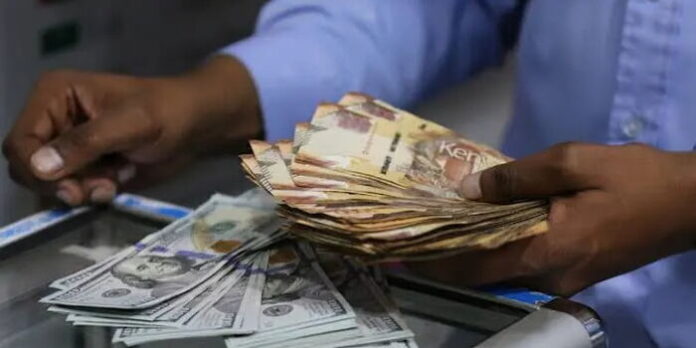
Kenya’s shilling is currently trading with relative stability against major global currencies, presenting a nuanced snapshot of the nation’s foreign exchange position as of today.

Against the United States dollar, one of the most-tracked benchmarks, the shilling is valued at approximately 129.36, reflecting a level that has remained within a moderate range amid ongoing market dynamics.

Meanwhile, the Kenyan unit exchanges at about 149.93 against the euro, and around 172.81 for the British pound.

These exchange rates illustrate a steady posture for the shilling, particularly in light of economic headwinds faced by regional and global markets.

In terms of conversions, one Kenyan shilling is worth roughly 0.00773 US dollars, 0.00667 euros, and 0.00579 British pounds.

These mid-range values point to neither sharp depreciation nor appreciable strengthening, positioning the shilling in a zone of relative equilibrium.

This exchange rate terrain offers dual-facing implications. On the one hand, import-dependent businesses might take some comfort in the shilling’s relative firmness, since it mitigates immediate cost surges on essential imports like fuel and machinery.

On the other hand, exporters may feel constrained by the steadiness, as a stronger currency can tamp down foreign earnings when converted to shillings.

Beyond the major currencies, the shilling also trades at approximately 0.01194 against the Australian dollar and 0.01067 versus the Canadian dollar further demonstration of its stable range across a broad basket of currencies.

While the current data suggests a calm phase in forex markets for Kenya, stakeholders especially those involved in trade, remittances, or travel are advised to monitor developments closely.

Any shifts in global interest rates, trade imbalances, or geopolitical events could quickly alter the current equilibrium.

Car Importers Oppose New KRA Rule on Certificate of Origin, Cite Rising Costs.

By Ian Maleve

Car importers in Kenya are pushing back against a new directive by the Kenya Revenue Authority (KRA) that requires all vehicle imports to be accompanied by a certificate of origin.

The importers argue that the rule is duplicative, unnecessary, and will lead to increased operational costs, which may ultimately be passed on to consumers.

The requirement, which is part of broader efforts to enhance trade documentation and prevent fraud, mandates that all importers provide proof of the country where the vehicle was manufactured before clearance at Kenyan ports.

However, the car dealers say that vehicles already undergo rigorous verification processes, including inspection and valuation, which confirm their authenticity and origin.

According to the importers, the new rule is not only time-consuming but also burdensome, especially for used vehicle traders who source cars from multiple markets such as Japan, the United Kingdom, and South Africa.

Obtaining the certificate of origin, they say, involves dealing with additional foreign agencies and paying extra fees, all of which slow down the import process and raise overall costs.

They are calling on KRA to review the directive and consider exempting car imports from the requirement, or at the very least, allowing other forms of documentation that are already accepted globally in the vehicle trade.

Many in the industry believe the policy could disrupt the flow of vehicles into the country and threaten the survival of small and medium-sized import businesses.

The Kenya Auto Bazaar Association and other trade groups have indicated they will seek dialogue with government agencies to address their concerns.

They argue that while the goal of improving customs efficiency is valid, it should not come at the expense of trade facilitation and business sustainability.

As discussions continue, importers have warned that if the rule is enforced without revision, car prices may rise, impacting affordability for many Kenyans and further straining the already volatile automobile market.

Tourism Fund and Meteorological Department Set to Share in Air Travel Levy Under New Bill.

By Ian Maleve

The Tourism Fund and the Kenya Meteorological Department could soon benefit from billions of shillings collected from air travellers, if a new Bill proposing an expansion of the current list of beneficiaries is passed into law.

The proposed legislation seeks to amend the existing framework that governs the distribution of the air passenger service charge, which is levied on both domestic and international travellers.

Currently, the funds collected through this charge are directed to only two entities the Kenya Airports Authority (KAA) and the Kenya Civil Aviation Authority (KCAA).

If the amendment is approved, the number of beneficiary institutions will double from two to four, allowing the Tourism Fund and the Meteorological Department to tap into the growing pool of revenue generated by Kenya’s aviation sector.

The move is aimed at supporting tourism development and improving weather forecasting services, both of which are considered critical to the country’s economic growth and aviation safety.

Lawmakers behind the Bill argue that tourism and meteorological services play an integral role in the functioning of the air travel industry. Tourists form a significant portion of air passengers, while accurate weather forecasts are essential for flight safety and planning.

By redirecting a portion of the funds, the government hopes to strengthen these sectors and enhance the overall travel experience.

According to recent estimates, the air passenger service charge generates billions annually, making it a key source of revenue within the transport sector.

Expanding its beneficiaries could provide much-needed funding to improve tourism infrastructure, marketing campaigns, and climate monitoring technology.

However, aviation stakeholders have expressed mixed reactions to the proposal. Some worry that spreading the funds across more agencies could dilute the resources currently supporting airport maintenance and air safety oversight.

Others view the proposal as a timely and necessary realignment of priorities to reflect the evolving needs of the aviation ecosystem.

The Bill is currently under parliamentary review and is expected to attract significant debate before any final decision is made. If passed, it would mark a significant shift in how air travel revenues are allocated in Kenya.

High Court Halts Government’s Duty-Free Rice Import Plan.

By Michelle Amondi

The High Court has temporarily stopped the government from implementing a Cabinet decision allowing the duty-free importation of 500,000 metric tonnes of rice.

Justice Edward M. Muriithi issued the conservatory order suspending a July 28, 2025 gazette notice by Treasury Cabinet Secretary John Mbadi, pending the hearing of an application on August 14. The petitioners argue the imports would harm local farmers, particularly those storing produce at Mwea Rice Growers Multi-Purpose Cooperative Society.

CS Mbadi had directed that duty-free Grade 1 milled white rice be imported by December 31, 2025, citing recommendations from Agriculture CS Mutahi Kagwe.

The Agriculture and Food Authority (AFA) has sought to reassure farmers, saying only high-quality imports meeting Kenyan and international standards would be allowed, and that the Kenya National Trading Corporation is continuing to buy local rice directly from farmers.

Judiciary Developing AI Policy to Boost Justice Delivery.

By Michelle Ndaga

The Judiciary of Kenya is crafting an Artificial Intelligence Adoption Policy Framework to guide the integration of AI tools into judicial operations, Chief Justice Martha Koome has announced.

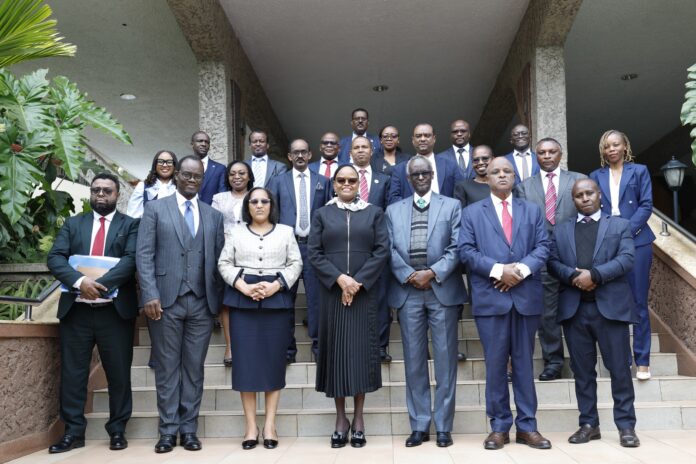
Speaking during a meeting between the Supreme Court of Kenya and Ethiopia’s Federal Supreme Court in Nairobi, CJ Koome said the policy aims to enhance case management, legal research, predictive analytics, and administrative support, while safeguarding judicial independence, data privacy, and due process.

She noted that the Judiciary is committed to an inclusive digital transformation, with ICT help desks at Huduma Centres and court stations to assist court users, especially the elderly, indigent, and digitally illiterate.

Koome highlighted interoperability between justice sector institutions as a key challenge but said progress has been made through integration with the Office of the Director of Public Prosecutions, with plans to link other agencies such as police, prisons, probation, and the children’s department.

On cybersecurity, the CJ stressed the high cost of protecting digital systems from cyber threats, adding that the Judiciary is investing in robust measures to safeguard its infrastructure.

The Ethiopian delegation, led by Vice President Abeba Embiale Mengste, was in Kenya for a regional exchange on integrated case management and electronic record systems. Justice Isaac Lenaola, chair of the Judiciary’s ICMS Committee, said Kenya is ready to offer ICT support to Ethiopia as it targets full judicial digitization by 2026.

Global Oil Price Drop Sparks Hope for Fuel Relief in Kenya.

by Lisa Murimi

Kenyan motorists could see relief at the pump this month following a notable drop in global oil prices. The decline, reported in the Central Bank of Kenya’s (CBK) weekly bulletin, comes just days before the Energy and Petroleum Regulatory Authority (EPRA) is set to announce its mid-August fuel price review.

As of August 7, the price of Murban crude oil had fallen to Ksh 8,871 ($68.25) per barrel, down from Ksh 9,550 ($73.52) recorded on July 31. Analysts attribute the drop to a shift in global market sentiment and an anticipated boost in supply. 

The Organization of the Petroleum Exporting Countries (OPEC) recently confirmed plans to increase output by 547,000 barrels per day from September, a move expected to ease global supply constraints and reduce upward price pressure.

However, volatility remains. Concerns over new U.S. tariffs and their potential to slow global economic growth have fueled fears of weaker oil demand, which in turn has also contributed to the price drop.

Domestically, the Kenyan shilling maintained stability against the U.S. dollar at an average of Ksh 129.24 during the week ending August 7 — a critical factor for a net oil importer like Kenya, where exchange rate fluctuations directly influence fuel costs. 

CBK data showed foreign exchange reserves at $10.89 billion, equivalent to 4.8 months of import cover, comfortably above the statutory minimum.

The anticipated EPRA review comes after sharp increases in July, when Super Petrol rose by Ksh 8.99 per litre, Diesel by Ksh 8.67, and Kerosene by Ksh 9.65. 

Energy Cabinet Secretary Opiyo Wandayi has assured Kenyans the July hike was temporary, predicting prices would ease in the coming months.

EPRA’s next announcement on August 15 will confirm whether global price shifts finally translate to lower pump costs for Kenyan households and businesses.

Create a free account, or log in.

Gain access to read this content, plus limited free content.

Yes! I would like to receive new content and updates.

Sponsored Ad

Ad 1
Ad 2
Ad 3
Ad 4
Ad 5
Ad 6