Sponsored Ad

Ad 1
Ad 2
Ad 3
Ad 4
Ad 5
Ad 6
25.3 C
Kenya
Sunday, May 24, 2026
Home Blog Page 14

Ospreys and Scarlets yet to sign WRU deal

Stacy Boit,

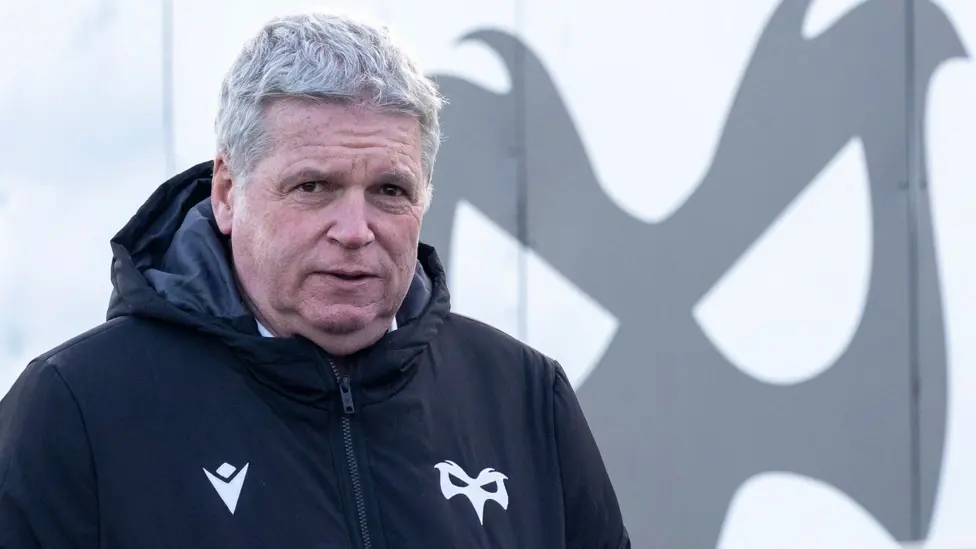
Ospreys chief executive Lance Bradley has confirmed the region is yet to sign Welsh rugby’s latest Professional Rugby Agreement (PRA).

Ospreys announced they intended to sign the deal that would guarantee their survival until at least 2028.

But four weeks on there is still no agreement.

Scarlets are also yet to commit to the deal negotiated between the WRU and the four regions which stipulates how the professional game in Wales will be run, including details such as how much money each side will have.

Ospreys and Scarlets are currently signed up to an old agreement which runs out in 2028, while Dragons and Cardiff – who are currently owned by the WRU – put pen to paper in May 2025 on the new PRA25 deal which lasts until 2030.

“It’s not signed yet, but it’s progressing towards that, so it’s very close,” Bradley told BBC Radio Wales Breakfast.

“It’s just a few details to sort out, there aren’t any problems with it.”

Bradley also denied reports suggesting the new agreement would mean budget cuts for the clubs.

He added: “There was some discussion about how you manage recruitment at relatively short notice, but no there’s no plans for a reduction in the budget.”

Negotiations for the new PRA have been set against a backdrop of the WRU planning to cut the number of professional men’s teams in Wales from four to three.

The union wants to achieve this in time for the 2028-29 season and will outline the terms of how this will be achieved by this summer.

Previous WRU proposals have suggested only one side would remain in the west of Wales, but Bradley remains hopeful for a long-term future for both Ospreys and Scarlets.

“I think we need to see the details of it,” Bradley said.

“My personal preference would be that four regions is something that works very well.

“Ospreys against Scarlets is the biggest club game in Welsh rugby and you know everybody likes to hate everybody else, but it’s a fantastic game and it’s a fantastic rivalry and I’d like to see it continue if possible.”
Gachagua claims Ruto has promised seven people running mate position ahead of 2027 polls

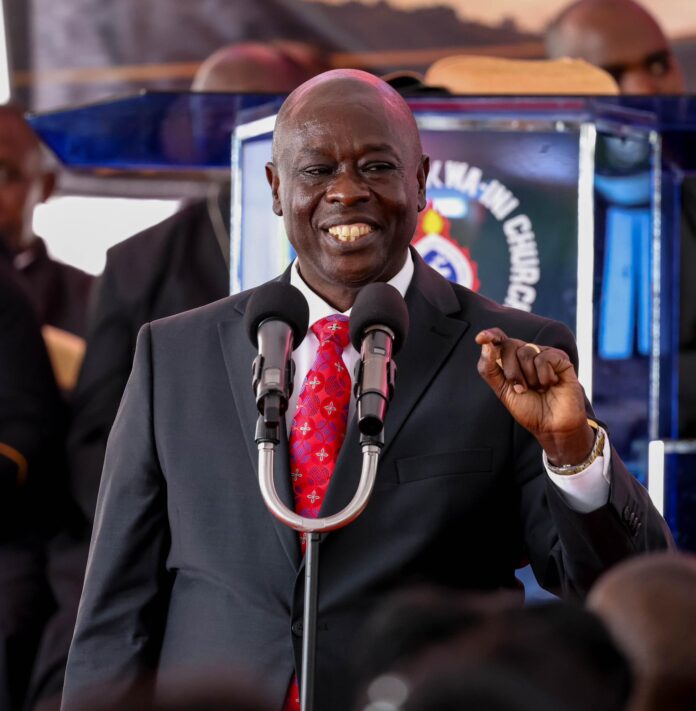
Former Deputy President Rigathi Gachagua sensationally claimed that President William Ruto had promised the running mate position to a little-known MP from Kirinyaga County.

Speaking during an interview on Wednesday, May 20, Gachagua claimed that Ruto had promised Ndia MP George Macharia Kariuki and seven others the position.

He alleged that Ruto was struggling to pick a running mate who would bring him in votes and had juggled between leaders in Mount Kenya and Luo Nyanza.

Gachagua claimed that any politician would find it difficult to trust his former boss, given that he was impeached after delivering votes to him.

“He has a serious trust deficit, and that is why he has promised the running mate position to seven people: Anne Waiguru, Gladys Wanga, Oburu Oginga, John Mbadi, Kithure Kindiki, another fellow called G. K. Kariuki, the MP for Ndia. He has promised everybody,” he stated.

The DCP Leader added that the Head of State was uncertain about the Luo Nyanza vote because he allegedly discovered that he could not ‘inherit’ the late Raila Odinga’s supporters.

“He had hoped he could inherit what Raila Odinga had, but you know, those ODM people were not followers of the party; they were Raila followers. Now he is gone,  and loyalty is not transferable. The Luo nation’s loyalty to Raila Odinga cannot be transferred to Oburu Oginga, and for him to transfer to William Ruto will be very difficult. It is a very tall order,” he added.

Gachagua explained that the main role of a running mate was to bring in lampsum votes, preferably more than 2 million voters.

He revealed that if the United Opposition settled on him, he would use the aforementioned criteria to pick his preferred running mate.

The ex-DP agreed with Jubilee presidential aspirant Fred Matiang’i on the use of a scientific formula to pick the flagbearer of the United Opposition. However, he stated that the only science in politics was numbers.

“He is right. The science of politics is numbers. For you to become president, you must mobilise voters to come and vote for you.”

“When you look for a running mate, numbers will play a huge role in that decision because you must add what you control and what others control, and put it together to get 50% plus one,” he stated.

Meanwhile, Gachagua denied any possibility of entering into a handshake deal with the Commander in Chief.

He explained that Kenyans would never forgive him and added that the only way to keep the country standing is to have a strong opposition to keep the government in check.

The former DP further claimed that the current United Opposition was doing a better job than the late Raila Odinga, because they had more strength and better access to intel.

President Ruto announces construction of new Ksh3 billion Likoni ferry by December

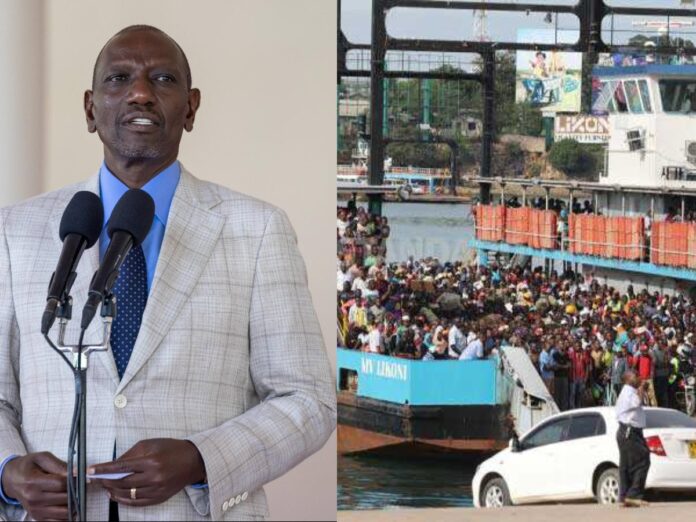
President William Ruto has announced plans to introduce a new ferry at the Likoni crossing, Mombasa County, by December. 

The Head of State made this announcement on May 21 while on a five-day development tour in the coastal region.

According to the President, the new ferry will be built in December this year at a cost of Ksh3 billion.

“I’ve just witnessed the people of Mombasa trying to cross the sea using the ferry this morning. I want to tell you that my government is building you a new ferry before December this year at a cost of Ksh3 billion,” stated President Ruto.

The President affirms that this decision comes from the congestion that is often witnessed on a daily basis when people try to move from one point to another.

Moreover, the President has also announced a Ksh5 billion investment in Mtongwe, also with the aim of improving mobility in the region.

“In Mtongwe as well, we are investing another Ksh5 billion to make sure that mobility is improved in the county,” stated President Ruto.

The ferry witnesses about 15,000 to 30,000 commuters, while approximately 300,000 pedestrians and 6,000 vehicles cross both channels daily combined. 

Residents of Mtongwe have long battled unreliable ferry services and poor road conditions, with frequent suspensions forcing commuters onto the congested Likoni crossing or dangerous alternative routes, particularly during the rainy season.

Persons with Disabilities bear an even heavier burden, as Mtongwe’s ferry ramps and boarding areas remain largely inaccessible, falling far short of the disability-friendly standards maintained at the larger Likoni channel.

Likoni Ferry, on the other hand, has been associated with a number of demises, with reports of passengers reportedly slipping off and falling into the ocean waters.

The crossing frequently serves over 300,000 pedestrians and 6,000 vehicles daily, leading to occasional injuries and safety scares during chaotic boardings.

During the five-day development tour, President William Ruto also took the opportunity to address the problem of squatters, planning to distribute over 200,000 title deeds to over one million families.

He has instructed the Ministry of Land to subdivide the land to streamline the issuance of title deeds.

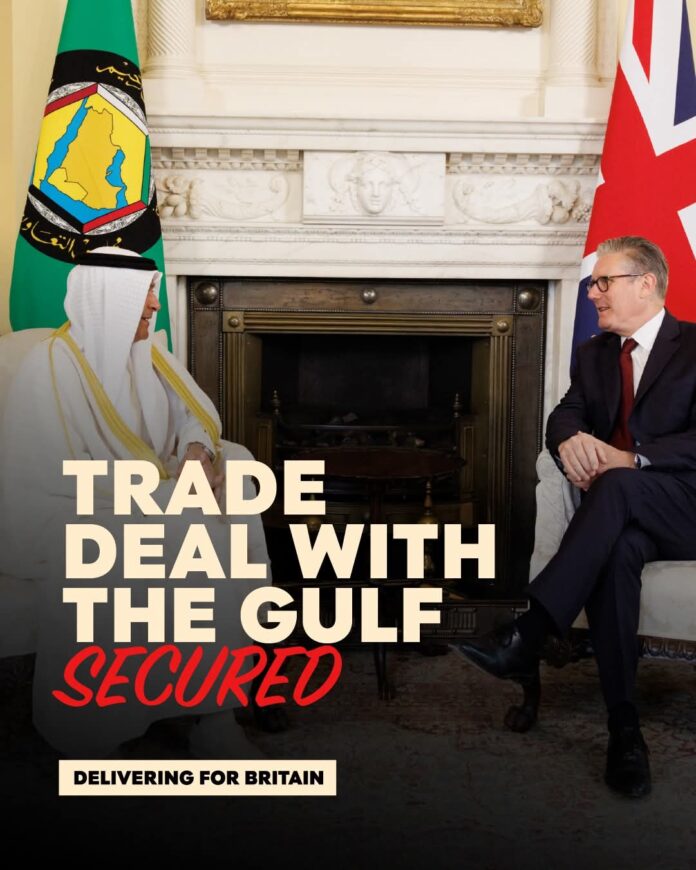
UK agrees £3.7bn trade deal with six Gulf states

By Bonface Mulyungi

The UK has struck a trade deal with a group of six Gulf states which it says will be worth £3.7bn to the economy.

The government said the deal with Bahrain, Kuwait, Oman, Qatar, Saudi Arabia, and United Arab Emirates (UAE) would remove an estimated £580m a year in tariffs from British exports to the region once fully implemented.

It also said it would make it easier for British firms to expand and partner in the Gulf, which will support jobs.

Activist groups have criticised the lack of detail on human rights and labour protections in the deal. But the deal was welcomed by Chris Southworth, secretary general of the International Chamber of Commerce (ICC) UK, as a “boost to business confidence”.

The Conservatives, who began the negotiations for the deal when in government, said it was “another major Brexit opportunity” which Labour risked “throwing away” because of what it saw as Labour’s pro-EU stance.

British products that will have tariffs removed include cheddar cheese, butter and chocolate.

The trade deal between the UK and the Gulf Co-operation Council (GCC) is the third struck by Prime Minister Sir Keir Starmer’s government, after those with India and South Korea.

It is also the first deal between a G7 country and the GCC.

The government has also reached trade agreements with the US and EU. 

Sir Keir said the GCC deal was a “huge win” for British workers and businesses.

Working people “will feel the benefits in the years ahead through higher wages and more opportunities”.

Business and Trade Secretary Peter Kyle said: “At a time of increased instability, today’s announcement sends a clear signal of confidence – giving UK exporters the certainty they need to plan ahead.”

Chancellor Rachel Reeves said the deal was “proof we are backing British firms to compete and win globally”.

“This agreement is good for jobs, good for industry and ultimately good for consumers.”

Speaking to BBC News, ICC UK’s Chris Southworth said: “This is guaranteed market access, free flow of data, increased mobility. 

“This is good for growth, good for jobs, good for investment and excellent news for the UK economy.” 

However, rights group Trade Justice Movement has said the deal “poses serious risks to human rights, labour protections, and climate action”.

It has raised concerns about the GCC’s record of restricting press freedom, using the death penalty, and being high producers of greenhouse gas emissions because of their six countries’ oil industries.

It said on Wednesday the deal “locks the UK into deeper commercial ties with some of the most repressive governments in the world, for economic gains so marginal they barely register”.

Responding to those concerns on the BBC’s Today programme, Southworth said: “Trade is not the right vehicle to tackle human rights.”

“The more we trade, the more peaceful the relationship is, the more influence you have in the longer term because we’re invested in each other’s economy,” he added.

“So the way to have that conversation is not through trade, it’s the wrong vehicle.”

PS Susan Mang’eni Clarifies Status of NYOTA Business Start-Up Capital 2nd Tranche Disbursement

The government has addressed a viral notice circulating on social media claiming that the second tranche disbursement of the NYOTA business start-up capital has been suspended.

In a statement on Wednesday, May 20, MSMEs Development Principal Secretary Susan Mang’eni assured beneficiaries that preparations for the nationwide release of funds were still ongoing and that the process would be completed soon.

The clarification came after a purported media release claimed that the second disbursement had been suspended due to economic and fiscal considerations. 

Addressing the reports, Mang’eni stated that the government remained committed to the programme and asked the public to rely only on official communication channels.

“We acknowledge inquiries from NYOTA Project beneficiaries and the general public regarding the 2nd tranche of the NYOTA business start-up capital disbursement.

“The Government is working on the nationwide disbursement processes, which we expect to finalise soon,” she said.

Mang’eni noted that beneficiaries would be informed once the process is complete.

“Once complete, we will announce through the official communication channels and broadcast a live media address on all mainstream media stations,” she added.

File image of Susan Mang’eni

This comes over a week after the government dismissed a notice circulating on social media claiming that beneficiaries of the NYOTA Project had completed mandatory business training and would begin receiving Ksh25,000 start-up capital from Monday, May 11.

In a statement on Sunday, May 10, MSMEs Development Principal Secretary Susan Mang’eni clarified that the notice is fake and urged the public to disregard it. 

The viral document, bearing the Ministry of Co-operatives and MSMEs Development branding and the NYOTA logo, falsely claimed that the second classroom business skills training had been completed successfully across the country and that disbursement of start-up capital would commence immediately for eligible beneficiaries

However, the image has since been marked as fake news, with the government distancing itself from the contents.

“Ignore such purported ‘updates’ circulating on NYOTA start-up capital disbursement. We shall communicate officially in the coming days on when the disbursement will take place,” Mang’eni said.

The Principal Secretary further encouraged beneficiaries under the NYOTA business support programme to remain focused on growing their enterprises as they await official communication from the government.

“In the meantime, we encourage our NYOTA business support beneficiaries to continue building their businesses and sharing their success stories,” she added.

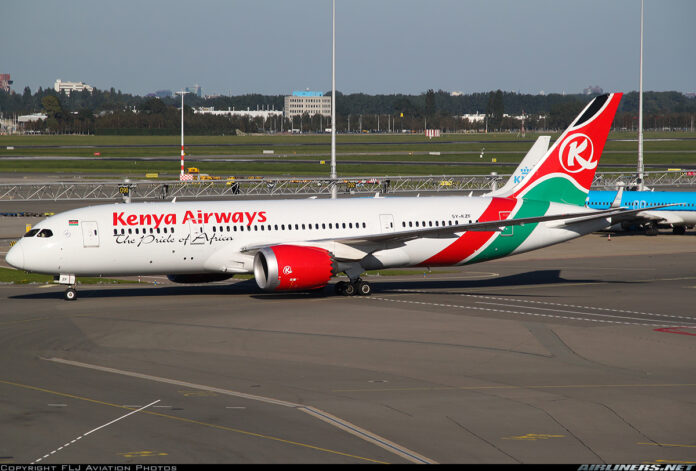
KQ Warns New Security Bill Could Ground Flights, Worsen Delays

National carrier Kenya Airways (KQ) has warned Members of Parliament that proposed controls under the Strategic Goods Control Bill, 2026, could worsen flight delays and cancellations.

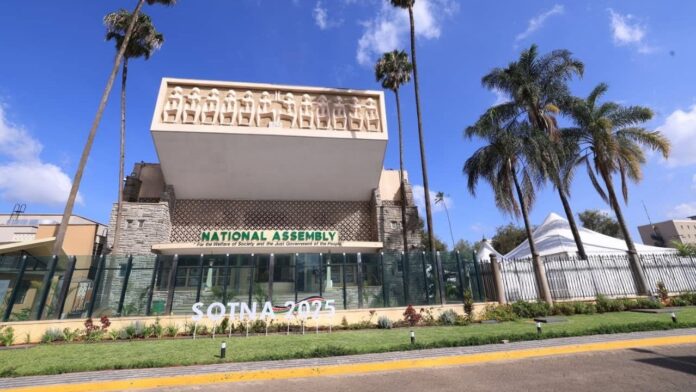
Appearing before the National Assembly Departmental Committee on Administration and Internal Security on Wednesday, May 20, KQ Company Secretary Habil Waswani said the airline fears the proposed law could slow the importation of spare parts needed to keep flights operating on schedule.

Waswani told the members of the committee that the aviation equipment used by commercial airlines is already subject to rigorous international certification and oversight by global aviation authorities.

He urged Parliament to amend Section 3(2) of the bill or introduce a new clause exempting International Civil Aviation Organisation-certified civil aircraft, parts, software, and aviation services intended for commercial passenger operations, subject to end-use certification.

Waswani also proposed that the interpretation schedule be clarified to expressly exclude civil aviation items certified under European Union Aviation Safety Agency and US Federal Aviation Administration standards unless they are diverted for military use.

File image of National Assembly Departmental Committee on Administration and Internal Security chairperson Gabriel Tongoyo. 

“Aviation is already a highly regulated safety and security sector,” Waswani told the committee.

He added, “The parts that you put on aircraft have to be inspected and certified by international bodies before airlines can operate into certain territories.”

According to Waswani, additional approvals under the Strategic Goods Control framework would create duplication and operational inefficiencies for airlines already operating under strict international oversight.

He warned that delays in clearing aircraft parts could directly affect flight reliability, particularly for airlines operating smaller fleets.

“For Kenya Airways, we currently have around 34 aircraft. When one aircraft goes down, and you need a replacement part, delays in securing that part affect operations immediately,” Waswani stated.

The Strategic Goods Control Bill, 2026, which is sponsored by the leader of the majority in the National Assembly, Kimani Ichung’wah, seeks to regulate the import, export, and transit of strategic and dual-use goods that could pose national security risks if diverted for military or terrorist use.

On Tuesday, May 19, MPs raised concern that the proposed law could create an expensive and bureaucratic system that may hinder trade instead of streamlining it.

Departmental Committee on Administration and Internal Security Gabriel Tongoyo questioned why the bill proposes a committee to oversee strategic trade instead of establishing a fully-fledged regulatory authority or board.

“The objective of this Bill is to control trade of listed strategic goods and technology, but in my opinion, this would have been better handled by a board or regulatory authority rather than a committee,” said Tongoyo.

The Narok West MP noted that sectors such as firearms and nuclear materials are already supervised by independent regulators, raising concerns that the proposed committee may lack the authority and operational efficiency required to manage such a sensitive sector.

Principal Parliamentary Counsel in the Office of the Attorney General, Olivia Simiyu, told the MPs that the proposed law does not intend to create another state corporation but to establish a coordinating mechanism that brings together existing regulators.

“The purpose of the committee was not to take over the mandate of existing bodies such as the Nuclear Regulatory Authority or the Firearms Licensing Board. It is meant to coordinate various agencies and streamline verification processes,” she said.

Parliament invites Kenyans to submit views on Finance Bill 2026 as public participation starts

The National Assembly has announced the commencement of public participation on the Finance Bill, 2026, inviting Kenyans and stakeholders to submit their views.

In a statement on Thursday, May 21, the National Assembly said the public engagement process would be spearheaded by the Departmental Committee on Finance and National Planning and will run until the end of May.

“The Departmental Committee on Finance and National Planning is set to commence Stakeholder Engagements on the Finance Bill, 2026 this morning,” the statement read.

According to the statement, the exercise will continue for several days before lawmakers compile submissions from the public and other stakeholders.

“The engagements are set to run through Friday May 29, 2026, before the Committee collates views on the proposed law from members of the public,” the statement added.

The National Assembly explained that Kenyans can take part in the process and submit their opinions on the Bill by using the Quick Response (QR) Code provided.

The Finance Bill, 2026, has been introduced as part of the government’s efforts to boost revenue collection and improve the efficiency of tax administration. 

The proposed measures are projected to raise approximately Ksh117 billion in additional revenue.

The Bill proposes amendments to several key tax laws, including the Income Tax Act, Value Added Tax Act, Excise Duty Act, Tax Procedures Act, Miscellaneous Fees and Levies Act, and the Stamp Duty Act.

According to the National Assembly, the proposed law also aims to simplify tax compliance processes, remove outdated provisions, and clean up redundant legal references in existing legislation.

Kenyans seeking to review the Bill can access it through the Parliament website via https://www.parliament.go.ke/node/25767

This comes a week after Treasury Cabinet Secretary John Mbadi announced that the proposal to impose a five percent presumptive tax on mitumba imports has been dropped.

Speaking during a press conference on Monday, May 11, he revealed that the National Assembly had rejected the proposal and that it could be left out of the final draft of the Finance Bill 2026.

However, Mbadi intimated that he will still push for the proposal to be effected as it was intended to benefit mitumba traders.

“On the taxation around mitumba, I have noticed that it has been dropped out of the final bill that has come from the National Assembly. Of course, the final bill comes from there. Our proposal was to have it, and I still insist that we should,” he stated.

Mbadi claimed that he hosted a contingent of mitumba traders at the National Treasury, and the decision to impose the 5 percent presumptive tax was reached.

As such, he explained that apart from 16 percent value added tax on the imported goods, the government would only charge the traders 1.5 percent of the value of the goods as income tax

The government would then assume that the traders would make a profit worth 5 percent of the value of the imported goods.

“For income tax, we deem 5 percent of the customs value as profit, and then we tax that 5 percent at 30 percent to give you 1.5 percent. This becomes the final tax, and nobody will go after the business people again,” he explained.

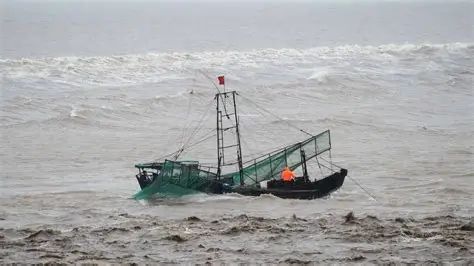
Four people missing after boat capsizes in Indian Ocean

Four people have been reported missing after a boat capsized in the Indian Ocean.

In a statement on Thursday, May 21, the Kenya Red Cross said the incident occurred at the Bruno Channel near the LAPSSET area in Lamu County.

The humanitarian organization noted that four individuals have been rescued and taken to the hospital.

The Kenya Red Cross also said efforts are ongoing to locate the other four missing persons.

“Search and rescue efforts are ongoing following a boat capsize incident at Kwa Bruno Channel near the LAPSSET area in Lamu County. Four people have been rescued and taken to the hospital, while search efforts continue for four missing persons,” read the statement.

File image of Kenya Rec Cross personnel during a boat incident on May 9, 2026. 

The organization mentioned that the rescue operation is being conducted by its aqua divers together with the Beach Management unit and fishing boats from the community.

“The response involves Kenya Red Cross aqua divers, Beach Management Unit, and community fishing boats,” Kenya Red Cross added.

PS Omollo Issues Update on Progress of Wote Pool Affordable Housing Project

The Ministry of Interior has issued an update on the progress of the Wote Pool Affordable Housing Project in Makueni County. 

In a statement on Wednesday, May 20, Interior Principal Secretary Raymond Omollo said construction is advancing steadily since works began in July 2024.

He explained that the housing project is part of the government’s efforts to expand access to decent and affordable housing under the Bottom-Up Economic Transformation Agenda.

“The development comprises eight modern residential blocks delivering 775 housing units across affordable, social and market categories, in line with the Government’s Bottom-Up Economic Transformation Agenda and commitment to decent and accessible housing for Kenyans,” the statement read.

Inside the Wote Pool Affordable Housing Project

Omollo noted that the project includes different apartment types designed to cater to various groups within society.

“The project features a mix of three-bedroom, two-bedroom, one-bedroom and studio apartments tailored to meet the needs of families, workers and young professionals,” the statement added.

File image of the Wote Pool Affordable Housing Project

According to Omollo, the development also includes several social amenities aimed at improving the living standards of future residents and supporting a sustainable community.

“It also incorporates essential social amenities including a shopping centre with 65 commercial stalls, a clubhouse, community centre, kindergarten, children’s play areas, borehole, secure boundary wall, gate house and modern waste management systems to support a dignified and sustainable living environment,” the statement further read.

Inside the Wote Pool Affordable Housing Project

Omollo added that the project is already benefiting residents in the area through job creation and business opportunities linked to construction activities.

“Beyond housing, the project continues to create employment opportunities and stimulate economic activity within the local community through ongoing construction and related services,” the statement concluded.

Inside the Wote Pool Affordable Housing Project

CS Mbadi Criticizes Matiang’i Over Rejection of Finance Bill 2026

Treasury Cabinet Secretary John Mbadi has called out former Interior CS Fred Matiang’i after he asked Kenyans to reject the Finance Bill 2026.

Speaking on Wednesday, May 20 night, CS Mbadi criticized Matiang’i for opposing the Finance Bill without specifically identifying any contentious clauses in the bill.

CS Mbadi reminded Matiang’i that he served in former President Uhuru Kenyatta’s administration for a decade, during which multiple Finance Bills were passed.

“I have a problem with politicians out there who are telling Kenyans to reject the Finance Bill without saying what is wrong with it,” he stated.

“You have been a minister in Uhuru’s government for ten years, my friend Fred Matiang’i, you passed finance bills, 10 of them, most of them with problems,” said Mbadi.

File image of Fred Matiang’i. 

The Treasury CS challenged Matiang’i to identify any contentious provisions in the Finance Bill 2026 instead of calling on Kenyans to reject the entire proposed legislation.

“Instead of telling Kenyans to reject, tell Kenyans I have a problem with this provision, that is responsible leadership, you cannot address a press conference without pointing out what you feel is wrong with the Finance Bill. Is that how you want to run this country as president?” Mbadi posed.

Matiang’i, on Wednesday, during a press briefing at the Jubilee party’s headquarters, called on Kenyans to reject the Finance Bill 2026.

The Jubilee Deputy party leader argued that the proposed legislation has punitive clauses that will allegedly worsen the cost of living.

“As the Jubilee Party, we are the first to say that we are joining other Kenyans in rejecting the Finance Bill 2026.

“When you look at what is contained in that Finance Bill, you wonder how we will survive. The cost of living is already unbearable for many people,” Matiang’i stated.

Create a free account, or log in.

Gain access to read this content, plus limited free content.

Yes! I would like to receive new content and updates.

Sponsored Ad

Ad 1
Ad 2
Ad 3
Ad 4
Ad 5
Ad 6