Sponsored Ad

Ad 1
Ad 2
Ad 3
Ad 4
Ad 5
Ad 6
29.3 C
Kenya
Sunday, May 17, 2026
Home Blog Page 1405

Ruto Nominates Dr. Komora and Ms. Siparo to National Police Service Commission

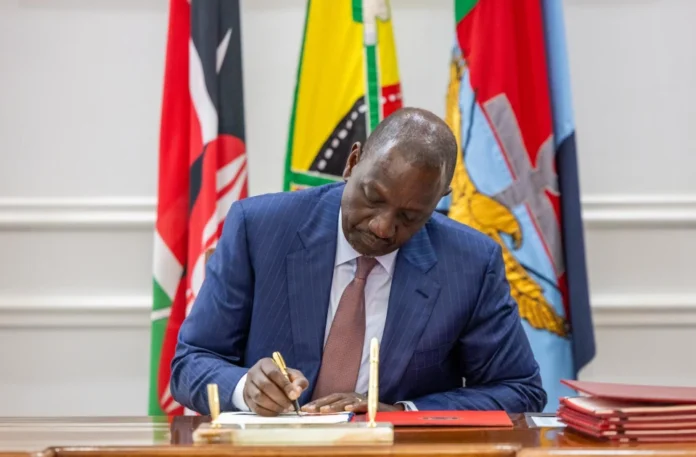
President William Ruto has nominated Dr. Amani Yuda Komora as Chairperson and Ms. Angeline Yiamiton Siparo as a Member of the National Police Service Commission (NPSC), according to a statement from the Executive Office of the President.

The nominations, made under Article 250(2)(b) of the Constitution and Section 9(5) of the National Police Service Commission Act, now await parliamentary approval. Once confirmed, the appointments will fully constitute the Commission, enabling it to carry out its constitutional mandate.

The NPSC, established under Article 246(1) of the Constitution, is responsible for recruiting and appointing officers to the National Police Service (NPS), confirming appointments, determining promotions and transfers, and exercising disciplinary control over members of the Service.

Dr. Komora, the nominee for Chairperson, is a seasoned human resource expert and the immediate former Vice-Chairperson of the Salaries and Remuneration Commission (SRC). He has previously held senior roles at the Kenya Ports Authority, Kenya Revenue Authority, and the National General Wages Council. He holds a PhD in Human Resource Management from Jomo Kenyatta University of Agriculture and Technology.

Ms. Siparo, nominated as a member, has a background in leadership and public health, having served as Chairperson of the National Aids Control Council (2016–2022) and coordinator of the YALI Legacy Localization Project across 49 African countries. She holds a Master’s degree in Counselling Psychology from USIU-Africa and has worked with organizations including UNAIDS, PRB, and Futures Group International.

If approved by Parliament, the NPSC will comprise Dr. Komora as Chairperson and members Ms. Siparo, Ms. Peris Muthoni Kimani, Mr. Edwin Cheluget, Mr. Benjamin Juma Imai, and Prof. Collette A. Suda. The announcement was made by Chief of Staff and Head of Public Service, Felix K. Koskei.

Written By Rodney Mbua
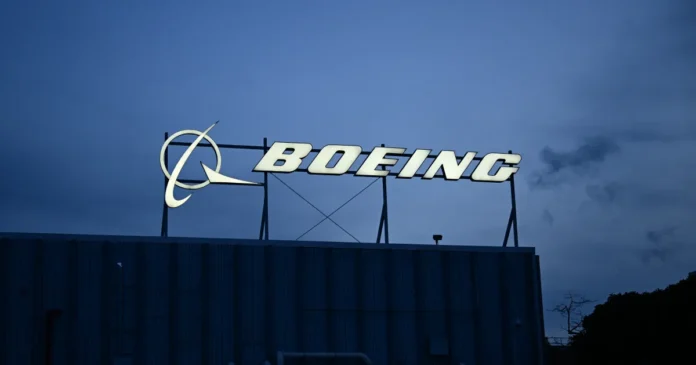
Over 3,200 Boeing Fighter Jet Workers Strike After Rejecting Contract Offer

More than 3,200 unionized machinists employed at Boeing defense facilities in the St. Louis, Missouri area and Mascoutah, Illinois went on strike at midnight after overwhelmingly rejecting the company’s revised four‑year contract proposal.

These workers, represented by IAM District 837, are responsible for assembling critical defense hardware including F‑15 and F/A‑18 fighter jets, the T‑7 trainer aircraft, and the MQ‑25 unmanned aerial refueling drone for the U.S. Navy, underscoring the strategic importance of their roles in national defense production.

Boeing had offered what it described as the “richest contract” ever put forward to its St. Louis defense workforce, promising average wage growth of 40%, a general wage increase of 20%, a $5,000 ratification bonus, improved vacation and sick leave, and enhanced periodic raises.

Despite these incentives, union members rejected the offer as inadequate, particularly citing dissatisfaction with alternative work schedule provisions that remained unchanged.

Union leadership asserted that District 837 machinists deserve compensation and working conditions that properly reflect their expertise and contribution to national defense.

Boeing Air Dominance vice president Dan Gillian expressed disappointment over the rejection and confirmed that contingency plans were already in place to maintain operations amid the walkout.

He emphasized that the company is ready to deploy non‑union personnel to help meet customer commitments and mitigate disruption from the work stoppage.

CEO Kelly Ortberg downplayed the impact, pointing to Boeing’s ability to weather last year’s much larger industrial action when 33,000 machinists struck for 53 days and the company ultimately negotiated a contract with 38% wage growth.

The current strike represents Boeing’s first walkout in nearly 30 years at the St. Louis defense hub, with the last similar strike occurring in 1996 and lasting 99 days

The timing is particularly fraught as Boeing’s defense division accounting for nearly 30% of its second‑quarter revenue had recently turned profitable after incurring significant losses in prior years.

Rising production pressures follow Boeing’s award of the next‑generation F‑47 fighter program, further raising the stakes for continued manufacturing capacity and workforce stability.

Financial markets have taken note of the labor unrest, with Boeing shares slipping slightly amid investor caution. Still, the company’s stock remains up significantly in 2025, and leadership remains confident that flight schedules and defense deliveries can continue despite the strike.

Union leaders are urging Boeing to return to negotiations with proposals that address long-standing issues around compensation, scheduling, and job security.

The standoff now sets the stage for a critical labor showdown, with both sides under pressure to reach an agreement that supports national defense production while acknowledging the economic contributions of frontline machinists.

Written By Ian Maleve

Hunger Deepens and Graves Multiply in Besieged Sudanese City of al-Fashir

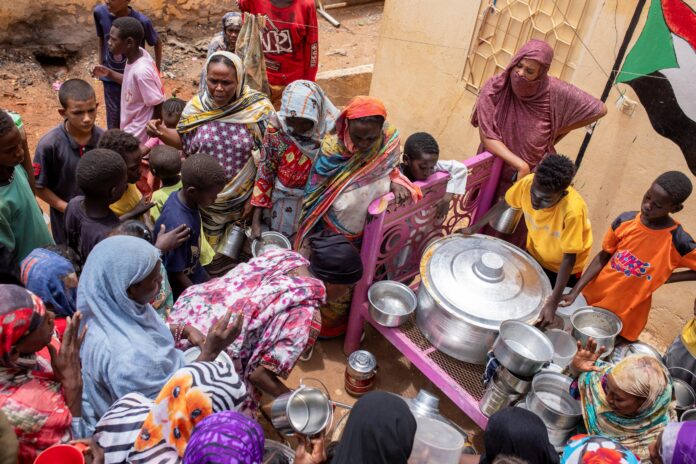
Women from community kitchens distribute meals to those who are affected by conflict and extreme hunger and out of reach of international aid efforts, in Omdurman, Sudan, on July 27, 2024. REUTERS/Mazin Alrasheed

Written by Lisa Murimi

A worsening humanitarian crisis is unfolding in the besieged city of al-Fashir, North Darfur, where relentless shelling, food blockades, and a growing cholera outbreak are compounding the suffering of hundreds of thousands trapped by Sudan’s civil war.

The city, the last major army-controlled stronghold in western Sudan, has become the focal point of brutal fighting between the Sudanese Armed Forces and the paramilitary Rapid Support Forces (RSF), now in the third year of their conflict. The RSF has intensified its assault in recent weeks, bombarding the city with artillery and drone strikes.

“Shelling starts in the morning and continues into the night,” one resident told Reuters. “There’s no electricity, bakeries are shut, and the cemeteries are growing every day.”

With humanitarian access blocked and aid convoys frequently attacked, residents face severe food shortages. Many have resorted to eating animal feed like ambaz, made from peanut shells. Even that is becoming scarce.

“There is hunger everywhere. Even I haven’t eaten today,” said a doctor working inside the city, speaking anonymously for safety. “Children and adults alike are malnourished.”

Al-Fashir’s fall would give the RSF near-total control over Darfur, raising fears of Sudan’s potential fragmentation. Displaced residents, some previously uprooted by earlier violence, are caught in the crossfire, and attempts to flee come with new dangers.

At least 14 people fleeing the city were killed in a village attack, rights group Emergency Lawyers reported. Survivors described being robbed, attacked, and witnessing kidnappings along the road to Tawila, a town now sheltering over 500,000 displaced people.

Tawila itself is overwhelmed, with minimal shelter, limited food, and an expanding cholera outbreak. Médecins Sans Frontières has treated over 2,500 cases since mid-June, with 52 reported deaths. A lack of clean water, sanitation, and shelter has left many sleeping in the open amid rains.

“We wait for the rain to stop so our children can sleep,” said Huda Ali, a mother of four sheltering under a straw roof.

Despite a United Nations call for a humanitarian pause, the RSF has rejected ceasefire appeals. Fighting has also spread into Sudan’s Kordofan region, further complicating efforts to establish safe zones or restart peace talks.

Cambodia, Thailand Begin Border Talks in Malaysia Amid Fragile Ceasefire

Cambodian and Thai defense officials have launched preliminary talks in Malaysia as a fragile ceasefire between the two Southeast Asian neighbors continues to hold, following deadly border clashes last week.

The discussions, which began Monday, are a lead-up to a high-level ministerial meeting of the General Border Committee scheduled for Thursday. The talks aim to solidify the truce and prevent further conflict after the worst fighting between the two countries in over a decade.

The recent violence, marked by artillery exchanges and air strikes, claimed at least 43 lives and displaced more than 300,000 people along the border. The ceasefire was brokered in Malaysia last Monday, with observers from the United States and China playing a key role in mediating the agreement.

Despite the ceasefire, tensions remain high. Cambodia’s defense ministry has accused Thailand of violating the agreement by laying barbed wire and using excavators in a contested area. Thailand has denied any aggressive movements, though its military acknowledged reports of Cambodian troop reinforcements and position modifications.

Rear Admiral Surasant Kongsiri, a Thai military spokesperson, said the situation remains stable but warned of increased Cambodian military activity aimed at replacing troops lost during the clashes.

Adding to the strain, Cambodia has demanded the immediate release of 18 of its soldiers captured during the fighting. Thailand responded that the soldiers are being treated humanely as prisoners of war and will only be released following a full end to hostilities, not just a temporary ceasefire.

Thursday’s ministerial meeting will be attended by defense chiefs from both nations and observed by officials from the U.S., China, and Malaysia.

Written By Rodney Mbua

Philippines, India Conduct First-Ever Joint Naval Sail in South China Sea

Written by Lisa Murimi

The Philippines and India have held their first joint naval sail in the South China Sea, a significant move in deepening maritime cooperation amid rising tensions in the region.

The two-day passage, which began on Sunday, took place within the Philippines’ exclusive economic zone (EEZ) in the West Philippine Sea. It coincided with President Ferdinand Marcos Jr.’s departure for a five-day state visit to India aimed at strengthening bilateral ties in defence, pharmaceuticals, agriculture, and maritime cooperation.

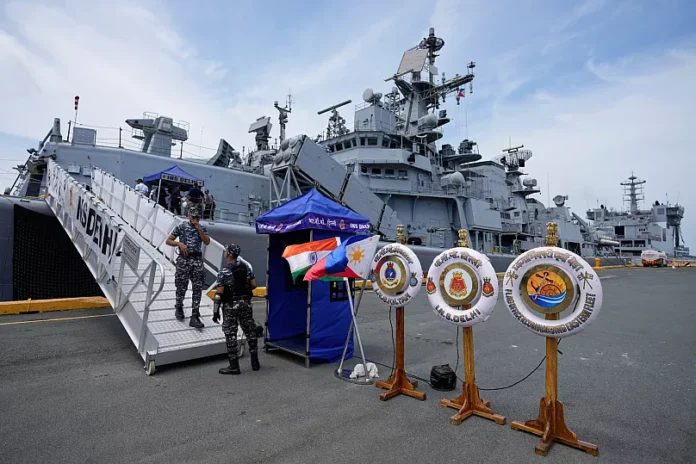
Indian Navy vessels INS Delhi (guided missile destroyer), INS Shakti (tanker), and INS Kiltan (corvette) joined Philippine frigates BRP Miguel Malvar and BRP Jose Rizal in the exercise. The Indian ships had arrived in Manila on Friday as part of New Delhi’s broader Indo-Pacific engagement strategy.

Philippine Armed Forces Chief General Romeo Brawner said the joint sail was proposed during his visit to India in March. “We did not experience any untoward incidents, but there are still those shadowing us, as we had already expected,” Brawner noted, alluding to Chinese presence in the area without naming Beijing directly.

In response, China’s foreign ministry reiterated that disputes in the South China Sea should be resolved solely by the countries directly involved, opposing third-party intervention.

The Philippines has intensified maritime cooperation with allies and partners, including the United States, Japan, Australia, France, and Canada, since late 2023, seeking to push back against China’s sweeping claims in the region. A 2016 international tribunal ruling invalidated China’s expansive maritime claims, a verdict Beijing continues to reject.

The South China Sea remains one of the world’s most strategic waterways, with over $3 trillion in annual trade passing through its contested waters.

One Dead, 11 Injured After Bus Collides With Train in Russia’s Leningrad Region

A general view shows the scene following the collision of a bus with a freight train in the Leningrad region, Russia, August 4, 2025, in this still image taken from video. Russian Investigative Committee/Handout via REUTERS

Written by Lisa Murimi

One person has died and 11 others sustained injuries after a bus collided with a freight train in Russia’s northwestern Leningrad region, authorities confirmed on Monday.

According to the regional railway administration, the tragic incident occurred when the bus driver entered a level crossing despite an approaching train. “The train driver applied emergency braking, but the distance was too short to prevent a collision,” the administration stated on Telegram.

While railway officials described the vehicle as a regular service bus, Russian state news agency RIA, citing the local prosecutor’s office, reported it was a tourist bus.

Emergency responders rushed the injured to nearby medical facilities. Investigations are ongoing to determine the circumstances leading to the crash and whether safety protocols at the crossing were followed.

Railway operations in the area experienced temporary delays as recovery and inspection efforts continued.

Tesla Approves $29 Billion Share Award for Elon Musk Amid Court Battle and Falling Sales

Tesla Inc. has approved a massive $29 billion share award for CEO Elon Musk, granting him 96 million new shares in a move aimed at securing his continued leadership as the electric vehicle maker faces legal challenges and strategic shifts.

The new compensation package comes in the wake of a 2024 Delaware court decision that voided Musk’s 2018 pay deal, originally valued at over $50 billion, ruling that the process used by Tesla’s board to approve it was flawed and unfair to shareholders. Musk has since appealed the ruling, arguing that the court made multiple legal errors.

In a regulatory filing on Monday, Tesla said a special committee of the board approved the new interim award to ensure Musk remains focused on the company’s evolving mission. The shares will only vest if Musk retains a key executive role through 2027 and are subject to a five-year holding period, except for covering taxes or the purchase price. Musk must pay $23.34 per share, mirroring the exercise price of the 2018 award.

The committee emphasized that the new award will not result in double compensation. If the 2018 package is reinstated by the courts, the interim award will either be forfeited or offset.

“While we recognize Elon’s business ventures, interests and other potential demands on his time and attention are extensive and wide-ranging … we are confident that this award will incentivize Elon to remain at Tesla,” the committee stated.

Tesla shares rose over 2% in premarket trading following the announcement.

The move comes at a critical juncture for Tesla. Musk, Tesla’s largest shareholder with a 13% stake, is steering the company away from its long-promised affordable EV platform toward robotaxis and humanoid robots, signaling a transition from car manufacturing to artificial intelligence and robotics.

But the company is also grappling with slumping sales, a decline in brand loyalty, and intensifying competition. Tesla’s stock has lost about 25% of its value in 2025, driven by an aging vehicle lineup, reduced U.S. government subsidies for EVs, and Musk’s polarizing political stances, including his vocal support for former President Donald Trump.

The Cybertruck, Tesla’s only new model since 2020, has underperformed commercially despite Musk’s projections of massive demand.

In a recent earnings call, Musk acknowledged the rough road ahead, citing subsidy cuts and softening consumer interest. He predicted that financial relief could come late next year through revenue generated by Tesla’s self-driving software and related services.

Tesla’s future now rests heavily on whether Musk can deliver on that vision, and whether shareholders, regulators, and courts will continue to back his leadership.

Written By Rodney Mbua

South Africa Announces Support Measures to Counter U.S. Tariffs

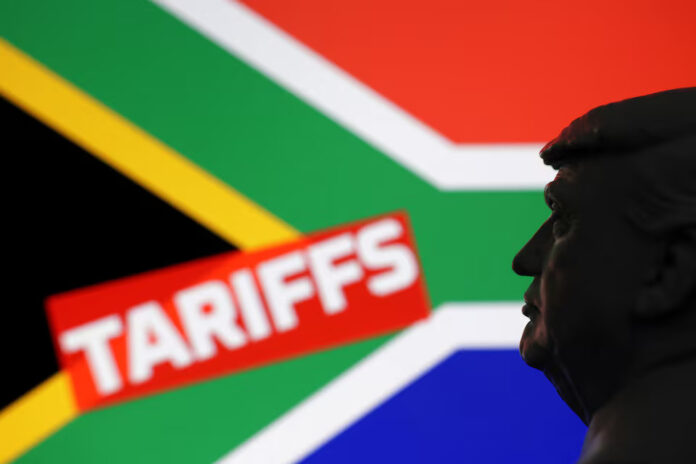
A 3D-printed miniature model of U.S. President Donald Trump, the South Africa flag and the word "Tariffs" are seen in this illustration taken July 23, 2025. REUTERS/Dado Ruvic/Illustration/ File Photo

Written by Lisa Murimi

The South African government has unveiled a series of support measures aimed at shielding local industries from the economic fallout of new 30% tariffs imposed by the United States, set to take effect this week.

At a press briefing on Monday, South Africa’s trade and foreign affairs ministers outlined a multifaceted response plan, including financial aid, policy exemptions, and international trade facilitation, aimed at minimizing job losses and keeping industries afloat.

Key among the measures is a forthcoming “block exemption” under the Competition Act, which will temporarily allow rival companies to collaborate and coordinate efforts without breaching anti-competition laws. Officials said the exemption will be published by the end of this week.

Additionally, the government is rolling out a support programme featuring a working capital facility, a plant and equipment facility, and other financial tools to help affected businesses cope. The Unemployment Insurance Fund (UIF) will also be leveraged to cushion workers from job losses, particularly in agriculture and car manufacturing, sectors expected to be hardest hit.

Trade officials warned the tariff could lead to tens of thousands of job losses, as the U.S. under President Donald Trump continues reshaping global trade rules to benefit American industries.

South Africa had spent months trying to negotiate an alternative, offering to purchase U.S. liquefied natural gas and invest $3.3 billion in American industries under a proposed “framework deal.” Despite a last-minute effort to improve the offer, Washington rejected the deal.

Responding to speculation that the failure to secure a lower tariff stemmed from U.S. opposition to South Africa’s domestic policies, such as affirmative action and its genocide case against Israel, Foreign Minister Ronald Lamola dismissed the claims, insisting the dispute should remain rooted in economic terms.

“We pose no trade threat to the U.S. economy or its national security,” Lamola stated. “South African exports often support the U.S. industrial base and do not compete directly with American products.”

An export support desk will also be established to help South African firms explore new international markets, with assistance from embassies and trade attachés. A more detailed set of measures is expected to be finalized during a cabinet meeting on Wednesday.

Despite the setback, Pretoria reaffirmed its commitment to engaging with the U.S. within the framework of its initial trade proposal.

Mwakha Shines as Kenya Takes Early Lead Over Tunisia in Billie Jean King Cup

Kenya’s teenage tennis sensation Melissa Nanjala Mwakha got the national team off to a flying start in the Billie Jean King Cup Africa Group III clash against Tunisia, powering to a 6–1, 6–0 victory over Lina Soussi on Monday morning in Windhoek, Namibia.

The 17-year-old was in total control from the outset, needing just 51 minutes to seal the win in the opening singles match and hand Kenya a 1–0 lead in the best-of-three tie. Mwakha broke Soussi four times in the first set alone, showcasing impressive baseline dominance, sharp returns, and quick footwork that kept her Tunisian opponent under constant pressure.

Kenya now looks to wrap up the tie in the second singles match later this afternoon, where African Games champion Angella Okutoyi is set to face Tunisia’s Mouna Bouzgarrou.

The Billie Jean King Cup, formerly known as the Fed Cup, is the world’s premier women’s team tennis event. The ongoing Group III Africa competition brings together emerging national teams battling for promotion to the more competitive Group II tier.

Kenya, who narrowly missed promotion in last year’s edition held on home soil, are keen to make a statement in Namibia and advance to the next level of international tennis.

Written By Rodney Mbua

KHRC Demands Overhaul of Hustler Fund Over Design Flaws and Rising Defaults

The Kenya Human Rights Commission (KHRC) has called for a comprehensive overhaul of the Hustler Fund, warning that the initiative risks turning into “quick money turned dead money” if urgent reforms are not undertaken.

The Hustler Fund, launched by President William Ruto in November 2022, was marketed as a financial lifeline for millions of low-income Kenyans, including boda boda riders, informal traders, and small-scale entrepreneurs, collectively dubbed “hustlers.” However, nearly two years later, a new KHRC study paints a grim picture of the fund’s performance, citing deep-rooted structural flaws, high default rates, and limited impact on enterprise growth.

The KHRC report, compiled using a mixed-methods approach, including interviews with fund managers, telecom partners, traders, and beneficiaries, reveals that many Kenyans are disillusioned with the program. Key among the concerns is the size of loans issued, which many recipients say are too small to support meaningful business activity.

“We are being given Sh300 or Sh500 in the name of the Hustler Fund; what business can you start with such an amount?” one borrower asked, while another, Joyce Wanja, a shopkeeper, lamented, “Even though the Hustler Fund was intended to help businesses, it has provided little benefit to mine. The amount is insufficient to purchase stock; I can only use it for emergencies.”

The study highlights that loans must be repaid within 14 days, with interest rates rising from 8% to 9.5% in case of default. These terms have contributed to widespread repayment challenges. By December 2022, the default rate had soared to 68.3%, and by June 2023, 78% of overdue accounts were in arrears for over 90 days.

Some borrowers admitted to misusing or deliberately defaulting on the loans. “They are telling us to take the loan. I will take it, but not repay it. What will they do to me?” said a respondent from Nairobi, revealing a worrying attitude toward accountability.

Others, such as street vendors, avoid the fund entirely due to precarious business environments. “I cannot take the Hustler Fund because, as a vendor, City Council can come and confiscate my goods, and I will not be able to repay,” one trader explained.

The report also reveals low levels of financial literacy among potential beneficiaries. A staggering 45% of Kenyans depend on friends for financial advice, while only 2.9% seek guidance from financial institutions. KHRC argues that the absence of business development support has rendered the fund largely ineffective in stimulating sustainable economic activity.

While some boda boda operators reported modest benefits, such as using the loans to service motorbikes or buy spare parts, most agreed that the amounts and terms were unsuitable for larger ventures. “With the Hustler Fund, most operators can buy small spare parts and repay after two weeks,” noted one boda boda chairman. “But for bigger ventures, it is useless.”

KHRC is now urging the government to redesign the fund with more realistic loan sizes, extended repayment periods, and integrated financial literacy training. Without such reforms, the Commission warns, the Hustler Fund may continue to serve more as a political tool than a genuine driver of economic empowerment.

“Unless these systemic issues are addressed,” the report concludes, “the Hustler Fund risks becoming a politically driven project with little economic benefit for Kenya’s hustlers.”

The findings raise serious questions about the long-term viability and intent of one of President Ruto’s signature economic programs, putting pressure on policymakers to deliver more inclusive and impactful financial solutions for the country’s informal sector.

Written By Rodney Mbua

Create a free account, or log in.

Gain access to read this content, plus limited free content.

Yes! I would like to receive new content and updates.

Sponsored Ad

Ad 1
Ad 2
Ad 3
Ad 4
Ad 5
Ad 6