Sponsored Ad

Ad 1
Ad 2
Ad 3
Ad 4
Ad 5
Ad 6
29.3 C
Kenya
Sunday, May 17, 2026
Home Blog Page 1407

Lancet Report Warns of Escalating Health Threat from Plastic Pollution

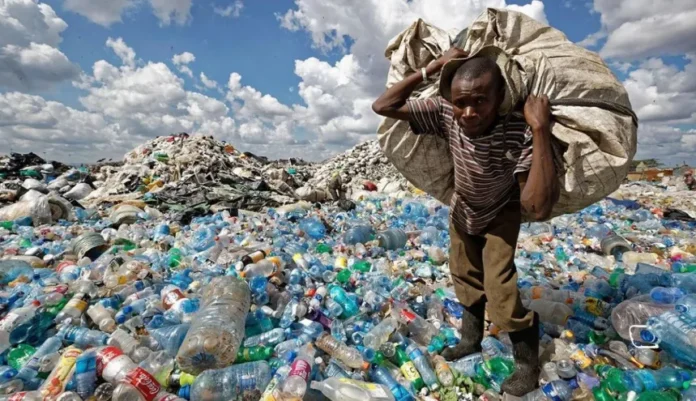
Plastic pollution poses a “grave, growing and under-recognised” danger to global health, costing the world more than $1.5 trillion annually, according to a new report published Monday in The Lancet medical journal.

The review, conducted by a team of leading international health researchers and doctors, paints a stark picture of the impact of plastic on human health, warning that exposure causes disease and death across all age groups, from infancy to old age. The authors are urging world leaders gathering in Geneva this week to finally secure an international treaty to combat plastic pollution, after previous negotiation rounds failed.

Dr. Philip Landrigan of Boston College, one of the report’s lead authors, said vulnerable groups — especially children, are disproportionately affected by plastic pollution. “It is incumbent on us to act in response,” he said. “To those meeting in Geneva: please take up the challenge and the opportunity of finding the common ground that will enable meaningful and effective international cooperation in response to this global crisis.”

Global plastic production has surged from just 2 million tonnes in 1950 to 475 million tonnes in 2022 and is projected to triple by 2060. Yet, less than 10 percent of plastic is currently recycled. Most plastic ends up in landfills, oceans, or the atmosphere, releasing toxic substances or breaking down into microplastics, tiny particles now found in food, water, and even human bodies.

The full health effects of microplastics are still being studied, but experts have expressed deep concern about their pervasiveness and potential long-term consequences.

The report also draws a direct connection between the plastic crisis and climate change. Because plastic is made from fossil fuels, its rising production contributes to greenhouse gas emissions. “There is no understating the magnitude of both the climate crisis and the plastic crisis,” said Landrigan. “They are both causing disease, death, and disability today and will cause even more harm as the planet warms.”

As part of the report, The Lancet announced a new initiative, the Lancet Countdown on Plastics, aimed at tracking and understanding the evolving health impacts of plastic pollution over time.

Delegates from nearly 180 countries are meeting this week in Geneva to resume talks on what could become the world’s first legally binding treaty to curb plastic pollution.

Written By Rodney Mbua

Relief for Lake Gas as KEBS Clears Cooking Gas Cargo in Major Safety Breakthrough

Lake Gas Limited has received a welcome reprieve after the Kenya Bureau of Standards cleared over 11,000 tonnes of cooking gas previously held at the Port of Mombasa, ending weeks of uncertainty after the shipment failed initial safety tests.

The consignment, imported in June 2025, was earlier rejected due to dangerously low levels of ethyl mercaptan an odorant essential for detecting gas leaks supposed to comply with national safety standards (KS 91:2022).

KEBS had blocked the release until Lake Gas demonstrated corrective measures. Following additional dosing of the odorant and independent testing to confirm compliance, the gas was approved on August 2, clearing the backlog and allowing delivery to distributors to resume.

The KEBS clearance has broader implications for the LPG sector in Kenya. Lake Gas is one of the newest entrants aiming to challenge well-established suppliers in a market that consumed nearly 414,000 tonnes of LPG in 2024.

Observers had feared that regulatory delays could delay supply, push up prices, and dampen competition. The swift resolution reinstates confidence in Kenya’s regulatory framework and sends a signal that safety standards will be enforced while allowing compliant businesses to operate.

Lake Gas, owned by Tanzanian entrepreneur Ally Awadh, confirmed completion of the odorant infusion process and said it was satisfied that the product now meets all regulatory requirements.

Company officials expressed relief that KEBS approvals were granted and pledged to enhance internal quality assurance systems to avoid future compliance gaps.

They also emphasised that no gas had entered commercial distribution before final approval and assured consumers of product safety.

While relief is palpable, the weekslong standoff exposed operational and reputational vulnerabilities. KEBS’s initial refusal to clear earlier tests underscored strict safety protocols, while Lake Gas’s prompt corrective action helped avoid a protracted standoff.

At the same time, emergency stockpiles and logistics plans had to be revisited to accommodate the delayed delivery schedule.

Energy sector watchers highlight that the episode amplifies the importance of rigorous odorant dosing technology, especially as LPG consumption grows and new players enter the market.

Authorities note that inadequate odorant not only violates standards but carries serious risks of leaks undetectable to consumers, potentially leading to explosions and injuries.

With the shipment now cleared, Lake Gas is expected to begin distribution to its Kilifi-based facility and downstream retail partners in Nairobi, Mombasa, and western Kenya.

The resolution also boosts competition in LPG wholesale and retail, which regulators hope will drive efficiency and price moderation.

In summary, KEBS’s green light ends the regulatory impasse, enabling Lake Gas to integrate its inaugural Kenyan cargo into the supply chain. It signals Kenya’s dual commitment to enforcing safety standards and supporting compliant market expansion an outcome that could reshape competition dynamics in the cooking gas sector moving forward.

Written By Ian Maleve

Banks Face Loan Refunds Risk from Illegal Charges Amid Regulatory Scrutiny

Kenyan banking institutions now confront a rising threat of being compelled to refund customers for unpermitted fee structures, as regulators heighten enforcement over excessive and illegal charges levied on loan accounts.

The scrutiny comes in response to a regulatory push backed by international precedents and growing consumer complaints, all pointing to widespread use of fees that exceed permissible thresholds.

Regulators are reviewing current fee schedules applied to loan products, particularly daily default fees, credit facility premiums, and early settlement penalties that disproportionately affect low-income borrowers.

These charges often exceed legal caps set by frameworks such as the Draft Banking (Fees) Regulations and the Revised Guide to Bank Charges. In Nigeria, for instance, the Central Bank mandated the phasing-out of Commission on Turnover fees after declaring them illegal, contributing to major corrective action in fee policy enforcement.

In Australia, regulators ordered banks to refund more than USD 93 million to low-income customers for excessive fees, demonstrating a global trend toward accountability.

In Kenya, the Draft Banking (Fees) Regulations released in early 2025 clearly define permissible charges and prohibit exorbitant fees that strip borrower equity or undermine affordability.

Consumer groups have reported cases where banks applied compound daily penalties that drive outstanding balances beyond reasonable levels, especially in mobile‑linked credit accounts. Loan default charges and penalty interest accumulations constitute major sources of dispute, prompting formal complaints lodged with regulatory authorities.

Legal analysts warn that banks found applying illegal charges may face structured refund mandates, enforcement orders, and reputational fallout.

Public interest litigation remains possible, particularly in courts protecting informal or vulnerable populations who disproportionately bear the cost of fee abuses. The regulatory tide is shifting toward a rights‑based approach in financial inclusion, requiring transparent, fair, and capped fee structures.

Banks, for their part, are reassessing product governance and lending terms. Many lenders are reviewing fee algorithms, waiving or scaling down punitive default penalties, and bolstering borrower communication during delinquencies.

Some large banks have initiated customer remediation drives voluntarily, in anticipation of formal directives. Institutional governance is moving to align product design with compliance expectations and ethical lending standards.

Deposit taking institutions are also reinforcing internal audit controls to detect legacy fee models that may breach emerging regulations or expose them to refund liabilities.

Where fees exceed caps established by the law or guide, credit units must provide roll‑back mechanisms and transparent refund processes. The banking trade body continues to engage with regulators to streamline implementation timelines and clarify retroactive enforcement thresholds.

Customer advocates stress that meaningful reform must include financial literacy efforts to empower borrowers to challenge unfair fees and choose better‑suited credit products.

Without such support, consumers may remain unaware of exploitative charges embedded in standard loan documentation.

As regulatory enforcement grows sharper, banks face mounting pressure to clean up loan products, refund unlawful charges, and restore trust with consumers.

The coming months may see a wave of compensation obligations, structural fee revisions, and heightened regulatory oversight shaping Kenya’s credit landscape for vulnerable and mainstream borrowers alike.

Written By Ian Maleve

Boeing Defense Workers Launch Strike, Adding Pressure on Aviation Giant

Boeing’s defense arm has been hit with a fresh labor walkout as approximately 3,200 skilled machinists at facilities in St. Louis, St. Charles, Missouri, and Mascoutah, Illinois, initiated a strike at midnight after unanimously rejecting the company’s latest contract offer.

These workers, represented by the International Association of Machinists and Aerospace Workers (IAM) District 837, play a critical role in assembling fighter aircraft including the F‑15 Eagle, F/A‑18 Super Hornet, the MQ‑25 aerial tanker drone, and components for the newly awarded F‑47 fighter jet program. It marks the first strike at Boeing’s defense operations since 1996.

The breakdown came after union members dismissed the revised four-year proposal, which featured a general wage increase of 20%, enhanced medical and pension benefits, overtime protections, and a $5,000 ratification bonus.

Boeing had promoted the offer as delivering up to 40% average wage growth over the term, but the majority of IAM members deemed it insufficient, particularly objecting to unchanged alternative scheduling provisions.

Union leaders emphasized that workers deserve a contract reflecting their expertise and contribution to national defense.

Boeing executives declared readiness to activate contingency plans to sustain operations with non-union personnel.

Senior leadership in the Air Dominance division stated the company was prepared to mitigate the disruption and continue meeting defense customer commitments, though acknowledged the unpleasant reality of the strike.

This action compounds Boeing’s labor-related challenges following a major machinist strike in late 2024 that involved more than 33,000 workers, paused commercial jet production for nearly two months, and resulted in tens of billions in losses.

While that strike ended with a negotiated pay increase of approximately 38%, the new defense strike underscores unresolved grievances across the company’s broader workforce.

Industry analysts warn the strike could delay delivery timelines for defense contracts and further complicate Boeing’s recovery efforts, which are already strained by recent aircraft incidents, safety reviews, and financing pressures.

CEO Kelly Ortberg and other executives have sought to reassure investors but face a growing test of operational resilience and employee relations across both commercial and defense divisions.

As the strike unfolds, attention turns to whether Boeing and IAM will re-engage in negotiations or hold firm on their respective positions.

Efforts to resolve the impasse swiftly are vital not only to avoid schedule setbacks for critical military programs but also to prevent reputational damage that could affect future contracts and investor confidence. The outcome could set the tone for labor dynamics at Boeing well into 2026.

Written By Ian Maleve

KRA Seeks to Block Exit of Former Java Owner Amid Ksh 3 Billion Tax Dispute

The Kenya Revenue Authority is moving decisively to prevent the former owner of Java House, ECP Kenya Ltd, from leaving the country as it intensifies efforts to recover a disputed tax bill valued at approximately Ksh 3 billion.

KRA has filed legal proceedings aimed at impounding travel documents of key individuals associated with the firm to ensure they remain available for resolution of the contentious liability. The agency’s action reflects increasing urgency after years of back-and-forth over tax classification and final appeals.

ECP Kenya, once the Nairobi-based affiliate of Emerging Capital Partners that owned Java House until its 2017 sale, is at the centre of the dispute. Initially, KRA issued a demand for over Ksh 3.21 billion in corporate income tax in early 2022, arguing that proceeds from the exit qualified as taxable business income.

ECP Kenya contended the proceeds were investment gains subject to capital gains tax instead. In October 2023 the Tax Appeals Tribunal reduced the liability to KSh 773.8 million but upheld KRA’s authority to tax the amount as trading income.

An appeal by ECP Kenya to the High Court was dismissed in December 2024, sealing the tribunal’s assessment as final.

As the legal and financial stakes escalate, KRA is preparing to safeguard its interest by petitioning the courts to block exits of former executives and board members associated with the company.

The move comes as ECP Kenya has petitioned the High Court for voluntary liquidation, citing the tax burden and legal setbacks as the principal reasons behind winding down operations in Kenya. The application, filed in early July 2025, invites creditors to submit support or objections.

KRA officials argue that the sum remains payable and that remaining parties cannot evade accountability through liquidation or international exit.

Blocking exits is intended to secure access to key witnesses, documentation, and any remaining domestic assets. Legal experts say the action sets a precedent for dealing with cross-border private equity exits where the fund management interface resides within Kenyan jurisdiction.

Observers note the broader implications for foreign investment in Kenya, especially regarding tax planning and corporate restructuring.

The case highlights the risks of underestimating Kenya’s position on permanent establishment and the distinction it draws between capital gains and business income. It also signals KRA’s increasing assertiveness in pursuing large-scale liabilities, even when tied to deals formerly conducted offshore.

With court proceedings now entering a critical phase, the focus will remain on whether ECP Kenya can negotiate a structured settlement or whether the tax authority will insist on full collection through enforcement.

As stakeholders weigh implications, the case is poised to become a benchmark for Kenya’s tax jurisdiction claims and set expectations for international investors operating through local affiliates.

Written By Ian Maleve

Kenya to Join Global Education Benchmarking Test PISA in 2025

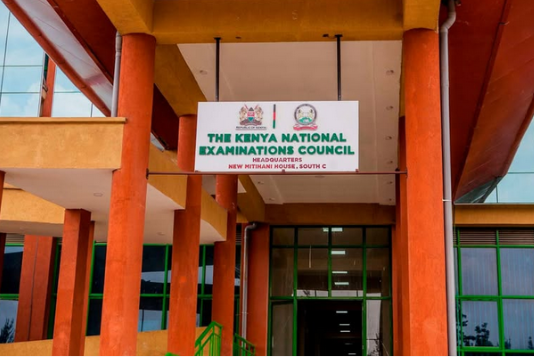
The Kenya National Examinations Council (KNEC) has announced that the country will, for the first time, participate in the Programme for International Student Assessment (PISA) in 2025. This global education benchmarking initiative, coordinated by the Organisation for Economic Cooperation and Development (OECD), evaluates how effectively students apply knowledge to real-life situations.

In a statement issued on Monday, KNEC confirmed that Kenya will join over 90 countries in the assessment, scheduled to begin in September 2025. The assessment will target 15- to 16-year-old students across a sample of selected schools nationwide, focusing on their ability to apply concepts in mathematics, science, and reading.

“PISA measures how students apply what they have learned to solve real-life problems. It goes beyond testing academic recall and focuses on problem-solving and critical thinking,” KNEC stated.

The council highlighted that this international evaluation aligns well with Kenya’s ongoing Competency-Based Curriculum (CBC) reforms, which emphasise practical skills and knowledge application over rote memorisation.

KNEC noted that insights from the assessment will help evaluate the effectiveness of current education reforms and guide strategic decisions on curriculum development, teacher training, and resource allocation.

“PISA offers a unique opportunity to benchmark our learners against global standards. This will help inform curriculum development and policy direction to ensure that Kenya’s education system remains globally competitive,” the council added.

KNEC has urged all education stakeholders, including school heads, teachers, parents, and community leaders, to support the initiative. Preparations are set to begin in the coming weeks, including the selection of participating schools and training of assessment personnel.

Kenya’s participation in PISA is seen as a major step toward aligning the country’s education system with international benchmarks and ensuring learners are equipped with critical 21st-century skills.

Written By Rodney Mbua

Ferrari Boss Backs ‘Frustrated’ Hamilton After Disappointing Hungarian GP

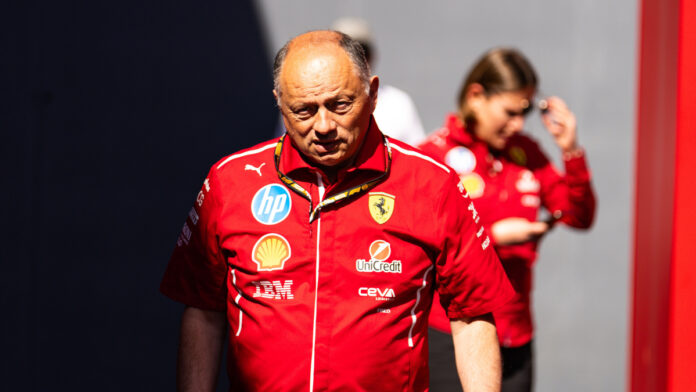
Fred Vasseur @ Getty Images

Ferrari team principal Fred Vasseur has thrown his full support behind Lewis Hamilton, following the seven-time world champion’s disappointing 12th-place finish at the Hungarian Grand Prix on Sunday.

Hamilton, still seeking his first podium since his much-anticipated switch from Mercedes to Ferrari, cut a dejected figure after a weekend riddled with struggles. Despite starting 12th, he was unable to make any real progress during the race, while teammate Charles Leclerc, who had secured Ferrari’s first pole of the season, slipped to fourth due to mechanical issues.

The British driver, 40, appeared emotionally drained and was highly critical of his own performance after being knocked out in Q2 on Saturday, even telling reporters the team should “bring in another driver.” His remarks prompted speculation about retirement and concerns over his adjustment to Ferrari’s environment.

However, Vasseur downplayed the alarm, defending Hamilton’s candidness and reaffirming confidence in his ability to bounce back.

“Honestly, he’s frustrated, but not demotivated,” Vasseur said. “He’s demanding, but that’s why he’s a seven-time world champion. These emotional reactions are part of elite sport. Right after a tough qualifying or race, disappointment hits hard. I can understand the frustration, but we’re all feeling it.”

Vasseur also highlighted the narrow margins in qualifying that contributed to Hamilton’s early exit, noting the competitiveness of the field. “He was in front of Charles in Q1 and just a tenth off in Q2. It’s tight. He was stuck in a DRS train during the race, but when in clean air, his pace was strong. He’ll be back.”

Leclerc also defended his teammate, calling Hamilton’s weekend an outlier. “We are one team,” said the Monegasque driver. “It’s been a tough weekend for Lewis, but I have no doubt he’ll come back strong in the second half of the season.”

Currently sixth in the drivers’ championship and yet to reach the podium for Ferrari, Hamilton admitted he’s looking forward to the upcoming Formula 1 summer break before the Dutch Grand Prix resumes action later this month.

“I just need a bit of a break from work,” he said. “We’ll come back stronger.”

Written By Rodney Mbua

CHAN 2024: McCarthy Praises Fans, Tactical Gamble After Kenya’s Win Over DR Congo

250803F_ANC_KenCon_DL

Harambee Stars head coach Benni McCarthy has credited Kenya’s home fans and a bold tactical switch for their 1-0 victory over DR Congo in Sunday’s African Nations Championship (CHAN) opener at the Moi International Sports Centre, Kasarani.

In his post-match remarks, McCarthy praised the energy of the supporters, calling them the team’s “twelfth man” and key to the spirited performance. “The fans have shown us love, and they stood by the team based on how the players played. I’m just slightly disappointed we didn’t give them a second or third goal,” he said.

The coach reserved special praise for 20-year-old Manzur Suleiman, whose surprise role in defensive midfield proved instrumental. Initially pegged for the left-back position, Suleiman was shifted into midfield after impressing in friendlies with his energy, bravery, and game intelligence.

“I initially thought of playing him at left-back, but the more I watched him, the more I knew he belonged in midfield,” McCarthy explained. “He was young, energetic, and brave, just what we needed to disrupt DR Congo’s game plan.”

McCarthy hailed the tactical tweak as a gamble that paid off, noting Suleiman’s performance as among the best on the pitch.

Looking ahead to their second group match against Angola on Thursday, August 7, McCarthy warned of a tougher challenge. “Angola isn’t going to get any easier. The hardest hurdle is over, getting our first win, and now the boys can relax a bit and prepare.”

The team remains in high spirits, buoyed by strong public support and continued encouragement from President William Ruto, who has followed through with his promised reward packages.

McCarthy, while proud of the opening win, emphasized that it was just the beginning: “With belief, the fans behind us, and the right tactics, we can go far in this tournament.”

Written By Rodney Mbua

Bolsonaro Supporters Rally Across Brazil Against Supreme Court and President Lula

Supporters of former Brazilian President Jair Bolsonaro attend a demonstration, against the Brazil's Supreme Court's measures in Bolsonaro's trial, in Copacabana in Rio de Janeiro, Brazil August 3, 2025. REUTERS/Pilar Olivares

Thousands of supporters of former Brazilian President Jair Bolsonaro took to the streets across several cities on Sunday to protest against Supreme Federal Court (STF) Justice Alexandre de Moraes and current President Luiz Inácio Lula da Silva, demanding amnesty for those involved in the alleged coup attempt following Bolsonaro’s 2022 election loss.

Demonstrators, many draped in Brazil’s national colors and sporting national team jerseys, gathered in Rio de Janeiro, São Paulo, and Brasília, chanting slogans such as “Magnitsky”, a reference to recent U.S. sanctions against Justice Moraes, and calling for freedom for Bolsonaro and his allies. Some protesters carried American flags and pro-Donald Trump signs, echoing claims of political persecution.

Bolsonaro, currently under house arrest and prohibited from leaving his residence on weekends and holidays, did not attend the rallies. However, he addressed the crowd in Rio via phone, introduced by his son, Senator Flávio Bolsonaro. The former president is wearing an electronic ankle monitor and remains a defendant in a case overseen by Justice Moraes.

In March, a five-judge panel of the STF unanimously voted to put Bolsonaro on trial for allegedly conspiring to stage a coup after losing the 2022 presidential election. The trial, expected later this year, could result in a lengthy prison sentence if he is convicted.

The protests come amid rising diplomatic tension between Brazil and the United States. Last week, the Trump administration imposed a 50% tariff on most Brazilian imports, citing what it called a “witch hunt” against Bolsonaro. Additionally, the U.S. sanctioned Justice Moraes under the Global Magnitsky Act, accusing him of violating human rights and engaging in corruption, a move Brazil’s government condemned as foreign interference.

Justice Moraes, who is leading multiple investigations into Bolsonaro and his political allies, also imposed precautionary measures last month, accusing Bolsonaro and his son Eduardo, currently residing in the U.S, of attempting to collaborate with U.S. authorities to undermine Brazil’s institutions.

As Bolsonaro’s legal troubles deepen and tensions with Washington rise, Sunday’s demonstrations signal continued support for the former far-right leader and a growing rift within Brazil’s polarized political landscape.

Written By Rodney Mbua

Top Trump Aide Accuses India of Financing Russia’s War Through Oil Purchases

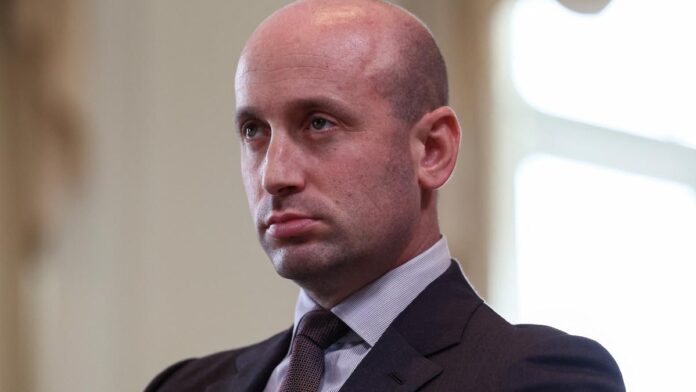
White House Deputy Chief of Staff Stephen Miller attends an interaction between U.S. President Donald Trump and British Prime Minister Keir Starmer in Turnberry, Scotland, on July 28, 2025. | Photo Credit: Reuters

A top aide to U.S. President Donald Trump has accused India of effectively financing Russia’s war in Ukraine by continuing to purchase oil from Moscow, intensifying pressure on one of Washington’s key Indo-Pacific partners.

Stephen Miller, Trump’s deputy chief of staff and a prominent voice in the administration, delivered the sharp rebuke during an appearance on Fox News’ Sunday Morning Futures, stating: “What he [Trump] said very clearly is that it is not acceptable for India to continue financing this war by purchasing the oil from Russia.”

Miller emphasized the scale of India’s imports, noting that the country is now “basically tied with China in purchasing Russian oil,” a statistic he called “astonishing” and contrary to the expectations of a close U.S. ally.

The Indian Embassy in Washington has not yet responded to the allegations. However, senior Indian officials told Reuters over the weekend that New Delhi will continue to buy Russian oil, despite threats from the U.S., citing energy security and market stability as key priorities.

The growing tensions follow Trump’s recent decision to impose a 25% tariff on Indian goods, citing its continued purchases of Russian energy and military equipment. The White House has also floated the possibility of slapping 100% tariffs on imports from any nation that continues to buy Russian oil unless Moscow agrees to a significant peace settlement in Ukraine.

Despite the tough rhetoric, Miller maintained that Trump’s personal relationship with Indian Prime Minister Narendra Modi remains “tremendous,” suggesting that diplomatic backchannels may still be active.

India has defended its oil purchases as legal under international law and vital to its economic stability, while continuing to balance relations with both Washington and Moscow. The public clash underscores deepening strains in U.S.-India relations at a time when both countries have sought to strengthen strategic and defense ties to counter China’s regional influence.

Written By Rodney Mbua

Create a free account, or log in.

Gain access to read this content, plus limited free content.

Yes! I would like to receive new content and updates.

Sponsored Ad

Ad 1
Ad 2
Ad 3
Ad 4
Ad 5
Ad 6