Sponsored Ad

Ad 1
Ad 2
Ad 3
Ad 4
Ad 5
Ad 6
29.3 C
Kenya
Sunday, May 17, 2026
Home Blog Page 1410

Saudi Arabia Executes Eight Convicts in One Day over Drug-Related Death Sentences

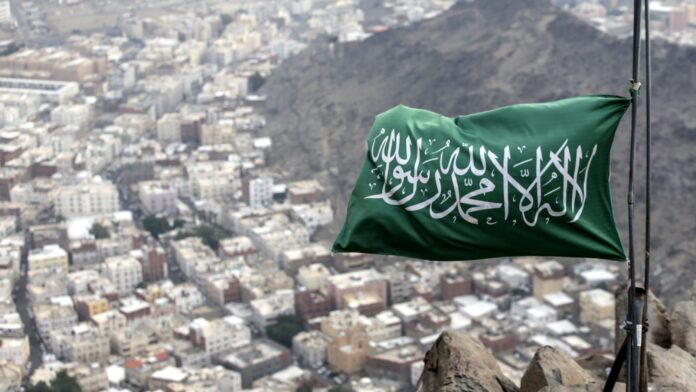
Saudi Arabia has executed eight people in a single day, state media confirmed on Saturday, highlighting a sharp rise in the use of capital punishment in the kingdom, particularly for drug-related offenses.

According to the official Saudi Press Agency (SPA), seven of the individuals, four Somalis and three Ethiopians, were convicted of smuggling hashish and were executed in Najran, a region in the country’s south.

The eighth person, a Saudi national, was executed for the murder of his mother.

The mass execution brings the total number of people executed in Saudi Arabia so far in 2025 to at least 230, according to a tally by AFP based on official announcements.

Of these, 154 were executed for drug offences, suggesting an intensification of the kingdom’s so-called “war on drugs.”

Saudi Arabia had previously suspended the use of the death penalty for narcotics-related crimes between 2020 and 2022, but resumed executions for such cases at the end of 2022.

Since then, the number has climbed dramatically, with 19 drug-related executions in 2022, two in 2023, 117 in 2024, and already over 150 this year.

Analysts say many of the individuals executed in 2025 were arrested years earlier and are now reaching the end of lengthy legal processes.

The spike in executions appears to contradict Crown Prince Mohammed bin Salman’s Vision 2030 reform agenda, which aims to promote Saudi Arabia as an open and modern society. Human rights groups say the continued reliance on capital punishment, especially for non-violent offences ,undermines this image.

Saudi authorities maintain that executions are carried out only after all legal avenues for appeal have been exhausted and argue that the death penalty is essential for deterring serious crimes and preserving public order.

Decorated Policeman Honoured with Prestigious Global Leadership Award

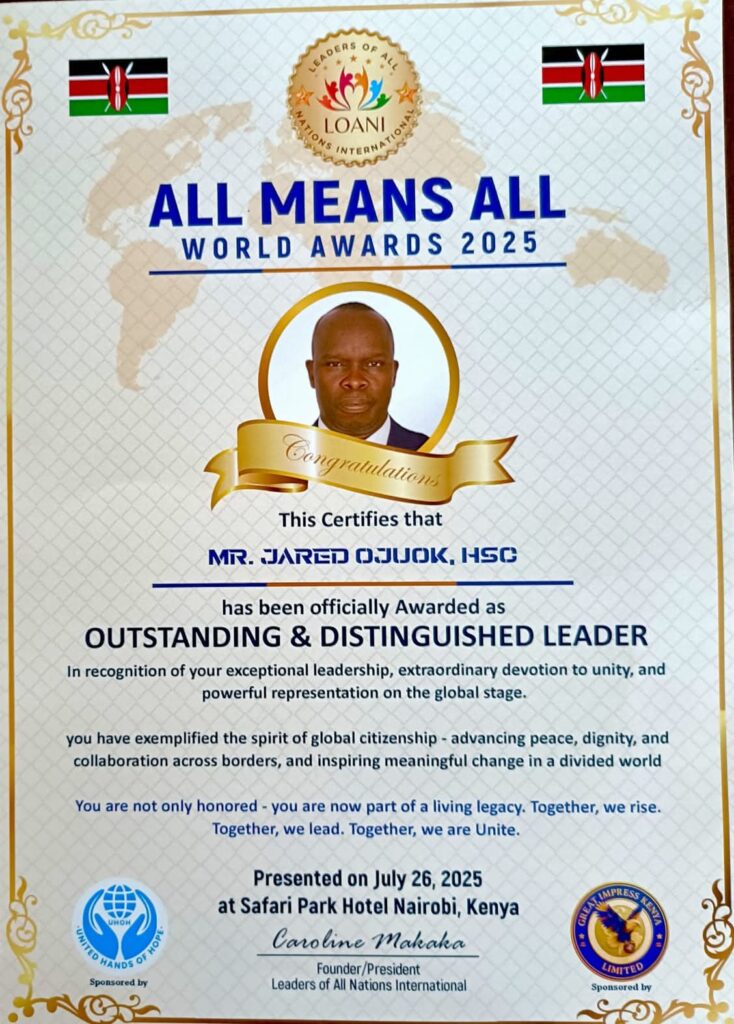
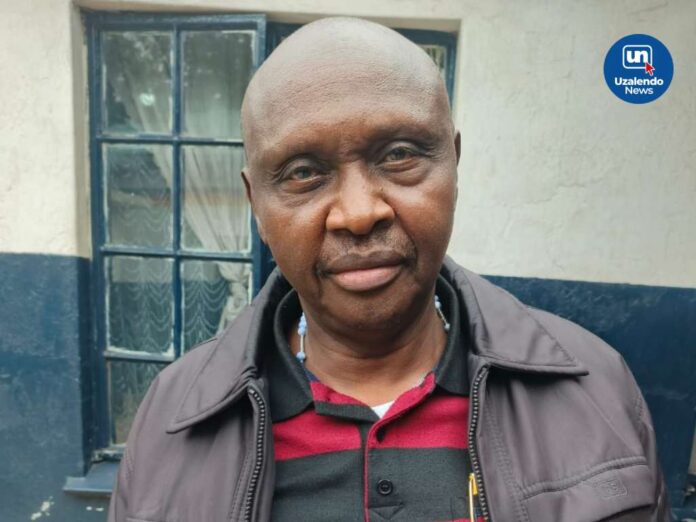
Senior Superintendent of Police (SSP) Jared Ojuok, HSC, has been recognised with the “All Means All World Award 2025”, capping off a distinguished law enforcement career spanning over two decades.

The award, presented on 26 July 2025, celebrates Ojuok’s exceptional leadership, international advocacy, and deep humanitarian commitment.

Mr Ojuok joined the National Police Service on 3 March 2001 as a police constable in the General Service Unit (GSU). His steady rise through the ranks has been marked by integrity, professionalism, and service excellence.

After serving as an instructor at the GSU Training School, he was transferred to Police Headquarters in 2009, where he worked as a communications officer in the Office of the Police Spokesperson. He currently serves as Staff Officer, Public Relations, in the Kenya Police Service.

Ojuok holds a BA from the University of Nairobi and an MBA in Strategic Management from Kenyatta University. He has also earned diplomas in national security and police science from institutions in Israel.

Beyond his official duties, Ojuok serves as president of the International Police Association (IPA)—Kenya Section, leading initiatives that foster cross-border cooperation among police forces. A humanitarian at heart, he supports projects for displaced families, children, and vulnerable youth.

In 2022, he published When the Ancient Tree Falls, a reflective work capturing the human side of policing.

The National Police Service lauded his recognition, stating that Mr Ojuok embodies the Service’s highest ideals of professionalism, leadership, and compassion. His award is a testament to the impact one dedicated officer can have, locally and globally.

Public Servants Asked to Wear Harambee Stars Jersey To Work This Month

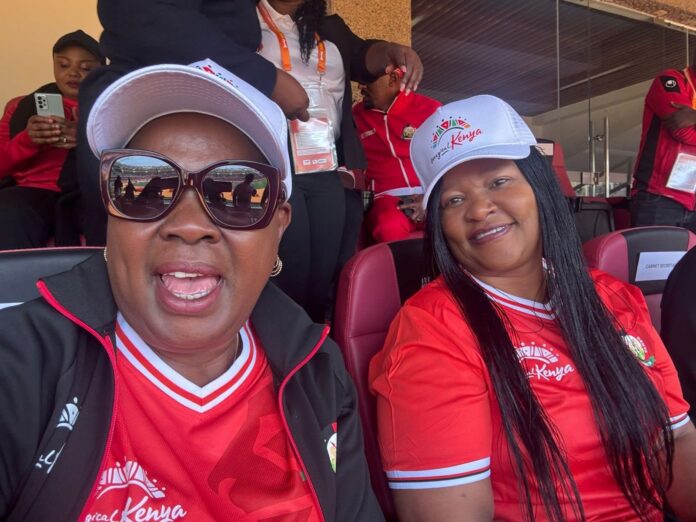
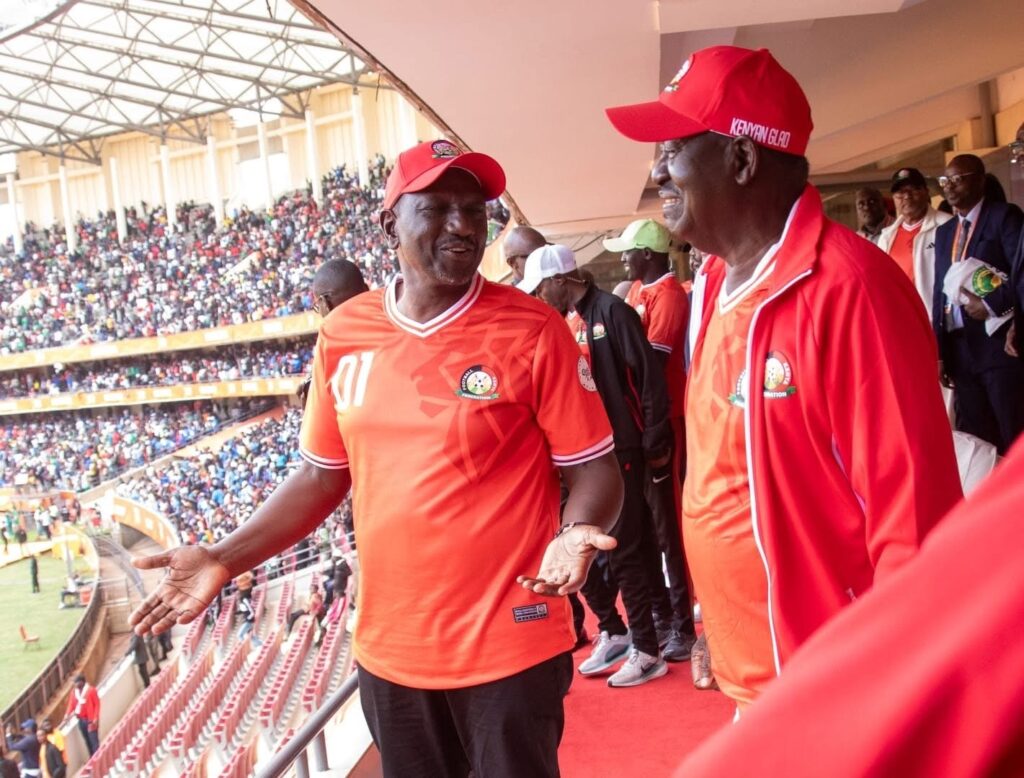
Public Service Cabinet Secretary Geoffrey Ruku has called on all public servants to don the Kenyan national football jersey throughout August.

This is order in a show of solidarity with Harambee Stars as the country co-hosts the 2024 African Nations Championship (CHAN).

Speaking at a press briefing on Thursday, Ruku said the move is intended to rally national pride and create a united atmosphere as Kenya stages the prestigious continental tournament for the first time.

“This is a historic moment for Kenya,” said the CS. “We want every government office, from Nairobi to the counties, to reflect the spirit of patriotism and support for our team. Wearing the national jersey is one simple but powerful way to do that.”

The directive comes days after Kenya marked its CHAN debut with a memorable 1–0 victory over two-time champions DR Congo, igniting hopes of a strong run in the tournament.

The month-long event, exclusively featuring players based in their home countries’ domestic leagues, has drawn thousands of fans to stadiums and is seen as a chance for Kenya to showcase both its footballing talent and organizational capability on a continental stage.

DCI Arrests Former MP Over Land Fraud in Nairobi West

Detectives have arrested former Member of Parliament Sammy Silas Komen Mwaita in Nairobi’s Kilimani area over alleged involvement in a land fraud scheme.

The Directorate of Criminal Investigations (DCI) confirmed the arrest on Thursday, stating that Mr Mwaita is facing multiple charges, including conspiracy to commit a felony, making a document without authority, abuse of office, and giving false information to a public officer.

His arrest comes after the Office of the Director of Public Prosecutions (ODPP) issued fresh directions in a case linked to the illegal acquisition of two prime plots in Nairobi West, situated along Mai Mahiu Road.

The properties are said to be worth several million Kenyan shillings.

Mr Mwaita, a former Commissioner of Lands and Baringo Central MP, is currently being processed for arraignment. Authorities say investigations are ongoing as a manhunt continues for one of his alleged accomplices.

The case has reignited scrutiny over land dealings involving senior political figures, with calls for increased accountability and reform in Kenya’s land administration sector.

SIFUNA: I Will Quit If ODM Supports Ruto in 2027

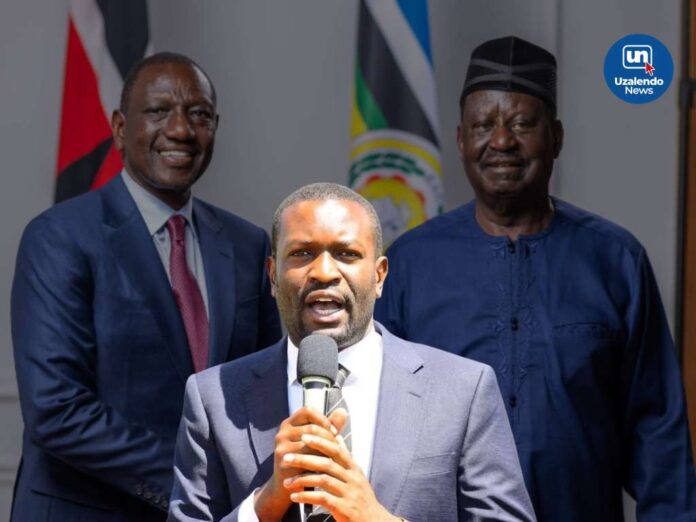
Orange Democratic Movement (ODM) Secretary-General Edwin Sifuna has warned that he will exit the party should it endorse President William Ruto’s re-election bid in 2027, laying bare deepening internal rifts over the party’s ideological direction and its increasingly ambiguous relationship with the ruling Kenya Kwanza coalition.

Speaking at a Sunday rally in Sabaoti, Trans Nzoia County, Sifuna issued a pointed rebuke to sections of the party leadership flirting with the idea of backing Ruto, declaring:

“That one I will not read.”

“I assure ODM supporters that my stance remains,” said the Nairobi Senator.

“Raila himself has said that this is a democratic party, and any member is free to speak their mind… yet some thugs are saying I cannot hold views independent of the party just because I am the secretary-general.”

Sifuna’s remarks come amid simmering discontent among ODM’s grassroots and mid-level leadership over what critics describe as a ‘co-opted’ opposition, one that has lost its ideological edge following a broad-based agreement that saw a handful of senior Azimio-affiliated figures appointed to President Ruto’s government.

A party adrift?

Sifuna’s threat of departure is the most public indication yet of mounting frustrations within ODM over what many perceive to be political drift and policy inconsistency.

The party, once the country’s most vocal opposition force, has been accused of abandoning its core tenets of social justice and state accountability in favour of political expediency.

In his speech, Sifuna acknowledged these concerns, saying ODM “no longer speaks with a single voice,” and that the party had “failed to put its house in order.”

While he reaffirmed his loyalty to the party’s official communications mandate. insisting he would “read whatever statement ODM comes up with, even if they were to insult me”. He made clear that support for Ruto was his personal red line.

The Raila question

The rift has placed party leader Raila Odinga in an increasingly precarious position. While Odinga has defended Sifuna’s right to express personal views, the party’s working relationship with Ruto’s administration, particularly around national unity and institutional reform, has sparked confusion over ODM’s role as opposition or partner.

Sifuna’s vocal opposition to the Ruto administration, particularly over its handling of youth protests and alleged democratic backsliding, has made him a polarising figure. Some within ODM’s ranks have labelled him a rebel and called for his resignation.

Others, including MPs like Jared Okelo, have been touted as potential successors to the secretary-general post—a suggestion Sifuna himself referenced, saying:

“If they endorse Ruto, I won’t be a part of that. Okelo, be ready if you want to take up my role.”

High stakes in 2027

The stakes for 2027 are rising as both ODM and Kenya Kwanza jostle for control of the political center. Ruto’s administration has stepped up its outreach to opposition strongholds, promising development projects and appointments in regions historically aligned with ODM, including Nyanza.

Interior PS Raymond Omollo recently told residents of Nyanza that supporting Ruto in 2027 would unlock “greater benefits” come 2032—comments interpreted by critics as an overt pitch to weaken ODM’s base.

Sifuna’s hardline stance may resonate with younger ODM supporters disillusioned with political compromise, but it also exposes the fragility of the party’s unity heading into a crucial election cycle.

For now, Raila Odinga remains the glue holding the party together.

But with no clear succession plan and rising internal tensions, the road to 2027 may be a bruising one for Kenya’s once-unshakable opposition force.


West Africa’s Junta Leaders Launch Investment Bank in Bid for Economic Sovereignty

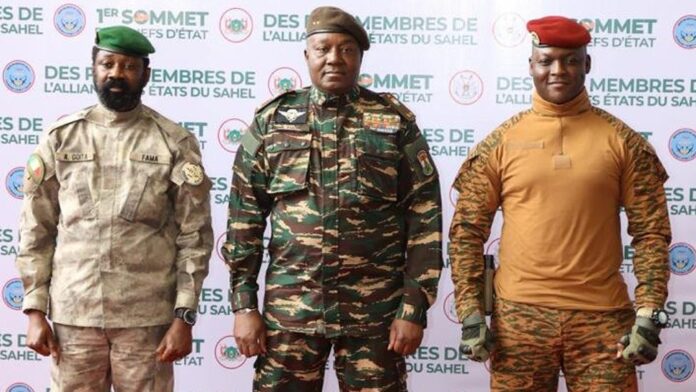
The military-led governments of Mali, Niger and Burkina Faso have unveiled plans to create a new regional investment bank funded by national tax revenues, in a move aimed at reducing reliance on foreign aid and asserting greater control over their development agendas.

According to Serge Balima, an adviser to Burkina Faso’s junta leader Ibrahim Traoré, each country will contribute roughly 5% of its annual tax revenues toward capitalising the institution.

“We’ll pool resources from a set of taxes imposed in each state,” Balima told Bloomberg. “Together, these funds will form the capital needed to create the bank, which will then be used to finance development projects.”

The initiative represents the latest coordinated economic policy under the Alliance of Sahel States (AES), the political and security bloc formed earlier this year after the trio collectively withdrew from the Economic Community of West African States (ECOWAS).

It also reflects a growing shift toward resource nationalism and regional self-reliance. The three nations have already taken steps to jointly develop mining, infrastructure, and energy ventures and have begun revising natural resource laws to increase state participation in extractive industries.

In some cases, the governments have moved to nationalise mining operations deemed underperforming or non-compliant with new regulatory standards.

From ECOWAS Exit to Strategic Realignment

The creation of the investment bank is the latest signal that the AES is intent on consolidating its economic and political independence from both regional blocs and traditional Western allies.

The departure from ECOWAS in early 2025 followed months of tensions, fuelled by what the three military regimes described as insufficient support in the fight against Islamist insurgencies that have ravaged large parts of the Sahel.

Disillusioned with the historical presence of France and the United States—both militarily and economically—Mali, Niger and Burkina Faso have since severed or scaled back ties with their former partners. In their place, they have courted new alliances with non-Western powers including Russia, Iran and Turkey.

This realignment is being watched closely by Western diplomats and multilateral institutions, particularly as it coincides with a broader global scramble for access to Africa’s strategic minerals, including gold, uranium and lithium.

Analysts say the proposed bank could provide a critical financing vehicle for domestic infrastructure, agriculture and industrialisation, if implemented effectively. But questions remain about governance, transparency and the long-term sustainability of the model—especially in nations grappling with ongoing security crises and economic sanctions.

Still, the symbolic significance is hard to ignore. For regimes that have framed their rule as a rejection of neocolonial influence and elite-driven politics, the creation of a self-financed regional institution marks an important step in consolidating their vision of sovereignty.

Austin Odhiambo Shines As Kenya Kicks Off CHAN With Win over DR Congo

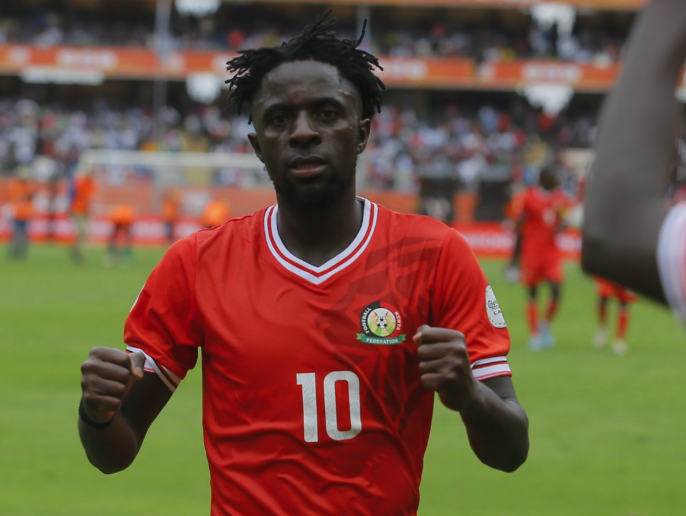
Kenya announced their arrival on the continental stage with a hard-fought 1-0 win over African Nations Championship (CHAN) heavyweights DR Congo, as the hosts opened their PAMOJA 2024 campaign in front of a raucous crowd at the Moi International Sports Centre in Nairobi.

A crisp first-half finish from Austin Odhiambo proved enough to separate the sides, handing the Harambee Stars a dream start to their maiden appearance at the CHAN finals.

DR Congo, champions in 2009 and 2016, arrived with pedigree but struggled to assert dominance against a resolute and tactically aware Kenyan outfit that showed little sign of stage fright once the early nerves settled.

The Leopards looked to have struck early when forward Jephté Kitambala turned in a fifth-minute effort, only for VAR to intervene and rule the goal out for offside, an early warning sign that sparked Kenya into life.

Despite DR Congo controlling possession in the opening exchanges, the hosts slowly found their rhythm. Urged on by the deafening energy of nearly 60,000 supporters, Kenya grew in confidence and found their breakthrough on the stroke of halftime.

Odhiambo, the attacking heartbeat of this youthful Kenyan side, timed his run to perfection, latching onto David Sakwa’s incisive pass before slotting coolly past Brudel Efonge in goal. It was a finish of composure and class, met with an eruption from the terraces.

From there, the match became a test of grit and discipline. DR Congo, desperate to avoid a fifth straight match without victory in the competition, pushed hard after the interval. Heltone Kayembe and Kitambala both threatened, while Jonathan Mokonzi’s aerial presence troubled the Kenyan backline.

But it was goalkeeper Byrne Omondi who proved the standout in the second half, making a crucial fingertip save in the 59th minute to deny Kayembe’s goalbound strike—a moment that underscored the resilience of this Kenyan unit.

Coach Benni McCarthy, overseeing his first major tournament in charge of the Harambee Stars, opted for pragmatism in the closing stages. His substitutions were deliberate: Mike Kibwage added composure at the back, while Marvin Nabwire helped neutralise Congolese momentum in midfield.

Seven minutes of added time brought tension to boiling point. But Kenya’s defence, anchored by Sylvester Owino and Alphonce Omija, withstood the late siege to secure a historic result. In doing so, they became only the third debutant team in CHAN history to win their opening match.

For DR Congo, the loss adds to growing frustration in a tournament they once dominated. Otis Ngoma’s side must regroup quickly ahead of a tricky fixture against Morocco, while Kenya, now buoyed by belief and home support, face Angola on Thursday with one foot already edging toward the knockout rounds.

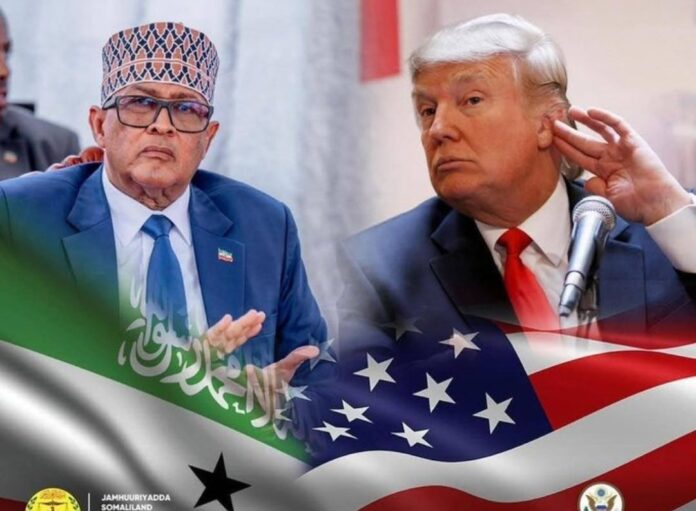
Somaliland Offers Rare Minerals and Military Base in Exchange for US Recognition

The self-declared republic of Somaliland is offering the United States access to a military base near the strategic Bab el-Mandeb Strait and critical mineral supplies, including lithium, in a renewed push for international recognition, according to officials in Hargeisa.

President Abdirahman Mohamed Abdullahi, who assumed office last year, told reporters his administration is in talks with the US Department of Defence and the US Embassy in Somalia as part of a broader strategy to position Somaliland as a stable partner amid intensifying global competition for influence across the Horn of Africa.

“If the US is interested in landing in Somaliland, they are most welcome,” Abdullahi said in an interview this week, adding that economic cooperation, security partnerships, and resource deals were all on the table—regardless of whether Washington formally recognises Somaliland’s sovereignty.

Somaliland declared independence from Somalia in 1991 but remains unrecognised by the international community. Despite lacking formal statehood, it has maintained relative peace and democratic stability, in sharp contrast to Somalia’s decades of conflict and insurgency.

The offer of a US base comes amid heightened geopolitical interest in the Red Sea corridor, particularly following attacks by Houthi rebels on commercial vessels, and Washington’s deepening concerns over China’s expanding military and commercial footprint in Africa.

Yet, the move risks diplomatic friction. The United States continues to back Somalia’s sovereignty, and any shift in its “One Somalia” policy would likely complicate counter-terrorism operations and regional alliances.

A spokesperson for the US State Department reiterated this week that “the United States recognizes the sovereignty and territorial integrity of Somalia, which includes Somaliland.”

Still, US officials have maintained informal contact with Somaliland’s leadership. Ambassador Richard Riley and other diplomats have held talks in recent months, focusing on regional stability, economic development, and maritime security.

Abdullahi confirmed that talks regarding a potential US base are ongoing and said a visit to the United States is being planned. He also dismissed suggestions that recognition is a precondition for cooperation. “We are offering partnerships, not ultimatums,” he said.

So far, Ethiopia remains the only country to have formally acknowledged Somaliland’s sovereignty—an announcement that sparked a diplomatic rift with Mogadishu and drew criticism from the African Union.

Somaliland’s offer comes at a time when former US President Donald Trump, widely expected to return to office in 2025, has signalled openness to rethinking long-standing foreign policy positions, including toward breakaway regions.

While the Biden administration has been cautious, Abdullahi appears to be betting that a Trump-led White House might be more receptive to a transactional deal that trades recognition for geostrategic value.

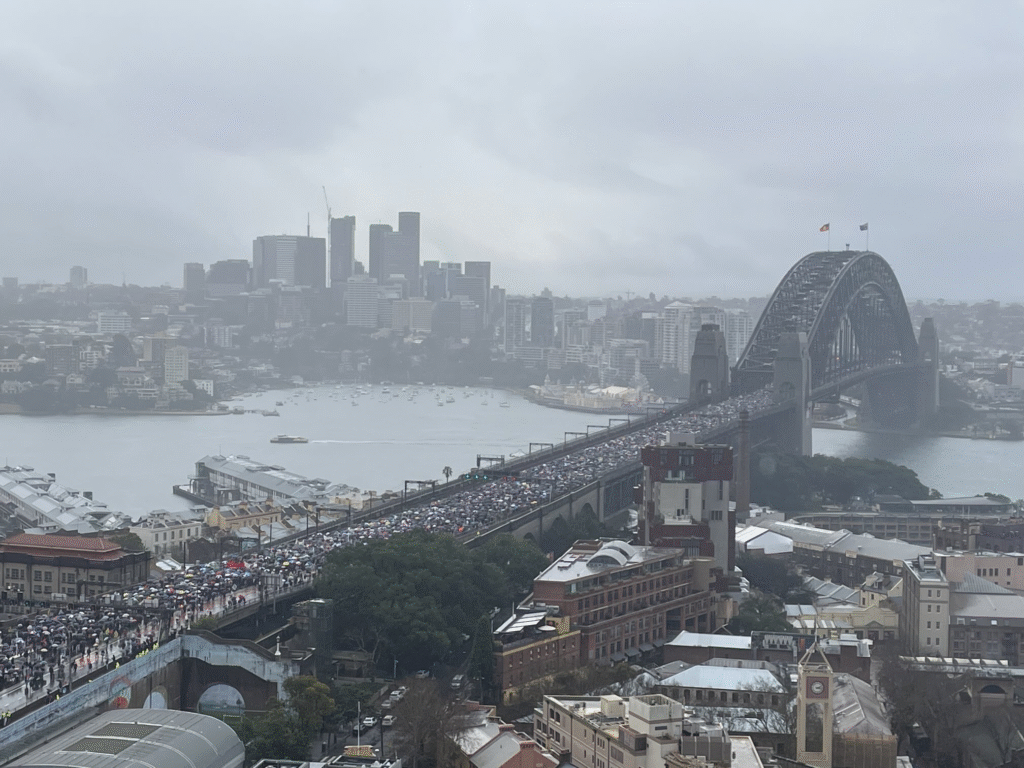
Tens of Thousands March for Gaza Across Sydney Harbour Bridge in Historic Protest

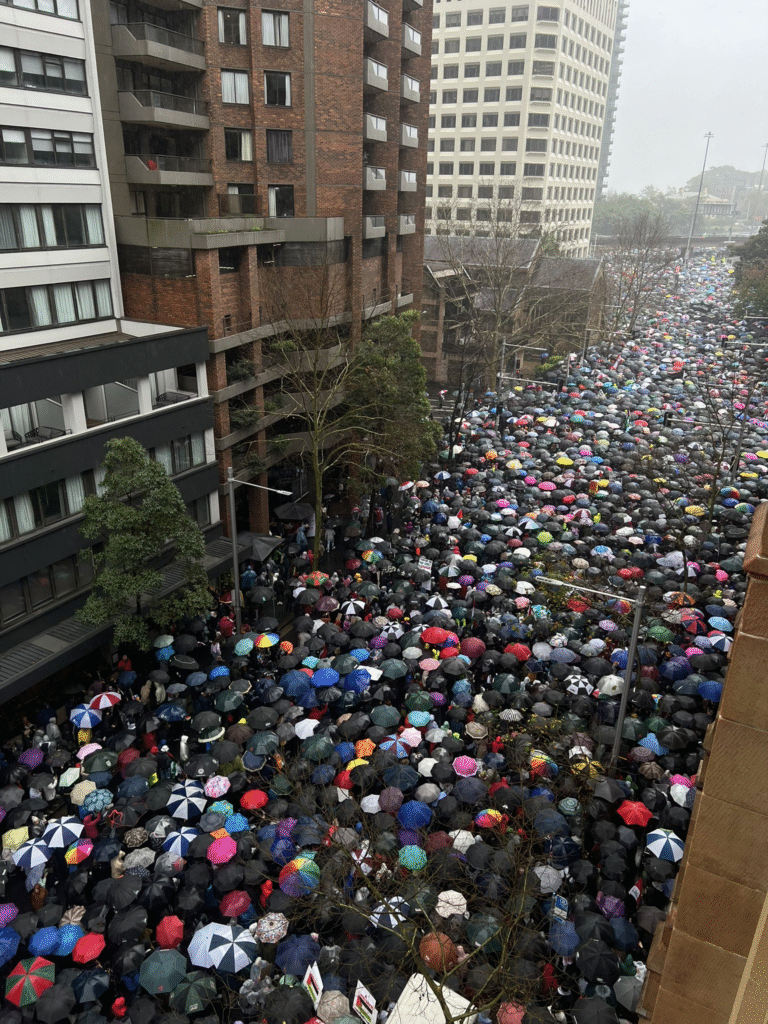
Tens of thousands of pro-Palestinian demonstrators crossed the Sydney Harbour Bridge on Sunday in a rain-soaked but peaceful protest that organisers hailed as a historic moment for Australia’s solidarity with Gaza.

The “March for Humanity” proceeded after the New South Wales Supreme Court overturned a police bid to block the rally over public safety concerns. The event marked the first authorized protest of its kind to take place on the Harbour Bridge since World Pride 2023.

Among the crowd were families with young children, members of Parliament including Ed Husic, former Premier Bob Carr, and WikiLeaks founder Julian Assange. Protesters chanted for an immediate ceasefire and condemned both Israel and the United States for what they called complicity in the humanitarian crisis in Gaza.

Placards bearing slogans like “Stop the war” and “End starvation in Gaza” were raised high despite the torrential rain. Police officers, including members of the riot squad, were stationed across the bridge but no major incidents were reported.

Midway through the march, NSW Police sent a mass text message directing protesters to turn back toward the city citing public safety. The crowd complied in a calm and organised manner.

The event was organised by the Palestine Action Group in response to the deepening crisis in Gaza, where over 60,000 Palestinians have been killed since October 2023 according to local health officials.

The protest gained legal protection under the Summary Offences Act after Justice Belinda Rigg ruled that while police concerns were valid, the right to public assembly outweighed them in this case.

The NSW Jewish Board of Deputies criticised the court’s decision, while Prime Minister Anthony Albanese reiterated that Australia would not recognise Palestinian statehood unless certain conditions were met.

Transport authorities warned of major disruptions across Sydney throughout the day.

UhuRuto Reunited Against Gachagua—Behind the State House Meeting

Make no mistake. Impeached Deputy President Rigathi Gachagua’s rising political status is the reason President William Ruto and President Uhuru Kenyatta met on Friday.

The pretence is that the meeting was accidental. Truth is, it was well calculated.

The two are united against Gachagua. Ruto because he fears his Deputy can make him a ‘wantam’ President.

Uhuru has never forgiven Gachagua for humiliating him in the 2022 elections. In the mountain.

Worse, his stolen sheep and raid on his expansive Northlands farm have hurt to date.

Uhuru consciously wants to retain the GEMA kingship for political play.

The 4th President was almost silent in the Hague for protecting his community in the Rift Valley.

Uhuru has taken good note of what has happened to the Moi family. He will be keen to ensure his family remains politically active.

He is already grooming his daughter, Ngina Kenyatta, for leadership. With a firm strategy of grooming her to become the first woman President in Kenya.

GEMA masses owe Kenyatta a political debt. They are likely to listen to him.

Who are the losers of UhuRuto deal?

Create a free account, or log in.

Gain access to read this content, plus limited free content.

Yes! I would like to receive new content and updates.

Sponsored Ad

Ad 1
Ad 2
Ad 3
Ad 4
Ad 5
Ad 6