Sponsored Ad

Ad 1
Ad 2
Ad 3
Ad 4
Ad 5
Ad 6
27.3 C
Kenya
Sunday, April 26, 2026
Home Blog Page 1926

‘That’s Obama!’: Family Shocked After Barack Obama Crashes Their Photoshoot In Accidental Viral Moment

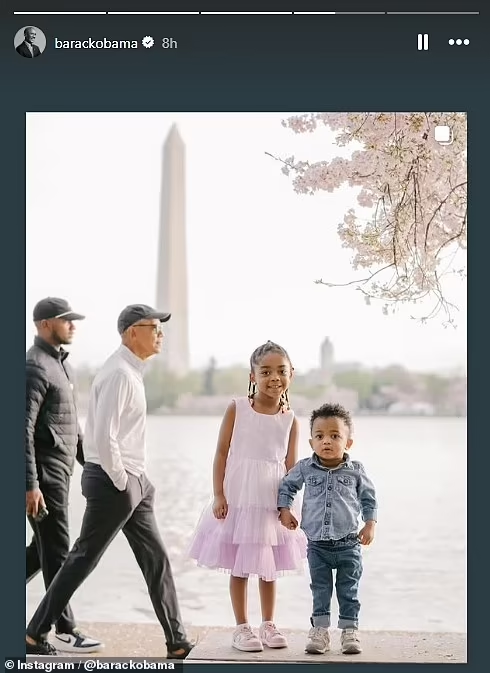
Barack Obama has hilariously apologized to a young family after accidentally strolling into the background of their adorable photoshoot.

Portia Moore was watching her two young children, Preston and Belle, on Monday morning as family photographer Briana Inell took their picture under a Cherry Blossom tree at the Washington DC Tidal Basin.

At the same time, former President Obama walked behind the children, styling a pair of form-fitting black pants, a white button down, a baseball cap and sunglasses.

‘Of course, I’m paying attention to my son, making sure he doesn’t run into the water. He’s 20 months old,’ Moore recounted to NBC Washington.

But her eagle-eyed husband, Damien, quickly spotted the famous photobomber.

‘My husband’s like “That’s Obama,”‘ she recounted. ‘I didn’t know what he was saying. I was like, “Yeah, whatever I’m looking at Preston right now.”‘

It was only when she picked up her son that she asked her husband what he was trying to tell her.

‘That’s Obama!’ he replied.

Moore said they immediately rushed to see if they managed to capture the 44th president in the background of one of their pictures.

‘We went to the photographer and she scrolled back, and we’re like “We got it,”‘ Moore said.

Moore posted the photo to Instagram, showing her daughter with her hair back in a pink dress and sneakers and her young son wearing an all-denim ensemble with sneakers.

‘Look who strolled by in our picture for our family Cherry Blossom photoshoot,’ she wrote.

Obama shared the photo and a message to the family with his 36.6 million followers on Instagram.

‘Preston and Belle, I hope you enjoyed peak bloom! My bad for stepping into the shot,’ he wrote.

Obama had earlier posted photos from the same location.

‘It’s fun to be able to play tourist once in a while,’ he wrote. ‘The cherry blossoms were beautiful this morning!’ 

Now, Moore says she wishes she could go back to that moment to invite Obama to join them on their next photoshoot.

‘Come for next year’s shoot,’ she pleaded. ‘Same place, same time, same date. We’ll be here.’

In the meantime, Inell said she will always remember that moment.

‘Usually I’m editing all of the tourists out of the backgrounds for all my clients anyways, but this is the one photo that I won’t be editing out this person,’ she vowed.

Heritage Flower Limited Director Punjani to Know His Fate On April 9 Over Contempt of Court

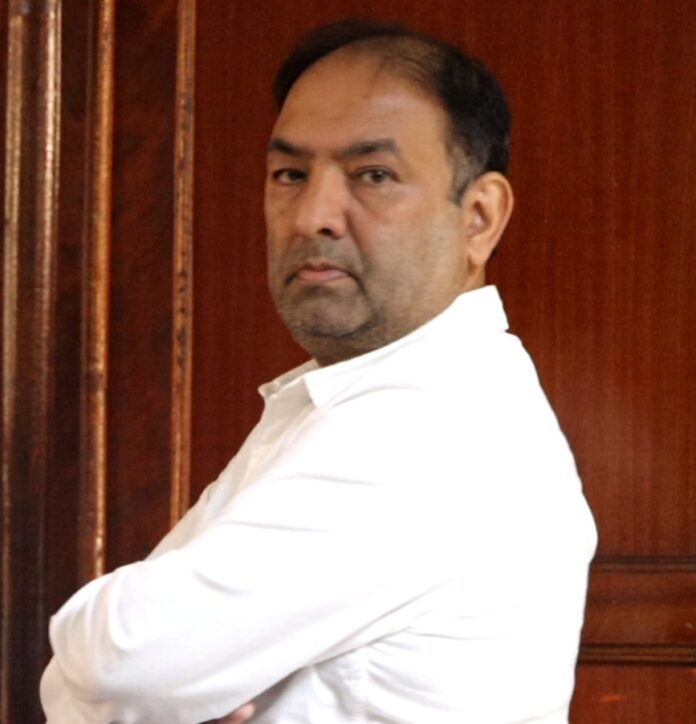
Justice Njoki Mwangi is set to sentence the director of Heritage Flower Limited, Punjani Riyaz Mahammadali on April 9, 2025.

The sentencing follows a conviction of the director for contempt of court after his lawyer failed to convince the court that Punjani did not act in utter disobedience of court orders.

Court documents indicate that Punjani disobeyed a court order issued on November 8, 2021, where Justice Chacha Mwita directed him to sign cheques in respect to monies necessary for the proper management of Heritage Flower Limited.

Further, in October 2023 Shailesh Rai Kumar one of the directors of Heritage Flower Limited moved to court after Punjani failed to sign his payment cheque.

Shailesh in court documents asked the court to compel Punjani to sign off his salary cheque for the month of September 2023.

Consequently, the court issued orders compelling Punjani to sign the cheque, he however declined to sign the cheque leaving the court with no other option but to convict him over contempt of court orders.

He appeared today before Justice Njoki Mwangi at Milimani High Court for mitigation before sentencing.

His lawyer told the Judge that his client had honored the Court’s orders that he had indeed signed the payment cheque for Shailesh.

He said that he is a family man and that he has no other criminal records.

He asked the court to be lenient on him while sentencing him.

However, the Advocate representing Shailesh objected to the allegations that Punjani had signed the payment cheque saying that he deliberately altered his signature on the salary cheque forcing the Bank of India to decline processing the cheques.

According to the Lawyer, the Bank of India said that Punjani’s signature in payment cheques differs from the specimen of his known specimen signature.

Justice Njoki said that sentencing will be on April 9, 2025, after she has read the averments in Punjani’s affidavit sworn on April 1, 2025, and after reading Shailesh’s affidavit expected to be filed following the alleged misconduct of Punjani in signing his salary cheques.

Museveni Calls for Regional Unity in Fight Against Money Laundering, Terrorism Financing

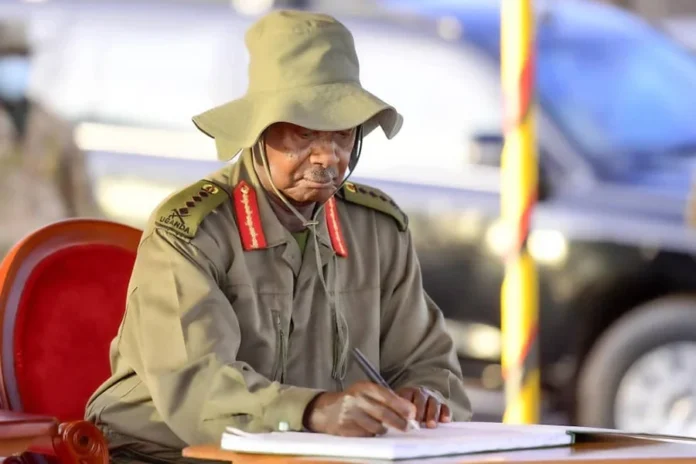
President Museveni has urged Eastern and Southern African nations to strengthen regional collaboration in combating money laundering and the financing of terrorism, warning that financial crimes pose a direct threat to national security, economic stability, and development.

Speaking at the opening of the Eastern and Southern Africa Anti-Money Laundering Group (ESAAMLG) meeting, Museveni emphasized the urgent need for coordinated efforts to dismantle illicit financial networks.

“Money laundering and the financing of terrorism are not mere financial crimes. They undermine trust in financial systems, discourage investment, and support criminal networks that destabilize our societies,” Museveni stated.

He highlighted that Africa loses billions of dollars annually due to illicit financial flows, mainly through organized crime, corruption, and tax evasion.

The President commended ESAAMLG and the Financial Action Task Force (FATF) for their continued efforts in pushing for stronger Anti-Money Laundering (AML) and Combating the Financing of Terrorism (CFT) measures.

Museveni warned that terrorist groups like Al-Shabaab and the Islamic State (IS) exploit weaknesses in financial systems to fund their activities.

He also noted that the rapid digitalization of financial transactions has created new vulnerabilities, with extremist groups increasingly using online platforms for recruitment and fundraising.

“The Eastern and Southern African region faces threats from terrorist groups, including Al-Shabaab and IS. Digitalization in Sub-Saharan Africa has opened up new avenues for these groups to radicalize and fundraise online, presenting fresh challenges for counter-terrorism efforts,” he said.

The Ugandan leader emphasized that combating financial crimes requires constant vigilance, given that criminals continuously adapt their methods to evade detection.

Museveni reaffirmed Uganda’s commitment to fighting money laundering and terrorism financing, highlighting the country’s legal and institutional reforms that contributed to its removal from the FATF “grey list” in 2024.

“Uganda, like other ESAAMLG member states, has undertaken significant steps to combat these threats. We have strengthened our legal frameworks, built robust institutions, and enhanced intelligence-sharing with regional and international partners,” he stated.

He also stressed the importance of Africa’s economic independence, urging regional governments to focus on industrialization and value addition rather than exporting raw materials.

“Africa remains vulnerable to economic and political exploitation. To change this, we must transition from exporting raw materials to industrial production. This will create jobs, grow our economies, and strengthen our position in the global market,” he added.

Museveni concluded by urging ESAAMLG member states to prioritize unity, economic integration, and infrastructural development to strengthen Africa’s resilience against financial crimes.

“As a community, we must work together to secure the integrity of the global financial system. Uganda remains fully committed to the ESAAMLG agenda and will continue supporting initiatives that promote financial security and economic stability,” he affirmed.

The ESAAMLG meeting brought together regional leaders, financial regulators, and international partners to discuss measures for strengthening the fight against money laundering and terrorism financing across Eastern and Southern Africa.

Gabon junta leader who overthrew govt in 2023 announces presidential bid

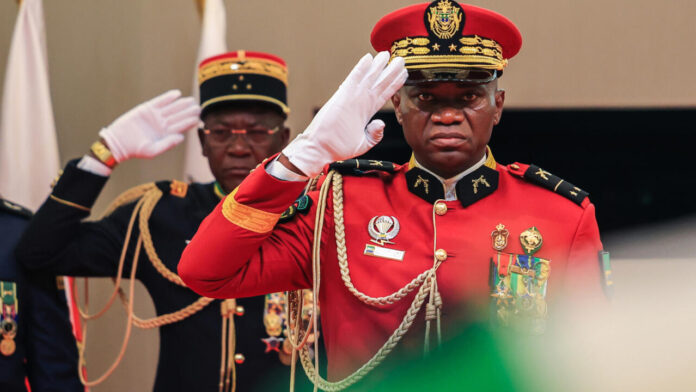
Gabon’s Brice Oligui Nguema will try to ride the advantages of incumbency and a popular crackdown on corruption to make the jump from junta leader to democratically-elected president in an election scheduled for April 12.

The 50-year-old general seized power in the oil-producing Central African country in an August 2023 coup against his distant cousin President Ali Bongo, one of eight successful putsches in West and Central African countries since 2020.

He promised in the days after the coup to hand over power to civilians in a transition back to constitutional rule, but declared his candidacy for president last month.

Nguema is favoured to win the eight-candidate race, in which his main challenger is seen as Alain Claude Bilie By Nze, Bongo’s last prime minister.

The coup was largely welcomed by Gabonese tired of 56 years of rule by Ali Bongo and his father, Omar, during which the country emerged as one of Africa’s leading oil producers but poverty remained widespread.

A new constitution championed by Nguema was approved with 92% of the vote last November and his very public crackdown on corruption is widely viewed as popular.

“Gabonese tell themselves that someone who works with this much ardour is trying to transform things,” said Joseph Tonda, sociologist at Omar Bongo University in Libreville, adding that Nguema was well-placed to win.

Yet Rogers Orock, a Gabon expert at Lafayette College in the United States, said it was doubtful the election would be fair, and that the true depth of Nguema’s reforms would be visible after his term begins.

“The question is how far-reaching he will be willing to take these changes forward once he has fully transitioned from a military ruler to a civilian president,” he said.

CONTINUITY AND CHANGE

Nguema, who was the commander of Gabon’s Republican Guard at the time of the coup, has styled himself since taking over as a crusader against the endemic graft of the Bongo era.

A week after seizing power, he publicly dressed down the heads of public agencies, ordering them to return any stolen money within 48 hours.

The clampdown has resulted in the arrests of several corporate executives and testimony by government officials before a commission investigating graft.

But Nguema has also faced questions about his own finances. A 2020 investigation by the Organized Crime and Corruption Reporting Project (OCCRP), a global network of investigative journalists, found he had bought three properties in the U.S. state of Maryland for a total of over $1 million in cash.

He declined to respond to questions from OCCRP, saying his private life should be respected, and has not commented further on the matter.

On another major issue – Gabon’s historically close ties to former colonial master France – he has signalled continuity with the Bongo era, talking up his close relationship with President Emmanuel Macron and visiting France several times.

“We have very good relations and France is our historic partner,” he told Radio France Internationale last week.

That approach is markedly different from several other juntas that took power in the region since 2020 – including in Mali, Burkina Faso and Niger – which have ended longstanding defence cooperation with France and encouraged growing public resentment over France’s historic presence in the region.

The election will be Gabon’s first since the August 2023 vote that directly precipitated the coup. Opposition leaders alleged fraud after Bongo was elected to a third term.

Announcing his candidacy last month, Nguema said he “dreams of a Gabon that rises from the ashes”. He added: “I am a builder and I need your courage, your force, to build this nation.”

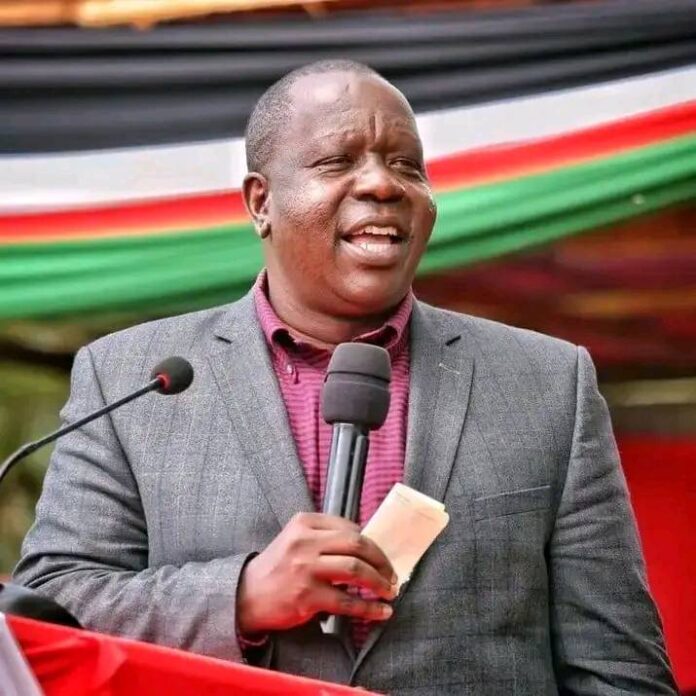
Matiang’i Supporters Plan Grand Homecoming in May with Major Nairobi Rally

Former Interior Cabinet Secretary Fred Matiang’i is poised to return to Kenya in May, signalling the commencement of his campaign for the 2027 presidential elections. 

The planned homecoming is being organized by a Nairobi-based central committee, supported by regional caucuses in Kisumu, Mombasa, Nakuru, and Nyeri, according to Kisii Senator Richard Onyonka, a key political ally.

Organizers anticipate a large turnout, drawing comparisons to Kenneth Matiba’s return in the early 1990s.

Upon arrival at Jomo Kenyatta International Airport, Matiang’i is expected to lead a procession through Nairobi’s Central Business District, culminating in a major rally, before embarking on a nationwide tour to engage with voters. 

This tour will serve as a precursor to the formal launch of his political party and campaign strategy.

Matiang’i’s entry into the presidential race sets the stage for a potential contest against incumbent President William Ruto and may also impact the political aspirations of other potential candidates, including former Chief Justice David Maraga.

Allies are considering various political vehicles to support his presidential bid. 

The Jubilee Party, linked to retired President Uhuru Kenyatta, has reportedly offered Matiang’i its presidential ticket.

Regional leaders from Kisii and Nyamira counties have formed the Taifa Alliance to consolidate support for Matiang’i within the Abagusii community.

In July last year, former Cabinet Secretary Fred Matiang’i entered into a consultancy agreement with the Canadian lobbying firm Dickens & Madson to bolster his efforts to run for President in 2027.

At the time of the agreement, Matiang’i had already made a down payment of $65,000 (Sh.8.4 million) and was set to pay a retainer of $250,000 (Sh.32.3 million).

The agreement stipulated that Dickens & Madson would provide “media and public relations services on behalf of the foreign principal’s (Matiang’i) goals and activities.”

The firm was also tasked with lobbying both the Executive and Legislative branches of the US government to garner support for his presidential ambitions.

Matiang’i had maintained silence regarding his political aspirations since leaving active politics in 2022, coinciding with the end of former President Uhuru Kenyatta’s tenure.

Mudavadi: Kenya receives 20 refugees from South Sudan daily

Prime Cabinet Secretary (CS) Musalia Mudavadi has revealed that Kenya receives 20 refugees from South Sudan on a daily basis.

Speaking at the Senate plenary on Wednesday, April 2, 2025, Mudavadi decried that the situation presents further challenges to the Foreign Affairs Ministry.

“The situation in South Sudan is getting worse, and we are beginning to see again another influx at the rate of about 20 refugees per day, so we are beginning to see certain circumstances that are giving us challenges,” he said.

The Foreign Affairs CS also decried that the country was still facing challenges from the Al Shabaab and the conflict around the Somali side.

He called for further enforcement of security measures across the country’s borders reiterating that Kenya was facing a serious security issue that needs to be dealt with both regionally and internally. 

 “We also still remain with challenges from the Al Shabaab and the conflict around the Somali side and we also have sporadic conflicts along the Marsabit-Ethiopian border from time to time. There is a serious security issue that has to be looked at regionally and internally by Kenya’s security forces,” the CS added. 

The CS equally affirmed the government’s stance on the compensation of Kenyan refugees in Ethiopia.

Mudavadi made it clear that the government will not compensate the refugees in Ethiopia, insisting that the state can only facilitate the return of the refugess and their reintegration into the community. 

“With regards to compensation, the government only facilitates return and reintegration into the Kenyan society for any Kenyan refugee granted asylum by any country. No compensations are paid by the government for any returning Kenyan,” Mudavadi said while responding to the question raised by Marsabit Senator Mohamed Chute.

He, however, issued some considerations the state will undertake regarding the situation. 

Mudavadi said the repatriation of the refugees should be undertaken for those willing in return. 

“What do we consider as the way forward? One, repatriation of the refugees should be undertaken for those who are willing to return, as it must be voluntary. Based on an informed choice and consent to return given by the refugees to avoid coercion and prosecution, and it should also be done with dignity, and we hope this process can commence as soon as possible.

“Kenya should also ensure refugee returnees are safe, devoid of discrimination, and provided with basic services and access to essential services to avoid being exposed to another cycle of displacement. We must also engage and coordinate with the UNHCR, the Kenyan government, and the Ethiopian government to facilitate the return of the refugees,” Mudavadi added. 

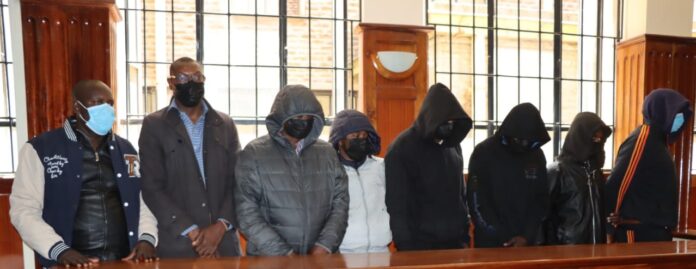
Court Detains Eight Suspects in Land Fraud Case for 10 Days

Milimani Magistrate’s Court on Wednesday, April 2, 2025, ordered the detention of eight individuals, including Emmanuel Mutuku Matheka, an officer at Ardhi House, for 10 days.

They are accused of involvement in land fraud and forging title deeds.

The Directorate of Criminal Investigations (DCI) is probing Matheka, who works at the Ministry of Lands, alongside Livingstone Ambayi, a police officer, Leonard Clifford from the Government Press, and several others.

The charges under investigation include conspiracy to defraud, forgery, making false documents, obtaining registration by false pretenses, abuse of office, and fraud.

According to Investigating Officer Nicolaus Osuri Otieno, searches conducted at the suspects’ offices and residences led to the discovery of forged land certificates, leases, title deeds, land transfer documents, allotment letters, and counterfeit stamps.

The recovered stamps were found to bear official markings from the State Department for Lands and Physical Planning, land registrars, land administrators, advocates, and the county governments of Kiambu and Nakuru. However, authorities confirmed that none of the arrested individuals held such official designations.

During the court proceedings, the prosecution argued against granting bail, stating that the suspects could interfere with ongoing investigations. The prosecution had initially requested 14 days to conclude their inquiries.

In response, the defense opposed the application, contending that the prosecution had failed to prove the suspects were a flight risk or that they would tamper with evidence.

Delivering her ruling, Milimani Court Principal Magistrate Rose Ndombi found merit in the prosecution’s request. She noted that the charges under investigation were serious and that there was a significant likelihood the suspects could interfere with witnesses or crucial evidence.

“Having carefully considered the matter before me, I find the application justified. I direct that the eight respondents be detained at Muthaiga and Ruaraka police stations, as capacity allows, for a period not exceeding 10 days,” Magistrate Ndombi ruled.

The case is scheduled for mention on April 11, 2025, at 9 a.m. for further directions.

390 Homa Bay youths fail German exams, lose chance to work in Europe

A German language program at Tom Mboya University has seen hundreds of enrolled learners dropping out due to challenges in mastering the language. 

The initiative, launched in mid-2024 following an agreement between Kenyan President William Ruto and the German government, aimed to address labour shortages in Germany, Austria, Switzerland, and other German-speaking nations by equipping young Kenyans with essential language skills.

The fully sponsored program began with 1,100 learners, but a substantial portion has struggled with the language proficiency exams required for advancement. The program was designed to prepare Kenyan youths for employment opportunities in German-speaking countries. 

According to German language examiner Peter Hauch, German-speaking countries have approximately 450,000 unfilled skilled labour positions annually, making proficiency in German a prerequisite for Kenyan candidates.

The course at Tom Mboya University prepares learners for rigorous A1, A2, B1, and B2 level exams to assess their readiness for international careers. However, only 710 of the initial cohort passed the initial assessments, while 390 dropped out after failing.

To support struggling learners, the program offers a second chance to retake exams within a month, rather than the standard four-month waiting period.

Despite this, many students have chosen to discontinue their studies, citing difficulties in language acquisition, loss of interest, or the pursuit of other employment opportunities. Gordon Opiyo, a German language training partner at Tom Mboya University, has emphasized the importance of perseverance and encourages learners to seize this potentially transformative opportunity.

Despite the challenges, remaining participants maintain optimism. Learners such as Jemima Orwa are utilizing self-study through online resources and peer group discussions to improve their language skills.

Bill Owuor expresses confidence in his ability to pass the exams and anticipates sending remittances home once employed in Europe. The program integrates financial literacy to ensure students are well-prepared for both professional and personal adaptation in a new cultural environment.

Eunice Mburu, CEO of 20X Entrepreneur, emphasizes the potential for remittances from Kenyan workers abroad to stimulate local economic growth. The program seeks to ensure earnings from overseas employment contribute to long-term investments rather than fleeting expenditures.

The German language program represents a key opportunity for Kenyan youths to access global labour markets. 

How one of the largest auto suppliers in the world is preparing for Trump’s tariffs

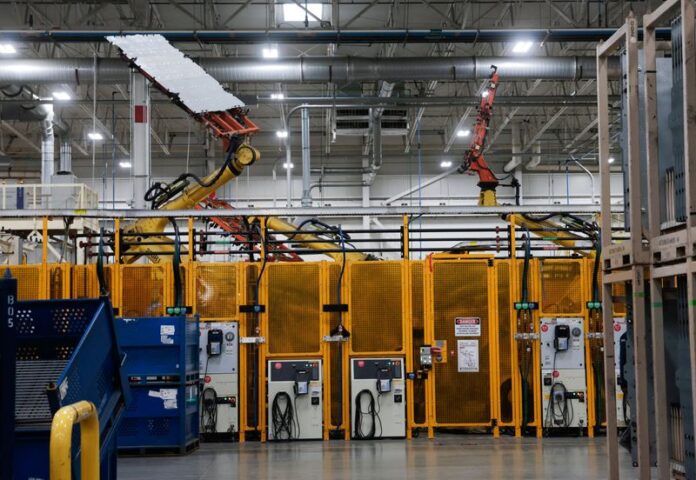
Robotic arms move material through the assembly process at the Magna Electric Vehicle Structures Facility, the manufacturing facility that builds battery enclosures for electric (EV) vehicles, in St. Clair, Michigan, U.S., March 31, 2025. REUTERS /Rebecca Cook

(Reuters) – Walking through a Michigan plant past whirring robotic arms and flying sparks, Swamy Kotagiri, the CEO of Canada-based auto supplier Magna (MG.TO), opens new tab reflected on how he is trying to “control the uncontrollable” in the midst of industry-shaking tariffs.

“We’ve had a series of black-swan events,” Kotagiri said. “Our industry really prospers with certainty and cadence and stability. And that’s what’s been missing in the last four years.”

The vastness of Magna’s facility in Michigan underscores its role as a key cog in the intricate global auto supply chain. The company has 59 facilities in the United States, 50 in Canada, and another 33 in Mexico, part of the legacy of the 1990s North American Free Trade Agreement that produced a highly intertwined system of sending parts from one country – and then back again – to produce cars in some of the world’s largest markets.

But Kotagiri and other leaders of auto companies are now facing an upended industry. President Donald Trump’s 25% tariffs on foreign auto imports announced at the end of March are expected to raise consumer prices, reduce demand and hit job growth. Magna, with more than 170,000 employees across 28 countries, dwarfs most of its large customers, including the likes of Ford, General Motors and Toyota.

Speaking just hours before Trump called for the 25% tariffs, Kotagiri said there was no “easy way to absorb this,” saying much of the cost would be passed on to consumers. Trump’s levies are expected to add thousands of dollars in cost per vehicle and billions for automakers and suppliers, analysts say.

‘FLEXIBILITY IS KEY’

Magna has already weathered union strikes, a semiconductor shortage and lower-than-expected EV demand. In the face of tariffs, Kotagiri said Magna is trying to be as flexible as possible, including at its EV structures facility in St. Clair, Michigan, where it cranks out battery enclosures for vehicles like GM’s Hummer and Silverado EV. If needed, the supplier can reprogram those swinging robotic arms to assemble frames or engine cradles, Kotagiri said.

“The world changed,” Kotagiri said. “Flexibility is key. We need to have the footprint, the capacity and the expertise to help.”

But its success may also depend on smaller suppliers, who are likely even more distressed.

“If you talk to small and mid-sized suppliers that support, like a Magna, I mean, talk about panic,” said Laurie Harbour, whose team focuses on automotive suppliers at advisory firm Wipfli. “Their cost has gone up so much and the revenues are still so soft,” she said, adding that it is “putting pressure on their viability as a business.”

Massive companies like Magna also have to trace where their products land and how many times they cross borders. Some suppliers surprisingly don’t have complete visibility into this, Harbour said.

There may be more demand for Magna’s U.S. business as automakers expand production stateside to avoid tariffs. Last month, Hyundai announced a $21 billion investment in the United States, and supplier Lear said it could expand as well. On the other hand, S&P Global Mobility estimates that the rising cost of autos could sap U.S. sales, cutting annual vehicle deliveries by more than 1 million from its current 16 million.

For new growth, Magna is looking in the same direction as many others – China, the world’s largest car market. Magna’s China business accounted for 13% of the company’s overall revenue, where it has 69 manufacturing facilities that employ more than 30,000 people

When Chinese businesses “start thinking of either exports or coming to Europe or other parts of the world, we believe we have the seat at the table,” Kotagiri said.

USAID cuts put US on sidelines of Myanmar aid, former officials say

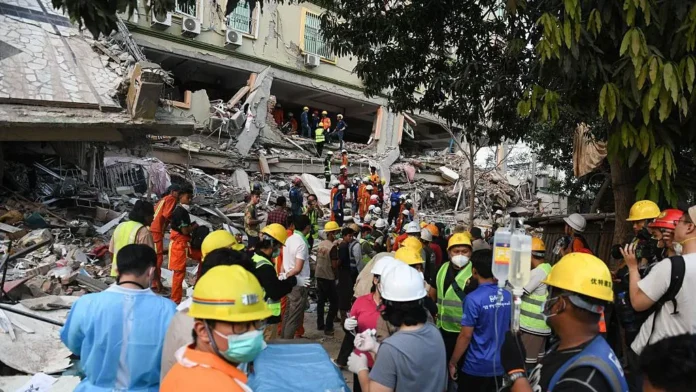
The US has been unable to meaningfully respond to the Myanmar earthquake due to the Trump administration’s decision to slash foreign aid, according to three former senior US officials.

One former US Agency for International Development (USAID) mission director for Myanmar told the BBC that “America has been on the sidelines” after the disaster.

“The US basically was not there for the rescue-window period,” said another official. All three suggested the deep cuts to aid probably cost lives.

A 7.7 magnitude earthquake struck on Friday, leaving at least 2,700 people dead, more than 4,500 injured and hundreds still missing, according to the country’s military. Those figures are expected to rise.

The former USAID officials said the agency mobilised Disaster Assistance Response Teams (Darts) from the US after previous major earthquakes. Comprised of highly trained rescuers, sniffer dogs and specialist equipment, the teams are immediately made ready then dispatched when the affected country requests them.

A typical deployment, like that sent to the Turkey-Syria earthquake in 2023, could comprise some 200 people – the majority of them rescue workers. US teams are often the biggest of all foreign assistance groups on the ground.

The US Department of State said on Monday a US team based in the region was on its way to Myanmar. It is believed to comprise three people who are advisers, not rescuers.

The state department also said it was donating $2m (£1.6m) to humanitarian assistance organisations to support earthquake-affected communities. This figure is significantly smaller than previous US government donations during disasters, according to the former officials.

President Donald Trump’s adviser Elon Musk is finalising the shutdown of USAID after weeks spent dismantling the agency and placing staff on administrative leave. Trump targeted foreign assistance on his first day in office, calling it an “industry” that was in many cases “antithetical to American values”.

On Friday, after the earthquake struck, the White House attempted to mobilise a Dart team, according to Andrew Natsios, who served as USAID administrator in George W Bush’s administration. But, he said, it couldn’t because key officials were on administrative leave.

“The problem is they fired most of the 500 people that make up the Bureau of Humanitarian Assistance, so obviously there are no people [from the bureau] to be on the Dart team to be sent – and the people have to be trained and be familiar with disaster relief operations,” he said.

Staff at the Bureau of Humanitarian Assistance received letters of termination the day the earthquake struck, said Chris Milligan, who served as USAID Mission Director in Myanmar from 2012 to 2016.

“The employees… were told to go home by one o’clock. Everyone was told. All employees in that building were told to go home at one o’clock, and then they were told later to come back,” said Mr Milligan.

“It shows the lack of management and the confusion that there was an earthquake earlier, and they didn’t have the foresight to say ‘Okay, let’s retain these people’.”

Two of the former USAID officials said the administration couldn’t deploy US search and rescue teams, sniffer dogs and specialist equipment to Myanmar because logistics contracts to transport them from Virginia and California had been cancelled as part of the cuts, led by Musk’s Department of Government Efficiency (Doge).

“It is the first time that I can think of that the US has simply not responded meaningfully to a major disaster,” said Jeremy Konyndyk, who ran the USAID Office of US Foreign Disaster Assistance (OFDA) from 2013 to 2016.

He said for the last few decades, with every disaster on this scale, the US would be the largest and most capable team on the ground.

“You’ve got 75 to 100 people, the dogs and it’s a pretty substantial lift [which] you’ve got to get there, operating and excavating piles, within the first really four days.”

“The US basically was not there for the rescue window, period. And it’s too late,” said Mr Konyndyk.

It’s unlikely the agency could reactivate logistics contracts in time for a Dart team to Myanmar in time to save lives, he said. “If you wanted to issue new ones, the people who could issue new contracts and do the tenders for that, they’ve all been fired,” explained Mr Konyndak.

The US state department rejects the notion that the cuts have impacted disaster relief in Myanmar.

The department had partners it worked with “that may not require us to be physically present”, spokeswoman Tammy Bruce said on Monday.

“With the reform that the government is going through with the lead of President Trump… certain things won’t necessarily look the same. But the success in the work and our impact will still be there,” she said.

However, Mr Konyndyk described the claim as “fantasy land”.

“You can’t pull people out of a building virtually, you can’t excavate, you can’t do live rescues from a collapsed building without boots on the ground,” he said.

Chris Milligan, the former USAID mission director for Myanmar, said the rescue capacity available in the United States would double the capacity already on the ground in Myanmar.

“This is the new normal. This is what it looks like when the United States sits on the international sidelines, when the United States is a weaker international player, when it cedes the space to other global players like China,” said Mr Milligan.

The state department told the BBC it did not intend to deploy a Dart team to Myanmar, adding it was continuing many existing lifesaving programs and strategic investments that “strengthen our partners and our own country”.

A state department spokesperson said: “USAID has contracts in place with Urban Search and Rescue Teams to assist in responding to disasters.”

“[A] USAID team of humanitarian experts based in the region are traveling to Burma to assess additional needs,” the spokesperson continued.

“A Dart is essentially a coordination mechanism. We are able to coordinate with our partners for this specific response without a Dart. Every response is different,” added the spokesperson.


Create a free account, or log in.

Gain access to read this content, plus limited free content.

Yes! I would like to receive new content and updates.

Sponsored Ad

Ad 1
Ad 2
Ad 3
Ad 4
Ad 5
Ad 6