Sponsored Ad

Ad 1
Ad 2
Ad 3
Ad 4
Ad 5
Ad 6
24.1 C
Kenya
Sunday, April 26, 2026
Home Blog Page 1935

Traders Face Heavy Losses After Fire Ravages Gikomba Market Again

Written by Kelly Were

Traders at Gikomba market are counting heavy losses after an early morning fire ravaged the ‘Kwa Mbao’ area on Tuesday. 

The blaze, which broke out around 3 a.m., destroyed at least 500 businesses and affected sections of the nearby bus station. 

Although the exact cause of the fire remains unclear, many traders suspect it could have been caused by a power fault. 

This incident follows a similar fire just a month ago, on March 1, which also left traders devastated.

Gikomba market has a long history of frequent fires, often leaving traders with millions of shillings in damages. 

The ‘Kwa Mbao’ section, in particular, has been a frequent target. Traders have long suspected foul play, with some believing the fires are acts of deliberate arson aimed at pushing vendors out of the area. 

In response, over 900 traders who have suffered from these fires filed a lawsuit against the Nairobi County Government in 2021, seeking Ksh20 billion in compensation for their losses. They argue that the county has failed to take adequate action to prevent the fires.

Nairobi Governor Johnson Sakaja, who took office in 2022, has acknowledged the problem and promised to take action to protect Gikomba from land grabbers, who are believed to be behind some of the fires. 

While the latest blaze continues to be investigated, traders are once again left to pick up the pieces, hoping for stronger measures to prevent future incidents.

High Court Cancels Government’s eCitizen School Fees Rule

Written by Kelly Were

The High Court has stopped the government’s rule that parents should pay school fees through the eCitizen platform, calling it unconstitutional.

Judge Chacha Mwita made the decision after Nakuru-based activist Magare Gikenyi and the Law Society of Kenya (LSK) challenged the rule. 

They argued that the government did not involve the public or other important groups in the decision.

This ruling follows a temporary halt of the rule in February 2024, while the case was being decided.

Lawyer Omochokoro O’mong’oni, who represented LSK, said the court found the Ministry of Education’s rule to be unfair and illegal.

In February 2024, President William Ruto had defended the rule, saying that using eCitizen to pay school fees and other government fees would continue.

 He pointed out that reducing over 3,000 payment numbers to one had helped the government keep track of money and prevent theft. 

The President also said the government was committed to fully switching to digital payments to stop misuse of public funds.

Public Service Commission Announces Over 240 Job Vacancies

Written by Kelly Were

The Public Service Commission (PSC) has advertised 243 job openings across various government ministries, offering opportunities in senior and mid-level positions.

The announcement was made on Tuesday, April 1, through the official government publication, MyGov.

The National Treasury has several openings, with 18 positions available. These include roles such as Senior Deputy Director, Deputy Director, and Assistant Director in Macro and Fiscal Policy.

Additionally, the ministry is seeking a Director General for Economic Planning and a Secretary for Economic Planning Monitoring.

The State Department for Lands and Physical Planning has listed 23 vacancies, including a Senior Deputy Director for Physical Planning and Assistant Directors for Land Valuation and Cartography.

In the Foreign Affairs Ministry, 22 roles are open, including a Director General for Foreign Affairs and multiple Deputy Director General positions. The department is also recruiting Secretaries for foreign service management.

The State Department for Housing and Urban Development has the highest number of vacancies, with 44 positions available.

These include Director of Housing Infrastructure, Director of Urban Governance, and several Deputy Director roles in housing, urban planning, and estate management.

Other ministries with openings include Energy (27 positions), Wildlife (7), Blue Economy and Fisheries (2), and Gender and Affirmative Action (2).

The PSC emphasized that recruitment is aimed at improving service delivery and inclusivity.

Interested applicants must apply online through the PSC portal by April 22. The commission warned against fraudsters soliciting bribes, reiterating that the process is free and merit based.

Sudan Ends Ban on Kenyan Tea Due to Economic Pressure

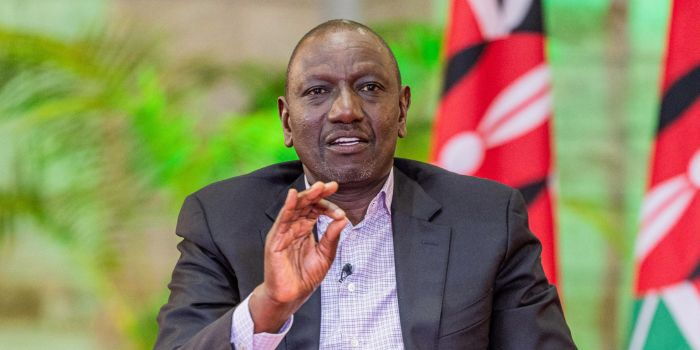
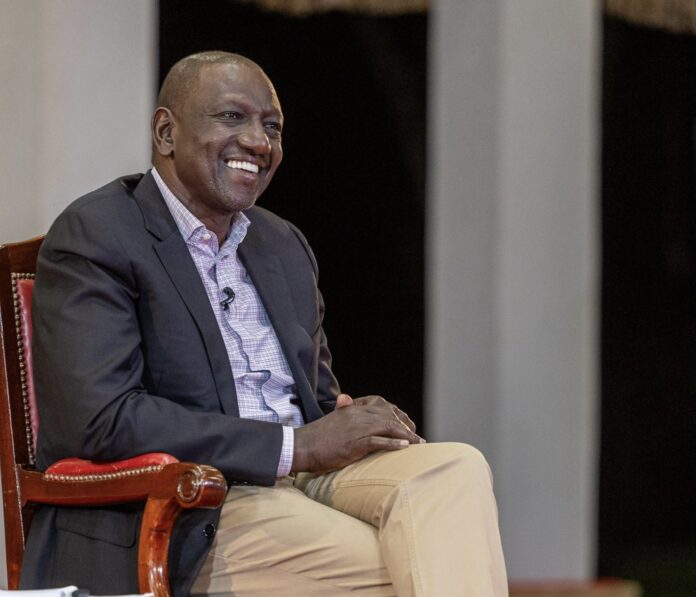
President William Ruto while addressing the nation during an interview with local media at Sagana State Lodge, March 31, 2025

Written by Lisa Murimi

Sudan has lifted its ban on Kenyan imports, including tea, less than three weeks after imposing it. 

President William Ruto confirmed this on Monday night, saying the decision was driven by economic reasons.

Speaking at Sagana State Lodge, Ruto stated that economic realities had compelled Sudan to restart tea imports from Kenya, bringing relief to farmers who depend on tea exports.

“Even after they said they are not buying our tea, the market itself has forced them,” Ruto said during the interview at Sagana State Lodge.

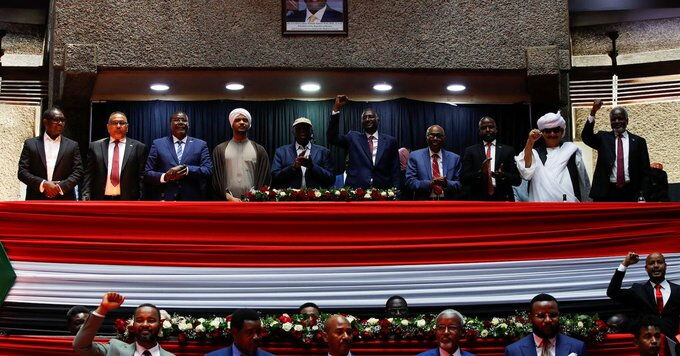
Sudan had banned Kenyan imports on March 14 after the paramilitary Rapid Support Forces (RSF) signed a charter in Kenya to form a rival government. 

The Sudanese military said the ban was to protect national security.

“The import of all products coming from Kenya through all ports, crossings, airports, and ports will be suspended as of this day until further notice,” a decree issued by Sudan’s Ministry of Trade stated.

However, Sudan’s economy is struggling, and inflation is high, making it hard to maintain the ban. 

Before the war, Sudan bought about $37 million (Ksh 5 billion) worth of Kenyan tea every year. In 2024, this amount dropped to $18 million (Ksh2.3 billion) due to the ongoing conflict.

Besides tea, Kenya also exports food and medicine to Sudan, making trade important for both countries. 

The decision to resume tea imports will help rebuild business ties and ensure stable trade between the two nations.

President Ruto Explains ‘Costly’ Delay In Nithi Bridge Promise 

The reconstruction of the infamous Nithi Bridge had hit a financial roadblock, with President William Ruto revealing that the project faces costly alternatives. 

Speaking to Mt Kenya media, Ruto stated that the government has been presented with two options: reconstructing the bridge at a staggering cost of Ksh 50 billion or improving an alternative route to enhance safety.

The Nithi Bridge, located on the Meru-Embu highway, has long been a blackspot, claiming countless lives due to its treacherous curves and steep gradient. 

Constructed in 1983, the 50-metre-long bridge has witnessed multiple tragic accidents, including a 2022 crash involving a Mombasa-bound bus that left 36 people dead. In 2000, another horrific accident at the bridge claimed 45 lives, cementing its reputation as one of Kenya’s deadliest roads.

The Kenya National Highway Authority (KeNHA) has outlined three key proposals to address the issue. 

The first is redesigning the bridge to eliminate dangerous curves and improve its gradient. 

The second option involves upgrading the Old Marima Road, an alternative route that remains in poor condition but could offer a safer passage.

All these according to President William Ruto, were rendered unviable due to budget constrains that were orchestrated by the dropping of the Finance Bill 2024. 

The bill that was forcefully abandoned due to resistance by Kenyans, contained solutions to bridge the infrastructure funding gap. 

However President Ruto has revealed that Kenya is in a good place financially and will allocate funding for a cost appropriate financing option. 

While the government grapples with budget constraints, the pressing need for a lasting solution remains, as every day the bridge remains unchanged, it continues to pose a threat to motorists.

Stocks stabilise, gold hits record before Trump tariff reveal

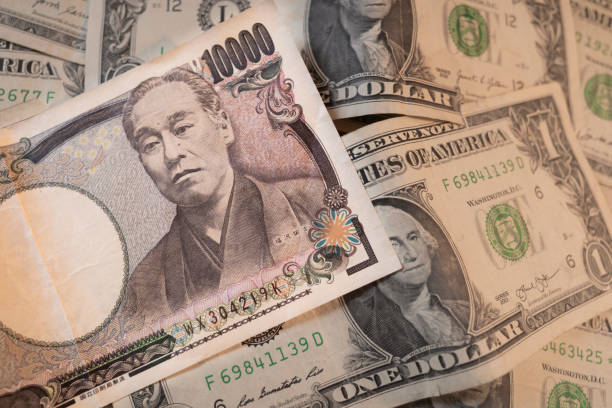
Stock images of a 10,000 Yen note and $1 US Dollar notes. The Japanese yen has recently plummeted to a 37-year low, falling below 160 against the U.S. dollar. This significant depreciation is the weakest the yen has been since 1986, leading to heightened expectations of market intervention by Japanese authorities. The yen's decline, which hit 160.82 during trading, has prompted concerns and speculations about potential actions from Japan's Ministry of Finance to stabilize the currency. This situation follows previous interventions earlier this year, where Japan spent over $61 billion to support the yen. The persistent weakness of the yen, despite these efforts, is attributed to various factors, including speculative trading and differing monetary policies between Japan and the United States

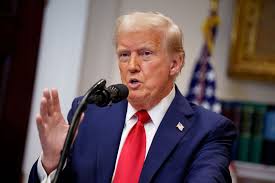
Asian stocks climbed on Tuesday, buoyed by Wall Street’s overnight gains. Gold reached a record high, and Treasury yields dropped as investors awaited more information on U.S. President Donald Trump’s proposed reciprocal tariffs.

The Japanese yen gained strength as demand for safe-haven assets rose. In contrast, the Australian dollar came under pressure following a weaker-than-expected retail sales report, ahead of the Reserve Bank of Australia’s policy announcement later in the day.

Regional stocks found some relief on the first day of April after experiencing heavy losses in March, driven by concerns that Trump’s trade war might lead to stagflation or even a potential U.S. recession.

Investors are anxiously anticipating April 2, which Trump has called “Liberation Day,” a day when he plans to announce a significant reciprocal tariff plan.

Japan’s Nikkei gained 0.7%, South Korea’s KOSPI advanced 1.4%, and Taiwan’s equity benchmark climbed 1.7%, recovering from significant declines on Monday.

In Hong Kong, the Hang Seng rose by 1%, while mainland China’s blue-chip stocks inched up by 0.1%.

The U.S. S&P 500 (.SPX) rose by 0.55% on Monday, ending a three-day losing streak, although futures indicated a 0.54% decline.

Tony Sycamore, an analyst at IG, commented, “A significant portion of the rebound in major Wall Street indices could have been driven by month-end and quarter-end rebalancing, along with short covering ahead of Trump’s Liberation Day, amid ongoing uncertainty about what comes next.”

Sycamore further noted, “U.S. equity markets are currently priced for a slowdown in growth and earnings, but not for a recession. If the U.S. economy were to enter a recession, stock markets could easily drop another 10%.”

Gold prices surged to a record high for the fourth consecutive session, reaching $3,139.78 per ounce.

Kyle Rodda, a senior financial markets analyst at Capital.com, explained, “In addition to general risk aversion, investors are increasing their allocations to gold due to concerns over the Trump administration’s trade policy, which threatens the dollar’s status as the world’s primary reserve currency.”

Rodda concluded, “The fundamental outlook for gold remains strong.”

“Stocks Decline As Gold Surges Amid Tariff-Driven Recession Concerns”

Global equity markets declined on Monday, while safe-haven gold surged to a new record high after U.S. President Donald Trump announced that tariffs would apply broadly to nearly all countries. His remarks heightened concerns that an escalating global trade war could trigger a recession.

Speaking to reporters aboard Air Force One, Trump’s statement dampened expectations that the tariffs would be restricted to a select group of nations with the most significant trade imbalances.

On Wall Street, benchmark S&P 500 and the Dow reversed losses in early trade and finished higher with gains in consumer staples, financials, materials and energy stocks. The Nasdaq ended down. All three indexes notched both quarterly and monthly losses.

“What the Trump administration has shown us so far is that you should not expect a consistent approach,” said George Lagarias, chief economist at Forvis Mazars.

“This is what scares the market the most. Inconsistency breeds uncertainty, and markets hate uncertainty.”

The Dow Jones Industrial Average (.DJI) climbed 1.00%, closing at 42,001.76, while the S&P 500 (.SPX) gained 0.55%, reaching 5,611.85. In contrast, the Nasdaq Composite (.IXIC) dipped 0.14% to 17,299.29.

In Europe, the STOXX 600 (.STOXX) dropped 1.51%, marking its lowest level in nearly eight weeks. Major indices in Frankfurt (.GDAXI), London (.FTSE), and Paris (.FCHI) also saw declines ranging between 1.7% and 2%. Meanwhile, MSCI’s broad Asia-Pacific index (.MIAPJ0000PUS) excluding Japan slid 1.9%.

Analysts at Goldman Sachs have raised the likelihood of a U.S. recession to 35%, up from their previous estimate of 20%. They anticipate that Trump will announce new tariffs averaging 15% across all U.S. trading partners on April 2.

Economic data released on Friday highlighted growing risks, as a key core inflation measure rose higher than expected in February, while consumer spending fell short of forecasts.

That raised the stakes for the March payrolls report due on Friday, where any outcome below the 140,000 gain expected would only add to recession fears.

“The current market narratives center on this fear of stagflation, which conceptually could be the worst possible combination for stocks,” said Talley Leger, chief market strategist at The Wealth Consulting Group in New Jersey.

“So in a slowing growth environment, earnings would decelerate, or even collapse in a recession. That’s another big fear in the market. And on the other side, spiralling inflation would squeeze stocks on the valuation channel.”

Gold prices extended their stellar run, hitting another record high of $3,128.06. Spot gold rose 1.31% to $3,124.34 an ounce, while U.S. gold futures rose 1.2% to settle at $3,150.30.

In currency markets, the dollar pared early losses to strengthen against the Japanese yen and the euro amid the uncertainty around tariffs.

Against the Japanese yen , the dollar strengthened 0.07% to 149.93. The euro was down 0.11% at $1.0815. Against the Swiss franc , the dollar strengthened 0.48% to 0.884 franc.

The dollar index , which measures the greenback against a basket of currencies, including the yen and the euro, rose 0.17%.

Bond investors seemed to be betting the slowdown in U.S. economic growth will outweigh a temporary lift in inflation and prompt the Fed to cut rates by about 80 basis points this year.

The yield on benchmark U.S. 10-year notes fell 3.5 basis points to 4.221%. In Europe, the yield on the benchmark German 10-year Bunds rose 0.9 basis points to 2.738%.

The outlook for rates could become clearer when Fed Chair Jerome Powell speaks on Friday, following a host of other Fed speakers this week.

Brent rose 1.5% to settle at $74.74 a barrel, while U.S. West Texas Intermediate crude rose 3.1% to settle at $71.48 as Trump threatened secondary tariffs on buyers of Russian oil if he felt Moscow was blocking efforts to end the war in Ukraine.

China, Japan, South Korea will jointly respond to US tariffs

China, Japan, and South Korea have agreed to coordinate their response to U.S. tariffs, according to a social media post affiliated with Chinese state broadcaster CCTV. However, South Korea has downplayed this assertion, calling it “somewhat exaggerated.”

The report follows the first economic dialogue between the three nations in five years, held on Sunday. The discussions aimed to strengthen regional trade ties as these leading Asian exporters brace for the impact of U.S. tariffs imposed by President Donald Trump.

According to the Weibo account Yuyuan Tantian, Japan and South Korea are exploring ways to import semiconductor raw materials from China, while China is interested in acquiring chip products from Japan and South Korea. The post also mentioned that the three nations agreed to enhance supply chain collaboration and hold further discussions on export controls.

When asked about this claim, a spokesperson from South Korea’s trade ministry stated that the characterization of a “joint response to U.S. tariffs” seemed exaggerated. The spokesperson instead pointed to the official joint statement, which emphasized economic and trade cooperation.

During the meeting, the three trade ministers committed to expediting negotiations for a trilateral free trade agreement to support both regional and global commerce, as noted in the statement released after the talks.

“The three countries discussed the global trade environment, and as reflected in the joint statement, they acknowledged the necessity of continued economic and trade collaboration,” the South Korean trade ministry spokesperson said.

Japan’s foreign ministry has yet to issue a response regarding the report.

The meeting of trade ministers comes just ahead of President Trump’s anticipated tariff announcement on Wednesday, dubbed “Liberation Day,” signaling further shifts in Washington’s trade policies.

Despite their economic interdependence, China, Japan, and South Korea continue to grapple with regional disputes, including territorial disagreements and Japan’s handling of wastewater release from the damaged Fukushima nuclear power plant.

Ruto: CS Muturi Sacked Himself!

President William Ruto has defended his decision to drop former Public Service Cabinet Secretary Justin Muturi in the recent Cabinet reshuffle, stating that the former Attorney General had struggled to deliver in his previous roles.

Speaking during a media roundtable at Sagana State Lodge on Monday, Ruto revealed that Muturi himself had admitted to challenges when first appointed as Attorney General, citing his long absence from legal practice after years in politics.

“He said he might get overwhelmed. It was my fault because I persuaded him, but after some time, I saw he was struggling, so I decided to move him to the Public Service Ministry,” Ruto explained.

However, the President claimed that even in his second role, Muturi disengaged from his duties, skipping Cabinet meetings and effectively sidelining himself.

“In between, he went on strike from attending Cabinet meetings. You are a minister, but you are on strike—what was I supposed to do?” Ruto posed.

Despite their long-standing friendship, Ruto asserted that Muturi’s actions left him with no choice but to let him go.

“I believe in second chances, and I gave him one. But he chose to do as he pleased. It’s not the end of the road for him; he has a good pension as a former Speaker, so he won’t suffer much,” the President added.

Muturi has yet to publicly respond to Ruto’s remarks.

Ruto Dismisses Political Tensions As He Kicks Off Mount Kenya

President William Ruto has downplayed concerns over political tensions as he embarks on a nine-county tour of the Mt. Kenya region, asserting that his bond with the people remains strong despite recent upheavals.

Speaking during a roundtable interview with vernacular stations on Monday, Ruto dismissed claims that his support in the region had waned following the impeachment of his former deputy, Rigathi Gachagua.

“I have been visiting Mt. Kenya for over 20 years. This is not a friendship of months or days; it is one built over decades. Such a bond cannot be questioned based on a few months of political shifts,” Ruto stated.

A Tour to Defend His Scorecard

The President’s visit comes at a crucial time when Gachagua has positioned himself as the region’s opposition leader, accusing Ruto of sidelining Mt. Kenya after securing the presidency. However, Ruto insists that his government has delivered tangible projects for the region and aims to set the record straight.

“I am here because I was given a mandate by the people of Kenya, including those from Central Kenya. From tomorrow, it will be evident whether I have fulfilled my promises,” Ruto stated.

His itinerary includes inspecting and launching major infrastructure projects, including road networks, affordable housing programs, and electricity connectivity.

A Direct Jab at Gachagua

Responding to criticism from his former deputy, Ruto dismissed claims that he had neglected Mt. Kenya, pointing to key projects initiated under his leadership.

“I have heard some leaders claim that I have done nothing. But I was the one who started the road project from Marua, passing through Wamunyoro, where this same critic resides. That road was built under my leadership,” he remarked, in a pointed jab at Gachagua.

The comments signal Ruto’s intent to counter Gachagua’s growing influence in the region, especially as the former deputy president consolidates support among discontented leaders and voters.

The Mt. Kenya Political Storm

The visit comes against the backdrop of political unrest in the region, with Gachagua rallying leaders who feel the government has not prioritized their interests. The former DP has been vocal in demanding that Mt. Kenya receive its fair share of national resources and appointments, a message that has resonated with sections of the electorate.

Further complicating matters, Ruto recently accused Gachagua of attempting to extort Ksh.10 billion from him, claiming the funds were necessary to “fix” Mt. Kenya politics ahead of 2027.

With tensions running high, Ruto’s tour will be a defining moment in his quest to reaffirm his grip on the region. Will his development agenda be enough to calm the storm, or is Mt. Kenya slipping from his grasp? The coming days will reveal whether his long-standing relationship with the region remains intact or if Gachagua’s rebellion is gaining traction.

Create a free account, or log in.

Gain access to read this content, plus limited free content.

Yes! I would like to receive new content and updates.

Sponsored Ad

Ad 1
Ad 2
Ad 3
Ad 4
Ad 5
Ad 6