Sponsored Ad

Ad 1
Ad 2
Ad 3
Ad 4
Ad 5
Ad 6
25.1 C
Kenya
Sunday, April 26, 2026
Home Blog Page 1950

The Plight Of American Deportees Under Trump Order

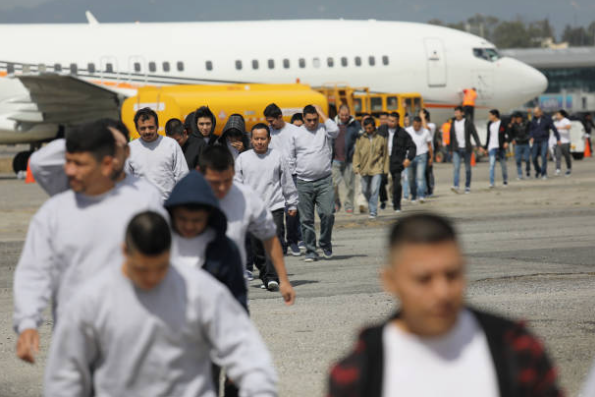
Gertrudis Pineda is on the verge of collapse, overwhelmed by the lack of information about her son, Oscar—one of 238 Venezuelans deported by the U.S. to a maximum-security prison in El Salvador.

The mere mention of Oscar’s name brings her to tears.

“My son only wanted to pursue the American Dream, but now he’s trapped in a nightmare,” she sobs.

Oscar had been living in Dallas, Texas, working as a carpet installer in apartments. “He helped me by sending money for the family and for his father’s diabetes medication,” Gertrudis explains.

Now, she is 1,800 kilometers away, speaking from the sweltering heat of Zulia state in western Venezuela. Between them lie six national borders and the fortified walls of Cecot—El Salvador’s infamous “Terrorism Confinement Centre,” a prison built to house violent members of the MS-13 and 18th Street gangs.

The U.S. government claims the Venezuelans detained at Cecot are members of the Tren de Aragua gang. Under the 1798 Alien Enemies Act, the Trump Administration deported them without due legal process, ignoring a federal judge’s order to turn the planes around—bringing the U.S. Justice Department into direct conflict with the court.

Gertrudis had known that U.S. Immigration and Customs Enforcement (ICE) agents had detained her son, but she believed he was still in Texas and likely being sent back to Venezuela. The shocking truth only surfaced when her other son, who lives in Colombia, saw Oscar’s name on a televised list of detainees.

Shortly after, images emerged of the 238 Venezuelans having their heads shaved as they were processed at Cecot. Among them, Gertrudis recognized Oscar by the rose tattoo on his forearm.

The White House maintains that those deported to Cecot were thoroughly vetted. Trump Administration officials insist they are dangerous gang members—despite acknowledging in court documents that many have no U.S. criminal record.

While El Salvador’s president, Nayib Bukele, and his supporters hail Cecot as the ultimate solution to gang violence, human rights activists describe it as “a black hole of human rights violations.”

Trump Targets ‘Anti-American Ideology’ in Smithsonian Museums

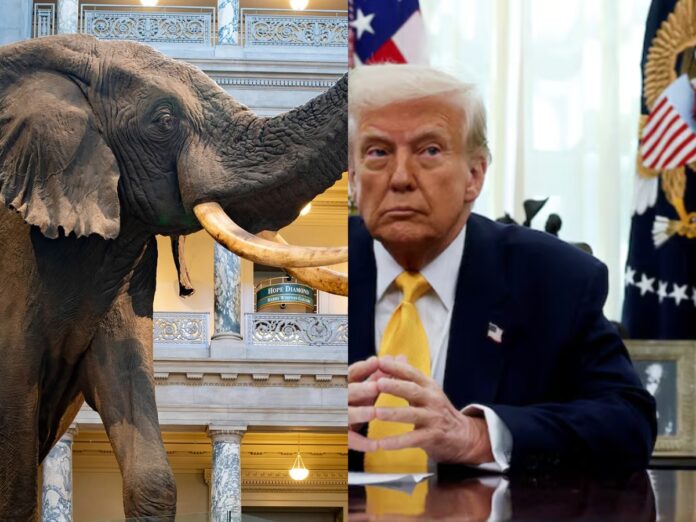
U.S. President Donald Trump has signed an executive order aimed at the Smithsonian Institution, which oversees more than 20 museums and research centers visited by millions each year in Washington, D.C., and New York City.

The order directs Vice President JD Vance to “eliminate improper, divisive, or anti-American ideology” from Smithsonian museums, research centers, and the National Zoo in Washington. It also instructs the Secretary of the Interior to restore federal properties—including parks, memorials, and statues—that have been “improperly removed or altered in the past five years to promote a false revision of history.”

This move is part of Trump’s broader effort to reshape American culture alongside politics.

Titled “Restoring Truth and Sanity to American History,” the order appoints Vice President Vance, a Smithsonian Board of Regents member due to his government position, to lead the initiative. The order also calls on Congress to withhold funding from Smithsonian exhibits and programs that “divide Americans by race.”

It specifically criticizes the upcoming American Women’s History Museum, alleging that it plans to “recognize men as women.” Additionally, it targets the National Museum of African American History and Culture, accusing it of portraying “hard work, individualism, and the nuclear family” as aspects of “White culture.” The museum, which opened in 2016 during President Barack Obama’s final year in office, has been a focal point for discussions on race and history.

The Smithsonian museums provide free admission to between 15 and 30 million visitors annually and operate 21 locations across Washington, Virginia, and New York. Among them are the National Museum of American History, the National Portrait Gallery, the American Art Museum, and the National Zoo.

The executive order also directs Interior Secretary Doug Burgum to carry out “restorations and improvements” at Independence Hall in Philadelphia, ahead of the 250th anniversary of the Declaration of Independence’s signing.

Trump has made it a priority to reshape American cultural institutions, arguing that they have been influenced by “woke” left-wing ideology. His administration has taken steps to eliminate diversity, equity, and inclusion programs from federal agencies—moves that have sparked legal challenges.

Shortly after taking office, Trump also dismissed the board of the John F. Kennedy Center for the Performing Arts in Washington, D.C., appointing himself as chairman. The decision drew backlash from actors and directors, leading several to cancel upcoming performances.

FKF Suspends Patrick Matasi For 90 Days

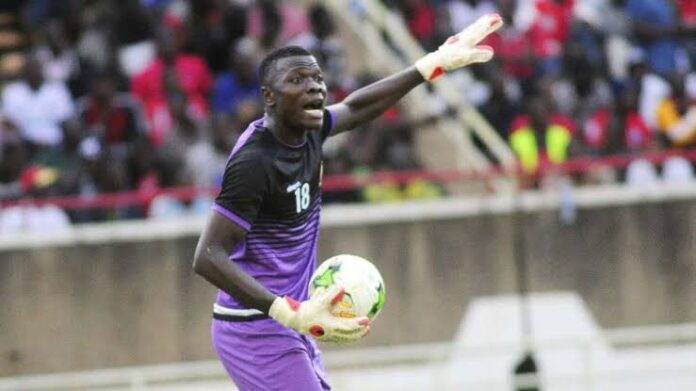
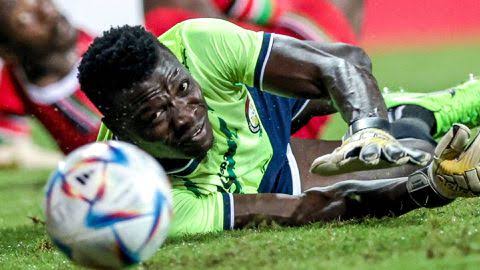
The Football Kenya Federation (FKF) has provisionally suspended Kakamega Homeboyz goalkeeper Patrick Matasi from all FKF-sanctioned events and competitions for 90 days amid allegations of match-fixing.

The decision follows the circulation of videos allegedly implicating Matasi in match manipulation discussions. FKF cited Section VII (2) of its Anti-Match Manipulation Regulations (2016) as the basis for the suspension, which has been formally communicated to both the player and his club.

FKF, in collaboration with FIFA, CAF, and other relevant bodies, has launched a full-scale investigation into the allegations. “We remain committed to safeguarding the integrity of football and ensuring a fair, transparent process for all parties involved,” the federation said in a statement.

Matasi, a former Harambee Stars goalkeeper, had earlier denied involvement, with Kakamega Homeboyz officials stating they would not take action without verified evidence. However, with FKF stepping in, the player’s immediate future in football now hangs in the balance.

As investigations proceed, FKF has urged anyone with credible information to come forward. The case marks a significant test of Kenya’s efforts to curb match-fixing in local football.

It Wasnt Me! Patrick Matasi Denies Match-Fixing Allegations

Kakamega Homeboyz goalkeeper Patrick Matasi has denied involvement in an alleged match-fixing scandal after videos surfaced online appearing to show him discussing plans to manipulate a football match.

Club chairman Cleophas Shimanyula revealed that he shared the videos with Matasi, who firmly denied any knowledge of them. “He told me that he knows nothing about these videos. He is shocked,” said Shimanyula.

Attempts to reach the 37-year-old former Harambee Stars goalkeeper for comment were unsuccessful.

The videos, widely circulated online, show an individual, alleged to be Matasi, seated inside a vehicle receiving instructions on match-fixing. Another clip features a conversation about conceding two goals in the first half of a match to influence betting outcomes.

Despite the controversy, Kakamega Homeboyz has opted not to take action against Matasi, citing the lack of verified evidence. “We don’t know if it’s a camera trick. We cannot act on rumors,” said Shimanyula.

Team Manager Boniface Imbezi echoed this stance, stating that Matasi remains focused on training and will be available for selection in their upcoming match against KCB.

Meanwhile, the Football Kenya Federation (FKF) has launched an investigation in collaboration with FIFA, CAF, and other relevant bodies.

“We reaffirm our zero-tolerance policy on match manipulation,” FKF said in a statement, urging the public to provide any credible information.

Matasi, who has previously faced scrutiny over costly errors at both club and national level, remains under the spotlight as the investigation unfolds.

10,000 Health Workers To Lose Jobs As RFK Jr. Announces Sweeping Overhaul

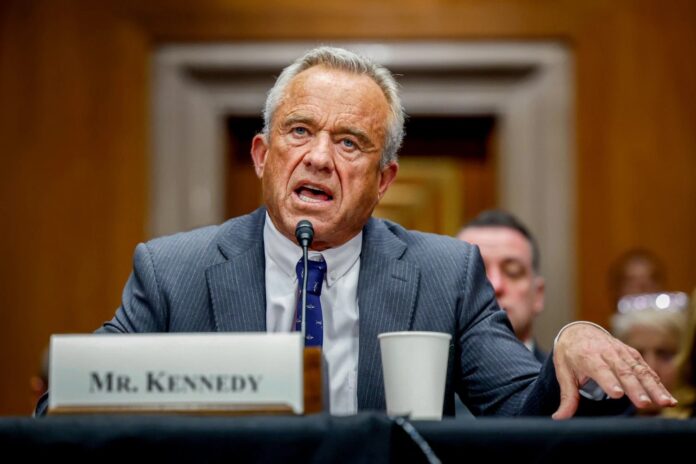
U.S. Secretary of Health and Human Services (HHS) Robert F. Kennedy Jr. has unveiled a major restructuring plan for federal public health agencies, including a reduction of 10,000 jobs and the consolidation of key functions within the FDA, CDC, and NIH.

The job cuts will affect 3,500 positions at the Food and Drug Administration, 2,400 at the Centers for Disease Control and Prevention, and 1,200 at the National Institutes of Health. Combined with 10,000 voluntary departures in recent months, the HHS workforce will shrink from 82,000 to 62,000 employees.

Kennedy defended the move as a necessary measure to reduce inefficiencies. “Bureaucracies like HHS become wasteful over time, even when most staff are dedicated civil servants. This overhaul will benefit taxpayers and improve public health services,” he said.

Critics warn that the cuts could disrupt drug approvals and patient access to treatments. “There’s a real risk of delays in drug and medical device reviews,” said Eva Temkin, a regulatory lawyer.

The restructuring will also consolidate 28 HHS divisions into 15, including a new Administration for a Healthy America (AHA) to oversee addiction, occupational safety, and toxic substances. Additionally, the Administration for Strategic Preparedness and Response will be merged into the CDC.

While Kennedy calls the plan a step toward efficiency, health policy experts caution that drastic workforce reductions could undermine critical public health programs. The restructuring is set to take effect in the coming months.

Raila Odinga Appointed Special Envoy to South Sudan Amid Rising Tensions

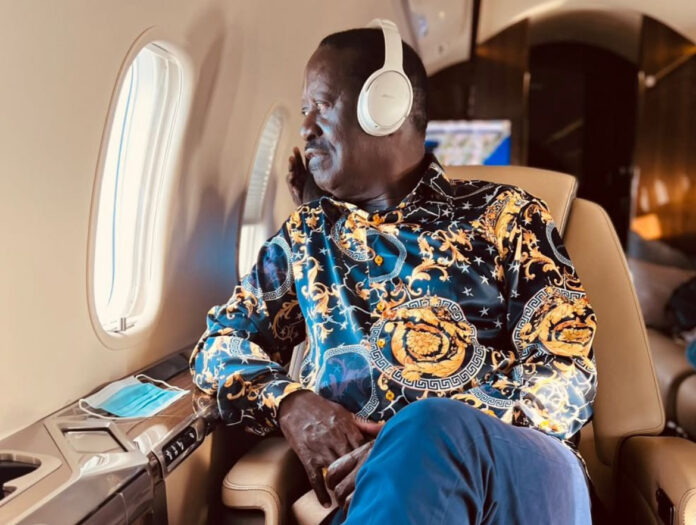
President William Ruto has appointed former Prime Minister Raila Odinga as Kenya’s special envoy to South Sudan following the arrest of First Vice President Riek Machar and his wife, Interior Minister Angelina Teny.

Odinga is set to depart on Friday as part of efforts to prevent the country from sliding back into civil war.

Machar, leader of the Sudan People’s Liberation Movement-In Opposition (SPLM-IO), was arrested on Wednesday after security forces loyal to President Salva Kiir stormed his residence.

His bodyguards were disarmed, and he was placed under house arrest. The SPLM-IO has condemned the move, calling it a violation of the 2018 Revitalized Peace Agreement.

The international community has responded swiftly, with the United Nations and the Intergovernmental Authority on Development (IGAD) warning that the situation could lead to a collapse of the transitional government. The U.S. has urged President Kiir to reverse the decision.

Kenya, historically a key player in South Sudan’s peace process, acted promptly.

President Ruto announced the appointment of Odinga after consultations with Ugandan President Yoweri Museveni and Ethiopian Prime Minister Abiy Ahmed.

“I’m sending a special envoy to engage, try to de-escalate, and brief us back,” Ruto said.

The African Union has also deployed its Panel of the Wise, chaired by Kenyan retired Justice Effie Owuor, to mediate the crisis.

Odinga’s diplomatic efforts will be closely watched as South Sudan teeters on the edge of renewed conflict.

Military, NIS Break Silence on ‘Ruto Must Go’ Chants, Hashtags

Chief of Defence Forces (CDF) General Charles Kahariri has issued a stern warning against actions that could destabilize the country. 

According to Nation, speaking at the National Intelligence and Research University in Nairobi during a public lecture, Kahariri emphasized that while Kenyans have a right to express themselves, it must be done within constitutional limits.

“Even as people exercise their rights, we should be within limits so that we don’t tear our country apart. As the military, our core value is that we are apolitical. We don’t support any political camp—we defend the Constitution and the government of the day,”

On the calls for a regime change, Gen. Kahariri stated that it can only happen through constitutional means.

“So when some people say they are tired with this government, a government they elected on their own and say ‘must go, that ‘must go’ must be done according to the Constitution.”

His remarks come as crowds at public gatherings and social events have increasingly erupted into “Ruto Must Go” chants, signaling growing discontent with the Kenya Kwanza administration. 

The most recent incident occurred during the Harambee Stars vs Gabon match at Nyayo Stadium, where President Ruto and ODM leader Raila Odinga were in attendance. 

Authorities have interpreted these chants as an attempt to undermine the government.

National Intelligence Service Noordin Haji also weighed in, warning that divisive politics, fueled by social media, is threatening national cohesion.

“Divisive politics has found new breeding ground on our social media platforms. This is polarising our people and undermining national cohesion, yet national cohesion goes hand-in-hand with national security and national interest,”

Meanwhile, LSK President Faith Odhiambo called on security agencies to remain neutral, warning against any attempts to suppress political expression.

While Ruto has previously dismissed these chants as “hooliganism” and the work of “enemies of progress,” political analysts argue that the chants reflect a genuine hush revolt—one that the government cannot afford to ignore.

The question remains: Can Ruto contain the growing wave of discontent before it hurts his scorecard and second term bid?

Premier League to have two transfer windows this summer

The Premier League has announced it will have two transfer windows this summer to allow Manchester City and Chelsea to sign players before the Club World Cup.

The window will open between Sunday, 1 June and Tuesday, 10 June, then close for five days before running again from Monday, 16 June until Monday, 1 September.

This summer features the first expanded Fifa Club World Cup, which involves 32 teams and adopts the format of the regular World Cup of the past few years.

Chelsea and Manchester City are the Premier League teams in the tournament which takes place in the United States from Sunday, 15 June.

But the Premier League can only have 12 weeks of a summer window – hence the five-day break in order to run it until 1 September.

Fifa has allowed new players to be registered for the Club World Cup from 1-10 June, and again from 27 June-3 July for the knockout stage.

Why is this happening?

Firstly, to bring order to the global registration system, world governing body Fifa only permits the transfer window in any individual country to be open for 16 weeks in any calendar year.

In Europe, precedent dictates four of those weeks are for the winter window, leaving 12 in the summer. In 2024, the Premier League transfer window opened on 14 June and closed on 30 August.

However, in October, Fifa approved an additional window from 1-10 June that would allow the 32 clubs competing in the Club World Cup to register new players before the tournament.

It also agreed to open a registration window mid-tournament, from 27 June and 3 July, to allow clubs to register additional players for the knockout stage.

As well as Manchester City and Chelsea, European heavyweights Real Madrid, Atletico Madrid, Inter Milan, Juventus, Paris St-Germain, Bayern Munich, Borussia Dortmund and Saudi Arabia’s Al-Hilal are among others playing in the tournament.

In order to ensure Manchester City and Chelsea did not have an advantage over the other 18 top-flight clubs, the Premier League has adopted the same window.

However, 12 weeks from 1 June is 24 August. The Premier League wanted to be aligned with the rest of Europe’s big leagues around when the summer window closes. Those leagues preferred to close the window at the end of August, so that meant the window had to close and reopen.

What are the issues?

Firstly, the dates.

The Champions League final takes place in Munich on 31 May. After that, there are Nations League semi-finals and finals and World Cup qualifying double-headers. In Europe, those games take place 6-10 June.

It means players could be negotiating transfers in the build-up to important matches.

One potential impact concerns international players who may move to clubs competing in the Club World Cup.

Let us take two examples – Trent Alexander-Arnold and Kevin de Bruyne. Both are internationals who might be called up by England and Belgium for their June matches.

However, both are out of contract at Liverpool and Manchester City respectively on 30 June.

Alexander-Arnold currently plays for a club not involved in the United States this summer, but looks likely to join Real Madrid who are.

So, do Real reach an agreement over a fee with Liverpool to trigger Alexander-Arnold’s release early so he can play a full part in the competition? Or do they wait until 30 June and add him to their squad for the knockout stage?

Manchester City are involved in the Club World Cup. So, as it presently stands, De Bruyne could play in the group stage but would not be eligible for the knockout stage.

If De Bruyne does not want to commit for a further year, he could sign a short extension that covers the tournament and then leave. Or he could leave before the tournament and sign for a different club. If that club were also involved at the Club World Cup, De Bruyne would be in the same situation as Alexander-Arnold.

Fifa has also tweaked its registration rules to effectively mean clubs can sign players solely for the duration of the tournament. It is thought unlikely either Manchester City or Chelsea would be looking at that scenario.

Semi-automated offsides might come in next month

Semi-automated offside technology might be introduced to the Premier League in April.

It was trialled in the FA Cup fifth round – and will be tried again for the three quarter-final ties at Premier League grounds this weekend.

The plan was to introduce it for the Premier League in October or November, but issues with the system have delayed that.

If no problems arise from these FA Cup games, it will be rolled out in the Premier League next week.

Semi-automated offsides are designed to make the judgement of tight calls easier for officials by rendering key parts of the process automatic.

Bespoke cameras have been installed at all 20 Premier League grounds.

Reporter who sued MP and won $18m hopeful he will pocket the money

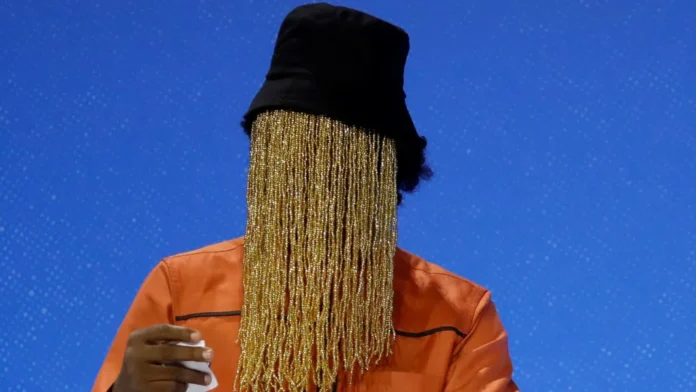
An investigative journalist who won an $18m (£14m) defamation case against a Ghanaian MP says that, although he is hopeful he will receive the money, what is more rewarding is the message his victory sends.

Anas Aremeyaw Anas began legal action against Kennedy Agyapong after the MP labelled him a “criminal” following his investigation into football corruption in Ghana and elsewhere.

He initially brought the case in Ghana, and lost, but then took it to the US, where Agyapong owns property, and won.

“The bigger impact for me is not the money but the fact that young journalists are encouraged [to hold the powerful to account] no matter how big you are [as] a politician”, Anas told the BBC.

The court heard that Agyapong, among other accusations made on a podcast, had called the reporter a “criminal” and alleged he was behind the murder of fellow journalist Ahmed Suale.

Anas told the BBC he was still grieving Suale and that, despite the recent arrest of one suspect, he believes there are other culprits still at large.

“From time to time I go to where Ahmed was shot, and I go to have my own quiet time. I go to his grave.

“It encourages me. When Ahmed was alive he asked me one day: ‘Boss, I want [to] assure you [that] one day if you should die, I would continue with the good work that you do’. I didn’t know it was going to be the reverse because, all along… I was the one who was the target.”

Anas has been scathing in his criticism of Ghana’s legal system, telling the BBC he believes “many” members of the judiciary “are doing nothing but tilting the scale of justice in favour of the wrong one”.

He decided to bring his case against the MP to the US state of New Jersey, where the politician was at the time he was interviewed for the Daddy Fred Show podcast, according to court papers filed by Anas’ lawyers.

The journalist’s victory earlier this month saw him awarded $18m in damages as the result of a unanimous decision by an eight-member jury in Essex County Superior Court in New Jersey, finding Agyapong liable for defamation.

The figure included $8m in punitive damages.

“I feel very happy, I think that it’s a vindication of what I have always preached. This goes a long way to encourage African journalists across the continent there’s a need for us to be resilient. There’s a need for us to have a stomach to take the heat,” Anas told the BBC.

Now that the court has ordered Agyapong to pay damages, the journalist says he is confident the funds will be transferred because his legal team’s “due diligence” had assessed the value of property and businesses owned by the MP before bringing the case.

“I cannot be 100% certain, but I know that my legal team has done some work and they have a plan,” he adds.

Anas says that, even though his case was won in the US, it should serve as a wake-up call to the rich and powerful that African journalists can and will hold them to account.

“We also have the capacity to stand toe-to-toe with you. Whilst we are patient, whilst we are honest, our day will definitely come.”

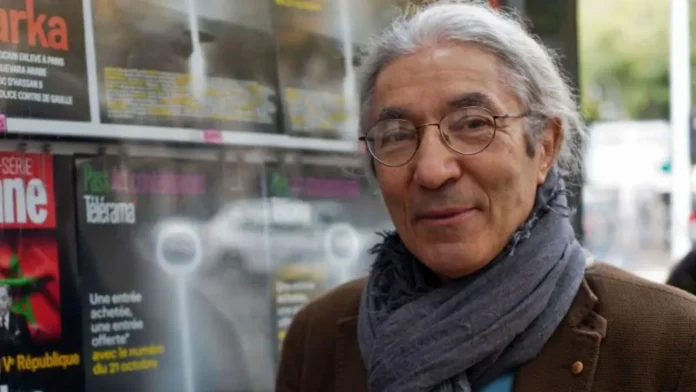
French-Algerian writer jailed over Morocco comments

An Algerian court has sentenced an 80-year-old writer to five years in prison after accusing him of undermining the country’s territorial integrity.

Boualem Sansal was arrested last year after saying in an interview with a far-right French media outlet that, during the colonial era, France gave too much land to Algeria and too little to Morocco.

He had also said that the disputed territory of Western Sahara was historically part of Morocco.

During his detention the French-Algerian author has spent time in hospital for ill-health.

His case has sparked a wave of support from intellectuals and politicians, including Nigerian Nobel Prize-winning author Wole Soyinka and French President Emmanuel Macron.

“Boualem Sansal’s arbitrary detention, on top of his worrying health situation, is one of the elements that need to be settled before confidence [between our countries] can be fully restored,” Macron said back in February.

The writer finds himself at centre of a deepening diplomatic row, according to his friends.

“He has unwillingly become a pawn in the troubled relationship between Paris and Algiers,” a committee of his supporters in France said recently.

Algeria was once a prized French colony and fought a dogged war of independence eventually winning its sovereignty in 1962.

Relations have long been strained between the two countries but reached a new low last year, when France backed Morocco’s claim to Western Sahara, where Algeria backs the Polisario group fighting for the territory’s independence.

Algiers responded to that slight by withdrawing its ambassador to Paris.

Three years earlier, Algeria severed diplomatic ties with Morocco.

Following Wednesday’s court ruling, Sansal’s lawyer pleaded to Algeria’s President Abdelmadjid Tebboune to show “humanity” to the writer.

Sansal is well known for his anti-Islamist views and is an outspoken critic of the Algerian government.

His detractors say he is a darling of the far-right who appeases their prejudices.

Far-right French leader Marine Le Pen has called Sansal a “fighter for liberty and a courageous opponent of Islamism”.

His age has previously been reported as 75, but his publishers Gallimard say he is in fact 80.

Sansal’s best-known works include 2084 – a satire about religious radicalism which won the French Academy’s Grand Prix of the Francophonie a decade ago.

His next novel, Vivre, is to be published in May and tells the story of a select group of people who are chosen to colonise a new planet as Earth nears apocalypse.

Create a free account, or log in.

Gain access to read this content, plus limited free content.

Yes! I would like to receive new content and updates.

Sponsored Ad

Ad 1
Ad 2
Ad 3
Ad 4
Ad 5
Ad 6