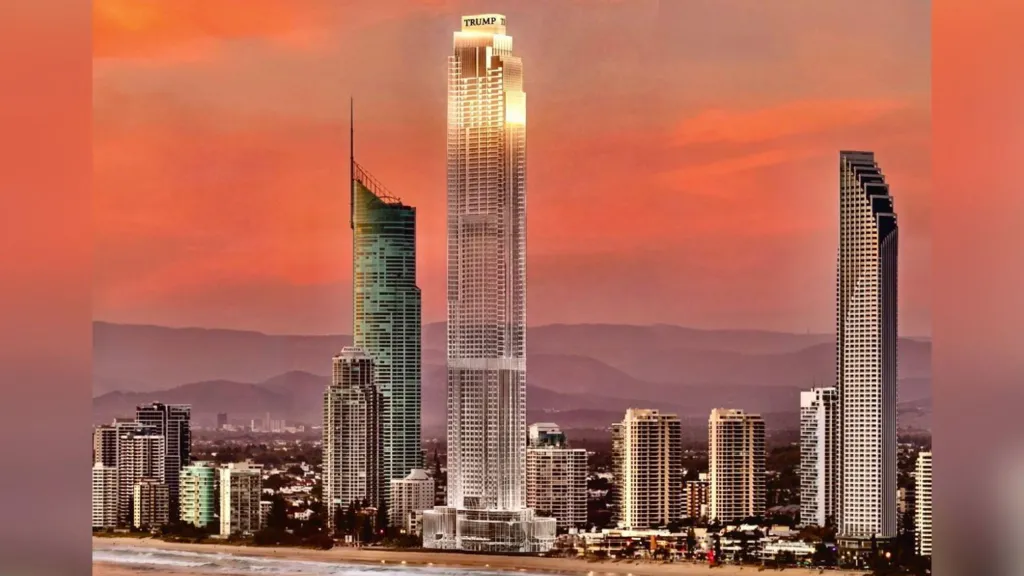
Plans for a A$1.5bn ($1.1bn; £802m) Trump Tower in Queensland have been scrapped with an Australian developer blaming the “toxic” Trump brand and the Iran war for the project’s demise.
It comes just three months after the deal was announced, with claims that the 91-storey luxury hotel on the Gold Coast would be Australia’s tallest building, measuring 335 metres (1,100 ft) high, taller than the Shard in London.
Details about the project have been deleted from the Trump Organization’s website with a spokesperson saying the developer had not met obligations.
Altus Property Group denied those claims and maintained the project would continue with other luxury brands as options.
“Let’s just say that with the Iran war and everything else, the Trump brand was increasingly toxic in Australia,” David Young, chief executive of Altus Property group, said in a statement.
“Some time ago we knew it was time to part company. It was not about not meeting obligations. There are other luxury brand options for us. The project is live.”
A spokeswoman for the Trump Organisation said it had been “very excited” about the project, but had relied on it’s “licensing partner meeting certain obligations”.
“After months of negotiations and empty promise, after empty promise, on a supposed $1.5 billion project, Altus Property Group was unable to meet the most basic financial obligation due upon the execution of the agreement,” Kimberly Benza, director of executive operations for the Trump Organization, said.
“Mr Young’s attempt to blame certain world events for our termination of the agreement is merely a ploy to distract from his own defaults and failures.”
She added that the company looked forward to “exploring other potential projects and bringing a Trump property to Australia soon”.
Gold Coast Mayor Tom Tate said the local council had not received a development application for the site and the project was “an agreement between two private parties”.
He blamed the deal’s collapse on negotiations over profit margins.
“The Trump Organization wants a lot more for their brand on the funding side of things, to operate it and the percentage of return,” Tate told the Australian Broadcasting Corporation.
When the project was announced in February, Eric Trump – executive vice president of the Trump Organization and Donald Trump’s second son – said it was the company’s first official foray in Australia, bringing “the prestige and allure of a world-class luxury brand” to the country.
Construction was due to begin in August with the building to have 285 hotel rooms and 272 luxury residential apartments as well as shops, restaurants and an exclusive beach club.
The project has divided locals, with a petition against the development attracting more than 120,000 signatures, while another petition supporting the deal had about 3,600 signatures, according to local media.
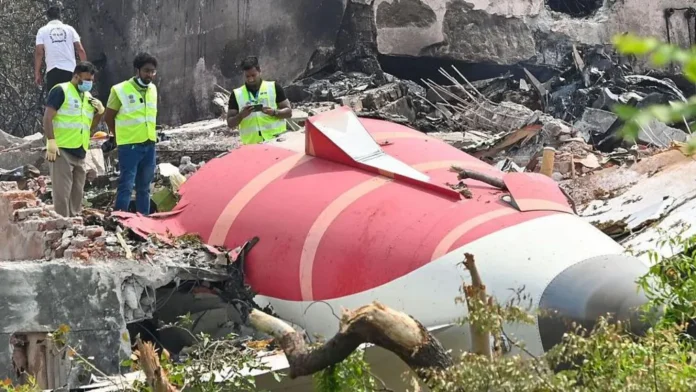
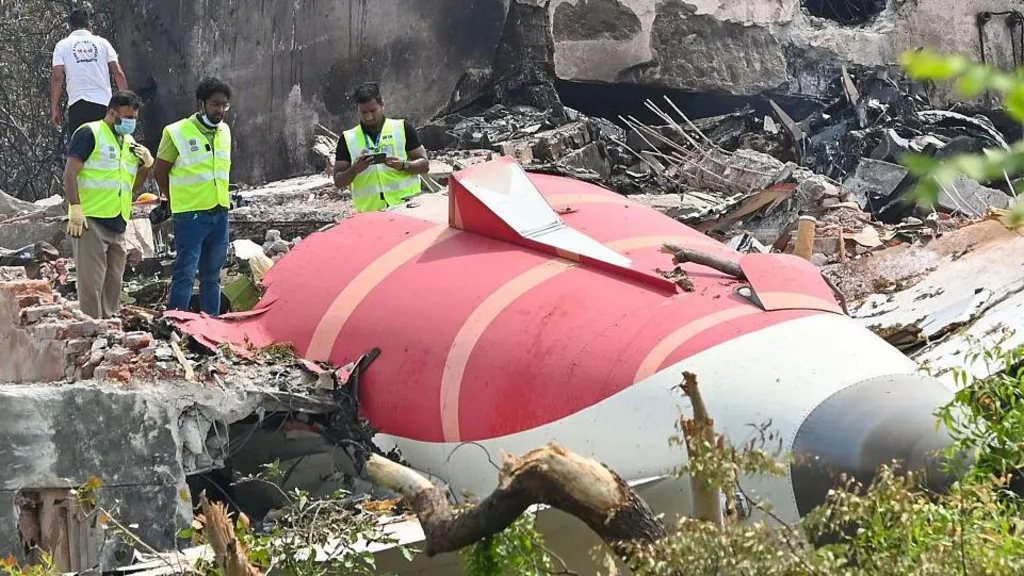
In under a month from now, India’s Aircraft Accident Investigation Bureau (AAIB) is expected to release its final report on the crash of London-bound Air India flight AI‑171 that went down seconds after take‑off from Ahmedabad in western India on 12 June 2025.
As the world awaits the findings on the devastating tragedy that claimed 260 lives, a cascade of formidable challenges has deepened the crisis at Air India.
A leadership vacuum, mounting financial losses, airspace closures and a Middle Eastern fuel shock have put the carrier’s ambitious turnaround into question. A spate of recent incidents have also cast a shadow on the safety and operational track record of the airline.
Last month, Air India’s chief executive officer, Campbell Wilson, resigned midterm as losses for the year ending March 2026 reportedly hit $2.4bn.
Air India is currently the biggest loss-making entity within the Tata Group – which took over the ailing carrier from the government in 2022 – and a point of growing consternation for the Tata board.
According to local media, the board met last week and is said to have discussed several cost-cutting measures and warned staff of “tough times”. The arrival of senior Singapore Airlines leadership at the group’s headquarters in Mumbai city in April, meanwhile, sparked talks of the latter deepening its involvement in the beleaguered carrier. Singapore Airlines is a 25.1% shareholder in Air India.
Air India said it would not comment on the BBC’s detailed questionnaire, but aviation experts say Wilson’s exit creates a void at a time when the airline desperately needs someone to steer it through the turbulence.
“They needed a clear vision right now. Air India had given itself a five-year plan to revamp itself after the privatisation. But one can’t really say that it’s been a happy ride so far. Between their plan and its implementation, there have been big and growing gaps,” Jitendra Bhargava, a former executive director at Air India, told the BBC.
Bhargava points to internal and external factors that have compounded the airline’s troubles even as it tries to recover from the Ahmedabad crash.
He says the Tatas had “underestimated the problems they inherited with the legacy carrier”, and Wilson was unable to build a team quickly enough after coming in to set things in order.
Far from improving its brand image, Air India has had to continue answering for an array of embarrassing operational lapses and safety violations in the past year.
In March, its flight from Delhi to Vancouver was forced to return to the Indian capital after flying for nearly eight hours because it did not have regulatory approval to enter Canadian airspace.
Air India merely cited operational reasons for the goof-up but Alok Anand of Acumen Aviation consultancy, previously the head of maintenance for India’s first low-cost carrier Air Deccan, says this is “highly unusual and shows there was definitely a breakdown of process somewhere”.
Last year, India’s aviation regulator also uncovered 51 safety violations at Air India as part of its annual audit of the country’s airlines. Seven safety-related lapses were of the highest level.
Besides internal challenges, a worsening operating environment outside its control has also stymied performance.
The carrier was expected to induct dozens of new planes to its fleet, but deliveries are running late because of supply chain shortages, which has upended the replacement schedule.
Moreover, the number of routes it operates has contracted since 2024, with key services such as Delhi-Washington and Mumbai-San Francisco axed, something that is likely to have contributed to its revenue hit.
Another major issue has been the depreciation in the rupee. The Indian currency is down over 10% against the US dollar, which has been a “major challenge for the turnaround”, given that a large portion of costs of Indian airlines, including for fuel, are linked to the greenback, according to aviation analyst Mahantesh Sabarad.
So, what next?
Sabarad says the Tatas and Singapore Airlines will have to step up and infuse more money into the carrier to fund the mounting losses. The $2.4bn figure, if correct, he says is comparable to the steep financial challenge the Tata Group faced after Tata Steel’s buyout of UK’s Corus Steel nearly two decades ago.
“Shareholder support is required. The Tatas didn’t give up then and have experience dealing with such scenarios… but they should start looking at innovative financing arrangements going forward,” he adds.
But things could get worse for Air India before they begin looking up in terms of its financial performance, says Anand.
“My guess is that the projected losses may be on account of payments made for refurbishments which they might have recognised and the costs and penalties paid to lessors after returning older planes, so these are legacy issues coming to the fore,” says Anand.
“The impact of the events of today, including high fuel costs, currency depreciation and route closures, will also be felt more acutely in the months to come.”
The ongoing conflict in the Middle East was a chance for Air India to make a greater dent in the international market, given that the stranglehold of the Gulf carriers has weakened.
But it is a missed opportunity given that availability of aircraft remains a big constraint for the airline.
Going ahead, what the final investigation into last year’s deadly crash potentially reveals will also determine how damaging the consequences will be for the airline and its reputation, say experts.
The liabilities for the carrier would have largely been covered, and no further financial surprises are expected, according to Sabarad.
However, from a reputational point of view, any potentially negative findings in the investigation could damage its image, which will take Air India a lot of effort to repair, he adds.
Issues with a new wave of “smart glasses” seem to be piling up.
Yet some of the biggest technology companies in the world are poised to sell many millions of pairs in the coming years.
Women leaving the beach, going into a shop, or simply standing outside are now being approached by men usually wearing Meta’s Ray-Bans, the company’s “smart” or “AI” glasses, often in order to film the women’s responses to casual questions or pick-up lines without their knowledge or consent.
The women only find out about the videos of them after they gain traction, and often abuse, online. They have little legal recourse as photography in public is broadly considered legal. One woman told the BBC that when she asked the person who posted a secret recording of her to remove it, she was told that doing so was “a paid service”.
Meta’s glasses are currently the most popular on the market, estimated to make up more than 80% of all AI or smart glasses sales, as the company was the first major tech player to launch such a product in recent years.
Made in partnership with EssilorLuxottica and offering the classic look of Ray-Bans, the glasses feature an almost invisible camera in the frames, small speakers in the arms, and lenses that can show a wearer some information. People can start recording video or take a photo with a casual touch of the frames.
The nature of the camera in Meta’s glasses can be so unobtrusive that even their wearers have been caught off guard by what and when they’re recording, and where those recordings are going.
After workers in Kenya, tasked with watching videos made through Meta’s glasses to create AI training data for the company, said they were being required to watch graphic content like sex and bathroom usage, people who own the glasses filed two lawsuits. In one, people said they had no idea such videos had been made. In the other, they said they did not know their videos were being shared by the company for review.
Meta has previously said that users were made aware of the possibility of human review in some circumstances in its terms of service.
Nevertheless, sales continue to rise. Today, seven million pairs and counting have been sold, according to the company.
“They’re some of the fastest-growing consumer electronics in history,” Mark Zuckerberg, Meta’s chief executive, boasted earlier this year.
Tracy Clayton, a Meta spokesman, told the BBC that people should behave responsibly with any technology.
“We have teams dedicated to limiting and combating misuse, but as with any technology, the onus is ultimately on individual people to not actively exploit it.”
Now, other major tech companies are planning to get in on what may have the potential to be the tech industry’s long-awaited new product category.
Apple is reportedly developing its own version of smart glasses, possibly to be released next year. Snap has said it will release a new version of its smart glasses, called Specs, this year.
Google, too, is set to try again with smart glasses, more than a decade after its notorious Google Glass flop, which the company pulled from the public within two years of launch as the pricey gadget came under fire over privacy concerns.
All are expected to offer some combination of artificial intelligence (AI) and augmented reality (AR) technology, as Meta’s glasses do, which typically requires a camera.
The way people may use the coming wave of smart glasses will not be all bad, of course.
Mark Smith wears his Meta Ray-Bans every day.
“I’ve used them around the world, in all kinds of places. The basic features are great,” Smith said.
As a partner at the advisory firm ISG where he focuses on enterprise software, Smith can be classified as a tech-savvy early adopter. But the reasons he likes the glasses are not about any huge leaps in technological capability.
He likes to wear them while washing up the dishes at home because they make it easy for him to listen to music or a podcast without blocking out other noise like most headphones do. Taking phone calls through the glasses is a breeze. When travelling, it’s nice not to have to constantly pull out his phone to snap a quick picture or video.
Even so, Smith said some potential privacy issues are obvious. The small light that turns on when the glasses are recording appears dim in daylight and often goes unnoticed, he said. Most people seem to have no idea he’s wearing anything other than normal eyeglasses.
Should AI or smart glasses products from more companies end up selling as well as Meta’s version, researchers expect as many as 100 million people will buy a pair in the next few years.
If such a prediction becomes reality, the ability of institutions to enforce norms and laws that typically prohibit recording in places like courthouses, museums, movie theatres, hospitals and bathrooms will be difficult when suddenly millions of eyeglasses are also cameras.
David Kessler, an attorney who heads the US privacy practice at Norton Rose Fulbright, said many of his corporate clients are already having to grapple with this.
“There are some pretty dark places we could go here,” Kessler said. “I’m not anti-technology in any sense, but as a societal matter…will I need to think [of being recorded] anytime I go out in public?”
And Meta reportedly plans to add facial recognition technology in an updated version of its glasses, meaning wearers could not only have the ability to surreptitiously record anyone, but quickly identify them, as well.
Meta markets its glasses under the tagline: “Designed for privacy, controlled by you.” It suggests to users of the glasses that they do not record people who state they do not want to be recorded, and that users turn the glasses off completely “in sensitive spaces”.
In a strategic move to reclaim its historical roots, the Forum for the Restoration of Democracy-Kenya (FORD Kenya) has launched a major restructuring of its leadership and grassroots network in Siaya County.
The party, which traces its origins to the legendary Jaramogi Oginga Odinga, signaled its intent to challenge the regional dominance of the Orange Democratic Movement (ODM) by appointing Omondi Vero as the new Siaya County Chairperson.
Speaking during a delegates’ meeting in Siaya, FORD Kenya Deputy Party Leader Millicent Abudho emphasized the party’s deep-seated connection to the region.
”FORD Kenya’s origin is in Siaya County,” Abudo stated. “We are going to the grassroots to make sure we have more members joining the party. We believe this time around, FORD Kenya is going to get more seats in Siaya.”
FORD Kenya National Vice Chair Hon. Margaret Sabina Wanjala echoed these sentiments, noting that while the party is national in scope, returning to Siaya feels like coming “home” due to the legacy of Oginga Odinga.
In a direct challenge to its political rivals, particularly ODM, the party leadership issued a firm rejection of “zoning”—a practice where political coalitions reserve specific regions for certain parties to avoid internal competition.
Abudo argued that zoning undermines democratic rights and often results in leaders who fail to deliver.
”We want to ask our brothers, the ODM: Let the ground decide. The issue of zoning will bring people who will not be able to deliver to the people, but to themselves,” Abudo said.
Despite the local focus, the leaders remained aligned with the national Kenya Kwanza administration. Both Abudo and Wanjala explicitly declared the party’s support for President William Ruto’s re-election.
”We are in government… and we are going to ensure Ruto is re-elected for his second term,” Abudo affirmed. “Ruto is two terms!”
The newly appointed Siaya Chair, Omondi Vero, described FORD Kenya as a “party of peace” and invited aspirants for various seats to register, promising a platform without the restrictive conditions found in other political outfits.
”Our agenda is for all people to come and join. We are humble people and we ask everyone to join us,” Vero concluded.
Chaos broke out on May 12, 2026 after the body of a 37-year-old man, who was buried under mysterious circumstances the previous night in Kamunono village, Kisasi sub-location, Vihiga County, was exhumed in a shocking turn of events.
According to the Chief of Shamakhohkho Location, Hesbon Liyenzero, the deceased was found dead in his room on May 2nd.
The circumstances of his death were suspicious, with allegations suggesting he may have succumbed to injuries sustained from an attack.
Authorities had called for anyone with information regarding the suspicious death to come forward, but no one did.
Initially, the family reportedly collected the body from the Jumuia Hospital Mortuary in Kaimosi and proceeded to bury him at night.
This secretive burial raised alarm among local residents, who eventually forced those responsible to exhume the body. The community is demanding a post-mortem examination to determine the actual cause of death.
The situation turned violent when the individuals who conducted the burial were attacked and injured by an angry mob.
The incident led to a major standoff, forcing police officers to use teargas to disperse the rowdy crowd and restore order.
The body has since been moved and is currently being preserved at the Vihiga County Referral Hospital Mortuary awaiting further investigation.
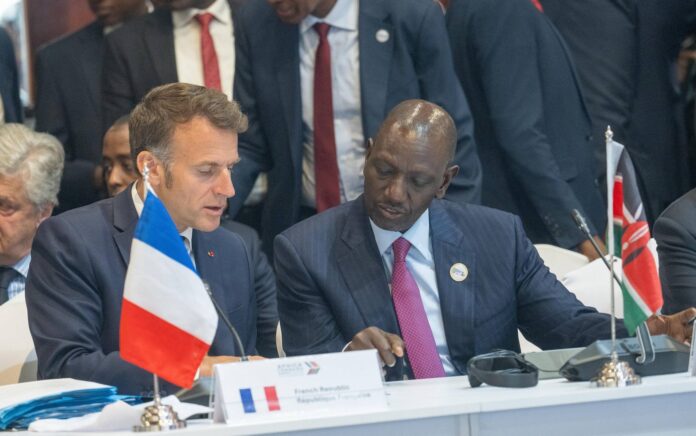
President William Ruto has called on Africa to rethink how it finances its development through the mobilisation of domestic resources and a reformed financial structure, moving away from aid dependency and unsustainable borrowing for long-term prosperity.
Speaking during the opening session of the Africa Forward Summit 2026 at the Kenyatta International Convention Centre on Tuesday, May 12, President Ruto said institutions such as the World Bank and the International Monetary Fund alone are not enough to drive Africa’s development agenda.
“Our continent possesses vast natural resources, critical minerals, fertile land, immense renewable energy potential, expanding consumer markets, dynamic entrepreneurs, and the youngest population in the world. What Africa requires is not charity, but investments; not extraction, but value creation; not dependency, but mutually beneficial partnerships capable of unlocking shared prosperity,” he stated.
The President further emphasized that the Africa Forward Agenda seeks to redefine engagement between Africa and global partners such as France by moving away from outdated aid models that continue to limit the continent’s ability to finance its ambitions at the scale required.
According to Ruto, the current international financial system continues to disadvantage African economies through high borrowing costs, limited access to concessional financing and distorted risk perceptions.
“The current international financial system remains structurally unequal. African countries continue to face disproportionately high borrowing costs, constrained access to concessional financing, and distorted risk perceptions frequently disconnected from economic realities. The bias embedded within global credit rating systems continues to penalise African economies, increase the cost of capital, and discourage long-term investment into productive sectors,” he said.
The Head of State also backed the proposed New African Financial Architecture and Development framework (NAFAD), saying Africa requires coordinated financial firepower capable of financing infrastructure, industrialisation, trade corridors and energy transformation on African terms.
He explained that the framework seeks to align African capital through pension systems, development banks and private investment into strategic and transformative sectors across the continent.
“NAFAD represents Africa’s collective effort to build financial sovereignty by aligning African institutions and African priorities,” he said.
President Ruto added that Kenya has already begun implementing aspects of the vision through the establishment of the National Infrastructure Fund aimed at channeling domestic capital into strategic national projects.
He noted that through strong institutions, predictable policies and trusted markets, Africa can generate substantial development resources internally while enabling citizens to become active participants in nation-building.
The Africa Forward Summit 2026, co-hosted by Kenya and France, has brought together heads of state, ministers, CEOs, innovators and thought leaders from across Africa and France to discuss innovation, partnerships and economic growth.
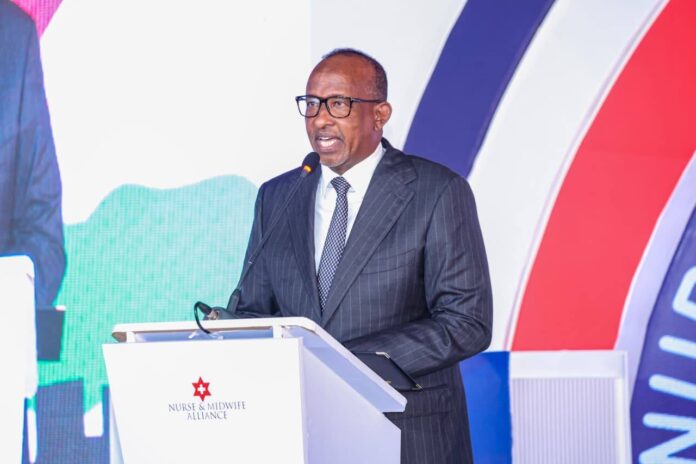
The Ministry of Health announced on Tuesday, May 12, that the government will extend the contracts of universal health coverage (UHC) workers.
Appearing before the National Assembly Departmental Committee, Health Cabinet Secretary Aden Duale revealed that UHC workers will be on the government’s payroll until June 30.
He further intimated that the UHC workers would be hired on permanent and pensionable terms by the county
“On the status of UHC healthcare workers, the Ministry confirmed extension of their engagement contracts up to 30th June 2026 to facilitate a smooth and structured transition process as county governments prepare for their absorption on permanent and pensionable terms,” the statement read in part.
Particular emphasis was placed on the critical role played by Community Health Promoters (CHPs) in linking households to the healthcare system and strengthening primary healthcare interventions at the community level.
A file photo of CS Aden Duale appearing before a National Assembly Committee.
The Ministry also announced plans to transition 107,000 Community Health Promoters into the Social Health Authority (SHA) comprehensive medical scheme to improve their welfare and long-term institutional support.
This will be done through a collaborative framework between the national and county governments.
CS Duale told the Committee that the Ministry urgently needed to replace and upgrade kits used by the CHPs to enhance grassroots service delivery and reinforce preventive and promotive healthcare interventions within communities.
The Ministry officials briefed the Committee on the ongoing reforms focused on strengthening the Health Sector through sustained reforms, strategic financing, and enhanced collaboration between the national and county governments.
These include improving health financing, strengthening supply chain systems, enhancing digital health infrastructure, and ensuring the uninterrupted availability of essential medicines and commodities across all levels of care.
Duale appealed for enhanced budgetary allocations for several high-impact yet underfunded programmes, such as the operationalisation of the East Africa Centre for Excellence in Urology and Nephrology.
He also called for strengthening the Kenya National Blood Transfusion Services, scaling up the Primary Healthcare Fund to sustain outpatient services at Levels 2 and 3 facilities, and increasing support for the Emergency, Chronic and Critical Illness Fund.
The Health Boss further requested additional financing for national referral hospitals to address rising operational and human resource demands.
The High Court in Voi has convicted a police officer over the 2019 fatal shooting of a man at a restaurant in Taveta Town.
In a statement on Tuesday, May 12, the Independent Policing Oversight Authority (IPOA) confirmed that Corporal Mark David Gitahi Marombe was found guilty of the murder of Esau Juma Mwanguku.
According to the authority, the court also cancelled the officer’s bond following the conviction and ordered that he be detained at Manyani GK Prison pending sentencing.
“Consequently, the Court cancelled the officer’s bond, detaining him at the Manyani GK Prison until his sentencing which is slated for 2nd June, 2026,” the statement read in part.
The court heard that the officer fatally shot Mwanguku at Rockland Restaurant in Taveta Town, where both men had reportedly been drinking before the incident.
IPOA said it independently launched investigations into the killing before recommending murder charges against the officer.
“The matter was investigated Suo Moto by the Authority. Upon completion of investigations, IPOA recommended that the officer is charged with murder,” the statement added.
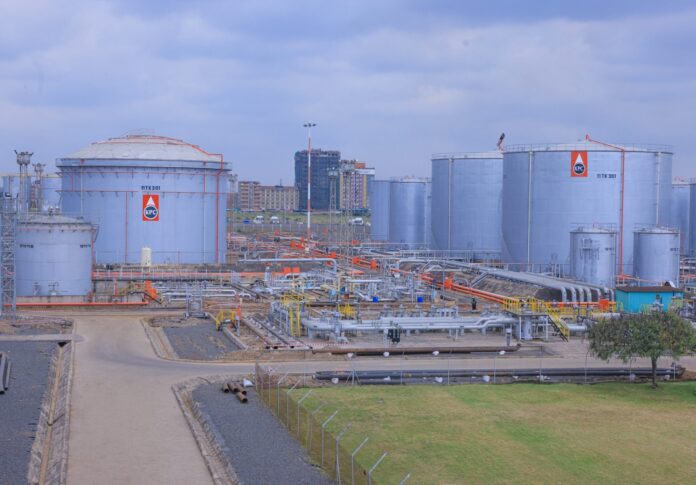
The Kenya Pipeline Company has announced the departure of two members from its Board of Directors following its gazetting as a private entity.
In a statement shared by the Nairobi Securities Exchange (NSE) on Tuesday, May 12, KPC confirmed the cessation of directorship of Sharon Irungu-Asiyo HSC and Mohamed Birik Mohamed.
Irungu-Asiyo served as the Board Representative of the Attorney General, while Mohamed served as a Board Representative of the Principal Secretary, State Department of Petroleum.
“Cabinet Secretary for the National Treasury and Economic Planning, Hon. John Mbadi Ng’ongo, issued Legal Notice No. 72 dated April 22, 2026, revoking the declaration of Kenya Pipeline Company as a National Government Entity under Legal Notice No. 33 of 2015.
“As a result, Ms Sharon Irungu-Asiyo, HSC and Mr Mohamed Birik Mohamed, OGW, EBS, ceased to be Directors of the Company with effect from April 22, 2026,” the statement read in part.
A file photo of Kenya Pipeline Plaza offices.
KPC also announced that Maureen Mwenje, the General Manager -Supply Chain, had also left the corporation with effect from May 6, 2026.
During her tenure, Irungu-Asiyo was a member of the KPC Board Audit Committee and the Technical Committee.
KPC praised her for bringing rigour, legal insight, a keen eye and sound legal and commercial thinking to both committees. The company lauded the outgoing director for being principles voice and constantly championing transparency and accountability.
Kenya Pipeline also acknowledged Mohamed, who served in the Technical Committee, and the Board Nomination and Remuneration Committee.
“Throughout his tenure, he was a committed steward of the Company’s interest and a bridge between the Company and the government, contributing meaningfully to the strategic direction that has positioned KPC as a regional energy leader,” the statement continued.
Notably, the KPC Board assured shareholders, partners and the investing public that the changes did not affect the Company’s strategic focus, operational stability, or financial position.
“The Board and management remain fully committed to delivering long-term value to all stakeholders,” KPC reassured.
KPC General Manager (Legal Services)and Company Secretary Flora Okoth confirmed that the changes had been approved by the Capital Markets Authority.
The Jubilee Party has unveiled Wilson Kigwa as its candidate for the upcoming Ol Kalou parliamentary by-election.
In a statement on Tuesday, May 12, the party said it had completed consultations and nominations after inviting interested aspirants to seek consideration for the seat.
“The Jubilee Party wishes to officially inform the people of Ol Kalou Constituency and the country at large that following the party’s invitation to all interested aspirants to apply for consideration as the party candidate in the upcoming Of Kalou parliamentary by-election, the party has successfully concluded its internal consultations and nomination processes,” the statement said.
The party noted that several aspirants had expressed interest in flying the Jubilee flag, describing the response as a sign of continued confidence in the former ruling party.
“The party received applications from several qualified and committed aspirants from across the constituency, demonstrating the continued confidence that the people of Ol Kalou have in the Jubilee Party and its vision for the future of our nation,” the statement added.
According to the party, the decision to settle on Kigwa was reached through consultations guided by the party constitution and its electoral structures.
“Through our party’s constitution, the guidance of the National Elections Board and other relevant party organs, and in consultation with the aspirants who qualified, the party has settled on Eng. Wilson Kigwa who will now fly the party flag in the forthcoming by-election,” the statement continued.
File image of Jubilee Party Secretary General Moitalel Ole Kenta
The party further announced plans to intensify campaigns in the constituency ahead of the by-election, with leaders and supporters expected to mobilize support for the candidate.
“In the coming days, the party leadership, grassroots structures, and supporters will camp in the constituency to vigorously campaign for our candidate and to popularize the renewed vision and agenda of the Party,” the statement further read.
Jubilee also linked the upcoming contest to the legacy of the late area MP, noting that the constituency had previously been represented under the party’s ticket.
“It is important to remember that the late Honorable Member of Parliament served under the Jubilee Party ticket, and we remain committed to protecting and advancing the legacy of service, development, and people centered leadership that he stood for,” the statement concluded.
















.jpg)