Sponsored Ad

Ad 1
Ad 2
Ad 3
Ad 4
Ad 5
Ad 6
22.9 C
Kenya
Wednesday, May 13, 2026
Home Blog Page 21

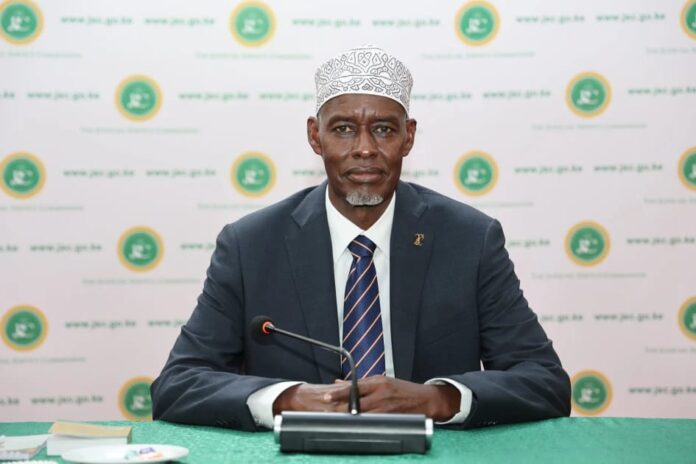
Justice Mohamed Warsame Appointed to The Supreme Court

By Andrew Kariuki

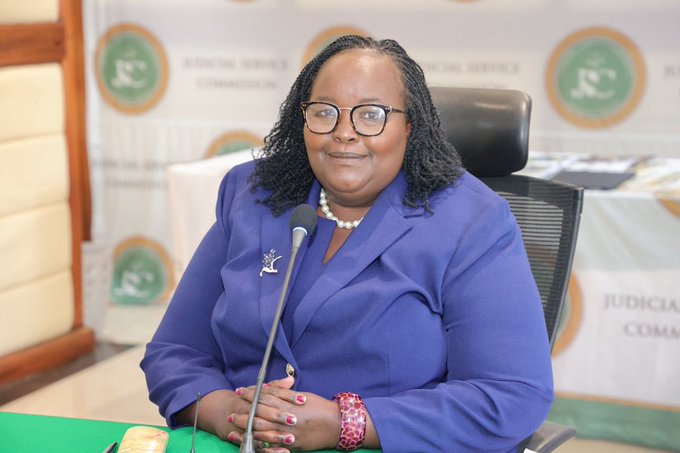
President William Ruto has formally appointed Justice Mohamed Abdullahi Warsame as a judge of the Supreme Court of Kenya, filling the vacancy left following the death of Justice Mohammed Ibrahim in December 2025.

The appointment was confirmed through a Gazette Notice dated May 5, 2026, after Justice Warsame emerged successful in the Judicial Service Commission’s recruitment process.

“In exercise of the powers conferred by Article 166 (1) (b) of the Constitution of Kenya, I, William Samoei Ruto, President of the Republic of Kenya and Commander-in-Chief of the Defence Forces, appoint Justice Mohamed Abdullahi Warsame to be Judge of the Supreme Court of Kenya,” the notice reads.

Justice Warsame joins the apex court after years of service in the Judiciary, having served as a judge of the Court of Appeal since 2012 following his elevation from the High Court.

He was first appointed to the High Court bench in 2003 and later served in various divisions including Commercial, Criminal and Judicial Review, handling a broad range of cases.

The newly appointed Supreme Court judge holds a Bachelor of Laws degree from the University of Nairobi and a Postgraduate Diploma from the Kenya School of Law. Before joining the bench, he practiced as an advocate of the High Court of Kenya.

During his interview before the JSC, Warsame also spoke about his future aspirations outside the Judiciary.

“If called upon by my people after retirement, I may consider serving them politically,” he said while responding to questions on whether he would consider contesting for the Mandera gubernatorial seat in future.

He, however, maintained that any future political interest would not affect his current judicial duties or independence.

“I have served under four Chief Justices without conflict because collegial courts require cooperation, consultation and institutional leadership,” Warsame told the panel during the interviews.

His appointment now increases the number of judges at the Supreme Court as the Judiciary continues efforts to strengthen the country’s judicial system.
“We Chose Availability Over Quality,” CS Kinyanjui Defends Relaxed Fuel Standards

By Andrew Kariuki

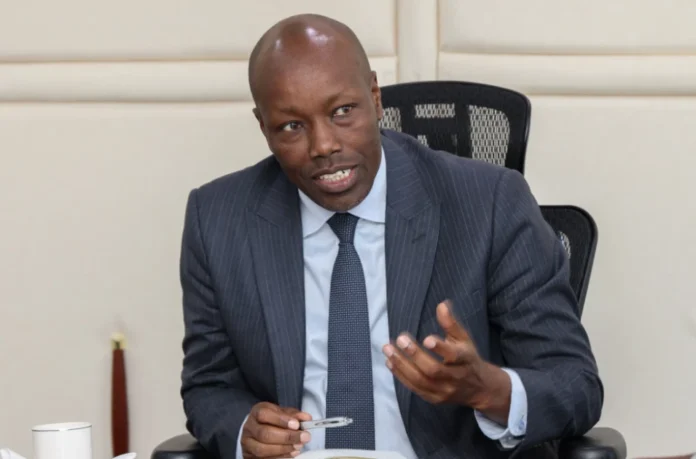
Trade and Investments Cabinet Secretary Lee Kinyanjui has defended the government’s decision to relax fuel quality standards, telling senators that the move was necessary to ensure Kenya maintains adequate fuel supply amid global market disruptions.

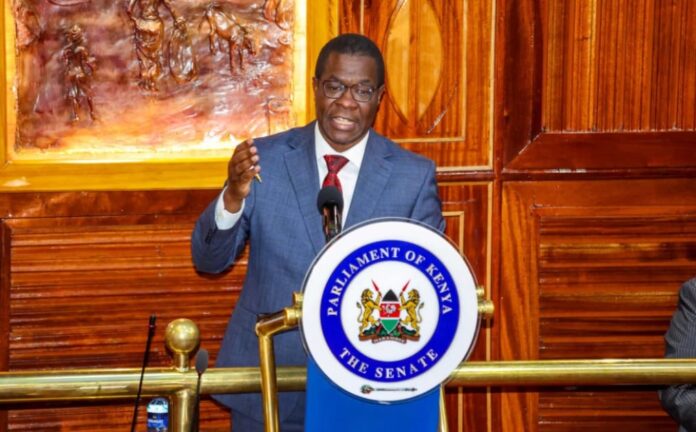
Appearing before the Senate on Wednesday, Kinyanjui responded to concerns raised by Migori Senator Eddie Oketch over increased sulphur levels in fuel imported into the country.

Oketch questioned whether the revised standards could negatively affect vehicles and the environment.

In response, the CS said the fuel currently being criticised is similar to what Kenyans had been consuming for years before the country tightened standards in 2025.

“The fuel you are talking about being substandard is the fuel you have been consuming for the last 10 years until August last year. I don’t know how many vehicles went bad,” Kinyanjui told senators.

He explained that Kenya had only recently moved from a sulphur cap of 50 parts per million (ppm) to 10 ppm in August 2025 as part of efforts to improve fuel quality.

“We had just raised our standards from 50-10 in sulphur in August last year,” he stated.

According to Kinyanjui, ongoing instability in the Middle East and damage to oil refineries have significantly affected global fuel sourcing, forcing Kenya to temporarily adjust its standards to guarantee supply.

“There is nothing new we have brought. It is just that the sourcing of petroleum products across the world is a major challenge,” he said.

The CS further indicated that the relaxed standards could remain in place for the next one to two years depending on global supply conditions.

“Between having perfect quality and availability, we chose to have availability,” Kinyanjui told the Senate.

The remarks come amid growing public debate over fuel quality, energy security and the impact of global conflicts on Kenya’s petroleum supply chain.

CBK Raises Over Ksh94 Billion in Reopened Treasury Bond Auction

By Andrew Kariuki

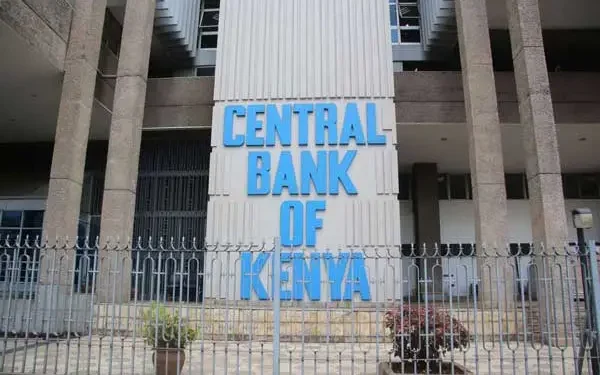
The Central Bank of Kenya (CBK) has released the results for the reopened Treasury Bonds Issue Nos. FXD1/2012/020, FXD1/2019/020 and FXD1/2021/025 dated May 11, 2026, with the government accepting bids worth more than Ksh94 billion.

According to the auction results released on May 6, investors submitted bids amounting to Ksh106.01 billion against the Ksh80 billion on offer, translating to an overall performance rate of 132.52% .

CBK accepted bids worth Ksh94.04 billion across the three reopened bond issues.

The FXD1/2012/020 bond, which matures on November 1, 2032, attracted bids worth Ksh47.94 billion, all of which were accepted. The bond recorded a market weighted average rate of 12.4655 percent and a coupon rate of 12%.

The FXD1/2019/020 bond, due on March 21, 2039, received bids worth Ksh17.57 billion, with Ksh14.53 billion accepted. It recorded a market weighted average rate of 13.3141% and carries a coupon rate of 12.8730% .

Meanwhile, the FXD1/2021/025 bond, maturing on April 9, 2046, attracted bids totalling Ksh40.49 billion, out of which Ksh31.97 billion was accepted. The bond posted a market weighted average rate of 13.7660% and a coupon rate of 13.9240% .

CBK further indicated that Ksh57.13 billion will go toward redemptions, while the government will realise Ksh36.9 billion in new borrowing from the auction.

The Central Bank also announced that details of forthcoming Treasury bond issues for June 2026 will be provided in a prospectus ahead of the next auction.

Kenya to Begin Commercial Oil Production by End of 2026, Wandayi Says

By Andrew Kariuki

Energy and Petroleum Cabinet Secretary Opiyo Wandayi has announced that Kenya is expected to begin commercial oil production by the end of 2026, marking a major milestone in the country’s energy sector.

Speaking before the Senate plenary on Wednesday, Wandayi said oil drilling activities in South Lokichar, Turkana County, will gradually increase production levels as the country moves toward full commercialisation.

“From the beginning we shall be producing about 20,000 barrels per day, which will progress to some 50,000 barrels per day,” Wandayi told senators.

He noted, however, that the current projected output would still be insufficient to sustainably operate a commercial refinery within Kenya.

“Petroleum economics tell us that we need some 300,000 to 500,000 barrels per day to run a refinery viably,” he said.

The CS defended the government’s support for the proposed regional refinery project in Tanga, Tanzania, arguing that it makes more economic sense compared to reviving the old Changamwe refinery in Mombasa, which ceased crude oil processing in 2013 due to ageing infrastructure and commercial challenges.

“That informs the reason, the justification and the basis for the plan to establish a refinery in Tanga that will not only serve Kenya but also neighbouring countries. It’s basically business logic,” Wandayi stated.

The South Lokichar oil project, currently under Gulf Energy, is expected to develop millions of barrels of recoverable oil, with exports projected at between 25,000 and 80,000 barrels per day through a planned pipeline to the port of Lamu.

According to the government, the push toward local and regional oil production is aimed at reducing dependence on imported petroleum products from the Middle East and other international suppliers.

The proposed Tanga refinery is estimated to cost approximately USD 20 billion (about KSh 2.58 trillion) and is expected to support growing fuel demand across East Africa while cushioning the region from global supply disruptions such as the ongoing tensions involving the United States and Iran.

Officials say the project forms part of broader regional energy integration and long-term fuel security plans.

Media Barred From Covering Justice Mong’are Case

By Andrew Kariuki

Journalists were barred from covering proceedings involving High Court Judge Justice Josephine Wayua Wambua Mong’are after the court stated that existing orders prohibit disclosure and media coverage of the matter.

The issue arose during proceedings to check compliance on 6th May 2026 in petition number HCCHRPT/E189/2026, involving Justice Mong’are against the State Law Office, the Ethics and Anti-Corruption Commission (EACC) and another respondent.

After the court was notified of the presence of members of the media in the courtroom, lawyers representing Justice Mong’are objected to any form of coverage of the proceedings.

“Your honour, the existence of conservatory orders which bars issuance or disclosure of this particular petition,” counsel representing the judge told the court.

The presiding judge, Justice Gregory Mutai, subsequently stated that there were previous orders already issued in the matter restricting media coverage and disclosure of the proceedings, adding that the court was bound by those directives.

The development effectively kicked out journalists from reporting details of the case despite growing public interest surrounding the petition and its implications on judicial accountability and independence.

The recent development comes after conservatory orders were issued earlier this year by the High Court in favour of Justice Mong’are after she moved to court seeking protection from investigations by the EACC.

In the March 19, 2026 ruling, Justice Bahati Mwamuye restrained the EACC and other state agencies from summoning, questioning, arresting, detaining or taking coercive action against the judge pending the hearing and determination of her application.

The orders also barred authorities from seizing documents, devices, records or any materials connected to matters arising from her judicial duties.

According to court documents filed at the time, the EACC had written to the Deputy Registrar of the High Court directing that Justice Mong’are appear before investigators at the Integrity Centre for statement recording.

Justice Mong’are argued that the summons violated judicial independence and bypassed constitutionally established procedures for handling complaints against judges.

“The actions of the 1st Respondent are a clear affront to the Constitution and the independence of the Judiciary,” she stated in her affidavit.

She further argued that any complaints concerning a sitting judge fall under the mandate of the Judicial Service Commission (JSC) and not external investigative agencies acting independently.

The ruling was widely viewed as a major test of the balance between judicial independence and anti-corruption oversight.

The latest move to bar media coverage is now likely to raise fresh debate over transparency in court proceedings, public interest litigation and the extent to which conservatory orders can limit press access in matters involving senior judicial officers.

Our World Cup host ‘is Fifa, not Trump or America’ – Iran

By George Ndeto,

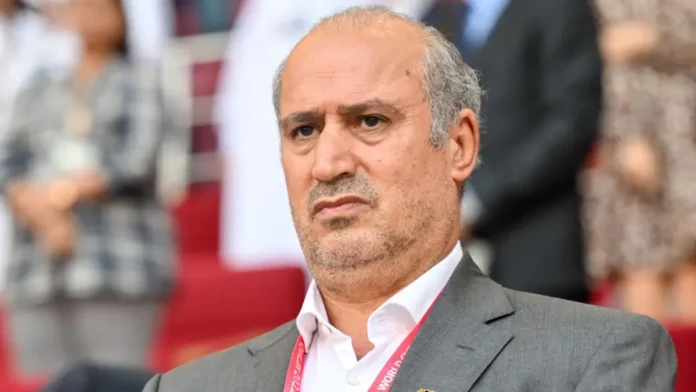
Iran’s football chief says their World Cup host “is Fifa, not Mr. Trump or America” and has called for respect towards the Islamic Revolutionary Guard Corps (IRGC) if the national team is to travel to the United States for this summer’s tournament.

There remains uncertainty over Iran’s participation at the World Cup because of the war with the US and Israel.

Iranian FA (FFIRI) chief Mehdi Taj was among a delegation which turned back from the Canadian border before last week’s Fifa Congress in Vancouver, because of what they felt was disrespectful treatment by immigration officials.

Taj said the decision to return home was their own choice, but Canada’s immigration minister confirmed to parliament that the FFIRI president’s visa had been cancelled while he was in the air because of his links to the IRGC.

The IRGC was set up to defend Iran’s Islamic system and has become a major military, political and economic force in the country. However, the group is listed as a terrorist organisation in Canada and the US.

Fifa secretary general Mattias Grafstrom wrote to express regret for the “inconvenience and disappointment” and has invited FFIRI to Zurich for a meeting about their World Cup preparations on 20 May.

Taj, who served as a high-ranking IRGC official, told state broadcaster the Islamic Republic of Iran Broadcasting (IRIB) on Tuesday that he would seek assurances from the governing body about the treatment of Iranian officials at the World Cup.

“We need a guarantee there, for our trip, that they have no right to insult the symbols of our system – especially the IRGC,” Taj said.

“This is something they must pay serious attention to. If there is such a guarantee and the responsibility is clearly assumed, then an incident like what happened in Canada will not happen again.”

The US, Canada and Mexico will co-host the World Cup between 11 June and 19 July.

Iran are scheduled to play two games in Los Angeles, against New Zealand on 15 June and Belgium on 21 June, and then Egypt in Seattle on 26 June.

US secretary of state Marco Rubio said last week that no-one with ties to the IRGC would be admitted to the country.

“We are going to the World Cup, for which we qualified, and our host is Fifa – not Mr Trump or America,” Taj said.

“If they accept hosting us, then they must also accept that they must not insult our military institutions in any way.

“Because if they do, then naturally it could create the same kind of situation that happened in Canada, where there was a possibility we might have to return.

“So there must be this kind of guarantee so that we can go with peace of mind.”

The US and Israel launched air strikes on Iran in February.

Iran was the only Fifa federation among the 211 member countries that did not have representation at the Fifa congress in Vancouver.

Fifa president Gianni Infantino said Iran will be going to the US and playing as scheduled – despite Iran’s request in March for its matches to be moved to Mexico.

BBC Sport

Kenya to Host Africa Forward Summit Co-Chaired by Ruto and Macron

By Andrew Kariuki

Kenya is set to host the Africa Forward Summit on May 11–12, 2026, in partnership with France, bringing together African leaders, investors and business executives for high-level talks on trade, investment and global cooperation.

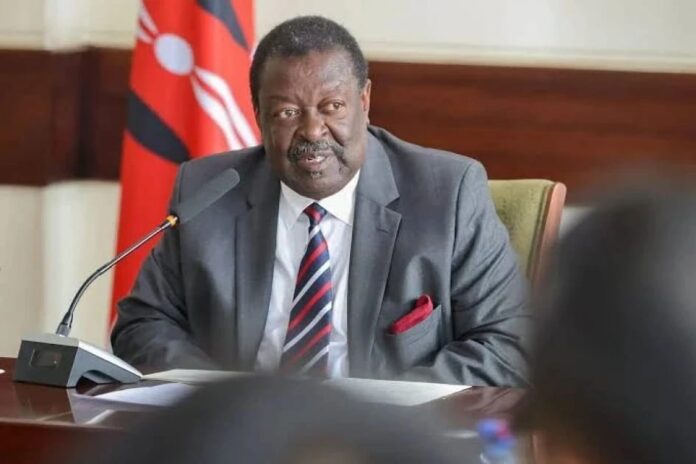
Prime Cabinet Secretary Musalia Mudavadi said the country is fully prepared to host what is expected to be one of Kenya’s largest diplomatic and economic events.

The summit will be co-hosted by President William Ruto and French President Emmanuel Macron and is expected to attract more than 30 heads of state and government alongside over 1,500 business leaders, innovators and investors from Africa and France.

Foreign Affairs Principal Secretary Abraham Korir Sing’oei said the two-day programme will begin on May 11 with a business forum themed “Inspire and Connect”, featuring business-to-business matchmaking sessions, workshops and sector-focused discussions.

The Heads of State Summit will then take place on May 12 at the Kenyatta International Convention Centre (KICC), where leaders are expected to hold plenary sessions and roundtable discussions before adopting the Nairobi Declaration.

According to officials, discussions during the summit will focus on seven key areas including energy transition and green industrialisation, reform of the international financial system, blue economy, sustainable agriculture, artificial intelligence and digital technologies, resilient healthcare systems, as well as peace and security.

Sing’oei said the Nairobi Declaration will outline Africa’s shared priorities and recommendations ahead of the G7 Summit scheduled to take place in Évian, France, in June 2026.

DP Kindiki challenges regulatory agencies to enhance coordination for efficiency

By Bonface Mulyungi

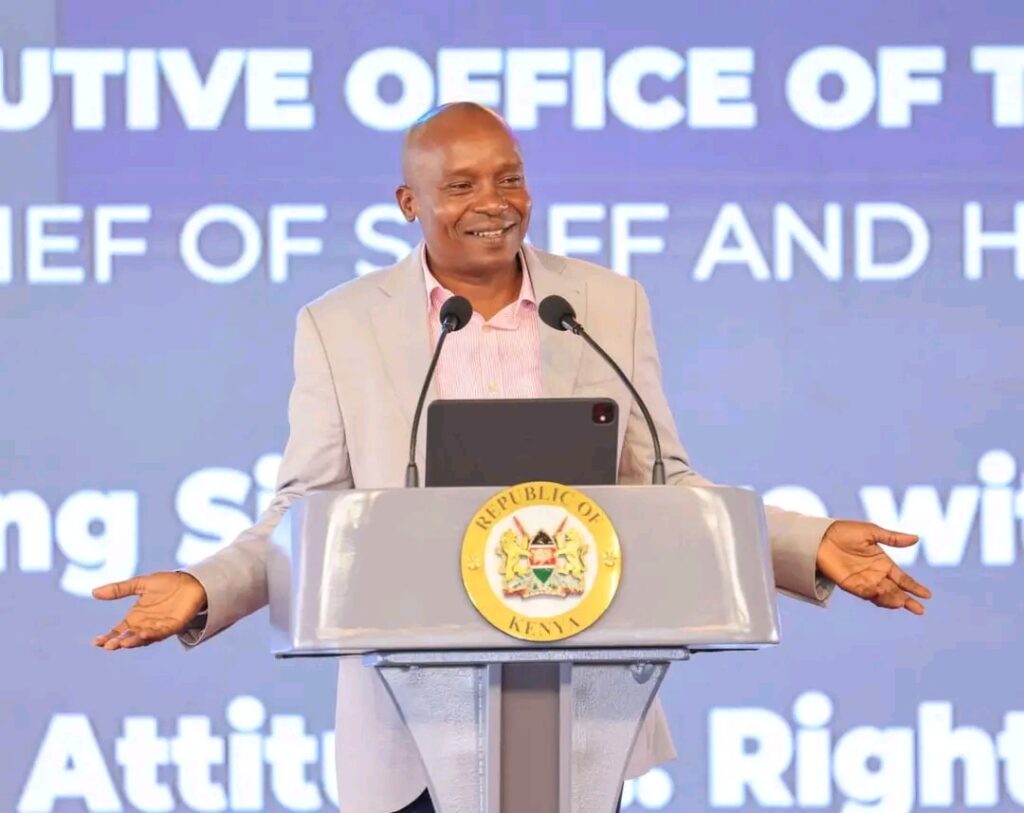
Deputy President Kithure Kindiki has challenged regulatory bodies and agencies to enhance coordination for quick and efficient service delivery.

The DP said the work done by the agencies defines the government’s performance, hence the need to improve decision-making and coordination to meet Kenyans’ expectations and avert duplication of duties.

“We must ensure that the presence of the 127 regulators translates into coordinated strength, clarity, and efficiency rather than duplication, confusion, and delay,” DP stated.

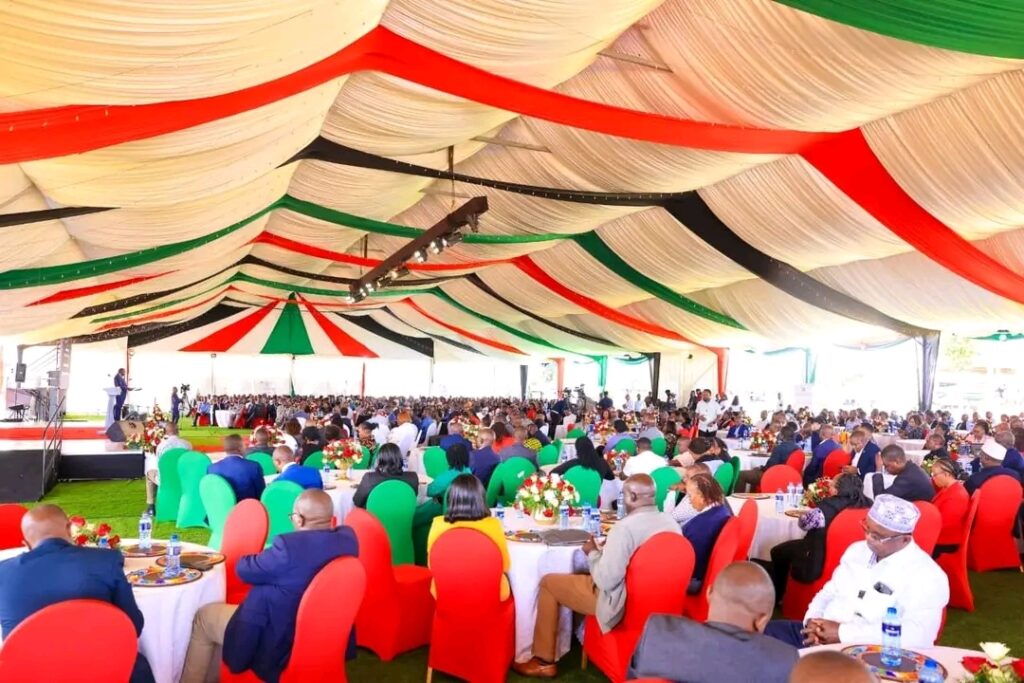
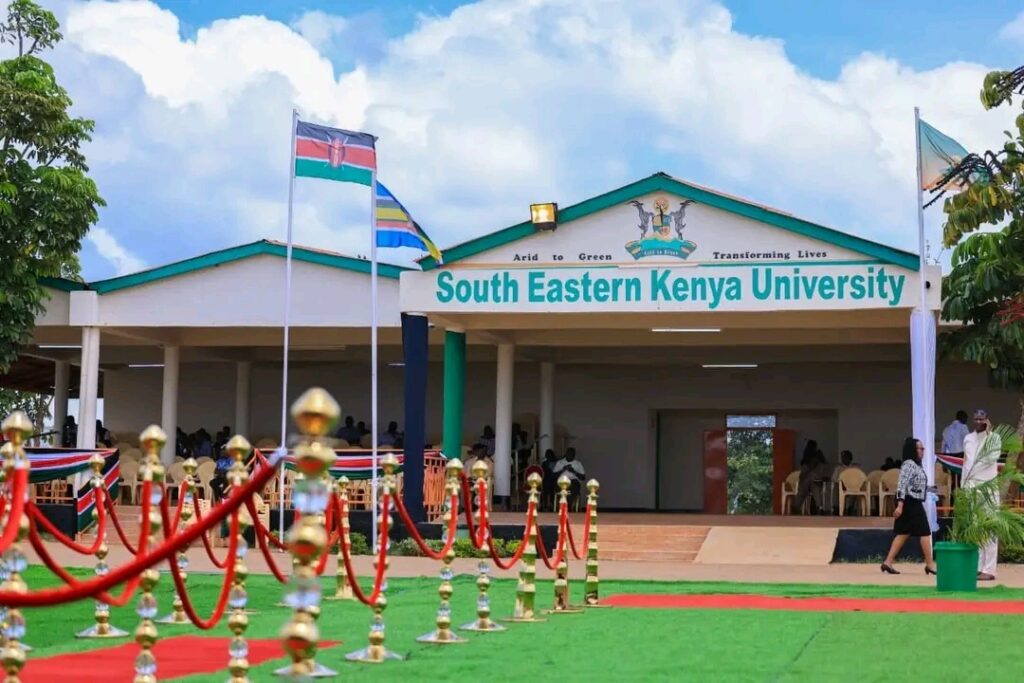
Kindiki spoke on Wednesday when he addressed the 3rd Annual Regulatory Authorities and Agencies Conference held at South Eastern Kenya University (SEKU), Kitui County.Presently, there are 127 Regulatory Authorities and Agencies (RAAs) under operation within the various State Departments with mandates touching on every facet of the economy and society.

The Deputy President said Kenyans expect the agencies to execute their mandates with urgency, vigour and in a transparent manner.

“When regulatory action is weak, inconsistent, or compromised, Government itself appears weak, and when regulatory processes are opaque or unfair, Government is perceived as unjust, but when regulation is firm, fair, and predictable, Government earns trust, credibility, and legitimacy,” he noted.

In discharging their duties, Kindiki urged the regulatory bodies to avoid laxity and comfort, saying such would reflect badly on the state of governance in the country.

“It is not enough that you are working; your work must be seen, felt, and experienced by the citizens we serve. Government action must be clear, consistent, and visible in the public space, reflecting the seriousness and discipline with which we execute our mandate,” DP reiterated.

The DP emphasized adherence to the Constitution, which provides clear guidance on the obligations of the public service in Article 232, saying no Kenyan should be mistreated or poorly served by those in public service. “No citizen should ever have to ask where the Government is because the Government is present wherever rules are set, standards enforced, safety assured, and fairness upheld,” he added.

Orengo Accuses IG Kanja of Taking Orders From Interior PS Raymond Omollo

By Andrew Kariuki,

Siaya Governor James Orengo has accused Inspector General of Police Douglas Kanja of operating under the direction of Interior Principal Secretary Raymond Omollo, claiming the Executive is interfering with the independence of the National Police Service (NPS).

Speaking on Wednesday, Orengo argued that the Constitution grants the police operational independence and warned against what he described as political misuse of security agencies.

“The National Police Service is independent. Executive direction only applies on policy matters and not operational matters,” Orengo said.

He further alleged that officers from the Directorate of Criminal Investigations (DCI) based in Nairobi were being deployed to disrupt Linda Mwananchi political meetings in Kisumu without involving local security commanders.

“I’m asking the Inspector General to be in charge of the NPS in operations. There is no way that we have part of the directorate in Kisumu at the regional and county level and still send officers from Nairobi to arrest people in Kisumu,” he stated.

“This is undermining the authority of officers you have on the ground.”

Orengo also directed criticism at Interior PS Raymond Omollo, warning him against allegedly using security agencies to intimidate political opponents.

“The Interior PS is not your superior on operations. We may have to inquire and take you into account if you are acting on the directions of Raymond Omollo,” Orengo claimed.

Embakasi East MP Babu Owino also weighed in, accusing unnamed officers of interfering with political activities linked to the Linda Mwananchi movement.

“You must stamp your authority and ensure your unit is not abused,” Babu said while addressing IG Kanja.

The Linda Mwananchi faction has in recent weeks accused sections of the Executive of sponsoring chaos at opposition-linked political events and has repeatedly called for the resignation of PS Omollo.

35-year-old fisherman killed in Lake Victoria over fishing ground dispute

By Bonface Mulyungi

One fisherman died following a physical fight among fishermen over fishing ground in Lake Victoria.

The incident occurred at Mukuyu beach in Homa-Bay County on Monday evening.Fredrick Oduol, a 35-year-old fisherman, was killed when groups of fishermen fought in a rivalry over fishing grounds during a fishing expedition.

According to Suba Sub-county Beach Management Unit Chairman William Onditi, two groups of fishermen engaged in violent attacks in the lake as they were scrambling for fishing grounds.

The violence occurred when a group of fishermen accused Oduol and his colleagues of fishing in a space that was not meant for them.

Oduol is reported to have been hit with a paddle, culminating in serious injuries, before he was rushed to Mikuyu Health Center where he lost his life.

Onditi attributes the incident to a decline in the fish population in Lake Victoria, resulting from illegal fishing methods that kill immature fish.

The Chairman of the Homa-Bay County Beach Management Network, Edward Oremo, said illegal fishing methods should not be allowed to continue in Lake Victoria, as they are a recipe for chaos in the lake.

He calls on fishermen to diversify their sources of livelihood to reduce fishing pressure in Lake Victoria.

Create a free account, or log in.

Gain access to read this content, plus limited free content.

Yes! I would like to receive new content and updates.

Sponsored Ad

Ad 1
Ad 2
Ad 3
Ad 4
Ad 5
Ad 6