Sponsored Ad

Ad 1
Ad 2
Ad 3
Ad 4
Ad 5
Ad 6
23.1 C
Kenya
Monday, May 11, 2026
Home Blog Page 220

Seychelles Set to Host Landmark UN Tourism Africa Meeting as Vice-President Pillay Engages UN Director

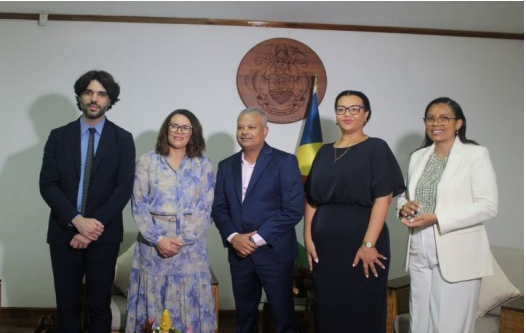
Director for Africa at UN Tourism Ms. Elcia Grandcourt, paid a Courtesy Call to the Vice-President, Mr. Sebastien Pillay, during her official visit to Seychelles.

The meeting was held in the presence of the Minister for Tourism and Culture, Mrs. Amanda Bernstein, and the Principal Secretary for Tourism, Mrs. Sherin Francis.

The visit coincides with Seychelles’ preparations to host the 69th Meeting of the UN Tourism Commission for Africa, scheduled for July this year.

The high-level gathering will bring together Ministers responsible for tourism from across the continent to deliberate on the evolving dynamics of the sector, with particular focus on the workforce in tourism and the realities facing African destinations.

In parallel, a conference dedicated to human capital development will be convened, addressing key areas such as training and capacity building. A comprehensive survey that has already been conducted across African countries will be unveiled during the conference to inform discussions and policy direction.

Discussions during the courtesy call also touched on the broader global context, including the ongoing situation in the Middle East and its ripple effects on tourism-dependent economies globally.

Ms. Grandcourt highlighted the importance of strengthened collaboration between UN Tourism and international partners to mitigate impacts on the sector, noting that the situation remains under close observation.

Vice-President Pillay welcomed the engagement and expressed pride in seeing a Seychellois national occupying a senior leadership role within an international organisation, underscoring the country’s continued contribution by women to global tourism leadership.

Drawing from her visit, Ms. Grandcourt, commended Seychelles for its maturity and advancement in the tourism sector.

Drawing from her visits to several small establishments, she noted her strong impression of the high standards of facilities and service delivery, positioning Seychelles as a benchmark for quality tourism on the African continent.

The upcoming Commission meeting also holds historical significance, marking the first time since the 1980s that Seychelles will host this important continental forum, further reinforcing the country’s standing as a key player in shaping the future of tourism in Africa.

South Africa: Committee on Trade Says Urgent Action Is Needed to Secure Manufacturing Future in Eastern Cape

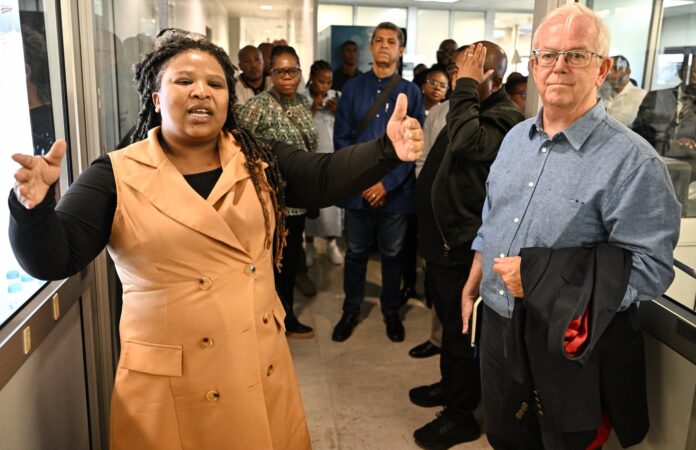
The Portfolio Committee on Trade, Industry and Competition concluded its oversight visit to the Eastern Cape province’s industrial zones, that contribute to industrial growth and job creation.

On Thursday, 19 and Friday, 20 March 2026, the committee visited the East London Industrial Development Zone (IDZ), as well as the Mercedes Benz South Africa plant in East London.

The visit forms part of Parliament’s broader focus on the strengthening of South Africa’s manufacturing sector to ensure that industrial development spreads beyond major economic centres.

The committee has welcomed progress made at the IDZ, particularly the work of its Science and Technology Park in fostering innovation, incubating entrepreneurs, particularly small, medium, and micro enterprises (SMMEs) and developing much-needed skills in the Eastern Cape such as those required in the digital economy and renewable energy sector. The committee noted the IDZ’s efforts to create youth training, entrepreneurial and employment opportunities.

The Eastern Cape remains an important hub for South Africa’s automotive industry. As part of its two-day visit in East London, the committee engaged stakeholders in the automotive industry, namely Mercedes Benz South Africa, Ebor and Voestalpine. Collectively, the industry has made a significant contribution to component localisation, skills development, job creation, and community development.

Industry raised concerns regarding the need for reliable and affordable electricity and water provision, efficiency and reliability of transport logistics, and policy reform to secure favourable tariffs with the United States and ensure stability in the incentives underpinning the Automotive Production and Development Programme. These factors would assist the industry to remain sustainable and continue to benefit the broader community.

Stakeholders also required urgent policy certainty on electric vehicles. Without clear direction, they warned that manufacturers may delay or forego critical investments in new technologies, putting local production, jobs and export markets at risk.

“The committee will engage relevant stakeholders to address some of the key challenges facing the automotive industry and other businesses in the Eastern Cape,” said the Chairperson of the committee, Mr Mzwandile Masina.

Tanzania Accelerates Progress Toward Universal Health Coverage at 25th Annual Health Sector Technical Review Meeting

The 25th Joint Annual Health Sector Technical Review Meeting (JAHS‑TRM) took place from 17–18 March 2026 in Dodoma, bringing together Government leaders, development partners, non‑state actors and the private sector to review health sector performance for 2025 and set priorities for the 2026/27 financial year. The meeting was held under the theme “Accelerating achievement of Universal Health Coverage through Transformative Leadership, Accountability and Digital Innovation in Ensuring a Healthy Society.” It was chaired by Prof. Tumaini Nagu, Deputy Permanent Secretary for Health in the Prime Minister’s Office – Regional Administration and Local Government (PMORALG).

In her remarks, Prof. Nagu reaffirmed Government commitment to expanding access to essential services through the national rollout of the Universal Health Insurance (UHI). She noted progress in infrastructure expansion, strengthened local governance, and rapid digital transformation, including 97.8% installation of GoTHOMIS across public facilities. Key challenges highlighted included shortages of Human Resources for Health (HRH), commodity constraints and the need to strengthen preparedness for emerging diseases. She called for enhanced coordination to ensure policy priorities are effectively implemented.

Acting Permanent Secretary of the Ministry of Health, Dr. Alex Magesa, emphasized the importance of evidence‑based decision‑making to drive accountability and measurable improvements. He noted gains in specialized services, improved sector reporting, increased utilization of Primary Health Care (PHC) and reductions in maternal mortality. However, he underscored persistent HRH shortages, rising Non‑Communicable Diseases (NCDs) and the need to fully integrate digital systems to improve efficiency and data use.

The Development Partners Group for Health, represented by Chairperson Ms. Melissa McNeil‑Barret, reiterated their commitment to supporting Government priorities, including UHI rollout, development of the Health Sector Transformation Plan (HSTP 2026–2031) and strengthening local production of essential commodities. Development partners emphasized the importance of coordinated multisectoral engagement and improved interoperability of digital health systems.

Non‑State Actors – Health, represented by Dr. Anthony Mwendamaka, acknowledged improvements in health information systems, availability of medicines and community‑level accountability. They noted that HRH shortages at PHC level, fragmented digital platforms and inconsistent financing for community health workers continue to impede service delivery. They reaffirmed their commitment to community‑based monitoring, UHI enrolment mobilization and supporting behaviour change initiatives.

Private sector and faith‑based representatives including APHTA, BAKWATA and CSSC, represented by Dr. Samwel Ogillo, commended Government recognition of their role in service delivery. They observed increased demand linked to expanding insurance coverage and stressed that HRH and infrastructure investments must match sector growth. They expressed readiness to contribute to the development of the HSTP and encouraged further strengthening of local manufacturing and expansion of specialized training, especially for critical cadres such as anaesthesia providers.

The WHO Representative in Tanzania, Dr. Alex Gasasira, commended the improved performance of Tanzania’s health system as evidenced by positive indicator trends in immunization, reproductive, maternal, newborn, child and adolescent health (RMNCAH), disease surveillance and digital transformation. He underscored the importance of maintaining PHC as the foundation of the health system, improving accountability through better data use and leveraging digital innovation to support equitable and efficient service delivery.

Stakeholders reviewed evidence from major sector reports, including the Annual Health Sector Performance Profile, National Health Accounts, Public Expenditure Review, Mid‑Term Review of the Health Basket Fund and the Joint Field Visits Report. Synthesis of these reports highlighted common challenges: rising NCD prevalence, HRH gaps, systemic fragmentation, declining external financing and the need to increase sustainable domestic health financing. Based on this analysis, participants developed priority policy recommendations for FY 2026/27 aligned with WHO’s six health system building blocks: service delivery; quality of care and infrastructure; health workforce; medicines, medical devices and medical technology; health financing and social protection; and health information systems and governance. They also identified priority policy issues for inclusion in the forthcoming five‑year HSTP (2026–2031), aligned with Vision 2050.

Concluding reflections emphasized shared responsibility for sector performance. The private sector called for timely integration into the UHI framework. Development partners stressed the need to strengthen the Sector‑Wide Approach (SWAp) to maximize efficiency and value for money. The Ministry of Health noted that accountability is essential for maintaining trust and ensuring effective implementation and confirmed that the recommendations would inform policy commitments and annual action plans. Prof. Nagu reaffirmed Government commitment to strengthening governance across all levels, improving information systems for better planning and increasing budget allocations from local to national levels. She called on all partners to support implementation of the agreed priorities.

The Policy Recommendations will be reviewed and approved as Policy Commitments for FY 2026/27 at the Joint Annual Health Sector Policy Meeting to be held later in March 2026, co‑chaired by the Ministers of Health and PMORALG. WHO, serving as Secretariat to the Government and the Development Partners Group for Health, will continue to provide technical support and coordination to ensure effective planning, alignment and execution of the Joint Annual Health Sector Review process.

KCB Rugby Shifts Focus to Kenya Cup Playoffs

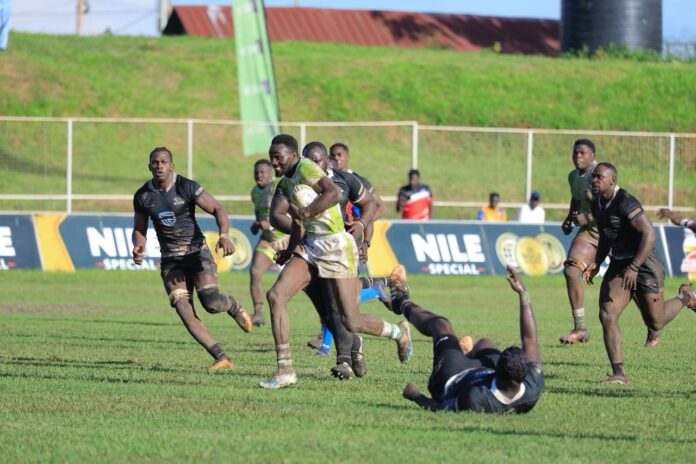
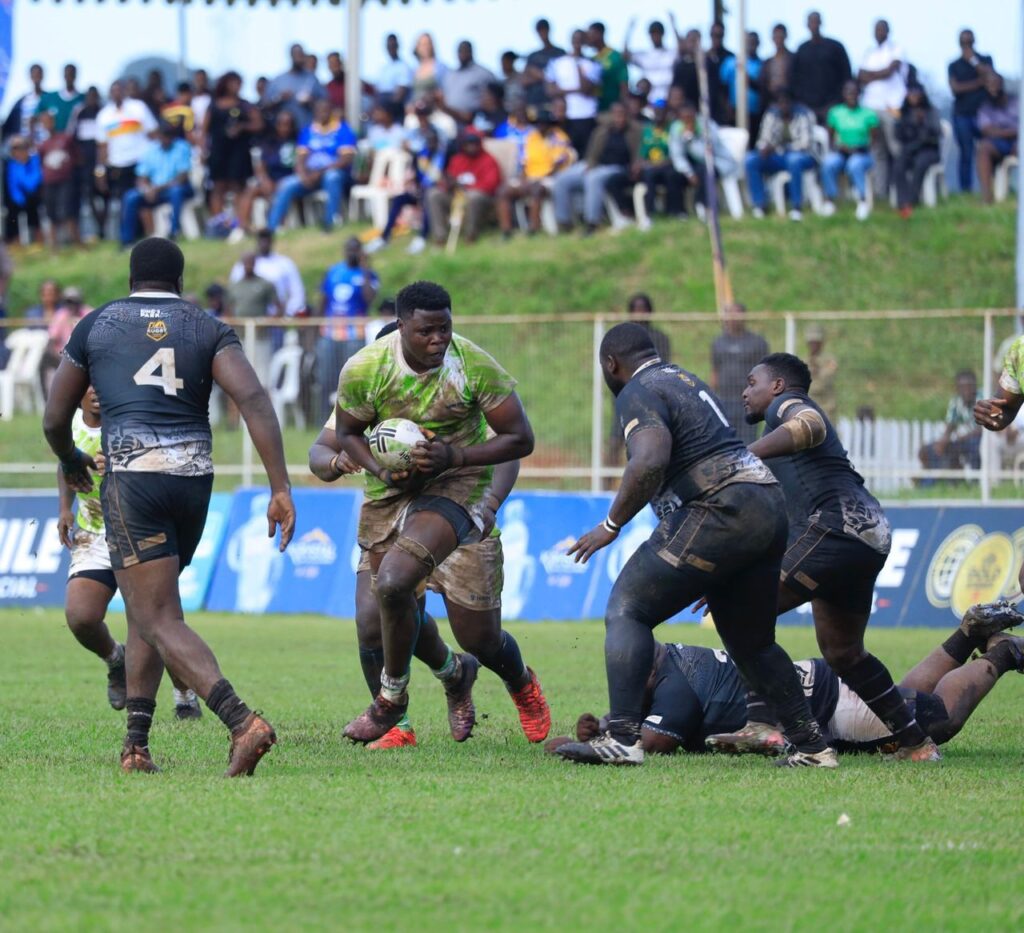
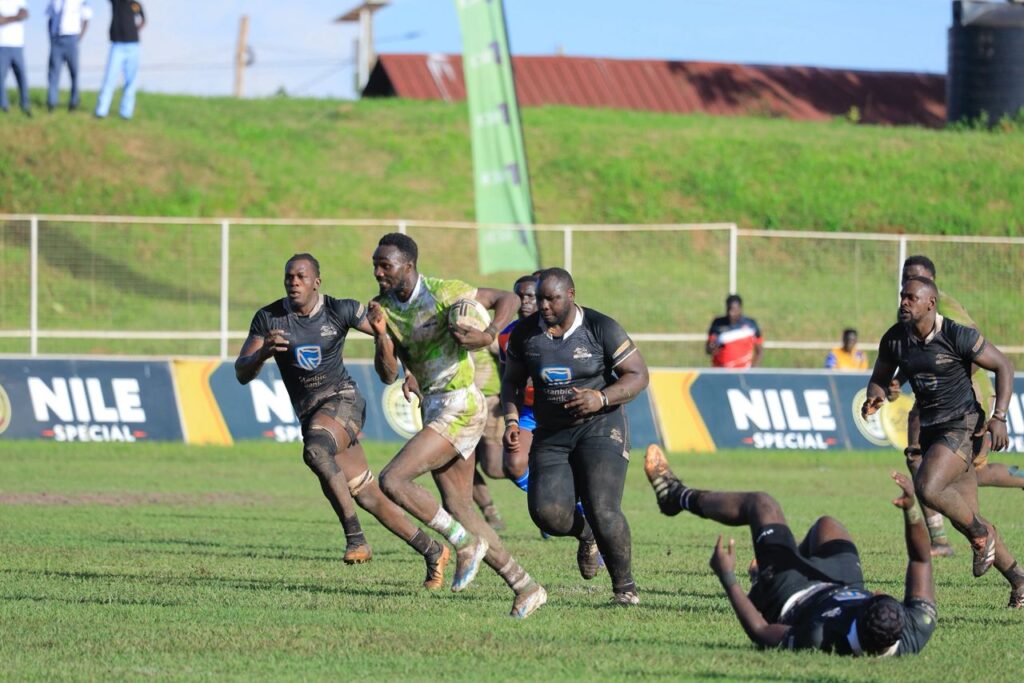
KCB Rugby have shifted their focus to the crunch Kenya Cup playoffs following their 10-11 loss to Ugandan side Black Pirates in the Enterprise Cup quarterfinal played at Muteesa II Stadium, in Wankulukuku.

The contest began with early nerves from the Pirates, who missed a penalty that could have handed them a quick advantage. However, Mukore Wayne soon steadied matters, calmly slotting a penalty to give Pirates a 3-0 lead and settle his side into the contest.

Momentum swung firmly in favor of the visitors when Pirates captain Bob Muhati was temporarily sin-binned, but instead of collapsing, Pirates tightened their grip. They earned another penalty and made no mistake from the tee, stretching the lead to 6-0.

Despite KCB’s efforts to respond, Pirates’ defensive structure held firm through the remainder of the half, taking a deserved 6-0 lead into the break.

“We lost a tight one, and credit to Pirates for taking their chances. For us, the focus now shifts fully to the Kenya Cup playoffs. That is where our season will be defined, and we have to be sharper in those key moments,” noted Forwards Coach Brian Nyikuli.

The second half sparked into life when Sheldon Kahi crossed over for KCB’s opening try, narrowing the deficit to 6-5. However, the missed conversion by Levy Amunga proved to be an early turning point in what would become a game of fine margins.

Pirates responded with purpose, Okelo touching down to extend their lead to 11-5 and reasserting control just as KCB threatened to build momentum.

The bankers refused to back down. Michael Wekesa powered over for a crucial try, bringing KCB within a single point at 11-10. But once again, the extras went begging, as Wahinya missed the conversion that could have swung the lead in KCB’s favor.

In the end, the Pirates held on through a tense finish, closing out an 11-10 victory built on discipline, defensive resolve, and capitalizing on key moments.

Speaking after the match, KCB Rugby Captain Bob Muhati said: “It is a tough loss, especially in a game decided by such small margins. But we take the lessons and move forward. Our focus is now on the Kenya Cup playoffs, and we believe we have what it takes to compete and finish strong.”

Kenya grants amnesty to citizens recruited in Russia military operations

The government has announced an amnesty for Kenyan citizens recruited into Russia’s military operations, allowing those unwilling to continue to return home safely.

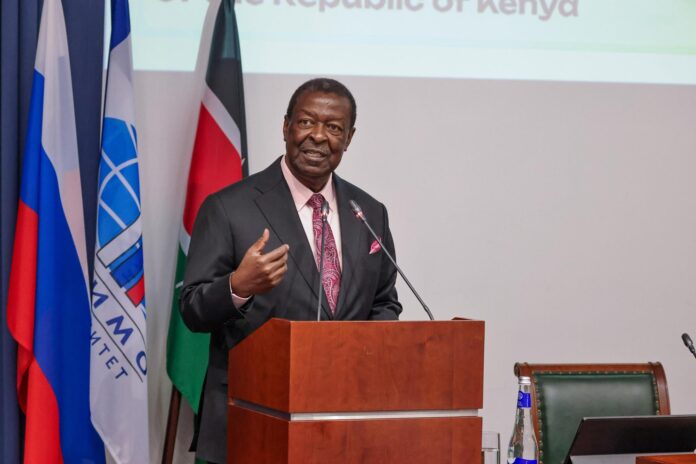
Foreign Affairs CS Musalia Mudavadi said the deal was reached after talks with Sergey Lavrov, with Russia agreeing to halt the recruitment of Kenyans. The government will also launch a public awareness campaign as it moves to repatriate affected nationals, noting that over 250 Kenyans had been enlisted.

In a statement dated March 22, the Ministry of Foreign and Diaspora Affairs said Russia had agreed to place Kenya on a “STOP LIST” to prevent further enlistment of its nationals into the Russia-Ukraine war.

The agreement followed Mudavadi’s official visit to Moscow from March 15 to 18, where he held a formal bilateral meeting with Lavrov.

“In addressing the issue of Kenyan citizens recruited to fight in the Russia-Ukraine war, the two countries agreed to stop any further recruitment of Kenyan nationals into the Russian Special Military Operations (SMO),” the statement said.

It added that Kenyans currently involved but unwilling to continue “were to be immediately disengaged and freed to travel back to Kenya.”

Mudavadi disclosed that “so far, 44 Kenyans have been safely repatriated back home, while 11 have been reported missing in action/killed in action, 38 are currently hospitalized in various Russian hospitals under restricted access, leaving 160 Kenyan officers still actively involved in SMO.”

According to the ministry, approximately 252 Kenyans are part of the operations, although a report by the National Intelligence Service presented to Parliament in February 2026 indicated that over 1,000 Kenyans may have been recruited.

As part of the agreement, Kenya’s embassy in Moscow has been granted consular access to nationals in hospitals and civilian facilities to support the repatriation of the injured and facilitate “the dignified return of the remains of those who have lost their lives.”

Both countries have also initiated information sharing to curb human trafficking, smuggling, and illegal recruitment linked to the operations.

The government has since launched a nationwide awareness campaign dubbed Linda Mkenya Majuu to educate citizens on legitimate overseas job opportunities and warn against illegal recruitment schemes.

Mudavadi noted that authorities have already shut down more than 600 unlicensed recruitment agencies suspected of human trafficking.

The amnesty comes despite Kenyan law prohibiting citizens from joining foreign armed forces without presidential approval, an offence that can attract up to 10 years’ imprisonment. However, the government said its immediate focus is on securing the safe return of affected Kenyans.

Trump, Iran threaten power, energy targets as war escalates

(Reuters) – U.S. President Donald Trump and Iran threatened to escalate their war, targeting energy and fuel facilities in the Gulf, which could again roil global energy and financial markets and deepen a regional crisis.A drone view shows a damage in a residential neighbourhood, following a night of Iranian missile strikes which injured dozens of Israelis, amid the U.S.-Israel conflict with Iran, in Dimona, southern Israel March 22, 2026. REUTERS/Roei Kastro
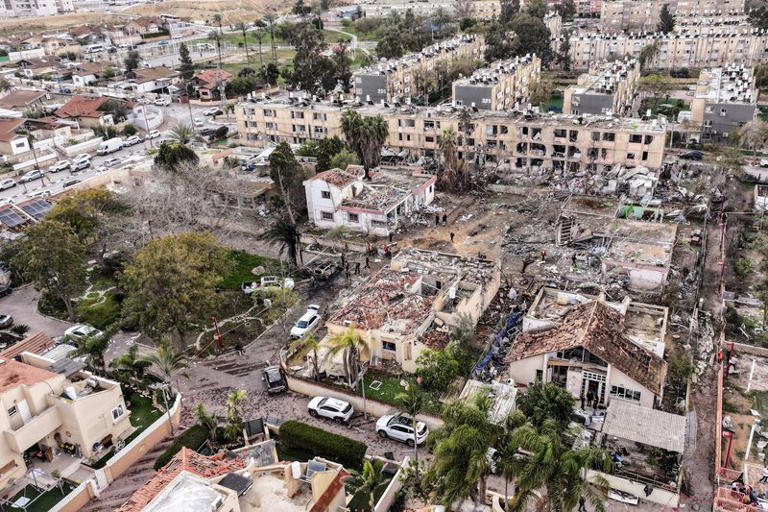
A drone view shows a damage in a residential neighbourhood, following a night of Iranian missile strikes which injured dozens of Israelis, amid the U.S.-Israel conflict with Iran, in Dimona, southern Israel March 22, 2026. REUTERS/Roei Kastro© Thomson Reuters

Trump on Saturday threatened to “obliterate” Iran’s power plants if Tehran did not fully reopen the Strait of Hormuz within 48 hours, a significant escalation barely a day after he talked about “winding down” the war, now in its fourth week.

Iran warned on Sunday it would target U.S. infrastructure, including energy facilities in the Gulf, if Trump carried out his threat, which he made as U.S. Marines and heavy landing craft continue to head to the region.A drone view shows a damage in a residential neighbourhood, following a night of Iranian missile strikes which injured dozens of Israelis, amid the U.S.-Israel conflict with Iran, in Dimona, southern Israel March 22, 2026. REUTERS/Roei Kastro
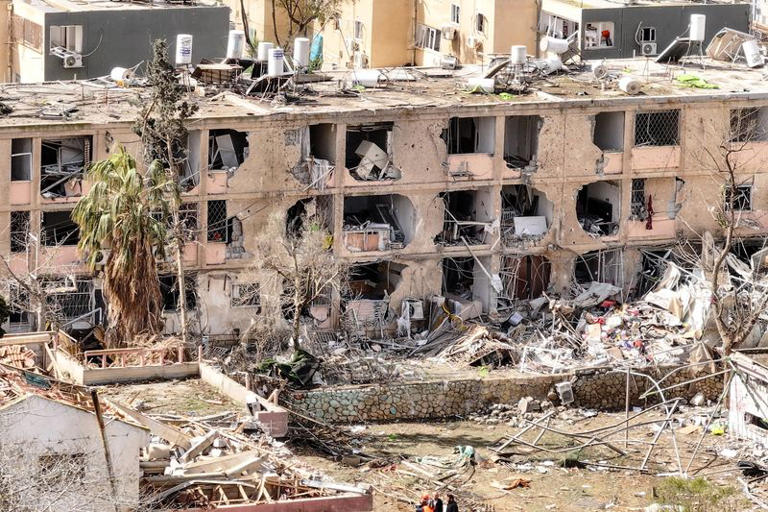
A drone view shows a damage in a residential neighbourhood, following a night of Iranian missile strikes which injured dozens of Israelis, amid the U.S.-Israel conflict with Iran, in Dimona, southern Israel March 22, 2026. REUTERS/Roei Kastro© Thomson Reuters

More than 2,000 people have been killed during the war the U.S. and Israel launched on February 28, which has upended markets, spiked fuel costs, fuelled global inflation fears and convulsed the postwar Western alliance.

‘TICKING TIME BOMB’ FOR MARKETS

“President Trump’s threat has now placed a 48-hour ticking time bomb of elevated uncertainty over markets. If the ultimatum is not walked back, we will likely see a Black Monday reopening of global equity markets in free fall and oil prices spiking significantly higher,” said IG market analyst Tony Sycamore.

Tehran would likely target Gulf energy facilities in Saudi Arabia, the United Arab Emirates and Qatar, which “would deepen and prolong the pain of higher energy prices and drag the conflict into a broader regional crisis”, Sycamore said.Oil prices jumped on Friday and settled at their highest in nearly four years, after Iraq declared force majeure on all oilfields developed by foreign firms, Israel attacked a major gas field in Iran and Tehran responded with strikes on neighbours, Saudi Arabia, Qatar and Kuwait.An Israeli soldier uses a torch to inspect the damage after Iranian missile barrages struck Dimona, amid the U.S.-Israel conflict with Iran, in southern Israel March 21, 2026. REUTERS/Ilan Assayag
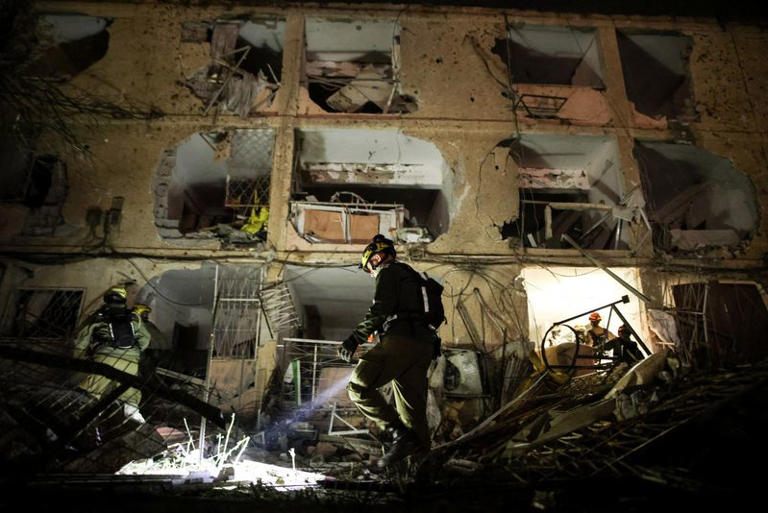
An Israeli soldier uses a torch to inspect the damage after Iranian missile barrages struck Dimona, amid the U.S.-Israel conflict with Iran, in southern Israel March 21, 2026. REUTERS/Ilan Assayag© Thomson Reuters

Iranian attacks have effectively closed the Strait of Hormuz, a narrow choke point that carries around a fifth of global oil and liquefied natural gas supplies, causing the worst oil crisis since the 1970s. Its near-closure sent European gas prices surging as much as 35% last week.An Israeli soldier prepares stretchers at the impact site after Iranian missile barrages struck residential buildings in Arad, amid the U.S.-Israel conflict with Iran, in southern Israel March 22, 2026. REUTERS/Ilan Assayag
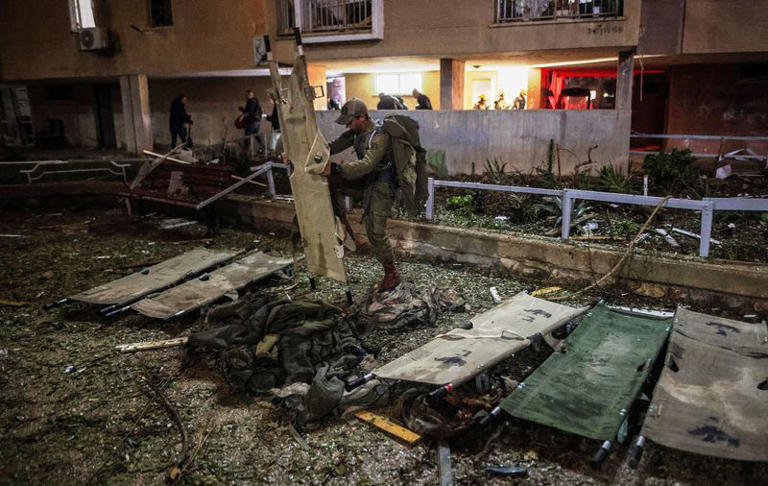
An Israeli soldier prepares stretchers at the impact site after Iranian missile barrages struck residential buildings in Arad, amid the U.S.-Israel conflict with Iran, in southern Israel March 22, 2026. REUTERS/Ilan Assayag© Thomson Reuters

“If Iran doesn’t FULLY OPEN, WITHOUT THREAT, the Strait of Hormuz, within 48 HOURS from this exact point in time, the United States of America will hit and obliterate their various POWER PLANTS, STARTING WITH THE BIGGEST ONE FIRST!” Trump posted on social media around 7:45 p.m. EDT (2345 GMT) on Saturday.

The Strait of Hormuz strait remains open to all shipping except vessels linked to “Iran’s enemies”, Iran’s representative to the U.N. maritime agency was quoted as saying in Iranian media reports published on Sunday.An Israeli soldier secures the impact site after Iranian missile barrages struck residential buildings in Arad, amid the U.S.-Israel conflict with Iran, in southern Israel March 22, 2026. REUTERS/Ilan Assayag
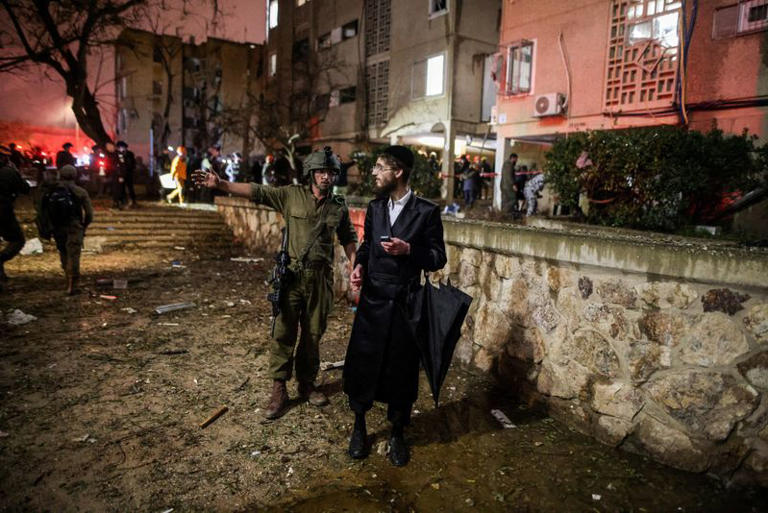
An Israeli soldier secures the impact site after Iranian missile barrages struck residential buildings in Arad, amid the U.S.-Israel conflict with Iran, in southern Israel March 22, 2026. REUTERS/Ilan Assayag© Thomson Reuters

Ali Mousavi’s comments came from an interview published on Friday by Chinese news agency Xinhua, before Trump’s threat to target Iranian power plants if the strait was not “fully open” within 48 hours.Israeli soldiers work at the scene of damage after Iranian missile barrages struck residential buildings in Arad, amid the U.S.-Israel conflict with Iran, in southern Israel, March 22, 2026. REUTERS/Ronen Zvulun
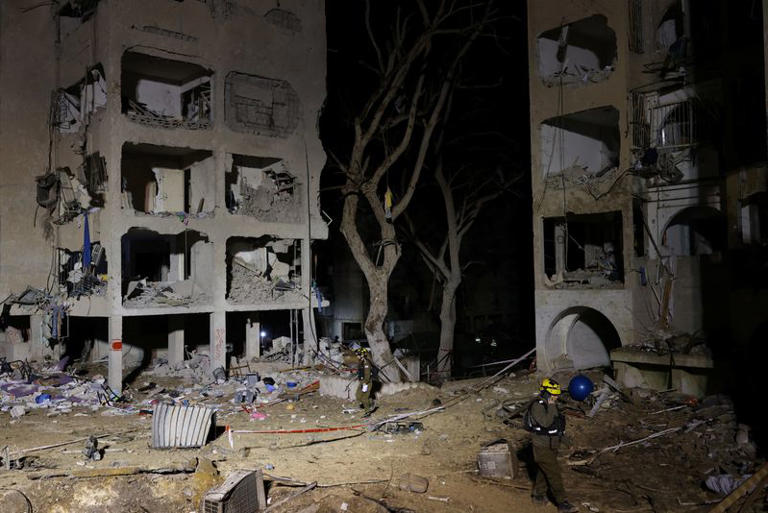
Israeli soldiers work at the scene of damage after Iranian missile barrages struck residential buildings in Arad, amid the U.S.-Israel conflict with Iran, in southern Israel, March 22, 2026. REUTERS/Ronen Zvulun© Thomson Reuters

Ali Mousavi, Tehran’s representative to the International Maritime Organisation, said passage through the narrow waterway was possible by coordinating security and safety arrangements with Tehran.

Ship-tracking data has shown some vessels, such as Indian-flagged ships and a Pakistani oil tanker, have managed to negotiate safe passage through the strait. Pakistan has good ties with Iran while maintaining close relations with the U.S. and Saudi Arabia.

Trump’s idea in targeting Iranian infrastructure is to make the Hormuz blockade “economically and politically unbearable for Tehran, without destroying Iranian oil fields that would cause long-term global supply damage,” Sycamore said.Israeli soldiers work at the scene of damage after Iranian missile barrages struck residential buildings in Arad, amid the U.S.-Israel conflict with Iran, in southern Israel, March 22, 2026. REUTERS/Ronen Zvulun
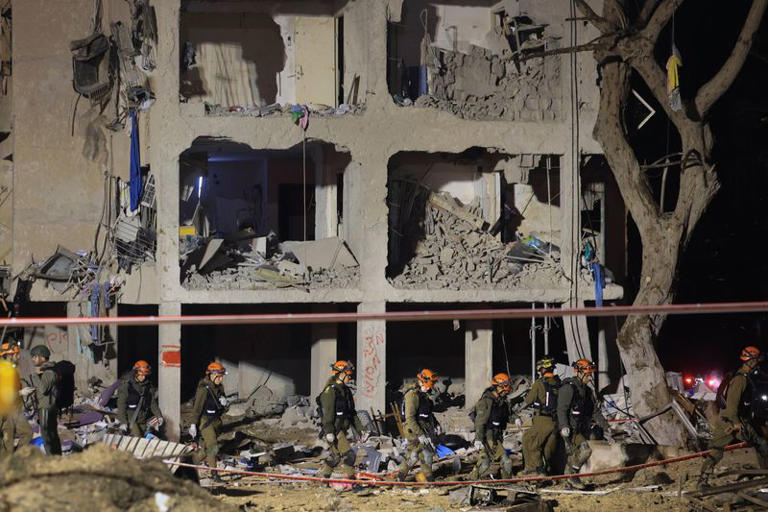
Israeli soldiers work at the scene of damage after Iranian missile barrages struck residential buildings in Arad, amid the U.S.-Israel conflict with Iran, in southern Israel, March 22, 2026. REUTERS/Ronen Zvulun© Thomson Reuters

Iran’s Khatam al-Anbiya military command headquarters said if the U.S. attacked Iran’s fuel and energy infrastructure, Iran would target all U.S. energy, information technology and desalination infrastructure in the region.

The Islamic republic’s power grid is deeply intertwined with its energy sector. Striking major plants could trigger blackouts, crippling everything from pumps and refineries to export terminals and military command centres.

Iran’s largest power plants include the Damavand facility near Tehran, the Kerman plant in the southeast and Ramin in Khuzestan province, all of which have much greater generation capacity than Iran’s sole nuclear plant at Bushehr on the southern coast.

IRAN EXPANDS RISKS WITH LONG-RANGE MISSILES

Tehran fired long-range missiles for the first time on Saturday, expanding the risk of attacks beyond the Middle East, while an Iranian strike landed near Israel’s secretive nuclear reactor about 13 km (8 miles) southeast of Dimona.

Iran launched two ballistic missiles with a range of 4,000 km (2,500 miles) at the U.S.-British ‌military base at Diego Garcia in the Indian Ocean, said Israeli military chief Eyal Zamir.

“These missiles are not intended to strike Israel. Their range reaches European capitals – Berlin, Paris, and Rome are all within direct threat range,” Zamir said in a statement.

The Israeli military said on Sunday it was striking Tehran just hours after Iran’s attacks on southern Israel.

Trump and his administration have sent mixed messages about U.S. goals throughout the war, leaving allies struggling to respond.

He has accused NATO allies of cowardice over their reluctance to help open the Strait of Hormuz. Some allies have said they would consider it but most say they are reluctant to join a war that Trump started without consulting them.

Japan could consider deploying its military for minesweeping in the s, if a ceasefire is reached, Foreign Minister Toshimitsu Motegi said on Sunday.

A new Reuters/Ipsos poll, conducted last week, finds that 59% of Americans disapprove of U.S. military strikes against Iran, with 37% approving.

The war has become a major political liability for Trump ahead of November mid-term elections for the Congress, with energy price shocks fuelling U.S. inflation and hitting consumers and businesses hard.


Cemetery attendant traced and arrested over discovery of mass grave in Kericho

A suspected mass grave discovered in Kericho County took a new twist after police detained a cemetery caretaker who is now at the center of investigations into the mysterious burial of multiple bodies.

Authorities in Kericho East Sub-County confirmed that the caretaker, initially identified as Ezekiel, was traced to the Makaburini area late Saturday night.

Upon interrogation, he revealed his true identity as Richard Towett and claimed to be an employee of the National Council of Churches of Kenya, which owns the cemetery where the bodies were allegedly buried.

Police said a search at his residence led to the recovery of a photocopy of a purported court order said to have originated from a court in Nyamira County.

The document reportedly authorized the burial of seven unclaimed bodies from a hospital in Nyamira.

However, investigators noted glaring inconsistencies, including the absence of a court file number and contradictions over the number of bodies involved.

Earlier reports indicated that up to 12 bodies may have been interred at the site, raising concerns over possible illegal burials and the handling of unclaimed bodies across county lines.

“The suspect is currently in custody assisting with investigations as we verify the authenticity of the court order and liaise with officials from Nyamira County Referral Hospital,” police said.

Investigators are also probing why no officials from Kericho County were involved in the process, despite the burials taking place within its jurisdiction.

Police said the incident was first brought to the attention of authorities by a member of the public on Saturday March 21, 2026.

Preliminary findings indicate the presence of a freshly dug grave within the cemetery.

Two witnesses—casual labourers who reportedly earn a living by digging graves and conducting burials—told investigators that they were hired by unknown individuals to prepare a large grave.

The two claimed that on March 20 at about 6:00 a.m., three individuals arrived in a white Land Cruiser and oversaw the disposal of approximately 14 bodies into the grave.

The witnesses further alleged that all the bodies were sealed in body bags, with some showing signs of mutilation.

The same individuals are said to have visited the cemetery a day earlier, where they held discussions with a caretaker identified as Ezekiel, who is now being sought by police for questioning.

Authorities have since secured the scene and indicated that formal exhumation of the bodies will be sought beginning March 23 as part of ongoing investigations.

A team was sent from Nairobi DCI headquarters to join those on the ground in pursuing the matter.

They will however have to wait until Monday March 23 apply and get an exhumation order for the commencement of further probe.

A crowd gathered outside the site as news of the discovery spread out.

Police spokesman Michael Muchiri said following the alleged discovery of a mass grave within the Makaburini Cemetery in Kericho County, police visited and secured the scene to preserve the integrity of potential evidence.

“At this preliminary stage, we are seeking to establish the veracity of the claims. Some witnesses have since recorded statements, and efforts are underway to locate and interview more persons of interest in this matter.”

“The National Police Service assures the public that this matter is being handled with the utmost seriousness and will be conducted professionally and transparently to ascertain the facts surrounding this incident,” he said.

He appealed to members of the public to remain calm as investigations are ongoing. Any person with information that may assist this investigation is requested to report to the nearest police station or law enforcement officer, or to share it via our toll-free numbers: 999, 911, 112, or anonymously via our #FichuakwaDCI on 0800 722 203 or WhatsApp 0709 570 000.

Police say efforts to identify the deceased, establish the circumstances surrounding the incident, and trace all persons involved are underway.

Such findings are not uncommon as some bodies have in the past been found in dump sites, forests and rivers.

The matters remain under probe.

Ruto Appoints Catherine Kagwiria Mutua as Tana and Athi Rivers Authority Chair

President William Ruto has appointed Catherine Kagwiria Mutua as the Non-Executive Chairperson of the Board of the Tana and Athi Rivers Development Authority.

The appointment, made through a gazette notice, takes effect from March 19, 2026, and will run for a period of three years, placing Mutua at the helm of the authority’s board to guide development initiatives within the Tana and Athi river basins.

“In exercise of the powers conferred by section 4 (1) (a) of the Tana and Athi Rivers Development Authority Act, I, William Samoei Ruto… appoint—Catherine Kagwiria Mutua (Dr.) to be the Non-Executive Chairperson,” the notice read.

As Non-Executive Chairperson, Mutua will provide strategic oversight and policy direction to ensure the authority effectively delivers on its mandate.

She will lead the board tasked with managing and developing the Tana and Athi rivers, key resources that support agriculture, energy production, and domestic water supply.

The changes come amid a series of fresh appointments and official notices published in the latest Kenya Gazette, signaling ongoing restructuring and governance updates across national and county institutions.

In Mombasa, Governor Abdullswamad Sharrif Nassir appointed Halima Abdi Hashi as chairperson of the Board of Mombasa Water Supply and Sanitation Company Limited (MOWASSCO) for a three-year term effective February 24, 2026.

The gazette states that the appointment was made “in exercise of the powers conferred by Section 11(1)(a) of the Mombasa County Water and Sewerage Services Act, 2016,” alongside other relevant laws governing the water services sector.

Meanwhile, the National Assembly has formally declared a vacancy in Emurua Dikirr Constituency following the death of area MP Joshua Kipyegon Ng’eno on February 28, 2026.

Speaker Moses Wetang’ula confirmed the development, noting that “the seat… has become vacant as a result of the death of Hon. Joshua Kipyegon Ng’eno.”

The notices set the stage for upcoming administrative transitions, including a by-election in Emurua Dikirr and leadership changes in key public institutions.

Laikipia University First-Year Student Dies in Tragic Hiking Accident in Nyandarua

A student from Laikipia University has died following an accident at Subukia View Point while hiking with fellow students.

In a statement issued on Saturday, March 21, the university confirmed the death of Hillary Vulimu, a first-year student pursuing a Bachelor of Arts in Communication and Media.

According to the university, the incident occurred on Friday, March 20, when the student was struck by a rock during the hike.

Fellow students who were with him quickly arranged for his transport to Michael Nursing Home in Subukia, where he received first aid before being referred to Nyahururu County Referral Hospital for further treatment.

“Regrettably, he passed away while at Nyahururu County Referral Hospital casualty receiving treatment,” the university said.

The Dean of Students visited the hospital to oversee necessary arrangements, while the institution also contacted the student’s parents.

“As a community, we are devastated by this loss. We appeal to students and the entire Laikipia University community to show support and tolerance at this time of sorrow,” the statement added.

The university has advised students to avoid risky areas, especially during the ongoing heavy rains.

Govt Spokesperson Isaac Mwaura Under Fire after Jumping on ‘Niko Kadi’ Slogan

The Office of the Government Spokesperson has found itself on the receiving end of angered Kenyans online.

It sparked the hostility after seeming to identify with the ‘Niko Kadi’ slogan, a clarion call launched by young Kenyans to mobilise voter registration ahead of the 2027 general election.

On Saturday, March 21, the spokesperson’s official handle sent a tweet identifying with the slogan.

“Mayouth Je, MKO KADI?” the account tweeted.

It went ahead to urge the youth to show up at an Independent Electoral and Boundaries Commission (IEBC) designated station or Huduma Centre to enlist as voters.

“Visit an IEBC office near you or Huduma Centre and register as a voter,” it said.

The tweets were not well received, with a majority of the responders blasting the government for what they said was mocking them in the face of many atrocities committed against civilians by the state, including abductions and extrajudicial killings.

Many referenced the deaths of young Kenyans during the 2024 protests against the year’s Finance Bill, noting that they were registering as voters to remove the same regime that was urging them to enlist as voters.

They expressed their anger both in words and graphics, asking the government to keep off the ‘Niko Kadi’ banner.

Despite having risen to power in 2022 through a popular vote, President William Ruto’s regime has grown unpopular over time, with the citizenry accusing him of reneging on the promises he made while seeking office.

Ruto had pledged to lower the cost of living and ease the tax regimes, only to widen them after being sworn in.

He has introduced taxes and reviewed such legacy programmes left by retired president Uhuru Kenyatta as Linda Mama, free secondary education and university funding.

The climax of the public anger was witnessed in 2024 when the citizens rose against the Finance Bill, which had introduced a raft of taxation that, if passed, would have overburdened them.

Ruto, for the first time, was forced to discard the bill after ‘listening’ to what the public wanted.

However, despite the decision to do away with the bill, Ruto’s regime was blemished by the killings of protesters on the streets.

Create a free account, or log in.

Gain access to read this content, plus limited free content.

Yes! I would like to receive new content and updates.

Sponsored Ad

Ad 1
Ad 2
Ad 3
Ad 4
Ad 5
Ad 6