Fifa has fined the Israeli Football Association 150,000 Swiss Francs (£141,700) and issued a warning about its future conduct after investigating an “alleged offence of discrimination” by the Palestine Football Association (PFA).
A disciplinary committee looked into the IFA’s handling of racism in Israeli football as part of a PFA complaint at the 74th Fifa congress in May 2024.
World football’s governing body found the IFA had committed breaches of “articles 13 (offensive behaviour and violations of the principles of fair play) and 15 (discrimination and racist abuse) of the Fifa disciplinary code”.
In addition to the fine and warning, the IFA has to display “a significant and highly visible banner with the words ‘Football Unites the World – No to Discrimination’ alongside the Israel Football Association’s logo” at its next three home matches.
“The size, layout, and positioning of the banner in the stadium shall be submitted by the Israel Football Association to Fifa at the latest 15 days before each match for approval,” said Fifa in a statement.
It has also ordered the IFA to “invest one third of the fine … towards the implementation of a comprehensive plan to ensure action against discrimination and to prevent repeated incidents”.
Fifa added “the decision remains subject to a potential appeal” by the IFA.
The PFA also accused the IFA of “allowing inclusion of football teams located on the territory of another association (Palestine) in its national league”.
On this, Fifa said it “should take no action given that … the final legal status of the West Bank remains an unresolved and highly complex matter under public international law”.
Meanwhile, the Palestine FA said its national team’s friendly matches against Mauritania and Benin in Morocco later this month have been cancelled because of the conflict in the Middle East.
Entering a football match in England and Wales without a ticket will become a criminal offence under new laws that come into force before Sunday’s Carabao Cup final between Arsenal and Manchester City at Wembley.
Offenders will face a football banning order of up to five years, as well as a fine of up to £1,000.
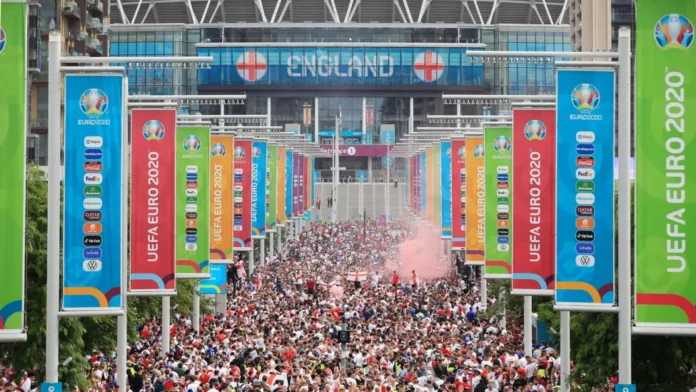
The legislation has been introduced as a result of the serious disorder that marred the European Championship final between England and Italy at Wembley in July 2021, when thousands of fans forced their way into the stadium.
The new act is designed to clamp down on ‘tailgating’ – where supporters without tickets make their way through turnstiles by staying close behind legitimate ticket-holders.
It will also be illegal to knowingly attempt to gain entry using forged tickets, passes and accreditation documents, or by posing as a member of staff.
Until now, there have been no specific legal penalties for entering a football match without a ticket, with supporters that are caught doing so tending to be ejected without any further punishment.
Sixty-nine arrests were made in relation to last year’s Carabao Cup final, with the Metropolitan Police confirming at the time that the majority had been for trying to get into Wembley without a ticket. But until now, police could only charge a culprit with suspected fraud, making prosecution unlikely.
“Football fans should be able to enjoy the game without feeling unsafe or threatened,” said policing minister Sarah Jones.
“We’re giving the police the tools they need to ensure the chaos we saw at Wembley five years ago never happens again.
“Anyone who endangers others by forcing their way into stadiums faces serious consequences.”
Mark Lynch, Stadium Director at Wembley, said: “Attempts to tailgate or force entry into football stadiums places a huge strain on crowd safety teams and puts legitimate ticket holders at risk of overcrowding or injury.
“This new legislation will make football safer for fans with genuine tickets, and we are pleased that it will come into effect ahead of a busy period of football matches at Wembley Stadium.”
A Football Association (FA) commissioned report led by Baroness Louise Casey said the disorder at the Euro 2020 final could have led to deaths.
It found that about 2,000 people got into the match illegally, with 17 mass breaches of disabled access gates and emergency fire doors.
The Unauthorised Entry to Football Matches Act follows Baroness Casey’s findings that sanctions on breaking into stadiums were weak, and that tailgating should become a criminal offence.
Everton midfielder James Garner and Brighton goalkeeper Jason Steele are the two uncapped players named by Thomas Tuchel in an expanded 35-man England squad.
It is Tuchel’s penultimate squad before he makes his selection for the 2026 World Cup.
The extended squad sees recalls for Manchester United duo Harry Maguire and Kobbie Mainoo, while AC Milan defender Fikayo Tomori is back for the first time since October 2023.
Leeds striker Dominic Calvert-Lewin returns after more than five years since his last call-up and Dominic Solanke makes his first squad since October 2024.
But there is no place in Tuchel’s squad for Real Madrid full-back Trent Alexander-Arnold, Bournemouth midfielder Alex Scottor Aston Villa forward Ollie Watkins.
Chelsea’s Reece James and Trevoh Chalobah, who were named in the last squad, miss out through injury.
The Three Lions continue their World Cup preparations with friendlies at Wembley Stadium against Uruguay on 27 March and Japan on 31 March.
“We decided to divide it into basically two camps almost,” Tuchel said of his decision to select a 35-man squad.
“So we bring players in that we haven’t seen, who haven’t played so much, to open up the picture and the competition for plane tickets to the US.
“Then from Friday and Saturday, a group of players will come into camp – 10 or 11 players who [had] a rest before [so we can] go with a new group and mix of players into the match against Japan.”
Midfielder Jude Bellingham is included despite not playing for Real Madrid since early February because of a hamstring injury, while defender John Stones has made just two Manchester City appearances since early December.
Garner, who was part of the England Under-21 squad that won the Euros in 2023, has five assists and two goals in the league this season, having started every game for the Toffees.
In a short video posted on Everton’s X account, Garner said he was “really happy” about his first senior call-up.
“The manager rang me last night and just said that I’ll be involved. That was a good FaceTime call,” he added.
“I was very confident it was going to come just on the basis that I’ve had a good season, so I finally got my chance and it’s a dream come true.”
England have said Steele, who has not made a single Premier League appearance for Brighton this season, is named “with the prospect of him joining the World Cup squad as a training goalkeeper during the summer”.
The call-up is the 35-year-old’s first at senior international level since he represented Great Britain at the 2012 Olympics in London.
Tuchel’s 35-man England squad
Goalkeepers: Dean Henderson (Crystal Palace), Jordan Pickford (Everton), James Trafford (Manchester City), Aaron Ramsdale (Newcastle United), Jason Steele (Brighton & Hove Albion)
Defenders: Dan Burn (Newcastle United), Marc Guehi (Crystal Palace), Lewis Hall (Newcastle United), Ezri Konsa (Aston Villa), Tino Livramento (Newcastle United), Harry Maguire (Manchester United), Nico O’Reilly (Manchester City), Jarell Quansah (Bayer Leverkusen), Djed Spence (Tottenham Hotspur), John Stones (Manchester City), Fikayo Tomori (AC Milan)
Midfielders: Elliot Anderson (Nottingham Forest), Jude Bellingham (Real Madrid), James Garner (Everton), Jordan Henderson (Brentford), Kobbie Mainoo (Manchester United), Declan Rice (Arsenal), Morgan Rogers (Aston Villa), Adam Wharton (Crystal Palace)
Forwards: Jarrod Bowen (West Ham United), Dominic Calvert-Lewin (Leeds United), Eberechi Eze (Arsenal), Phil Foden (Manchester City), Anthony Gordon (Newcastle United), Harry Kane (Bayern Munich), Noni Madueke (Arsenal), Cole Palmer (Chelsea), Marcus Rashford (Barcelona, loan from Manchester United), Bukayo Saka (Arsenal), Dominic Solanke (Tottenham Hotspur)
A trio linked with a US technology supplier have been charged over a ploy to smuggle American artificial intelligence (AI) chips to China. The Department of Justice said the individuals allegedly “conspired to sell billions of dollars'” worth of technology to buyers in China by faking documents and using dummy equipment to slip past audits, according to the DOJ.
The goods in question included Nvidia-made semiconductors, highly coveted AI chips which are subject to export controls. In August 2025, two Chinese nationals were also arrested and charged with illegally shipping millions of dollars’ worth of Nvidia chips to China.The DOJ said in a statement on Thursday that it had arrested US-citizen Yih-Shyan “Wally” Liaw and Taiwanese citizen Ting-Wei “Willy” Sun, while Ruei-Tsang “Steven” Chang, a Taiwanese citizen, remains a fugitive.
Liaw is the co-founder of California-based Super Micro Computer, a publicly traded firm that builds servers and supplies tech equipment for clients. In a statement, Super Micro said it was cooperating fully with the investigation and noted that the firm was not named as a defendant in the case – though it confirmed that the three individuals were associated with the company.
Super Micro said it had placed Liaw, the firm’s Senior Vice President of Business Development, and Chang, a sales manager, on leave. It also said it had terminated ties with Sun, who was a contractor. ”The conduct by these individuals alleged in the indictment is a contravention of the company’s policies and compliance controls, including efforts to circumvent applicable export control laws and regulations,” the firm said.
Neither court documents nor the DOJ named Super Micro as the trio’s employers. Court documents said only that they worked for the same US manufacturer, and that that manufacturer worked with high-end computer chips, including those designed by Nvidia. Nvidia’s semiconductors are highly regarded in the AI industry, with most of its advanced chips subject to US export controls that block their sale to China without a license, due to national security and foreign policy concerns.
A spokesperson for Nvidia told the BBC the firm works closely with its customers and the government on compliance programs.
“Unlawful diversion of controlled US computers to China is a losing proposition across the board,” said the spokesperson. “Nvidia does not provide any service or support for such systems, and the enforcement mechanisms are rigorous and effective.” The US government, which initially sought to stop Beijing from obtaining Nvidia’s advanced processors, said that they would allow the company to export some of its chips to China.
The DOJ alleged that the trio devised a plan with an unnamed South East Asia-based firm to divert US-made chips to brokers in China who were in close contact with Liaw and Chang. The unnamed firm, referred to by the DOJ as Company-1, would allegedly place orders for servers, some of which contained Nvidia chips. Company-1 and the trio would then allegedly fabricate records to make it appear as though Company-1 was the intended user.
But instead, Company-1 would repackage the servers with the help of a separate logistics firm and conceal them in unmarked boxes before shipping them to China, the DOJ said. The trio allegedly used thousands of “dummy” replica servers designed to resemble the US-purchased machines to slip past audits, while the real servers had already been illegally shipped, said the DOJ.
The department said Sun, the contractor, would use hair dryers to remove and stick labels and serial number tags to the server boxes and dummy servers, which were captured on surveillance cameras. Company-1 is believed to have bought around $2.5bn (£1.86bn) worth of equipment and sent”massive quantities of servers with controlled US artificial intelligence technology” to China, said the DOJ.
The department said that at no point did the defendants or the US manufacturer have a licence from the government to export American-made servers to China. In a separate case, two Chinese nationals were arrested and charged over illegally smuggling restricted AI chips to China.
The two allegedly sent goods from the US to shipping firms in Malaysia and Singapore between 2022 and 2025, before diverting them to companies based in Hong Kong and mainland China. Their company, ALX Solutions, allegedly told their supplier, Super Micro, that the ordered chips were for a Singapore-based customer.
The Office of the Director of Public Prosecutions (ODPP) has launched a specialized multi-agency training programme aimed at strengthening the prosecution of terrorism and terrorist financing cases.
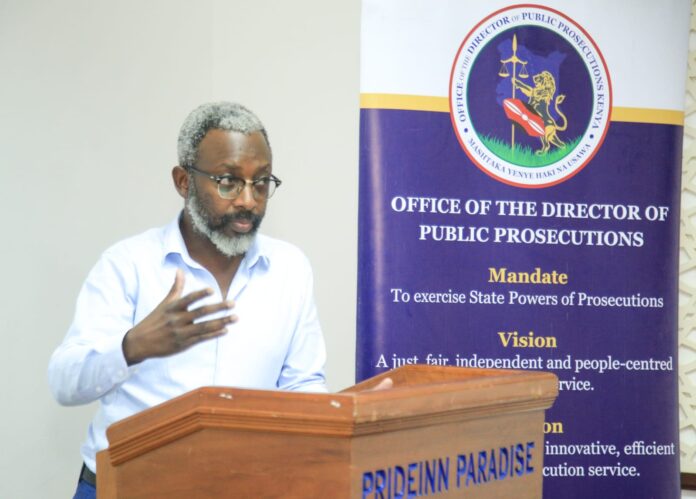
Speaking during the launch, Assistant Director of Public Prosecutions and Coast Deputy Regional Head Tito Wanga described the initiative as timely and strategic, noting that it is designed to enhance the Office’s preparedness in dealing with evolving security threats.
Wanga emphasized the need to build prosecutorial capacity to support the justice system in handling complex terrorism-related cases, which continue to grow in sophistication.
Lead facilitator Allan Mulama, also an Assistant Director of Public Prosecutions, highlighted the central role played by prosecutors and investigators in counter-terrorism efforts, urging participants to actively engage and share practical experiences during the training.
He noted that the changing nature of terrorism and its financing mechanisms requires continuous skills development and closer collaboration among agencies involved in national security and law enforcement.
Mulama said the programme provides a platform for participants to sharpen their expertise, understand emerging trends and improve coordination frameworks necessary for successful prosecution of terrorism cases. He added that practical knowledge-sharing would help bridge operational gaps and enhance the quality of both investigations and prosecutions.
The training brings together officers from multiple agencies, including the National Counter Terrorism Centre, National Intelligence Service, Anti-Terrorism Police Unit, Financial Reporting Centre, Kenya Revenue Authority, Kenya Airports Authority, and the Assets Recovery Agency.
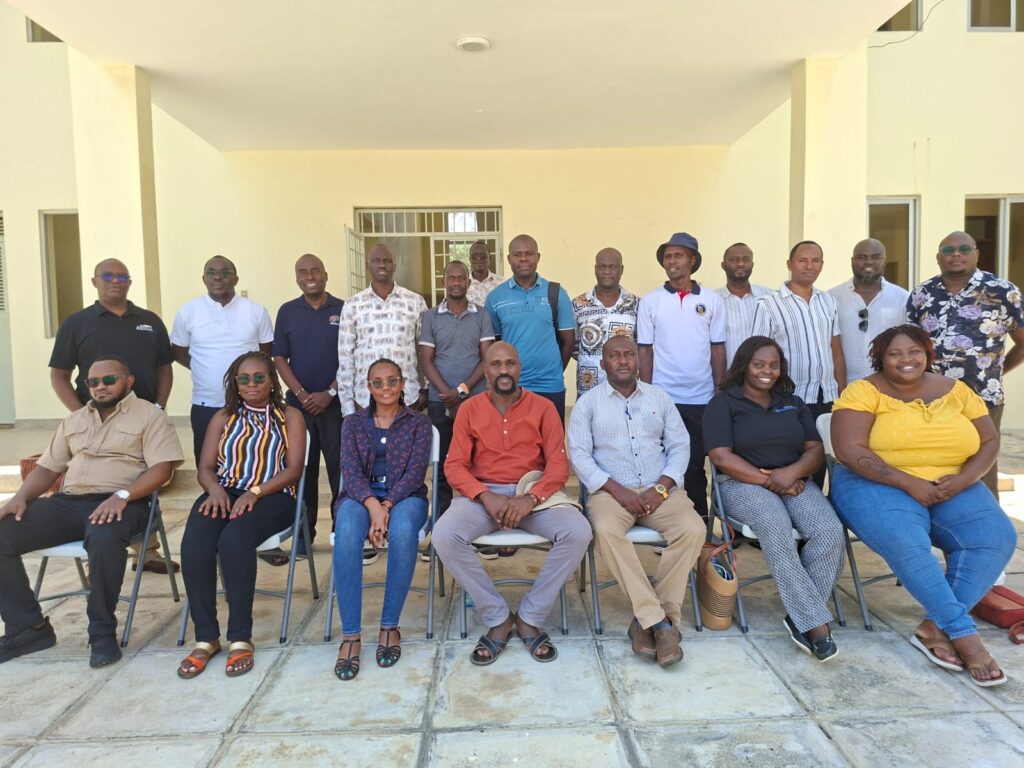
As part of the five-day programme, participants conducted a field visit to the Anti-Terrorism Police Unit Coast Regional Offices in Mombasa, where they interacted with Regional Commander Adam Abikar.
During the visit, the team toured key operational facilities such as the operations centre, cyber forensic laboratory, interview rooms, and holding cells and received practical insights into investigative and interview procedures.
Participants described the training as a critical step in improving inter-agency collaboration and strengthening operational effectiveness in addressing terrorism and related offences.
Cancer patients at Kenyatta National Hospital (KNH) are facing worsening conditions amid delays in treatment and equipment breakdowns, even as attention shifts to governance disputes at Nairobi Hospital, raising concerns over national healthcare priorities.
According to recent findings, a key radiotherapy machine at KNH has been non-functional for more than three months, leaving patients unable to access critical cancer treatment and forcing many to wait as their conditions deteriorate.
KNH, Kenya’s largest referral hospital serving thousands of patients across the region, plays a central role in public cancer care, particularly for low-income patients who rely on subsidised treatment.
However, the prolonged equipment failure has exposed systemic challenges in maintaining essential oncology services within public facilities.
The situation has sparked concern among health stakeholders, who argue that while patients at KNH struggle with limited access to treatment, government attention has been disproportionately directed toward administrative and boardroom issues at Nairobi Hospital, a private facility.
Health experts warn that delays in radiotherapy can significantly reduce survival chances, especially for advanced-stage cancer patients who require consistent treatment schedules.
The crisis also highlights broader structural gaps in Kenya’s healthcare system, including underinvestment in public hospitals, maintenance failures, and reliance on a limited number of specialised cancer treatment centres.
Kenya continues to grapple with a growing cancer burden, with tens of thousands of new cases diagnosed annually, placing increasing pressure on existing infrastructure and personnel.
While the government has in recent years expanded cancer care facilities and increased coverage under national health programmes, access remains uneven, particularly for patients dependent on public hospitals.
Critics say the KNH situation underscores the urgent need to prioritise functional infrastructure, timely maintenance of medical equipment, and efficient allocation of resources within the public health sector.
The developments come at a time when Kenya is pursuing universal health coverage reforms, including the rollout of new financing mechanisms under the Social Health Authority, which are intended to improve access to specialised care such as oncology.
However, ongoing service disruptions at key referral hospitals risk undermining these efforts, raising questions about implementation gaps and the State’s ability to deliver equitable healthcare.
As pressure mounts, stakeholders are calling for immediate intervention to restore services at KNH and ensure that cancer patients receive uninterrupted treatment, warning that continued delays could lead to preventable deaths.
From Nordic trust to Costa Rica’s sense of community, residents explain what daily life looks like in the countries topping the 2026 World Happiness Report.
While the Nordic countries have long dominated the World Happiness Report, 2026 brought one surprise. For the first time in the report’s 14-year history, a Latin American country made its way into the top five as Costa Rica continued its multi-year rise to fourth place, jumping from 23rd in 2023.
The rankings, produced annually by Gallup, the Oxford Wellbeing Research Centre, and the UN Sustainable Development Solutions Network, are based on a three-year average of how residents in 140 countries rate their own lives alongside factors such as GDP, social support, life expectancy, perceived freedom, generosity and corruption. For the second year in a row, no major English-speaking countries made the top 10, with Australia at 15th, the United States at 23rd, Canada at 25th and the UK at 29th.
This year, the countries in the top five each have unique aspects contributing to their happiness, though freedom to make life choices scores highly among all of them. We spoke to residents living in each country to find out what contributes to the daily and long-term sense of happiness – and how travellers can experience a taste of the local “happy life” when they visit.
1. Finland
For nine of the past 10 years, Finland has ranked number one. The country scores highly for social support and low perceived corruption, and residents often point to the social safety net – including education and healthcare – that creates a sense of security and wellbeing.
“I love the fact Finland is safe and I can trust the average person here,” said Olli Salo, co-founder of the Helsinki-based company Skimle. “Kids walk to school from age seven, you don’t feel threatened when walking home, and you can trust if someone makes a promise they will keep it.”
While the country has high taxes, residents see a clear trade-off. Salo compares it to paying for a premium software subscription; while it may cost more, the quality is better. “The majority of the really important things in life like health, education and transportation are public services, so why not splurge a bit and get those in high quality?” he said. He also finds Finnish workplaces more collaborative than elsewhere in the world, with less hierarchy and less “corporate theatre”.
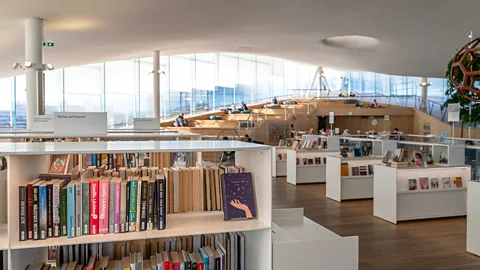
Helsinki’s Central Library Oodi is one of the city’s most distinctive public spaces (Credit: Getty Images)
For Daniel Sazonov, the current mayor of Helsinki, happiness also comes from proximity to nature. “Being able to step outside, and in a few minutes, reach the sea, a park or a forest for an evening walk is something special,” he said.
For visitors, experiencing Finland’s sauna culture should be the first stop. With an estimated three million saunas for a population of just 5.5 million, the nation has no shortage of options. “I suggest trying out the different saunas in Helsinki – and maybe even a plunge into the cold Baltic Sea,” said Sazonov. The Helsinki Central Library Oodi, opened in 2018, is a striking modern landmark and a popular gathering place for locals and travellers.
Beyond the capital, Salo suggests heading north in winter, renting a cabin and watching for the Northern Lights. But he advises against a packed itinerary. “I’ve never understood those who book four activities per day and rush from husky rides to Northern Lights tours,” Salo said. “That is not the Finnish way.”
2. Iceland
Edging past Denmark into second place for the first time since 2014, this island nation of just 400,000 people ranks first for social support – the degree to which residents feel they have someone to count on in times of trouble. It also places in the top 10 for GDP per capita, healthy life expectancy and generosity, making it one of the most well-rounded performers in the rankings.
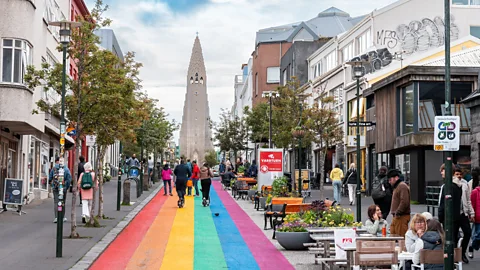
Reykjaví́k’s colourful Skólavörðustígur street reflects the lively everyday atmosphere of Iceland’s capital (Credit: Getty Images)
“Historically, our isolation meant that survival was a group effort. For centuries, there was no outside help. There was just us, and we had to stand together,” said Ingibjörg Friðriksdóttir, a Reykjavík resident and digital marketing manager at Hotel Rangá. “That legacy has shaped a culture where helping one another is simply second nature.”
Icelanders also have a strong adaptability forged from surviving harsh, dark winters. “We learn to appreciate the small moments: good coffee, warm pools and spending time with friends,” said Bryndís Björnsdóttir, managing director of Laugará́s Lagoon in Reykjaví́k. “When summer arrives, we suddenly get daylight almost all night long, and everyone becomes more energetic and happier.”
No matter the season, residents suggest visitors get outside regardless of conditions. “The fresh air, the open landscapes and the feeling of freedom are a big part of what makes this a great country,” said Björnsdóttir. The food is worth slowing down for too, she adds, especially the fresh fish.
A perennial top performer, Denmark has never dropped below fourth in the report’s history and has frequently taken the top spot. Ranking third overall this year, the country also places third globally for social support and low corruption, and seventh for GDP per capita. But the sense of happiness here isn’t always visible in obvious ways.
“It’s not about wearing a big smile and laughing,” said Laura Hall, Copenhagen-based journalist and author of The Year I Lay My Head in the Water, a book about swimming in Scandinavia. “It’s really about trust in society, trust in each other and the belief that everyone is working together for the common good.”
Hall is raising two daughters here and says the sense of security is constant. She also loves Copenhagen’s clean harbour, which the city transformed from an industrial waterway in the 1990s into a place where residents now swim year-round.
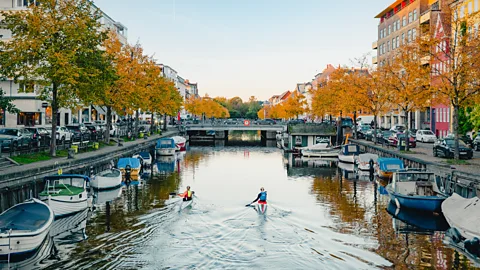
Copenhagen’s waterways are central to daily life, with residents regularly swimming, kayaking and paddleboarding through the city (Credit: Getty Images)
In Ribe, the country’s oldest town, resident Lise Frederiksen sees happiness rooted in civic participation. “Each day I walk down the cobblestone streets, I’m grateful for my life here,” she said. She values the Danish educational system, where children of all economic backgrounds attend the same public school for 10 years and parents are expected to arrange play groups across households. “It is very important that the kids visit each other’s homes and see that people can live in many different ways,” she said.
Top 10 happiest countries for 2026
1. Finland
2. Iceland
3. Denmark
4. Costa Rica
5. Sweden
6. Norway
7. Netherlands
8. Israel
9. Luxembourg
10. Switzerland
For travellers, Frederiksen recommends coming during one of Ribe’s many festivals, which range from celebrations of oysters and tulips to metal music. Visitors who come in autumn can experience the “black sun” period, when millions of starlings migrate through the region in formations dense enough to briefly block out the sky.
In Copenhagen, visitors don’t need to plan a perfect itinerary to pick up on the happy vibe. “Most of the time, visitors come away feeling a sense of calm and peace – and a little envy when they see people cycling about going about their day in a relaxed fashion,” Hall said. “There’s not really any hustle culture here.”
4. Costa Rica
Climbing to fourth in this year’s rankings, Costa Rica is the first Latin American country to make the top five, with its freedom score and social support measures nearly doubling since 2021. Costa Rica doesn’t rank as highly for GDP or governmental support as the Nordic nations, but residents still report strong freedom to make their own life choices. They also rate their lives significantly higher than measured factors alone would predict, according to the report.
I believe Costa Rica has the best quality of life of any country in Central America – Adrian Hunt
When asked what makes Costa Rica such a happy place, resident Adrian Hunt didn’t hesitate. “Community, community, community,” said the digital nomad who lives in Las Catalinas, a car-free town on the Guanacaste coast. “Having folks that share the same passion as you to live a healthy life, be outdoors and be neighbours.”
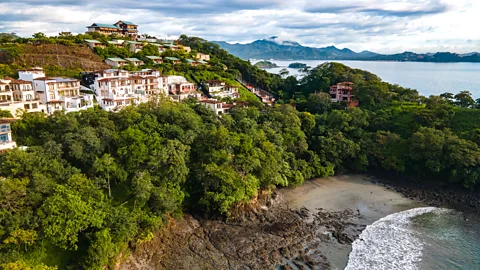
The car-free beach town of Las Catalinas is designed around walking, nature and outdoor living (Credit: Getty Images)
Nature is also a constant source of daily happiness. Hunt describes waking up in the mornings, walking the beach and watching howler monkeys move from tree to tree while fish chase each other in the bay. “I believe Costa Rica has the best quality of life of any country in Central America,” Hunt said. “There is something about the energy of the people, both locals and expats, that makes this country pretty special.”
To get a sense of the Costa Rica’s happiness, he recommends sitting at a café and striking up a conversation or hiking the country’s miles of trails. “We want folks to take away from this place how peaceful and tranquil it really is,” he said.
5. Sweden
Ranking fifth this year, Sweden has moved between fourth and 10th over the past decade. It ranks seventh in the world for healthy life expectancy and fifth for low perceived corruption. Its presence in the upper ranks reflects what residents describe as a balance between progressive urban life and easy access to nature.
“One major reason why Sweden consistently ranks so highly on happiness is that we are a small country,” said Micael Dahlen, professor of wellbeing, welfare and happiness at the Stockholm School of Economics. “The distances are small – between people, between cities and nature. We have learned to trust and rely on each other, to share and cherish what we have, live with nature and be welcoming of new ideas and people.”
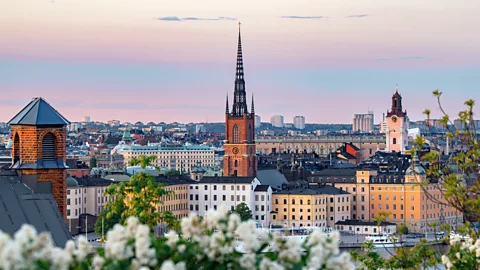
Stockholm sits across an archipelago of islands where water, parks and neighbourhood life are never far away (Credit: Getty Images)
One cultural detail captures the egalitarian streak: the universal use of the informal “du” (you) regardless of status. “No matter who you are – a pop star, a Nobel laureate, the prime minister or a professor of happiness like myself, you’re mainly you, du,” Dahlen said. His centre recently partnered with the capital to launch the Stockholm Wellbeing Index, to ensure wellbeing is measured and developed alongside economic growth.
“I love the people and their kindness, the slower pace of life, the beautiful nature and landscapes, and the feeling that I made a good choice for my future and for the future of my children,” said Karolina Pikus, who moved here from Poland and blogs at LikeSweden.com. In Gothenburg, where she now lives, she especially likes that she can swim in the sea, visit a lake and walk in the forest, all in the same day thanks to the well-connected public transport.
Residents recommend visiting in summer, especially for first-timers. During Midsummer, visitors can dance to traditional songs, eat jordgubbstårta (strawberry cake) and soak up the long Scandinavian evenings. In Stockholm, Dahlen suggests simply taking a walk. “Everything in Stockholm and our cities is walking distance and you can bump into anyone,” he said. The archipelago is a short boat ride away and is “really worth the while”.
But the simplest entry point is fika, sitting down for coffee and a cinnamon bun and watching the rhythm of the street. “That, to me, is one of the best ways to understand Sweden,” said Pikus. “To slow down, breathe deeply and let yourself enjoy the moment.”
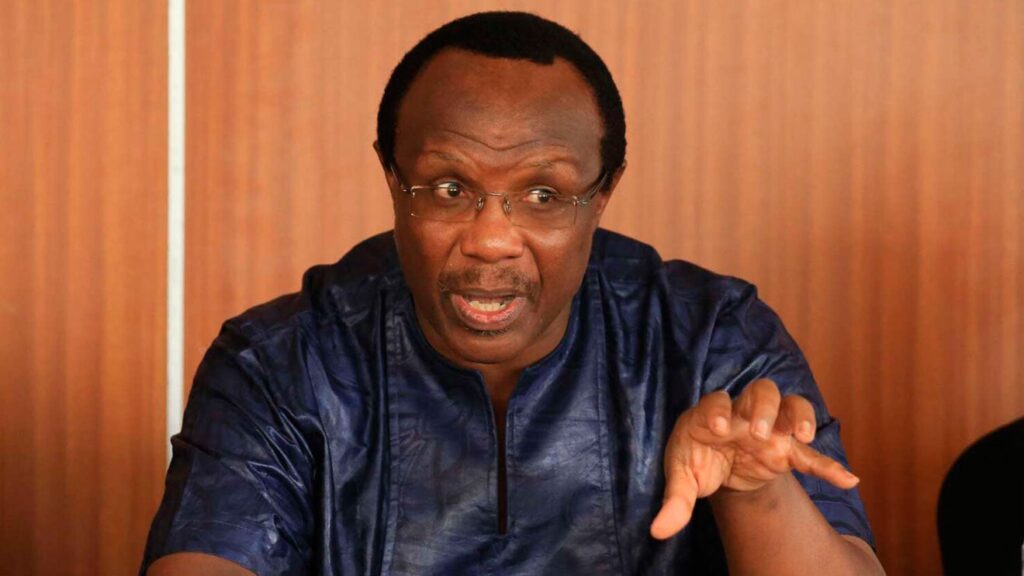
President William Ruto’s economic advisor, David Ndii, has weighed in on why Chinese contractors continue to dominate infrastructure projects in Kenya.
In a post on Friday, March 20, Ndii attributed the dominance of Chinese contractors to their responsiveness, value for money, and strong customer service.
The economist explained that Chinese firms tend to engage Kenya as a valued client, while contractors from Western countries often approach projects from an aid-based perspective.
“Why they dominate? Responsiveness, value for money, customer service. Chinese contractors engage us as valued customers. Western ones engage us as aid recipients,” Ndii stated.
The economist’s explanation comes amid growing concern among a section of Kenyans online over Chinese firms taking up the majority of infrastructure projects in the country.
This comes a day after President Ruto broke ground for the extension of the Standard Gauge Railway (SGR) from Naivasha to Malaba, which will be constructed by the China Communications Construction Company.
The extension of the 475-kilometre SGR line is estimated to cost the government Ksh645.8 billion ($5billion).
Other infrastructure projects being undertaken by Chinese firms include the dualling of the Rironi-Mau Summit road, Bomas International Conference Centre (BICC), and the 60,000 capacity Talanta Stadium along Ngong road.
Meanwhile, former Deputy President Rigathi Gachagua on Thursday accused President Ruto of favoring a Chinese firm in major projects.
The DCP party leader said he will hold a press briefing next week to disclose all high-value projects that have been awarded to the company.
“All the big projects, William Ruto has ordered that they be awarded to CRBC who are in partnership with him.
“They are the ones who are doing Talanta Stadium, Bomas of Kenya, Railway City, Rironi–Mau Summit Road, JKIA, and the SGR. We will be giving you details,” Gachagua claimed.
The Kenya National Highways Authority (KeNHA) has issued a traffic advisory following flooding and silt deposition along a section of the Mai Mahiu–Narok highway.
In a notice on Thursday, March 19, KeNHA said the affected section of the road is at the Kedong Ranch near Suswa.
“The Kenya National Highways Authority (KeNHA) wishes to notify motorists that this evening, the Mai Mahiu–Suswa–Narok (B7) Road experienced flooding and silt deposition at Kedong Ranch near Suswa.
“The Authority is currently working to reopen the affected section of the road,” read the advisory in part.
KeNHA cautioned motorists against driving through the flooded sections, warning that doing so could result in vehicles being swept away or stuck in silt deposits.
The authority advised drivers to strictly follow instructions from police officers and traffic marshals stationed along the route.
“As the area continues to receive heavy rainfall, motorists are further urged to exercise extreme caution when driving along various sections of the road, particularly between Naivasha ICD (Km 14) and Suswa Ranch (Km 39),” KeNHA stated.
Further, the authority called on motorists who have not yet commenced their journeys to delay travel until floodwaters subside.
Meanwhile, motorists with urgent travel needs were advised to use the Ngong – Suswa, Nairobi – Naivasha – Nakuru – Mau Narok – Narok and Nairobi – Naivasha – Longonot – Suswa routes.
“KeNHA assures all road users that it is working around the clock to restore normal traffic flow and ensure the safety of motorists,” the advisory added.
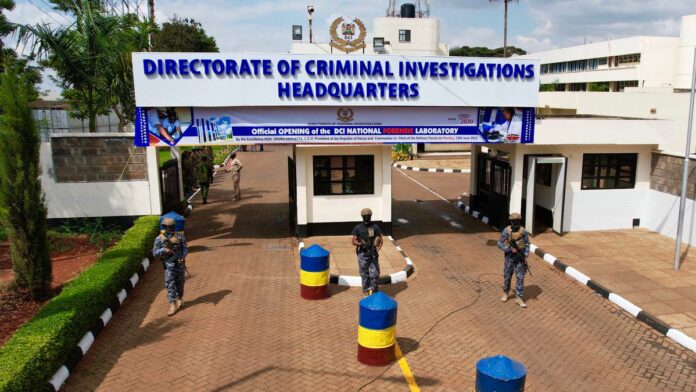
The Directorate of Criminal Investigations (DCI) has dismissed media reports claiming government officials were involved in a Ksh60 million targeting a foreign investor.
In a statement on Friday, March 20, DCI termed the report, which was published in a local daily, as misleading.
“The Directorate of Criminal Investigations (DCI) wishes to set the record straight and strongly refute misleading and sensationalised headlines and reports appearing in sections of the media, particularly The Standard, concerning the arrest of seven individuals at Harambee House on 10th March, 2026,” the statement read.
The investigative agency noted that the seven suspects behind the fraud were arrested by detectives on March 10.
According to the DCI, the suspects posed as government officials from key government ministries and illegally accessed a boardroom on the 12th floor of Harambee House.
File image of DCI boss Amin Mohamed.
The suspects allegedly lured two foreign nationals into a fictitious deal to supply 500 Toyota Hiace High Roof ambulances.
“The suspects were masquerading as officials from the Ministry of Interior, National Treasury, Ministry of Health and had lured two foreign nationals; Mr. Talal Yousef Yousef Zaitoun, representing M/S Jokara AB (a Swedish company), and his brother Mr. Hatem Youssef Yousef Zaitoun into a fictitious government tender for the supply of 500 Toyota Hiace High Roof Ambulances,” DCI stated.
Investigations indicate that the scheme began on January 10, 2026, when one of the victims received a WhatsApp message from an individual who later connected him to a supposed consultant.
The victim subsequently travelled to Kenya, where he was received at the airport and escorted into Harambee House through unauthorised channels.
“On 26th January, 2026, the victim travelled to Kenya, was received at the airport by the said Geoffrey Were and a driver, and taken to Harambee House. A female accomplice facilitated illegal entry past security checkpoints,” said the DCI.
The victim was taken to a conference room located on the 5th floor and was introduced to individuals posing as representatives of Treasury and the Ministry of Health.
He was presented with forged tender documents, including a fake pre-qualification certificate purportedly signed by the Head of Procurement and the Principal Secretary, Ministry of Interior.
The suspects offered two vestment packages to the victim, but he opted for the higher-tier deal and transferred $110,000 (Ksh 14,170,200) on January 30, 2026.
The victim again transferred $360,750 (Ksh46471815) to the same account on February 11, 2026, under the pretext of insurance, bringing the total funds fraudulently obtained to $470,750 (Ksh60,642,015).
At the time of their arrest, the suspects were pressing for a further $1,080,000 (Ksh139,125,600) in instalments, prompting the victims to return to Kenya for further negotiations.
Upon arrival, the victims were taken to a 12th-floor boardroom at Harambee House, where they met suspects who were later arrested.
The seven suspects include: Geoffrey Were Odondi, Michael Musyoki Ngumbi, Kororia Simatwa, Evans Simotwo, Allan Muthaiga Kariuki, Munialo Jared Masinde and Purity Njeri Njami.
DCI noted that Njeri, who is a former employee of the Ministry of Public Service, illegally facilitated access to the boardrooms but held no current position at Harambee House or the Ministry of Interior.
The suspects were arraigned at the Milimani Law Court on March 16 and charged with conspiracy to defraud, obtaining money by false pretences, money laundering, and forgery.
They pleaded not guilty and were released on a bond of Ksh5 million each or an alternative cash bail of Ksh300,000, with two sureties.
DCI further emphasised that no serving government official or employee of the Ministry of Interior was involved in the scheme.
“The arrested persons were purely external fraudsters who exploited public institutions for criminal gain.
“The successful arrest underscores the effectiveness of inter-agency collaboration and the vigilance of genuine public servants who assisted in exposing the syndicate,” DCI added.
The clarification follows a report by a local daily alleging that four of the suspects arrested in connection with the scam are linked to a senior government official and a lawmaker.
According to the newspaper, two of the suspects are aides to the lawmaker, while the other two suspects work in the office of the government official.
This comes weeks after DCI detectives arrested two suspects after defrauding a United States (US) citizen of Ksh28 million in a fake gold deal.
The hawkshaws launched an investigation into the fake gold scheme after Oleg Gershonov filed a report with the Capitol Hill police station on behalf of his American business partner, John Sodipo.
According to the DCI, Oleg first visited Kenya in September 2025 to pursue a gold transaction that never materialised. During the trip, Oleg established contacts with Wasonga, who is the prime suspect.
Sodipo then held talks with Wasonga for the purchase and subsequent chartering of 495 kilograms of gold to Dubai.
The US businessmen only realised they had been scammed after the gold shipment failed to arrive within the agreed timeframe.
Willis Wasonga, the prime suspect, presented himself at DCI Headquarters on Friday, February 13, 2026, before he was arraigned at Milimani Law Courts, where he pleaded not guilty and was granted a bond of Ksh1 Million.
His accomplice, Mohammed Noor, was arrested by detectives from DCI’s Operation Support Unit (OSU).