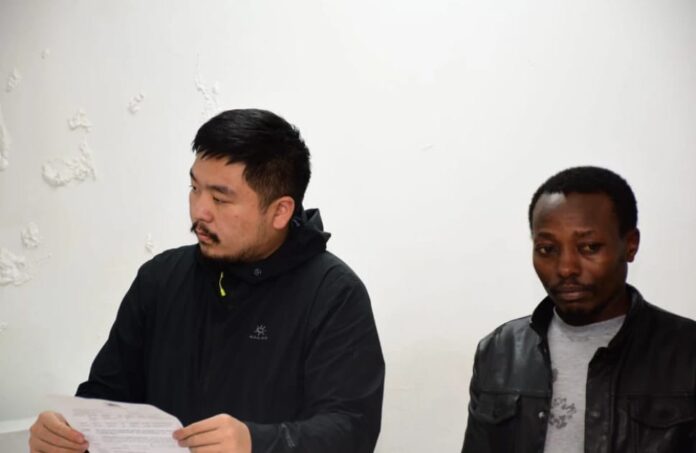
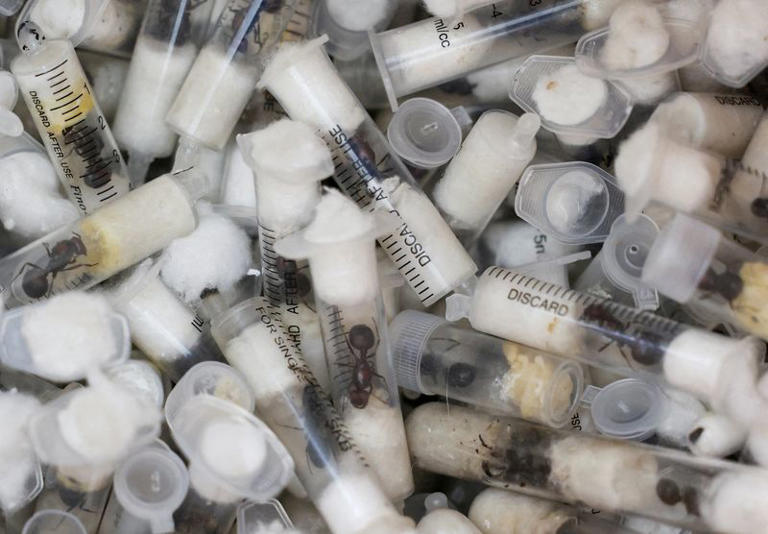
A Chinese national and a Kenyan man have been arraigned in court over the illegal possession and trade of thousands of live ants allegedly being trafficked without the required permits.
Zhang Kequn, 37 and Charles Mwangi, 35, appeared before the Jomo Kenyatta International Airport (JKIA) Law Courts where they were charged with dealing in live wildlife species and conspiracy to commit a felony.
According to the Office of the Director of Public Prosecutions (ODPP), the two were arrested on March 10, 2026, while in possession of 1,948 garden ants packed in specialised tubes, along with an additional 300 live ants concealed in three rolls of tissue paper.
Prosecutors John Tago and Mercy Katsivo told the court that the suspects lacked the necessary permits to handle or trade in the wildlife species.
The court further heard that Mwangi faces an additional charge linked to a separate incident on March 13 in Gilgil town, where he was allegedly found with 1,000 live ants in a pink basin, 113 garden ants stored in specialised syringes and 503 empty syringes in a white sack, all without authorisation.
Investigations revealed that the two allegedly conspired between March 10 and March 13 to engage in the illegal trade, with Kequn said to have purchased ants from Mwangi at a rate of Ksh.100 per ant, paying Ksh.60,000 for 600 ants and an additional Ksh.70,000 for another 700 ants.
Both accused persons denied the charges before Senior Principal Magistrate Irene Gichobi.
The prosecution opposed granting bond to Kequn, arguing that he is a flight risk, noting that he entered Kenya on February 27, 2026, on a tourist visa and does not have a fixed residence in the country.
The case is scheduled for mention on March 27, 2026.
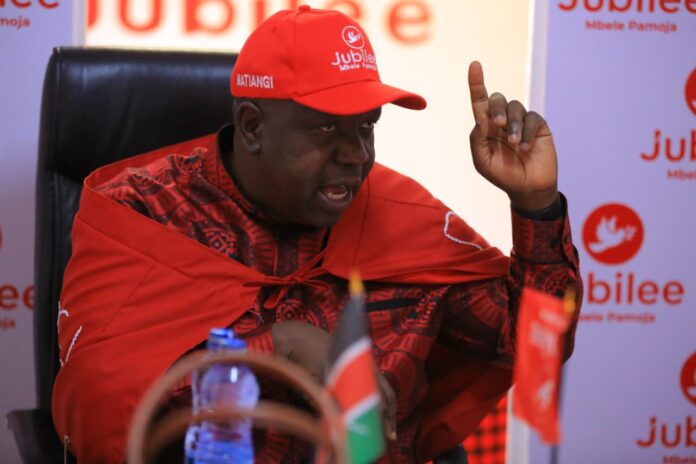
Jubilee presidential flagbearer Fred Matiang’i clapped back at President William Ruto over his ‘endeni gym’ slur against the leaders of the United Opposition.
Speaking during the launch of Jubilee Party offices in Narok, Matiang’i told Ruto that he did not ask for or eat food prepared by First Lady Rachel Ruto for the President to start body shaming him.
He told the Head of State to mind his own health status, given his sudden, rapid weight loss.
“I do not understand why you are concerned about what or how much I eat because I don’t ask for food from your wife or your people. All I eat is bananas from my home in Kisii and ugali.
“If that is what bothers you so much, how come I have never come to ask you why you have lost so much weight?” Matiang’i posed.
A file image of former Interior CS Fred Matiang’i with President William Ruto
The former Interior Cabinet Secretary was untamed as he stated that he was ready to talk about Ruto’s ‘unusual appetite’.
“Since you want us to talk about food, let us discuss who has eaten land in Narok. We all know the stomach that does not get satisfied in Kenya,” he stated.
Matiang’i urged Ruto to respect the Office of the President and uphold the standards that come with it. He argued that the Commander in Chief had stooped so low in his recent verbal attacks.
He added that he had exercised a lot of restraint in not responding to Ruto only because he respected the Kenya Defence Forces and he was the CiC.
The Jubilee Candidate claimed that Ruto’s latest outbursts were an indication that he had panicked about possibly losing in the 2027 General Election.
“I know the President because I worked with him for 10 years in the Cabinet. When he gets to the point of insulting others, it only means that he is cornered and completely desperate. Let him come down,” he stated.
Nonetheless, he assured Ruto that should he succeed him in 2027, he would accord him respect as a former President.
“We are not bad people. Even when we replace you, we will not treat you the way you have treated others before; we will respect you and your office,” he stated.
The verbal exchange between Ruto and the United Opposition leaders was ignited by former Deputy President Rigathi Gachagua, who trolled his former boss over his weight loss.
Gachagua pined that the UDA party leader had lost a lot of weight because the opposition was keeping him on his toes.
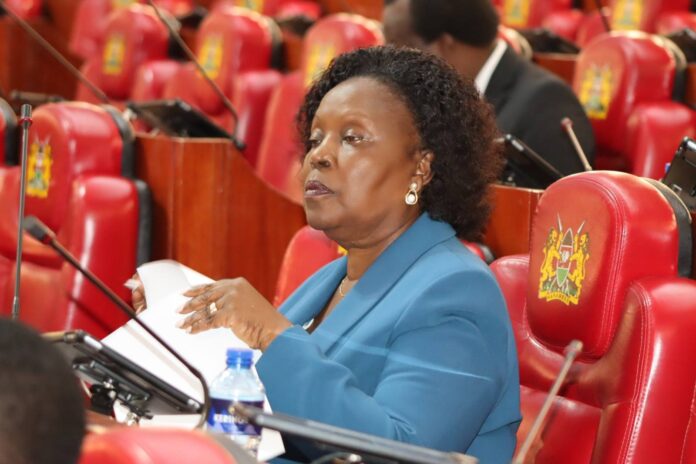
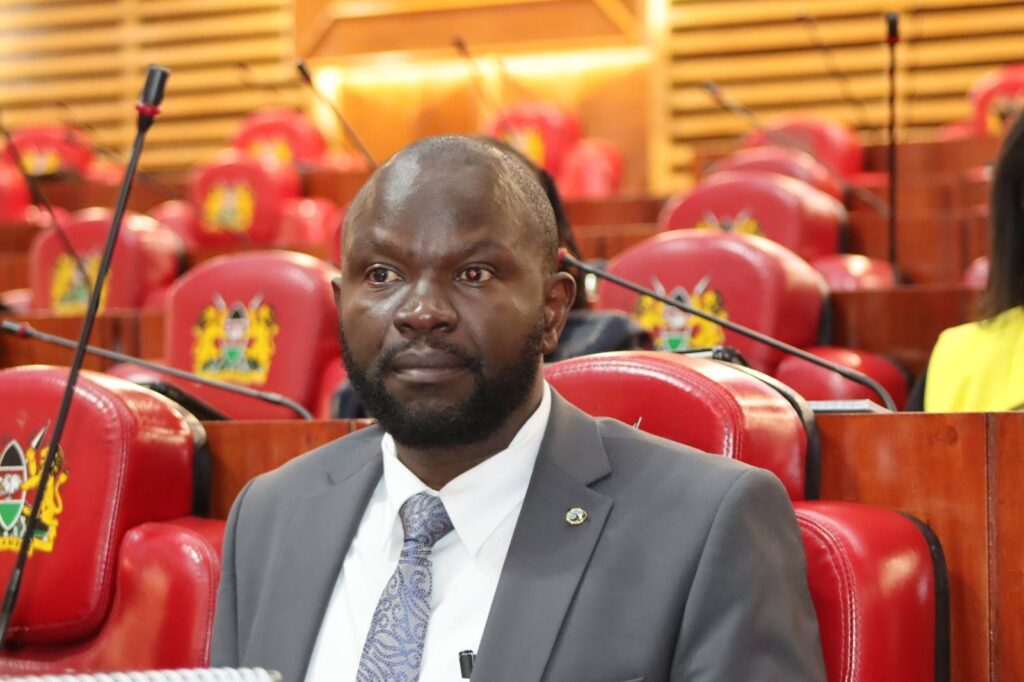
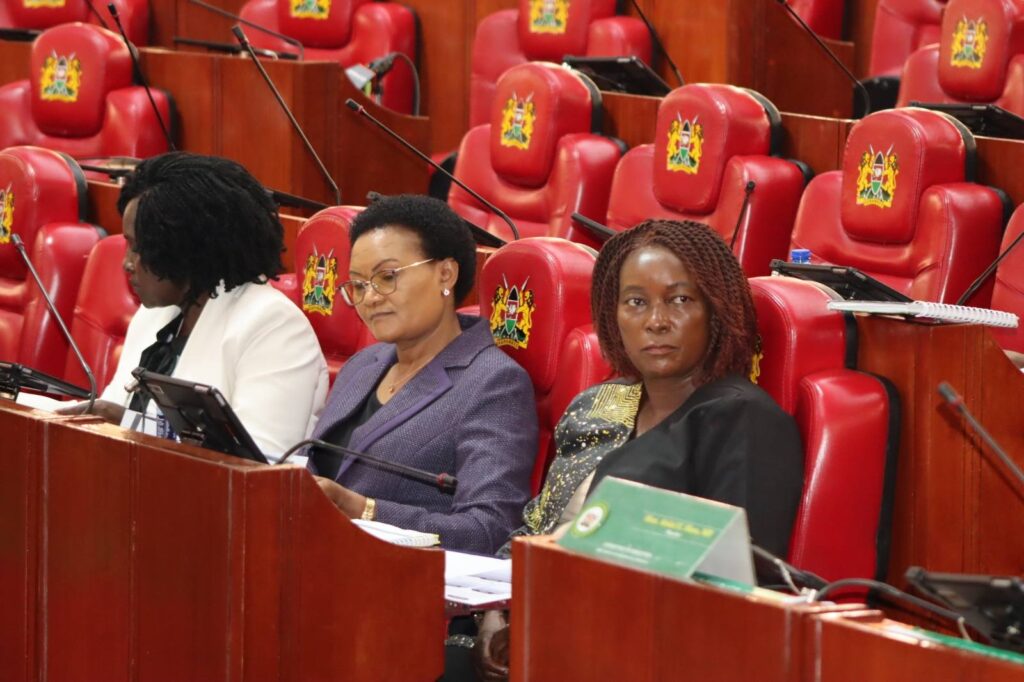
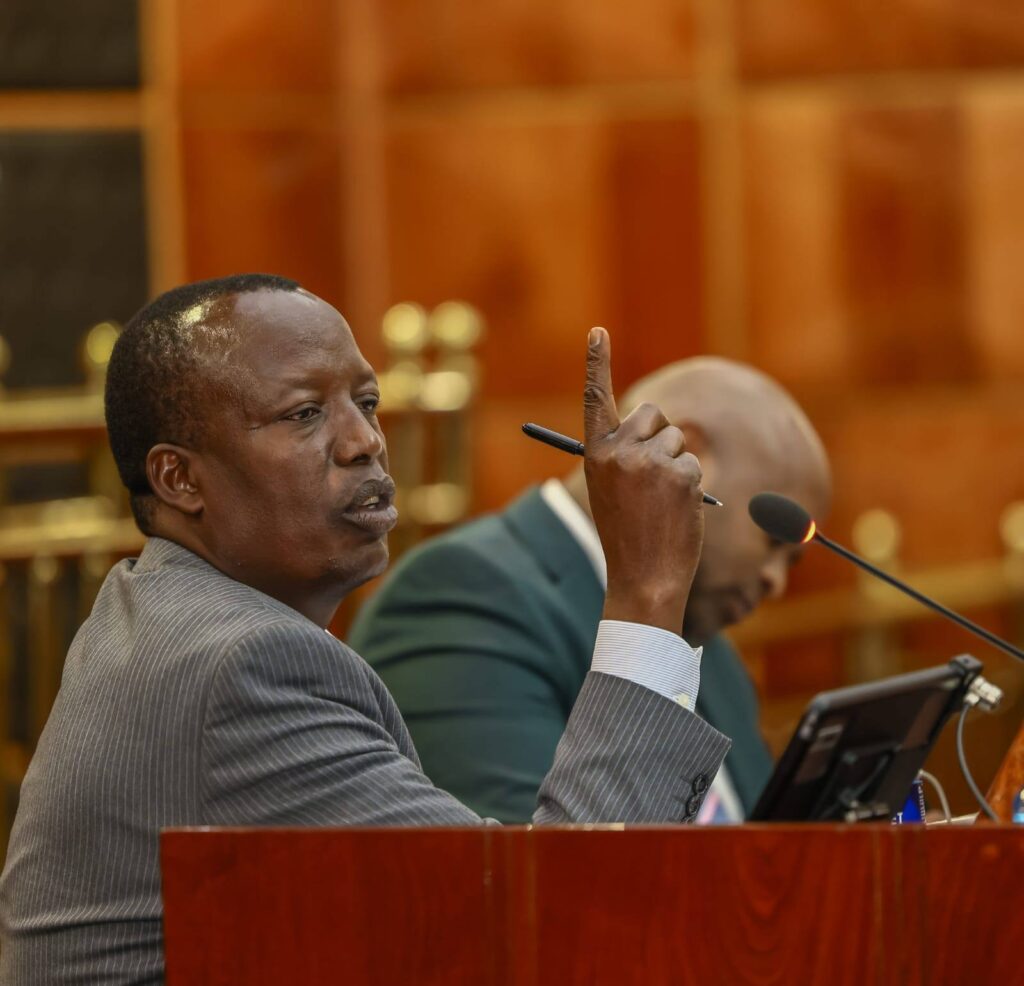
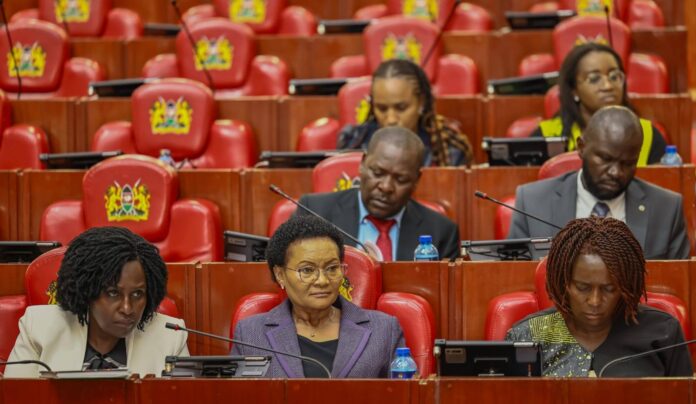
Members of the Committee on Education have raised concern over inadequate funding for the school feeding programme warning that vulnerable learners are at risk.
The concerns emerged during a meeting with Basic Education Principal Secretary Prof. Julius Bitok over the Supplementary Estimates I for the 2025/2026 financial year.
Hon. Nabii Nabwera warned that the shortfall could have far-reaching consequences on access to education, particularly in vulnerable counties.
“The impact of this shortage of funds is severe. We are talking about children who depend on this programme to stay in school. Without adequate funding, we risk increased absenteeism and dropout rates,” Hon. Nabwera said.
The State Department told the Committee that while it requires Ksh12.7 billion to fully fund the school feeding programme, only Ksh4.7 billion has been provided, leaving a significant financing gap. The programme currently targets 2.6 million learners, largely in arid and semi-arid areas.
Committee Members questioned the criteria used to determine beneficiaries, with some pushing for expansion beyond traditionally designated regions.
Hon. Peter Orero called for the inclusion of learners in urban informal settlements, arguing that poverty in cities mirrors the deprivation seen in arid regions.
“Children in informal settlements are equally vulnerable. Limiting the programme to arid areas ignores a growing population of food-insecure learners in urban centres,” he said.
On school infrastructure, lawmakers’ decried inequitable allocation of funds despite widespread need across the country.
Under the supplementary budget, Ksh361 million has been allocated for primary school infrastructure and Ksh510 million for junior secondary schools.
Hon. Rebecca Tonkei and Hon. Mary Emaase raised concern over the state of learning facilities in rural areas, where some schools continue to operate in dilapidated structures.
“There must be equity in the distribution of infrastructure funds. We still have schools with mud walls, leaking roofs and unsafe classrooms. These learners deserve dignity,” said Hon. Tonkei.
Hon. Emaase echoed the sentiments, urging the Ministry to prioritise basic improvements in underserved regions before committing large sums to select institutions
On his part. Hon. Dick Maungu warned that the shortage of funds continues to undermine learning conditions, noting that some schools remain in temporary structures or lack basic facilities.
“We have learners studying under trees and in unsafe classrooms. The allocations we are seeing cannot meaningfully address these challenges,” he said.
The Committee demanded transparency in the distribution of funds, insisting that the Ministry provide a detailed list of beneficiary schools to ensure fairness and accountability.
Hon. Rebecca Tonkei and Hon. Mary Emaase emphasized the need to prioritise rural schools, many of which continue to operate in mud-walled classrooms with leaking roofs.
“There must be deliberate equity. Rural schools cannot continue to lag behind while resources are concentrated elsewhere,” Hon. Clive Gesiro noted.
Basic Education PS, Prof. Bitok defended the allocations, stating that infrastructure investments are guided by ongoing programmes and existing commitments, including donor-supported initiatives such as the Kenya Primary Education Equity in Learning Programme (KPEEL).
Officials also cited competing budgetary pressures, including pending bills amounting to Ksh7.7 billion, as a constraint on expanding allocations.
Committee Chair, Hon. Julius Melly directed the Ministry to submit a comprehensive breakdown of schools earmarked for infrastructure funding, as well as detailed data on beneficiaries of the feeding programme.
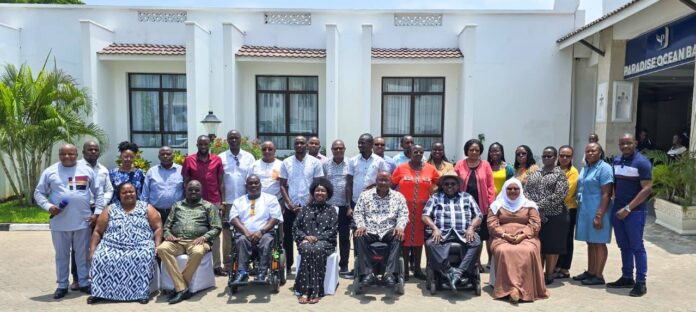
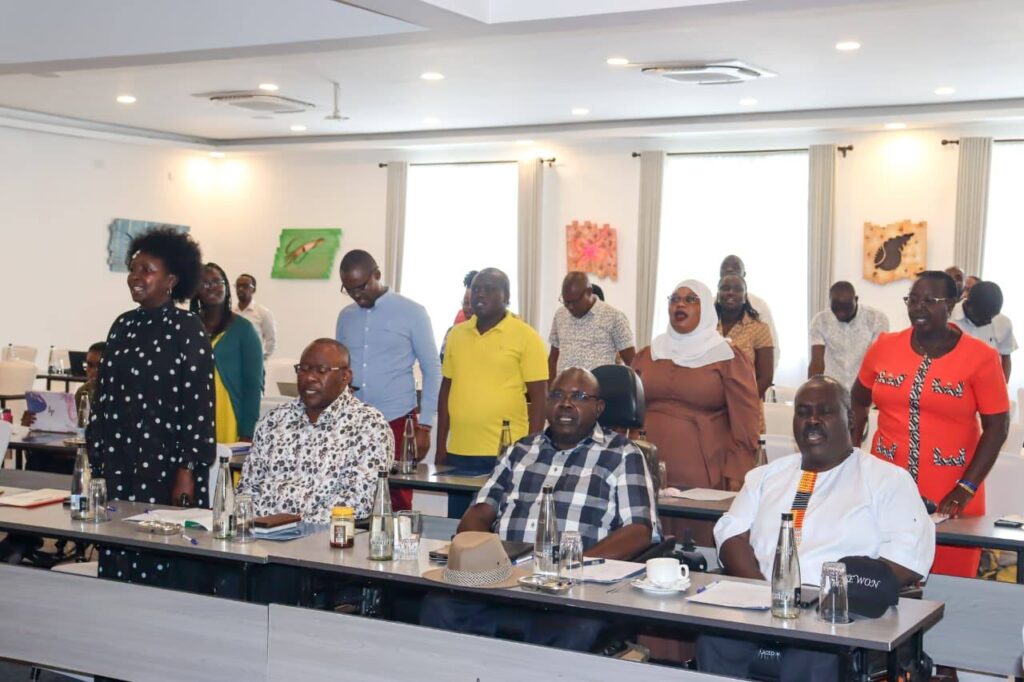
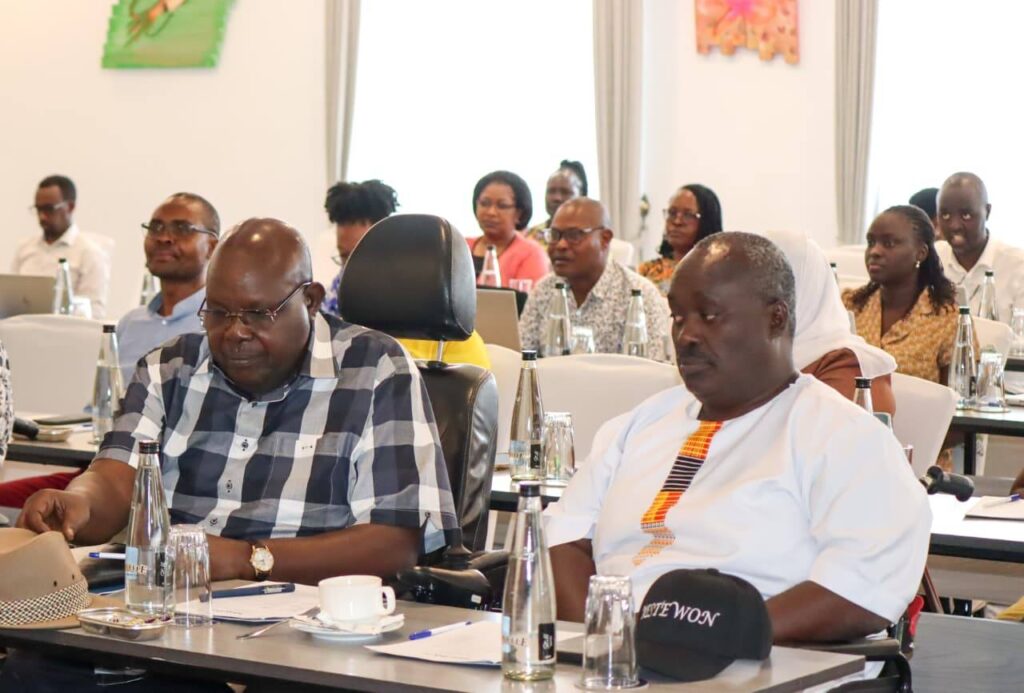
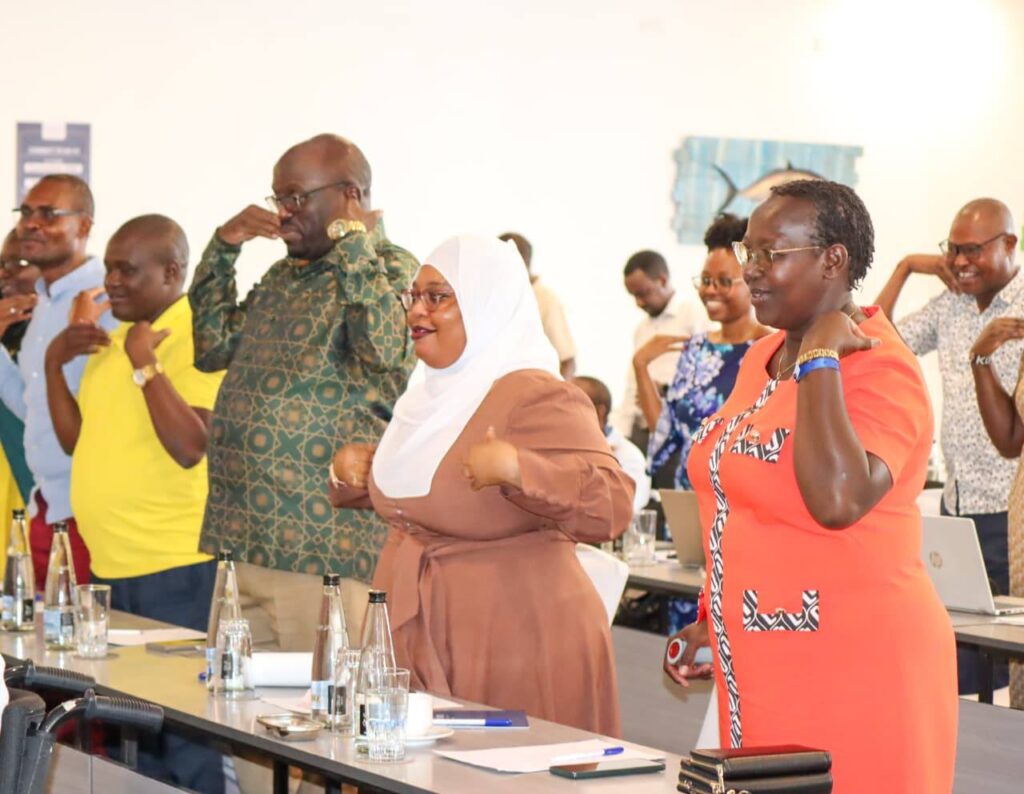
The Kenya Disability Parliamentary Association (KEDIPA), chaired by Hon. Timothy Wanyonyi (Westlands), has brought to the fore a more urgent and progressive conversation on disability inclusion. The strategy is to dismantle entrenched systemic, legislative and societal barriers that continue to limit equitable participation.
At the centre of discussions is the growing recognition that while progress has been made, particularly through the enactment of the Persons with Disabilities Act, 2025, significant gaps remain in implementation.
Leaders acknowledged that legislation alone is insufficient if it does not translate into lived realities in sectors such as education, employment, healthcare and public service.
Hon. Wanyonyi highlighted strides made within Parliament itself, where targeted investments in accessibility, supported through partnerships such as the Commonwealth Parliamentary Association, are enabling Members with disabilities to perform their roles more effectively. However, he emphasized that true inclusion must be embedded across all institutions, with Parliament setting the pace.
A key emerging issue is the need to institutionalize disability inclusion within the legislative process. KEDIPA has proposed the introduction of a disability impact assessment for all Bills: an approach that would ensure laws are interrogated for their effect on persons with disabilities before enactment. This signals a shift towards proactive, rather than reactive, lawmaking.
Equally critical was the call to dismantle outdated and exclusionary policies, particularly in recruitment frameworks. Hon. Gladys Boss questioned rigid criteria such as physical attributes in recruitment processes that continue to lock out capable individuals from serving in sectors like security, urging institutions to align roles with ability and skill. She further shared on the importance shifting societal attitudes, such as raising awareness on issues such as cornea donation. Hon. Boss deemed this as a simple yet transformative act that can restore dignity and opportunity to others.
The retreat also spotlighted the need for sustained investment in KEDIPA’s own operational capacity, with calls for strengthened administrative and financial support to enable the Caucus to effectively drive oversight, policy dialogue and stakeholder engagement.
As the conversations deepen, KEDIPA will engage key institutions, including the Public Service Commission, Kenya Airports Authority, National Police Service, the Ministries responsible for Transport and Education, the State Department for Sports, and the Teachers Service Commission. The goal is to implement practical solutions that shift disability inclusion to measurable action and lived inclusion.
The Teachers Service Commission has warned of a KSh1.4 billion shortfall in funding for teachers’ medical cover under the new Social Health Insurance Fund (SHIF), raising concerns over continuity of healthcare services for educators across the country.
Appearing before the National Assembly Education Committee chaired by Hon. Julius Melly, TSC Acting CEO, Ms. Evelyn Mitei said the Commission is grappling with a significant financing gap following the transition from the Minet medical scheme to the Social Health Authority (SHA).
“As at December 31, 2025, the outstanding bill for teachers’ medical cover under the previous Minet scheme stands at KSh7.448 billion,” said the CEO. “For the current seven-month period under SHA, we require KSh8.9 billion, but we have only been able to access KSh7 billion under Article 223, with a supplementary allocation of KSh7.5 billion. This leaves a funding gap of KSh1.4 billion.”
The disclosure came as MPs scrutinised TSC’s Supplementary Estimates I for the 2025/26 financial year, which have been revised upwards by KSh21.18 billion to KSh407.69 billion from the initial KSh386.51 billion.
A bulk of the additional allocation KSh12.86 billion has been earmarked for teachers’ salaries, while KSh7.5 billion will go towards the medical scheme under SHA. Other allocations include KSh480 million to cover deficits in stipends for teacher interns, KSh235 million for secretariat staff medical cover, and KSh106 million to enhance field operations.
Committee Members, however, raised concerns over the sustainability of the medical scheme, warning that underfunding could disrupt access to healthcare for teachers.
TSC officials admitted that the shortfall could affect service delivery, particularly if hospitals experience delays in reimbursements from the insurer.
The Commission also revealed that it made its first withdrawal of funds under Article 223 on March 5, 2026, to settle payments to the Social Health Authority for teachers’ medical cover.
Similarly, the number of field officers trained on discipline management has increased, while more staff are set to benefit from capacity-building programmes across the Commission.
Lawmakers pressed the Commission to address persistent systemic challenges, including delays in pension payments, understaffing in field offices, and inequities in teacher transfers.
Kenyans have been advised to prepare for increased rainfall over the next seven days as the long rains season intensifies across several parts of the country, according to the latest forecast by the Kenya Meteorological Department.
The forecast covering the period between March 17 and March 23, 2026, indicates that rainfall will be experienced in multiple regions, with intensity expected to rise from Thursday and isolated heavy downpours likely in some areas.
Regions expected to receive rainfall include the Highlands East and West of the Rift Valley, the Lake Victoria Basin, the Rift Valley, the South-eastern Lowlands, and the Coastal region.
The department warned that while rainfall will be widespread, some areas could experience heavy storms accompanied by thunderstorms, particularly in the afternoons and at night.
At the same time, parts of North-eastern and North-western Kenya, including counties such as Marsabit, Mandera, Wajir, Garissa, Turkana and Samburu, are expected to remain largely sunny and dry, although occasional showers may occur.
Weather experts have also cautioned that high daytime temperatures exceeding 30°C will persist in several regions, especially in the Coast, North-eastern and North-western parts of the country.
In contrast, night-time temperatures are expected to drop significantly in some areas, falling below 10°C in parts of the Highlands East of the Rift Valley, the Central Rift Valley and regions near Mt. Kilimanjaro.
The forecast comes amid ongoing heavy rains that have already impacted several parts of the country, with authorities urging the public to remain alert and follow updates issued by the Meteorological Department.
Rainfall is expected across several parts of the country from Thursday, with isolated heavy downpours likely, the Kenya Meteorological Department has said.
In its latest forecast, the department indicated that rains will be experienced over the Highlands East and West of the Rift Valley, the Lake Victoria Basin, the Rift Valley, the South-eastern lowlands and the Coast, warning that some regions could record heavy rainfall events.
Counties in the Lake Victoria Basin and the Highlands West of the Rift Valley, including Nandi, Kakamega, Kisumu and Narok, are expected to begin with sunny intervals before transitioning to morning rains and afternoon to night showers and thunderstorms from Thursday.
In the Highlands East of the Rift Valley, covering areas such as Nyeri, Murang’a and Nairobi, morning rains are likely in a few places before spreading to several areas later in the day, accompanied by afternoon and night thunderstorms.
The South-eastern lowlands, Machakos, Kitui, Makueni and Kajiado, will initially experience dry and sunny conditions, with rainfall expected to set in from Thursday, bringing showers and thunderstorms in the afternoons and nights.
At the Coast, including Mombasa, Kilifi and Kwale, showers are likely at different times of the day, while north-western counties such as Turkana and Samburu will largely remain sunny and dry at the start before occasional rains develop.
North-eastern counties, Marsabit, Mandera, Wajir and Garissa, are also expected to experience predominantly dry conditions initially, followed by intermittent rainfall in a few areas.
Chief of the Defence Forces, General Charles Kahariri, on Tuesday, March 17, hosted Chief of the General Staff of the United Kingdom, General Sir Roland Walker, at the Defence Headquarters in Nairobi.
According to the UK Embassy in Nairobi, General Walker was in the country to strengthen the Kenya-IK Defence Partnership.
The two military chiefs held discussions about cementing the already existing partnerships in training, CT cooperation and leadership development.
“Discussions focused on enhancing joint training initiatives, strengthening institutional capacity building, and expanding areas of operational cooperation in response to emerging regional and global security challenges,” KDF wrote.
General Walker also visited Headquarters Kenya Army, where he held discussions with the Commander Kenya Army, Lieutenant General David Ketter.
CDF General Charles Kahariri and UK Chief of the General Staff Sir Roland Walker during a meeting with UK and Kenyan military officials.
“The engagement focused on strengthening military-to-military collaboration, particularly in the areas of training, capacity building, and operational readiness,” the statement read in part.
Kahariri and Walker agreed that joint training initiatives continue to enhance professionalism, interoperability, and operational preparedness of the two forces.
The UK Army Chief also visited the Kenya Navy Base at Manda Bay in Lamu County, where he and his Kenyan counterpart received a briefing on the current security situation in the Boni Forest enclave.
The delegation also toured the Combined Joint Interagency Task Force, a trilateral operational platform established under the Kenya–UK–USA defence cooperation framework.
The platform integrates intelligence, surveillance, and reconnaissance capabilities to enhance situational awareness and support coordinated joint operational planning, including direct operational support to Operation Amani Boni and maritime security along Kenya’s coastline.
Walker’s visit happened within weeks of the French Army deploying 800 naval officers in Mombasa.
The French military stated that the officers were on a five-month mission to patrol the Indian and Pacific Oceans.
General Kahariri was also awarded a medal of honour by France, the Legion of Honour, for his exceptional service as a military officer.
The Engineers Board of Kenya (EBK) has released an updated list of recognized engineering degree programmes offered across universities in the country.
The list categorizes programmes into two tiers.
Tier I includes engineering programmes accredited to Washington Accord standards, meaning they meet internationally recognized benchmarks.
Tier II consists of programmes accredited to local standards, which are recognized within Kenya but may not automatically enjoy international equivalence.
Under Tier I, only a select number of universities have programmes that meet the Washington Accord threshold.
These include Jomo Kenyatta University of Agriculture and Technology (JKUAT), Strathmore University, and Dedan Kimathi University of Technology.
The accredited courses at this level include Bachelor of Science degrees in Mechanical Engineering, Electrical and Electronics Engineering, and Mechatronics Engineering. All listed programmes under this tier are offered at undergraduate level and have been fully accredited.
EBK noted that the Tier I programmes are aligned with international engineering education standards, enabling graduates to be recognized more easily across countries that are signatories to the Washington Accord.
Tier II contains a larger number of universities and programmes accredited to local standards.
Among the institutions listed are University of Nairobi, Moi University, Egerton University, Kenyatta University, Technical University of Kenya, Technical University of Mombasa, Masinde Muliro University of Science and Technology, University of Eldoret, and Multimedia University of Kenya among others.
Programmes under this category cover a wide range of engineering disciplines including Civil Engineering, Mechanical Engineering, Electrical and Electronics Engineering, Agricultural Engineering, Chemical Engineering, Aerospace Engineering, Biomedical Engineering, Petroleum Engineering, Mining Engineering, Marine Engineering, Materials and Metallurgical Engineering, and Telecommunications and Information Engineering.
File image of Engineers Board of Kenya CEO Margaret Ogai
For instance, the University of Nairobi offers multiple accredited courses such as Civil Engineering, Agricultural Engineering, Mechanical Engineering, Electrical Engineering, and Biosystems Engineering.
Moi University provides programmes in Civil and Structural Engineering, Chemical and Process Engineering, Mechanical and Production Engineering, Electrical and Telecommunications Engineering, and Industrial and Textile Engineering.
JKUAT, beyond its Tier I accredited programmes, also has several Tier II courses including Mining and Mineral Engineering, Marine Engineering, Materials and Metallurgical Engineering, Aerospace Engineering, and Electronics and Computer Engineering.
Egerton University offers Agricultural Engineering, Mechanical and Manufacturing Engineering, Civil Engineering, and Electrical and Electronics Engineering.
Other institutions such as Murang’a University of Technology, Machakos University, South Eastern Kenya University, Taita Taveta University, University of Embu, and Chuka University also feature on the list with accredited programmes in key engineering fields.
EBK noted that all listed programmes are undergraduate level and have been evaluated and approved based on their curriculum, facilities, staffing, and compliance with regulatory requirements.
Each programme is also assigned a specific course code, which serves as an official reference for accreditation status.
EBK cautioned that it will only register graduates who have completed programmes that are duly recognized and accredited.
“The Board wishes to bring to the attention of the public the following recognized local engineering programmes. The Board shall only register persons who have pursued courses that are duly recognized by the Board,” the notice read.
Kenyatta University has announced career opportunities for part-time lecturers.
In a notice on Tuesday, March 17, the university called on qualified individuals to apply for the positions, including those who have previously taught at the institution in a part-time capacity.
According to the notice, to be considered for the roles, applicants must hold a Master’s degree in a relevant area of specialization from a recognized university.
In addition, candidates are required to have at least three years of teaching experience at the university level or relevant experience in research or industry.
Individuals with four years of teaching experience in a tertiary institution are also eligible for consideration, while possession of a PhD in a relevant field will serve as an added advantage.
Applicants are expected to provide detailed information outlining their area of specialization, academic qualifications, work experience, and current place of employment.
The application process requires interested and qualified candidates to submit a detailed Curriculum Vitae alongside a copy of their national ID or passport, academic certificates, testimonials, and any other relevant supporting documents.
All applications must be addressed in writing to the Deputy Vice-Chancellor in charge of Administration and Finance at Kenyatta University, with submissions sent to P.O. Box 43844–00100, Nairobi.
The university has set April 2, 2026 as the deadline.