Sponsored Ad

Ad 1
Ad 2
Ad 3
Ad 4
Ad 5
Ad 6
26.6 C
Kenya
Wednesday, May 13, 2026
Home Blog Page 25

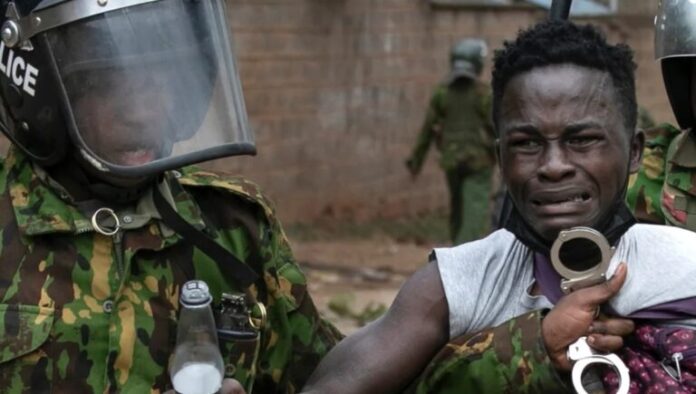
MPs back use of drones, bodycams to monitor police conduct ahead of 2027 polls

Members of Parliament have endorsed the use of surveillance technology to monitor police conduct, piling pressure on the Independent Policing Oversight Authority (IPOA) to strengthen accountability frameworks ahead of the 2027 General Election.

The move comes after police have long been under scrutiny over alleged excessive force, delayed response in emergencies and gaps in evidence collection, especially during volatile public demonstrations.

The push emerged during a joint session between IPOA’s board and the National Assembly Departmental Committee on Administration and Internal Security held in Mombasa on Monday, where lawmakers backed tools such as body cameras and drones but warned against abuse and weak safeguards.

Committee chair Gabriel Tongoyo asked IPOA to clarify its position on adopting emerging technologies within the National Police Service, signalling Parliament’s growing interest in tech-driven oversight.

“From where you sit as IPOA, what is your position on the intended use of body cameras and drones by the police?” Tongoyo posed.

MPs broadly supported the proposal but urged caution on its application. Teso North MP Oku Kaunya said drones could improve surveillance in planned operations but may have limited value in spontaneous incidents.

“In cases of organised criminal activity, drones can be deployed effectively. But in isolated incidents, such as goon attacks, by the time you deploy a drone, the damage has already been done,” Kaunya said.

Homa Bay Town MP Peter Kaluma raised concerns about the psychological effect of constant monitoring on officers, warning it could slow response in high-risk situations.

“We must balance human rights with necessary police intervention to save the state. If officers feel constantly watched, we risk creating police lethargy,” he said.

IPOA Commissioner Annette Mudola Mbogo defended the selective use of surveillance tools, saying drones are best suited for planned public order management.

She stressed the need for a clear legal and policy framework to safeguard privacy and comply with Kenya’s Data Protection Act.

“These technologies must operate within a framework that addresses surveillance concerns and protects personal data,” she said, adding that IPOA supports body cameras, CCTV systems, and digital recording tools to strengthen evidence collection.

IPOA Director of Inspections Munene Mugambi said cost remains a major barrier, revealing that a single drone costs about Sh3 million. He said deployment would be intelligence-led and focused on high-risk scenarios.

“This is not just about identifying misconduct. It is also about recognising officers who conduct themselves professionally, based on verifiable evidence,” Mugambi said.

Lawmakers also questioned the effectiveness of current policing strategies, citing rising violence, delayed responses, and gaps in adopting modern tools.

Nakuru Woman Representative Liza Chelule urged IPOA to provide forward-looking risk assessments ahead of the 2027 polls.

“What is not clear is what you predict will happen before and after the elections. That is how we prepare and mitigate,” she said.

On accountability, Kaluma raised concerns over compensation for victims of police brutality, warning of potential fraud without strict verification mechanisms.

“We risk having people who were not injured benefiting instead of real victims. How actively is IPOA verifying claims?” he asked.

IPOA Chief Executive Officer Elema Halakhe said the authority has submitted verified data on deaths and injuries to relevant agencies, noting the process depends on consent from victims’ families.

He linked fluctuations in police conduct to political activity, warning that tensions are likely to rise as campaigns intensify.

“As we approach the campaign season, we anticipate an increase in encounters between police and the public,” Halakhe said.

He also acknowledged growing concerns over delayed police response, saying IPOA is investigating whether the trend stems from fear of accountability or weak command structures.

Saku MP Dido Rasso questioned how IPOA defines legitimate use of force in politically charged environments, warning that Kenya’s electoral history points to heightened tensions in 2027.

“What is your projection based on this history?” he asked.

IPOA officials said they are modelling election-related scenarios using past data to improve preparedness, signalling a shift toward predictive oversight in policing.
Gachagua criticises Atwoli for neglecting workers amid economic hardships

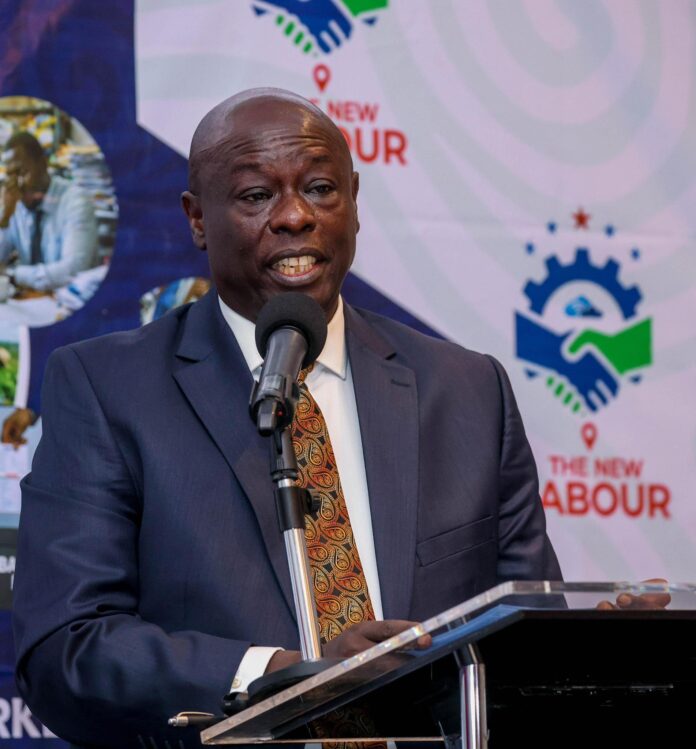
Former Deputy President Rigathi Gachagua has accused Central Organisation of Trade Unions (COTU) Secretary General Francis Atwoli of abandoning workers and turning into what he called a “self-serving political broker” who has aligned himself with successive governments at the expense of Kenyan workers.

Speaking on Tuesday, May 5, 2026, during the National Reflections forum held after Labour Day and the launch of the Labour Market and Worker Welfare Report 2026 at Radisson Blu, Nairobi, Gachagua said millions of workers remain unheard despite their daily contribution to the economy.

“More than 20 million Kenyans wake up every morning and go to work. These great and patriotic Kenyans have remained unheard for far too long,” he said. “For many of them, a job does not mean a decent life. This is not their failure. It is the result of policy choices made by a regime that does not care.”

He accused both the government and some labour unions of deepening inequality.

“The government and some labour unions like COTU are busy creating 50 billionaires and 55 million poor Kenyans in a span of three and a half years,” Gachagua said.

He referenced the late politician J.M. Kariuki, who was assassinated in 1975 after warning of a deeply unequal society.

“Fifty years down the line, we now have 50 billionaires and 55 million poor Kenyans and one trillionaire—you know him,” he added.

Gachagua also raised concern over what he termed the failure of unions to defend workers in critical sectors, citing teachers, police officers, informal traders and gig workers.

“About 500,000 teachers cannot access medical care under the broken SHA system. A demotivated teacher destroys the quality of learning. Who is speaking for the teachers?” he posed. “Where are the unions? Where is KNUT? Where is KUPPET?”

He further accused union leaders of neglecting their mandate.

“They are silent. They cannot speak because their mouths are full. They are dining with the oppressor,” he said.

On the police service, Gachagua said poor welfare conditions were undermining national security. He also highlighted the vulnerability of informal workers, noting that four out of every five Kenyans now work in the informal economy without protection or inclusion in national planning.

He pointed to markets such as Gikomba, Githurai, Kariokor, Kongowea, Huruma and Lodwar, saying traders continue to suffer losses from fires, taxation pressures and lack of support. He also mentioned ride-hailing drivers who lose access to platforms without recourse.

“Who hears the plight of Mama Fua, who is overworked and underpaid?” he asked.

Gachagua criticised public spending patterns, noting that the wage bill consumes a significant share of national revenue despite widespread hardship.

“Even with 938,000 public posts, too many households still struggle to pay rent, buy medicine and keep children in school,” he said.

His remarks came amid contrasting Labour Day messages. On May 1, 2026, President William Ruto presided over national celebrations at Chavakali National School in Vihiga County.

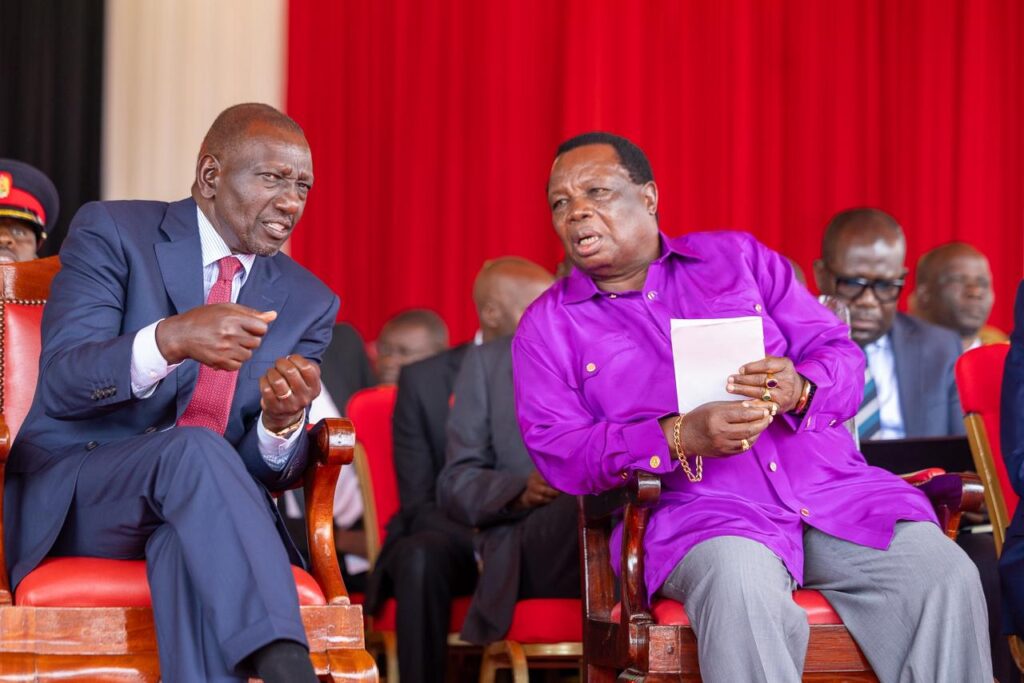
COTU Secretary General Francis Atwoli addressed the gathering alongside government officials, union leaders and workers. He led chants of “TUTAM, TUTAM, TUTAM,” which he directed at President Ruto in a show of political support ahead of the 2027 elections.

The chants drew backlash from sections of the public and opposition leaders, who accused Atwoli of turning Labour Day into a political platform and ignoring pressing worker concerns such as taxation, wages and cost of living.

During the Labour Day celebrations, Ruto announced an increase in workers’ wages and reduced the affordable housing deposit.

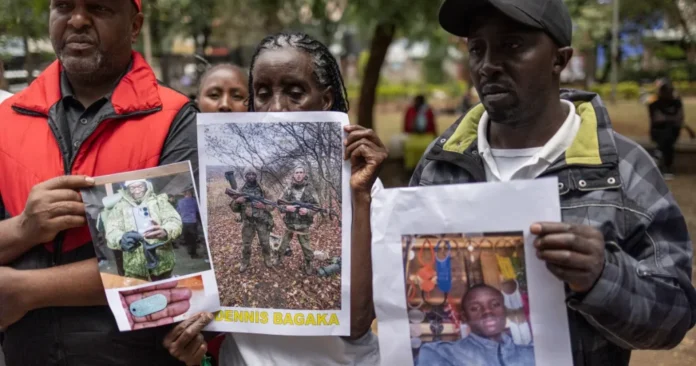
UK sanctions networks behind trafficking Kenyans to fight for Russia in Ukraine war

The UK Government has imposed fresh sanctions targeting networks accused of trafficking foreign migrants—including Kenyans—into Russia’s war effort in Ukraine, alongside firms supplying components for drone production.

The measures, announced on May 5, affect 35 individuals and entities linked to what British officials described as “callous exploitation” of vulnerable migrants and the expansion of Russia’s military supply chains.

According to the UK, the sanctioned networks have been recruiting migrants under false promises of employment, only to coerce them into joining the Russian military or working in weapons production facilities.

Among those named is Mikhail Lyapin, accused of facilitating the movement of Kenyan nationals to Russia, where they were allegedly forced to sign military contracts and deployed to the frontlines with minimal training.

Also sanctioned is Pavel Nikitin, whose company produces the VT-40 drone, described by UK authorities as a low-cost, mass-produced attack drone widely used in Russia’s operations in Ukraine.

Migration, Exploitation, and War Effort

British officials said the sanctions respond to what they termed Russia’s “weaponisation of migration,” where foreign nationals are used to sustain its military campaign.

The UK government indicated that some migrants were redirected into drone factories, including through programmes such as the Alabuga Start initiative, previously sanctioned over its role in military production.

“The practice of exploiting vulnerable people to prop up Russia’s failing and illegal war in Ukraine is barbaric,” said Stephen Doughty.

“Today’s sanctions expose and disrupt the operations of those trafficking migrants as cannon fodder and feeding Putin’s drone factories with illicit components,” he added.

Expanding Drone Warfare

The sanctions also aim to disrupt Russia’s growing reliance on drone warfare. UK data shows Russia launched an average of more than 200 drones per day into Ukraine in March 2026—the highest monthly total recorded since the war began.

Officials warned that the figure could rise further, with April expected to surpass that record.

To counter this, the UK targeted companies and intermediaries in third countries, including China and Thailand, accused of supplying critical drone components and technical support.

Legal and Policy Framework

The action marks the first use of the UK’s Global Irregular Migration and Trafficking in Persons sanctions regime, designed to combat human trafficking and organised immigration crime worldwide.

The regime allows the UK to impose restrictions on individuals and entities involved in people smuggling, forced labour, and exploitation, including those enabling such activities through financing or logistics.

Implications for Kenya and the Region

The mention of Kenyan nationals in the sanctions announcement is likely to raise concerns in Nairobi over labour migration safeguards and the protection of citizens abroad.

Kenya has, in recent years, expanded labour export programmes, sending workers to various global destinations, often under bilateral agreements intended to prevent exploitation.

Human rights groups have, however, warned of persistent risks, including trafficking, contract substitution, and forced labour—especially in conflict-linked environments.

Continued Pressure on Russia

The UK reaffirmed its support for Ukraine, saying it would continue to deploy sanctions to weaken Russia’s military capabilities and economic base.

“We stand shoulder to shoulder with Ukraine in defence of European security and our shared values,” Doughty said.

Woman stabbed to death over market stall dispute in Kisumu

A woman has been stabbed to death in Muhoroni, Kisumu County, following a dispute over a market stall, with police confirming the arrest of a suspect.

The incident occurred at Shauriyako estate, where the victim was setting up a makeshift stall before a confrontation turned fatal.

Police say the altercation began when the deceased, identified as Silvia, attempted to construct a stall next to a hotel operated by Jane Adhiambo Okeyo.

The disagreement escalated into a heated exchange.

Authorities say the suspect allegedly took a knife and stabbed the victim during the confrontation.

Silvia was rushed to St. Vincent Hospital but succumbed to her injuries shortly after.

Police confirmed that the suspect was arrested and is currently being held at Muhoroni Police Post.

Investigations into the incident are ongoing.

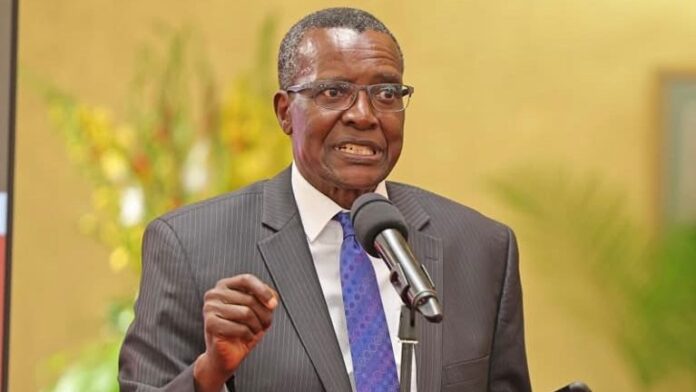
Maraga condemns Ruto and Suluhu over alleged Gen Z crackdown remarks

 Former Chief Justice David Maraga has criticised Presidents William Ruto and Samia Suluhu Hassan over reported remarks suggesting coordinated action targeting Gen Z in Kenya and Tanzania, describing the alleged comments as “abhorrent”.

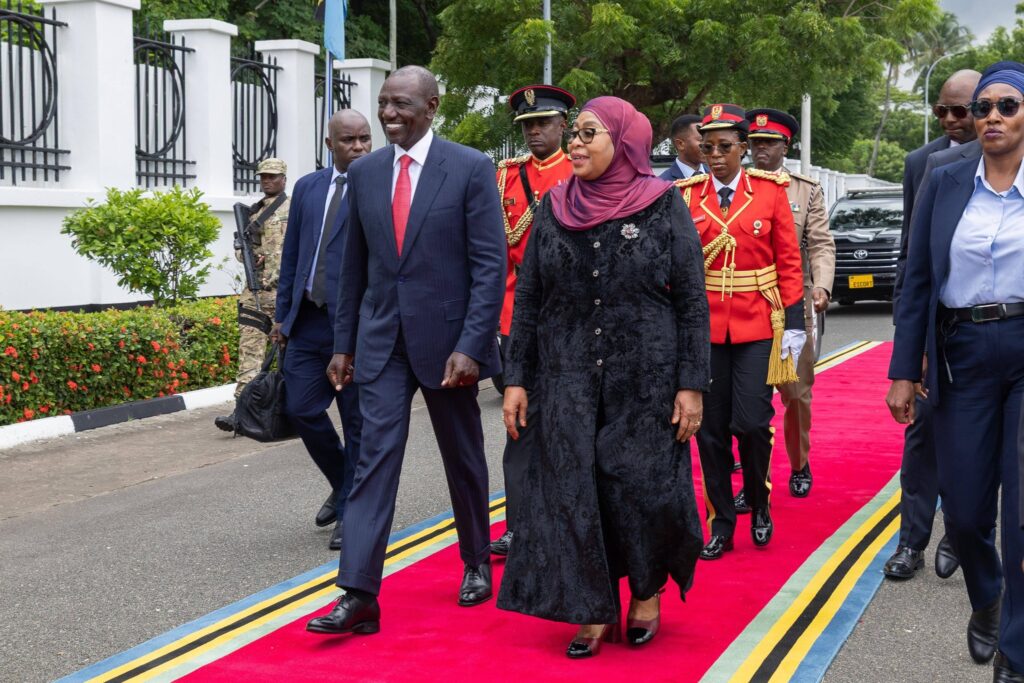
Samia, speaking on Monday while hosting Ruto during his state visit, was quoted as saying, “Piga mikwaju, wakija kwangu napiga mikwaju,” in remarks interpreted as a call for joint efforts to “discipline” Gen Zs agitating for good governance across East Africa.

In a statement on Tuesday, Maraga said the remarks, if accurately reported, point to a disturbing approach to dissent that undermines justice and the rule of law in the region.

“As Chief Justice, I cherished the brotherly bonds within our East African Jumuiya and worked closely with my colleagues in the Tanzanian judiciary in the shared pursuit of justice and the rule of law. I am therefore deeply disturbed by the remarks attributed by President Samia during President Ruto’s address to Tanzania’s National Assembly. It is regrettable that the two presidents are reported to have discussed coordinating efforts to ‘chapa mikwajo’ the Gen Z across Kenya and Tanzania. These remarks are abhorrent,” he said.

Maraga linked the controversy to recent events in Tanzania, noting that the comments come shortly after Samia received findings from a commission probing election-related violence.

“They come barely a week after President Samia received the report of the Commission of Inquiry into killings during and after Tanzania’s October 2025 general elections, in which more than 518 people lost their lives, primarily from gunshot wounds. To date, not a single person has been held accountable,” he said.

He further reminded the public of unresolved accountability concerns over recent human rights abuses, even as he raised alarm over the broader state of civil liberties in the region. Calling for public vigilance, the former Chief Justice warned of growing authoritarian tendencies in the region.

“We must also not forget that our compatriot Boniface Mwangi and Agather Atuhaire of Uganda were tortured on Tanzanian soil. The perpetrators remain free,” Maraga said.

“Citizens of East Africa must speak up. The axis of tyranny that Presidents Samia and Ruto are constructing threatens to return our region to autocracy.”

He referenced his past solidarity with opposition figures in Tanzania, adding, “As I demonstrated through my solidarity appearance in Dar-es-Salaam on May 19, 2025, standing with opposition leader Tundu Lissu, our East African Jumuiya cannot advance while leaders suppress dissent and trample on the basic rights of our people.”

The remarks come against the backdrop of Ruto’s first state visit to Tanzania since taking office, where official discussions focused on resolving trade tensions and strengthening bilateral ties.

However, underlying tensions emerged during engagements between the two leaders. While the visit was framed around cooperation, observers noted a shift in tone during Samia’s address, particularly when she raised concerns over regional coordination.

In a brief unscripted moment, she questioned Ruto’s earlier announcement of plans to construct an oil refinery in Tanga without prior consultation.

“While we were speaking inside, I pressed Ruto and asked him: you went ahead and announced a refinery in Tanga – why was I not aware? He will explain, himself, why he made that announcement,” she said.

The refinery proposal had earlier been unveiled by Ruto at a Nairobi summit, where he outlined plans for a regional facility modelled on the Dangote refinery concept, involving multiple East African countries.

Nigerian industrialist Aliko Dangote, who attended the meeting, expressed willingness to support the project.

“My commitment today here is that if we agree with the three or four governments here about the refinery, we will lead and we’ll make sure that refinery is built within the next four or five years,” he said.

The sequence of announcing the project before securing consensus appears to have unsettled Tanzanian officials, with analysts noting that such moves are often viewed as breaches of diplomatic protocol.

Amid the unease, Ruto sought to ease tensions, switching to Swahili to clarify his position.

“Nimeambiwa ya kwamba, tangazo letu kwamba tujenge refinery pale Tanga limewakera kiasi… ningejua ningetangaza hio refinery ijengwe Mombasa,” he said.

He emphasised the economic benefits of the project, adding, “The building of a refinery is a big opportunity for business, a big opportunity for industrialisation.”

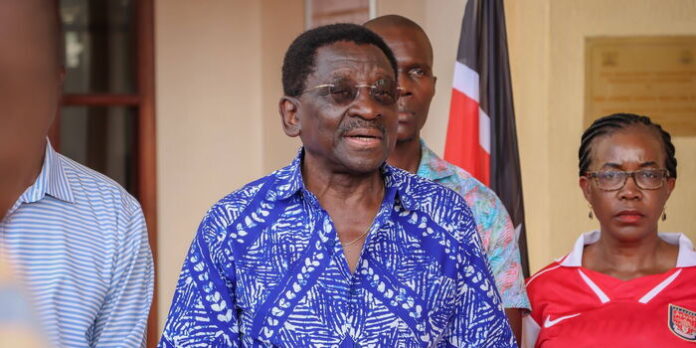
James Orengo defends role as ODM demands Sh12bn in unpaid political funding

Siaya Governor James Orengo has reasserted his central role in securing the Orange Democratic Movement’s (ODM) claim unpaid public funding, even as the party escalates demands for the immediate release of Sh12 billion it says is owed by the State.

In a statement that lays bare fault lines within  ODM party, Orengo said the figure now being demanded from government exists solely because of litigation he personally initiated on behalf of ODM.

“It is a matter of public record that I personally initiated the legal proceedings on behalf of ODM to determine the funds owed to the party by the Government. The Sh12 billion figure exists today only because of the ruling in the case I filed,” he said.

He criticised sections of the Linda Ground Movement which he referred to as the “Linda Tumbo group” for demanding the funds while simultaneously launching personal attacks against him despite his role in pushing for the unpaid claims.

“It is ironical to see them now demanding these funds from the President without acknowledging the legal groundwork I laid,” Orengo stated.

His remarks come against the backdrop of mounting pressure from ODM leaders on the National Treasury to settle arrears from the Political Parties Fund, which the party says have accumulated over several years and is now crippling its operations ahead of the 2027 General Election.

At a high-level Parliamentary Group retreat in Mombasa County, acting Secretary General Catherine Omanyo said the delay in disbursements had pushed the party to the brink financially.

“We want the government to pay all pending party debts to ensure we don’t suffer a cash crunch. The Sh12 billion is the money ODM demands to be paid,” she said while reading resolutions from the two-day meeting.

ODM’s position is anchored in the Political Parties Act, 2011, which provides that at least 0.3 per cent of national revenue be allocated annually to the Political Parties Fund. The funds are distributed based on electoral performance, including votes garnered and representation in elective offices.

The party argues that despite commanding significant representation, 94 MPs, 20 senators, 13 governors, and hundreds of MCAs, remittances have fallen short since 2022.

According to Treasury data, only Sh3.1 billion was allocated to all political parties in the 2024/25 financial year, far below the projected Sh12.8 billion based on revenue collections. The Registrar of Political Parties has previously flagged arrears exceeding Sh15 billion, with ODM’s share estimated at Sh12 billion.

The funding standoff has now been elevated into a political condition, with ODM linking any potential pre-election engagement with President William Ruto and his United Democratic Alliance (UDA) to the settlement of the debt.

Deputy party leader Simba Arati took a hardline stance, ruling out negotiations until the funds are released.

“We are saying one thing here the money that the government owes us should be given to our party. We will not have any talks with UDA. That cash is what we need to run our party as we move forward,” Arati said.

The retreat, held at Whitesands Hotel in Mombasa, brought together more than 70 MPs, governors, and members of ODM’s National Executive Council as the party maps out its political strategy.

Party officials say delayed disbursements have severely constrained grassroots mobilisation, nominations, and day-to-day operations, raising concerns about the party’s preparedness for the next election cycle.

Beyond the financial strain, ODM leaders have accused the government of deliberately withholding funds to weaken opposition parties and tilt the political playing field, claims that add a sharper political edge to the dispute.

The party has previously sought legal redress over delayed allocations, a process Orengo now insists was instrumental in quantifying and legitimising the claim.

Senator Sifuna’s Case to Proceed as Tribunal Allows ODM Internal Process

By Andrew Kariuki

Edwin Watenya Sifuna’s case will proceed after the Political Parties Disputes Tribunal (PPDT) allowed the Orange Democratic Movement (ODM) Party’s Internal Dispute Resolution Mechanism (IDRM) to continue.

In its ruling in case PPDTC/E014/2026, the tribunal directed that the ODM internal process should proceed, but its final outcome will await the determination of the matter before the tribunal.

The decision followed submissions by ODM lawyers Ken Amondi and Sam Makori, who argued that Sifuna’s application was premature due to the ongoing IDRM proceedings within the party.

At the same time, the tribunal affirmed that it has jurisdiction to hear and determine the dispute.

The ruling was delivered by a panel comprising Hon. Jin Muzna Mohamed Yusuf, presiding member Gad Gathu Kiragu, Stephen Musau, Theresa Chepkwony and Abdirahman Adan Abdikadir.

The case remains active before the tribunal.

Postmortem Reveals Nairobi Hospital Director Dr Job Obwaka Died of Cardiac Arrest

By Andrew Kariuki

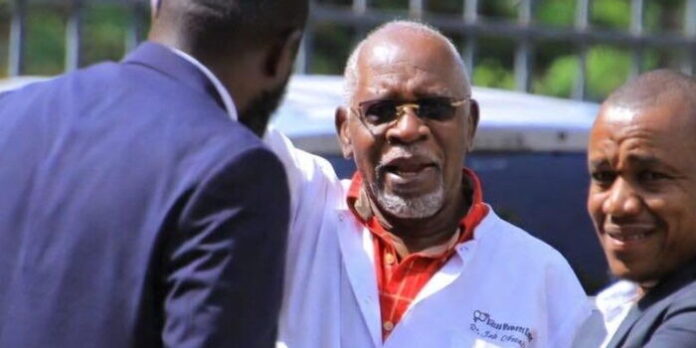
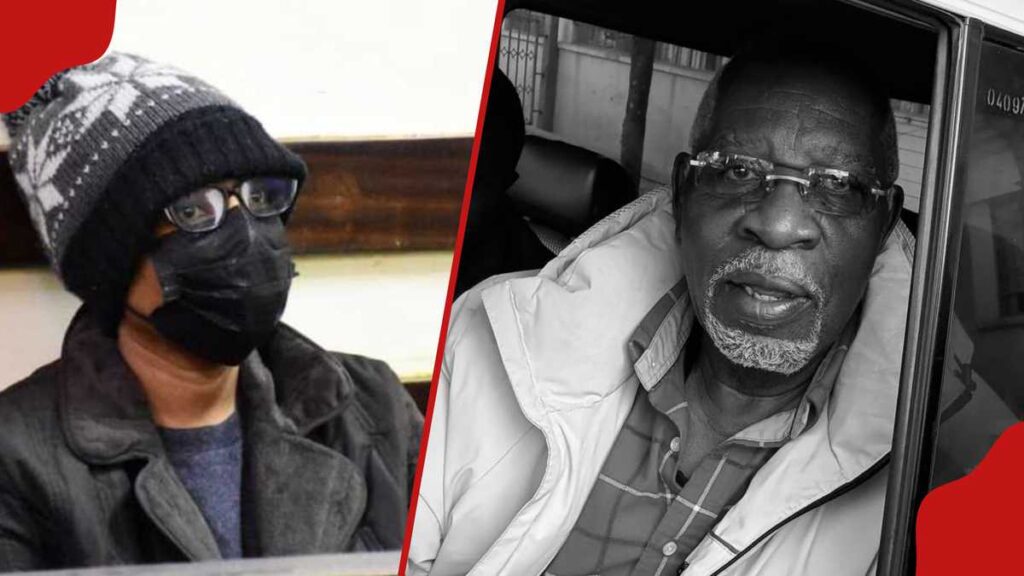
A postmortem examination has established that Veteran gynaecologist Dr Job Obwaka, a board member at The Nairobi Hospital, died of cardiac arrest.

Dr Obwaka passed away on May 1, 2026, after he was rushed to The Nairobi Hospital, where he was pronounced dead on arrival.

Reports indicate that he had been found unconscious shortly before being taken to the facility.

Family representative Joseph Ndungu confirmed the postmortem findings, stating that cardiac arrest was identified as the cause of death, while noting that further examinations will still be conducted to provide additional clarity on the circumstances surrounding his passing.

The findings come amid ongoing investigations into the events leading up to his death, with authorities expected to rely on additional forensic and toxicological tests before reaching a final conclusion.

This comes after police arrested a 45-year-old woman identified as Beatrice Wangare in connection with the sudden death of Dr. Job Obwaka.

According to investigators, Wangare was the last person seen with the doctor before he collapsed and later died on Friday night.

The suspect was taken into custody on Saturday morning as a person of interest as detectives continue probing the circumstances surrounding the medic’s death.

A report filed by security personnel at The Nairobi Hospital indicates that Dr. Obwaka was brought to the facility by ambulance at around 7:00 p.m. after reportedly collapsing.

Medical personnel at the hospital confirmed that he was dead on arrival.

Police officers who visited the facility established that the deceased had a history of underlying medical conditions, although the exact cause of death has not yet been determined.

Authorities revealed that Dr. Obwaka had reportedly been out on personal errands in the company of Wangare, who is believed to be a business associate, before the incident occurred.

His body has since been transferred to Lee Funeral Home, where a postmortem examination is expected to establish the exact cause of death.

Investigations into the incident are ongoing.

Two Suspects Arrested in Trans Nzoia Over Organised Crime

By Andrew Kariuki

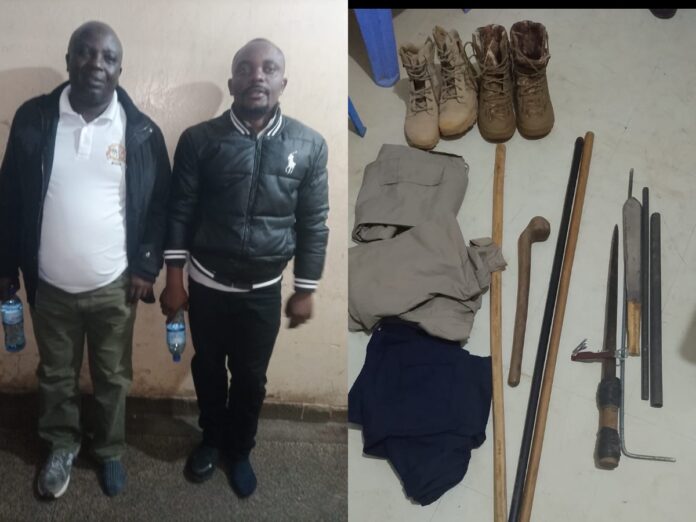
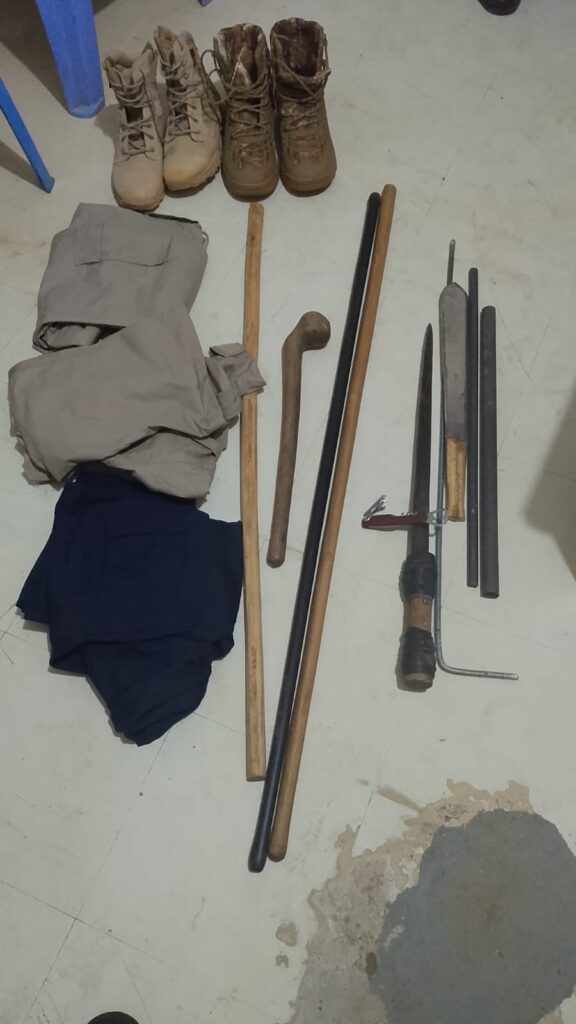
Police in Trans Nzoia County have arrested two suspects linked to organised criminal activities following an intelligence-led operation that also led to the recovery of several weapons.

Officers from Kitale Police Station, working jointly with detectives from the Directorate of Criminal Investigations, carried out a coordinated raid in Chebarus and Kibomet areas of Trans Nzoia West Sub-County.

The operation resulted in the arrest of Dickson Wamocho and Frank Kuyala.

A search conducted during the raid led to the recovery of items believed to have been used in criminal activities, including a military-style tactical uniform, two pairs of combat boots, a sword, metal rods and several mobile phones.

The suspects are currently in custody undergoing processing ahead of their arraignment in court, while the recovered items have been secured as exhibits.

Authorities say the operation forms part of ongoing efforts to dismantle organised criminal networks, urging members of the public to continue sharing information to support law enforcement agencies.

Trafficker Arrested as Police Seize Cannabis in Kanyonyoo Along Thika–Garissa Highway

By Andrew Kariuki

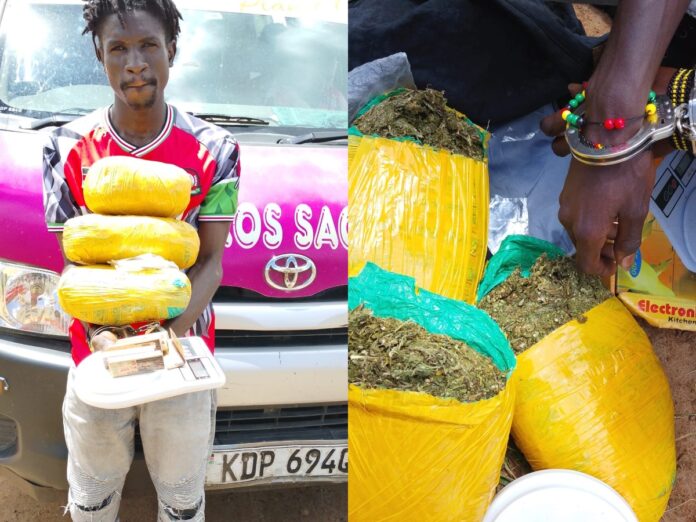
A 27-year-old suspected drug trafficker has been arrested after police officers intercepted a consignment of cannabis during a routine security operation in Kanyonyoo along the Thika–Garissa Highway.

The suspect, identified as Stephen Oronje, was travelling in a Nissan matatu when officers manning a roadblock flagged down the vehicle for inspection. During the search, officers discovered a suspicious black bag among his belongings.

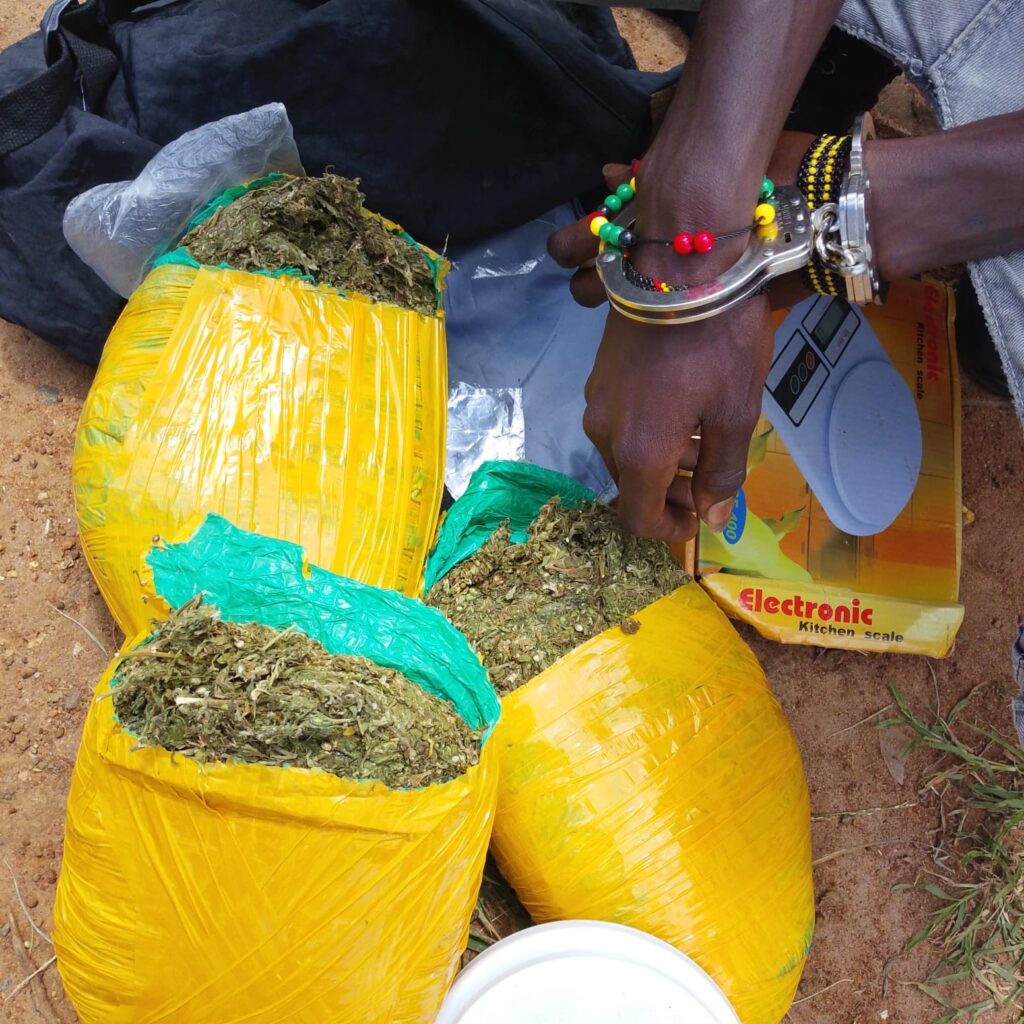
Upon further examination, the bag was found to contain several bales of cannabis sativa, tightly wrapped in yellow cellotape.

Also recovered were eight packets of Rizla rolling papers, each containing 100 sheets, as well as a digital weighing scale, indicating possible intent to distribute the narcotics.

Preliminary investigations suggest that the suspect was transporting the drugs to Kitui town, allegedly having sourced them from Bungoma County.

Oronje was immediately taken into custody and escorted to Kanyonyoo Police Station, where he is being processed ahead of his arraignment in court. Authorities say investigations are ongoing.

Create a free account, or log in.

Gain access to read this content, plus limited free content.

Yes! I would like to receive new content and updates.

Sponsored Ad

Ad 1
Ad 2
Ad 3
Ad 4
Ad 5
Ad 6