Sponsored Ad

Ad 1
Ad 2
Ad 3
Ad 4
Ad 5
Ad 6
24.9 C
Kenya
Saturday, May 9, 2026
Home Blog Page 277

Gunshots Reported as Goons Raid Nyakera’s Kisumu Hotel Amid Property Dispute

By Peter John

Gunshots were reported during a dramatic confrontation at a hotel linked to former government official William Nyakera in Kisumu, after a group of suspected goons allegedly stormed the premises in what has been described as a property dispute.

Nyakera, who is also known as an opposition political figure, claimed the raid was orchestrated by individuals connected to a state agency amid a long-running disagreement over the property.

The hotel sits on land he leased in 2019, and he says he has invested more than KSh235 million in renovating and reviving the establishment.

According to Nyakera, the attackers arrived at the premises and caused chaos, with reports indicating that gunshots were fired during the incident. 

He further alleged that the individuals involved shouted tribal insults targeting members of the Kikuyu community.

In his account, Nyakera accused a senior government official of being behind the operation, suggesting the incident may be politically motivated. 

However, the claims remain contested and have not been independently verified by authorities.

The dispute is linked to the property’s ownership and lease arrangements involving the Lake Basin Development Authority (LBDA), a government agency tasked with managing development projects within the Lake Basin region. 

Court records indicate that the authority has been pursuing recovery of the property after Nyakera’s company allegedly fell into arrears and breached repayment terms tied to the lease.

Despite the developments, Nyakera has denied that any court order authorizing eviction from the property exists.

The incident has also sparked debate online. Blogger and political commentator Robert Alai dismissed Nyakera’s claims, describing the situation as a publicity stunt linked to unpaid rent.

Police response to the incident has drawn criticism, with observers noting delays in law enforcement intervention even as tensions escalated at the scene.

The matter remains before the courts as the dispute between Nyakera’s firm and the Lake Basin Development Authority continues, raising broader questions about property management, political rivalry, and the enforcement of lease agreements involving public land.

Authorities have yet to issue a comprehensive statement on the reported gunshots and the alleged raid. 

Investigations into the incident are expected as the legal battle over the property unfolds.

Kenya Ports Authority Announces 194 Internship and Apprenticeship Opportunities for Young Graduates

By Andrew Kariuki

The Kenya Ports Authority (KPA) has announced 194 internship and apprenticeship opportunities for young graduates across various departments within the organization as part of its commitment to youth empowerment, skills development and professional capacity building.

The program, which will run for one year beginning in April 2026, is designed to give recent graduates an opportunity to gain hands-on workplace experience while developing practical skills required in the modern job market.

KPA noted that the initiative forms part of its broader effort to help bridge the gap between academic training and practical industry experience while strengthening Kenya’s maritime, logistics and trade sectors.

As the state corporation responsible for managing and operating Kenya’s seaports, the Authority plays a critical role in facilitating international trade, logistics operations and regional economic development.

Through the internship and apprenticeship program, KPA aims to contribute to the development of a skilled workforce capable of supporting the continued growth of the maritime and logistics sector in Kenya and the wider East African region.

The program seeks to provide young graduates with practical exposure to professional working environments while allowing them to apply knowledge and skills acquired during their academic studies. It is also intended to enhance employability by equipping participants with workplace experience and professional competencies such as communication, teamwork, problem-solving and time management.

Successful applicants will be deployed across various departments within the Kenya Ports Authority depending on their academic qualifications and specialization.

Areas of placement include engineering and technical services, logistics and supply chain management, finance and accounting, human resource management, information and communication technology (ICT) administration and corporate services, environmental and safety management, and maritime and port operations.

During the internship period, participants will receive mentorship from experienced professionals, engage in departmental assignments, participate in operational projects and develop professional networks that may support their future careers.

KPA stated that interns are expected to gain valuable competencies including professional communication and workplace etiquette, teamwork and interpersonal skills, analytical thinking and problem-solving abilities, as well as a better understanding of organizational processes, governance structures and professional responsibility.

To qualify for the program, applicants must be Kenyan citizens aged 27 years or below at the time of application.

They must have graduated with a degree, diploma or certificate from a recognized and accredited institution between January 2023 and December 2025.

Applicants must also not have previously undertaken any internship program or gained work experience related to their field of study since graduation and must not have retired from or exited formal employment.

The Kenya Ports Authority emphasized that it is an equal opportunity employer, encouraging applications from qualified individuals from all regions of the country.

The Authority also promotes gender equality and strongly encourages persons living with disabilities (PWDs) to apply.

KPA stated that the internship and apprenticeship program provides a valuable opportunity for young graduates to gain meaningful professional experience, build networks and develop the skills necessary to succeed in their chosen careers while contributing to the development of Kenya’s maritime and logistics industry.

Woman Charged with Attempted Murder After Shooting at Rihanna’s Los Angeles Home

By Andrew Kariuki

A woman accused of opening fire at the Los Angeles home of global pop star Rihanna has been charged with attempted murder, prosecutors announced on Tuesday.

Authorities identified the suspect as Ivanna Lisette Ortiz, 35, who allegedly fired multiple rounds at the luxury property on Sunday. The estate is shared by Rihanna, rapper A$AP Rocky, and their three children.

According to prosecutors, Ortiz faces one count of attempted murder, 10 counts of assault with a semiautomatic firearm, two counts of shooting at an inhabited dwelling, and one count of shooting at an inhabited vehicle.

Aerial footage captured after the incident showed bullet holes in the gate of the property, indicating that several rounds were fired toward the residence. Police previously stated that the weapon used in the attack was an AR-15-style assault rifle.

The shooting reportedly occurred in broad daylight, while Rihanna was believed to be inside the home at the time. No injuries were reported.

Ortiz, who is originally from Florida, has previously been involuntarily committed and had lost custody of her then 10-year-old child, according to reports by entertainment news outlet TMZ.

Investigators also reviewed a Facebook page believed to belong to Ortiz, which contains several posts and videos referencing celebrities including Rihanna, Kim Kardashian and Cardi B. In one post, she reportedly tagged Rihanna and challenged the singer to speak to her directly, while in another video she claimed the star wanted to kill her.

Following her arrest, a court ordered that Ortiz be held on bail of $1.875 million and that she have no contact with Rihanna.

She is scheduled to appear in court again on March 25 as the case proceeds through the Los Angeles legal system.

Kisii family buries tree after son killed in Russia-Ukraine war

A family in Kisii County has held a symbolic burial for their son after losing hope of ever receiving his body from Russia.

Clinton Nyapara, a young Kenyan who reportedly died in Donetsk, Ukraine, after joining the Russian army last year, is among several Kenyans believed to have perished in the ongoing war.

On Tuesday, his heartbroken family made the painful decision to bury a tree in place of his body. 

Preparations began in Bomariba Village, Bonchari Constituency in Kisii County. A grave was dug, but there was no body to bury. 

It was meant to be the final resting place of Nyapara, who left home in search of a better future, only to die thousands of kilometres away in Donetsk, Ukraine.

Nyapara is among a growing number of young Kenyans reportedly killed in the Russia–Ukraine war after recruitment by the Russian army.

Three months after news of his death reached home, his family is still waiting — not for justice — but for his body. 

That wait has become too long and too painful.

After lengthy consultations with village elders, the family decided to plant a tree in what would have been their son’s grave — a tree that will stand as a symbol of a life lost far from home.

The family says their desperate efforts to seek help from the Ministry of Foreign Affairs have only been met with empty promises.

“Tumejaribu juu chini but imeshindikana… tukaamua wacha sasa huu mti uwekwe hapa…” said Nyapara’s brother.

It is the only closure they may get. After weeks of incessant promises to repatriate Nyapara’s body back home, the family has now decided to close the matter after conducting a special ritual, hoping that someday Nyapara’s dreams will live on through his six-year-old son.

In Transmara East, however, a different kind of pain is unfolding. At least 15 young men have been reported missing, believed to have been lured into joining Russia’s military.

Their families now live in fear that they too may soon be forced to hold burials without bodies.

In Nagwenya Village, Kilgoris in Narok County, families are grappling with the mysterious recruitment of their sons by the Russian military.

The remote area, accessed through hours of navigating rough and treacherous roads, tells a story of loss, confusion and deep sorrow.

The controversial recruitment of Kenyan youth by Russia’s military has taken sons from their families, young men who left home in search of a better future.

Three families now sit together, trying to comfort one another in their shared pain.

For some, it is the first time they have heard of a country called Russia, and it remains a mystery how their sons ended up there.

Three men — 30-year-old Erick Korinko, Kevin Ledama Mopesi and Alfred Bett, both aged 35 — left the village between June last year and November with dreams of transforming the lives of their families.

Instead, their departure marked the beginning of uncertainty and heartbreak.

“Kijana yangu alitoka kijijini, ameniacha na mke na mtoto mdogo alafu naambiwa alienda Russia… juzi tumepata habari kijana ameuawa. Tafadhali rais tutafutie mtoto wetu, tunalia sana… tunataka hata kumuona kama wazazi, tumefika mwisho,” said Ascar Korinko, Erick’s mother.

Erick Korinko’s shoes are among the few belongings he left behind — a silent reminder of a son who walked out of his home with hope, never to return.

“Tumehuzunika vibaya sana… kama wazazi hatulali. Hatujui tunaanzaje kumtafuta na hatujui njia,” said Eliud Korinko, Erick’s father.

For the family of Kevin Ledama Mopesi, the pain remains raw.

They say he left home believing he was travelling abroad to take up a security job, unaware that he had been recruited into a foreign war.

“Sisi pia tuliambiwa kwamba hayuko bado, tunamtafuta tu. Tunataka rais atusaidie,” said Lemiso Mopesi, Ledama’s brother.

In another home, Alfred Bett’s family lives in agonising uncertainty.

Their son, who had previously served as a soldier, travelled to Russia but has been missing for more than four months, with no word about his whereabouts.

Parents who watched their sons leave with dreams of a better future now spend sleepless nights wondering whether they will ever see them again — and whether, if they do, it will be their sons alive or bodies brought back home for burial.

Japan Targets Eightfold Growth in Domestic Microchip Sales by 2040

By Andrew Kariuki

Japan has unveiled an ambitious plan to dramatically expand its domestic semiconductor industry, setting a target to increase sales of locally produced microchips eightfold by 2040 compared with 2020 levels.

During a strategy meeting on Tuesday, the administration of Prime Minister Sanae Takaichi announced that the government aims to boost sales of Japanese-made chips to 15 trillion yen (about $95 billion) by 2030 and 40 trillion yen (around $250 billion) by 2040.

The 2040 target represents a sharp increase from approximately five trillion yen recorded in 2020, according to figures from the Ministry of Economy, Trade and Industry.

Japan was once a dominant force in the global semiconductor industry.

In the 1980s, the country accounted for roughly half of the global semiconductor market share.

However, Japan has since been overtaken by competitors such as Taiwan and South Korea, with the growth of its chip industry slowed by factors including slow digital transformation among businesses and trade tensions with the United States.

Today, Japan holds less than 10 percent of the global semiconductor market, prompting the government to invest heavily in new manufacturing facilities and technological development in an effort to regain competitiveness.

The renewed push comes as demand for advanced chips continues to surge globally, driven by rapid developments in technologies such as artificial intelligence, smartphones, electric vehicles and high-performance computing.

Japan expects the global semiconductor market to expand to 190 trillion yen (about $1.2 trillion) by 2035, making the sector increasingly strategic for economic growth and technological leadership.

As part of its revival strategy, Rapidus, a newly established Japanese semiconductor company, is constructing a facility aimed at producing cutting-edge two-nanometre chips, with mass production scheduled to begin in 2027.

At the same time, Taiwan Semiconductor Manufacturing Company (TSMC)—the world’s largest contract chipmaker—recently announced plans to manufacture advanced three-nanometre semiconductors at a factory currently under construction in Japan.

Government officials say logic and memory chips, often described as the “brain” and “data storage” of artificial intelligence systems, have been key drivers of recent expansion in the global semiconductor market.

However, according to a government document titled “Draft Investment Roadmap,” Japan has not fully benefited from this growth.

“We will secure the capacity to domestically develop and produce cutting-edge, next-generation semiconductors that will be crucial to this AI era,” the government stated.

The strategy reflects Tokyo’s broader effort to strengthen technological independence, supply chain security and economic resilience as global competition in the semiconductor sector intensifies.

Container Ship Damaged by Suspected Projectile Off UAE Coast Amid Rising Gulf Tensions

By Andrew Kariuki

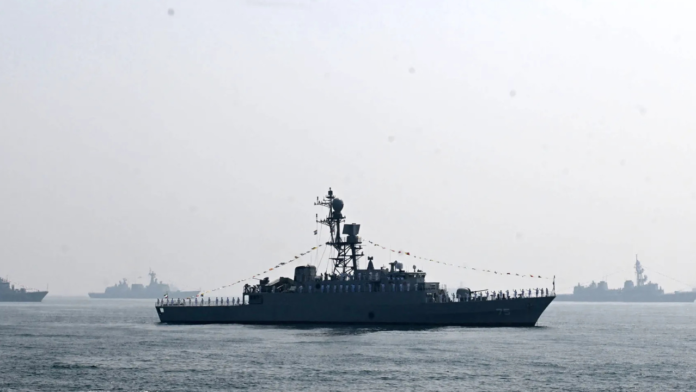
A container ship was damaged after being struck by a suspected projectile off the coast of the United Arab Emirates, according to a report by the United Kingdom Maritime Trade Operations (UKMTO) as tensions escalate in the Gulf region.

In a statement issued on Wednesday, the UKMTO said the master of a container vessel reported that the ship had sustained damage from what appeared to be an unidentified projectile.

Authorities said the extent of the damage remained unclear, but confirmed that all crew members aboard the vessel were safe.

The incident occurred approximately 25 nautical miles northwest of Ras Al Khaimah, one of the emirates of the United Arab Emirates.

Maritime authorities have urged vessels operating in the region to exercise heightened caution while investigations into the incident continue.

The development comes amid growing tensions in the Gulf following Iran’s retaliatory actions in response to recent U.S. and Israeli strikes.

Iran’s elite Islamic Revolutionary Guard Corps (IRGC) recently claimed it had “complete control” of the Strait of Hormuz, a strategic maritime chokepoint connecting the Persian Gulf to the open ocean.

The Strait of Hormuz, which is less than 30 miles (48 kilometres) wide at its narrowest point, is shared by Iran on one side and Oman on the other and serves as one of the world’s most critical routes for global energy shipments.

According to data compiled by the UK Maritime Trade Operations, the International Maritime Organization and Iranian authorities, at least ten oil tankers in or near the Strait of Hormuz were struck, targeted or reported attacks between March 1 and March 10.

Meanwhile, U.S. President Donald Trump warned Iran of “unprecedented military consequences” if Tehran proceeds with threats to mine the Strait of Hormuz after Iranian officials declared that no Gulf oil would be allowed to pass through the waterway.

The White House also clarified earlier Tuesday that the United States had not escorted any oil tanker through the Strait of Hormuz, after a social media post from the U.S. Energy Secretary briefly suggested otherwise before being deleted.

The latest maritime incident underscores growing security concerns in the Gulf, a region vital to global oil and trade flows.

Authorities continue to monitor the situation as investigations into the projectile strike are ongoing.

ODPP Opposes Bond for Three Kenyans Facing Extradition to U.S. Over Cyber Fraud Claims

By Andrew Kariuki

The Office of the Director of Public Prosecutions (ODPP) has opposed the release on bond of three Kenyan nationals facing extradition to the United States over alleged cyber fraud offences.

Appearing before the court, prosecutors argued that the three suspects are fugitives wanted by U.S. authorities and warned that releasing them on bond could undermine the ongoing extradition process.

According to the prosecution, the suspects are the subject of an extradition request submitted by the United States through INTERPOL, seeking their surrender to face charges related to alleged cybercrime activities.

The ODPP told the court that granting them bail would pose a significant flight risk and could interfere with the proceedings aimed at facilitating their extradition.

Prosecutors urged the court to keep the suspects in custody until the extradition application is heard and determined, emphasizing the importance of international cooperation in combating cybercrime.

However, the defence strongly opposed the position, with lawyer Danstan Omari urging the court to consider the current global security situation before allowing the extradition of the three Kenyans.

In his submissions, Omari asked the court to take judicial notice of the escalating tensions between the United States and Iran, arguing that the conflict could pose serious risks to individuals extradited to the U.S. at this time.

According to the defence, sending the suspects to the United States amid the current hostilities could expose them to grave danger due to ongoing security threats linked to the conflict.

Omari cited reports indicating that tensions have intensified into a wider confrontation involving U.S. and allied strikes on Iran, followed by Iranian retaliatory missile and drone attacks on American military bases and regional targets.

The conflict, which began in late February 2026, has reportedly resulted in casualties and increased instability in parts of the region.

The court is expected to consider submissions from both sides before making a determination on the suspects’ bond application and the extradition proceedings.

Large parts of Dresden to be evacuated after 250kg WW2 bomb found

BBC -Much of the centre of the German city of Dresden will be evacuated on Wednesday, after the discovery of a large unexploded British World War Two flying bomb.

The 250kg (551lb) device was discovered near the former Carola Bridge, which collapsed in the Elbe River in 2024.

The fire brigade in Dresden says this is the city’s largest evacuation to date for such an incident, affecting around 18,000 residents, tourists and commuters.

Much of the old town will be cordoned off by 09:00 (08:00 GMT), including some of the city’s most famous buildings – the iconic Frauenkirche Lutheran church, the Residenzschloss Palace and the Semper Opera.

The police headquarters, Saxony’s state parliament, several ministries, retirement and nursing homes, daycare centres and other social institutions are also located in the evacuated area.

The authorities are providing emergency accommodation at the Dresden Exhibition Centre from 07:00 (06:00 GMT), while additional buses and trams will be running to this location.

It is not clear how long it will take to defuse the bomb.

Dresden was attacked by British aircraft on 13 February 1945. In the days that followed, the British and their US allies dropped nearly 4,000 tons of bombs in the assault on the city.

The ensuing firestorm killed 25,000 people and ravaged the city centre, once known as the Jewel Box because of its Baroque and Rococo architecture.

Four other bombs were found during demolition work on the Carola Bridge last year.

EPA Woman in a woolly hat lights a candle as crowds gather round an array of candles on the ground. Behind them looms the Frauenkirche Lutheran church
Last month Dresdeners marked the 81st anniversary of the bombing campaign.

The attack on Dresden is one of the most controversial Allied acts of World War Two. Some say it was strategically justified. Others argue it was a war crime.

It took many years before the renowned Semper Opera and Frauenkirche were rebuilt.

A British tenor, Stephen Chaundy, who is currently working at the Semper Oper, told the media that rehearsals have been cancelled on Wednesday.

Reflecting on the British bombing of Dresden in World War Two, he said: “The past casts a long shadow.”

Inside the Russian explosives plot that targeted the UK

Sex toys, body lotion and massage cushions were not the kind of delivery Aleksandr Suranovas usually handled.

“What?” he messaged, when he was sent a photograph of the items he was being asked to post in four parcels from Lithuania to the UK and Poland.

“It’s what they need, and they’re offering regular work,” the response came over the messaging app Telegram. The pay was decent: €150 (£130/$173) for a couple of hours’ work, so Suranovas agreed. “If that’s what’s needed, fine by me,” he typed back.

But each parcel contained a sophisticated incendiary device. The tubes of cosmetics had been re-filled with a liquid high explosive called nitromethane and the ignition devices were so well hidden inside the cushions even an airport scanner didn’t detect them. Suranovas maintains he had no idea of this.

When he was handed the items in a Vilnius park in July 2024 the timers inside were already counting down. Over the next two days, three of the parcels would go up in flames, one just before it was loaded onto a cargo plane for London. Any later and the consequences could have been disastrous.

That August, Suranovas was arrested and charged with carrying out an act of terrorism on behalf of Russian military intelligence, the GRU. Twenty-two people are now in custody in Lithuania and Poland after an international investigation involving UK counter-terrorism officers. It concluded that the operation was run by Russia, an allegation consistently denied by Moscow. This is the first time anyone involved in the parcel plot has spoken publicly.

Last year, I wrote to several of the suspects in prison as part of my own ongoing investigation into a wave of sabotage attacks across Europe following Russia’s full-scale invasion of Ukraine, that has included arson and derailed trains as well as the parcel plot. Suranovas replied at length and, when he was released on remand recently, agreed to meet.

His account, together with the many case documents I have seen and other sources, give a unique insight into an extraordinary plot that targeted the UK and several other countries, in an apparent attempt to shatter support for Kyiv.They help expose how Russia is now actively recruiting individuals within Europe, accused of increasingly serious attacks.

“I wouldn’t call it a shadow war. I think this is active aggression against our nations,” Vilmantas Vitkauskas, head of Lithuania’s National Crisis Management Centre, warns. “It’s a clear message that those who support Ukraine will be hit by the Russians. I think it’s very dangerous and we are very close to… situations where a lot of people would be suffering.”

By Anthony Solly

Masinde Muliro University student stabbed to death, suspect dies by suicide

Grief and sorrow have engulfed the Maraba area in Kakamega after a third-year student at Masinde Muliro University was allegedly stabbed to death by a colleague, who later committed suicide by hanging himself with a rope.

The scene inside the house was chaotic, with signs of a struggle evident throughout, suggesting a violent confrontation that led to the killings.

A father of one of the deceased said he visited his son at his rental house but noticed bloodstains, prompting him to raise the alarm.

Residents reported that they discovered the two bodies after breaking into the house, which had been locked from the inside.

A large crowd gathered at the scene in disbelief as police cordoned off the area.

The two bodies were taken to the Kakamega Referral Hospital morgue, awaiting autopsy.

Create a free account, or log in.

Gain access to read this content, plus limited free content.

Yes! I would like to receive new content and updates.

Sponsored Ad

Ad 1
Ad 2
Ad 3
Ad 4
Ad 5
Ad 6