Business leader Rajan Rameshchandra Malde, a board member of Pwani Oil Products, has died at the age of 48.
In a joint statement, the boards and management of Pwani Oil Products, Trufoods Ltd, and Kartasi Ltd announced the passing of Mr. Malde on Friday, March 6, 2026, in Nairobi.
The companies described his death as a profound loss to the organisations, their employees, and the wider business community.
“Throughout his tenure, Mr. Malde demonstrated unwavering commitment, visionary leadership and a deep sense of purpose,” the statement read.
“His guidance helped shape the direction of our companies and his contributions will remain a lasting part of our institutional legacy.”
According to the funeral notice, the public will be allowed to pay their last respects on Sunday, March 8, 2026, from 12:30pm to 2pm at the Oshwal Centre on Ring Road in Parklands, Nairobi.
The funeral cortege will depart the venue at 2pm for a cremation ceremony at the Hindu Shamshan Bhumi Kariokor Crematorium, where cremation is scheduled to begin at 2:30pm.
A family meeting and prayers will later be held the same evening from 7pm to 8pm, again at the Oshwal Centre.
In their tribute, the companies said Mr. Malde leaves behind “a legacy of integrity, hard work and kindness,” noting that his impact as a leader and colleague will be remembered for years to come.
“Our thoughts and prayers are with his family during this most difficult time,” the statement added.
Computer tablet screens glow inside a row of partitioned booths at a new-style Ethiopian police station.
There is no commotion. There is no front desk, no bench of anxiously waiting civilians, no officer calling out names.
It is a pilot project of what is being called a “smart” – or unmanned – police station in the Bole district of the capital, Addis Ababa, is the latest chapter in Ethiopia’s bid to catch up with the digital revolution.
A large monitor on the wall cycles through welcome messages as well as images of Prime Minister Abiy Ahmed.
But at the moment there are uniformed officers standing by to demonstrate how the system works, which makes it feel more like a tech showroom.
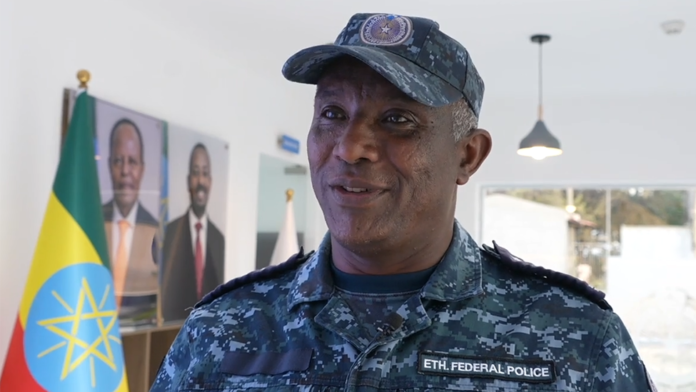
Recently opened, the staff “are here to help people get used to it”, the police’s head of technology expansion department Cdr Demissie Yilma tells the media.
Inside a booth, he taps a screen and goes through the steps to make a report.
Demissie selects the type of incident – a crime, a traffic report or a general concern – enters the details and presses a button to submit the comment.
Then, an officer – who is a real person in a remote location rather than a chatbot – pops up on the screen and begins to ask questions and take down information.
“If there is a problem, officers respond immediately and patrol the area mentioned by the reporter,” Demissie says.
In its first week last month, the smart police station (SPS) received just three reports – a lost passport, a financial fraud case and a routine complaint.
But Demissie believes the number of reports will grow as locals become more aware of it.
“The future police service should be near the citizens,” he says.
The use of a computer tablet to communicate with officials may mean less human-to-human contact but the authorities believe that the SPS could increase access to the police in places where there may not be enough personnel to man a fully fledged station.
At the project’s launch on 9 February, the prime minister was quoted in state media as saying that it was aimed at making “law enforcement institutions competent and competitive” and he framed it as part of a wider digital reform drive.
Users of the smart police station enter details on a tablet before a real person appears on the screen
The smart police station is part of a broader move to change how citizens interact with the state.
The national strategy launched last year – known as Digital Ethiopia 2030 – is the government’s blueprint for digitising public services, from identity systems and payments to courts and public administration.
The proportion of Ethiopians who have access to the internet remains quite low, meaning that the country has lagged behind others on the continent in terms of digital transformation.
Also, conflict and political upheavals in recent years have led to internet blackouts.
But as the telecoms sector has opened up, the country is embracing mobile phone digital payments in birr, the local currency.
The government has also introduced a national digital ID system and put several government services online.
Supporters of the moves argue that these changes are long overdue in a country with rapid urban growth and a young population.
Birhan Nega Cheru, a senior software engineer in Addis Ababa, is pleased with the shift.
“When they work well, they reduce paperwork and visits to offices,” he tells the media.
But he also recognises security and privacy issues and the dangers that those “who are not digitally literate can easily be scammed”.
“Urban users, younger people, businesses, those with smartphones and skills, benefit most,” the software engineer says.
“Older people, rural communities and low-income groups are at risk of being left out.”
And the numbers support his assertions.
In a report last year, the UN’s educational organisation, Unesco, found that 79% of its citizens were not connected to the internet.
But Zelalem Gizachew, a technology policy analyst, argues that the government’s strategy has been chipping away at the digital divide.
“Digital literacy remains a challenge,” he says. “That is why the Digital Ethiopia 2030 strategy puts emphasis on training and skills, not just technology.”
He points to measurable changes over the past five years.
“Digital payments have boomed with trillions of birr now moving through electronic transactions. Broadband access has expanded sharply, and more than 130 government services have been digitised.
“These are foundational investments,” Zelalem says. “You cannot modernise public services without infrastructure, policy and skills.”
For now, the smart police station remains a pilot.
It is in a controlled environment where officers guide users through a system which is still finding its footing. Traditional stations continue to operate, and most citizens still rely on in-person reporting.
Whether the model expands will depend less on how sleek the technology looks, and more on whether people choose to use it when no-one is there to explain the screens.
In that sense, the quiet room in Bole is not a finished product. It is an experiment, and a small window into how Ethiopia’s broader digital ambitions may play out in everyday life.
BBC -A distinctive white tiger rescued from conflict-hit Ukraine has found a new home in Lincolnshire.
Aleks arrived at Lincolnshire Wildlife Park, near Friskney, on Saturday after a three-day, 1,600 mile (2,500km) journey.
Park director Steve Nichols said military volunteers looking for survivors in “bombed-out” areas came across him in a residential back garden in June 2024 in the Kharkiv region.
Nichols said, despite his long journey, Aleks was “very grumpy, very achy and very tired,” and added, “but in all honesty he’s actually settling in a little bit better than we thought he would do”.
Aleks was born during the war in Ukraine
Nichols said the area Aleks had been rescued from was “under siege” and he had received rehabilitation after being found “almost dead” during the war.
He said the tiger was found “dehydrated, infested with parasites and exhausted”.
However, he said the he was currently “laid in absolute luxury”.
The director said: “He’s having the best food he’s ever had. He’s absolutely comfortable. It’s all peace and quiet.
“And he’s actually, we don’t think that they have this kind of emotion, but he looks like he’s grateful.”
Nichols said only one in 10,000 tigers in the wild were born with a white coat and most were bred in captivity to have this fur.
He said Aleks was settling into his enclosure away from the public, but the park would be sharing a live video stream of the tiger and updates on their social media channels.
“We want to assess him over the next three or four weeks to see whether he likes to be near humans, or whether he’d rather be on his own and kept at a distance,” he added.
Though tigers are usually solitary animals, if Aleks is amenable to the company of another tiger, the rescue might also introduce him to their tigress Sajhiba, who “does like males”, Nichols said.
BBC -More than 200 people, including 70 children, have been killed after a landslide caused a collapse in a mining area in the east of the Democratic Republic of Congo, the government says.
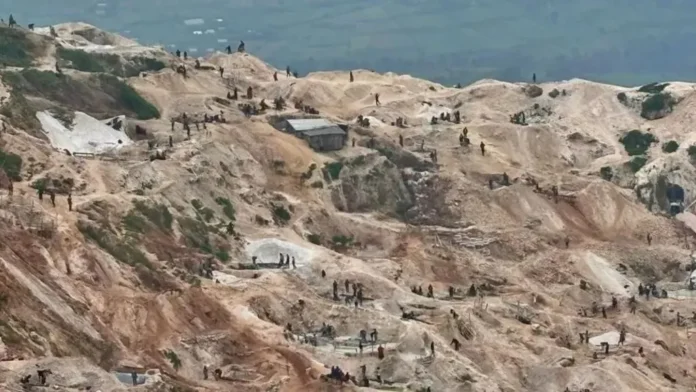
The landslide struck Rubaya, the country’s biggest source of coltan – an ore vital in the electronics industry – in the rebel-controlled east on Tuesday following heavy rains.
In a statement, the mines ministry blamed the tragedy on M23 rebels and said they were allowing illegal mining without proper safety standards.
The M23 are yet to comment but a source in Rubaya told the media the collapse was caused by attacks from government forces and only six had died. The government has not responded to the claim.
How Trump wants the US to cash in on mineral-rich DR Congo’s peace deal
The mines in Rubaya are thought to hold about 15% of the world’s coltan supply and half of the DR Congo’s total deposits.
The metallic ore contains tantalum, which is used to produce high-performance capacitors in a range of electronic devices, making it in high demand worldwide.
Since 2024, the M23 have been in control of Rubaya, which lies about 70 km (45 miles) west of Goma, the capital of North Kivu province.
The authorities said rescue efforts after Tuesday’s landslide were hampered by dangerous conditions, which they blamed on restrictions imposed by rebels on civilians.
The mines ministry added that the lack of official oversight at the site had left workers without basic safety protections.
“The provisional toll counts more than 200 compatriots who lost their lives, including 70 children and numerous wounded,” the ministry said in a statement.
The media was unable to independently verify the death toll in the remote area, where humanitarian agencies and major medical facilities have little or no access, and telecommunications are frequently disrupted.
Many of the injured have been evacuated to hospitals in Goma.
The Congolese authorities said they had banned mining in the area last year, even though the rebels had already seized control of the mines by then.
When the media team visited the site in July 2025, they observed miners digging manually to source the precious mineral. Conditions at the site are very bad, with dangerous pits dotted around its vast expanse.
Over the past year, the M23 has made rapid advances across the mineral-rich east of DR Congo, taking more areas where coltan is mined.
UN experts say there is evidence that minerals from DR Congo are being exported through Rwanda.
The experts have also accused Rwanda of backing the M23 – an opinion supported by the US government this week which imposed sanctions on the Rwandan army and four of its senior commanders.
Rwanda has rejected these accusations.
The Rubaya mining site was recently added to a shortlist of assets that is being offered to the US by the Congolese government under a minerals cooperation framework, according to the Reuters news agency.
A similar collapse at the site in late January following heavy rainfall killed more than 200 people.
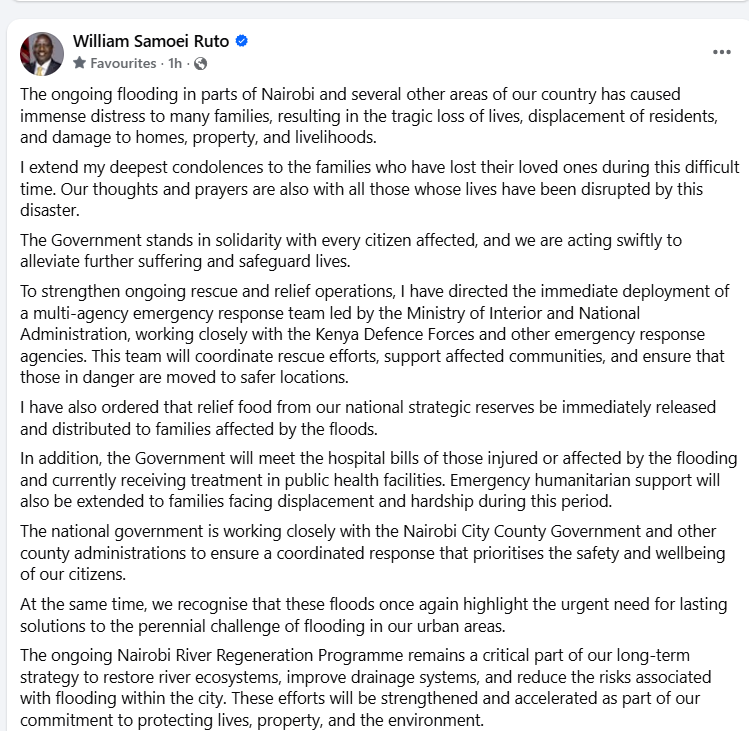
President William Ruto has ordered the immediate deployment of a multi-agency emergency response team and the release of relief food from national strategic reserves following deadly floods that struck Nairobi and other parts of the country on Friday night.
In a statement issued on Saturday afternoon, the President said the emergency team, led by the Ministry of Interior and National Administration and working alongside the Kenya Defence Forces (KDF) and other response agencies, will coordinate rescue efforts, support affected communities and evacuate residents from areas still at risk.
Ruto also directed that relief food be urgently distributed to families affected by the flooding, while the government takes responsibility for hospital bills for victims currently receiving treatment in public health facilities.
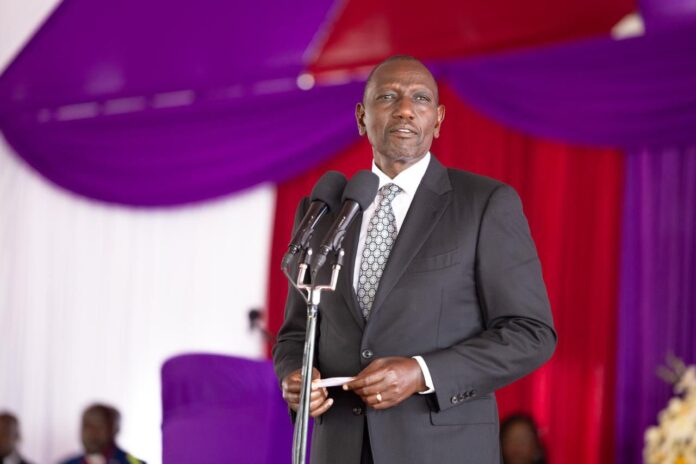
“The government stands in solidarity with every citizen affected, and we are acting swiftly to alleviate further suffering and safeguard lives,” the President said.
“The government will meet the hospital bills of those injured or affected by the flooding and currently receiving treatment in public health facilities. Emergency humanitarian support will also be extended to families facing displacement and hardship during this period.”
He added that the national and county governments are working together to ensure a coordinated response that prioritises the safety and wellbeing of citizens.
Ruto noted that the tragedy underscores the need for lasting solutions to recurring flooding in urban areas, pointing to the government’s Nairobi River Regeneration Programme as a key long-term intervention.
“At the same time, we recognise that these floods once again highlight the urgent need for lasting solutions to the perennial challenge of flooding in our urban areas,” he said.
“The ongoing Nairobi River Regeneration Programme remains a critical part of our long-term strategy to restore river ecosystems, improve drainage systems, and reduce the risks associated with flooding within the city. These efforts will be strengthened and accelerated as part of our commitment to protecting lives, property, and the environment.”
The directives come after devastating overnight rains on Friday caused widespread flooding across Nairobi, leaving at least 23 people dead and forcing emergency teams to carry out rescue operations in several parts of the city.
According to the National Police Service, at least 29 people were rescued during the operations as authorities responded to distress calls across affected estates.
The floods hit multiple neighbourhoods including Mukuru, Kibra, Mathare, Huruma, South B, South C, Pipeline in Embakasi, Roysambu, Kahawa West, Githurai and parts of Westlands, where homes were inundated and residents displaced.
Several major roads were also rendered impassable as floodwaters swept through the city, disrupting traffic along sections of Uhuru Highway, Mombasa Road, Thika Superhighway, Jogoo Road, Enterprise Road and Lang’ata Road.
Police said response teams remain deployed across the city as search and rescue operations continue amid ongoing rains.
President William Ruto has announced the government will pay hospital bills of those injured or affected by the flooding and are currently receiving treatment in public health facilities.
In a statement on his official social media accounts on Saturday, March 7, 2026, Ruto noted that the government stands in solidarity with every citizen affected.
His remarks come at a time when the National Police Service has confirmed that at least twenty-three people have died following the ongoing floods witnessed in Nairobi.
“In addition, the Government will meet the hospital bills of those injured or affected by the flooding and currently receiving treatment in public health facilities. Emergency humanitarian support will also be extended to families facing displacement and hardship during this period,” Ruto said.
“I extend my deepest condolences to the families who have lost their loved ones during this difficult time. Our thoughts and prayers are also with all those whose lives have been disrupted by this disaster,” Ruto said.
Ruto orders KDF deployment to help
On his part, Ruto announced that the government stands in solidarity with every citizen affected and is acting swiftly to alleviate further suffering and safeguard lives.
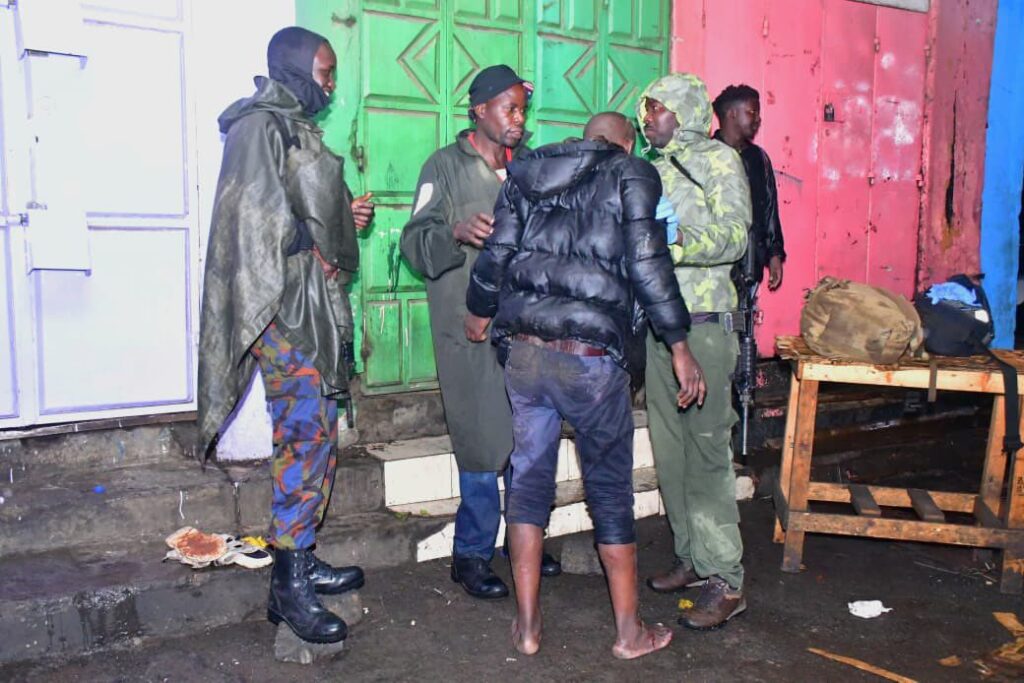
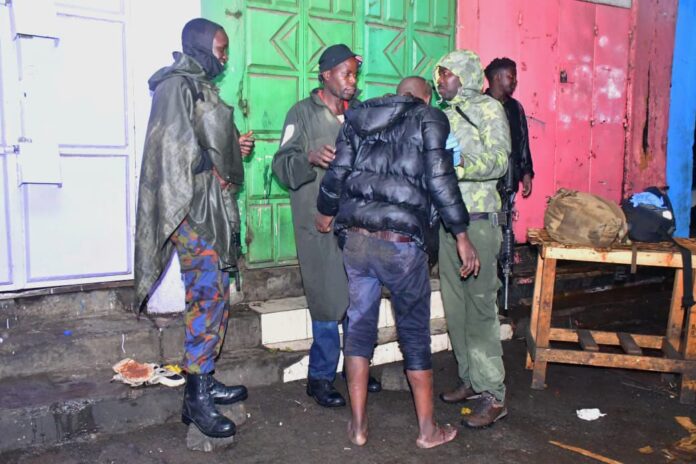
Ruto has also issued a directive for the immediate deployment of a multi-agency emergency response team led by the Ministry of Interior and National Administration, working closely with the Kenya Defence Forces and other emergency response agencies.
The team will coordinate rescue efforts, support affected communities, and ensure that those in danger are moved to safer locations.
“I have also ordered that relief food from our national strategic reserves be immediately released and distributed to families affected by the floods,” he added.
“The national government is working closely with the Nairobi City County Government and other county administrations to ensure a coordinated response that prioritises the safety and well-being of our citizens.”
At the same time, the Head of State noted that the government recognise that the ongoing floods once again highlight the urgent need for lasting solutions to the perennial challenge of flooding in our urban areas.
“The ongoing Nairobi River Regeneration Programme remains a critical part of our long-term strategy to restore river ecosystems, improve drainage systems, and reduce the risks associated with flooding within the city. These efforts will be strengthened and accelerated as part of our commitment to protecting lives, property, and the environment,” Ruto said.
Heavy rains have caused widespread flooding across several parts of Nairobi, leaving major roads impassable and disrupting transport in the capital.
The downpour, which began earlier in the evening, quickly overwhelmed drainage systems in several neighbourhoods including Nairobi West, South C and South B, where roads were submerged under rising water levels.
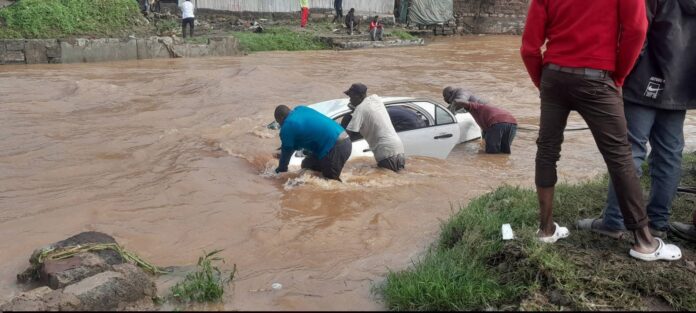
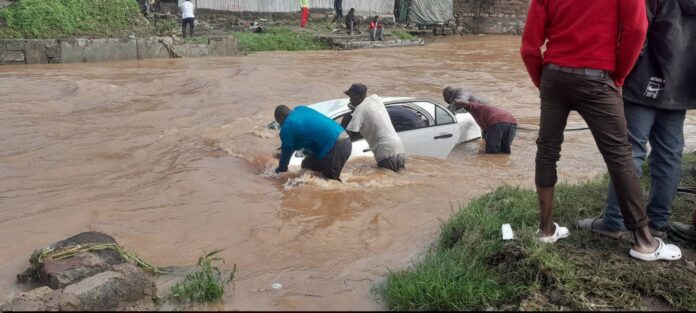
Motorists along Uhuru Highway were among the hardest hit, with dramatic scenes showing vehicles nearly submerged as floodwaters engulfed sections of the busy roadway.
Flooding was also reported in Kilimani and parts of the central business district, where heavy runoff turned streets into streams, slowing movement and forcing some drivers to abandon flooded route
In several areas, commuters were forced to disembark from public service vehicles and wade through the flooded streets as traffic ground to a halt.
Residents in South C also reported water entering homes after drainage systems failed to cope with the sudden surge of rainwater.
The flooding has sparked frustration among city residents, many of whom took to social media to blame the Nairobi City County Government for what they described as persistent drainage failures in the capital.
Critics argued that blocked drains, uncollected garbage and rapid urban development without adequate infrastructure have left the city vulnerable to flooding whenever heavy rains fall.
The scale of the crisis prompted President William Ruto to deploy the military overnight to support search and rescue efforts as floodwaters cut off roads, submerged estates and left motorists and residents stranded in different parts of the city.
Most of the victims were swept into rivers by the raging floodwaters, with several bodies later found lodged along riverbanks and drainage channels across Nairobi.
Police said the bodies of a man and a woman were found stuck near Visa Oshwal Primary School in Parklands.
Three other bodies were recovered within Nairobi’s central region, including one in the Gikomba Kwa Mbao area, while three more victims were found in the Lang’ata area. A woman’s body was also recovered from a flooded section of Uhuru Park.
Nairobi police commander George Seda warned the death toll could rise as search and rescue operations continued on Saturday.
Authorities are also searching for the bodies of two people who drowned in Kitengela after their vehicle was swept away by floodwaters on Friday night.
Seda said rescue efforts were severely hampered by widespread flooding across roads and residential estates.
“Most roads and estates were flooded, making it impossible for rescue missions last night,” he said.
The downpour also caused extensive property damage across the city, with more than 100 vehicles damaged by floodwaters.
“In South C alone there are more than 50 cars affected. Others were overturned on the roadside and parking bays in many parts of the city,” Seda said.
The heavy rains triggered major traffic disruption, with several key roads flooded and motorists stranded for hours.
Similar incidents were reported in other parts of the country, especially in areas near rivers, with police confirming at least three additional drowning incidents outside Nairobi.
In response, the government activated emergency response mechanisms nationwide after the Kenya Meteorological Department warned that heavy rainfall will persist across much of the country, raising fears of further flooding, displacement and transport disruption.
Public Service Cabinet Secretary Geoffrey Ruku said the government is coordinating national disaster preparedness, response and recovery efforts as intense rains continue to affect several regions.
He urged Kenyans to remain vigilant and prioritise safety, especially when travelling near flooded roads or swollen rivers.
“Members of the public are advised to be cautious on the roads for their safety and that of other road users, and to avoid crossing rivers which may have swollen or broken their banks,” Ruku said.
According to the Kenya Meteorological Department, western and Rift Valley counties including Nandi, Kakamega, Vihiga, Bungoma, Siaya, Busia, Baringo, Nakuru, Trans-Nzoia, Uasin Gishu, Elgeyo Marakwet, West Pokot, Kisii, Nyamira, Kericho, Bomet, Kisumu, Homabay, Migori and Narok are expected to receive heavier-than-usual rainfall.
The forecast also points to significant rainfall in southeastern counties such as Machakos, Kitui, Makueni, Kajiado and Taita Taveta, as well as coastal counties including Mombasa, Kilifi, Lamu, Kwale and Tana River.
Northern counties such as Marsabit, Mandera, Wajir, Garissa, Isiolo, Turkana and Samburu have also been flagged for heavy downpours.
In Nairobi, several low-lying neighbourhoods were flooded, with some residents reportedly displaced after water entered homes. Authorities said monitoring, rescue and recovery operations remain ongoing as the rains continue.
The United Alternative Government has threatened to stage nationwide mass action in April if the Independent Electoral and Boundaries Commission (IEBC) continues its engagement with Smartmatic International Technologies for election technology.
Speaking in Maua, leaders allied to the opposition coalition claimed that there are concerted efforts to manipulate electoral data through the continued use of Smartmatic systems. They accused the IEBC of failing to terminate the company’s contract despite growing public concerns.
The coalition argued that the continued reliance on the technology provider could leave Kenyans with no alternative electoral system in upcoming elections, warning that such a situation could undermine public confidence in the country’s democratic processes.
According to the coalition, Smartmatic has been flagged in more than 15 countries around the world over concerns relating to election technology and potential manipulation of electoral systems. They cited debates in the United States among the examples where questions have been raised about election technologies.
The statement was issued by Democratic Party Leader Justin Muturi on behalf of the United Alternative Government coalition.
The group warned that if the IEBC does not address the concerns and provide a clear plan for alternative and transparent election technology, Kenyans will take to the streets in protest beginning in April.
The National Police Service has issued an update following the heavy downpour on Friday night, March 6, stating that at least 23 people have died after widespread flooding hit several parts of Nairobi.
In a statement released on Saturday, the police said the heavy rainfall caused extensive flooding that destroyed property, forced road closures and displaced residents across multiple estates in the city.
According to the National Police Service, the hardest hit areas include Mukuru, Kibra, Mathare, Huruma, South B, South C, Pipeline in Embakasi, Roysambu, Kahawa West, Githurai and parts of Westlands
Major roads were also affected, including sections of Uhuru Highway, Mombasa Road, Thika Superhighway, Jogoo Road, Enterprise Road and Lang’ata Road, where floodwaters disrupted traffic and movement.
Police said emergency teams rescued 29 people during the search and rescue operations in collaboration with other agencies responding to the disaster.
“Twenty-nine people were successfully rescued from various locations and are receiving the necessary support,” the statement read in part.
Authorities added that response teams remain fully deployed and continue to respond to distress calls while carrying out further search and rescue operations in affected areas.
The National Police Service urged members of the public to remain vigilant as the heavy rains persist, advising motorists and residents to exercise caution and observe traffic rules.