The Directorate of Criminal Investigations (DCI) has launched investigations into a land ownership dispute in Ruai, Nairobi.
In a statement on Monday, May 4, the agency confirmed that the matter was first reported by the complainant, who raised concerns after construction activities began on land she claims to own.
“The complainant, Catherine Wanderi, initially reported the matter at DCI Ruai on April 24, 2026, stating that an unidentified individual had commenced construction on her parcel of land,” the statement read.
According to DCI, detectives later visited the location and advised the complainant on the next steps required to support her claim, including recording a formal statement and submitting documents.
However, the agency claimed that the process was not completed at that time.
“Detectives visited the scene on April 28, 2026, and advised the complainant to record a formal statement and present supporting documentation. She presented herself at the station however she left without completing the process at that time,” the statement added.
With matter gaining public attention after a video went viral online, the individual linked to the construction was identified and summoned by detectives.
The DCI said he recorded a statement and presented documents to support his ownership claim.
“He presented documentation, including a lease certificate, and indicated that he purchased the property in 2017 through a formal transaction facilitated by Embakasi Ranching Company. He has since been directed to halt all construction activities pending the conclusion of investigations,” the statement noted.
File image of DCI headquarters
According to the agency, the complainant has since returned to the station and complied with the earlier request to formally record her statement and submit supporting documents related to the land.
“The complainant has also today, May 4, 2026, presented herself at DCI Ruai and recorded her statement, alongside submitting supporting documents, including a share certificate from Embakasi Ranching Company,” the statement added.
As such, the DCI has now opened a formal inquiry file to determine the rightful owner of the disputed land and ensure a fair process for both parties involved.
“An inquiry file has been opened to establish the rightful ownership of the piece of land, and investigations are ongoing, with both parties assured of a fair, impartial, and thorough investigation,” the statement concluded.
DCI has urged members of the public to allow the investigation to proceed without interference and to avoid drawing conclusions based on unverified information shared online.
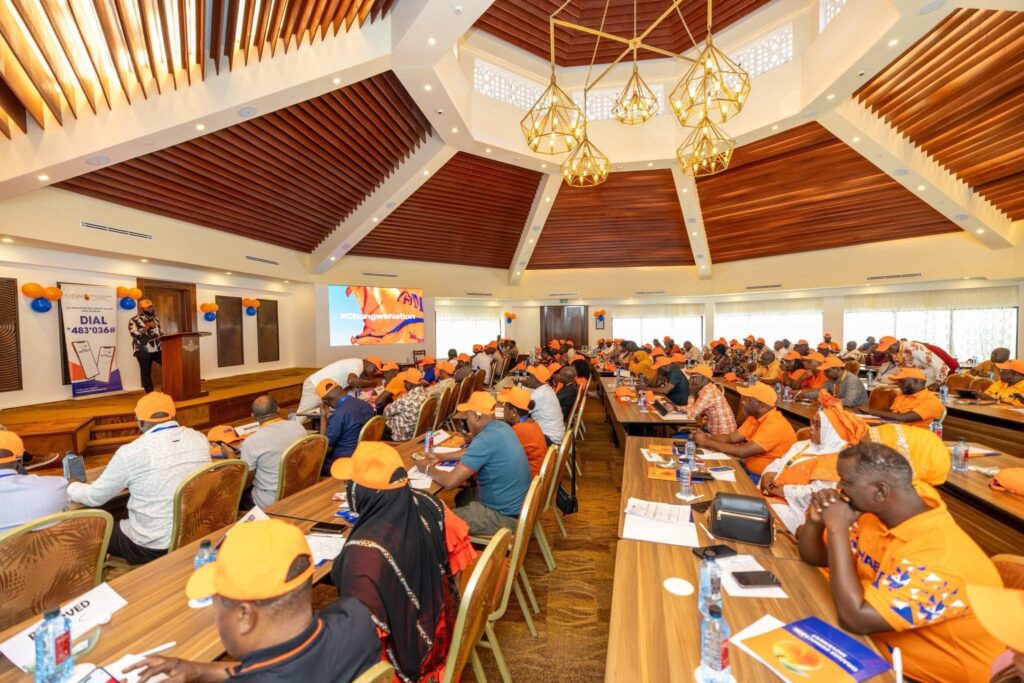
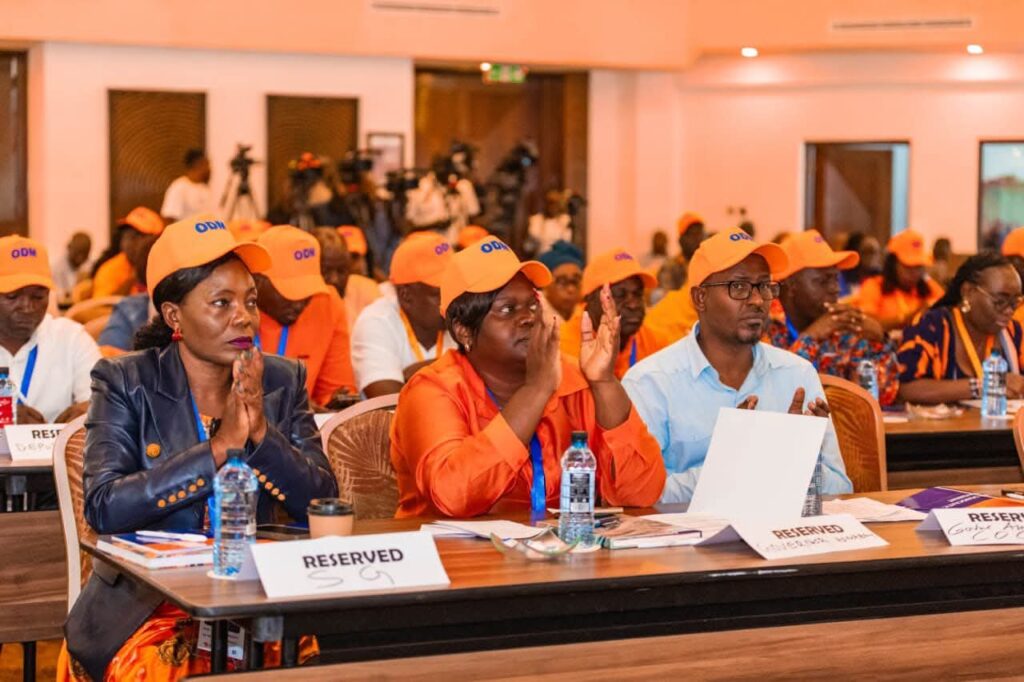
ODM Deputy Party leader Simba Arati has called on dissenting members of the Orange Democratic Movement (ODM) to return to the party, warning that unity remains critical for its survival and future political strength.
Speaking during day one of the party’s ongoing retreat in Mombasa, Arati struck a conciliatory yet firm tone, urging those he termed as “uncertain” or “doubting” to reconsider their positions and rejoin the party fold.
“We must choose, and I submit to you today that unity is not optional; without it we will fall,” Arati said.
His remarks come at a time when the party is grappling with internal divisions and competing voices, particularly as it prepares for future political engagements and the 2027 General Election.
Arati framed his message as both an appeal and a warning, emphasising that fragmentation would weaken the party’s influence and bargaining power.
“Those who doubt, those who may feel uncertain in this moment, I have this message for you: come back home. And home is here,” he said.
The governor extended an olive branch to the dissenting faction, assuring them that the party leadership and membership are ready to receive them and work together moving forward.
“Our brothers, come back home. We are ready. We can receive you. We’ll work. We’ll be strong,” he added.
At the same time, Arati cautioned against external politicking and actions that could mislead party supporters, drawing parallels with religious teachings to stress discipline and accountability within the party ranks.
“Come back home, my brothers and sisters, we build our house. Otherwise, the ship is taking off,” he warned.
Arati referenced the need for resilience within the party, invoking a popular political slogan associated with ODM’s founding leadership to underscore the importance of internal contestation without abandonment.“Tutakanyagana hapa kwa chama, tutakanyangana mpaka yule wa kuanguka anguke lakini chama isimame… tukikanyagana usitoroke,” he said.
The retreat brings together key ODM organs and leaders at a time when the party is seeking to stabilise itself, strengthen internal cohesion, and chart a strategic direction ahead of upcoming political processes.
Arati’s remarks signal growing concern within the party over internal rifts, even as leaders push for reconciliation and a united front.
His call for members to come back home reflects a broader effort by ODM leadership to close ranks, manage dissent, and reinforce loyalty as the party positions itself for the future.
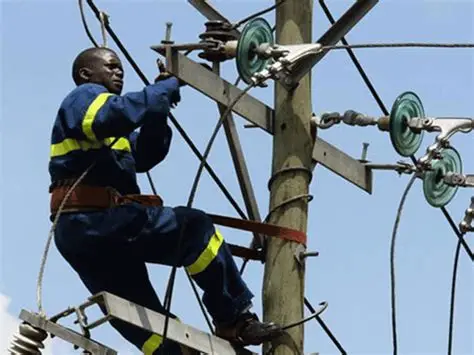
Kenya Power has announced scheduled power interruptions set to affect parts of six counties across the country on Tuesday, May 5.
In a notice on Monday, May 4, the company said the planned outages will take place in Makueni, Kisumu, Nyeri, Machakos, Kiambu, and Kitui counties.
In Makueni County, electricity supply will be interrupted in parts of Sultan from 8:00 a.m. to 5:00 p.m.
Areas expected to be affected include parts of Sultan Town, Major Muiu Quarry, Kasikeu Market, Kandolo Secondary School, Kavuthu Market, Nduluni Market, Mutyambua Market, Barazani Market, and all adjacent customers.
In Kisumu County, the outage will affect Chemursoi and Katolo areas between 9:00 a.m. and 3:00 p.m.
Nyeri County will experience two separate outages, both running from 8:00 a.m. to 5:00 p.m.
The first will affect areas around Kagumo High and Kirichu, including Kagumo High School, Kirichu Market, Ndurutu, Kiganjo Estate, Kiganjo Sewage, Gachika High School, Kang’ong’a, Ndathi-Ini, Wangi Water, Rosa, and adjacent customers.
The second outage will impact Kiawara and Nairutia areas, covering Lachuta, Kiawara, Lamuria, Bellevue, Kabendera, Ruirie, Kariminu, Tanyai, Nairutia, Mugunda, Ngobit, Kariguini, Mahiga Meru, Matopeni, and surrounding areas.
In Machakos County, areas in Kivaa, Masinga, and Kaewa will be without power from 9:00 a.m. to 5:00 p.m.
Others are Mukusu, Makutano Andei, Masinga Market, Katulye, Msingini, Mutwamwaki, Tulimyumbu, Kaewa, Musumaa, Kisuni, Ulutya, Kikumini, Kangonde, Kitangani, Mapatano, Kwasuvu, and all adjacent customers.
Kiambu County will also be affected, with outages scheduled from 9:00 a.m. to 5:00 p.m. in Kwa Maiko and Osho Millers areas. Locations listed include Kwa Maiko Shops, Osho Millers, Mega Pipes, Kambui Secondary School, Mitahato, Muchana Estate, Manila, Ndondo Estate, Oakland’s Estate, Ruiru Water, and nearby customers.
Meanwhile, in Kitui County, power will be interrupted in Mbondoni and Migwani areas between 9:00 a.m. and 5:00 p.m.
Affected locations include Mbondoni Market, Thokoa, Migwani, Kwa Ciku, Tulia, Muthale, Kyambo, Kavoloi, Kasue, Kasevi, Musuani, Kathumulani, Mwanzilu, Kwa Soo, Yalatani, and all adjacent customers.
The Kenya Accountants and Secretaries National Examinations Board (KASNEB) has released the results for candidates who sat for the April 2026 vocational, certificate, diploma, and CISSE examinations.
In a notice on Monday, May 4, the examinations body confirmed that all candidates who participated in the exams can now access their results.
According to KASNEB, the results are available through its online platform, where candidates can view and download their April 2026 results slips.
Candidates are required to log in to the e-KASNEB portal via https://online.kasneb.or.ke, navigate to the ‘Examination Results’ section, and download their results.
This comes weeks after KASNEB announced the official release and collection schedule for certificates relating to the December 2025 examination sitting.
In a notice on Wednesday, April 8, the examinations body confirmed that successful candidates will be able to collect their certificates starting this weekend.
“The December 2025 certificates will be ready for collection from Saturday, 11 April 2026. A mass issuance of the certificates will take place on Saturday, 11 April 2026 and Sunday, 12 April 2026 at KASNEB Towers I, GF 1 from 08:00am to 04:00pm,” the notice read.
Students who may not be able to physically collect their certificates have also been provided with an alternative option.
The body explained that candidates can request delivery via post by submitting a formal request through email.
To facilitate postage, applicants are required to send an email to certificates@kasneb.or.ke and include key details such as their registration number, a copy of their National Identity Card, postal address and code, cellphone number, and the specific examination sitting.
Additionally, KASNEB cautioned candidates to collect their certificates within the stipulated timelines to avoid extra charges, noting that storage fees will begin to apply from 1 August 2026.
The Linda Mwananchi team has criticized President William Ruto over his planned official visit to Tanzania, where he is expected to address the Tanzanian Parliament.
In a statement on Monday, May 4, the group said the timing of the visit has raised concern, arguing that it comes amid continued scrutiny over Tanzania’s recent political developments and the treatment of opposition figures following the country’s elections.
“Whereas the two countries have enjoyed good neighbourly relations over the years, this visit coming hot on the heels of recent grave happenings in Tanzania, is not only a betrayal of the people of Tanzania but also a betrayal of the very fundamental principles of democracy and freedom that we Kenyans hold dear,” the statement read.
Linda Mwananchi pointed to the conduct of Tanzania’s electoral process, saying opposition leaders and supporters were subjected to violence, arrests and intimidation instead of a free and credible contest.
“Tanzania was scheduled to hold elections in October of last year. What the people of Tanzania were treated to instead, was a farce. The main opponents of the incumbent President faced a violent crackdown, arrests, kidnappings and even death.
“The main Opposition Party CHADEMA, was banned from participating in the elections. Its leader, Tundu Lissu, was arrested on trumped up treason charges and subjected to a farcical trial which the state continues to stall in order to continue keeping him in jail,” the statement added.
According to Linda Mwananchi, the African Union Election Observer Mission said the election did not comply with AU principles, normative frameworks and international standards.
Separately, United Nations human rights experts and Secretary-General António Guterres expressed concern over reports of extrajudicial killings, enforced disappearances and mass arbitrary detentions of protesters and opposition figures.
Regional observers from Southern African Development Community also reported very low voter turnout, ballot stuffing and an uneven political playing field after major opposition candidates were disqualified.
The team said a coalition of 17 Western observer missions, including the United Kingdom and France, also condemned reports of electoral violence and alleged concealment of bodies.
“These are just a few of the credible voices that spoke against the conduct of the Tanzanian elections and the violence meted on unarmed citizens post-election. We can confidently state that the threshold of democracy and fairness was not met, especially given that opposition representatives had been placed behind bars,” the statement continued.
File image of the Tanzanian Parliament
As such, Linda Mwananchi said Ruto’s planned address to the Tanzanian Parliament could be interpreted as legitimising a contested political process.
“By addressing the Tanzanian parliament, Ruto is attempting to place Kenya’s stamp of legitimacy on a fraudulent regime and electoral process. In such a context, a high-profile presidential address risks being interpreted as an endorsement of contested processes and a troubling departure from Kenya’s longstanding commitment to democratic values,” the statement noted.
Linda Mwananchi also referred to the treatment of Kenyan activists in Tanzania, saying remarks made in the Tanzanian Parliament following those incidents remain a source of concern.
“We have also not forgotten that it was on the floor of the Tanzanian Parliament, where Kenyan activists who were brutalized in Tanzania were mocked repeatedly, with some of the vilest comments coming from people who should essentially be honourable. We must therefore question the intent and timing of this address,” the statement further read.
The group further questioned why the engagement should take priority over domestic concerns facing Kenyans, including unemployment, the high cost of living and declining public confidence in governance.
“Kenyans deserve clarity on what tangible benefits this engagement brings to the nation, and why it should take precedence over addressing unemployment, the high cost of living, and the erosion of public trust in governance. Kenya’s leadership must be anchored in accountability, integrity, and an unwavering commitment to the will and welfare of both its people and citizens of the EAC regional bloc. The country’s moral standing in the region must supersede Ruto’s flawed or non-existent geopolitical strategies,” the statement added.
In a message to Tanzanians directly, the movement said its criticism was aimed at the country’s ruling establishment rather than its citizens.
“We convey our warm compliments to the people of Tanzania, whose suffering at the hands of a brutal dictatorship is now well documented globally. As fellow East Africans, we share in the dreams of the creation of the East African Community, whose core founding principles were to foster economic, social, and political integration among East African nations, and to increase regional trade, harmonize policies, and improve living standards of citizens. We therefore make the distinction between the Tanzanian ruling class and the citizens, while issuing this statement,” the statement read.
Linda Mwananchi concluded by distancing Kenyans from the planned address and said it does not reflect the position of the Kenyan public.
“It is against this backdrop that the Linda Mwananchi leadership condemns in the strongest terms possible, this planned address to the Tanzanian parliament, and dissociate the Kenyan people from it entirely. Long-suffering Tanzanian citizens expect nothing less from their Kenyan allies,” the statement concluded.
Ruto is scheduled to address the Parliament of the United Republic of Tanzania on Tuesday, May 5.
The announcement was made on Wednesday, April 29, at the Parliament in Dodoma by Deputy Speaker Daniel Sillo, confirming that the address will commence at 11:00 a.m.
“Honourable MPs, I would like to inform you that on Tuesday, May 5, 2026, His Excellency William Ruto, the President of the Republic of Kenya, will address this House. The event will also be a State of the Nation address,” he said.
Sillo described the address as a key diplomatic engagement aimed at reinforcing ties between the two neighbouring nations.
“This important and historic event, which will also be attended by top national leaders, aims to strengthen the fraternal cooperation between the United Republic of Tanzania and the Republic of Kenya,” he added.
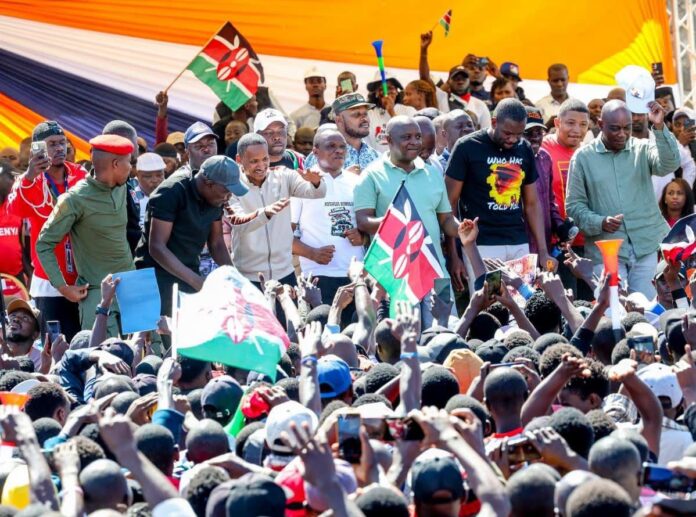
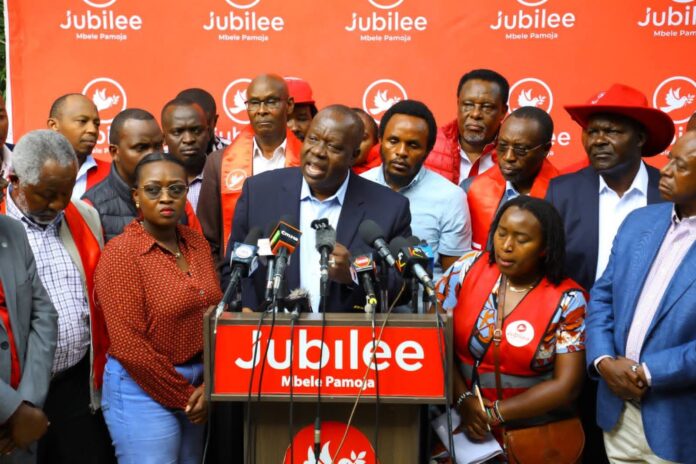
Jubilee Party presidential hopeful Fred Matiang’i hit out at the government and leaders in Kenya Kwanza over the attacks mounted upon Retired President Uhuru Kenyatta.
Speaking during a press conference on Monday, May 4, Matiang’i questioned why the government was rattled by just one phone call made by Uhuru to Jubilee supporters.
He stated that the Fourth President was within his Constitutional right to address Jubilee members in Narok, given his position as a party leader, and dared the government to go after him.
“The retired president made one phone call, and the government screams the whole weekend. The kind of pettiness and primitivity we have seen this weekend in addressing the retired president is shocking.
“Our party leader is going nowhere, and he will continue to express himself. In fact, you can go ahead and do what you please,” Matiang’i reiterated.
The Jubilee Deputy Party Leader lashed out at the elected leaders allied to the Kenya Kwanza administration for verbally insulting Uhuru.
He urged them to embrace dignified differencing and respect the former Head of State.
“In Kenya, some people whose worldview is essentially a village view are now insulting Uhuru Kenyatta. For those elected leaders who are speaking like they are speaking, please, grow up!” Matinag’i barked.
The former Interior Cabinet Secretary termed the UDA party and the government as a sinking ship, making reference to the haemorrhage of leaders from the party over the weekend.
He argued that those in government should be worried about Murang’a Governor Irungu Kang’ata’s decision to leave the party in 2027.
“Who can tell you more about an institution than those who were inside and are now leaving it?” he posed.
Matiang’i invited all Kenyans to see the insults from the pro-government leaders as a huge red flag and a reason not to re-elect President William Ruto in 2027.
He further took a swipe at the President over his upcoming address to the Tanzanian parliament.
“I wish he were exporting good manners there, of respecting retired Presidents and constitutional. At least for once, I hope he will tell them the truth because he is not very famous for telling the truth,” he chided.
The statement by the Jubilee Party leadership came after Uhuru was hurled with insults for calling out the government over attempts to censure him over his political stand.
Kapseret MP Oscar Sudi accused him of being jealous of Ruto, while others threatened to withdraw his retirement benefits.
Nigeria is planning to repatriate its nationals in South Africa willing to return home voluntarily, amid growing fears that recent attacks on foreigners there could escalate.
Foreign Minister Bianca Odumegwu-Ojukwu said 130 applicants had already registered for the exercise, adding that the number was expected to rise.
She expressed President Bola Tinubu’s concern about the attacks in the southern African nation, and condemned the violence against foreign nationals and demonstrations characterised by “xenophobic rhetoric, hate speeches and incendiary anti-migrant statements”.
Nigeria has summoned South Africa’s acting High Commissioner over the issue.
Nigeria will formally convey its “profound concern” at a meeting later on Monday over the incidents in South Africa, saying they could affect existing relations between the countries, according to a foreign ministry statement.
The meeting will focus on recent marches held by anti-immigrant groups and “documented instances of mistreatment of Nigerian citizens and attacks on their businesses”, it said.
On Sunday, Nigeria’s foreign minister said: “Nigerian lives and businesses in South Africa must not continue to be put at risk, and we remain committed to working to explore with South Africa ways to put an end to this.”
She cited the killing of two Nigerians in separate incidents involving local security personnel, insisting that her government was demanding justice.
She said the Nigerian president’s priority was for the safety of citizens and “consequently, arrangements are currently under way to collate details of Nigerians in South Africa for voluntary repatriation flights for those seeking assistance to return home”.
Four Ethiopian nationals have also been killed in recent weeks, local media reported, while there have been attacks on citizens of other African countries.
Peter Odike, a Nigerian naturalised in 2006, told the BBC there was fear among immigrants in South Africa: ”Business is totally down. Most of us are shutting down because it’s not safe to stay here,” he said.
As Africa’s most industrialised country, people from elsewhere in the continent have long travelled to South Africa to seek work.
South African President Cyril Ramaphosa has condemned the attacks but also cautioned foreigners to respect local laws.
He used his Freedom Day address last week – marking the country’s first democratic elections in 1994 – to remind South Africans of the support other African nations had given in the struggle against the racist system of apartheid.
But some South Africans accuse foreigners of being in the county illegally, taking jobs from locals and having links to crime, especially drugs trafficking.
Anti-immigrant groups have been stopping people outside hospitals and schools demanding to see their identity papers.
At the time, one Nigerian man told BBC Pidgin: “It is not okay because we are blacks, we are brothers… everybody comes here just to survive.”
A security guard, who was unable to go to work because of the protest, told the BBC: “It’s not what we expected as fellow Africans.”
“It’s just making us scared – imagine if we’re scared in our own African continent – what if we go to Europe?” he asked.
Last month, Ghana summoned South Africa’s top envoy after a video was widely shared showing a Ghanaian man being challenged to prove he had the correct immigration papers.
Anti-immigrant sentiment rose earlier this year after reports that the head of the Nigerian community in the port city of KuGompo (formerly East London) had been installed in a traditional role that can be translated as “king”. Some South Africans in the local area saw this as an attempt to grab political power.
South Africa is home to about 2.4 million migrants, just less than 4% of the population, according to official figures. However, many more are thought to be in the country unofficially.
Most come from neighbouring countries such as Lesotho, Zimbabwe and Mozambique, which have a history of providing migrant labour to their wealthy neighbour. A smaller number come from Nigeria.
On a quiet Wednesday last month, a Kenyan politician stopped for coffee after getting his hair cut in the western city of Kisumu.
Moments later, a group of hooded youths set upon Senator Godfrey Osotsi without warning – punching and kicking him, leaving him badly injured, stripping him of his phones and valuables before vanishing into the street.
The assault was captured on CCTV. Within hours, the footage was everywhere.
The police are still investigating but the senator said this was not a robbery. Rather, he alleged, it was politically motivated as he was asked by the attackers why he was not supporting the president’s re-election bid.
The nationwide outcry that followed the assault forced Kenya’s parliament to summon the country’s top security chiefs.
For many Kenyans, the attack felt less like a shocking outlier and more like a confirmation of something they had long feared – that the country was sliding, once again, toward an era of deadly political violence.
Kenya’s history of politically sponsored criminal gangs dates back to the early 1990s and the reintroduction of multiparty democracy. Unemployed youths have been hired by various politicians and turned into tools of electoral intimidation.
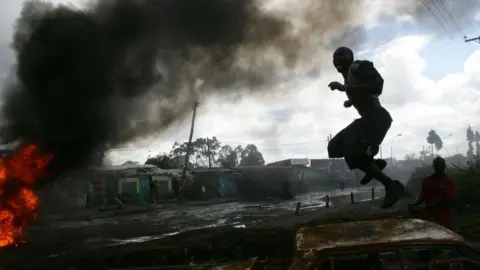
They were a major driver of the unrest surrounding the shocking nationwide violence that followed the 2007 election, which left about 1,500 people dead.
And the stage is now being set for a particularly tense electoral cycle even though the next nationwide vote is up to 15 months away.
Embittered by his impeachment, Rigathi Gachagua is aiming to unseat the president in next year’s poll
Bearing a huge grudge over his 2024 impeachment and removal from government, former Deputy President Rigathi Gachagua is planning to run for the presidency. In addition, there is an open split within one of the main parties.
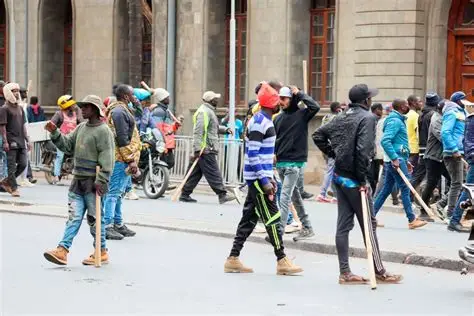
This is all helping to raise the political temperature with attacks on politicians by hired youths – known locally as goons – becoming more brazen.
Interior Minister Kipchumba Murkomen acknowledged to a parliamentary committee that the government was struggling to contain the groups that he said had evolved from street-level outfits into “sophisticated and decentralised networks”.
Murkomen, who appeared alongside Kenya’s security chiefs, disclosed that more than 104 local criminal gangs were active in the country, many under the patronage of politicians
“The gangs are owned by political leaders who play a significant role in mobilising people. It is chaotic. An irresponsible leader is a threat to national security,” he said, without naming any names.
At least 300 suspects have been arrested, as the authorities intensified a crackdown against the criminal groups, with police recovering weapons and communication devices during the raids. However, no politicians were among those held.
Successive governments have attempted to ban such groups, yet the problem has persisted with gangs mutating, rebranding and reappearing under new names each electoral cycle.
They have developed into sophisticated organisations with a clear structure, a security source told the BBC.
The former deputy president appears to have been a target.
Traumatic memories of the deadly violence that followed the 2007 election remain
For months, opposition leaders and civil society groups have accused police of either colluding with, or turning a blind eye to, organised gangs that descend on rallies armed with crude weapons.
In many cases, they say, the violence unfolds in the presence of police.
The death of veteran politician Raila Odinga last October has also triggered a sharp political realignment in Kenya, with his ODM opposition party splitting into two hostile camps divided over whether or not to support President William Ruto.
A 28-year-old man was shot dead when police clashed with supporters of the anti-Ruto faction at a rally in February, prompting the group to condemn what it described as “state-sponsored acts of violence by police and hired goons”.
Government spokesperson Isaac Mwaura firmly denied reports that some of the criminal groups were state-sponsored.
“The use of criminal gangs to intimidate or silence individuals undermine our democracy and will not be tolerated. Anyone found financing, supporting, or engaging in such acts will be held fully accountable under the law,” he told the BBC.
It is not just opposition figures and events that are targeted.
In February, a senatorial aspirant aligned to the governing Kenya Kwanza alliance was attacked after a group of people stormed a church service in the western town of Kakamega and forcibly ejected her from the building.
Last November, by-elections in western and central Kenya were marred by widespread violence, with polling agents attacked, armed groups clashing during vote counting and police firing tear gas at voters.
“These incidents paint a troubling picture of a country where political rivalry increasingly spills into organised street violence executed by hired gangs operating with precision and impunity,” said Robert Chege, a security analyst.
Each attack, taken alone, might be explained away. But together, they sketch a country edging towards an abyss it has fallen into before and barely survived, observers warn.
“The worrying problem in Kenya is that this is now a near norm carried out by all major political parties. It is, to wit, a Kenyan culture, an epidemic,” wrote Prof Makau Mutua, a legal expert and adviser to Ruto.
A report last year from the state-funded National Crime Research Centre found hundreds of criminal gangs in operation, with more than 120 linked to politicians. These were no longer temporary formations but had become entrenched institutions within their communities, the report said.
Inspector General of Police Douglas Kanja told parliamentarians that the police were taking the matter seriously, adding that security agencies had already identified those behind the chaos.
“This issue of goons and guns is going to stop soon. We have clearly investigated. We have seen where they come from, who funds, who does what, who is the grassroots organiser and so forth,” Kanja added.
The interior minister addressed concerns regarding accusations of police inaction against gangs. He acknowledged problems in some instances, blaming “operational challenges”, including corruption and information leaks, noting that the ministry was taking all allegations of police complicity or inaction seriously.
Critics, however, argue that the government’s response has been inconsistent – strong in rhetoric but weak in execution.
Chege described Kenya’s security crisis as self-inflicted and sustained by political patronage networks and state systems “that thrive on violence and inequality”.
“The question is no longer who the goons are, but who sends them, funds them and protects them? The real architects of Kenya’s rising wave of organised violence remain in the shadows,” he added.
Ordinary Kenyans will hope that authorities can provide some of the answers before the violence has a chance to ratchet up ahead of general elections which have to take place by August next year.
Real Madrid beat Espanyol to ensure Barcelona must wait for the La Liga title – which they could seal in El Clasico next Sunday.
Barca need only a draw at the Nou Camp against their old rivals to be crowned champions.
Vinicius Jr scored two second-half goals against Espanyol at RCDE Stadium, netting the opener following a one-two with Goncalo Garcia, and another from Jude Bellingham’s backheeled returned pass.
Vinicius had earlier hit a post with a deflected strike.
Omar El Hilali was shown a red card for fouling Vinicius, but it was overturned by the video assistant referee (VAR).
Will history be made in El Clasico?
In the 97 years of La Liga the title has never been won in El Clasico.
Real’s victory over Espanyol means they avoid the dilemma of whether they would give Barca a guard of honour as champions before the game.
Barca are 11 points above Real and could break the record for the biggest title-winning margin in history, which stands at 15 points from their 2012-13 triumph.
If they win their final four games they will finish with a record-equalling 100 points – achieved by Real in 2011-12 and Barca in 2012-13.
It would also give them the record for La Liga wins – 33. They have drawn only once.
Real are facing only their second season without a trophy since 2009-10, having also failed to win anything in 2020-21.
Manchester United forward Matheus Cunha feels interim boss Michael Carrick has the “magic” that can reconnect the club to its trophy-laden Sir Alex Ferguson era.
Cunha scored the opening goal at Old Trafford that set United on their way to the 3-2 win over Liverpool that ensured Champions League qualification with three games to spare.
It is an achievement few felt United were capable of, even though football director Jason Wilcox said a return to Europe’s elite club competition was the aim in the wake of Ruben Amorim’s dismissal in January.
Carrick has engineered 10 victories in his 14 games in charge, putting him in pole position to be appointed on a full-time basis.
The 44-year-old was part of the final great United side under Ferguson, winning five Premier League titles and a Champions League.
Cunha feels the connection is crucial.
“I sat on the bench with him,” said Cunha.
“How he teaches everyone is amazing. He has the magic with these Ferguson times. Then he comes and brings it to us, teaches us how it was, to be part of everything. Then he did this.
“It’s amazing. He’s a pleasure. Of course, I think he deserves it.”
Carrick has already made it clear his squad cannot relax just because they have achieved their mission.
They still require four points to be certain of securing a top-three finish for only the fifth time since Ferguson retired in 2013. They could also finish fewer than 12 points behind the eventual champions, which is the closest they have got post-Ferguson, under Ole Gunnar Solskjaer in 2020-21.
“It’s one of the biggest privileges I have to play at this club,” said Cunha.
“The Champions League without this club is not the same competition, and this club without Champions League is not same club.
“But it is not only the Champions League. We need to fight for the titles. This is the first one [step]. We could come much stronger for next season.”
It will be a summer of change at Old Trafford, not least because Cunha’s Brazilian international team-mate Casemiro is leaving. Or is he?
Casemiro has said he is and Carrick reinforced the point when he spoke to the media on Friday.
But Cunha knows the 34-year-old well. He is not so sure.
“It’s so easy to talk about him,” he said. “I know how important he is.
“He’s an amazing guy. There is a strong part of him outside the pitch. He’s so lovely and so friendly. He teaches me.
“We don’t know in the end how it is with his contract. Of course, everyone hopes there’s a little bit more. I know it’s harder than we talked about, but, in the end, you never know.”
Cunha has made the impact United hoped when they paid Wolves £62.5m last summer, when he was a priority target.
With such a huge personality, it was unlikely joining a club of that size would be too much for the 26-year-old.
His goal against Liverpool was his ninth of the season, including some key ones for Carrick, specifically the winners at Arsenal and Chelsea.
It has given Cunha time to show off his familiar surfing celebration, which reached a new level against Liverpool, when he raced away, pursued by team-mates, dived on the ground and then got up to ‘surf’.
“I’ve improved my celebration a little bit,” he said.
“Every time, my friends in Brazil every time say, ‘you cannot only surf, you have to paddle and stand up on the surfboard’. I said OK, I’ll try to improve.
“It’s part of my life; to bring this into football and show everyone how happy I am to play football and surf. I have to do it.”
Image caption,Matheus Cunha did his surfing celebration after scoring the opener against Liverpool at Old Trafford