Sponsored Ad

Ad 1
Ad 2
Ad 3
Ad 4
Ad 5
Ad 6
24 C
Kenya
Friday, May 8, 2026
Home Blog Page 303

Kenya removed from the Non-Compliance Watchlist by World Anti-Doping Agency (WADA)

Kenya has been removed from the Non-Compliance Watchlist by the World Anti-Doping Agency (WADA) after a positive review, reflecting the country’s strong commitment to clean sport, transparency, and accountability.

This is a testament to the efforts of our athletes, institutions, and stakeholders in safeguarding the integrity of sport.

The National Olympic Committee of Kenya (NOC-K) continues to prioritize fair competition and zero tolerance to doping.

As we prepare for the 2026 Commonwealth Games in Glasgow, the 2026 Summer Youth Olympics in Dakar, and the 2028 Summer Olympics in Los Angeles, Kenya is ready to shine on the global stage with clean sport and fair play.

By Anthony Solly

Spain’s government denies cooperating with US operations in Mideast, contradicting White House

(AP) — A diplomatic tussle between the United States and Spain over the war in Iran intensified on Wednesday when the governments exchanged contradictory statements over the possible use of Spanish military bases by American armed forces for operations in the Middle East.

Moments after a White House spokesperson said the Spanish government in Madrid had agreed to help the U.S., Spanish Foreign Minister José Manuel Albares came out and flatly denied that the European government had changed its position.

“I can refute (the White House spokesperson),” Albares told Spanish radio station Cadena Ser. “The position of the Spanish government regarding the war in the Middle East, the bombing of Iran and the use of our bases has not changed one iota.”

Spain's Foreign Minister Jose Manuel Albares Bueno speaks with the media as he arrives for a meeting of EU foreign ministers at the European Council building in Brussels, Monday, Feb. 23, 2026. (AP Photo/Virginia Mayo)
Spain’s Foreign Minister Jose Manuel Albares Bueno speaks with the media as he arrives for a meeting of EU foreign ministers at the European Council building in Brussels, Monday, Feb. 23, 2026. (AP Photo/Virginia Mayo)

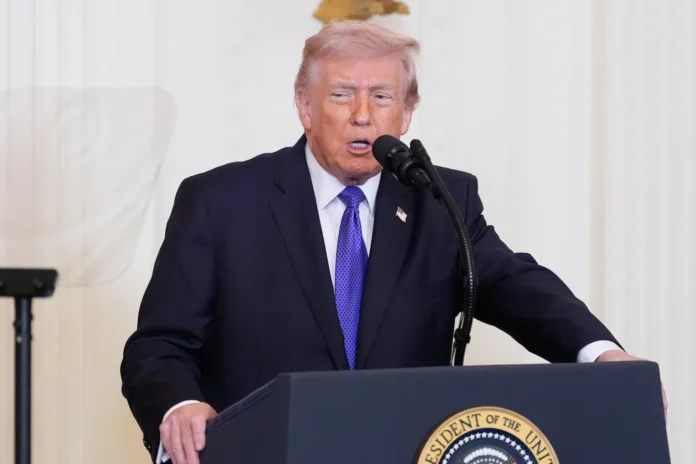
The disagreement broke out on Tuesday when Trump said that he was going to “ cut off all trade with Spain,” a day after Albares said that his government wouldn’t allow the U.S. to use jointly operated bases in southern Spain in any strikes not covered by the U.N. charter. Spanish Prime Minister Pedro Sánchez said that his government wouldn’t “be complicit in something that is bad for the world.”

Albares denied that his government had reconsidered its posture on the use of the bases on Wednesday evening in Madrid shortly after White House press secretary Karoline Leavitt had said “with respect to Spain, I think they heard the president’s message yesterday loud and clear.

“And it’s my understanding over the past several hours, they’ve agreed to cooperate with the U.S. military,” Leavitt had said. “And so I know that the U.S. military is coordinating with their counterparts in Spain.”

Spanish criticism of military action in Iran

Sánchez, widely regarded as Europe’s last major progressive leader, has called the U.S. and Israeli attacks on Iran an “unjustifiable” and “dangerous” military intervention.

0:00 / 55

AP AUDIO: Spain’s Sánchez says ‘no to the war’ in Iran despite Trump’s trade threat

AP correspondent Charles de Ledesma reports Spain’s prime minister has defended his government’s stance against the Iran war led by the US and Israel.

Spain's Prime Minister Pedro Sanchez speaks during a panel discussion at the Munich Security Conference in Munich, Germany, Saturday, Feb. 14, 2026. (AP Photo/Michael Probst)
Spain’s Prime Minister Pedro Sanchez speaks during a panel discussion at the Munich Security Conference in Munich, Germany, Saturday, Feb. 14, 2026. (AP Photo/Michael Probst)

Sánchez again criticized the U.S. and Israel’s military actions in Iran early on Wednesday when he made a nationally televised address. While not mentioning Trump by name, Sánchez stood firm against trade threats from Washington and warning that the war in the Middle East risked “playing Russian roulette” with millions of lives.

“We are not going to be complicit in something that is bad for the world and is also contrary to our values and interests, just out of fear of reprisals from someone,” Sánchez said.

Sánchez expressed concern that the attacks on Iran could lead to another costly military quagmire in the Middle East, similar to the past American interventions in Iraq and Afghanistan.

“In short, the position of the government of Spain can be summarized in four words,” Sánchez said. “No to the war.”

After Spain denied U.S. use of its bases, Trump on Tuesday said “we could use their base if we want,” referencing the Rota and Morón installations in southern Spain that the U.S. and Spain share, but which remain under Spanish command.

“We could just fly in and use it,” Trump said. “Nobody’s going to tell us not to use it, but we don’t have to.”

U.S. chastises Spain

It wasn’t clear how Trump would have cut off trade with Spain, which is a member of the European Union. The EU negotiates trade on behalf of all its 27 member states.

When asked in an interview with CNBC whether a trade embargo with Spain would be possible, U.S. Treasury Secretary Scott Bessent said that Wednesday “it would be a combination effort.” He didn’t explain further, but said Spain’s refusal to allow the U.S. to use its bases in the weekend attack on Iran endangered American lives.

“Anything that slows down our ability to engage and prosecute this war in the fastest, most effective manner puts American lives at risk,” Bessent said. “The Spanish put American lives at risk.”

The EU said that it would protect its interests and work to stabilize its trade relationship with the U.S, with which it struck a trade deal last year after months of economic uncertainty over Trump’s tariff blitz.

Trade threats

Tuesday’s threats from Washington were just the latest instance of the U.S. president wielding the threat of tariffs or trade embargoes as punishment. Last month, the U.S. Supreme Court struck down Trump’s far-reaching global tariffs, saying emergency powers don’t allow the president to unilaterally impose sweeping tariffs.

However, Trump maintains that the court allows him to instead impose full-scale embargoes on other nations of his choosing.

Spain’s main business groups expressed concerns over the trade threat, calling the U.S. a “key partner from an economic and political standpoint.”

“We trust that our trade relations will ultimately not be affected in any way,” the Spanish business chambers CEOE, CEPYME and ATA said Tuesday.

Last year, Spain’s central bank issued a report that concluded Europe’s fourth-largest economy was relatively cushioned compared with the EU average when it came to exposure to tariffs by Trump.

Spain’s exports and imports with the U.S. accounted for 4.4% of gross domestic product, the Bank of Spain said, while trade with the U.S. for the EU as a whole was 10.1%.

Exports of Spanish goods to the U.S. accounted for 1% of Spain’s GDP, or 16 billion euros ($18.6 billion), the bank said, making it Spain’s sixth largest export market for goods. Pharmaceutical products, olive oil, refined gas and electrical transformers are among Spain’s main exports to the U.S., according to the Observatory of Economic Complexity.

Spain’s position on the Iran conflict is the latest flare-up in its relationship with the Trump administration.

Sánchez was an outspoken critic of the Israel-Hamas war in Gaza and attracted Trump’s ire last year when Spain backed out of NATO’s pledge to increase defense spending by members to 5% of GDP.

Fight over Trump’s Iran war powers comes after a long stretch of Congress yielding to presidents

Multiple times during Donald Trump’s second presidency, Congress has debated his military authority, first in Latin America and now the Middle East.

The latest test will come in the GOP-controlled House on Thursday after the Senate voted down a Democratic measure to limit Trump, at least theoretically, in the U.S.-Israeli war against Iran.

Like many predecessors, Trump claims broad, even unlimited power over U.S. forces. He approved boat strikes near Venezuela, established a naval blockade and authorized a military operation to arrest and depose its leader, Nicolás Maduro — all arguable acts of war under international law. He made noise about additional action in Greenland and Latin America, before launching a sweeping bombing campaign in Iran.

Under the Constitution, the military reports to the president. But the document grants oversight roles to Congress. Trump says he won’t sign anything limiting his options — proof for some experts that control over a civilian-led military has skewed from its original design.

“The Constitution gives war powers to two different branches of government,” said military historian Peter Mansoor, an Ohio State University professor and retired U.S. Army colonel. “The pendulum has swung towards the executive,” he lamented, arguing that “the framers meant for Congress to be the most powerful branch.”

Here is a look at what the Constitution says and how U.S. war powers have played out.

What the constitution says about war powers

Article I, which established Congress, states that lawmakers “shall have power … to declare war.” Article II, which established the presidency, makes the chief executive the “commander in chief of the Army and Navy.” The Constitution also gives Congress authority over military budgets.

Congress has not declared an official state of war since World War II. Yet since 1945, U.S. service members have fought and died in full-scale conflicts in Korea, Vietnam, Iraq and Afghanistan, among other places.

In the Maduro mission, an Army pilot was injured, leading Trump to award him the Medal of Honor — recognition legally restricted to actions taken when fighting a foreign enemy. As of Wednesday, six U.S. service members had died in the Iran war.

During Senate debate last month on Venezuela, Sen. Rand Paul, R-Ky., mocked an “elaborate song and dance” and said it’s “an absurdity” to argue that Trump’s actions were anything other than waging war.

Sen. Tim Kaine, the Virginia Democrat who sponsored Venezuela and Iran war powers resolutions, said the latest version — which failed 47-53 — would prevent a presidential “end-run around the Constitution.”

Declarations of war: 11 — but none since World War II

Congress has declared war against 11 nations across across five wars. Three declarations came in the 19th century, two during World War I and six during World War II. Each time, the president formally asked Congress to act, citing some specific attack on the U.S. or another national interest.

President James K. Polk asked even for the Mexican War, which was principally about expanding U.S. territory.

Over the same span, Congress voted many times to authorize force without declaring war. Early measures were usually for specific naval actions defending U.S. commercial interests. Congress first took this route in 1798; it became a roadmap for the post-World War II era.

The Korean War marked a turn toward presidential power

President Harry Truman won World War II under declarations issued while Franklin Roosevelt was president. Then, in 1950, the fledgling United Nations voted to act in Korea and asked member nations to assist.

Citing the U.N., Truman engaged U.S. troops in a so-called “police action” without seeking lawmakers’ approval. Congress later that year approved the Defense Production Act to mobilize U.S. war capacity. It was an after-the-fact endorsement of Truman’s decision, and the law remains a potential Pentagon tool.

Vietnam showed the span of congressional and presidential power

Presidents from Dwight Eisenhower to Gerald Ford presided over what history remembers as the “Vietnam War,” though it was often called “the Vietnam conflict” as U.S. administrations expanded southeast Asia operations.

Lyndon Johnson persuaded Congress to pass the Gulf of Tonkin Resolution in 1964 and used that to accelerate U.S. involvement.

As U.S. deaths rose, the war grew unpopular, but Johnson — and then Richard Nixon — had broad authority from lawmakers. “Congress approves and supports the determination of the President, as Commander-in-Chief, to repel any armed attack against the forces of the United States and to prevent further aggression,” the 1964 resolution stated.

Congress repealed that measure in 1971, but Nixon did not withdraw.

Mansoor said war declarations don’t just define the start of a war. They also effectively require an official end — which triggers the Senate’s role in ratifying peace treaties. Sidestepping those legal bookends, Mansoor said, is “how you get in these forever wars.”

Congress answers with the War Powers Act

In 1973, as the U.S. limped toward its Vietnam exit, Congress passed the War Powers Resolution, intending to impose guardrails on presidents by requiring certain communication with lawmakers and allowing Congress to hold votes setting parameters for military action. That was the legislative trigger this year for failed Venezuela resolutions and the Iran resolutions.

In 2020, a Democratic-controlled House narrowly adopted a measure intended to curtail Trump’s powers against Iran at that point. But in practice the War Powers Resolution has not served as a functional check on executive power.

After Vietnam, presidents assert role as commander in chief

Ronald Reagan sent troops to Lebanon in 1982 as part of a multinational peacekeeping force. He did not cite the War Powers Resolution when notifying Congress and did not agree to congressional authorization until 1983 — after service members already had died.

In 1990, George H.W. Bush notified Congress under the War Powers Resolution that he’d dispatched troops to the Middle East after Iraq invaded Kuwait. Bush asked Congress for “support” — as opposed to “authorization” — only after securing U.N. backing for action by an international coalition led by U.S. forces. Congress authorized force in January 1991.

Bill Clinton deployed U.S. troops multiple times — to Somalia, Haiti, Rwanda, Bosnia and Herzegovina, Kosovo and Iraq. He asked Congress for appropriations but not explicit authorizations. When some lawmakers pressed Clinton to seek approval for strikes in Iraq in 1998, Clinton asserted his interpretation of presidential authority — not unlike Trump’s arguments.

Bush calls 9/11 an act of war — but never seeks a declaration

George W. Bush quickly mobilized the military after terrorist attacks on Sept. 11, 2001. He consulted quickly with Congress, resulting in a joint resolution authorizing sweeping action. It was unique because no specific country was targeted and it initially focused on al-Qaida. Congress nearly unanimously supported the measure but asked for reports every 60 days.

Mansoor, the military historian, noted that Bush used the vote to conduct antiterrorism efforts anywhere in the world. Bush returned to Congress in 2002, telling leaders he wanted authorization for action against Iraq.

What Congress passed for Bush had no effective end date. His successor, Barack Obama, inherited troops in Iraq and did not initially withdraw them. Afghanistan carried on through Obama’s two terms and Trump’s first presidency and into Joe Biden’s term.

Biden withdrew U.S. troops from Afghanistan after it had become the longest U.S. war — never declared — in the nation’s history.

Sri Lanka recovers 87 bodies from Iranian warship sunk off its coast by a US submarine

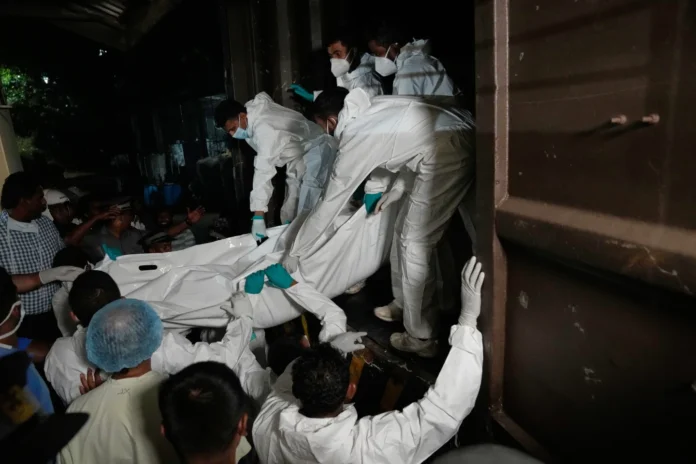
(AP) — A torpedo fired by a U.S. submarine sank an Iranian warship off the coast of Sri Lanka, whose navy said Wednesday it recovered 87 bodies and rescued 32 people.

The Iranian vessel sunk in the Indian Ocean was the Islamic Republic’s “prize ship,” U.S. Defense Secretary Pete Hegseth said. It was one of the few instances of a submarine sinking a ship since World War II.

The sinking of the IRIS Dena illustrates a U.S.-Israeli military operation against Iran that is stretching beyond its borders. U.S. President Donald Trump has said one of the key objectives of the war is to wipe out Iran’s navy.

“An American submarine sunk an Iranian warship that thought it was safe in international waters,” Hegseth said at a Pentagon news briefing. “Instead, it was sunk by a torpedo.”

After Sri Lanka’s navy received a distress signal from the IRIS Dena, which had 180 people on board, it sent ships and planes on a rescue mission, the country’s foreign minister, Vijitha Herath, told Parliament.

But by the time Sri Lanka’s navy reached the location, there was no sign of the ship, “only some oil patches and life rafts,” navy spokesman Commander Buddhika Sampath said. “We found people floating on the water.”

A video released by the U.S. Department of Defense on X showed the moment of the torpedo attack. The Iranian ship appears to be hit by an underwater explosion that causes it to break apart, as a large plume of water rises up in the air.

The 32 people rescued were admitted to a hospital in Galle, a town on Sri Lanka’s southern coast, Sampath said. The bodies recovered were also being brought to land, he said.

At the National Hospital in Galle, Iranian sailors’ bodies were arriving in trucks and being stored in a makeshift mortuary. The hospital was guarded by Sri Lankan police and naval personnel, as workers unloaded bodies away from view.

Dr. Anil Jasinghe, a top health ministry official, said one of those rescued is in critical condition, seven are receiving emergency treatment and others are being treated for minor injuries.

The IRIS Dena — one of Iran’s newest warships — patrolled in deep water, and was armed with heavy guns, surface-to-air missiles, anti-ship missiles and torpedoes. It carried one helicopter.

The ship had been sanctioned by the U.S. Treasury Department in February 2023, along with eight executives of an Iranian drone manufacturer that supplied weapons to Russia for use against civilian targets in Ukraine.

At least 17 Iranian naval vessels have been sunk during the ongoing war, said U.S. Adm. Brad Cooper, who leads the American military’s Central Command.

North Korea’s Kim visits naval destroyer, oversees missile test

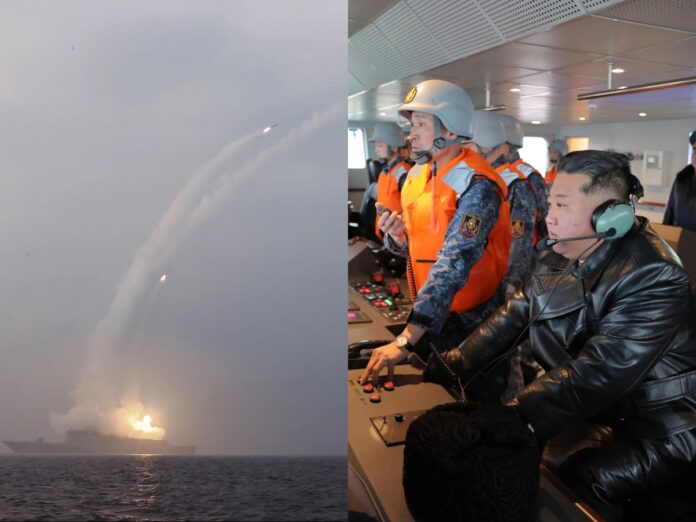
(Reuters) – North Korean leader Kim Jong Un said the ‌navy would have a “powerful offensive capability” as he visited a 5,000-ton destroyer and oversaw a missile test, state media KCNA reported on Thursday.

Kim has ​pledged to keep modernising the Navy’s fleet to ​boost the country’s maritime power in the Pacific ⁠Ocean, citing what he called provocations by the U.S. ​and its allies.

“Every year during the new five-year plan period, ​we must build two surface warships of this class or of a higher class,” Kim said at the Nampho Shipyard, referring to the new ​national strategy decided at the ninth Congress.

He also oversaw the test-firing of ​a “strategic cruise missile” launched from the vessel, KCNA said.

During a two-day trip on ‌Tuesday ⁠and Wednesday, Kim visited the Choe Hyon, the first warship of a series of 5,000-tonne ‘Choe Hyon-class’ destroyers North Korea is constructing, KCNA said.

Kim also discussed a third warship ​of the same ​class, which ⁠is being planned at the shipyard, KCNA added.

The second warship of the Choe Hyon-class ​destroyers suffered a failed initial launch in May 2025, ​causing ⁠Kim’s ire and leading to the detainment of officials involved. The warship was repaired and launched again in June, ⁠according ​to KCNA.

Kim said he was satisfied ​with the progress of the nuclear armament of his Navy.

KeNHA Board Chairman and Director Inspects the ongoing works from Jomo Kenyatta International Airport (JKIA) to James Gichuru Road

The Kenya National Highways Authority (KeNHA) Board Chairman Winfrida Ngumi and Director General Eng. Luka Kimeli conducted a comprehensive inspection of the ongoing capacity enhancement and beautification works along the corridor from Jomo Kenyatta International Airport (JKIA) to James Gichuru Road.

The inspection focused on evaluating the progress of construction activities, including pedestrian walkways, drainage improvements, landscaping, and street lighting.

During the visit, the Board Chairman and Director General engaged with contractors and project managers on-site to review project timelines, quality assurance measures, and adherence to approved technical specifications.

This corridor improvement project is part of KeNHA’s broader initiative to upgrade major transport routes in Nairobi, aimed at supporting economic growth, improving the movement of goods and people, and enhancing urban mobility.

Upon completion, the upgraded route is expected to reduce travel time, increase safety, and significantly enhance the overall commuter experience.

The inspection concluded with a strong commitment to maintain strict quality control, ensure timely project completion, and conduct continuous monitoring to guarantee that all works fully align with the planned objectives and standards.

By Anthony Solly

David Ndii, Kiprono Kittony Among Newly Named Kenya Airways Board Members

Kenya Airways (KQ) has announced the appointment of four new members to its Board of Directors, including President William Ruto’s economic adviser, economist David Ndii.

In a notice dated Thursday, March 5, 2026, the national carrier said the appointments were made in line with the Capital Markets (Securities) (Public Offers, Listing and Disclosures) Regulations, 2023, issued under the Capital Markets Act.

“The Board of Directors of Kenya Airways Plc (“KQ”) hereby announces the appointment of the following as new Board members of the Company,” read the notice.

Ndii, who joins the board as a Non-Executive Director, currently serves as chairperson of the President’s Council of Economic Advisors under President William Ruto.

Other newly appointed board members are Kiprono Kittony, Chris Diaz and Winnie Iminza Nyamute.

Kittony will serve as Chairman and Independent Non-Executive Director. He is a prominent Kenyan businessman and currently the chairman of the Nairobi Securities Exchange.

He has previously led the Kenya National Chamber of Commerce and Industry and has been involved in several major organizations including Radio Africa Group and Creditinfo CRB Kenya. Kittony was awarded the Elder of the Order of the Burning Spear (EBS) by former President Uhuru Kenyatta in 2019.

Diaz joins the board as an Independent Non-Executive Director. He is a seasoned business leader with more than three decades of experience in strategy, board leadership and business solutions. Diaz currently serves as chairman of Adili Group and director at Bidco Africa. He has also played key roles in Kenya’s aviation sector through previous engagements with Kenya Airports Authority and Kenya Airways.

Also appointed as an Independent Non-Executive Director is Prof. Nyamute, an associate professor at the University of Nairobi.

A respected scholar in finance and accounting, she has over 30 years of experience in academia and corporate governance. Nyamute has previously served on boards including the Nairobi Securities Exchange, Sameer Africa Plc and Family Bank Limited.

Kenya Airways welcomed the new board members and expressed confidence in their leadership and expertise as they take up their roles at the national carrier.

“The Board, Management and Staff of Kenya Airways congratulate Mr. Kiprono Kittony, Mr. Chris Diaz, Prof. Winnie Iminza Nyamute and Dr. David Ndii on their appointment and wish them success in their new roles,” the airline said in the notice.

An economist with over 30 years of experience, Ndii previously served as Chief Economist at Equity Bank and as an economist at the World Bank. He is also a co-founder of the Institute of Economic Affairs and Africa Economics.

Ndii holds advanced degrees from the University of Oxford and the University of Nairobi and is a Rhodes Scholar and Eisenhower Fellow.

He has played key roles in Kenya’s economic policy, including leading the Economic Recovery Strategy during the NARC administration and contributing to the country’s constitutional review process. He has also served as an advisor to the President of Rwanda and consulted for international financial institutions.

Revealed: How to transfer learners to another school through KNEC CBA portal

The Kenya National Examination Council (KNEC) has provided step-by-step guidelines on how to initiate and accept transfer requests for learners on the Competency-Based Assessment (CPA) portal.

In a notice published on Thursday, March 5, KNEC explained that learner transfer can only be initiated by the Head of Institution (HoI) to which the learner has transferred.

After the request is initiated, it must be confirmed by the HoI of the institution from which the learner originates.

The transfer process is entirely online through the portal and is available for both KPSEA and KJSEA pupils.

KNEC’s clarification came amid questions by parents who experienced challenges when attempting to make the transfers.

A snippet of the CBA portal learner transfer guidelines issued by KNEC on March 5, 2026.

“I have wrongfully deregistered a learner from the CBA portal, and I did not note the assessment number. How can you assist?” One parent posed.

“I’m not getting the verification code for login on the CBA portal. What’s wrong?” A second parent questioned.

How to Make a ‘Learner Transfer’ Request

1. Log in as the Head of Institution that the learner is transferring to.

2. Select the learner’s grade.

3. In the ‘Learner Transfer Section’ beneath the ‘Assessment Number’ label, click the textbox for the Assessment Number.

4. Enter the assessment number of the transferring learner and click on the ‘Search’ button.

5. The learner’s details will be displayed in the search result window, and the ‘Submit Transfer’ button will have a deep green background.

6. Click the ‘Submit Transfer’ button to complete the request process.

7. When successful, the number of ‘Pending’ transfers in the ‘Learner Transfer’ statistics section is increased by one. The name of the learner’s previous school and HoI number will also be displayed.

How to Accept a ‘Learner Transfer’ Request

1. Log in as the Head of Institution that the learner is transferring from.

2. Select the learner’s guide

3. Select the ‘Transfer’ menu.

4. Click the ‘Pending’ button under the Learner Transfer Management. A table with all the learner transfer requests from your school will be shown.

5. This table will give you the controls to accept the transfer request under ‘Action’ and complete the learner transfer process.

Senator Karungo Thang’wa Raises Alarm as Over 500 Youth Apply for Single Photographer Job

Kiambu Senator Karungo Thang’wa has raised concerns over the scale of youth unemployment in Kenya after revealing that hundreds of young people applied for a single job opportunity in his office.

In a statement on Thursday, March 5, he disclosed that his office had advertised for one photographer and video editor position, attracting an overwhelming number of applicants.

“January 25, 2026, my office posted an advertisement seeking a photographer and video editor, a single position. The advert was intentionally candid about the nature of the role: the successful candidate would be required to document public interest activities, including in environments that can be volatile and unpredictable.The application deadline has since lapsed,” the statement read.

Thang’wa noted that the response to the advert revealed the high demand for employment opportunities among young people.

“We have since received a total of 576 applications, 533 from male applicants and 43 from female applicants for a single vacancy. Let me repeat that for emphasis. Nearly 600 qualified young Kenyans applied for a single job opportunity. These numbers are not just remarkable; they are a strong signal of the scale of youth unemployment in the country,” the statement added.

Thang’wa said the situation should serve as a warning to the government about the urgency of addressing joblessness among the youth.

“Nearly 600 qualified young Kenyans are competing for one job.This is a situation to address, not a statistic to brag about. The National Government initiative, Nyota Program, though a donor-funded initiative, was created to combat youth unemployment,” the statement continued.

Thang’wa questioned whether the NYOTA program was achieving its intended goals, and whether the government should be claiming success.

“However, one must wonder where the impact of this program is when a single entry-level creative position draws this amount of desperation. When 600 young people are battling for a single opportunity, how can the government claim success?” the statement further read.

File image of Karungo Thang’wa

Thang’wa called on the national government to urgently review policies aimed at tackling youth unemployment.

“I demand that the National Government reconsider youth employment policy immediately. The information in front of us is clear: the programs are failing the very generation for which they were intended. Kenya’s youth deserve meaningful opportunities,” the statement noted.

Thang’wa also thanked the hundreds of applicants who expressed interest in the position.

He noted that while only one candidate will be hired, the applications demonstrate the potential that exists among young professionals.

“To the 576 young people who applied, I want to express my sincere gratitude. Your courage, talent, and willingness to step forward have not gone unnoticed.

“While only one candidate will ultimately be recruited for this position, every application we received reflects the immense potential that exists within our young generation. I want to assure all applicants that your effort was not in vain. Your applications will remain part of a valuable talent pool, and my office will continue to explore opportunities to engage and support you wherever possible,” the statement concluded.

Governor Malombe calls for stronger coordination between county administrations

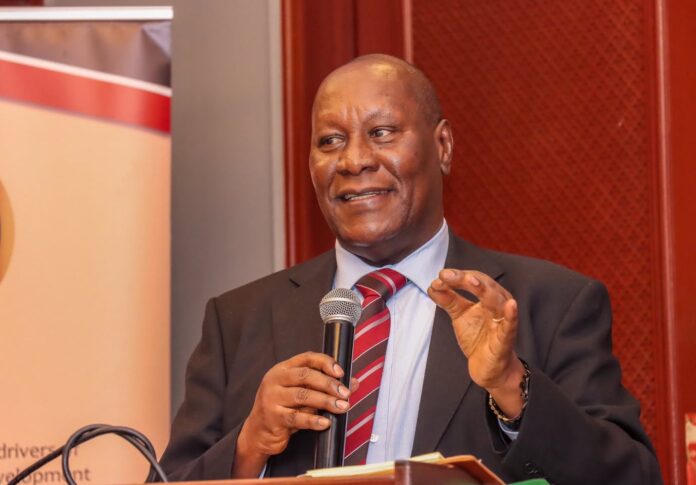
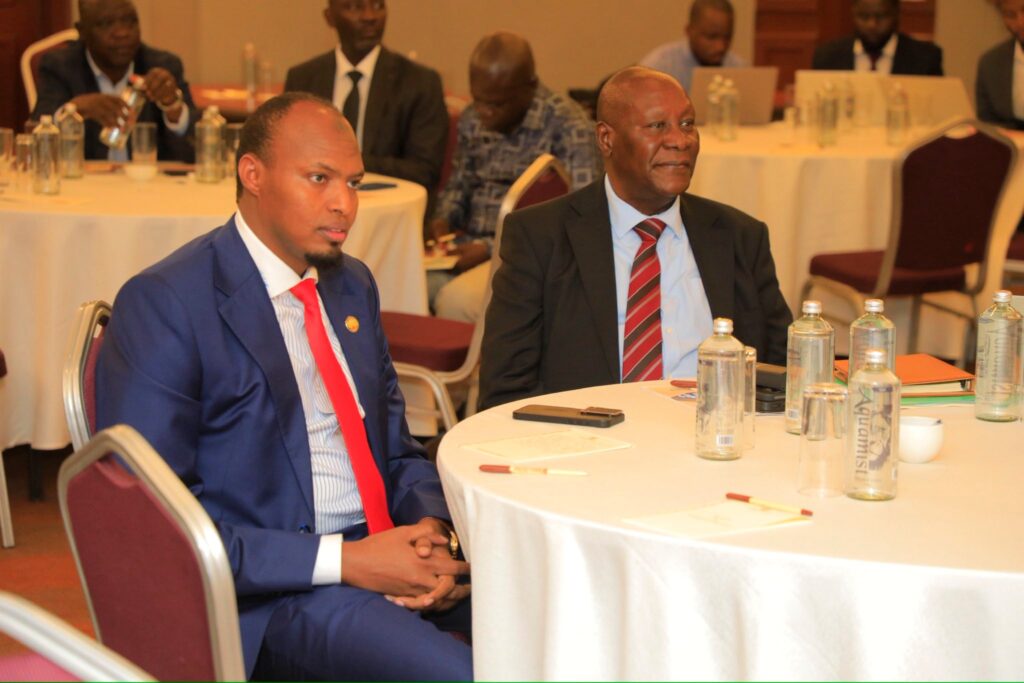
Kitui Governor Dr. Julius Malombe has called for stronger coordination between county administrations to enhance service delivery and safeguard the gains of devolution.

Speaking in Nairobi during a consultative meeting of the Council of Governors with all the County Secretaries, where he had been invited as the chief guest to deliver a keynote address, the Governor said county secretaries play a critical role in linking political leadership with the administrative systems of county governments and ensuring that executive decisions are effectively implemented.

“You are the links between the political leadership and the administrative systems of the county. You facilitate continuity in governance by putting into place systems that ensure institutional memory. Your success in the execution of the mandate of your office greatly contributes to effective service delivery by county governments.” He noted.

He recalled his experience as a member of the Task Force on Devolved Government, which developed the policies and legal framework that operationalized devolution, including the County Governments Act, the Public Finance Management Act, and the Intergovernmental Relations Act.

Governor Malombe noted that devolution has hugely transformed governance by decentralizing resources and key services closer to citizens. He highlighted progress made since 2013, particularly in healthcare, early childhood education and agricultural extension.

However, he acknowledged ongoing challenges such as delayed disbursements, fiscal constraints and capacity gaps in county administrations.

Governor Malombe urged county secretaries to uphold professionalism, maintain integrity in the public service, strengthen cooperation between national and county governments, and embrace digital systems and performance management to improve efficiency and service delivery.

Kitui Governor Dr. Julius Malombe has called for stronger coordination between county administrations to enhance service delivery and safeguard the gains of devolution.

Speaking in Nairobi during a consultative meeting of the Council of Governors with all the County Secretaries, where he had been invited as the chief guest to deliver a keynote address, the Governor said county secretaries play a critical role in linking political leadership with the administrative systems of county governments and ensuring that executive decisions are effectively implemented.

“You are the links between the political leadership and the administrative systems of the county. You facilitate continuity in governance by putting into place systems that ensure institutional memory. Your success in the execution of the mandate of your office greatly contributes to effective service delivery by county governments.” He noted.

He recalled his experience as a member of the Task Force on Devolved Government, which developed the policies and legal framework that operationalized devolution, including the County Governments Act, the Public Finance Management Act, and the Intergovernmental Relations Act.

Governor Malombe noted that devolution has hugely transformed governance by decentralizing resources and key services closer to citizens. He highlighted progress made since 2013, particularly in healthcare, early childhood education and agricultural extension.

However, he acknowledged ongoing challenges such as delayed disbursements, fiscal constraints and capacity gaps in county administrations.

Governor Malombe urged county secretaries to uphold professionalism, maintain integrity in the public service, strengthen cooperation between national and county governments, and embrace digital systems and performance management to improve efficiency and service delivery.

By Anthony Solly

Create a free account, or log in.

Gain access to read this content, plus limited free content.

Yes! I would like to receive new content and updates.

Sponsored Ad

Ad 1
Ad 2
Ad 3
Ad 4
Ad 5
Ad 6