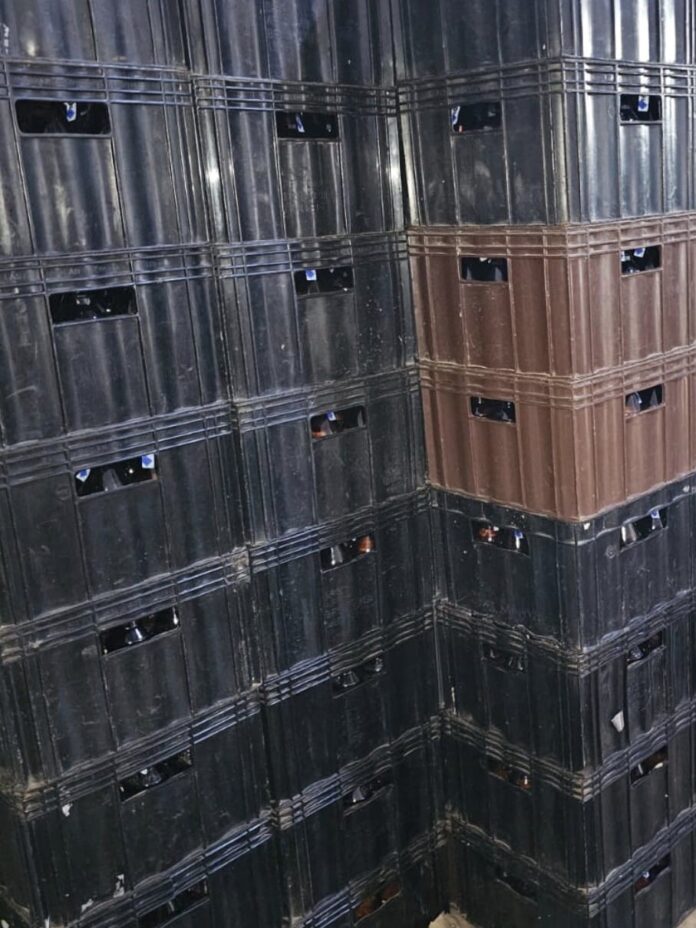
The National Authority for the Campaign Against Alcohol and Drug Abuse (NACADA) has intensified its crackdown on illicit alcohol trade in Kitui County, seizing counterfeit and suspected harmful alcoholic products worth an estimated KSh5 million during a multi-agency operation conducted on 3rd March 2026.
NACADA officials uncovered a series of violations that contravene the Alcoholic Drinks Control Act, including the sale of counterfeit alcohol, possession of fake Kenya Revenue Authority (KRA) documents, expired business licences, and operating premises located in close proximity to schools and places of worship.
The NACADA team, led by Deputy Director Cooperate Communications Simon Mwangi, confirmed that they recovered more than 900 cartons of alcoholic drinks bearing fake KRA stamps and over 250 crates of suspected harmful alcoholic beverages from one trader alone.“We have been conducting a multi-agency operation across Kitui County and successfully nabbed a distributor dealing in counterfeit alcohol within this area,” said Mwangi. “From one business person, we seized alcoholic products valued at approximately KSh5 million.”
Mwangi urged residents to cooperate with security agencies by reporting suspicious alcohol-related activities within their communities.“We request members of the public to remain alert and volunteer information regarding such illegal business activities for their own safety,” he said. “Consumers must also be vigilant about what they consume by verifying the authenticity and content of alcoholic products.”
NACADA issued a stern warning to individuals involved in the manufacture and distribution of illicit alcohol, stressing that penalties under the law are severe.“Those engaging in illegal alcohol trade must understand that once apprehended, they will face the consequences. We are committed to enforcing the law to the letter to protect the public,” Mwangi concluded.
The operation forms part of a broader national campaign aimed at curbing the proliferation of illicit and counterfeit alcohol across the country.
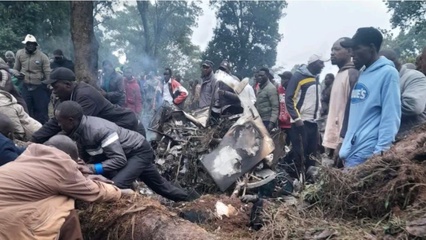
An autopsy on six bodies of the fatal Nandi plane crash has confirmed that the victims died as a result of multiple injuries to the chest and head.
The injuries were in the spinal, chases, and head among other body parts, during the fatal plane crash in Mosop, Nandi County.
This is accordng to government pathologist Dr. Johansen Oduor, who said the victims also suffered serious burns.
Among those perished in the crash were; Emurua Dikir MP Johana Ng’eno, Robert Kipkoech Keter, Amos Kimwetich Rotich, Nicholas Kosgei and Wycliffe Kiprotich Rono, as well as the pilot, retired Colonel George Were.
The autopsy exercise paved way for burial plans as investigations into the plane crash continue.
The horrific incident occurred on Saturday in Mosop, Nandi County, as the helicopter crashed and burst into flames on the edge of Chepkieb Forest, at about 4.45pm, moments after attempting to take off from a makeshift landing site near the forest.
Witnesses at the area speculated the accident was caused by poor visibility due to ongoing rains in the area.
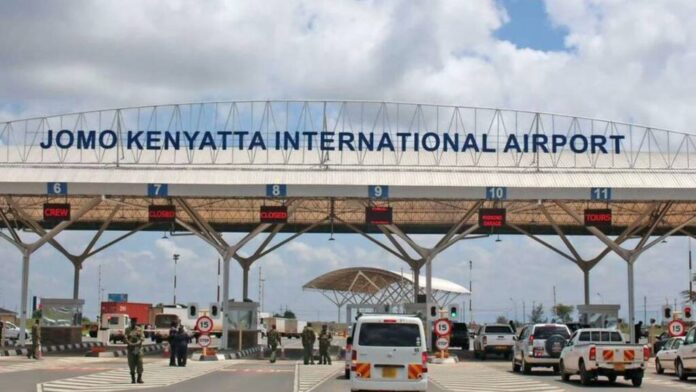
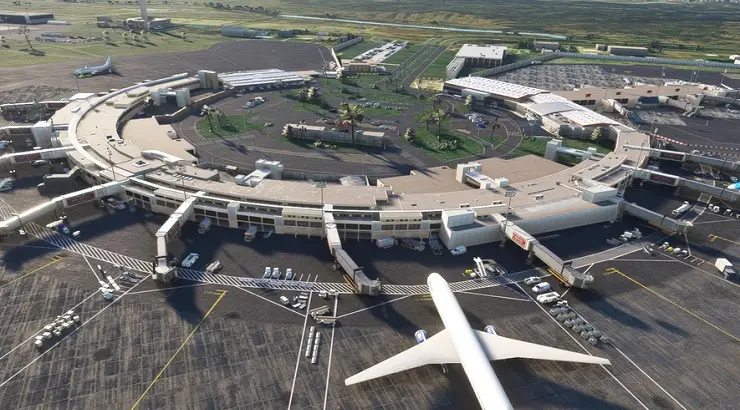
The government has officially unveiled a fresh plan to expand the Jomo Kenyatta International Airport (JKIA), months after cancelling a controversial multi-billion shilling deal with India’s Adani Group.
Roads and Transport Cabinet Secretary Davis Chirchir says the new facility will ease congestion and increase passenger and cargo capacity.
A new tender has been advertised, inviting investors to participate in the construction and upgrading of the JKIA.
The project includes the construction of a new passenger terminal and upgrading the existing facilities.
The master plan and feasibility study, which was completed last month, will see the expansion of runways, terminals, aircraft parking, and access roads to ease congestion.
“We are out competitively advertising for interested bidders to come in today. And when we close the bids there are PPDA rules on opening of bids, evaluation processes that will be in line with the law and so on and so forth,” said CS Chirchir.
“So, basically you cannot stop Kenyans from speculating and that is why I am here today as minister for roads and transport to assure Kenyans of the process that we have initiated, I’ve shown you the documents. We have been working on this master plan since February last year.”
The airport currently handles about nine million passengers, exceeding its original design capacity of 7.5 million. Incremental expansions over the years have created operational bottlenecks across airside, terminal, and landside systems.
Passenger numbers are expected to increase from 9 to over 22 million with cargo volumes expected to rise from 407,000 tonnes in 2025, to over 860,000 tonnes by 2045.
Without expansion, authorities warn that efficiency, safety, and the airport’s competitiveness could be compromised.
“We’ll really work around the clock to ensure we deliver the new airport within three years,” added Chirchir.
The new expansion, which comes months after collapse of a proposed deal with India’s Adani Group reportedly valued at more than Ksh.200 billion, will also include upgrades to the existing runway, construction of a partial parallel taxiway, and additional rapid exit taxiways to improve aircraft movement.
A new terminal is planned to handle an extra 10 million passengers annually, with provisions for future expansion.
“What we will be doing is that parallel to the new airport we will be working on an optimization upgrade of the current facility within 15 months, so that within 15months the current facility will be able to uptake upto 12 million customers,” stated the CS.
The project also envisions an Airport City and a Special Economic Zone around JKIA, creating an integrated hub for logistics, trade, manufacturing, and business services.
The tendering phase is now open, marking the start of one of the country’s most closely watched infrastructure projects.
The death toll from a missile strike on a girls’ school in southern Iran has risen to 165, according to state media.
The IRNA news agency also cited a local prosecutor as saying that 96 people had been wounded in Saturday’s strike in Minab.
The strike on school appears to be the worst mass casualty event of the US-Israeli-led bombing campaign on Iran so far.
Video and photographs of the aftermath, which have been verified as authentic and geolocated to the site, show hundreds of people gathered around the partially collapsed and smoking building, with rubble strewn across the street and men digging through it for victims. Screams can be heard in the background. In some of the images, schoolbags and textbooks are being pulled from the debris.
Capt Tim Hawkins, the spokesperson for US Central Command, said the US was “aware of reports concerning civilian harm resulting from ongoing military operations. We take these reports seriously and are looking into them”.
The school building appears to be adjacent to an Islamic Revolutionary Guards Corps barracks.
Hossein Kermanpour, the spokesperson for Iran’s health ministry, said in a post on X that the bombing of the school was “the most bitter news” of the conflict so far. “God knows how many more children’s bodies they will pull from under the rubble.”
Restrictions on international reporting in Iran mean the Guardian and other independent media outlets have not been able to access the site in Minab or independently verify the death toll.
The Nobel peace prize laureate and girls’ education advocate Malala Yousafzai said in a statement: “They were girls who went to school to learn, with hopes and dreams for their future. Today, their lives were brutally cut short.
“Justice and accountability must follow. All states and parties must uphold their obligations under international law to protect civilians and safeguard schools.”
Kenya Power has announced planned power interruptions across 10 counties on Wednesday, March 4.
In a notice on Tuesday, March 3, the company said the power supply will be interrupted in selected areas between 8.00 a.m. and 5.00 p.m., depending on the location.
The counties set to be affected are Nairobi, Kajiado, Nakuru, Bomet, Bungoma, Kakamega, Nyamira, Nyeri, Kiambu and Kilifi.
In Nairobi County, electricity will be interrupted in parts of Kibera Drive and Kabarnet Road from 9.00 a.m. to 5.00 p.m.
Areas to be affected include DC Kibera, Kichinjio, Kibera Lindi, Kibera Law Courts, Huduma Center, Makina Mosque, Kambi Muru, Kibera Mashimoni, Mashimoni Primary School, parts of Kisumu Ndogo, Sunday Studio, Kibera Gatwekera and adjacent customers.
In Kajiado County, the outage will affect parts of Rongai, Church Road and Matasia between 9.00 a.m. and 5.00 p.m.
Areas along Magadi Road, Total, Shell Laiser Hill Academy, Olerai School, Kware Market, Nairobi Women and Fatima, as well as surrounding customers, will be without power.
In Nakuru County, parts of Mogotio and Lake Bogoria will experience power interruption from 9.00 a.m. to 4.00 p.m.
The affected areas include Ravine Junction, Dale Flora, Kipsyenan, Mauade, Sarambei, Athinai Sisal Factory, Soin Hospital, Mogotio, Equator, Alphega Sisal Factory, Lomolo Sisal, Majani Mingi Sisal, Kipkitur, Mugurin, Emsos, Lake Bogoria Gate and adjacent customers.
In Bomet County, parts of Sotik and Gorgor will face power cuts from 8.00 a.m. to 4.00 p.m.
Areas affected include Gorgor Booster, Gelegele Secondary School, Kelonget Water, Kaplomboi Market, Kaplelach Market, Kamukunji Market, Kweleta Market, Kapchumbe Secondary School and Market, Kapsosurwa Secondary School and adjacent customers.
File image of a Kenya Power truck
In Bungoma County, the outage will affect Webuye and Kimilili from 9.00 a.m. to 5.00 p.m.
Areas such as Namawanga, Kambini, Wenyila, Kimilili, Kamtiong, Kapsokwony, Maeni, Kamasielo, Kibieto Namakhele, Cheromisand and surrounding customers will be impacted.
In Kakamega County, parts of Kakamega and Shikoti will experience electricity interruption between 9.00 a.m. and 5.00 p.m.
Affected areas include Shikoti Mission, Shikoti Market, Lower Ingotse Market, Maraba, Esumeiya, Lwanda Shop, Meteorological Site, Lurambi Primary School, Lukume Market, Shihome Secondary School, Shikutse Market and adjacent customers.
In Nyamira County, the outage will affect Birongo and Mongoni from 9.00 a.m. to 5.00 p.m.
Areas to be affected include Nyankoba Tea Factory, One Hen Project, Birongo Market, Nyasore Market, Mongoni, Amabuko, Geteni Dispensary and Secondary School, and adjacent customers.
In Nyeri County, parts of Ndima and Kianga will be without electricity from 8.00 a.m. to 5.00 p.m.
Others are Kianyange Village, Kiangai Coffee Factory, Kiangai Village, Thunguri Coffee Factory, Karerahungu Village, Bore Kero, Thunguri Village, Kianwe Market, Kianwe Village, Kariko Village, Kiambagathi, Kiahiti Village, Safaricom Boosters, Airtel Boosters and adjacent customers.
In Kiambu County, areas in Murera Sisal, Jujafarm and Athi will experience power interruption from 9.00 a.m. to 5.00 p.m.
The affected areas include Murera Sisal, Matangi-Ni, Hamundia, Theta, PCEA, Matangi, Magomano, Ndarasha, Ndururumo, Ruiriro, Pherie, Mathitima, Karia, Ngomatubu, Corner Brook, KPP Production, Space and Style, St. Dominic School, Mastores, Abba Salama, Chai Road, Kirathimo, and Tumaini.
Muhaka, Jujafarm Market, Jujafarm Polytechnic, Gikumari, Air Harries kwa Mzungu, Nyumba ya Wazee, Mungetho Juja Farm, Wamuini, Zone P, Mwireri, Mumba and adjacent customers will also be affected
In Kilifi County, two areas will be affected. In KBC Marekebuni and Garashi, power will be interrupted from 9.00 a.m. to 5.00 p.m., affecting KBC Marekebuni, Marafa, Garashi, Wakala, Pumwani, GIS and adjacent customers.
In Watamu and Gede, the outage will also run from 9.00 a.m. to 5.00 p.m., affecting Watamu Village, Casino Watamu, Fragola, Seven Island, Watamu Police, Timboni, Gede, Jimba, Dabaso, Blue Bay, Peponi, Watamu Mall, Natural Mente Pane, Snake Farm, Watamu Posta and adjacent customers.
The Kenya National Examinations Council (KNEC) has warned school heads against delaying the registration of candidates for the 2026 Kenya Junior School Education Assessment (KJSEA).
In a notice on Tuesday, March 3, the council announced that registration officially began on Monday, March 2, and urged heads of institutions to complete the process before the deadline.
KNEC cautioned principals not to wait until the final days to submit candidates’ details, calling for the need for early compliance.
“The registration of candidates for 2026 KJSEA started yesterday, 2nd March, two weeks after the start of registration for KPSEA and KCSE examination.
“As the Head of Institution or Principal, have you registered your candidates? Do not wait for the last-minute rush and register your candidates today,” the notice read.
KNEC directed schools to register candidates for both KPSEA and KJSEA through the Competency-Based Assessment (CBA) portal.
According to the notice, heads of institutions can access the portal via https://cba.knec.ac.ke/ and log in using the centre code as both the username and password.
They are required to confirm the data protection checkbox and then click on the “Sign In” button.
Upon logging in, the head of institution will be required to update their credentials, including name and mobile phone number.
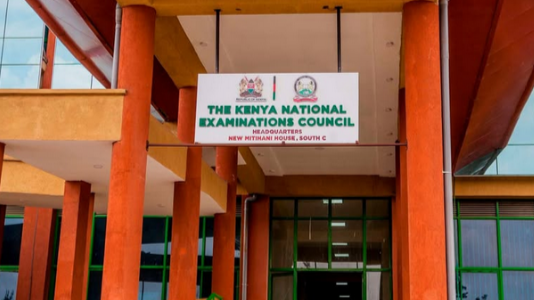
File image of KNEC offices
A one-time secret code will then be sent via SMS to the registered phone number for verification.
After entering and verifying the code, users will be redirected to the “Authorized Applications” dashboard, where they should click on “Registration & SBAs” to begin registering candidates.
KNEC outlined the timelines for registration, stating that KPSEA will run from February 16 to March 16, KJSEA from March 2 to March 31, and KCSE from February 16 to 31st March.
The Israeli Air Force struck a top Iranian meeting on Wednesday where Tehran’s senior clerics had gathered to select a replacement for slain supreme leader Ali Khamenei, according to multiple reports.
The Assembly of Experts, a body made up of 88 members, were allegedly together in the city of Qom when an airstrike hit their building overnight, the Times of Israel reported.
The strike came just as the mullahs were counting the votes to appoint the next supreme leader, according to Fox News.
Following the attack, Iran’s semi-official Mehr News Agency claimed that the building was an old structure that was no longer used by the assembly for its meetings.
It remains unclear how many members of the assembly, if any, were inside the building and casting a ballot when the building was hit.
Viral images from Qom allegedly show the building that housed the Iranian leaders, with the structure left in complete ruins following the blast.
The bombing ultimately left the building “flattened,” but no injuries or deaths have yet been reported as a result of the strike, The Jerusalem Post reported.
Iran’s leadership was plunged into chaos following Khamenei’s death on Saturday, with the country’s constitution tasking the Assembly of Experts to name a new successor.
While there is no strict deadline for a successor to be chosen, the Iranian constitution dictates that the assembly act in the shortest time possible.
The assembly said that choosing a successor for Khamenei “won’t take long,” according to Iran’s ISNA news agency.
The clerical body, however, could opt to delay naming a successor out of fears that he will be immediately targeted by the US and Israel, officials told Reuters.
The Assembly of Experts, itself, is made up of publicly elected clerics who have been vetted by Iran’s Guardian Council.
Until the assembly can hold an election, Iran will be run by a temporary three-man council composed of President Masoud Pezeshkian, Judiciary Chief Gholam-Hossein Mohseni-Ejei and Ayatollah Alireza Arafi, who serves as the Guardian Council’s representative.
Ali Larijani, secretary of Iran’s Supreme National Security Council, and Mohammad Baqer Qalibaf, the parliament speaker who has capped speeches off with chants of “Death to America, are believed to be among the favorites to succeed Khamenei.
The strike came just as the Israeli Air Force deployed around 100 fighter jets to drop more than 250 bombs on a “leadership complex” in Tehran, located north of Qom.
The attack targeted Tehran’s presidential bureau, the headquarters of Iran’s Supreme National Security Council, and compounds used by Iran’s leadership and military, according to the IDF.
“The leadership complex of the terror regime is one of the most secured assets in Iran and spans many streets in the heart of Tehran,” the IDF said in a statement.
“The leadership and security officials of the terror regime convened in the compound frequently, and from there conducted, among other things, situation assessments regarding the Iranian nuclear program and the advancement of the plan to destroy the State of Israel,” the Israeli military added.
Along with Khamenei, US officials estimate that at least 47 other Iranian leaders were killed during the first 48 hours of the war.
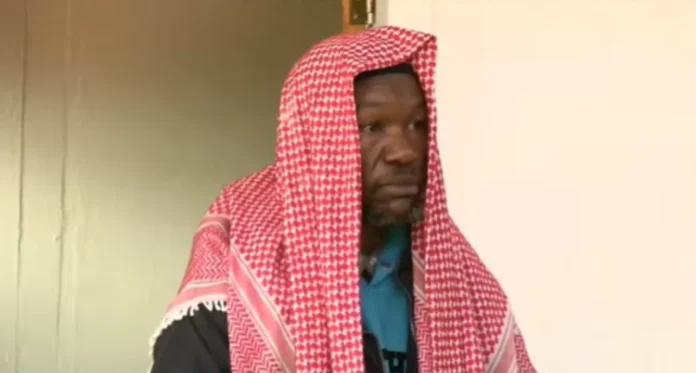
An Imam based in Othaya, Nyeri County, has pleaded guilty to multiple sexual offences involving minors.
Iddi Ali Koitat admitted before Othaya Principal Magistrate Sandra Ogot to seven counts of committing indecent acts with children aged between five and fourteen years.
The offences were committed at the Othaya Community Muslim Mosque between 2022 and November 2025.
The Cleric also pleaded guilty to one count of abuse of trust contrary to Section 24(4) of the Sexual Offences Act.
During proceedings at the Othaya Law Courts, the prosecution sought more time to present the facts of the case before sentencing.
Magistrate Ogot granted the request and ordered that the accused be remanded at Othaya Police Station until March 10, 2026, when the court will give further directions.
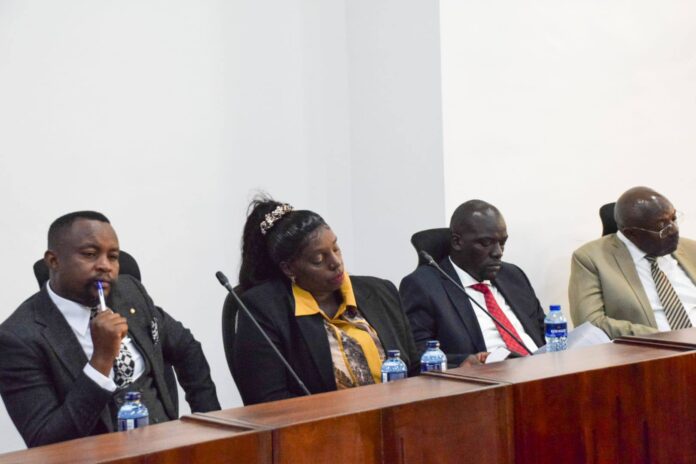
Meanwhile in Nakuru, six officers attached to the Kenya Wildlife Service have been placed on their defence over the disappearance of a fisherman inside Lake Nakuru National Park.
The ourt heard that Odhiambo went missing on January 18th, 2025, within Lake Nakuru National Park under circumstances that prompted investigations and the eventual charging of the officers.
In his brief ruling, Judge Kibellion stated that the evidence on record was sufficient to require the accused persons to answer to the charges. The six officers will now be required to defend themselves.
The matter will proceed to the defence hearing stage on dates to be set by the court.
The Orange Democratic Movement (ODM) party leader Dr. Oburu Oginga on Tuesday chaired his inaugural Parliamentary Group (PG) meeting since assuming office, ratifying key decisions made by the party’s National Executive Committee (NEC) and Central Committee.
Addressing the press outside Parliament after the meeting, National Assembly Minority Leader Junet Mohamed revealed that the PG endorsed the decision to hold a National Delegates Convention (NDC) on March 27, 2026. He noted that the party will issue a 21-day notice for the event on Friday, March 6.
The party also approved a move allowing Dr. Oburu to initiate negotiations with the United Democratic Alliance (UDA) in a bid to form a strategic alliance ahead of the 2027 General Election.
However, Junet issued a firm disclaimer, stating that ODM’s positions in Parliament remain non-negotiable.
“We want to tell the parties we are associating with that we are not negotiating on our positions in Parliament,” Junet stated.
He added that a broad-based Parliamentary Group meeting will be held at the Kenyatta International Convention Centre (KICC) next week Tuesday, March 10, where members will receive a report on the 10-point agenda.
Out of this, the PG meeting emphasised the need to prioritise compensation for protest victims and an increase in devolution funds.
During the session, party members also agreed to strengthen ODM ahead of any potential coalition arrangements.
This marks Dr. Oburu’s first PG meeting since his appointment as party leader following the death of his brother, Raila Odinga.
The meeting comes amid internal divisions within ODM, which have seen the party split along ideological lines.
One faction, the Linda Mwananchi movement led by Nairobi Senator Edwin Sifuna, supports the ‘one term’ narrative. The opposing Linda Ground faction, aligned with Oburu, backs a broad-based arrangement and is pushing for a coalition with the ruling party.
Attention now shifts to the upcoming NDC, which is expected to determine whether the Sifuna-led faction will participate and shape the party’s direction ahead of the 2027 elections.
The National Assembly’s Trade, Industry and Cooperatives Committee has considered a key legislative proposal that seeks to promote the use of locally manufactured goods and services.
At a meeting led by Committee Vice Chairperson Hon. Marianne Kitany (Aldai), members received a detailed briefing on the Local Content Bill, 2025. The Bill is sponsored by Hon. Jane Kagiri (Laikipia County).
Among its objectives, the Bill seeks to boost the growth of the manufacturing sector, promote agriculture and enhance job creation.
During the session, Hon. Kitany led members in appreciating the efforts by Hon. Kagiri in coming up with the Bill, noting that it is well intentioned. She observed that past administrations have launched campaigns to promote local products, including “Buy Kenya, Build Kenya,” but these efforts were not anchored in law.
“I am happy that this legislative proposal seeks to provide a framework to regulate locally produced goods and services,” she said, even as members raised reservations about some clauses of the Bill.
The proposed law requires foreign companies to source at least 60 per cent of their goods, services and supplies from local firms, provided they meet the required standards.
It also requires foreign companies operating in Kenya to source agricultural produce from Kenyan farmers and ensure that 80 per cent of their staff are Kenyan citizens.
Where gaps exist, companies would be required to support local firms through technical and capacity-building initiatives.
Individuals who contravene the proposed regulations face a fine of up to Sh100 million or imprisonment for a term of not less than one year.
Committee members noted that although the intention of the Bill is noble, some provisions may pose implementation challenges in the long run. They also expressed concern that the high penalties could discourage investors.
The Committee will next week meet the sponsor of the Bill before subjecting it to public participation. After the exercise, it will table its report in the House.