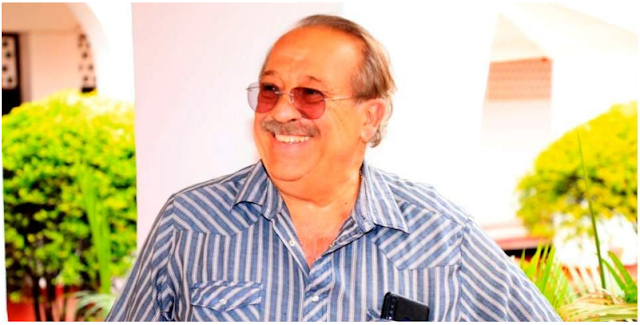
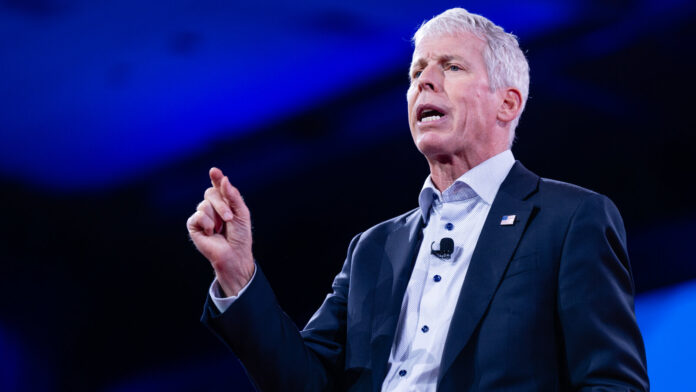
The High Court has ordered the government to compensate former Taita-Taveta Member of Parliament Basil Criticos with Ksh 30 million for infringing on his constitutional right to property.
In its judgment, the court held that Criticos’ rights under Article 40 of the Constitution of Kenya, 2010, which safeguards the right to property, had been violated through the actions and inaction of state officials.
The court awarded him Ksh 20 million in general damages for the constitutional breach and an additional Ksh 10 million as exemplary and aggravated damages against the respondents.
Criticos had moved to court claiming that between 1998 and 2000, thousands of squatters invaded his sisal estates and that state authorities failed to intervene despite repeated pleas.
He told the court that after he raised concerns about the invasions, he was dismissed from his position as Assistant Minister for Roads and Public Works.
According to his petition, the invasions led to the destruction of his sisal factory and the burning of approximately 4,400 acres of sisal between 1998 and 1999.
He stated that the destruction caused massive financial losses, forced about 1,600 employees out of work and left thousands of casual labourers without livelihoods.
He further claimed that the situation compelled him to flee the county.
Criticos also argued that in 1991 he had sold 23,400 acres of land to the Settlement Fund Trustees for the resettlement of squatters
However, he contended that the government failed to relocate the squatters to the designated land.
Instead, he alleged that various state agencies facilitated the continued occupation of his charged land by providing public utilities and infrastructure.
According to court documents, electricity was connected, roads were constructed, canals rehabilitated and water pipelines installed through Constituency Development Fund projects on the disputed land.
The court was further informed that previous court orders issued in 2005 and 2006 directing the removal of installations from the land were not enforced.
Criticos asserted that police officers failed to act even after being served with the court orders and lists identifying squatters occupying the property.
In its determination, the court found that the conduct of the respondents and their officers amounted to an infringement of Criticos’ property rights and disregard of lawful court directives, justifying an award of damages.
Criticos had sought Ksh.100 million in compensation, arguing that the government’s failure to protect his property prevented him from servicing his debts, which had ballooned due to accumulated interest.
He told the court that he had secured a Ksh.100 million loan, which was to be repaid using proceeds from the subdivision of his land and that he had to obtain a court order to compel the Land Control Board to approve the subdivision.
He also sought an order directing the Government Valuer to assess the value of Land Reference numbers 6731 and 6732, stating that he lacked the financial capacity to conduct a private valuation.
While the court declined to award the full amount sought, it emphasized that constitutional remedies are primarily meant to vindicate rights rather than punish the State.
The judge noted that the purpose of such awards is to affirm constitutional protections and deter future violations.
Importantly, the court observed that the respondents did not file any affidavits to challenge the claims made in the petition, nor did they provide written explanations to justify their actions.
The court held that the failure to rebut serious constitutional allegations effectively amounted to admission of the facts presented.
As a result, the court settled on an award of Ksh 20 million in general damages and Ksh10 million in exemplary and aggravated damages, bringing the total compensation to Ksh 30 million.
Rarieda MP Otiende Amollo has announced the death of the son of a Member of County Assembly following a hit-and-run accident in Machakos.
In a statement on Monday, March 2, the MP said the deceased, Blair Otieno Oguta, was the son of Justus Oguta, the MCA for West Uyoma in Siaya County, and reportedly died after the tragic incident on Sunday night.
Amollo expressed his sorrow over the untimely death and confirmed details surrounding the incident.
“I have learnt, with much sadness, the demise of young Blair Otieno Oguta, son to Justus Oguta, Member of County Assembly (MCA) West Uyoma, after a hit and run incident in Machakos last night,” he said.
Amollo also paid tribute to Blair, describing him as a bright young man, and conveyed his condolences to the grieving family and community.
“Blair was a promising university student. My condolences to Mr and Mrs Oguta, the entire family, West Uyoma community, and all who knew Blair. Rest in power,” he concluded.
Authorities had not released further details about the driver involved in the incident by the time of publication.
Blair’s death comes barely a month after Johnstone Muthama, a Parliamentary Service Commission (PSC) Commissioner, and his former spouse, Agnes Kavindu, lost their son, Moses Muthama.
The development was confirmed by Enoch Wambua, who conveyed his condolences to Senator Kavindu and her family.
“Our thoughts and prayers are with Machakos Senator, Hon. Agnes Kavindu Muthama and her family during this difficult time. I’m deeply sorry to hear about the loss of your son, Moses Muthama. Please receive our sincerest condolences,” Wambua stated.
According to a family statement, Moses suffered breathing difficulties and was rushed to hospital, where he was pronounced dead as doctors attempted to save his life.
The string of tragedies has also touched other political leaders. In June 2025, the Orange Democratic Movement announced the passing of Hillary Masara, son of Suna West MP Peter Masara.
“We commiserate with Hon. Peter Masara, MP for Suna West, for the loss of his beloved son Hillary,” the party said in a statement, offering prayers for strength during the grieving period.
Three months earlier, Dagoretti North MP Beatrice Elachi lost her son, Elvis Murakana Namenya. President William Ruto condoled with her family, citing Psalm 147:3 in a message of comfort.
“May God grant Beatrice Elachi and the family strength to bear with the loss of their dear son, Elvis Murakana,” Ruto said.
As leaders continue to express sympathy, Blair’s death has renewed calls for road safety and accountability in hit-and-run incidents, as families across the country grapple with similar tragedies.
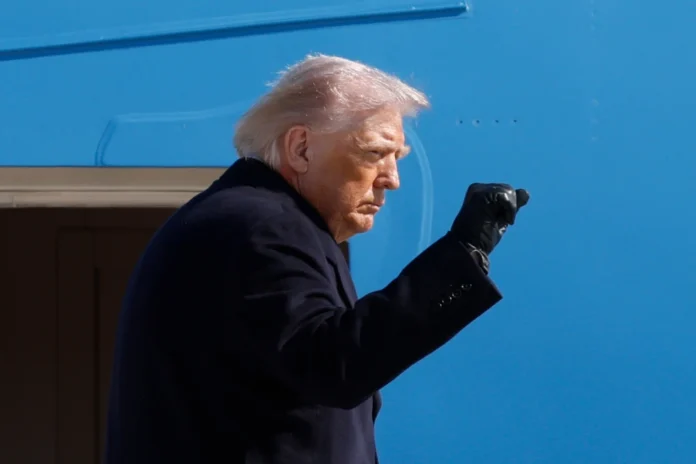
US President Donald Trump warned that his attack on Iran could run longer than a month, as Tehran retaliated to ongoing strikes by targeting US allies in the Gulf and drones hit the US embassy in Saudi Arabia on Tuesday.
Shortly after the United States urged Americans to flee all Middle Eastern nations from Egypt eastward, two drones hit the US embassy in Riyadh, sparking a quick vow by Trump to retaliate “soon”, without elaborating how.
New powerful explosions shook windows in Tehran throughout the night as fighter jets flew over the Iranian capital, AFP journalists witnessed, and the Pentagon said it had achieved air superiority over the country, ruled since 1979 by Islamic clerics virulently opposed to the United States.
Beyond launching missile and drone attacks that forced Qatar’s state-run energy firm to halt liquefied natural gas production, Tehran also vowed to choke one of the world’s most vital shipping lanes.
“We will burn any ship that tries to pass through the Strait of Hormuz,” Revolutionary Guards General Sardar Jabbari said of the strategic waterway to the Gulf through which about 20 percent of global seaborne oil travels.
Trump said that the war, which began Saturday with a strike that killed Iran’s supreme leader, Ayatollah Ali Khamenei, was going “substantially” ahead of schedule but that the United States was equipped for a prolonged conflict.
“From the beginning we projected four to five weeks, but we have capability to go far longer than that,” Trump said at the White House.
— ‘Won’t take years’ —
The US president laid out for the first time the operation’s objectives — destroying Iran’s missiles, navy and nuclear programme and stopping its support for armed groups across the region. The goals notably did not include toppling the Islamic republic, even though on Saturday Trump had urged the people of Iran to rise up and overthrow their government.
As Iran ramped up its retaliation, Saudi Arabia, home to one of the region’s largest oil refineries which has already been closed following an attack, said it intercepted eight more drones in two cities, including the capital, on Tuesday.
The Saudi defence ministry confirmed two drones attacked the US embassy, which said that caused “a limited fire and minor material damage”.
Speaking to the NewsNation network, Trump said “you’ll find out soon” how the United States would respond, without providing further detail.
The US mission in Riyadh asked its citizens in the capital as well as the cities of Jeddah and Dharan to shelter in place, while the US State Department ordered its “non-emergency” staff and their families to leave Bahrain, Jordan and Iraq.
Qatar, which had comparatively good relations with Iran before the war, said it shot down two Iranian bombers, the first time a Gulf Arab country has hit planes from their giant neighbour.
The Israeli military for the second day carried out strikes on Lebanon, with its military saying it was targeting Iran-backed Hezbollah after the militant group claimed rocket and drone attacks on Israel.
As the conflict spread, Israel’s Prime Minister Benjamin Netanyahu said its strikes with the United States on Iran would continue but not become “an endless war”.
“It may take some time, but it’s not going to take years,” he told Fox News in an interview broadcast Monday.
— ‘Imminent threat?’ —
Secretary of State Marco Rubio presented a strikingly new narrative of how the conflict started, saying on Monday that the United States, which built up its military to levels not seen since its 2003 Iraq invasion, attacked only after learning that ally Israel was set to strike Iran.
Iran had been ready to strike US forces in the region in response to Israel, so Trump decided to intervene “pre-emptively” alongside Israel, Rubio said.
“The imminent threat was that we knew that if Iran was attacked — and we believed they would be attacked — that they would immediately come after us,” Rubio told reporters before briefing lawmakers.
Rival Democrats voiced disbelief, with Senator Mark Warner saying it was “unchartered territory” for the United States to be triggered into action by Israel’s perception of a threat.
Iran’s foreign minister Seyed Abbas Araghchi responded that “there was never any so-called Iranian ‘threat’.”
“Mr. Rubio admitted what we all knew: U.S. has entered a war of choice on behalf of Israel’,” he posted on X.
Netanyahu alleged on the interview with Fox that Iran had been working on new weapons sites since a 12‑day conflict in June, when Israel and the United States also launched coordinated strikes on the Islamic republic.
In an earlier interview with the New York Post, Trump — who campaigned on promises to end US involvement in wars — refused to rule out deploying US ground troops to Iran “if they were necessary.”
– Death toll rises –
Israel’s military issued new evacuation orders for dozens of locations in Lebanon on Tuesday, following explosions rocking the capital the previous day as Israeli warplanes struck Beirut’s southern suburbs and the south of the country.
The Lebanese government said at least 52 people were killed in the strikes that came after Hezbollah, the armed Shiite movement affiliated with Iran, launched rockets and drones toward Israel in retaliation for Khamenei’s death.
In response, Lebanese Prime Minister Nawaf Salam took the unprecedented step of ordering an “immediate prohibition” of Hezbollah’s military activities and called on the group to hand over its weapons.
Throughout the region, the death toll has steadily increased with six US military personnel killed so far in the war, according to US Central Command.
Iranian media have reported hundreds of Iranian casualties, including at a girl’s school, although AFP reporters have not been able to verify tolls independently.
The US-based Human Rights Activists News Agency (HRANA) on Tuesday said there were 101 casualties inside Iran on the third day of the war, including “85 civilian deaths and 11 military personnel killed”.
Many residents in Tehran were torn between fear of the bombings and hope that the government’s days might now be numbered. AFP journalists witnessed some residents with suitcases in hand preparing to leave the unusually quiet capital on Monday.
“Every time we hear the noises, we get scared for just a second,” a 45-year-old lawyer said in a voice message to Europe, “but we experience some joy and excitement every time we hear a hit.”
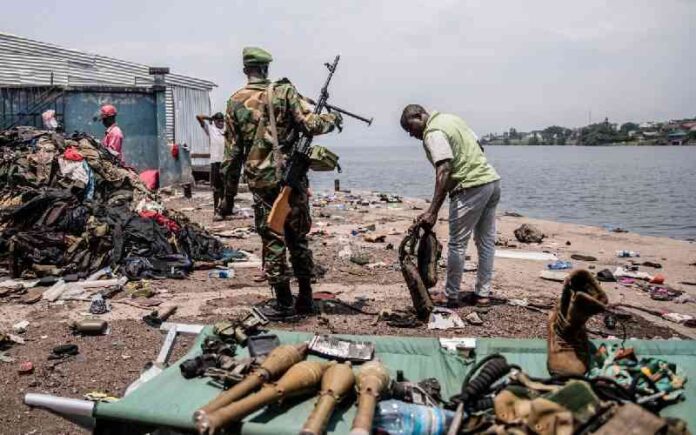
The United States said Monday that it was imposing sanctions on Rwanda’s military, taking action against a longtime partner it accused of violating a peace agreement in the Democratic Republic of Congo.
The mineral-rich east of DRC has seen decades of conflict, but violence flared last year when the Rwandan-backed M23 group made huge gains, capturing strategic mines and towns and displacing thousands of people.
US President Donald Trump in December brought together the leaders of Rwanda and the DRC to sign a peace deal, predicting a “great miracle”.
But just days afterwards, the State Department noted, the M23 captured the key Congolese city of Uvira.
The United States said it was imposing sanctions against the Rwanda Defence Force (RDF) and four officers including the army chief of staff, Vincent Nyakarundi, saying they were critical to M23 gains.
“M23, a US- and UN-sanctioned entity, is responsible for horrific human rights abuses, including summary executions and violence against civilians, including women and children,” State Department spokesman Tommy Pigott said in a statement.
“The continued backing from the RDF and its senior leadership has enabled M23 to capture DRC sovereign territory and continue these grave abuses,” he said.
Trump had earlier sounded positive about working with Rwandan President Paul Kagame, a veteran leader who has been willing to take in migrants deported from the United States, a top political goal for Trump.
The December peace deal had also been hailed by Trump as a way to secure critical minerals from the DRC.
The sanctions will block any assets that the RDF or the four officers hold in the United States and criminalize any financial transactions with them.
In a separate statement, Treasury Secretary Scott Bessent said the United States expected “the immediate withdrawal of Rwanda Defence Force troops, weapons, and equipment”.
“Thousands of RDF troops are deployed across eastern DRC, where they actively engage in combat operations and facilitate M23’s control of territory,” the statement added.
– ‘Misrepresent reality’ –
Rwanda said the US sanctions were “unjustly targeting only one party” and “misrepresent the reality and distort the facts of the conflict”.
It said “consistent and indiscriminate drone attacks and ground offensives constitute clear violations of ceasefire agreements by the DRC”.
The DRC government expressed its “deep appreciation” of the United States, calling the sanctions “a clear signal of support” for the respect of its “sovereignty and territorial integrity”.
Rwanda says it is only involved in the eastern DRC to help protect against an enemy militia formed from the remnants of those who committed the 1994 Rwandan genocide of the Tutsis, denying direct military involvement despite considerable evidence from United Nations observers and others.
In turn, it has demanded that the Kinshasa government clamp down on Hutu militants from the genocide, who targeted ethnic Tutsis and moderate Hutus.
Outmatched on the ground by the better-equipped M23 and Rwandan troops, Kinshasa’s forces have relied in part on US pressure on Kigali to stabilize the front line, regional specialists and security sources told AFP.
BBC -Foreign Secretary Yvette Cooper told the BBC there were an estimated 300,000 British citizens in Gulf countries, where much of the air space is closed.
She said many of those trapped were holidaymakers, passengers transiting through or people on business visits.
Foreign Office sources said no evacuation was imminent but the government was preparing for potential scenarios if commercial flights remained grounded.
British nationals in Bahrain, Israel, Kuwait, Palestine, Qatar and United Arab Emirates have been urged to register their presence to receive updates from the Foreign Office.
While speaking to MPs on Monday, Prime Minister Keir Starmer urged all British citizens in the region to register their presence so the government can provide “the best possible support”.
The government has previously used registration schemes to provide urgent updates to people affected by international crises but the number of people and countries affected in this case is unprecedented.
Cooper told BBC Breakfast the situation was “deeply stressful” for those affected.
She urged people to follow local advice, which in most countries was to shelter in place.
Asked if the government was planning to launch an evacuation, Cooper said: “We are in close contact, for example, with the travel industry, with airline companies and airports and also with the governments in the region.”
She added: “But we will need to provide updates for people as we go along… That’s why we’re encouraging people to register their presence so we know where they are so we can get information to them swiftly.”
Cooper said that in previous similar situations the government had wanted to work with airline companies so people could fly home in the normal way.
Sir Keir told MPs “the situation on the ground may remain challenging for some time” and the government was “looking at all options” to support British nationals in the region.
He added that the government was sending rapid deployment teams to the region to support Britons, as well as working with the travel industry and governments in the region.
Layla Hamood and Matthew McGinn, who are on their honeymoon with their three-year-old son, are among those stuck in Dubai.
The family have not left their hotel since the attacks started.
“It’s been terrifying to be honest,” Layla told BBC Breakfast. “The bombing hasn’t stopped. We can hear the missiles.”
She added: “No-one knows what to do. We’re in a limbo, we don’t know how we can get home.”
Layla and Matthew were on their honeymoon in Dubai when the crisis broke out
Nearly half of the flights scheduled to depart from London Heathrow to the region on Sunday were cancelled, according to analytics company Cirium.
British Airways and Virgin Atlantic are among the airlines which have cancelled or rerouted some flights.
Qatar Airways said on Monday morning that all its flights remained suspended.
Emirates said it would run a small number of flights from Dubai on Monday evening, as Dubai Airports confirmed it would allow a limited number of flights to operate from the city’s two airports.
A limited number of flights also left Abu Dhabi’s Zayed International Airport on Monday.
Iran has retaliated to US and Israeli strikes with attacks on US assets and countries in the region with a US military presence, including Bahrain, Qatar, the United Arab Emirates, Kuwait and Iraq.
No casualties were reported and the base sustained “minimal damage”, but the UK’s Ministry of Defence said family members would be moved to alternative accommodation as a precautionary measure.
BBC -A total of 102,000 Britons have registered their presence in the Middle East with the UK government, as Iranian strikes continue across the region.
Foreign Secretary Yvette Cooper told the media there were an estimated 300,000 British citizens in Gulf countries, where much of the air space is closed.
She said many of those trapped were holidaymakers, passengers transiting through or people on business visits.
Foreign Office sources said no evacuation was imminent but the government was preparing for potential scenarios if commercial flights remained grounded.
British nationals in Bahrain, Israel, Kuwait, Palestine, Qatar and United Arab Emirates have been urged to register their presence to receive updates from the Foreign Office.
While speaking to MPs on Monday, Prime Minister Keir Starmer urged all British citizens in the region to register their presence so the government can provide “the best possible support”.
The government has previously used registration schemes to provide urgent updates to people affected by international crises but the number of people and countries affected in this case is unprecedented.
Cooper told the media that the situation was “deeply stressful” for those affected.
She urged people to follow local advice, which in most countries was to shelter in place.
Asked if the government was planning to launch an evacuation, Cooper said: “We are in close contact, for example, with the travel industry, with airline companies and airports and also with the governments in the region.”
She added: “But we will need to provide updates for people as we go along… That’s why we’re encouraging people to register their presence so we know where they are so we can get information to them swiftly.”
Cooper said that in previous similar situations the government had wanted to work with airline companies so people could fly home in the normal way.
Sir Keir told MPs “the situation on the ground may remain challenging for some time” and the government was “looking at all options” to support British nationals in the region.
He added that the government was sending rapid deployment teams to the region to support Britons, as well as working with the travel industry and governments in the region.
Layla Hamood and Matthew McGinn, who are on their honeymoon with their three-year-old son, are among those stuck in Dubai.
The family have not left their hotel since the attacks started.
“It’s been terrifying to be honest,” Layla stated. “The bombing hasn’t stopped. We can hear the missiles.”
She added: “No-one knows what to do. We’re in a limbo, we don’t know how we can get home.”
Nearly half of the flights scheduled to depart from London Heathrow to the region on Sunday were cancelled, according to analytics company Cirium.
British Airways and Virgin Atlantic are among the airlines which have cancelled or rerouted some flights.
Qatar Airways said on Monday morning that all its flights remained suspended.
Emirates said it would run a small number of flights from Dubai on Monday evening, as Dubai Airports confirmed it would allow a limited number of flights to operate from the city’s two airports.
A limited number of flights also left Abu Dhabi’s Zayed International Airport on Monday.
Iran has retaliated to US and Israeli strikes with attacks on US assets and countries in the region with a US military presence, including Bahrain, Qatar, the United Arab Emirates, Kuwait and Iraq.
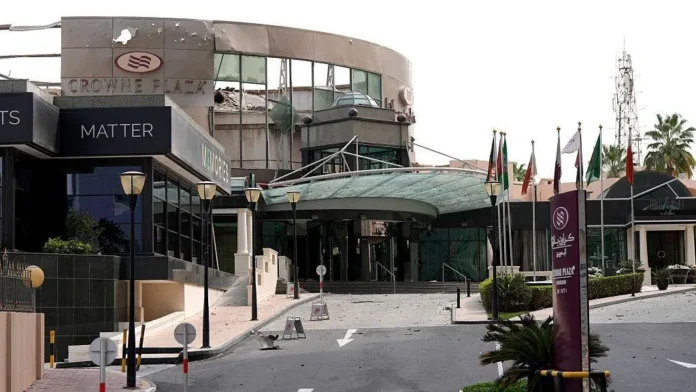
In Dubai, luxury hotels and the city’s main airport, the world’s busiest by passenger traffic, are among the sites which have been damaged.
One person has been killed and 11 others injured at airports in Dubai and Abu Dhabi since the strikes began.
Meanwhile, EasyJet has cancelled all its flights to and from Cyprus on Monday.
Paphos Airport, the second civilian airport on the island, was evacuated earlier after a drone was spotted in the airspace.
It comes after Cypriot President Nikos Christodoulides said an Iranian drone crashed into a British RAF base on the island on Sunday.
No casualties were reported and the base sustained “minimal damage”, but the UK’s Ministry of Defence said family members would be moved to alternative accommodation as a precautionary measure.
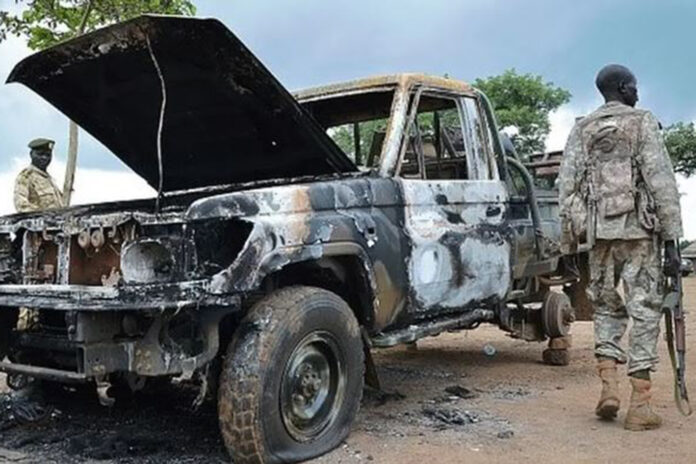
The authorities in South Sudan have said at least 169 people, including senior officials, were killed on Sunday when a group of unidentified men launched an assault on an area in the north of the country.
Describing the attack as carried out by dozens of armed youth, Ruweng Administrative Area’s Information Minister James Monyluak Mijok alleged that they came from neighbouring Unity state and were linked to the Sudan People’s Liberation Army in Opposition (SPLA-IO).
The SPLA-IO has denied any involvement in the attack, accusing the Unity state authorities of politicising the violence.
The UN has repeatedly warned that the country is at risk of sliding back into full-scale civil war.
”The dead include 90 children, women and elderly people, as well as 79 members of regional forces, including police,” Mijok said.
Fifty others were wounded and the majority of them had been taken to the neighbouring Abyei Administrative Area, where they were being treated, the official added.
Mijok told the media that the attackers entered Abiemnom county in Ruweng before dawn on Sunday, at around 04:30 local time (02:30 GMT), when people were still sleeping and “surprised them”.
He said the government forces on the ground “were outnumbered… The assailants set fire to homes and markets during fighting that lasted between three and four hours.” Several senior local officials were killed including the county commissioner and executive director.
Mijok said government forces had since driven the attackers out and that authorities were now in full control.
He also alleged that officials in Unity state “must have had knowledge” of the plan to target Ruweng. The Unity state authorities have not responded to this accusation. It is not clear what may have triggered the attack.
The United Nations Mission in South Sudan (Unmiss) said about 1,000 civilians began seeking protection near its base in the affected area. The mission said it was alarmed by the surge in violence in the region over the past 48 hours.
“Such violence places civilians at grave risk and must stop immediately,” said Anita Kiki Gbeho, officer in charge of Unmiss.
“The mission has enhanced its protective posture and is working with the government of South Sudan to support urgent efforts to restore calm and safeguard affected communities,” she added.
Peacekeepers are providing emergency medical care to at least 23 people wounded in the clashes. The mission has called on all parties to cease hostilities immediately and engage in dialogue.
Local reports and the AFP news agency say victims of the attack were buried in a mass grave on Sunday due to the high number of casualties and ongoing security concerns.
A similar incident in Abiemnom county last year left more than 42 civilians dead.
Following clashes in another part of the country – Jonglei sate – the medical charity MSF said 26 of its staff were missing after weeks of escalating violence between government and opposition forces.
The charity has now suspended medical services in two parts of the state – Lankien and Pieri.
The NGO added that its facility in Lankien was hit by a government air strike on 3 February.
“Many of our staff were forced to flee the violence alongside their families. Several are now displaced, sheltering in remote areas with little access to food, water or basic services,” the statement added.
South Sudan, the world’s youngest country, has been beset by civil war, poverty and corruption since it was formed in 2011.
The UN has warned that an “all-out civil war” could return as a power-sharing deal struck in 2018 between President Salva Kiir and his long-time rival, Riek Machar, has unravelled over the past year.
Peter Maingi Kimani, also known as Menelik Kimani, has been freed days after being arrested over a viral TikTok video in which he challenged President William Ruto and called for a battlefield confrontation.
The TikToker was arrested by the Directorate of Criminal Investigations (DCI) on February 26 from a hideout in the Gachage area of Kiganjo, Gatundu South Sub-County, where he had allegedly gone into hiding after posting the clip earlier this week.
He resurfaced on TikTok with a new account, confirming that he was released on February 27, but his mobile phone was confiscated by officers.
“Hey guys, it’s Menelik Kimani, I was arrested on Thursday and released on Friday. I am home and okay. The main problem is my phone is being withheld by the police but I have a new account, so kindly follow it,” he said in a video posted on Sunday.
Activist Mwabili Mwagodi had earlier taken to his social media, confirming that he visited Kimani at his parents’ home in Cura village, Kiganjo.
He however, questioned why the DCI confiscated his mobile phone without obtaining a court order.
“He was released on Friday at 4:00pm. We have gotten him an advocate and he is speaking with the advocate. The only time DCI is supposed to take your phone is when it is ordered by a magistrate or a judge,” he said.
His arrest was followed by public uproar as many questioned why security authorities would go after a TikToker for threatening the Head of State.
Others however argued that he breached legal provisions on the rights to expression, terming his threats as a justified offence.
Kenyan leaders have been cautioned against turning the tragic death of Emurua Dikirr MP Johana Ng’eno into a political contest.
Speaking to the press, Government Spokesperson Isaac Mwaura expressed concern over what he described as a growing trend of political leaders trading accusations and advancing unverified claims surrounding the legislator’s death.
Mwaura criticised attempts to exploit the tragedy for political gain, urging leaders to exercise restraint and allow the country to mourn with dignity.
“This is a moment for reflection, dignity, and solidarity with the bereaved family. It is therefore regrettable that some individuals seek to exploit this tragedy for political mileage through unsubstantiated allegations and divisive rhetoric,” Mwaura said.
“Leadership demands restraint, empathy, and respect for grieving families. This is a time to uphold decorum, allow space for mourning, and place national unity above partisan interests,” he added.
Reflecting on the late MP’s legacy, Mwaura described Ng’eno as a dedicated and honourable leader who served his constituents and the nation with commitment.
“He served with dedication and honour, and many of us had the privilege of working alongside him in Parliament and beyond,” Mwaura noted.
Similar sentiments were echoed by Buuri MP Rindikiri Mugambi, who warned that politicising a leader’s death goes against African values and cultural beliefs that emphasise respect for the departed and compassion for grieving families.
Mugambi urged politicians to be mindful of their words during this sensitive period, noting that Ng’eno’s family is still coming to terms with the loss.
“Leaders who are politicising Ng’eno’s death should stop because it is the family that is currently hurting, and we do not want to add to their pain,” Mugambi said.
Prime Cabinet Secretary Musalia Mudavadi has left for New Delhi, India, to attend the Raisina Dialogue on geopolitics and geoeconomics, where he is expected to outline Kenya’s foreign policy and economic priorities as the government pushes for expanded trade and investment partnerships.
In a press release dated Monday, March 2, 2026, the Office of the Prime Cabinet Secretary said Mudavadi — who is also the Cabinet Secretary for Foreign and Diaspora Affairs — will take part in the three-day conference from March 5 to 7, described as India’s premier forum on geopolitics and geoeconomics.
The government said Mudavadi will represent President William Ruto at a session on “Africa Rising: Pathways, Partnerships, and Priorities,” and will highlight Kenya’s economic diplomacy drive, including the signing of bilateral trade and investment agreements to expand markets across Africa, Asia and Europe.
“With the youth bulge on earth of about 70 per cent of the total population, vast mineral wealth, and the increasing number of tech-savvy young people, Africa remains the clearest source of long-term optimism — not just for Africans, but for global prosperity,” Mudavadi said, according to the statement.
While in New Delhi, Mudavadi is also set to attend the Kenya–India Joint Commission for Cooperation, with the government saying the talks will pursue a results-driven agenda aimed at delivering tangible outcomes for both countries
U.S. Secretary of Energy Chris Wright will return to Powering Africa Summit (PAS), taking place in Washington, D.C. on 19-20 March 2026, where he will take part in a fireside chat focused on energy access and clean cooking.
Having provided a keynote address and participated in a fireside chat at the 10th anniversary PAS 2025, Secretary Wright will again join policymakers and industry leaders at this year’s Summit to discuss US-Africa cooperation across energy infrastructure, critical minerals and investment strategies.
Building on last year’s focus, ‘The Future of the US & Africa Energy Partnership’, PAS 2026 will analyse how US foreign policy is transforming under the current administration, including through investment-led commercial diplomacy.
Within this year’s theme, ‘Powering the US-Africa Partnership: Energy Infrastructure, Critical Minerals & Investment Strategies’, a spotlight will be shone on progress since PAS 2025, and the role of reciprocal agreements in advancing critical minerals development and increasing trade between the US and Africa.
Some of the Summit’s key sessions will explore large scale infrastructure investment, guarantees and financing, and how gas strategies between the US and Africa are increasing energy security and bilateral trade, with several senior government leaders set to attend, including:
H.E. Honourable Dr. Eng. Habtamu Itefa Geleta, Minister of Water & Energy, Ethiopia
H.E. Honourable John Abdulai Jinapor, Minister for Energy & Green Transition, Ghana
Makhtar Diop, Managing Director of the International Finance Corporation (IFC), will be in attendance to provide welcome remarks at the summit, alongside Adam Cortese – CEO of renewable energy solutions specialist Sun Africa – who will provide the summit sponsor welcome address.
Cortese commented: “Sun Africa is proud to sponsor the Powering Africa Summit 2026 at this transformative time for US-Africa energy collaboration. Secretary Wright’s continued leadership and engagement underscore the growing commitment to practical, investment-driven solutions that expand energy access and unlock opportunities in critical minerals and infrastructure. We look forward to meaningful dialogue with ministers, policymakers, and industry partners to advance win-win initiatives grounded in pragmatism and profitability, ensuring sustainable success that will withstand the test of time.”
Senior representatives from other leading global organisations, agencies and institutions include:
John Jovanovic, Chairman, U.S. Export-Import Bank (EXIM)
Nicholas Checker, Senior Bureau Official, Bureau of African Affairs, U.S. Department of State
Thomas Hardy, Deputy Director & COO, U.S. Trade and Development Agency (USTDA)
Daniel Petrie, Acting Chief of Staff, Millennium Challenge Corporation (MCC)
Nancy Rivera, MD, U.S. International Development Finance Group (DFC)
Simon Gosling, Managing Director of EnergyNet, commented: “We’re delighted to be back for the 11th Powering Africa summit in Washington DC next month, and of course to be welcoming Energy Secretary Chris Wright back to the Summit to meet with stakeholders and to discuss the future of US/Africa relations. At last year’s Summit the Secretary talked about America’s [all of government approach] to partnering with African nations, and we’re pleased to have confirmed such a broad, high level representation from across State, Energy, Exim, DFC, MCC and Commerce to provide those necessary insights into the Trump Administration policies…”
Alongside Summit Sponsor Sun Africa, Petrodex joins as the Lead Sponsor, Genesis Energy as the Networking App Sponsor, and Lagos State Office of Works as the African Government Partner. Other sponsors include Endeavor Energy, Denham Capital, Mission 300 and HYDRO-LINK. Associate Sponsors include Absa, Alliant, Allied Talent Partners, A&O Shearman, Nant Power, NRECA International and McDermott, Will & Schulte.