Sponsored Ad

Ad 1
Ad 2
Ad 3
Ad 4
Ad 5
Ad 6
23.9 C
Kenya
Thursday, May 7, 2026
Home Blog Page 325

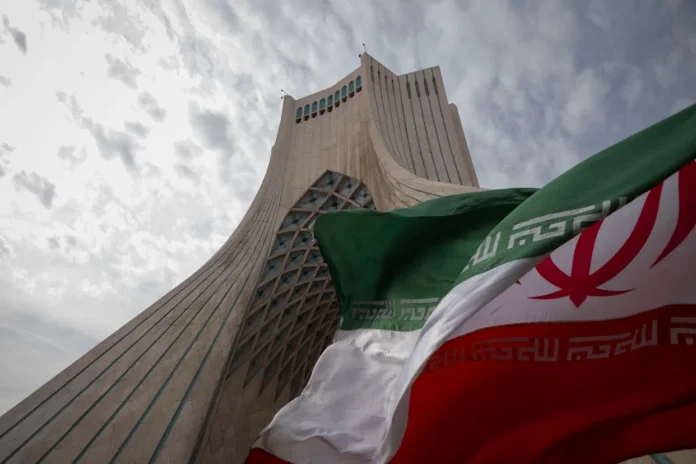
China says one citizen dead in Iran conflict, more than 3,000 evacuated

(Reuters) – The Iran ⁠conflict ⁠killed one Chinese ⁠citizen in Tehran, the capital, while more ​than 3,000 were evacuated, China’s foreign ministry said on ‌Monday, as its embassies and ‌consulates in nearby countries swung into action ⁠to ⁠help the affected.

Attacks by the United States and Israel ​from Saturday killed Iran’s Supreme Leader Ali Khamenei, provoking retaliatory Iranian strikes on Israel and other countries, including ​Gulf nations hosting U.S. military bases.

Work groups set up by ⁠Chinese embassies ⁠and consulates in ⁠neighbouring ​countries will receive and assist those evacuated, ministry spokesperson Mao ​Ning told a ⁠regular press briefing, but did not say how the evacuated would return home.

China was not informed in advance about the U.S. military actions against ⁠Iran, Mao added.

She denied a report that Iran and China ⁠were close to reaching a deal to buy supersonic anti-ship missiles, saying China was a responsible major power that “always fulfilled its international obligations”.

Mao reiterated condemnation of the attacks and the killing of Khameini, urging all parties involved to immediately cease military action to prevent escalation. 

The sovereignty, security ⁠and territorial integrity of the Gulf states should be fully respected and China backs efforts to strengthen communication among countries, Mao said.

(Reporting by Xiuhao ​Chen and Ryan Woo; Editing by Jacqueline ​Wong and Clarence Fernandez)

GOVERNOR ACHANI ANNOUNCES THE LAUNCH OF ISSUANCE OF BURSARY CHEQUES TO STUDENTS IN KWALE

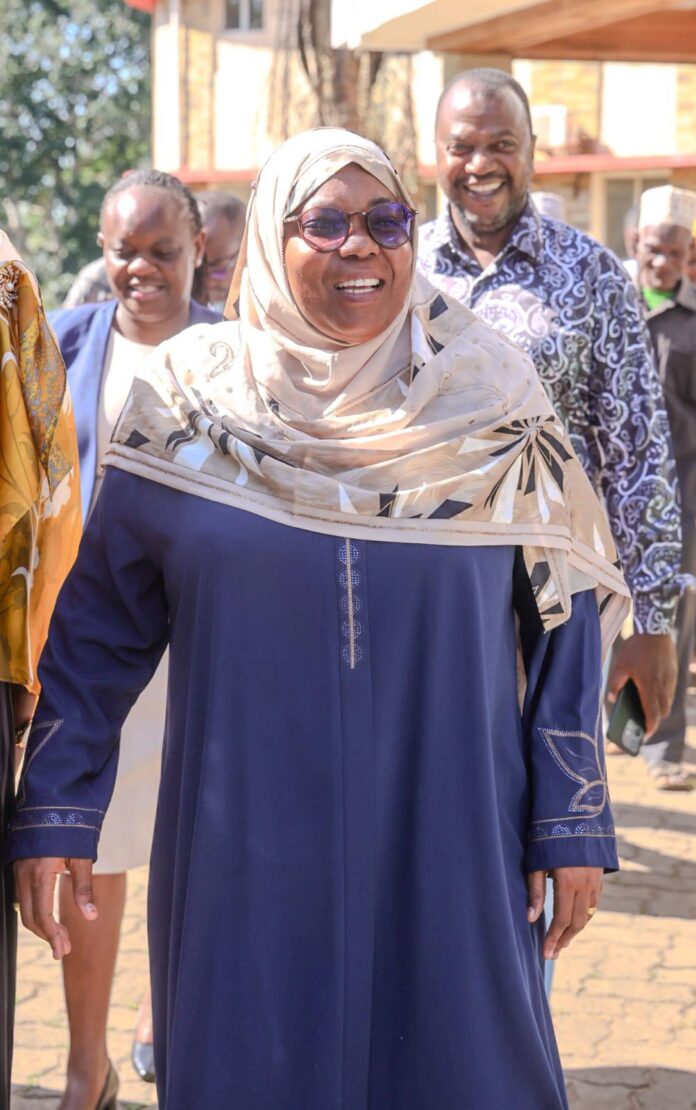
Kwale County Governor Fatuma Achani has officially announced the launch of the issuance of bursary cheques to students across Kwale County, marking the resumption of a crucial education support program that had been suspended for sometime.

The Governor confirmed that the distribution exercise will begin this week following clearance from the Office of the Controller of Budget, led by Margaret Nyakang’o, which had earlier halted bursary disbursements to counties.

The suspension had directed county governments to stop issuing bursaries to primary, secondary, and tertiary students a move that left many learners struggling to remain in school due to lack of fees.

Speaking at the Kwale County Headquarters on Monday, Governor Achani described the resumption of the bursary program as a major relief for families and students across the county.

“Education remains the most powerful equalizer in our society. Today, we are proud to announce the resumption of the issuance of bursary cheques to ensure that no child from Kwale misses school because of financial hardship,” she added.

Before the suspension, the county’s flagship Elimu Ni Sasa initiative, which has been running for over a decade, had supported more than 16,000 secondary school students and over 6,000 students in colleges and universities. The total allocation for the scheme stood at KSh 500 million across the county.

Governor Achani dismissed claims from sections of the opposition alleging that the bursary program has not made a meaningful impact on students in Kwale.

“It is unfortunate that some leaders are politicizing an initiative that has transformed thousands of lives. The numbers speak for themselves. Thousands of students have completed secondary school and higher education because of this program,” she stated.

She further emphasized that the county government has put in place transparent mechanisms to ensure that the bursaries reach deserving and needy students.

“This program is not about politics. It is about the future of our children. We have strengthened our vetting and verification processes to guarantee fairness and accountability in the distribution of funds,” the Governor noted.

Present were:County Attorney Salim Gombeni, County Secretary Sylvia Chidogo, Political Advisor Mshenga Ruga, Economic Advisor Anthony Yama CECs, Chief Officers among other county officials.

By Anthony Solly

Iran conflict disrupts oil supply to Asian countries dependent on Middle East

(Reuters) – The widening Iranian conflict ⁠is ⁠disrupting oil flows to several Asian countries as vessels ⁠are bottled up within the Middle East Gulf and crude and transport costs are rising, industry sources and analysts said on ​Monday.

The disruptions highlight the risks to Asia, the world’s biggest oil consuming region, which sources 60% of its oil from Middle Eastern producers, from the fighting between the U.S. and Israel on ‌one side and Iran.

U.S. President Donald Trump signalled the ‌U.S.-Israeli military assault could continue for weeks, which could mean a prolonged disruption of traffic through the Strait of Hormuz, a pinch point through which some 20% of global oil output ⁠and a similar share ⁠of liquefied natural gas transits via ships from Middle East producers.

Attacks on Sunday damaged three tankers and ​killed one seafarer while the initial attacks caused some 200 ships to drop anchor near the Strait to avoid any risk. On Monday, ship insurers cancelled war risk cover while industry sources expect tanker freight rates to jump as shippers keep vessels away.

“Iran has not officially shut the Strait of Hormuz but risk aversion from shippers is a real phenomenon. Transit volumes have already declined with vessels parking ​outside the Strait,” Citi analysts said in a note.

Global oil prices are up about 9% on Monday after earlier surging by as much as 13%. [O/R]

“Some crude ⁠oil tankers ⁠bound for Japan from the Middle ⁠East are waiting in the Persian ​Gulf, avoiding passage through the Strait of Hormuz,” Japan’s Chief Cabinet Secretary Minoru Kihara told a briefing.

Japanese trading house Itochu is experiencing “some impact” on shipments of ​crude and petroleum products from the Gulf and ⁠will source supplies from outside of the Middle East, it said in an emailed statement.

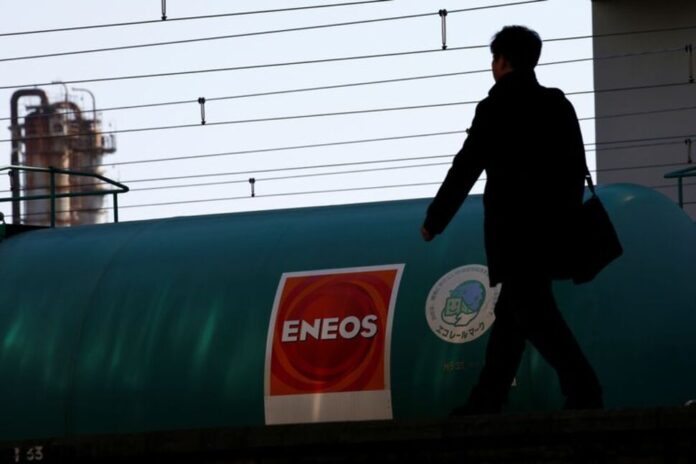
Eneos, Japan’s biggest refiner, said it will assess the impact on future crude procurement while monitoring the situation.

An extended disruption of the Strait would push oil prices higher and could cause supply shortages to China and India, the world’s biggest and third-biggest oil importers, forcing countries to tap stockpiles and reducing refinery operations.

The International Energy Agency, made up of mostly developed economies, requires members to hold oil stocks equivalent to at least 90 days of net oil imports.

Japan’s Kihara said ⁠the country had no immediate plans to release its strategic reserves, one of the world’s largest.

Indonesian state-owned energy company Pertamina has prepared ⁠risk mitigation measures and is optimising its refinery operations to ensure fuel and liquefied petroleum gas supply, it said in a statement. The country is Southeast Asia’s biggest gasoline importer.

INDIA MAY TAP RUSSIAN OIL IF CRISIS PERSISTS

Some Indian refiners have already told Middle East suppliers that they are unable to get ships to load crude, sources at two companies said.

India’s oil ministry and refiners met during the weekend to consider options for mitigating the impact of the crisis on the country’s energy security, the sources said.

The refiners will look at all options, including Russian oil if New Delhi approves, should the crisis continue for more than 10-15 days, the sources said.

“Alternative routes to get oil from the Middle East are costly and availability is not there as ships are not willing to go through that route,” said one of the sources.

LNG SQUEEZE

The loss of LNG supply from Qatar, Oman and the United Arab Emirates would hit Asian buyers hardest, especially ⁠Pakistan, India and Bangladesh, analysts said.

“Those countries face a choice between attracting LNG cargoes from other producers and reducing gas demand either by fuel switching or outright demand curtailment,” said Rystad Energy analysts in a note.

China and Japan are the world’s two largest LNG importers. Japan, however, sources most of its supply from Australia. The country’s utilities have LNG inventory worth about three weeks of domestic consumption, Kihara said.

(Reporting by Katya Golubkova and Yuka Obayashi in Tokyo, Nidhi Verma in ​New Delhi, Florence Tan, Emily Chow, Jeslyn Lerh and Trixie Yap in Singapore, Fransiska Nangoy in Jakarta; Additional reporting by Tamiyuki Kihara ​and Kantaro Komiya; Writing by Florence Tan; Editing by Tom Hogue and Christian Schmollinger)

Russia says five injured in massive overnight Ukrainian drone attack on Novorossiysk

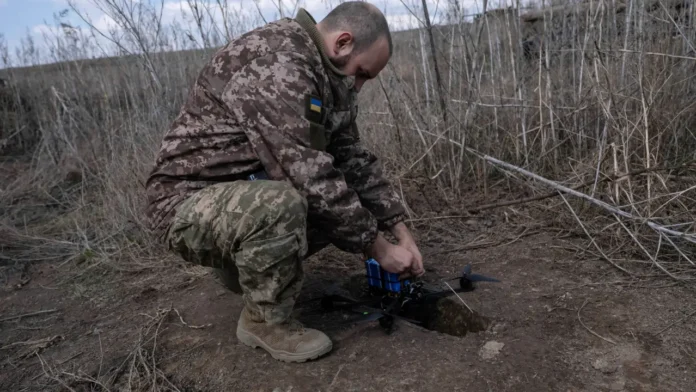
(Reuters) – Five people were injured and 20 buildings damaged in a massive overnight Ukrainian drone attack on the southern Russian city of Novorossiysk, which hosts a port and a naval base, local authorities said on Monday.

The Russian Defence Ministry said it had downed 172 Ukrainian drones overnight, including 67 over the Black Sea and 66 over the Krasnodar region where Novorossiysk is located.

“All night long, our military repelled a massive attack by Ukrainian drones. The strongest strike hit Novorossiysk, where a state of emergency was declared,” Veniamin Kondratyev, the governor of Krasnodar region, said.

Andrei Kravchenko, the mayor of Novorossiysk, posted images of some of the damage on his Telegram channel and said preliminary information suggested that eight residential tower blocks had been damaged along with nine private houses and three kindergartens.

Five people who sustained injuries in the attack were being treated in hospital, he said.

Drone debris also fell on a grain terminal in Novorossiysk, but did not cause any damage, the Interfax news agency reported, citing the head of the company that operates the facility.

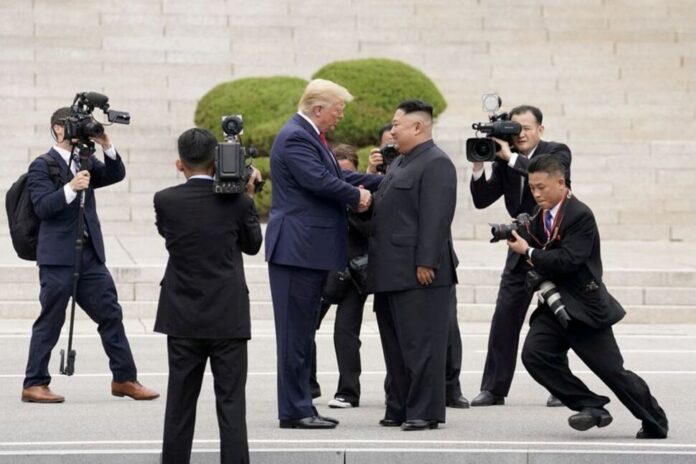
Iran strikes spotlight chances for North Korea to resume nuclear talks with Trump

(Reuters) – U.S. and Israeli military strikes on Iran will ⁠reinforce ⁠the nuclear ambitions of North Korean leader Kim Jong Un, ⁠say experts and former officials, as attention focuses on whether he might return to negotiations with President Donald Trump.

Talks to tackle Pyongyang’s ​arsenal of nuclear weapons and ballistic missiles, subject to heavy international sanctions, broke down despite summits between Kim and Trump in 2018 and 2019, but the attacks on Iran could spur it to reconsider.

The ‌Iran strikes, which killed Supreme Leader Ayatollah Ali Khamenei, ‌come two months after Venezuelan President Nicolas Maduro, another leader without a nuclear deterrent, was captured in a raid by U.S. special forces ordered by Trump. 

“Kim must have thought Iran was attacked like ⁠that because it didn’t ⁠have nuclear weapons,” said Song Seong-jong, a professor at Daejeon University and a former official of South Korea’s ​Defence Ministry. 

The military operation was inevitable, given the “hegemonic and rogue” nature of the United States, a spokesperson for North Korea’s foreign ministry said in a statement published by state media on Sunday.

Just a few days before the attack, Kim had pledged to build more nuclear weapons at a ruling party congress last week, though he left the door open for more talks, depending on Washington’s attitude.

“If the United States withdraws its policy ​of confrontation with North Korea by respecting our country’s current status … there is no reason why we cannot get along well with the U.S.,” state news agency KCNA ⁠cited ⁠Kim as saying.       

Trump has repeatedly said he ⁠would like to hold fresh talks, prompting ​speculation the two leaders could meet when he travels to China from March 31 to April 2.

PREEMPTIVE STRIKES

“The lesson the Trump administration wants pariah states to ​take is clear; stop threatening America and its allies ⁠and make a deal before it is too late,” said Leif-Eric Easley, a professor of international studies at Ewha Womans University in Seoul.Nonetheless, North Korea is far more advanced than Iran in nuclear warhead development and delivery systems, including intercontinental ballistic missiles, he said. 

In 2022, North Korea officially enshrined the right to use preemptive nuclear strikes in a law that Kim said made its nuclear status “irreversible”.

Renewed talks with the United States have been a low priority for Kim, however, said Sydney Seiler, a senior adviser at the Center for Strategic and International Studies.

“President Trump’s willingness to use military force and ⁠threats for negotiating leverage must make Kim nervous and less likely to hastily seek talks,” added the former U.S. special envoy during six-party ⁠talks on the North’s nuclear programme.

But Kim’s heightened threat perception could push him back to the negotiating table, some analysts said.

“Unlike Iran, it’s impossible to denuclearise North Korea,” said Cho Han-bum, at the state-run Korea Institute for National Unification, citing the scattering of nuclear sites across the isolated state.

North Korea is reckoned to have assembled about 50 warheads and possess enough fissile material to produce up to 40 more, the Stockholm International Peace Research Institute think-tank estimated last year.

MANAGE RELATIONS WITH TRUMP

There could still be a window of opportunity for talks if Kim seeks “to leverage his personal rapport with President Trump to explore Washington’s position on North Korea, while at the same time buying time to further advance the country’s nuclear capabilities,” said Yang Moo-jin, professor at Seoul’s University of North Korean Studies.

Kim may consider a conditional meeting with Trump if the United States acknowledges North Korea’s nuclear status, said Nam Sung-wook, a professor at Sookmyung Women’s University and a former head of a think-tank at South Korea’s spy ⁠agency.

The North Korean leader is also likely to believe his ties with China and Russia offer protection, Nam said.

In September, Kim made a rare trip by armoured train to Beijing, where he stood shoulder-to-shoulder with Chinese President Xi Jinping and Russian counterpart Vladimir Putin at a major military parade.

Despite such ties, Kim may still want to reassure Trump that he will not use nuclear weapons against the United States, said Ko Young-hwan, a North Korean diplomat-turned-defector who has advised the South Korean government. 

“The ​incident in Iran must have made him think he should manage relations with the United States better.” 

(Reporting by Heejin Kim and Sebin Choi, ​Additional reporting by Joyce Lee and Hwawon Lee; Editing by Ed Davies and Clarence Fernandez)

Iran Conflict Widens as Israel Strikes Lebanon Following Hezbollah Attacks

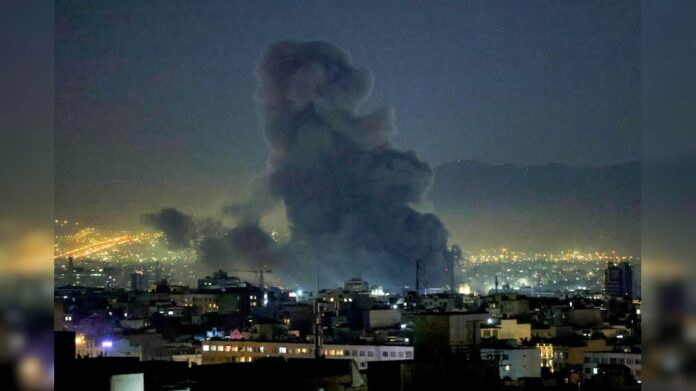
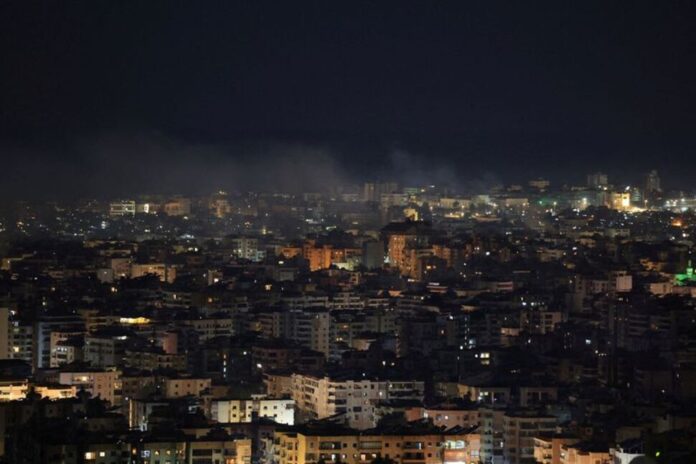
(Reuters) – Israel launched new air strikes targeting Iran and expanded its assault to include ⁠attacks on ⁠Iran-backed Hezbollah militants in Lebanon on Monday, as Tehran said it launched a new ⁠wave of missiles that had “opened the great gates of fire” on Israel.

Israel said it was attacking sites connected to Lebanon’s Shi’ite Muslim Hezbollah militants, one of Tehran’s principal allies in the Middle East, after Hezbollah said it ​launched missiles and drones toward Israel in retaliation for the killing of Iran’s Supreme Leader Ali Khamenei.

Lebanese state news agency NNA said an initial tally showed 31 people had been killed and 149 injured in the strikes, which Israel said targeted Hezbollah-controlled southern suburbs of Beirut. Israel said it also struck senior Hezbollah militants.

Israel also launched more strikes against ‌Iran. Explosions were heard in different parts of Tehran, with a hit on ‌Iran’s Sanandaj city in the western Kurdistan province killing at least three people, state media said.

Shortly after 7:00 a.m. (0500 GMT) air raid sirens were triggered across Israel, including in Tel Aviv and Jerusalem, warning of a fresh Iranian attack.

Missiles were being launched from central parts of Iran towards “enemy locations”, Iranian state media said.

Iran’s Islamic Revolutionary Guards Corps ⁠in a statement said the missile wave ⁠targeted the Israeli government complex in Tel Aviv, as well as military and security centres in Haifa and areas in East Jerusalem, saying those attacks would expand ​and air raid sirens in Israel “would never stop”.

U.S. President Donald Trump in interviews on Sunday with multiple news outlets said the U.S.-Israeli military assault on Iranian targets could continue for at least four weeks. 

UK CYPRUS BASE HIT, BLASTS IN QATAR, KUWAIT, UAE

Kuwait said its air defences intercepted hostile drones while the U.S. embassy in the Gulf state issued a warning to take cover due to the threat of missile and hostile drone attacks.

Witnesses saw a heavy presence of security, ambulances and fire trucks near the U.S. embassy, while a video obtained by Reuters showed black smoke rising from the surrounding area.

Reuters witnesses also heard loud blasts in Dubai, the Qatari capital Doha and Samha, about 50 km (31 miles) from Abu Dhabi.

A drone strike ​hit Britain’s Royal Air Force base of Akrotiri in Cyprus overnight, causing limited damage and no casualties, the island’s president and Britain’s defence ministry said on Monday, in the first attack on the base since an assault by Libyan militants in 1986, and a marked escalation ⁠to ⁠the conflict. 

‘PROLONGED DAYS OF COMBAT AHEAD’

The Hezbollah and Israel tit-for-tat ⁠attacks, which follow a U.S.-brokered ceasefire in 2024, widen the conflict that ​has spread through the Middle East since the United States and Israel attacked Iran on Saturday, sending oil prices soaring and snarling air travel.

Israeli’s military Chief of Staff Eyal Zamir said combat operations against Hezbollah could be prolonged, lasting days.

“This requires strong ​defensive readiness and sustained offensive readiness, operating in continuous waves while constantly utilising opportunities,” Zamir ⁠said in a statement. 

The Israeli military said late on Sunday that its air force had established aerial superiority over Tehran, and that a wave of strikes across the capital had targeted intelligence, security, and military command centers.

A source briefed on the Israeli operation against Iran said strikes so far have been significantly more intense and extensive than the 12‑day war between the two countries last June.

Another wave of Israeli reservists would be called up in the next 48 hours, the source said, adding Israel was able to bring in as many weapons as possible in recent weeks, meaning no shortage of defensive and offensive capabilities. 

ASSAULT TO CONTINUE UNABATED, WHITE HOUSE SAYS

A senior White House official told Reuters that while Trump would at some point talk with new potential leadership in Iran, the military campaign would go on.

“President Trump said new potential leadership in Iran has indicated they want to talk and eventually he will talk. For now, Operation Epic Fury continues unabated,” the official said.

Iran’s President Masoud Pezeshkian on Sunday said a ⁠leadership council composed of himself, the judiciary head and a member of the powerful Guardian Council had temporarily assumed the duties of Supreme Leader.

In an X post on Monday, Ali Larijani, who was adviser to ⁠Iran’s Khamenei, said his country would not negotiate with Trump. He said the U.S. president had “delusional ambitions” and was now worried about U.S. casualties. 

FIRST US CASUALTIES

The first U.S. casualties of the campaign, including the deaths of three service personnel were confirmed on Sunday. Two U.S. officials told Reuters the U.S. service members were killed on a base in Kuwait.

Trump paid tribute to the three killed as “true American patriots” but warned that there will likely be more casualties.

An extended military campaign could pose a major political risk for Trump’s Republican party ahead of U.S. midterm elections. Only around one in four Americans approve of the operation, according to a Reuters/Ipsos poll on Sunday.

But in a video posted on Sunday, Trump vowed military strikes on Iran will continue until “all our objectives are achieved” without providing specifics. He said the assault had so far wiped out Iran’s military command and destroyed nine Iranian navy ships and a naval building.

American aircraft and warships have struck more than 1,000 Iranian targets since the start of major combat operations on Saturday, the U.S. military said.

Trump called on Iran’s military and police, including the Islamic Revolutionary Guards Corps, to stop fighting, promising immunity for those who surrender and threatening “certain death” for those who resist. He reiterated calls for the Iranian people to revolt against the government.

EXISTENTIAL CHALLENGE FOR IRAN

Following the death of Khamenei, Iran faces a power vacuum that could leave it in chaos, but the Trump administration has not outlined longer-term aims for the country. 

Iran’s Revolutionary Guards said on Sunday they had hit three U.S. and UK oil tankers in the Gulf and the Strait of Hormuz, and attacked military bases in Kuwait and Bahrain with drones and missiles. Shipping data showed hundreds of vessels including ⁠oil and gas tankers dropping anchor in nearby waters with traders expecting sharp jumps in crude oil prices on Monday. 

Global air travel was also heavily disrupted as continued air strikes kept major Middle Eastern airports closed, including Dubai — the world’s busiest international hub — in one of the biggest aviation interruptions in recent years. Asian airline shares plunged on Monday, with some major carriers down more than 5%. 

It remained unclear what the longer-term prospects were for Iran to rebuild its leadership and replace 86-year-old Khamenei, who had held power since the death of the founder of the Islamic Republic, Ayatollah Ruhollah Khomeini in 1989.

Experts said that while his death and those of other Iranian leaders would deal Iran a major blow, it would not necessarily spell the end of Iran’s entrenched clerical rule or the sway of the elite Revolutionary Guards over the population.

($1 = 1.6575 marka)

(Reporting ​by Alexander Cornwell, Laila Bassam in Lebanon, Jana Choukeir in Dubai, Andrew Mills in Doha, Michele Kambas in Nicosia and Yiannis Kourtoglou at Akrotiri; Additional reporting by Parisa Hafezi in Dubai, Emily Rose and Reuters bureaux; Writing by Michael ​Georgy, James Mackenzie, Nathan Layne, Andrew Goudsward and Martin Petty; Editing by Sergio Non, Raju Gopalakrishnan, Hugh Lawson, William Maclean, Bill Berkrot and Michael Perry)


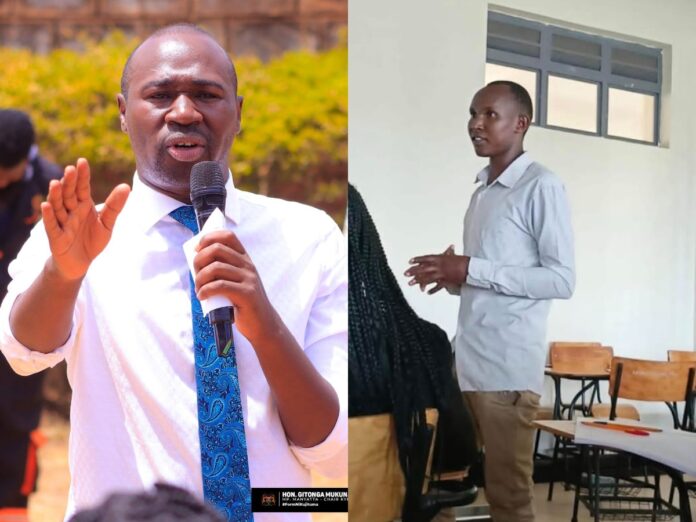
MP Mukunji breaks silence after Embu University student killed in suspected robbery

Manyatta MP Gitonga Mukunji has called for urgent security measures following the killing of a student from the University of Embu.

In a statement on Monday, March 2, the Manyatta MP expressed sorrow over the death of the student, identified as Eric Cheruiyot, and blamed security lapses in the area for the tragic incident.

“I am deeply saddened by the killing of Comrade Eric Cheruiyot from the University of Embu. The death of one comrade is one death too many especially due to security lapses around the Kangaru area and we must take stern action on this issue,” he said.

Mukunji revealed that he had already engaged security agencies to seek answers and push for immediate interventions to curb insecurity.

He called on county authorities to complement police efforts by improving infrastructure that enhances safety, particularly street lighting in the affected area.

“Yesterday evening I engaged the police for answers on this great tragedy and increment of police patrols in the area henceforth.

“I also request the county authorities to immediately respond with proper street lighting of the area as part of security measures,” he added.

Mukunji maintained that the safety of residents and students remains a top priority, noting that cases of mugging have been on the rise in the region.

“The security of our community is the highest concern in our county today as there has been a lot of mugging in the area and we must work to see improvements. Rest well Eric and pole to our UoE comrades and his family,” he further said.

Trump administration labels Iran a state sponsor of wrongful detention

Ahead of the decision to launch military strikes on Iran, the Trump administration on Friday formally designated Iran as a state sponsor of wrongful detention.

The designation, announced by Secretary of State Marco Rubio, activates authorities created under an executive order signed in September that expanded the government’s ability to penalize countries accused of detaining Americans for political bargaining power. This is the first time a country has been formally labeled under that framework.

“For decades, Iran has continued to cruelly detain innocent Americans, as well as citizens of other nations, to use as political leverage against other states,” Rubio said in a statement. “This abhorrent practice must end.” 

Under the new order, Rubio is empowered to impose a range of measures, including economic sanctions, export controls and visa restrictions targeting individuals or entities linked to wrongful detention policies.

The authorities are modeled in part on tools used in terrorism-related designations but are legally distinct. The United States has already designated Iran a state sponsor of terrorism since 1984, during the Reagan administration. 

In addition to financial penalties, the executive order authorizes the State Department to impose travel restrictions on U.S. passport holders — potentially limiting or prohibiting travel to countries designated as sponsors of wrongful detention.

Officials previously described travel authorities as among the most powerful deterrents available, aimed both at protecting Americans from high-risk environments and increasing pressure on governments that detain U.S. nationals. 

Imposing travel restrictions in Iran could raise obstacles to travel to the country by U.S. passport holders that are similar to those faced by travelers to North Korea. U.S. passports cannot be used in North Korea unless they are specifically validated for travel by the secretary of state.

By Anthony Solly

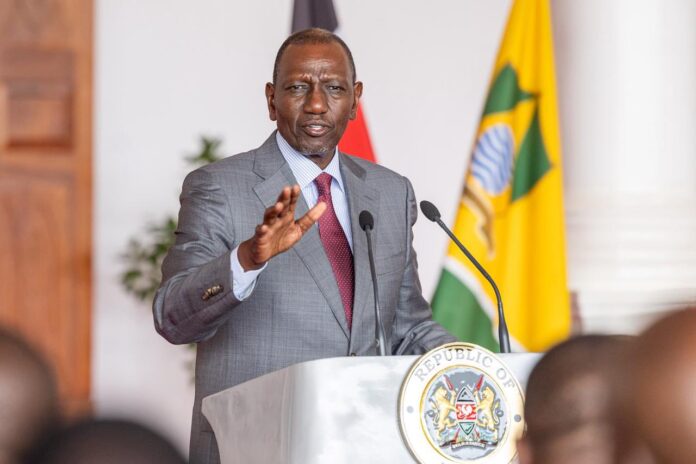
President Ruto Orders Installation of Speed Cameras, Roll out of Instant Fines

President William Ruto has directed the Ministry of Transport and the National Transport and Safety Authority (NTSA) to install speed cameras across major towns.

Speaking on Monday, March 2, at State House Nairobi, President Ruto said the speed cameras should be installed within a month.

The President stated that the speed cameras should be integrated with instant fines.

“When you leave here, go do what you have to do with the support of the Ministry of Transport. Rolling out the cameras is not rocket science since we have had cameras before on the roads, so let us roll out the cameras in six major towns in Kenya in the next one month.

“And those cameras should be connected to the whole framework of instant fines,” President Ruto ordered.

File image of President William Ruto. 

The Head of State noted that the rollout of the speed cameras and instant fines will make it easy for the government to deal with traffic offenders.

“This will make it easy for us to do several things. We will not be arguing with offenders; the cameras will provide full proof that they are in breach,” said Ruto.

He also noted that the move would prevent some cases from proceeding to court since the fines are predetermined, and added that the state would be able to generate revenue directly from the penalties.

“We do not have to go and bother the chief justice in court; the fines will be predetermined. When you commit an offence, you will receive a fine on your phone instantly. The issue of us not having money will also end because we will be collecting money instantly,” Ruto added.

This comes after NTSA announced it is planning to install over 1,000 traffic cameras across Kenyan highways.

In a notice on February 24, the authority announced it will implement the plan under a public-private-partnership (PPP) with KCB Bank and Pesa Print Limited.

According to NTSA, the cameras will be linked to a National Command and Control Centre, and the traffic violations will be linked to the offender driver’s profile.

Offenders will receive instant notifications from NTSA through SMS.

“The PPP will incorporate the deployment, implementation, and operationalisation of the instant fine infrastructure, including mobile driving licence wallet, driver merit and demerit point system, driver history, driver life cycle management and general information,” the Safety Authority explained.

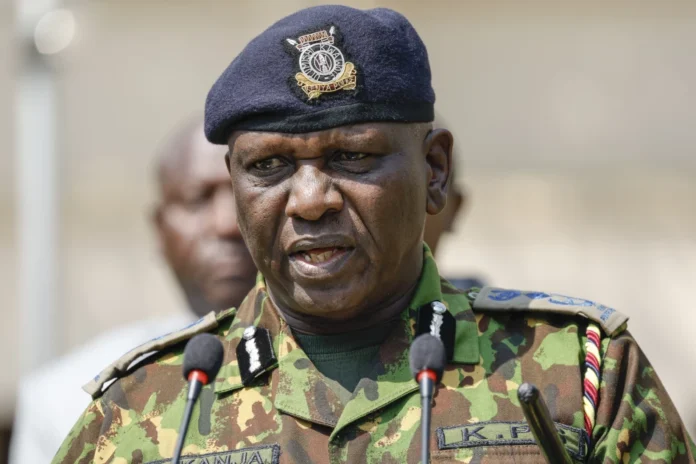
NPS Dismiss Viral Video of IG Kanja Addressing Concerns Over U.S., Iran Attacks

The National Police Service (NPS) has flagged as fake a viral social media post claiming that the Inspector General of Police, Douglas Kanja, had assured Kenyans of safety from possible attacks by the United States, Israel, or Iran.

In a post on its social media pages, the NPS issued a disclaimer, noting that the statement did not originate from the police leadership.

The fake post claims that IG Kanja said Kenyan authorities are prepared for war and ready to respond to any foreign aggression, assuring Kenyans of safety following the escalation currently witnessed in Iran and other Asian countries.

“Police IG Kanja assures Kenyans that they are safe from USA, Israel, and Iran attacks, and the Kenyan police are ready for war,” the fake post is captioned.

The caption followed a video of the police leadership in a media briefing after landing in the coastal region on February 27.

The video captures the police boss issuing a warning to criminal gangs and drug traffickers who have terrorised residents in the coastal region, promising to pursue them to the end.

The video, however, does not capture the IG mentioning any foreign state and does not condemn the attacks in the Middle East.

“We want a situation whereby no Kenyan will look over his shoulder because he feels he is not secure. So all those criminals must take note that we will not give you space for that,” IG Kanja stated.

Kanja was in Mombasa to attend the annual KPS high-level security conference at the Kenya Maritime Authority in Mombasa.

The notice came at a time when thousands of Kenyans find themselves concerned about their safety after joint U.S.-Israel military strikes on Iran and Iran’s subsequent retaliatory attacks on U.S. and allied bases across the Middle East. These developments have prompted the Kenyan government to issue travel and security advisories for its nationals in the region.

The Ministry of Foreign Affairs said that Kenyans in these countries should register with the nearest Kenyan Embassy or Consulate and update their next of kin through the diaspora, assuring them that Kenya was assessing the situation.

The ministry also issued hotline numbers for citizens in the affected countries, where they would be given assistance as the war escalates.

Create a free account, or log in.

Gain access to read this content, plus limited free content.

Yes! I would like to receive new content and updates.

Sponsored Ad

Ad 1
Ad 2
Ad 3
Ad 4
Ad 5
Ad 6