Sponsored Ad

Ad 1
Ad 2
Ad 3
Ad 4
Ad 5
Ad 6
26.8 C
Kenya
Tuesday, May 5, 2026
Home Blog Page 3368

Blow To KQ As Gov’t Allows Ethiopian Airlines, Fly Dubai More Flights Into Mombasa

Kenya’s Transport Ministry has approved additional flights for Ethiopian Airlines and Fly Dubai into Mombasa.

The decision to open up Mombasa will however not be welcome by all especially Kenya’s national carrier. The move will most definitely upset Kenya Airways (KQ) which had been lobbying the government to prevent such approvals.

Under the implementation of the open skies policy, the government of Kenya announced that Ethiopian Airlines will now be allowed to fly directly into Mombasa twice a week. This will escalate competition with KQ which has dominated the route.

Additionally, Fly Dubai has been granted permission to fly directly to Mombasa from Dubai within two months.

“We have a balance between protecting our local airlines and inviting business and tourists into the country. But even in that situation, we have approved the Fly Dubai which will begin flying directly from Dubai to Mombasa in two months,” said Transport Cabinet Secretary Kipchumba Murkomen.

Fly Dubai has however not been approved to fly to Nairobi.

While the ministry aims to strike a balance between protecting local airlines and attracting business and tourists, valid concerns have been raised by Kenya Airways. KQ argues that Kenya could end up with one-sided deals with foreign carriers under the open skies policy. This is because there is no reciprocity guaranteed.

Despite the approval for Ethiopian Airlines to compete in the domestic market, there are concerns that KQ might not enjoy similar opportunities in Ethiopia’s airports. This could potentially impact its ability to expand its operations in a challenging financial environment.

Revitalizing tourism

Coast County governors and hoteliers have been advocating for the full implementation of the open skies policy. They argue that this policy will contribute to revitalize the tourism sector. The move they say will create jobs, and fill the region’s over 40,000 beds.

Tourism is a critical economic lifeline for the region, but connectivity challenges have hindered its potential. The policy’s proponents argue that allowing international flights directly into Mombasa will significantly boost tourism numbers.

However, the issue remains a subject of contention, as some carriers have faced challenges in obtaining approvals for expanded operations.

With the aviation industry still recovering from the impacts of the Covid-19 pandemic, the decision to grant more flights to international carriers has raised questions about its potential impact on Kenya’s local airline and tourism sector.
Private Sector Business Leaders to Participate in Climate Change Dialogues to Influence Outcome of ACS23

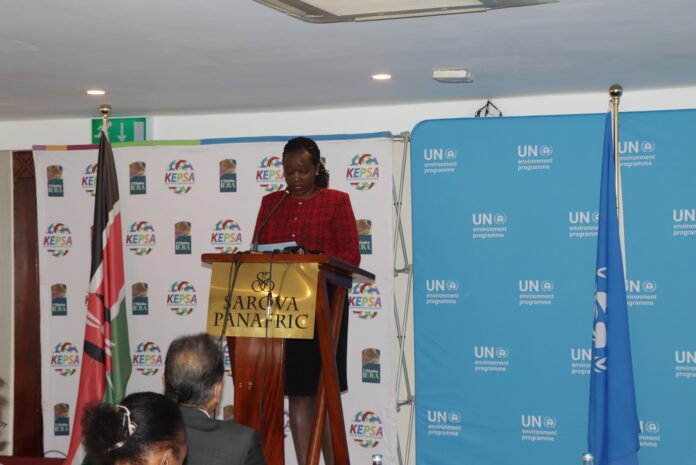
Kenya Association of Manufacturers (KAM) took part in a High-Level CEO’s Roundtable discussing the Private Sector Engagement and Priorities for Business Climate Action for Resilience and Green Growth.

The roundtable seeks to give Kenyan private sector business executives an opportunity to exchange perspectives and ideas on working with various stakeholders in climate change talks. They also want to provide their valuable input to help shape the Africa Climate Summit’s final result.

CS Environment Soipan Tuya, who was present at the conference, noted that Kenya is leading the way with an incredible 92% of its energy coming from renewable sources. that the nation is dedicated to accelerating this development in order to realise a goal of using only renewable energy sources.

“Kenya is taking the lead with an impressive 92% of its energy coming from renewable sources. The country is committed to pushing this progress aggressively to achieve a goal of reaching 100% renewable energy,” said Hon Soipan Tuya.

She added, “The financial sector has acknowledged that addressing global environmental challenges is key to managing risks and ensuring long-term investment. The Sustainable Development Goals (SDGs) reaffirm that growth and development cannot continue without all countries embracing green growth practices.”

KUCCPS Announces Placement Results For 2022 KCSE: How to Check

Education CS Ezekiel Machogu has officially released the results of the placement of 2022 Kenya Certificate of Secondary Education (KCSE) candidates.

A total of 870,561 KCSE candidates were eligible for placement in universities and colleges across the country.

The placement process saw 285,698 candidates submit their applications to various universities and colleges in the country.

Out of these, 285,167 candidates successfully secured places in degree, diploma, craft certificate, and artisan courses in 282 different training institutions.

For degree programs, 130,485 candidates secured placement in public universities, while 9,622 candidates were placed in private universities.

This accounts for approximately 80% of the 173,238 candidates who qualified for degree programs.

Furthermore, a significant number of candidates, precisely 144,500, were successfully placed in Technical and Vocational Education and Training (TVET) institutions, while an additional 560 candidates secured placements in secondary teacher training colleges.

An interesting trend observed during the placement process was that 9,673 candidates who qualified for degree courses opted to join TVET institutions instead.

Education CS Ezekiel Machogu expressed his satisfaction with the overall placement process and congratulated all the candidates who secured positions in universities and colleges.

He also urged those who did not secure placements to explore alternative opportunities, including reapplication for the next placement cycle or considering other vocational training programs.

To check their individual placement details, candidates can send their KCSE Index to the shortcode 20842.

Alternatively, the information is available at the Kenya Universities and Colleges Central Placement Service (KUCCPS) portal.

CS Machogu also directed heads of tertiary institutions to send joining instructions to candidates without delay.

“I will Not Discuss Cost Of Living With Raila,” Declares President Ruto

President William Ruto has said he will not discuss the cost of living will with Opposition leader RAILA Odinga because the government is already addressing the matter.

The president, who acknowledged having met Odinga with former Nigerian President Olusegun Obasanjo, said his government has already put in place necessary interventions to address challenges facing Kenyans as part of his manifesto.

“It is clear; we are effectuating our Manifesto that is heavy on reducing the cost of living,” he explained even as Azimio leaders protested that the issue was a key agenda that has been omitted contrary to their agreement during the Mombasa meeting.

He said Kenya was on course to produce surplus food this year due to the Government’s deliberate plan to subsidise production.

The President observed that protests marked by destruction of property and loss of lives will not curtail the price of living.

He warned the Opposition to keep off violent demonstrations.

“We will not negotiate about the safety of our country,” he said.

He also asked the youth not to participate in anything that can cause destruction.

He was speaking on Sunday during an interdenominational church service in Ukunda, Kwale County.

Present were Prime Cabinet Secretary Musalia Mudavadi, Cabinet Secretary for Mining, Blue Economy and Maritime Affairs Salim Mvurya, Speaker of the National Assembly Moses Wetang’ula, Speaker of the Senate Amason Kingi, Governors Fatuma Achani (Kwale) and Johnson Sakaja (Nairobi), MPs, among other leaders.

The President, who also addressed wananchi in Likoni, asked leaders to shun divisive politics and focus on serving the people.

“We need to work together, our persuasions notwithstanding, to transform Kenya.”

He said the Government was now in charge of the country’s economic affairs using locally-generated resources.

He maintained that is how it had managed to disburse funds to counties and constituencies way ahead of time since the promulgation of the current Constitution.

“We have a unique opportunity to unlock the potential that we have and break the poverty and hunger cycles in our country.”

Mr Mudavadi told the congregation that Kenya is not in any crisis to warrant any international attention.

The Opposition, he added, must be honest to Kenyans.

On his part, Mr Wetang’ula said it is only through sound policies that Kenya can move forward.

He asked President Ruto to focus on the needs of Kenyans.

“We will not pretend to engage with leaders who are bad examples to our politics,” explained the Speaker.

Mr Kingi wondered why issues on the cost of living called for mediation.

“You do not need [Olesegun] Obasanjo to guide the strategies to make life affordable in Kenya,” pointed out Mr Mvurya.

Kwale Governor said she will not allow demonstrations in the county.

She argued that her focus was on engaging in issues that will lessen poverty in the area.

African Leaders Leave Russia Summit Without Grain Deal or Path to End Ukraine War

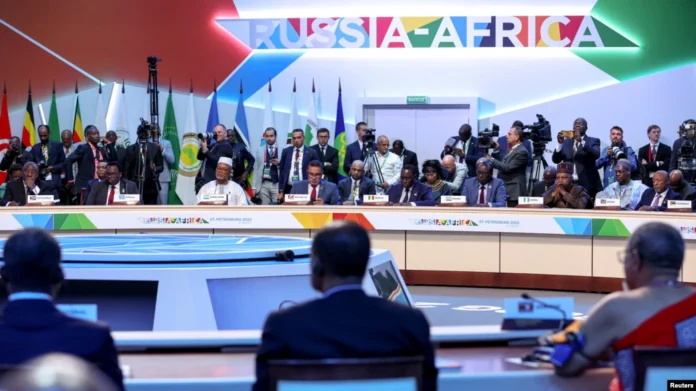
African leaders are leaving two days of meetings with Russian President Vladimir Putin with little to show for their requests to resume a deal that kept grain flowing from Ukraine and to find a path to end the war there.

Putin in a press conference late Saturday following the Russia-Africa summit said Russia’s termination of the grain deal earlier this month caused a rise in grain prices that benefits Russian companies.

He added that Moscow would share some of those revenues with the “poorest nations.”

That commitment, with no details, follows Putin’s promise to start shipping 25,000 to 50,000 tons of grain for free to each of six African nations in the next three to four months — an amount dwarfed by the 725,000 tons shipped by the U.N. World Food Program to several hungry countries, African and otherwise, under the grain deal. Russia plans to send the free grain to Burkina Faso, Zimbabwe, Mali, Somalia, Eritrea and Central African Republic.

Fewer than 20 of Africa’s 54 heads of state or government attended the Russia summit, while 43 attended the previous gathering in 2019, reflecting concerns over Russia’s invasion of Ukraine even as Moscow seeks more allies on the African continent of 1.3 billion people.

Putin praised Africa as a rising center of power in the world, while the Kremlin blamed “outrageous” Western pressure for discouraging some African countries from showing up.

The presidents of Egypt and South Africa were among the most outspoken on the need to resume the grain deal.

“We would like the Black Sea initiative to be implemented and that the Black Sea should be open,” South African President Cyril Ramaphosa said. “We are not here to plead for donations for the African continent.”

Putin also said Russia would analyze African leaders’ peace proposal for Ukraine, whose details have not been publicly shared. But the Russian leader asked: “Why do you ask us to pause fire? We can’t pause fire while we’re being attacked.”

The next significant step in peace efforts instead appears to be a Ukrainian-organized peace summit hosted by Saudi Arabia in August. Russia is not invited.

Africa’s nations make up the largest voting bloc at the United Nations. They have however been more divided than any other region on General Assembly resolutions criticizing Russia’s actions in Ukraine.

Delegations at the summit in St. Petersburg roamed exhibits of weapons, a reminder of Russia’s role as the top arms supplier to the African continent.

Putin in his remarks on Saturday also downplayed his absence from the BRICS economic summit in South Africa next month amid a controversy over an arrest warrant issued against him by the International Criminal Court.

His presence there, Putin said, is not “more important than my presence here, in Russia.”

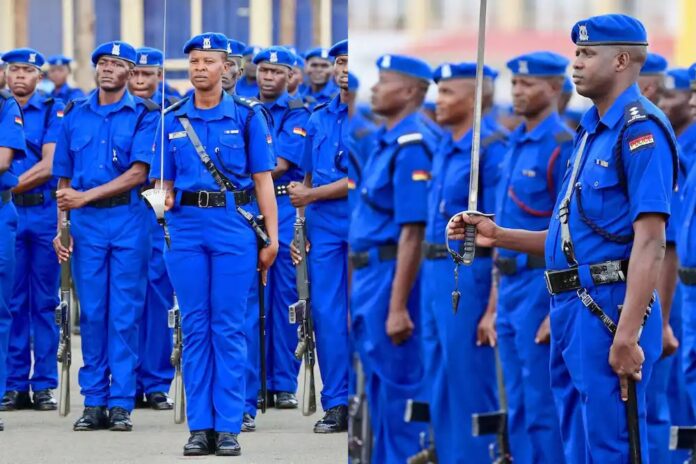
Haiti Welcomes Kenya’s Proposal To Send 1,000 Police Officers To Fight Gangs

Haiti has welcomed “with great interest” a Kenyan offer to lead a 1,000-strong multinational force to bolster security in the violence-torn Caribbean country.

“Haiti appreciates this expression of African solidarity,” a statement from Foreign Minister Jean Victor Geneus said Sunday, “and looks forward to welcoming Kenya’s proposed evaluation mission.” 

Kenya announced Saturday that it was prepared to deploy 1,000 police agents to help train and support their Haitian counterparts in combating the violent gangs that have taken control of much of capital Port-au-Prince.

“Kenya has accepted to positively consider leading a Multi-National Force to Haiti,” said the Kenyan statement, posted by Foreign Minister Alfred Mutua. 

A Kenyan-led deployment would still require a mandate from the United Nations Security Council, as well as formal agreement by local authorities.

The council has asked Secretary-General Antonio Guterres to present by mid-August a report on possible options for Haiti, including a U.N.-led mission.

U.S. diplomats have been actively seeking a country to head a multinational force.

Mutua said Kenya would send an “evaluation mission” to Haiti in coming weeks.

Kenya, seen as a democratic anchor in East Africa, has participated in peacekeeping operations in its own region, including in the Democratic Republic of Congo and Somalia.

Gangs in Haiti control roughly 80% of Port-au-Prince, and violent crimes including kidnappings for ransom, carjackings, rapes and armed thefts are common.

With a weak government and its security forces overwhelmed, the country — the poorest Western Hemisphere nation — has seen compounding humanitarian, political and security crises. 

Both Prime Minister Ariel Henry and the U.N.’s Guterres have for nearly a year called for an international intervention. Up to now, no country had stepped forward.

A U.N. peacekeeping mission was in operation in Haiti from 2004 to 2017 but fell out of favor after a cholera outbreak traced to infected UN personnel from Nepal claimed 9,500 lives. 

This week, the United States ordered nonessential embassy personnel and their families to leave Haiti as soon as possible.

On Thursday, a young American nurse and her infant child were kidnapped in Haiti, according to the Christian aid group for which she works.

Niger Coup: West African Leaders Threaten Military Intervention

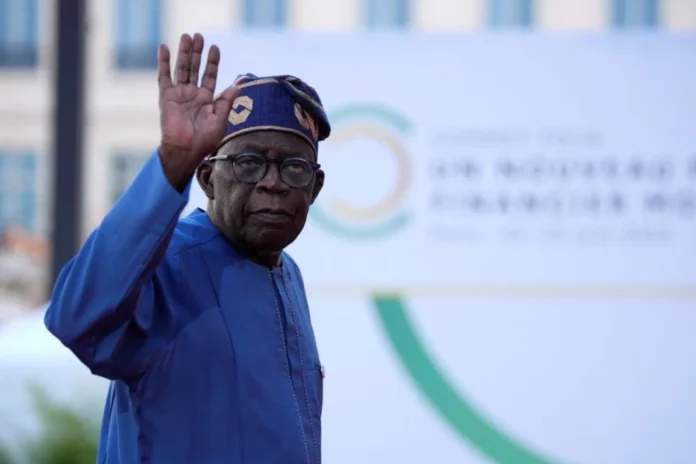
West African leaders have threatened military action against Niger’s junta after it took power in a coup last week.

The leaders gave the junta seven days to reinstate President Mohamed Bazoum, who is being held captive.

Earlier, the junta warned it would resist any “plan of aggression against Niger” by regional or Western powers.

Meanwhile, hundreds of coup supporters protested outside the French embassy in the capital Niamey.

Leaders from Ecowas, the bloc of West African nations, held crisis talks in Nigeria’s capital Abuja on Sunday to discuss the latest coup – which follows army takeovers in neighbouring Mali and Burkina Faso.

A statement read out after the summit said that Ecowas had “zero tolerance” for coups.

The regional bloc would “take all measures necessary to restore constitutional order” if its demands were not met within a week.

“Such measures may include the use of force,” and military chiefs are to meet “immediately” to plan for an intervention, the statement added.

The Special Representative and Head of the United Nations Office for West Africa and the Sahel was at the meeting, and said Ecowas had taken decisive action because events in Niger were concerning.

“Niger is playing a key role in fighting terrorism. If Niger stop playing this role this will give more space and more leeway to terrorists to expand in the region,” Dr Leonardo Santos Simao told BBC’s Newshour programme.

He added that “no official negotiations” were taking place between Ecowas and the country’s military junta.

This is the first time Ecowas has threatened military action to reverse the coups that have taken place in the region in recent years.

It last sanctioned military intervention in 2017, when Senegalese troops were deployed to The Gambia to force long-serving ruler Yahya Jammeh to leave office after he refused to accept defeat in elections.

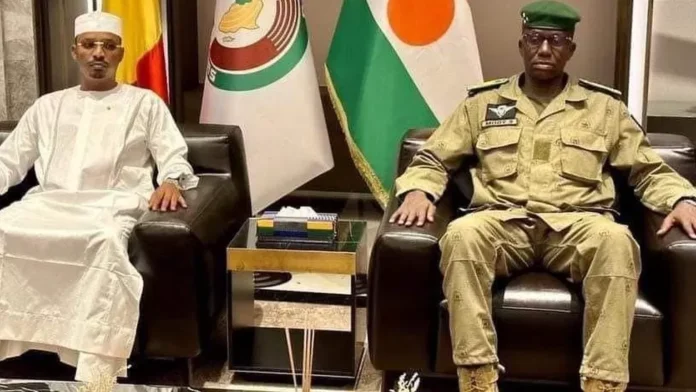
Chad’s President Mahamat Idriss Déby Itno has gone to Niamey to tell the junta to step down, Chad’s government said.

He is the first foreign leader to visit Niger since the coup, and has met junta deputy leader Gen Salifou Mody.

It is unclear whether he will hold talks with Gen Abdourahmane Tchiani, the head of the presidential guards unit who has declared himself Niger’s new ruler.

The West African leaders also announced the immediate enforcement of a no-fly zone over Niger for all commercial flights, the closure of all land borders with the country, and the imposition of financial sanctions against the junta.

Ahead of their meeting, Gen Tchiani warned Ecowas and unnamed Western nations against stepping in.

“We once again reiterate to Ecowas or any other adventurer our firm determination to defend our fatherland,” the statement, which was read out on TV, said.

The coup has prompted concern that Niger, a former French colony, could pivot towards Russia.

The ousted president had worked closely with both regional and Western nations to fight militant Islamists.

Burkina Faso and Mali moved closer to Russia after their own coups.

In Niamey, some of the protesters outside the French embassy chanted “Long live Russia”, “Long live Putin” and “Down with France”, AFP news agency reports.

They also set fire to the walls of the embassy compound.

France would not tolerate any attack on its interests in Niger, and would respond in an “immediate and intractable manner”, President Emmanuel Macron’s office said in a statement.

Niger’s coup has been condemned by Western nations, but welcomed by the leader of Russia’s Wagner mercenary group Yevgeny Prigozhin, who has reportedly described it as a triumph.

“What happened in Niger is nothing other than the struggle of the people of Niger with their colonisers,” he was quoted as saying on a Wagner-affiliated Telegram channel, although his comments have not been independently verified.

In Mali, the junta has brought in Wagner to help it fight militant Islamists.

France announced the withdrawal of its troops last year amid growing hostility from the junta.

It subsequently moved its regional military headquarters to Niger.

In June, Mali’s junta said the UN’s 12,000 peacekeepers also had to leave following a decade of countering Islamist militants.

The UN agreed, saying the withdrawal would be completed by the end of the year.

On Saturday, France said it had suspended all development aid and budgetary support to Niger. The European Union and the US have made a similar decision.

Nigerian State Imposes Curfew To Curtail Looting

Authorities in Nigeria’s northeastern Adamawa state on Sunday imposed a statewide round-the-clock curfew to stop widespread looting of food stores in the state capital Yola.

The looting saw hundreds of residents break into public and private warehouses storing grains and other commodities and cart them away.

“The Governor of Adamawa State… Ahmadu Umaru Fintiri has declared a 24-hour curfew on the state, effective immediately Sunday 30th July, 2023,” Humwashi Wonosikou, the governor’s spokesman, said in a statement.

Yahaya Nguroje, Adamawa state police spokesman, said security personnel had been deployed to enforce the curfew.

Last month Nigeria — the most populous country in Africa and the continent’s largest economy — ended a fuel subsidy regime, leading to petrol prices quadrupling and food prices soaring.

Nigeria’s economy has been weakened by recession and the fallout from Covid-19, making life hard for its 215 million citizens — nearly half of whom live on less than $2 a day.

Online video footage shows residents of Yola looting sacks of grain, cartons of pasta and other household items from a warehouse of Nigeria’s emergency management agency (NEMA).

The plunder prompted NEMA to put its warehouses across Nigeria on alert to forestall possible looting, according to agency sources.

Earlier this year the United Nations predicted that more than 25 million Nigerians would be a “high risk” of food insecurity in 2023.

Central African Republic Holds Referendum That Could Extend Touadera’s Rule

Central African Republic held a constitutional referendum on Sunday which, if passed, could allow President Faustin-Archange Touadera to run for a third term in 2025.

Touadera was first elected in 2016 for a five-year term and won reelection in 2020 for what was supposed to be his final term in office.

The proposed new constitution would abolish the two-term limit and extend the presidential mandate from five to seven years, meaning the time Touadera or another candidate could serve as president would be unlimited.

Mathias Barthelemy Mourouba, head of the country’s electoral commission, told Reuters that provisional results are expected within seven days, but they will start releasing results from some polling stations on Monday.

Opposition parties and some civil society groups called for a boycott of the referendum, saying it was designed to keep Touadera in power for life.

Speaking after he voted in central Bangui on Sunday, Touadera said he was “serene because the new constitution was at the request of the Central African people”.

Turnout was meagre at a polling station in a northern suburb of the capital Bangui early on Sunday, with around two dozen voters in the queue, according to a Reuters reporter.

“I’m hoping that my friends will come out massively to vote. What I really want is stability for the country to progress,” said Laurent Ngombe, a teacher and one of the first people to vote.

The land-locked country, roughly the size of France and with a population of around 5.5 million, is rich in minerals including gold, diamond, and timber. It has witnessed waves instability, including coups and rebellions, since independence from France in 1960.

Touadera, 66, a mathematician, has struggled to quell rebel groups that have controlled pockets of the country since former President Francois Bozize was ousted by another rebellion in 2013.

Touadera turned to Russia for help in tackling the rebels in 2018. Since then, over 1,500 troops, including instructors and private military contractors from Russia’s Wagner group, have been deployed in the country alongside the national army.

Jubilee Party Seeks To Exit Azimio Coalition – Adan Keynan Says

Eldas MP Adan Keynan has stated that the Jubilee party has chosen to distance itself from the ongoing anti-government protests and further seeks to disentangle itself from the Azimio la Umoja coalition.

Keynan stated on Citizen TV on Monday that the party does not subscribe to the opposition’s ideologies, which have resulted in the destruction of property and the loss of lives during the protests.

“Jubilee has refused and will continue to refuse to be party to maandamano that are tailor-made for the destruction of the property and lives of Kenyans,” he said.

“During the election, we were part of Azimio, we have written to exit from that coalition because it does not have the well-being of the people of Kenya and that is why today sitting here we don’t subscribe to maandamano and the sufuria revolution because we know the proponents don’t know what they are talking about.”

The legislator, who is also the party’s interim Deputy Chairperson, added that he has mobilised all party members to avoid the protests, with the exception of Jeremiah Kioni, who has been suspended as the party’s Secretary General.

“You will not see them. The only person that you know is our former Secretary General Kioni who doesn’t represent us,” he said.

Create a free account, or log in.

Gain access to read this content, plus limited free content.

Yes! I would like to receive new content and updates.

Sponsored Ad

Ad 1
Ad 2
Ad 3
Ad 4
Ad 5
Ad 6