Sponsored Ad

Ad 1
Ad 2
Ad 3
Ad 4
Ad 5
Ad 6
31.4 C
Kenya
Tuesday, May 5, 2026
Home Blog Page 3371

Anonymous Sudan: Key Weaknesses in Kenya’s Digital Finance System Exposed by Cyber Attack

Written By Lisa Murimi

Kenya although a third-world country is fast developing especially technologically.

It has been especially hailed for its achievements and advances in the digital finance sector after successfully introducing and running M-pesa, a mobile money transfer platform, and has been making significant steps in digitalising cash transactions.

But rapid digitalisation attracts its fair share of challenges, an example being threatened cyberspace, meaning that it is often susceptible to hackers and without proper security infrastructure results in significant potential losses.

Anonymous Sudan

This past week, Kenyan citizens have been grappling with helplessness following the attempted attack on Kenya’s cyberspace, rendering most online essential services useless and ineffective. This is shortly after the president launched an online platform, e-Citizen, designed to help make access to essential services easier.
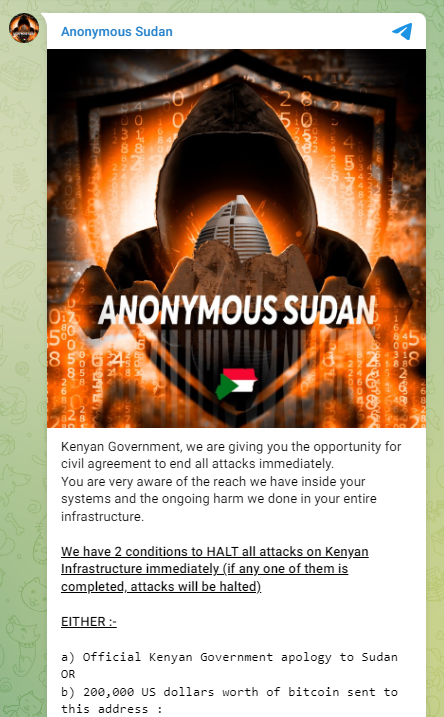
The cyber attack was directed at government agencies, financial institutions, and communication networks among other essential services that are heavily reliant on digital technology. For example, Kenyans attempting to access e-citizen received a host error message. K.P.L.C, M-pesa and Standard Chartered Bank were among those whose digital banking systems were compromised.

A Sudan-based group ‘Anonymous Sudan’ claims responsibility for the attack stating the reason being a strike out on behalf of oppressed Muslims worldwide.

How The ‘Cyber-Attack’ Affected Kenya
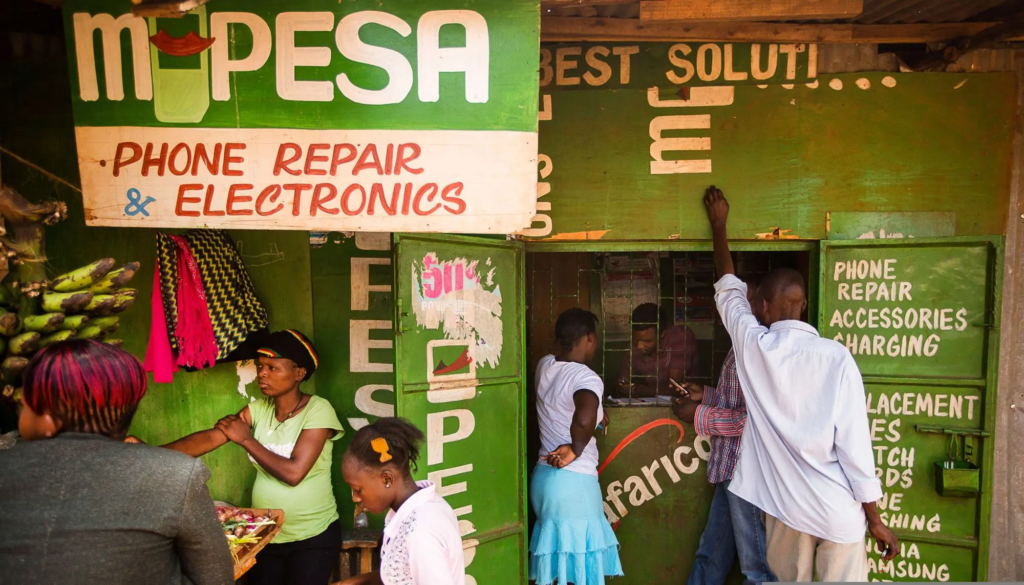
Financial losses – the attack halted many activities including tax collection in counties e.g, parking fees, leading to loss of revenue.

Customer data breaches – potential data breaches could result in increased accounts of identity theft and fraudulent transactions leading to significant financial losses for both customers and financial institutions.

Service disruption – Train services were disrupted due to a network outage by its service provider which affected the purchase of tickets. M-pesa paralysis led to losses in millions due to a reduced number of transactions. Both public and private institutions were affected.

Regulatory scrutiny – increased scrutiny due to investigations and the potential introduction of regulations to bolster cybersecurity measures may increase operational costs for service providers.

Loss of trust – loss of confidence in digital finance platforms potentially driving people back to cash-based transactions.

Reputational damage – loss of public trust regarding the safety and confidentiality of their data may increase negative reviews and ultimately lead to the business collapsing.

What Can Kenya Do Stop Cyber Attacks?

Cybersecurity investment – increasing expenses for security technologies, staff training and audits to enhance cybersecurity

Promoting awareness and education of the masses on cybersecurity

Strengthen collaboration and information sharing with the private sector to protect digital infrastructure and financial ecosystem and facilitate coordinated response to potential attacks Continuous monitoring and incident response.

Implementing real-time monitoring of digital systems can help detect and respond to cyber threats promptly. Developing an effective incident response plan is crucial to minimize the impact of any potential future attacks.

Conclusion

The suspected hacking of Kenya’s digital infrastructure serves a wake-up call to the importance of robust cybersecurity measures. Kenya can fortify its digital finance ecosystem, ensuring it remains secure, resilient, and conducive to economic growth for years to come.
Kanye West’s Twitter Account Restored After Eight-Month Ban

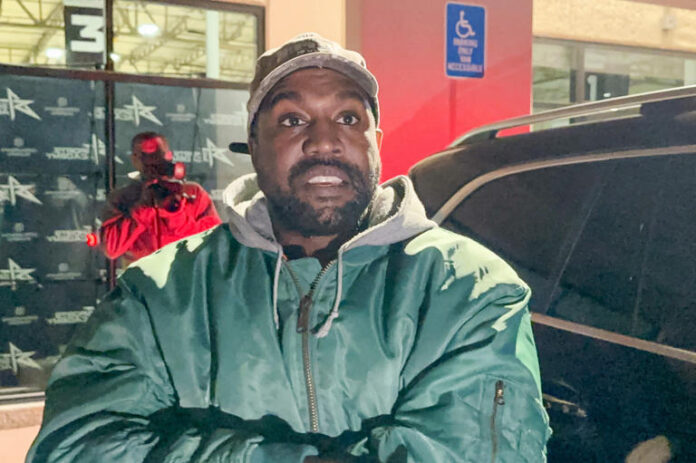
Kanye West has had his Twitter account reactivated, following a ban of almost eight months for offensive content.

The US artist – more recently known as Ye – had his account suspended in December 2022, when he was accused of violating the platform’s rules which prohibit incitement to violence.

Ye had posted a series of tweets, including one appearing to show a swastika and the Star of David.

His account, which has 31.5million followers, will be ineligible for monetization and no ads will appear next to his posts, according to New York Times tech reporter Ryan Mac. He also explains the “gold tick” next to Ye’s name – one of site owner Elon Musk’s innovations for official business accounts (which can usually run ads and enjoy increased distribution).

Ye was previously suspended from Instagram for a 24-hour period in March 2022 for using a racial slur in reference to comedian Trevor Noah. Then, in October, he was locked out of both Twitter and Instagram, after posting anti-Semitic material. At that time, his clothing brand partner Adidas cut ties with the controversial musician, saying the company “did not tolerate anti-Semitism and any other sort of hate speech.”

Anti-Semitism groups have begun to voice their distress at the rapper’s reinstatement, with the Stop Antisemitism organization tweeting today, “We are disgusted to see antisemite Kanye West unbanned by Twitter. What was once a platform for debate and discussion has simply become a cesspool for bigots to spew their hatred.”

Ye is yet to post on the site, which has been rebranded to ‘X’ during his absence. Another high-profile returner is Donald Trump, reinstated last November after Musk conducted a public poll which revealed a 51.8% result in favour of Trump’s return. Like Ye, he has to post anything since his return.

President Ruto Limits Trips Abroad By Executive To 45 Days

The government has issued new orders limiting the number of days government officials can travel overseas per year.

The days have been capped at 45 days per year, with officials not being allowed to travel for more than seven days per trip.

In a communique dated July 29, and released by Chief of Staff and Head of Public Service Felix Koskei, Cabinet secretaries, PS, chairpersons and CEOs of state corporations will only be allowed to travel for events that have a bearing on policy and will not be allowed to travel for more than 15 days per quarter.

The size of the delegation is also limited to four people for CSs, which includes the Cabinet secretary, as the head of delegation and three people for the other categories of state officials.

Personal assistants and security personnel will not be approved for travel, Koskei said in the communique.

He added the delegations should have the most relevant technical staff who will assist the principal in meetings and deliberations.

The move is a continuation of the suspension of non-essential foreign travel that was put in place.

Koskei said that his office, as part of the application review process, will obtain advisory from the Foreign Affairs ministry on the necessity of participation of a delegation from the ministry over and above onsite foreign service staff.

Koskei reiterated that requests for travel will continue to be obtained from President William Ruto through his office.

He said that technical meetings should be attended by technical officers with the requisite expertise and added that calendars should be synchronised so that not both CS and PS are away at the same time.

Officers were also told to submit requests for travel at least seven working days before travel.

A caution was also made on benchmarking visits, which should be associated to a gazetted reform initiative targeting policy that is towards finalisation.

Ministries were also advised to opt for virtual participation in international conferences and workshops with the chief of staff saying that approval will not be granted for foreign travel for internationally hosted trainings, meetings and events organised by local and regional based public/private institutions.

Busia Receives 222,000 Fertiliser Bags

The government, through the Ministry of Agriculture, has given 222,000 bags to subsidised farmers to be used by farmers in Busia County during this second planting season.

Speaking during the launch of the fertiliser distribution at Amukura in Teso South Sub County on Friday, UDA Secretary General Cleophas Malala said that the price of the commodity has been reduced further from Sh3,500 per 50 kg bag to Sh2,500.

“When the president was being sworn in last year, fertiliser was sold at Sh7,000, but it was later reduced to Sh3,500,” he said, adding that it has now been reduced further to Sh2,500.

Malala added that the President directed that the fertiliser be given to counties that have two planting seasons.

“We have 30 counties that experience short rains countrywide,” he said, adding that priority was given to counties within Western Kenya.

He further stated that farmers will get the fertilisers from stores within each sub-county instead of travelling long distances to the National Cereals and Produce Board.

“Next season, the President has said that he will ensure that Kenyan seed also reduces the price of certified seeds,” he said, adding that the government will also provide lime so that farmers can use it to neutralise the acidic soil in the area.

The official warned cartels against repackaging the subsidised fertiliser with the aim of selling it to unsuspecting farmers at a higher price.

“All farmers must be registered by Assistant chiefs and the subsidised fertiliser will be sold to farmers depending on the number of acres,’ he said.

The Principal Secretary in the State Department of Crops, Kello Harsama, said that distribution of fertiliser will start in counties within Western Kenya.

Harsama noted that farmers in the region received the fertiliser late during the last planting season, thereby negatively impacting their harvest.

“The President has also directed that the commodity will be distributed from various stores created by the local leadership in collaboration with the Cereal Board.

Busia Governor Paul Otuoma said that his government will work closely with the National Government to deploy 10 more Agricultural extension officers to assist farmers.

Otuoma added that the county had ordered over 42,000 metric tonnes of cotton to be given to farmers for planting.

“That is why we have advised farmers to form Cooperatives consisting of 1,000 per ward so that we can give them farm inputs and monitor their productivity,” he said.

Busia County Commissioner Kipchumba Ruto said that Busia has a very high Agricultural potential and only needs farm inputs to be food secure.

Ruto added that around 113,000 farmers have been registered through the assistance of chiefs and assistant chiefs in less than 10 days, which was organised by the National government in preparation for subsidised fertiliser last year.

Teso South MP Mary Emase reiterated that farmers will not have to travel long distances to get the subsidised fertiliser.

Emase also urged the government to establish depots in every sub-county where farmers can purchase subsidised certified seeds for planting.

Last season, Busia received 23,000 bags of fertiliser and sold 12,140 bags, adding that around 10,925 are still in the stores.

39-Year-Old Kericho Man Seeks Help For 16-Year Bullet Wounds

A 39-year-old man living with bullets lodged in his chest for the last 16 years in Telanet village within Kericho County is appealing to well-wishers and the government to help him raise money in a bid to seek medical attention.

Collins Kiprono was hit by stray bullets in Kericho town as police were dispersing demonstrators in the wake of the 2007/2008 post-election violence and his life has never been the same since December 26, 2007.

He senses that the bullets, which are lead, may have leaked into the bloodstream, causing his ill health and wants to confirm the extent of damage they have caused.

In an interview with KNA at his home, Kiprono testified that his health began to deteriorate in 2020.

“I am always worried about my fate and it is not easy to live with bullets in your body,” adds Kiprono, who needs a CT scan to help him determine his next course of medical action.

A look at his back confirms the same, with two distinct permanent marks clearly showing the bullets had been directed from behind before being embedded inside his chest cavity.

The father of three earns a living by roasting maize at Kapsoit Market, a venture he opted to take up due to his deteriorating health.

“I used to engage in farming and sell my maize and bean crops to the surrounding markets within my area, but now, due to my failing health, I have stopped all this. I buy maize from other farmers from the different sub-counties within Kericho and manage to roast and sell it within Kapsoit Market. I am committed to this business, having started it in 2015 and the monies I earn go to provide for all the basic needs of my family,” added Kiprono.

With fear in his eyes, he says he understands that, with the bullets still lodged in his body, time is ticking away and he is living on borrowed time.

“For the last three years, each time I engage myself in heavy tasks like digging my shamba or carrying heavy loads, I always cough blood and my breathing system is not okay because I experience laboured breathing. I cannot stand up straight each time I wake up in the morning. I have to wait several minutes for my back muscles to relax on their own before I can stand up and walk. I now walk with a slight hunch,” a teary Kiprono narrates.

Having defaulted on his NHIF contributions as the proceeds from his maize roasting business are inadequate to cater for all his family’s needs, the class eight dropout now appeals for medical and financial assistance to aid his deteriorating health.

“From July 2013, I have defaulted on my Sh500 per month National Hospital Insurance Fund (NHIF) contributions. I used to engage in casual work but the money I would get paid would all go to feeding my young family of three. Currently, my two daughters are in primary school, my eldest is in Class 8 and I am not able to go for another CT scan to confirm my health status,” added a worried Kiprono.

Kiprono, the first born in a family of three, narrates how on that day he had paid a visit to his grandmother’s home at Kipchimchim village on the outskirts of Kericho town and decided to walk to the town while heading back to his home.

On reaching Kericho town, he met a crowd of people and was unsure what was going on. Though curious, the sight of police officers brought him to the reality that all was not well, and he immediately started running with no clear direction for where he was going.

Kiprono adds that he suddenly started sweating profusely with sudden body weakness, like having cold water poured on him without a warning.

He was not sure whether he was alive or dead but the sight of blood on his torn shorts made him cry for help while lying on the stone pavement near the Kericho County Referral Hospital Mortuary.

Passersby rushed him to the Kericho County Referral Hospital using the mortuary entrance, where he was immediately taken for an operation and later admitted to a ward at the facility.

He remained there for three days before being discharged, but with bullets still lodged in his chest, as doctors maintained that any operation would result in his death.

“I came to know that I was shot and two bullets were lodged in my chest. I only got to know about this from the doctors attending to me while I was admitted at the Kericho County referral hospital,” he added.

His family members took him to Tenwek Mission Hospital, where an x-ray opinion confirmed his worst fears. Any operation conducted to remove the bullets would be very risky.

A medical discharge summary dated January 17, 2008, from the medical facility confirms that he has bullets lodged in his body. It states ‘that a gunshot wound to the right chest retained the bullet.’

The doctors advised him to attend medical checkups on a regular basis, a thing Kiprono admits he has not been committed to due to his low income.

“Being a class 8 dropout, I have dreams of my children growing up to be better than I was.” I have never disclosed to them my condition,” adds Kiprono.

His 31-year-old wife, Caroline Chepkoech, revealed that he met Kiprono in 2010 and decided to spend the rest of her life with him, knowing too well that life with him would be full of challenges as he has two bullets lodged in his body.

Chepkoech is worried as her husband, the family’s breadwinner, has been coughing up a lot of blood and has given up all hope that he will get any assistance.

The family can be reached at 0711 868834 or 0723 401633.

Gov’t Launches Free Wi-Fi in 2 Counties

CS Eliud Owalo, on Saturday, July 29, led the Kenya Kwanza government in launching free Wi-Fi in Homabay and Siaya counties.

By launching the free service, the ICT CS, fulfilled one of the Kenya Kwanza administration’s campaign promises. This move mainly aims to expand the country’s ICT infrastructure. It is also geared to empower Kenyans with essential digital skills for the future of work.

During the launch event at Asumbi Girls High School, CS Owalo expressed his commitment to connect more areas in the region to the Internet. He also emphasized the significance of digital skills in enhancing the capabilities of Kenyans.

The CS also added that the connectivity will prepare Kenyans for various employment opportunities.

“We are determined to establish digital laboratories in every ward. This will enable people in villages to acquire essential digital skills,” announced CS Owalo.

Additionally, the ministry plans to deploy a total of 25,000 Wi-Fi hubs nationwide. According to the CS, markets and bus termini will be given top priority.

The CS stressed that this initiative would be a game-changer in addressing the shifting employment landscape. He added that this venture would reduce the unemployment rate in the country.

CS Owalo further encouraged young people to seize the opportunities presented by the digital space. He urged them to register for training programs to gain the necessary technical expertise for online employment.

To implement the project, the government will collaborate with tech giant Google and local telecom providers to commission the Wi-Fi hotspots. Other counties have already been connected to the free Wi-Fi network as part of this ongoing project.

Kenya is renowned as one of the leading tech hubs in the region. The Kenya Kwanza administration remains committed to providing last-mile connectivity to major urban centers across all counties.

CS Owalo highlighted the ICT ministry’s comprehensive blueprint, ensuring that every part of the country becomes accessible to the Internet.

This move is set to bridge the digital divide, empower citizens with essential digital skills, and open up new opportunities for economic growth and development in Kenya.

Kenya To Deploy 1,000 Police Officers To Help Restore Normalcy In Haiti

Kenya is ready to lead a multinational force in Haiti and will deploy 1,000 police officers to the strife-torn Caribbean nation once its offer is accepted, Foreign Affairs Cabinet Secretary Alfred Mutua has said.

“At the request of Friends of Haiti Group of Nations, Kenya has accepted to positively consider leading a Multi-National Force to Haiti,” Mutua said.

“Kenya’s commitment is to deploy a contingent of 1,000 police officers to help train and assist Haitian police to restore normalcy in the country and protect strategic installations.”

Gangs control about 80% of the Haitian capital, and violent crimes such as kidnappings for ransom, armed robbery and carjackings are common.

United Nations Secretary-General Antonio Guterres and Haitian Prime Minister Ariel Henry have for nearly a year sought international intervention to help support the police, but no country had stepped forward.

Its proposed deployment still required a mandate from the U.N. Security Council and approval from domestic authorities, said Mutua.

U.S. Secretary of State Antony Blinken spoke by phone Friday night to Kenyan President William Ruto, according to State Department spokesperson Matthew Miller.

Despite her own security challenges due to Alshabaab and bandits in the north, Kenya is seen as a democratic anchor in East Africa and has participated in peacekeeping operations in its immediate region including in the Democratic Republic of Congo and Somalia.

Haiti, the Western Hemisphere’s poorest nation, has seen compounding humanitarian, political and security crises, with gangs controlling most of Port-au-Prince.

Guterres said this month that violence had continued “to escalate and spread,” citing killings, kidnappings, rape of women and girls, looting, and the displacement of thousands of people.

Guterres, relaying a request from Henry, began calling in October for an international, non-U.N. deployment to help support police in the troubled nation.

The Security Council this month adopted a unanimous resolution encouraging member states “to provide security support to the Haitian National Police,” including through “the deployment of a specialized force.”

But the text, which focused on a one-year extension of the mandate for the special U.N. political mission to Haiti, BINUH, stopped short of making direct plans for such a force.

The council has asked Guterres to present by mid-August a report on all possible options, including a U.N.-led mission.

Earlier this month, Blinken said the U.S. remained active in its search for a country to head a multinational force in Haiti.

This week, Washington ordered nonessential personnel and family members of government employees to leave the country.

Staff at the U.S. embassy in Port-au-Prince already live under tight security — confined to a protected residential area and forbidden to walk around the capital or use any public transport or taxis.

Colombian President’s Son Arrested On Money Laundering Charges

Colombian President Gustavo Petro’s son Nicolas was arrested Saturday on charges of money laundering and illicit enrichment in a scandal linked to Petro’s election campaign, officials said.

Colombia’s first leftist president wrote on Twitter, which is being rebranded as X, that police arrested his son and the son’s ex-wife Daysuris Vasquez.

In March, in an interview with the magazine Semana, Vasquez alleged that Nicolas Petro, who is 37, received large amounts of money from drug traffickers and smugglers in 2022 for his father’s ultimately successful presidential campaign.

But instead, the younger Petro used it to live in luxury in the northern city of Barranquilla, Vasquez alleged.

Petro wrote: “I wish my son luck and strength. May these events build his character and may he reflect on his mistakes.”

“As a person and father it hurts to see so much self-destruction,” he added, and vowed to stay out of the legal proceedings involving his son.

Prosecutors confirmed the arrest of Nicolas Petro on charges of money laundering and illicit enrichment. Vasquez was also charged with that first offence.

Since the scandal broke, President Petro has denied receiving money from the country’s powerful cocaine lords. He himself asked that his son be investigated.

Nicolas Petro was a lawmaker for his father’s party in the Northern Atlantic department. News outlets published bank records of his showing he had far more money than would correspond to his salary from Congress.

In that department and elsewhere along Colombia’s Caribbean coast, the younger Petro became a key player in his father’s drive to become president.

People in the country’s Caribbean region have historically been wary of leftist politicians, but in 2022 they did support Petro as the country elected him as its first leftist president after decades of rule by conservatives.

Vasquez said in the March interview with Semana that her former husband received the equivalent of $124,000 from a former drug trafficker named Samuel Santander Lopesierra.

She said that President Petro was not aware of the money Nicolas Petro got from this man.

Santander Lopesierra served 18 years in prison in the United States for drug trafficking.

In another scandal, involving illegal wiretaps, the former Colombian ambassador to Venezuela, Armando Benedetti, threatened to reveal what he said were irregularities in the Petro campaign in the Caribbean region.

In conversations with the president’s ex-chief of staff, Laura Sarabia — these talks were leaked to the press — Benedetti suggested that Nicolas Petro was involved in these irregularities.

Singer Detained For Dropping Shorts On Stage At Festival In China’s ‘City Of Rock’

A singer who pulled down his pants during a performance at a rock festival in northern China has been detained by authorities, the latest incident highlighting the fine line artists must tread in a country where the space for free expression is highly limited.

In a statement Monday, the local culture bureau of Shijiazhuang city said the singer – identified by the surname Ding – was detained by police for “damaging social morality.” Meanwhile, a show organizer was fined $28,000 and suspended from hosting concerts, it added.

Videos on Chinese social media show the frontman of the band Violent Champagne drop his shorts during a gig at the Rock Home Town festival in the city on Saturday.

“Drop the briefs!” audience members can be heard chanting in the videos. But the footage shows the singer keeping his underwear on.

The recent return of live performances after years of pandemic lockdowns has been welcomed by music lovers in China.

But as the events in Shijiazhuang have showed, authorities keep a close watch and react to anything perceived to cross unacceptable political or moral lines.

Shijiazhuang, the capital of the Hebei province surrounding Beijing, has been known for its indie music scene, something city officials have been keen to capitalize on.

Earlier this month the city announced it would host the Rock Home Town festival until October to help attract tourists and boost consumption amid China’s sluggish post-Covid economic recovery.

But many commentators online questioned how dedicated officials really were to the ethos of rocking out in the wake of the singer’s detention.

“Shijiazhuang wants to be the City of Rock, but do you have that gene?” said a comment on China’s Twitter-like Weibo following the singer’s detention.

“Before you start to rock, you are rolled away,” another quipped.

The Shijiazhuang culture bureau said Violent Champagne were not part of the festival’s official lineup, according to a report in state-run Jimu News.

In its statement Monday, the bureau said it would “strengthen supervision of performances” at the event.

“We hope that performers and staff will consciously abide by laws and regulations, strengthen morality, and provide healthy and positive entertainment for audiences,” it said.

Shijiazhuang was put on the music map in 2010 when the song “Kill the One from Shijiazhuang” by local band Omnipotent Youth Society was released and became a hit.

The melancholic tune carried lyrics depicting a man’s frustration with the banality of life – a sentiment that resonated among many in the predominantly working class province known for its iron and steel industries.

The song came back into the limelight again in 2021 when the Communist Youth League of Hebei changed the title to “The Shijiazhuang man that can’t be killed,” recasting the lyrics glorifying China’s resilience and its rapid economic development in the past decades.

That rendition received an immediate backlash on China’s video sharing platform Bilibili, with many netizens criticizing the awkward instillation of “positive energy” by party officials into a song that originally had a very different sentiment.

Video Shows Bronny James Playing Piano After Hospital Release

LeBron James shared a video of eldest son Bronny James playing the piano on Saturday, five days after the teenager suffered a cardiac arrest during practice with his college team.

The video posted on Instagram by NBA superstar James showed 18-year-old Bronny playing on the piano with younger brother Bryce and sister Zhuri watching nearby.

“A man of many talents,” LeBron James can be heard to say after the brief performance.

In a caption accompanying the video, James wrote: “(Bronny) you are amazing!!! Simple as that! Keep going…We’re here right with you every step of the way.”

Meanwhile separate photographs published by the TMZ.com celebrity news website on Saturday showed LeBron James, Bronny James and the rest of the family heading out for dinner in Santa Monica, California on Friday.

Bronny James was rushed to hospital on Monday after collapsing during a pre-season training session with the University of Southern California basketball team.

Cedars Sinai Medical Center staff said on Thursday the teenager had been discharged from hospital and was now resting at home.

“Although his workup will be ongoing, we are hopeful for his continued progress and are encouraged by his response, resilience, and his family and community support,” the hospital said in a statement.

According to the American Heart Association, only about 1 in 10 people survive an out-of-hospital cardiac arrest, which occurs when the heart stops abruptly with little or no warning.

James’ cardiac arrest came just over a year after another USC basketball player, Vince Iwuchukwu, suffered heart failure and collapsed during an informal practice. Iwuchukwu subsequently made a full recovery.

Bronny James committed to playing for the USC Trojans in May after becoming one of the top prospects in US high school basketball.

He capped a stellar senior year campaign at the exclusive Sierra Canyon school in Los Angeles with 15 points in an all-star game of top college candidates, sinking five 3-pointers.

Create a free account, or log in.

Gain access to read this content, plus limited free content.

Yes! I would like to receive new content and updates.

Sponsored Ad

Ad 1
Ad 2
Ad 3
Ad 4
Ad 5
Ad 6