





Sponsored Ad

Ad 1
Ad 2
Ad 3
Ad 4
Ad 5
Ad 6
25.3 C
Kenya
Wednesday, May 6, 2026
Home Blog Page 3390

Why America Stopped Building Public Pools

Growing up in Louisville, Kentucky, Gerome Sutton looked forward all week for his chance to swim at Algonquin Park pool on the weekend.

“It was like Christmas in the summer time,” said Sutton, now 66 and a local minister. “It was the best time of the week.”

Louisville’s public parks were desegregated in 1955, a year before Sutton was born. This included the newly built Algonquin outdoor swimming pool on the West Side of Louisville.

It cost 35 cents to swim at Algonquin at the time, Sutton said. He and his seven siblings took turns going on alternating weekends because the family could not afford to send all eight children at the same time.

“We would go swimming. That makes a big statement” against segregation, he said. “There was an organized effort on the part of government to keep children engaged with an activity.”

Public pools have played a critical role in American culture over the past century. But as climate change and extreme heat worsen, they are taking on an urgent public health role. Heat kills more Americans than any other weather-related disaster, according to data tracked by the National Weather Service.

Yet just as public pools become more important than ever, they’re disappearing from sight.

Pools have become harder to find for Americans who lack a pool in their backyard, can’t afford a country club, or don’t have a local YMCA. A legacy of segregation, the privatization of pools, and starved public recreation budgets have led to the decline of public places to swim in many cities.

“If the public pool isn’t available and open, you don’t swim,” Sutton said.

‘Swimming is mental health’

In the early 2000s, Louisville had 10 public pools for a population of around 550,000.

Today, the city has five public pools for a population of around 640,000, ranking 89 out of the largest 100 cities in swimming pools per person, according to Trust for Public Land, an advocacy organization for public parks and land.

Algonquin is the only pool left in West Louisville, and residents say the city has neglected basic maintenance and improvements for years.

This summer, as temperatures climb to the 90s in Louisville, Algonquin is closed for repairs, leaving around 60,000 people — most of whom are Black and middle-or-lower income households — without convenient access to the water.

Some will miss out on a chance to learn how to swim, get more comfortable in the water, and build life-saving skills. Kids and teens won’t have a key place to gather and play during the summer months when school is off. And seniors can’t participate in Aqua Zumba fitness classes held at Algonquin during the summer to help them stay active.

“Swimming is mental health. It’s therapy. You have to have activities. It’s bigger than just a pool,” said Louisville Councilwoman Tammy Hawkins, who represents the district.

Swimming disparities

Access to swimming pools has long been hotly contested in America.

Giant municipal pools were built in the first half of the twentieth century, and desegregating public pools was a key target of the civil rights movement. But, strapped for funding, many local governments have neglected public pools.

“We’ve gotten to a point where a lot of the recreation taking place in the summers is happening in private spaces or in places with lack of support,” said Andrew Kahrl, a historian at the University of Virginia and author of “The Land Was Ours: How Black Beaches Became White Wealth in the Coastal South.”

“We’ve seen the complete erosion of the public side of this equation,” Kahrl said.

There is one outdoor public pool for every 38,000 people in America — from 34,000 in 2015 — according to the National Recreation and Park Association.

The retreat of government and privatization of swimming pools and recreation has hurt poor and minority groups hardest, historians and public recreation experts say.

“Poor and working-class Americans suffered most directly from the privatizing of swimming pools,” writes Jeff Wiltse, a historian at University of Montana, in “Contested Waters: A Social History of Swimming Pools in America.”

Today, 79% of children in families with household incomes less than $50,000 have no or low swimming ability, according to a 2018 study. Sixty-four percent of Black children, 45% percent of Hispanic children and 40% of White children have no or low swimming ability, the study found.

When America built pools

While public pools are a rarer sight today, governments built enormous pools during the twentieth century.

The New Deal led to the biggest burst of public pools in American history. The federal government built nearly 750 pools and remodeled hundreds more between 1933 and 1938.

New York Parks Commissioner Robert Moses opened 11 pools funded by the federal Works Project Administration, and San Francisco opened Fleishhacker Pool, the largest of the era.

A 1933 survey of Americans’ leisure activities found that as many people swam frequently as went to the movies.

“Pools became emblems of a new, distinctly modern version of the good life that valued leisure, pleasure and beauty,” Wiltse writes.

Racial violence

Before the 1920s, swimming pools in the North were segregated along gender lines but not racial ones.

This changed as they became gender integrated.

Racial stereotypes around cleanliness and safety, as well as intense fears of Black men interacting with White women in bathing suits, turned pools into some of the most segregated public spaces in America, said Victoria Wolcott, a historian at the University at Buffalo and author of “Race, Riots, and Roller Coasters: The Struggle over Segregated Recreation in America.”

In the late 1940s, there were major swimming pool riots over integration in St. Louis; Baltimore; Washington, D.C.; and Los Angeles, Walcott said. In Cincinnati, Whites threw nails and glass into pools, and in St. Augustine, Florida, they poured acid into the water to prevent Black swimmers.

The Kerner Commission, tasked with studying the underlying causes of disorder in cities during the 1960s, found in its landmark 1967 report that the lack of recreation facilities, including pools, was a “deeply-held grievance” among Black people fueling urban unrest during sweltering summers.

Abandoning public pools

Gaining entry to swimming pools was a top priority for civil rights groups, who saw recreation as a fundamental human right.

In Martin Luther King Jr.’s 1963 Letter from a Birmingham Jail, he described the tears in his daughter’s eyes when “she is told that Funtown is closed to colored children.”

But the success of the civil rights movement integrating pools coincided with a surge of private pools and swim clubs.

Millions of middle-class White families left cities for the suburbs and built pools in their new backyards during the era. New suburbanites chose to organize country clubs with fees rather than build pools open to the public.

From 1950 to 1962, 22,000 private swim clubs opened, mostly in White suburbs.

The development of private, gated communities and homeowners associations in the suburbs also led to the privatization of recreation. Towns formed their own tax bases and local governments with their own services and amenities.

“The decline of public pools happens at the same time as the push to privatization,” said Wolcott.

Some parts of the South revolted against integration by paving over or draining their pools rather than integrating them. Of the public pools open in 1961 in Mississippi, for example, nearly half had closed by 1972.

As Whites withdrew from public pools and parks, taxpayer funding and support for pools dwindled. In Cleveland, the city’s recreation budget was cut by 80%.

Disinvestment in public recreation grew following tax revolts of the late 1970s, Kahrl said. In 1978, California voters passed Proposition 13, which slashed local property tax rates and made it more difficult for the state to fund public recreation.

As cities closed pools and stopped maintaining existing ones, private swim clubs filled the void for those who could access them and backyard pools proliferated.

In 1972, there were 1.1 million residential pools, according to pool industry market research firm PK Data. Two decades later, there were 3.8 million.

Starved budgets

Lifeguard shortages and underfunded public recreation departments continue to strain local pools.

Parks and recreation agencies tend to be the first area to cut when budgets are tight and the slowest to get money back, said Kevin Roth, vice president of research, evaluation and technology at the National Recreation and Park Association.

“The budget challenge is something we’re very concerned about. It’s not new and it’s not going away anytime soon,” he said.

Public pools are costly for cities to maintain and insure.

Cities also have struggled to staff pools with lifeguards. High-school and college students have more summer job options and are less likely to pick up a job as a lifeguard over the summer than they once did, he said.

But the loss of public pools cannot be picked up fully by private pools or non-profit groups.

To give people in West Louisville a place to swim this summer, the city approved $100,000 in funding for free summer passes to the YMCA and an amusement park.

Passes will be only be available to a limited number of residents, and many residents lack transportation to get to the YMCA or amusement park.

Louisville’s metro government has allocated $6 million to renovate Algonquin and another local pool. But some local residents and leaders say renovating the Algonquin pool is not enough.

They want an indoor swimming pool open all year, like the aquatics center on the predominantly White East Side of the city, so people can access the water, take classes and stay fit.

“I would love for it to be year-round with water safety classes,” said LaShandra Logan, 35, who grew up in West Louisville and has gone to Algonquin since she was a child.

Last year, she learned how to swim through a local non-profit group, Central Adult Learn-to-Swim. Eighty-seven percent of the program’s students are Black and 85% are women.

“My biggest fear was drowning, and I wanted to learn,” Logan said. “I felt like if I could learn how to swim nothing else could intimidate me.”

She is currently enrolled in a lifeguard instruction class and wants to help other people in the community learn how to swim. Currently, there is a 2,500-person wait list of adults in Louisville who want to learn to swim through the non-profit.

“It’s a life-changing experience,” Logan said.

Wilson To Rescue As Newcastle Draw 3-3 With Villa

Callum Wilson scored a second-half equalizer as Newcastle recovered from a two-goal deficit to secure a 3-3 draw with Aston Villa in their Premier League pre-season friendly in Philadelphia on Sunday.

Newcastle, the surprise package of the Premier League last season after securing a top-four finish and a ticket to the Champions League, were rocked early on after Villa took the lead after just seven minutes through Ollie Watkins.

Villa midfielder Emi Buendia split the Newcastle defence with a fine run before passing to Watkins who controlled deftly to fire home a low finish.

Buendia doubled the Villa lead four minutes later with a rasping finish to beat Newcastle goalkeeper Martin Dubravka and make it 2-0.

Newcastle however hit back on 28 minutes when a long ball by Jacob Miller caught the Villa defence napping, allowing Elliot Anderson to control before tucking away a low shot.

The Magpies, who will play Villa in their opening Premier League fixture on August 12, leveled on the stroke of half-time, with Swedish international Alexander Isak burying a rebound from close range.

Newcastle manager Eddie Howe and Villa counterpart Unai Emery made a flurry of substitutions at half-time but it was the impressive Buendia who struck next.

Another surging run by the Argentine launched a Villa counter-attack which ended with teenager Omari Kellyman firing a shot off the foot of the post.

Buendia was alert to the rebound and tapped in from close range to make it 3-2.

Once again though, Newcastle were able to take advantage of Villa’s high defensive line.

A superb pass over the top from Jamal Lascelles found Anthony Gordon, whose shot was parried but only as far as Wilson, who stroked home for 3-3.

Twitter To Be Renamed X, Get New Logo

Twitter’s owner Elon Musk and its new CEO said Sunday that the social media network would ditch its bird logo, be rebranded with the name X and move quickly into payments, banking and commerce.

Founded in 2006, Twitter takes its name from a play on the sound of birds chattering, and it has used avian branding since its early days, when the company bought a stock symbol of a light blue bird for $15, according to the design website Creative Bloq.

Late on Sunday night, Musk changed his profile picture to the company’s new interim logo — a white X on a black background — and changed his Twitter bio to “X.com”.

Musk said the company was “Going with (a) minimalist art deco” logo, and that “X.com now points to twitter.com.”

He had earlier tweeted that “If a good enough X logo is posted tonight, we’ll make (it) go live worldwide tomorrow.”

Musk also tweeted that under the site’s new identity, a post would be called “an X.”

The changes were not visible on the website as of 0530 GMT Monday.

Musk had already named Twitter’s parent company the X Corporation, and previously said his takeover of the social media giant was “an accelerant to creating X, the everything app” — a reference to the X.com company he founded in 1999, a later version of which went on to become payments giant PayPal.

Such an app could still function as a social media platform, and also include messaging and mobile payments.

“Powered by AI, X will connect us in ways we’re just beginning to imagine,” Twitter chief executive Linda Yaccarino tweeted Sunday.

Yaccarino, an advertising sales executive at NBCUniversal who Musk poached last month to become Twitter’s CEO, said the social media platform was on the cusp of broadening its scope.

“X is the future state of unlimited interactivity – centered in audio, video, messaging, payments/banking – creating a global marketplace for ideas, goods, services, and opportunities,” Yaccarino tweeted.

– New revenue streams –

Since Musk bought Twitter for $44 billion last October, the platform’s advertising business has partially collapsed as marketers soured on mass firings at the platform that gutted content moderation — as well as on Musk’s management style.

In response, the billionaire SpaceX boss has moved toward introducing payments and commerce through the platform in a search for new revenue.

Twitter is thought to have around 200 million daily active users, but it has suffered repeated technical failures since the 52-year-old Tesla founder bought the app and sacked much of its staff.

Since then, many users and advertisers alike have responded adversely to the social media site’s new charges for previously free services, its changes to content moderation and the return of previously banned right-wing accounts.

Musk said earlier this month that Twitter had lost roughly half of its advertising revenue since he took control in October.

Facebook parent Meta earlier this month launched its own text-based platform, called Threads, which has up to 150 million users according to some estimates.

But the amount of time users spend on the rival app has plummeted in the weeks since its launch, according to data from market analysis firm Sensor Tower.

15 Dead, 19 Missing After Indonesia Boat Sinks

At least 15 people were killed and 19 more were missing on Monday after a wooden boat sank off the coast of Indonesia’s Sulawesi island, search and rescue officials said.

The boat sank with 40 people onboard just after midnight local time (1700 GMT on Sunday), the local office of Indonesia’s search and rescue agency said in a statement.

Six people were rescued and taken to hospital for treatment, it said, and the cause of the sinking was being investigated.

“Provisionally, there are 19 people who are still being searched for,” Muhamad Arafah, head of the local search and rescue agency in Kendari city in Southeast Sulawesi, said in the statement.

One search team will dive around the accident site, while another will search the water’s surface using boats, he said.

The agency shared images of rescuers mobilising for the search effort, and several dead bodies covered by sarongs laid on tarpaulin at a local hospital.

The boat was crossing a bay between the villages of Lanto and Lagili in Central Buton regency on Muna island in Southeast Sulawesi, the local office’s spokesperson Wahyudin, who like many Indonesians goes by one name, told AFP.

Wahyudin said the vessel was a wooden passenger boat and not a ferry as initially reported.

He warned the total number of passengers on board could have been higher than registered but refused to confirm local media reports the boat was overcrowded.

Indonesian media reported that villagers had travelled for a local celebration and gathered on an overcrowded boat that capsized on its way back across the bay.

Wahyudin said the agency would provide an update on the cause and missing passengers later on Monday.

It is common in Indonesia for the number of actual passengers on a boat to differ from the manifest.

Marine accidents occur frequently in the Southeast Asian archipelago nation of around 17,000 islands, where people rely on ferries and small boats to travel around despite poor safety standards.

In 2018, more than 150 people drowned when a ferry sank in one of the world’s deepest lakes on Sumatra island.

In May last year, a ferry carrying more than 800 people ran aground in shallow waters off East Nusa Tenggara province and remained stuck for two days before being dislodged.

No one was hurt in that accident.

Hughes Once Again Predicts British Record Time

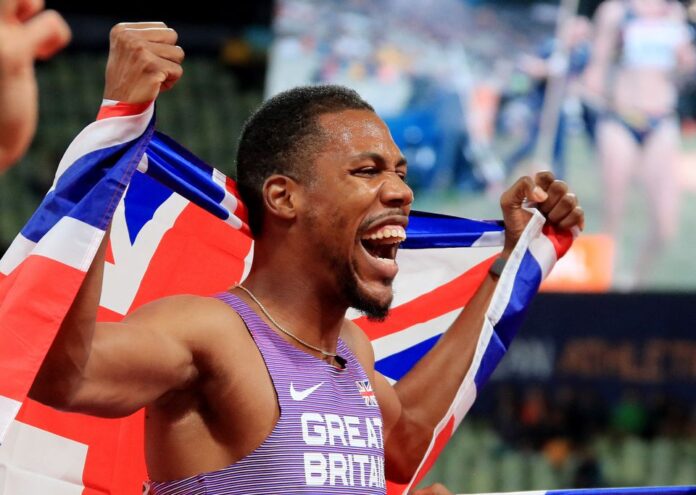
Zharnel Hughes has done it again.

A second British record smashed – and a second occasion on which the 28-year-old accurately predicted his time on the morning of his race.

Hughes was roared on by a sell-out 50,000 crowd at the London Diamond League on Sunday as he clocked 19.73 seconds to break John Regis’ 30-year 200m mark.

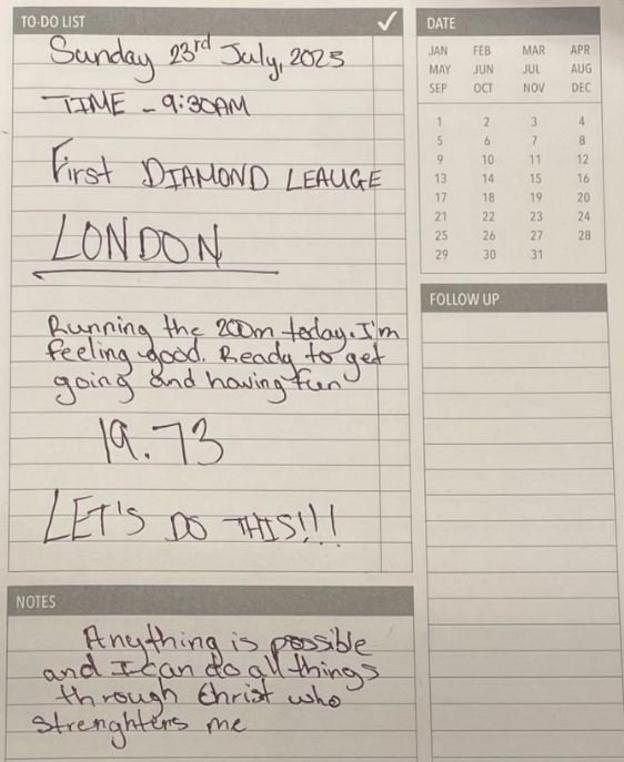
That came just 29 days after he had beaten Linford Christie’s equally long-standing 100m record, running 9.83 secs in New York and later revealing he had written that exact number in his notebook.

Remarkably, following Sunday’s third-place finish behind American world 200m champion Noah Lyles and Botswana’s Letsile Tebogo, the Briton revealed that had been no fluke.

“I predicted it, I wrote down that exact time this morning, at about 9:30am,” Hughes said following his run at London Stadium.

“I wanted to get the British record here on home soil and I did it.”Zharnel Hughes tweeted an image of a note in which he predicted his 200m British record

Hughes, the fastest man over 100m in the world this year, later tweeted a picture of his prediction – once again perfect to the hundredth.

Alongside the time he had written: “Running the 200m today. I’m feeling good. Ready to get going and having fun.”

The European 200m champion had not been willing to commit to targeting Regis’ record, despite Lyles casually insisting that was “definitely” attainable for his “modest” rival during Saturday’s news conference.

Lyles, who plans to chase a trio of gold medals at next month’s World Championships in Budapest, was proven correct as Hughes shaved 0.21 secs off the previous mark.

The American backed up his own grand ambitions by moving clear on the home straight to take victory in 19.47 secs.

“I don’t care about winning, as long as I execute the time that my coach wanted and got the British record,” Hughes said.

“We’ve got things I can work on but I executed my race and that was to get to 60m as fast as possible, then just maintain from there.”

On being neck-and-neck with Lyles coming off the bend, Hughes added: “I think Noah was playing off me slightly. He was ready to chase me down!”

Evidently in the form of his life and under the continued expert guidance of Glen Mills – the coach who oversaw retired sprinting legend Usain Bolt’s capture of eight Olympic gold medals – Hughes could not hope to be in a better place before bidding for a first global title later this summer.

At home in Jamaica, on the wall of his living room, a vision board lays out the Briton’s lofty career and life goals – a meticulous approach that also ensured he achieved his childhood dream of becoming a qualified pilot in 2018.

Now, with two British records obliterated, and having demonstrated he can compete with the world’s best athletes, he must surely expect to become the first British man to make the world 100m podium since Darren Campbell 20 years ago.

Newcastle Sign £38m Winger Barnes From Leicester

Newcastle United have signed England winger Harvey Barnes from Leicester City for a fee of about £38m.

The 25-year-old, capped once by England, has signed a five-year contract with the Magpies.

He is the club’s third signing of the summer following the arrivals of forward Yankuba Minteh and Italian international midfielder Sandro Tonali.

“I think it’s an attacker’s dream to come into a team like this,” Barnes said.

“I’m delighted. It’s an amazing club and for me it’s a massive opportunity to come and be involved in a successful team that’s doing exciting things, so I’m absolutely buzzing to be here.”

Newcastle finished fourth in the Premier League last season and in 2023-24 will be playing in the Champions League for the first time since 2003-04.

“Harvey is an exciting talent who I have admired for a long time so I’m delighted to welcome him to Newcastle United,” said Newcastle head coach Eddie Howe.

“He is strong, quick and very good technically, and he showed last season in particular that he has an eye for goal from wide positions.”

Barnes is the latest player to leave the Foxes after their relegation from the Premier League.

He made 146 Premier League appearances for Leicester, scoring 35 goals and creating 25 assists.

Despite scoring 13 league goals in 2022-23, he could not save them from dropping into the Championship.

His departure comes after James Maddison moved to Tottenham in a £40m deal, while fellow midfielder Youri Tielemans and defender Caglar Soyuncu left on free transfers, joining Aston Villa and Atletico Madrid respectively.

Bellingham impresses on Real debut in friendly win

Manager Carlo Ancelotti said Real Madrid are “lucky” to have the “fantastic” Jude Bellingham after the England midfielder impressed on debut in a 3-2 pre-season win against AC Milan in Los Angeles.

It was another Englishman, Fikayo Tomori, who got his name on the scoresheet, heading the opener for AC Milan, but two second-half goals from Federico Valverde and a superb winner from Vinicius Jr, who ran on to a sublime Luka Modric pass, sent the majority of fans in a 70,000 crowd at the Rose Bowl in Pasadena home happy.

Bellingham’s 62-minute debut had flashes of his natural technique and confidence, twice bringing roars of approval from the crowd and then praise from his manager Ancelotti.

In the opening stages Bellingham went on a mazy run by the touchline, leaving a couple of Milan defenders in his wake.

Then, as the opening period drew to a close, a brilliant first-time half-volleyed pass, blending dexterity and a sure touch in a crowded penalty area, almost put Brahim Diaz in on goal.

“It is rare to find player with this kind of quality,” Ancelotti said. “He is only 20, so he can improve. We are lucky to have him in our squad.

“He was fantastic. He has a lot of rhythm, moves well and has quality finding open spaces.”

Real paid Borussia Dortmund £88m to sign Bellingham on a six-year contract. They can already be assured the 20-year-old is the real deal.

Bellingham eases his way into life at Real

At his public unveiling as a Real player last month, Bellingham said he liked the idea of being out of his “comfort zone”.

There is no club in the world where the glare is quite as intense for quite as long.

But everything about Bellingham – from his solid family background and parental guidance, to the bravery of his move to Dortmund from Birmingham aged only 17, to his decision not to join any of the Premier League suitors this summer in favour of a switch to the Bernabeu – suggests that if anyone can deal with what lies ahead, it is Bellingham.

“Real Madrid is a big team with big pressure, but from what he did at Borussia Dortmund, he is ready to accept that,” said football writer Joel Del Rio, who was covering the AC Milan game for Madrid-based newspaper Marca.

“He is a player who can do everything.”

Watching Bellingham in the build-up to the game and then the opening hour, before he was replaced with a congratulatory handshake from Ancelotti, was instructive.

First of all, Ancelotti picked him at the tip of a diamond, which is the role he has earmarked for the Midlander.

It allowed Bellingham to ghost and glide into positions of space as Toni Kross, deployed in the sitting position at the base of that midfield, could dictate play.

Despite his tender years and the elite trophy-winning environment he has joined, Bellingham is not scared to demand the ball. When he gets it, he rarely takes the easy option.

Ancelotti said: “He is distinct from our other midfielders and he is going to help us a lot.

“He could play left or right to use his characteristics, but his best position is as a number 10, where he has more possibility to get near to the opposition goal.”

Bellingham already seems to have a connection with former Manchester City forward Diaz.

The pair did the pre-match passing drill together and twice Bellingham almost set the 23-year-old up, first with a flicked pass with the outside of his right foot, which drew appeals for a penalty as Tomori slid in to block, then that beautifully delicate half-volley pass very few players can execute.

Tomori, 25, was in conversation with Bellingham after the game and told BBC Sport: “He is so elegant and will be a really good player for them. He said he has gelled in well and a few of the guys speak English, which makes it easier for him.

“It is good to see so many English players move to different countries. I know the Premier League is big, but there is football beyond that.”

Judging by the names of the back of the Madrid shirts being worn at the Rose Bowl, Bellingham is not yet vying with Vinicius in terms of popularity.

But there were still plenty of number five shirts – most famously worn by Zinedine Zidane, now with Bellingham on the back – in the crowd.

Bellingham was showing signs of tiredness when his outing was brought to an end and, with matches against Barcelona and Juventus to come before Real return to Madrid, it will be interesting to see how much involvement he has against Manchester United – who were so keen to sign him before he went to Dortmund – in Houston on Wednesday.

Naivas Supermarket Opens Its 96th Branch In Kisii

Naivas supermarket has opened its 96th branch store in Kisii town to serve the increasing customer base in the region and edge closer to its journey of becoming the leading retailer to open 100 stores.

The supermarket is located at the newly built Kisii Naivas Mall opposite St. Vincent Pastoral Center, a space that was previously occupied by The Kisii Hotel.

Speaking to the press, Naivas Chief Commercial Officer, Mr. Willy Kimani expressed his joy at the opening of the new store saying the move was necessitated by customers who have been requesting for something bigger that can accommodate them.

Mr. Kimani said the step was a big milestone for Kenyan retailers and the goal is to ensure that Kenya takes the lead in the retail front and prove that local-bred supermarket chains can make it.

“It has not been easy, and especially with the current macro-economic environment where inflation has seen the prices of commodities going up. However, we have been coming up with clear initiatives like Naivas Kikapu Kibonge to cushion our shoppers,” he noted.

The Chief Commercial Officer pointed out that they have been working with suppliers as gatekeepers to ensure they don’t just change prices, but work towards protecting the customers even if it means making less money.

Kimani said they will be opening four more stores in the next two months, with two of them being in Malindi and Kakamega towns as they get closer to unveiling the 100th store in the country.

“We are looking forward to growing our partnership and footprint while working closely with our landlord, retail space partners, customers, suppliers, and everybody else and making sure that our staff are at the centre of it all,” he added.

Naivas’ first store in Kisii was opened 14 years ago next to Kisii Main Stage, but the shoppers struggled with parking space due to the increasing development of the town forcing some of them to opt for supermarkets with adequate parking space.

The second new store has been embraced openly by the locals who thronged the facility for the better part of the day after it was opened.

The store is strategically placed near Daraja Mbili Market which witnesses a beehive of activities, especially during the market days on Monday and Thursday.

According to the Kenya Retail Report (2022) by Cytonn, the sector witnessed an increase in market activities as evidenced by the aggressive expansion of local and international retailers including Naivas, QuickMart, and Chandarana Food Plus supermarkets.

The report cited that Naivas supermarket had opened 5 new stores spread across Nairobi, Machakos, Kiambu, and, Nakuru counties, QuickMart supermarket opened 3 new stores in Nairobi and Kajiado counties, and Chandarana Food Plus opened a new outlet in Nairobi’s Westlands.

Despite the expansion being witnessed by some retailers, supermarkets such as Tuskys, Nakumatt, Uchumi, Shoprite, Game, and Choppies have been shut down in the recent past due to competition from other stores or bankruptcy.

In fact, the QuickMart store in Kisii is now occupying the space that was previously owned by Tuskys, who took over from Nakumatt after the giant retail store shut down in 2017.

Senator Osotsi Resurfaces After 2-Day Hiding, Refutes Arrest Claims

Vihiga Senator Godfrey Osotsi has denied media reports that he is among the opposition leaders arrested in connection with Azimio-organized anti-government protests, putting an end to speculation about his whereabouts since Friday.

“On Friday during the launch of the County Integrated Development Plan (CIDP) by the County Government of Vihiga, there were spirited attempts to arrest me. Two police lorries full of armed anti-riots policemen were stationed outside Sosa cottages with several others in plain clothes inside Sosa cottages ready to undertake the illegal arrest,” Osotsi said.

The Senator said in a statement on Sunday that after learning about the plan for his arrest, he outsmarted “the arrest by timely exiting from the scene through the nearby house and then driving through Panya routes to a safe location.”

“They had intended to arrest me on misplaced and unfounded fears that I was planning to disrupt President WilliamRuto’s functions yesterday,”

“I want to reiterate that I had no such plans and as a leader who believes in freedom of assembly and association, I cannot engage in such a primitive and illegal activity.”

Despite his going to hiding, the parliamentarian announced that he would continue taking part in civil disobedience against the government that is being led by Azimio Leader Raila Odinga.

Azimio leaders arrested as a result of the protests include Embakasi East MP Babu Owino, Kilifi Assembly Speaker Teddy Mwambire, and Kilifi South Member of Parliament (MP) Ken Chonga.

Babu Owino was released on Sh100,000 bail, while the Kilfi leaders are still being held by police.

Miguna Miguna Breaks Silence After Failing To Get Shortlisted For DPP Job

Canada-based lawyer Miguna Miguna has broken his silence after failing to make it to the shortlist of 15 candidates who will be interviewed for the position of the Director of Public Prosecutions.

Miguna noted that he met all the qualifications listed in the advertisement.

With three university degrees and 28 years of legal practice experience in good standing, Miguna stated that he met the qualifications as the job required applicants to have a law degree and at least 15 years of service.

“The minimum academic qualification was one law/university degree. I had three. The second one was at least 15 years of legal practice or experience. I have 28 years of legal practice experience in good standing.

“The third was clearance certificates from HELB (Higher Education Loans Board), DCI (Directorate of Criminal Investigations), EACC (Ethics and Anti-Corruption Commission), and a credit union. I had all of them. Plus three letters of recommendation from solid professionals. I’m focused like a laser beam,” Miguna wrote on Twitter.

Nonetheless, Miguna stated that he is at peace with the outcome as he was aware that not being shortlisted was a possible outcome even when applying for the job.

“I am aware that when you apply for something with others, you can get or not get what you sought.

“So, not having been shortlisted or appointed for the position of DPP was part of the possible outcomes of my application, and I have no regrets for having applied,” he added.

The Public Service Commission (PSC) released a list of shortlisted candidates who will proceed to the interview stage.

Among the candidates shortlisted is lawyer Danstan Omari.

Others are Taib Ali Taib, Tabitha Wanyama, David Kiplagat Ruto, Jacob Ondari, James Ndegwa, David Okachi and Renson Ingonga.

Interviews will run from August 1 with the candidates facing the selection panel that includes Central Organization of Trade Unions (COTU) Secretary General Francis Atwoli and Ethics and Anti-Corruption Commission (EACC) boss Twalib Abdallah Mbarak.

Create a free account, or log in.

Gain access to read this content, plus limited free content.

Yes! I would like to receive new content and updates.

Sponsored Ad

Ad 1
Ad 2
Ad 3
Ad 4
Ad 5
Ad 6