Sponsored Ad

Ad 1
Ad 2
Ad 3
Ad 4
Ad 5
Ad 6
28.2 C
Kenya
Wednesday, May 6, 2026
Home Blog Page 3400

Nine Protesters Plead Guilty To Participating In Wednesday’s Anti-Gov’t Protests

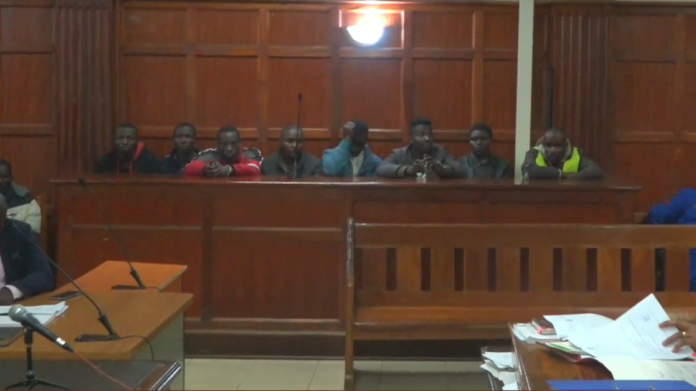
Nairobi Court has convicted nine people accused of participating in Wednesday’s demonstrations after pleading guilty to taking part in unlawful assembly.

Kennedy Kinywa, Stephen Baraza, John Mbithi, Musyoka Solo, Yasin Fadir, Glen Asumba among others appeared before Milimani chief magistrate Lucas Onyina and admitted to participating in demonstrations while running, shouting, destroying properties and obstructing other road users.

The prosecution said their actions caused the road users reasonable fear that they were to commit a breach of peace.

They are said to have committed the offence on July 19 along the North Airport Road within Embakasi south with others not before court.

The prosecution told court that on Wednesday at around 11 am, some notorious people were taking part in the unlawful assembly within Kobil area in Embakasi.

According to the prosecution, they were throwing stones at members of the public and motorists.

Police officers under the command of the OCS villa police station teargassed and managed to arrest the accused persons.

The prosecution said Stephen Baraza was found recording and filming police officers and his phone was confiscated at the police station.

Magistrate Onyina will sentence the nine convicts on Friday 21, July.

Cop Arrested For Joining Protestors In Stoning Police Station

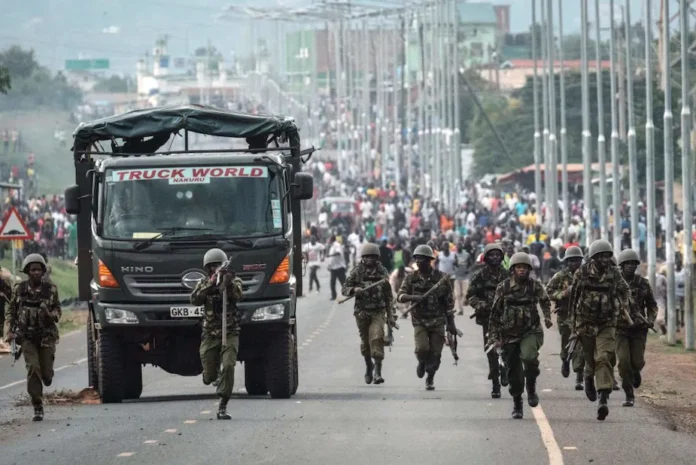
A police officer was on Thursday, July 20 arrested in Nzaui sub-county, Makueni County after he was accused of joining protestors in stoning a police station during the anti-government demonstrations.

According to a police report, the officer identified as Constable Evans Otieno was apprehended while engaging a group of men along the Mombasa-Nairobi highway at Emali who were blocking the road and throwing stones at passing motorists.

On Wednesday, July 19, PC Otieno was identified by his colleagues among the rioters who attacked the Emali Police station and its officers.

“Please be informed that NO 117670 PC Evans Otieno of this command whose recommendation letter ref: KPS/ Dig/Est/Hrm/30/vol v/4 dated 19th June 2023 was arrested today, the 20th day of July 2023 along Mombasa – Nairobi highway at Emali talking to a group of young men who were blocking the road and throwing stones to motorists.

“The said officer was also seen by his colleagues yesterday 19/07/2023 being among the rioters who were pelting stones at Emali police station and police officers,” read the police report in part.

During the officer’s arrest, a quick search revealed that he had in his possession 40 rolls of bhang of street value approximated to be Ksh2,000.

This discovery complicated the situation, as it has since added a drug-related offence to his charges.

As investigations continue, authorities have vowed to conduct a thorough and transparent inquiry to shed light on the full extent of PC Otieno’s involvement in the riot and drug possession.

DP Gachagua: President Ruto Cannot Hold Talks With A ‘Criminal’

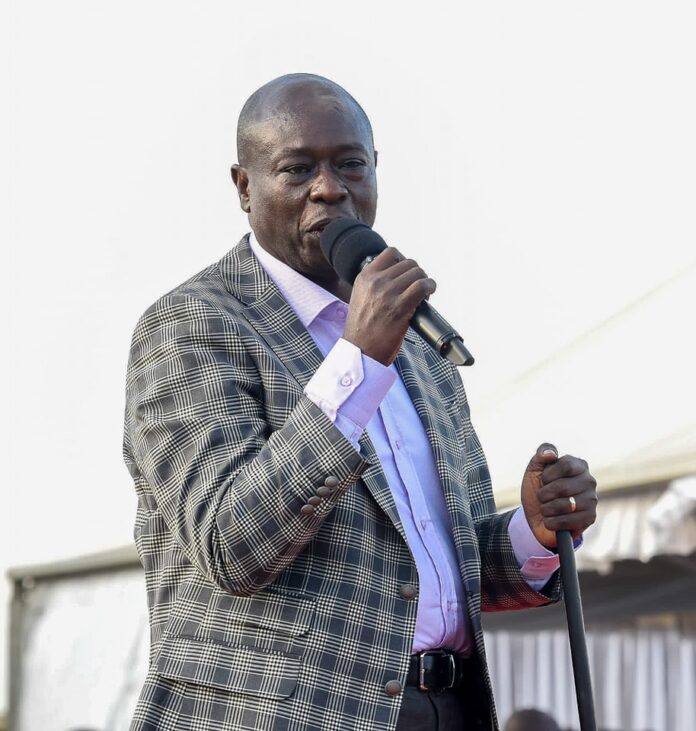
Deputy President Rigathi Gachagua has slammed the international community for promoting dialogue between the Kenya Kwanza administration and the opposition as a means of ending the ongoing anti-government protests.

Speaking in Isiolo County on Thursday, DP Gachagua stated that President William Ruto will not hold talks with opposition leader Raila Odinga, whom he blames for the violence, deaths, and property destruction witnessed during the protests, labelling the former premier a ‘criminal.’

“We want to ask church leaders and the international community…it is wrong to ask the President to sit down with a criminal,” said Gachagua during the issuance of title deeds at Etoro Ltungai Adjuction section.

“First of all umefanya watu wauwawe, umeharibu mali ya watu, alafu unaambia Rais kwa sababu umetoa fujo utulizwe. That has happened for a long time and the consequences have been that for a long time kazi imesimama.”  

Gachagua also questioned why high-ranking members of the Azimio la Umoja One Kenya coalition were absent from this week’s protests, implying that the opposition leaders are now fleeing a sinking ship.

“Ile kitu ya kustaabisha Wakenya ni kuwa hawa watu saa ile waliona kimeumana hakuna alikanyanga town. Mmoja alijificha Nairobi Hospital akasema akuwe admitted, awekwe tu maji kwa sababu si mgonjwa ndio asiende maandamano,” said the DP.

“Mwingine akakaa kwa nyumba yake alafu wanatuma watoto wa wenyewe wakauwawe, why can’t they come themselves ama watume watoto wao? Jana (Raila) ameona imeanguka anatoa taarifa akiwa amejificha kusema ati maandamano imefaulu ati isimamishwe na ni vile ameona hakuna kitu inaendelea.”

He also urged Raila to wait until the 2027 General Election to stake his claim to the presidency rather than allegedly attempting to destabilise the Kenya Kwanza government.

“For too long, that Mzee wa maandamano ametumia fujo to blackmail Kenyans and find his way into leadership. We want to tell Mzee Maandamano there are no short-cuts to leadership; the only route is one…the ballot,” said Gachagua.

“Hakuna njia ingine; kwa hivyo Rais ukae kidete huyu Mzee angoje 2027, haiko mbali sana, he can wait. Lakini kutoa fujo ati ndio aingizwe serikali, Wakenya wanakataa.”

CS Murkomen: It Will Cost Ksh 200 Million To Fix Kisumu Roads Burnt During Maandamano

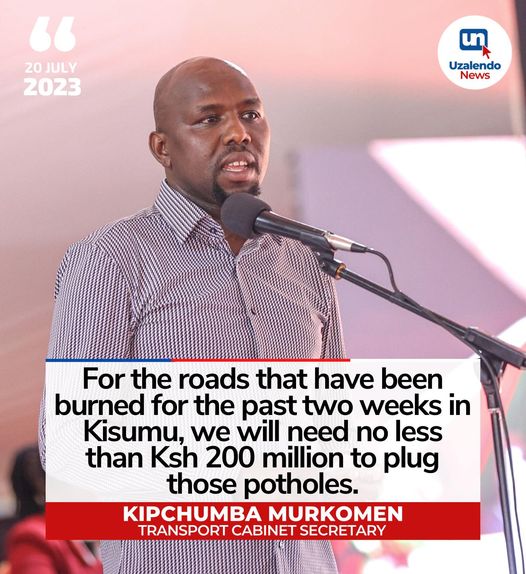
Kipchumba Murkomen, Cabinet Secretary for Roads and Transport, has now stated that the destruction of roads in Kisumu town caused by anti-government protests will cost Ksh.200 million to repair.

Speaking in Isiolo County on Thursday, Murkomen chastised the opposition, claiming that continued protests would cost the country money due to damage to roads and other critical infrastructure.

He singled out Kisumu County, claiming that roads in the area had been severely damaged, and that the government would spend Ksh.200 million to repair only a small section of road in the city’s Central Business District.

“Nimegadhabishwa sana, ukiona tunatengeneza barabara kilometer moja tunatumia pesa kadri ya milioni 50 na 80. Alafu unaona mtu ambaye anasema nia yake ni kupunguza gharama ya maisha ameenda kuweka tyres kwa barabara kuichoma,” he lamented.

”Kupitia pesa yao ya taxes  wanaambiwa baada ya mwaka tunafanya mainatinance na kesho tunatumia 50-80 million.”

The CS continued: “Ukiona barabara zimechomwa  Kisumu for the last two weeks, we will need not less than 200 million kwa area kidogo ya town kuziba ile mashimo yameharibiwa  kwa sababu mtu ameenda kuchoma matyres.”

Murkomen reiterated that burning tyres destroys most tarmacs and causes potholes.

In the same breath, Murkomen defended his previous remarks in which he stated that the destruction of the Nairobi Expressway last week would force the Ruto government to cough up Ksh.600 million for repairs.

His announcement sparked a lot of debate on social media, with the majority of Kenyans accusing him of inventing the figure and demanding proof of how he arrived at such an astronomical figure.

However, Murkomen dismissed critics pointing out that roads are expensive to build and maintain, stating that it currently costs between Ksh.50 and Ksh.80 million to build a kilometre of road.

“Juzi niliambia wakenya kuwa tutalipa karibu nusu bilioni kulipia Expressway. Kuna wengine wanafanya mzaha hapo kwa mtandao kwa sababu hawaelewi,” he said.

“Zile machines zote za kusoma magari na kupitisha magari… are not cheap. They are not like those sufurias they are putting on their heads; they are very expensive and will cost the taxpayers.”

Raila Refutes Claims That His Bodyguard Has Been Released

Raila Odinga, leader of Azimio la Umoja, has denied claims that his bodyguard Maurice Ogeta has been released following an alleged abduction on Wednesday morning.

On Thursday, the ODM party leader shared a video with the hashtag free Ogeta, with the caption “We will leave no one behind”.

Raila went ahead and revealed that Ogeta’s whereabouts were still unknown.

“Maurice Ogeta was abducted yesterday July 19, 2023, and has not been released,” he said in the video

Raila’s bodyguard Maurice Ogeta was arrested on Wednesday morning ahead of the anti-government protests.

Ogeta was taken by plain cloth officers while he drove to work.

An official confirmed to the Star that Ogeta was among those targeted for arrest and detention.

Raila’s spokesperson Dennis Onyango was also arrested on Wednesday.

Onyango’s home was raided by men suspected to be the police who drove away with him.

Earlier on, Raila said the demos will be held whether the government issues a permit or not.

In a statement, Azimio la Umoja said due to requests from all sectors, the peaceful protests will be held on Wednesday, Thursday, and Friday.

“We will have countrywide protests whether the government likes it or not,” they said last week.

Migori Youth ‘Forced’ To Change Base As Preparations For Playoff Showdown Heat Up

Migori Youth FC have had to change their training base to Katito, Kisumu County from Migori ahead of their Football Kenya Federation Premier League (FKFPL) playoffs second leg fixture at Wazito FC on Saturday.

The decision to move closer to Muhoroni, the venue for the much-anticipated showdown, was necessary, owing to the ongoing countrywide anti-government demonstrations that have compromised security and made transport difficult.

Migori Youth were forced to a barren draw in the initial duel they hosted at their Migori Stadium backyard a week back, and will now have to achieve what they couldn’t at home, away at the dreaded Muhoroni Stadium in Muhoroni Town.

“As much as we wanted a win, I’m glad we didn’t concede. We can build on that,” Kevin Oluoch, Migori Youth coach told Mozzart Sport.

The aggregate winner of the two-legged affair will bag the last spot in the 2023-24 FKFPL season.

Alive to the fact that the duel could be decided by spot kicks, Oluoch is leaving nothing to chance. “Our training is holistic,” the former Gor Mahia defender offered.

“We have to train for all scenarios, but our aim is to win within the normal time,” he added.

Migori Youth FC booked the playoffs chance by virtue of finishing third in the just ended National Super League 2022-23 season.

Former moneybags Wazito FC, now based in Muhoroni from Nairobi – following an acquisition – found themselves needing to affirm their top flight credentials – having survived automatic relegation by a whisker – finishing third (position 16) from bottom.

Kenya’s Politicians Continue To Use Ethnicity To Divide And Rule – 60 Years After Independence

Since independence in 1963, Kenya’s politicians have fed and manipulated ethnicity to win elections.

With some 40-odd ethnic groups, Kenya is a country of ethnic minorities – it has no single dominant community. During elections, political parties and candidates do raise policy issues, but ethnicity, or tribalism as it’s popularly called in Kenya, is the default vote-hunting strategy.

With few deviations, voting is akin to an ethnic census. Leading presidential candidates are usually from the populous ethnic groups. Of Kenya’s five presidents – three have been Kikuyu and two Kalenjin – come from two of the country’s biggest communities. This has raised issues of exclusion and fanned ethnic animosity.

My research into ethnicity in Kenya has found that it is central to political power. The two have a symbiotic relationship. In my view, ethnicity is not an expression of cultural identity or a reservoir of talent for nation building. It has been politicised and is linked to social status. It determines people’s fortunes, making it integral to social mobility, stagnation or regression.

Since no single ethnic group is populous enough to politically impose its will on others, winning presidential candidates have had to build alliances with other ethnic groups. Political elites have built ethnicity into the system of governance and administration.

For self-preservation, successive governments have arbitrarily created more ethnic groups. They have cemented ethnically based administrative units and emphasised ethnic differences.

This has normalised the exploitation of ethnicity for political and economic gain. The populace buys into ethnic politics under the false hope that their respective ethnic leaders will help them better their lives.

How ethnicity plays out

Throughout 60 years of independence, Kenya has held inconclusive elections marred by rigging and executive interference. The transitional elections held in 2002 and 2022, however, were exceptions. Electoral disputes are often protracted. They can degenerate into inter-ethnic violence.

Ethnic politics in Kenya manifests itself in four major ways.

First, the Kenyan state is colonial in orientation. It is extractive, discriminatory and oppressive. It is also insidiously ethnicised, elitist and classist. Successive Kenyan presidents, starting with the first, Jomo Kenyatta, anchored the state to ethnicity.

Second, historical land injustices in which communities and individuals have been dispossessed of their ancestral land – first by colonialists and then the post-colonial elite – manifests in ethnic politics and electoral violence. A lack of justice across the board, and especially for victims of state-instigated ethnic violence, has also contributed to ethnic consciousness.

Third, institutional disregard for the rule of law makes ethnic politics attractive, with the political elite evoking it to evade accountability. Their deliberate effort to erase memory and distort Kenya’s contested history fuels ethnicity, too. So does a lack of trust among the people, and between the people and the government.

Fourth, ethno-regional political figures – essentially, personality cults – have an outsized influence on Kenyans’ psyche and political choices. This comes at the expense of civic identity, personal agency and a pursuit of collective aspirations.

Ethnicity often determines party loyalty. Individuals form political parties under the assumption that members of their ethnic group will rally behind them. Further, since independence, the president’s co-ethnics have disproportionately held state positions.

Ethnicity has been on the upsurge with urbanisation in Kenya. Contrary to popular belief, the Kenyan elite are fixated on ethnicity – not the masses – since it determines access to the benefits of modernity. The elite tend to advance their political and economic interests through ethnicity. This has made it pervasive in the media, academy, politics, religious formations, civil society and state apparatus.

There is a link between ethnicity, elite ambitions and the impact of modernisation. Missionary education and the spread of infrastructure affected Kenyan communities differently. So did nature, which gave some communities arable land and others harsh environments. Disparities in development provide a basis for ethnicity.

False starts

Kenya’s 2010 constitution sought to neutralise ethnicity. It requires that state appointments reflect Kenya’s diversity and enhance inclusivity. It also seeks to streamline political parties to enhance national cohesion and harmony.

The constitution also provides for the devolution of power and resources through county governments. This aims to cure winner-take-all politics, which has fuelled resentment and animosity.

The constitution, however, is only as good as society’s political culture and norms. It cannot transform Kenyan society by itself. Governance shortfalls and excesses that have undermined the state for decades persist.

Ethnicity hasn’t always been Kenya’s bugbear. In elections held before independence in 1962, for instance, candidates won elections on the strength of vision and national appeal. Tom Mboya, a Luo, defeated Munyua Waiyaki, a Kikuyu, in a Kikuyu-dominated constituency.

However, ethnic consciousness heightened after a fallout among the post-colonial elite. The quest to monopolise political power and control national resources raised the stakes. This resulted in political assassinations, authoritarianism and a constriction of the political space. Some politicians abandoned policy-oriented programmatic politics and resorted to ethnic mobilisation to claw back receding influence.

Kenya’s inability to transcend the ethnic ideology has made it hard to devise alternative bases for political organisation.

Class vs tribe

Kinship ties and ethnic bigotry have trumped class-based national identities. In the lead-up to Kenya’s 2022 elections, opponents of class politics equated it to ethnic politics. They claimed it sought to incite the poor against the rich.

Unlike ethnic politics, however, class politics is programmatic. It is not based on primordial identities and differences. It affords people an opportunity to resolve social, economic and political concerns through the ballot.

William Ruto, as a presidential candidate in 2022, shifted the discourse from ethnicity to the economy through a “hustlers vs dynasties” ideology. He prevailed. Had Ruto designed his strategy solely around ethnicity, he would likely have been defeated – the opposition lived true to tradition and crafted a broader ethnic alliance.

While Ruto’s margin of victory was thin – just over 230,000 votes – it illustrates that Kenya is not impervious to class politics as an alternative form of political organisation.

Next steps

Moving away from ethnic politics requires an overhaul of the Kenyan state to ensure social justice, the rule of law and access to opportunities for all. This would begin to dismantle ethnicity as an operative ideology.

It requires decolonising the state to rid it of oppressive, extractive and predatory inclinations. This has to start with an overhaul of the education system to make it relevant to Kenyan society. There is need to empower the minds of citizens by instilling in them a sense of national pride and consciousness.

The trouble is that the political elite have no incentive for such reform – it would render them vulnerable to a conscious citizenry.The Conversation

Westen K Shilaho, Senior Research Fellow, Institute for PanAfrican Thought and Conversation (IPATC), University of Johannesburg

This article is republished from The Conversation under a Creative Commons license. Read the original article.


Kilifi Chief Officer Rahab Karisa Stabbed To Death At Her Home

The Chief Officer for Mining and Blue Economy in Kilifi County, Rahab Karisa, has been killed under mysterious circumstances.

According to the guard at Karisa’s house in Mnarani, the county government official was stabbed to death by her house help before fleeing.

The Chief Officer had reportedly returned to the country after a work trip to Italy.

Kilifi County police commander Fatuma Hadi confirmed the incident, saying that police will launch an investigation and search for the househelp.

Dominick Otieno, a lead DCI officer in Kilifi County, also confirmed the incident. 

“Yes, I can confirm that the incident occurred, and it’s under investigation, but the CCIO can divulge more,” the DCI officer stated. 

The deceased’s body was moved to the Kilifi County Referral Hospital Mortuary pending an autopsy.

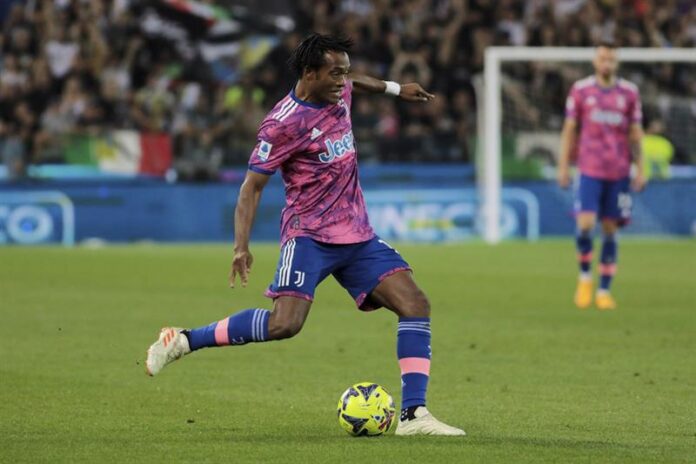
Inter Sign Free Agent Cuadrado To Fan Fury

Juan Cuadrado has signed for Inter Milan, the Serie A club announced on Wednesday as fans protested the arrival of the Colombia winger after being released by bitter rivals Juventus.

In a statement Inter said that the 35-year-old had signed a one-year deal with the San Siro club after eight years at Juve, where he won five league titles and reached the Champions League final in 2017.

“It’s an honour to be here at one of the biggest teams in Europe,” Cuadrado told Inter TV.

“I had many offers, but Italy is a second home for me. My family is very attached to this country, and there was the opportunity to stay here and play for a big team with a fantastic history.

“I chose Inter because we all know what they represent on a global level.

“The important thing is for my family and I to feel good. We had the opportunity to remain in a place that, for us, is home. It’ll definitely be the best choice.”

Cuadrado has also played for Italian clubs Udinese, Lecce and Fiorentina. He made his move to Juventus permanent in 2017 after initially joining on loan from Chelsea.

Cuadrado, who has played 115 times for his country, will slot in as a deputy to Netherlands international Denzel Dumfries at right wing-back in Simone Inzaghi’s side.

Inter welcomed Cuadrado’s “experience and plenty of desire to win and enjoy himself” despite a “childhood marked by difficulties”.

“Technique, versatility and reliability: Juan is ready for a new, Nerazzurri, adventure.”

Blazing row

However Cuadrado’s arrival has infuriated Inter supporters who detest him both as a symbol of Juve’s most recent successes and for a series of incidences during matches between the two clubs.

The most recent was a blazing row with Samir Handanovic at the end of a 1-1 draw in last season’s Italian Cup semi-finals which was also blighted by Juventus fans racially abusing Romelu Lukaku.

Juve’s goalscorer on the night, Cuadrado was given a three-match ban for grabbing Handanovic by the neck and punching him.

He is also seen by fans as a chronic diver, faking fouls and exaggerating contact like when in 2021 he won and then scored a penalty against Inter by kicking out at Ivan Perisic before flopping to the turf.

Cuadrado exited Milan’s Linate airport on Tuesday night with his head bowed and refusing to speak to waiting reporters, and after completing tests at Italy’s Olympic Committee (CONI) one fan launched a volley of foul-mouthed abuse at him.

A banner was hung outside the CONI building which read “you did everything you could to make yourself hated, if you want that to change it’s down to you”.

Inter supporters were already exasperated by reports that Lukaku had decided he wanted to go to Juve as last season’s Champions League finalists struggled to come to a sale agreement with Chelsea.

Lukaku was on loan at Inter last term after flopping in his second spell at Chelsea following a £97.5 million ($126 million) transfer to the Premier League club two years ago.

He had made himself a fan favourite over two years at Inter after scoring 64 times in 95 games and driving them to their first Serie A title in over a decade, the 2021 Scudetto ending both an 11-year drought and Juventus’ grip on Italian football.

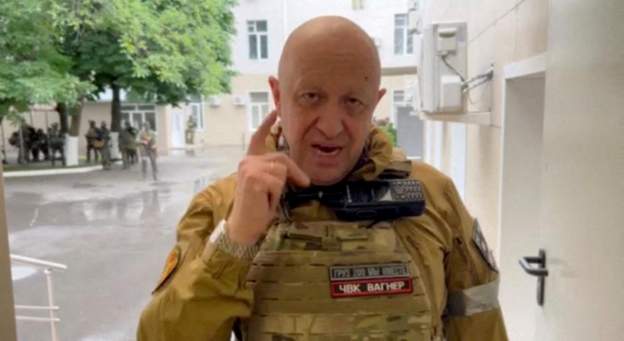
Wagner Group Chief Says Activities To Continue In Africa

The founder of Russia’s private military company Wagner, Yevgeny Prigozhin, has told Afrique Media TV that his mercenaries will continue working in African countries where they are present.

“We continue to work in all the countries where we started or are now doing this work of co-operation and development,” he said in an interview published on the pro-Kremlin TV’s Facebook page.

“If the assistance of the Wagner Group is needed anywhere to combat gangs and terrorists and to protect the interests of the people of these countries, we are ready to begin immediately to fulfil this task after agreeing on the conditions.”

He added that “there was no, and there will be no reduction in our programmes in Africa”.

His remarks followed rumours about the possible withdrawal of Wagner mercenaries from Mali and the Central African Republic. The rumours began circulating after Mr Prigozhin staged a short-lived mutiny in Russia on 24 June.

Rights groups have accused Wagner mercenaries of committing human rights abuses in Mali and CAR.

Create a free account, or log in.

Gain access to read this content, plus limited free content.

Yes! I would like to receive new content and updates.

Sponsored Ad

Ad 1
Ad 2
Ad 3
Ad 4
Ad 5
Ad 6