Sponsored Ad

Ad 1
Ad 2
Ad 3
Ad 4
Ad 5
Ad 6
23.9 C
Kenya
Thursday, May 7, 2026
Home Blog Page 3411

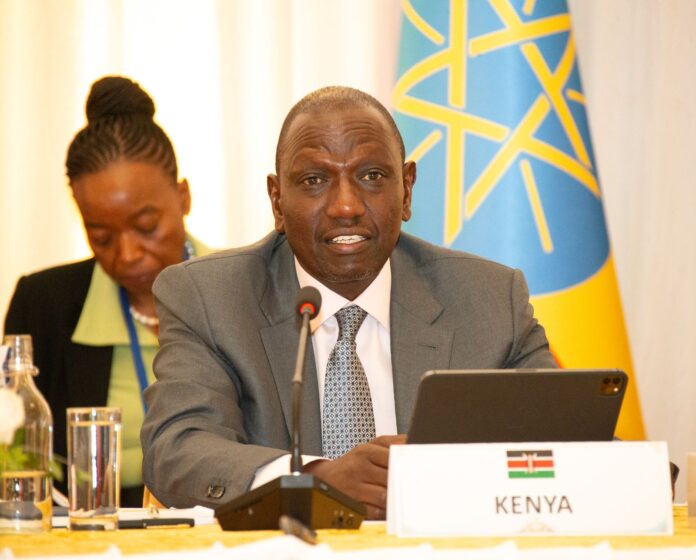
President Ruto Calls For Urgent Ceasefire In Sudan

Parties pushing for stability in Sudan have been asked to work together for fruitful realisation of their plan.

President William Ruto said IGAD and Jeddah Processes must consolidate their efforts to facilitate the realisation of permanent ceasefire in the country.

He said the union will skilfully push for access to humanitarian assistance, protection of refugees as well as the reactivation of the Political Process.

This, the Head of State explained, will lay the foundation for lasting peace in Sudan.

He was speaking on Saturday night when he held a telephone consultation with the Chairman of the Transitional Sovereign Council of Sudan General Abdel Fattah Abdelrahman al-Burhan.

In his capacity as the Chair of the IGAD Quartet of Heads of States on Sudan, the President also spoke with the President of Chad General Mahamet Idriss Deby Itno.

The two leaders agreed on the acceleration of the restoration of normalcy in Sudan and support to refugee-hosting countries.

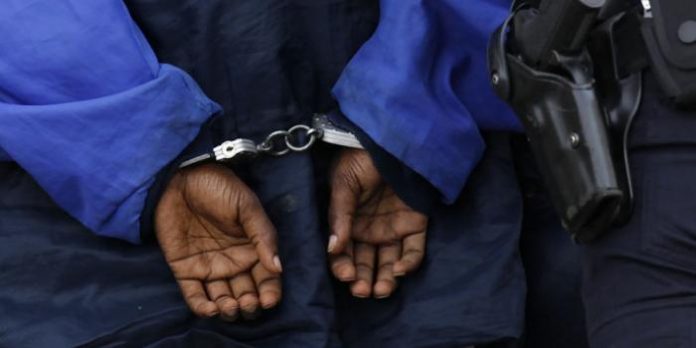
Homa Bay: Priest, Father Arrested Over Defilement Of Two Minors

Two minors aged 6 and 12 were defiled in separate villages in Gwassi South Ward of Homa Bay County, police say.

The two who are currently undergoing treatment at Magunga Sub-county Hospital in Suba South were defiled at Ong’ong’o and Seka villages, respectively, by different suspects.

The father of the victim aged 6 and a 42-year-old priest who is accused of defiling the 16-year-old form-three girl are both detained at Magunga police station.

Suba Children officer Kepher Otago said the student was admitted at Magunga Sub-county hospital for medical examination.

The clinical officer in charge of Magunga Sub-county Hospital, Richard Ojuok, confirmed that the two minors were examined at the facility and the medical report indicates that they were defiled.

Officials have expressed concerns over increased cases of defilement in the Sub-county.

Senegal Opposition Leader Stages Noisy But Peaceful Protest

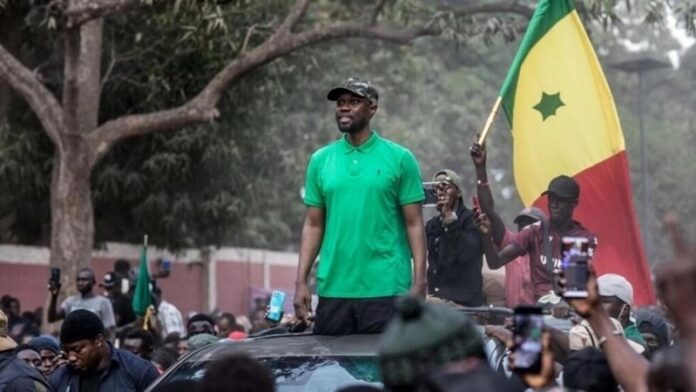
Senegalese opposition leader Ousmane Sonko led a peaceful protest banging pots and pans after authorities blocked a rally to publicly confirm he would run in next year’s presidential elections.

Sonko, dressed in red in a sign of anger, appeared outside his home Saturday evening to kick off the protest, “symbolically” banging pots for several minutes.

The 49-year-old had on Thursday been “unanimously voted in as the PASTEF-Patriots’ candidate for the February 25, 2024 presidential elections,” a party statement said.

Sonko has been confined by security forces at his home in Dakar since May 28 and his nomination comes despite lingering questions over his eligibility due to criminal convictions and prison sentences.

Plenty of people joined the noisy protest in several districts of the capital Dakar and major towns such as Ziguinchor in the south and Mbacke in the centre, local media reported.

In Dakar’s Parcelles Assainies area, Sonko supporter Malick Diedhiou took part “to send a message of peace… to show unhappiness at what the state is doing against Sonko because it’s illegal,” he said.

– Concert of saucepans –

The governor of Dakar had banned the party’s nomination rally, which was set for Saturday afternoon, due to the “risk of disturbing public order”.

Sonko told supporters “another date” would be chosen. He called for the “concert of saucepans, horns and firecrackers” on Saturday from 8:30 to 9:00 pm (2030 to 2100 GMT) to peacefully express disapproval and call for President Macky Sall “to leave office in peace”.

“Macky Sall is trying to eradicate PASTEF and prevent me from being a presidential candidate,” Sonko said Friday night, urging his supporters to wear red in protest.

The firebrand figurehead has generated a passionate following among Senegal’s disaffected youth, mounting a fiery campaign against Sall, who he paints as a corrupt, would-be dictator.

Sonko has warned of “indescribable chaos” if he is prevented from running for the top office.

His convictions in May and June sparked deadly clashes between supporters and security forces, spawning the worst unrest Senegal has seen in years.

On May 8, an appeals court gave Sonko a six-month suspended term for slander, although it is unclear whether this sentence, which can also be appealed to the Supreme Court, makes him ineligible.

On June 1, Sonko was also handed a two-year term following a trial on charges of sexual abuse of a beauty salon worker.

Legal analysts and Sonko’s own lawyers say this conviction rules him out from being a candidate.

But Sonko insisted Friday that despite the legal proceedings he remains eligible for the election.

Airlines Grapple With Rise In Turbulent Passengers

Viral videos of vulgar, intoxicated and violent airplane passengers have become common, but it is not just a social media trend: statistics confirm cases are on the rise.

The surge in incidents comes as the aviation industry is bouncing back from the Covid pandemic, with airlines expecting to fly a near-record 4.35 billion passengers this year.

According to the airline industry trade group IATA, one in every 568 flights had an incident linked to an unruly passenger in 2022, compared to one flight in 835 flights in 2021.

“Although non-compliance incidents initially fell after the mask mandates were removed on most flights, the frequency began to rise again throughout 2022 and ended the year some 37 percent up on 2021,” IATA said recently.

The most common incidents involved passengers smoking or vaping in the cabin or toilet, refusing to buckle their seatbelt, failing to respect baggage limits and storage instructions and consumption of their own alcohol on board.

While incidents of physical aggression remain rare — only one flight in 17,200 in 2022 — that represents a 61 percent jump from the previous year.

The United States saw a tenfold rise in violent incidents from 2017 to 2021 to 6,000, with the politicisation of mask wearing during the pandemic responsible for many confrontations.

“This was a crazy time, people did a lot of strange things,” said JetBlue CEO Robin Hayes.

“That has come back down a lot since the masking rules went away, it’s still slightly elevated compared to 2019 but it’s largely back to normal,” he added.

But Federal Aviation Administration data shows that in the first half of this year, incidents were nearly double the pre-pandemic rate. And this is despite the FAA’s “zero tolerance” policy towards unruly passengers, imposing $8.4 million in fines last year on passengers, who sometimes risked criminal prosecution as well.

For the European Aviation Safety Agency, the rate of incidents has fallen since peaking in the pandemic, but the seriousness of the issues “seems to have increased considerably”.

The reasons most often cited are the stress of travelling, less personal space on planes, smoking bans and alcohol abuse.

An Air Caraibes steward testified in a 2022 trial that he once confiscated 31 bottles of alcohol during boarding.

– Psychology, handcuffs and diversions –

“We see a lot more angry passengers generally and that matches very much what the police services say they see in the wider population everywhere,” said EASA’s head of safety promotion, John Franklin, during a recent webinar.

This “doesn’t necessarily make us feel any better, but it’s not just an aviation problem”.

Undercover officers often travel on routes where there are frequent problems, but for the most part, it is cabin crew who have to handle problem passengers.

They are trained in psychology to de-escalate situations, as well as self-defence.

If dialogue and warnings fail, airplanes are equipped with plastic handcuffs to restrain uncontrollable passengers in their seats. As a last resort, the captain can divert the plane and make all passengers disembark.

Some countries like France are increasing the financial penalties for unruly behaviour.

Failure to obey the cabin crew’s orders can incur a fine of 10,000 euros ($11,200), or even double for repeat offenders. Putting the safety of the aircraft in jeopardy can result in a fine of up to 75,000 euros, a four-year flight ban and a five-year jail term.

IATA wants changes that facilitate the prosecution of offenders on international routes.

Jurisdiction is determined by the registration country of the aircraft, which leaves the authorities of the country where the plane lands with no power to prosecute an unruly passenger.

Tesla Rolls Out Its First Electric Pickup, The Cybertruck

US automaker Tesla on Saturday announced that its first electric pickup — a slick-looking silver Cybertruck — had rolled off the assembly line at its huge plant near Austin, Texas.

“First Cybertruck built at Giga Texas!” says a tweet from the company, accompanied by a photo of the futuristic vehicle amid a sea of helmeted and yellow-vested Tesla workers.

Elon Musk, who owns both Tesla and Twitter, reposted the tweet with the comment “Congrats Tesla Team.”

Tesla did not immediately respond to an AFP request for comment on Saturday.

The company had promised in April that it would be rolling out the first Cybertrucks before the end of the year.

Plans for the vehicle, with its silvery, tortoise-like shape and unusual angles, were first announced in November 2019.

Its original introduction went awry when Musk urged a Tesla employee to strike one of the prototype’s windows with a hunk of steel to show its solidity. The window broke — drawing a laugh and a curse word from Musk — as did a second window on an ensuing attempt.

Yet within two days, Tesla said it had received nearly 150,000 advance orders.

In May, Musk said the company hoped to build 250,000 of the trucks a year — a number he said could eventually double, given a relatively accessible price tag.

Tesla will be making three models of the Cybertruck, a vehicle that can accelerate from zero to 60 miles per hour (100 kilometers per hour) in less than three seconds. The basic model will cost $39,900 and offer a 250-mile range between charges; the top-line truck will have twice that range and sell for $69,900.

Behind The Staggering Success Of MrBeast

In the fall of 2016, Jimmy Donaldson did not seem like a future celebrity multimillionaire.

The shy 18-year-old had been posting videos on YouTube for five years from his mom’s North Carolina house without much traction.

His mother urged him to go to college, but he dropped out of East Carolina University after two weeks. Instead of going to class, he spent most of his time on campus editing videos in his car.

“That’s all I ever talked about at school. I thought I was a freak of nature,” he told content creators and podcasters Colin and Samir in September. “People would tell me, ‘All you do is talk about YouTube videos. You’re too obsessed with YouTube. Get a life.’”

After he quit school, his mother was so disappointed that she kicked him out of the house, he says.

But his decision paid off.

Seven years later, Donaldson, better known online as MrBeast, has 167 million YouTube subscribers – more than any other individual creator on the platform.

He has 85 million followers on TikTok and 39 million more on Instagram. And he just became the first person to reach 1 million followers on Meta’s new social app Threads, hitting the milestone before CEO Mark Zuckerberg. (He celebrated his achievement with a familiar gesture: by giving a Tesla to a random fan.)

At 25, he oversees a fast-growing empire that may be worth more than $1 billion.

He’s built it by staging increasingly expensive and eye-popping stunts, along with generous cash giveaways and acts of philanthropy – such as bankrolling cataract surgeries for 1,000 blind people to help them see again.

“I just wanna make better videos, period. I don’t care about making money,” he told Colin and Samir. “I just want to make the best videos on the planet.”

He has re-enacted ‘Squid Game,’ tied up an FBI agent and crashed a train into a giant pit

Most of MrBeast’s action-packed videos start with Donaldson breathlessly explaining the setup in the opening seconds before launching a fast-paced series of stunts, gags, challenges and throwaway jokes.

He’s surrounded by an agreeable supporting cast of buddies, all of them dressed down in jeans, T-shirts and hoodies. Donaldson’s scraggly beard and constant excitability set him apart from the group.

In one clip from last year, Donaldson tied an FBI agent to a chair, tossed him a knife and offered the agent $100,000 if he could catch him before midnight. A wild chase ensued involving a hedge maze, a disguise and an escape in a private jet.

Sara Fischer, a media reporter for Axios, says that Donaldson’s authenticity and accessibility play a big role in his videos’ appeal.

“It’s not him wearing a suit, (it’s) him wearing his everyday clothes. It’s him hanging out with his friends.

“He has the money now, and is able to bring viewers access to places to see things that they would never get to see,” she told CNN’s Jon Sarlin, citing a video in which Donaldson visits luxury hotel rooms around the world – including one in a castle that rents for $1 million a night.

“That’s an interesting model, because you’re giving video viewers access to something they would never get to see in real life,” Fischer says. “Who do you know that gets to stay in a million-dollar hotel?”

Some of the videos feature ostentatious displays of wealth – like one showcasing a flight on the world’s most expensive plane ticket. Or the recent one where he and his crew pal around on massive yachts with comedian Pete Davidson and NFL star Tom Brady.

But despite his growing income and celebrity, he and his pals still act wide-eyed at all their adventures – not cynical or privileged – making him relatable, Miller says.

MrBeast got another spike in subscribers last year after he staged a real-life version of “Squid Game,” the Netflix hit drama in which desperate people compete in deadly contests for a large cash prize. (As far as anyone can tell, nobody died in MrBeast’s version.) The clip has been viewed 460 million times.

As MrBeast’s popularity has grown, so have his budgets, which now come with a hefty price tag. In a recent clip, he crashed a full-sized train into an enormous pit. Donaldson has said he spends $1 million a week on his videos.

His videos are a unique form of philanthropy

In a January video titled “1,000 blind people see for the first time,” Donaldson, surrounded by doctors, pledges to cure their blindness amid applause. As the patients emerge from cataract eye surgery, some in tears, he hands some of them a suitcase filled with cash.

“Here’s $10,000 to make your day better,” he tells one woman, who falls to the ground and screams. “Is she OK?” a bemused Donaldson asks.

In another video from May, he buys prosthetic limbs for 2,000 amputees.

Some critics have accused Donaldson, who did not respond to CNN’s request for an interview, of exploiting vulnerable people to generate views and revenue.

But Vince Miller, who teaches sociology and cultural studies at the University of Kent in the UK and has written a scholarly paper on MrBeast, argues that Donaldson has been innovative in the way he leverages YouTube’s revenue-sharing model to support charitable causes.

As Miller sees it, Donaldson is asking viewers simply to watch his videos and be entertained, as opposed to donating their time or money. And the more people watch, the more Donaldson earns and can donate to charity.

“It’s quite powerful to tell a 10-year-old kid who has no independent money and limited agency in their life that they can raise money and help people by watching MrBeast’s videos,” he says.

But the videos also can send a problematic message that social problems are best solved through philanthropic gifts from the wealthy as opposed to more systematic government efforts, Miller says.

Miller says MrBeast’s formula for viral success has several ingredients: his Everyman appeal and enthusiasm, the videos’ high production values and their elaborate stunts, along with wads of cash tossed around like confetti.

But Donaldson’s fame comes down to his unique form of philanthropy, Miller says. He convinces viewers that by watching his videos and helping him get more views, they’re engaging in a form of ethical consumerism.

“The fact that he recycles a good portion of the large income he makes from these videos into even larger and more spectacular prizes for subsequent videos is one of the secrets to his success. He often uses income from his previous videos to outdo himself in his next videos,” Miller says.

Through the philanthropic arm of his empire – most visible in his Beast Philanthropy channel, which has almost 15 million subscribers – Donaldson has raised millions to plant trees, clean the oceans of plastic waste and donate clothes to needy people.

In past interviews, Donaldson has said he studied the YouTube recommendation algorithm and other creators’ stats meticulously to come up with a recipe for making his videos popular.

The contest format of many of his videos encourages viewers to watch til the end to see the outcome, Miller adds, which results in higher advertising revenue for both Donaldson and YouTube, making the platform’s algorithm more likely to recommend his videos.

“He puts a lot of thought into his content, which is original and engaging,” says Kristen Ruby, a social media expert and CEO of Ruby Media Group. “He has mastered the art of YouTube.”

Donaldson has become a role model to millennials and Gen Zers who dream of being successful creators and influencers on social media, Ruby says.

“He gives off the perception of doing whatever you want, and that is attractive to people who want to emulate his lifestyle.”

He started with a used laptop and a few hundred followers. Now he runs a fast-growing business empire

Donaldson’s YouTube career started over a decade ago, when he was 13 and using a hand-me-down laptop.

He initially posted videos of himself playing games such as “Minecraft” and “Call of Duty” in his bedroom in Greenville, North Carolina. His mother didn’t know about his YouTube channel for years – until she saw it mentioned in his high school yearbook.

In one of his first viral videos, made in 2017, he sat in a chair in his room and counted to 100,000. The stunt took him 40 hours.

“That’s when it kinda clicked – like, ‘Oh, if I do interesting things, people will watch,’ ” he said later in an interview.

As he gained followers and began to attract advertisers, he poured his meager profits back into his videos, leading to bigger and better stunts.

“It took me a minute to grasp it,” his mother said two years ago in an interview. “Once I started studying his business model, it made sense. It worked for him, I should say – I don’t know whether it made sense or not.”

Today Donaldson oversees five YouTube channels which combined have more than a quarter of a billion followers. His videos are dubbed in other languages. His expanding empire includes a line of snacks, Feastables, and MrBeast Burger, a chain of mostly virtual restaurants that offer delivery and takeout only.

YouTube parent company Google declined to comment on how much money Donaldson makes from his content, but Guinness World Records says he holds the record for the highest-earning YouTube contributor, with a reported income of $54 million in 2021.

He now operates from an enormous, $10 million studio complex near Greenville, with 100 acres of land and multiple warehouses for shooting videos.

Donaldson is even going back to college – on his own terms.

In November, East Carolina University announced it will partner with him to launch a content creators’ education program on campus.

And in April this year, he taught a class at Harvard Business School.

“I taught a class at Harvard which is pretty funny because I dropped out of college after only going for two weeks haha,” he posted on Instagram.

Last year Time magazine named him one of the world’s 100 most influential people.

But Donaldson admitted in a recent interview that there can be a downside to his fame. He says he can no longer go to the store, or almost anywhere in public, without fans mobbing him for photos or trying to follow him home.

On a stopover in Chile last year he says he agreed to take a selfie with a young fan at the airport. After the fan posted it online, so many people besieged his hotel that he had to hire security.

Even so, MrBeast says he still has tremendous passion for what he does.

“I’m going on 10 years, and I love it more than anything,” he says. “If you took my channel away from me, I don’t know what I would do.”


Liverpool Offered £40m For Fabinho By Al-Ittihad

Fabinho has been left out of Liverpool’s squad for a training camp in Germany following a £40m bid for him from Saudi Arabian club Al-Ittihad.

Liverpool captain Jordan Henderson has also been linked with a move to Saudi Arabia but has travelled to Germany.

The Reds received the offer for Brazil midfielder Fabinho on Friday night.

A decision between the club and player was then taken to remove the 29-year-old from the 32-man touring party, which left on Saturday.

Fabinho has been at Liverpool since July 2018 after the Reds signed him from Monaco for a fee in the region of £39m.

He has since helped the club win the Premier League, Champions League, FA Cup, League Cup and Fifa Club World Cup.

There are reports Henderson is a target for Al-Ettifaq, who recently appointed former Liverpool captain Steven Gerrard as their new manager.

Liverpool have not set an asking price for the 33-year-old but the £10m offer being speculated about falls well below the club’s valuation for a player with two years left on his contract and who has been an integral part of their side.

The Reds have already been rebuilding their midfield following the departures of James Milner, Naby Keita and Alex Oxlade-Chamberlain.

They have signed Argentina international Alexis Mac Allister, 24, from Brighton and Hungary captain Dominik Szoboszlai, 22, from RB Leipzig and were looking at long term successor to Fabinho.

Southampton midfielder Romeo Lavia, 19, was one of those under consideration but if they lose the experience of Fabinho, and possibly Henderson, it is expected to see the club shift their transfer strategy.

A number of potential targets are believed to be under consideration but Brighton midfielder Moises Caicedo, who is expected to join Chelsea, is not one of them.

The player exodus to Saudi Arabia

Fabinho would be the latest in a number of big-name players to move to Saudi Arabia this summer if his transfer goes through.

His former Liverpool team-mate and compatriot Roberto Firmino, whose contract with the Anfield club had expired, has joined Al-Ahli, who also signed Senegal keeper Edouard Mendy from Chelsea.

Al-Ittihad, meanwhile, have already brought in former Real Madrid striker Karim Benzema, ex-Chelsea midfielder N’Golo Kante and Portuguese forward Jota from Celtic.

Al-Hilal have signed Portugal midfielder Ruben Neves from Wolves and Senegal defender Kalidou Koulibaly from Chelsea.

Washington Legal Marijuana Farms Get Back To Work After Pesticide Concerns Prompted Restrictions

 A big mound of fresh dirt sits at Terry Taylor’s marijuana farm in the high desert of north-central Washington state. Each hole for a new plant gets filled with the clean soil.

Large swaths of recently installed landscape fabric cover the ground, and soon the dirt roads on his property will be covered in crushed rock to keep contaminated dust from covering the crops.

Taylor’s pot farm is one of several getting back to business after state regulators halted their operations in April, citing product testing that turned up unacceptable levels of chemicals related to DDT, a synthetic pesticide banned half a century ago.

The affected growers haven’t used the pesticide themselves, but they are located on a 5-mile (8-kilometer) stretch of former fruit orchards along the Okanogan River where it was applied heavily and remains in the soil.

The Washington Liquor and Cannabis Board announced last week it had lifted the holds on the businesses, which are now taking steps with state financial support to keep the residual pesticide at bay and rebuild their brands. The board said it will increase pesticide testing for cannabis from the area.

“I haven’t sold any product since April,” said Taylor, who operates two licensed cannabis producer-processors, Okanogan Gold and Kibble Junction. “It’s just destroyed us. No one wants to buy it.”

Taylor, 58, said he’s been living off savings since April. His income has been about one-tenth of what it was previously. He normally has about six full time employees and 20 seasonal workers, but now has only two.

Pesticides in cannabis are a concern for regulators and consumers in legal pot states around the country, especially because the plant is typically smoked or concentrated, a process that can intensify the levels of pesticides in the final product.

Regulators in Vermont early this year pulled pesticide-contaminated pot from five retail stores after a customer reported feeling sick, and Nevada officials issued an advisory about widely available products possibly tainted with an unapproved pesticide.

Due to marijuana’s illegal status under federal law, states have written their own rules about pesticides in cannabis. There is wide variety about which are regulated and how much of a trace can remain in products. It’s unclear how many states require cannabis to be tested for legacy pesticides such as DDT.

Washington state’s recent experience with DDE, a remnant chemical remaining in the soil as DDT breaks down, suggests such regulations only go so far in protecting public health.

A chemist for the Liquor and Cannabis Board in March noticed several high test results for DDE and traced them to a single growing area. The companies — Okanogan Gold, Bodie Mine, Kibble Junction and Walden Cannabis — immediately issued recalls when asked in April, but by then much of the products had already been sold.

There were 108 samples tested from the companies and 59 came back with unapproved levels of DDE, the board said.

DDT was used heavily in the decades following World War II to control mosquitoes as well as insects that can damage fruit or other crops, but it also killed birds. Rachel Carson’s 1962 book “Silent Spring” documented its effects on nature, which sparked the environmental movement and helped bring about a national ban on the use of DDT in agriculture in 1972.

Studies have shown women with high amounts of DDE in their blood were more likely to give birth prematurely or have a baby with a wheeze, according to the U.S. Centers for Disease Control and Prevention. The chemical is considered a possible carcinogen.

Christopher Simpson, deputy director of the Pacific Northwest Agricultural Safety and Health Center at the University of Washington, said the risk from DDE in cannabis is probably low, though possibly more of a concern for anyone using the marijuana medicinally, since they already may have health issues.

“To my knowledge, nobody has done a really good risk assessment for that,” Simpson said. “You would have to be able to figure out how much cannabis people would consume and how much of that DDT would be deposited in the body. There just isn’t experimental data available.”

Many of the problematic samples of cannabis foliage or oil tested at about 0.2 parts per million, which is above the 0.1 ppm limit in state law but still only about half of what federal authorities tolerate for DDT contamination in tobacco. One sample of cannabis oil or resin came back at 1.7 ppm, the board said.

Given a lack of scientific evidence about what constitutes a dangerous level of DDE in cannabis, Taylor and other affected growers argued that regulators had overreacted by having them halt operations, rather than just issue recalls.

Chandra Wax, director of the board’s enforcement and education division, said in a statement that regulators acted “responsibly, swiftly, and intentionally.”

“We recognize the significant impact this had on licensees as well as the risk this posed to the public,” Wax said.

It isn’t clear how the DDE wound up in the products. Cannabis is known for its ability to remove contaminants from soil and has been studied for use in environmental cleanup. Taylor said he believed the contamination most likely came from dust settling on the plants as he and others drove or walked on the farm, or even from DDT present in wildfire smoke in the region.

In response to the testing, Washington lawmakers this spring directed $200,000 to help the growers fix their soil, as well as $5 million to study how marijuana plants absorb toxins, how much is transferred to cannabis products and the potential cost to grow plants in pots or broadly clean the soil in the area.

“You want a safe product, obviously, and you don’t want people getting sick,” said Republican Rep. Joel Kretz, who represents the area. “I’m hoping we can get it squared away without putting a bunch of farmers out of business.”

Bayern’s Hoeness Confident Of Kane Deal

Bayern Munich honorary president Uli Hoeness is confident they will sign England captain Harry Kane this summer.

The German champions have reportedly bid £70m for the Tottenham striker.

Chairman Daniel Levy met Bayern Munich officials on Thursday over a possible sale, and Hoeness says there have been talks with the striker’s advisers.

“Kane has clearly signalled in all conversations that his decision stands – and if it stays, then we’ll get him,” Hoeness told Sport1. 

“He wants to play in Europe and luckily for us Tottenham will not be next year. He now has another opportunity to come to a top club in Europe.”

Hoeness indicated that discussions with Kane’s brother Charlie, who is his agent, and his father Patrick had been positive.

“His advisers are also very pleasant in this case,” he said. “Up to now, the father and the brother have always stood by what they promised. If it stays that way, that’s OK.”

Kane, whose Spurs contract expires next June, scored 30 Premier League goals last season.

Last week, new Spurs manager Ange Postecoglou said he would present his “vision” for the club to Kane amid the Bayern interest.

On Friday, the 29-year-old was named in the squad for the club’s pre-season tour of Australia, Thailand and Singapore.

Insatiable Djokovic Ready For Ultimate Showdown With Alcaraz

(Reuters) – Novak Djokovic likes nothing better than munching on Wimbledon’s Centre Court turf on men’s final day and after setting up what he billed as the “ultimate showdown” with Carlos Alcaraz, he now wants to gobble up a record-equalling 24th Grand Slam title.

“He’s very motivated. He’s young. He’s hungry. I’m hungry, too, so let’s have a feast,” joked the Serbian who has bent down to eat a handful of grass from the most famous tennis arena after each one of his seven Wimbledon triumphs.

Djokovic has made no secret of his insatiable appetite to hoard more and more records as he looks to leave every rival, especially those whose names crop up in the GOAT (Greatest of All Time) debate, in his shade.

For the first time in his career, Djokovic stands alone on top of the men’s Grand Slam totem pole after he won the French Open last month to secure a 23rd major — moving ahead of his great rival Rafael Nadal on the all-time winners’ list.

But that achievement has only fuelled the 36-year-old’s burning desire.

Considering he honed his skills in a drained swimming pool converted into a makeshift tennis court while NATO was bombing Belgrade in 1999, it is not difficult to understand why winning the biggest prizes in tennis means so much to him.

“Maybe some people think that it would be a huge relief for me winning Roland Garros, being the only men’s tennis player with 23 slams. It’s not,” Djokovic, who turned up for his news-conference wearing a forest green sweatshirt, baseball cap and watch, said ahead of contesting a record 35th major final.

“It’s no secret that Grand Slams are the highest priority for me, the highest goals on my priority list. Every time I start the season, I want to peak at these four tournaments.

“I feel that the job is not finished until I lift the trophy.”

Create a free account, or log in.

Gain access to read this content, plus limited free content.

Yes! I would like to receive new content and updates.

Sponsored Ad

Ad 1
Ad 2
Ad 3
Ad 4
Ad 5
Ad 6