Sponsored Ad

Ad 1
Ad 2
Ad 3
Ad 4
Ad 5
Ad 6
30.9 C
Kenya
Thursday, May 7, 2026
Home Blog Page 355

Woman scalds boyfriend with hot water, flees with Ksh.318K on Valentine’s eve.

A young man is fighting for his life at a city hospital after his girlfriend allegedly attacked him, scalding him with hot water and leaving him with severe burn injuries that nearly cost him his life.

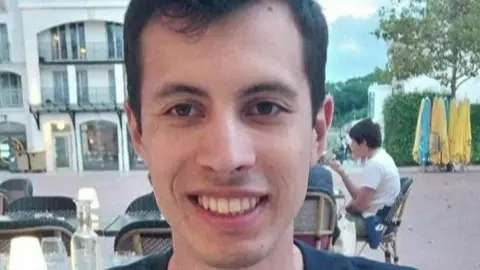
Steve Godia says the attack happened on the eve of Valentine’s Day at his rented house in Umoja 1 Estate, Nairobi. Steve alleged that his irate girlfriend confronted him over suspicions that he was involved with an ex-girlfriend.

The matter was reported to police, but ten days on, the suspect remains at large, leaving Steve and his family anxious for justice.

Love turned into horror on the eve of Valentine’s Day. In what police are investigating as attempted murder and grievous assault, allegedly at the hands of a jilted lover, Steve Godia is now counting the cost. Writhing in pain, he is struggling to process how a day meant to celebrate love became a fight for his life.

Admitted to a city hospital, Steve says he was attacked by his girlfriend, scalded with hot water during what he believed would be a calm meeting to iron out differences in their relationship.

Instead, that conversation allegedly erupted into violence, leaving him with severe injuries and a Valentine’s he may never forget.

“It was my girlfriend who burnt me because she felt that like my explanation about my ex-girlfriend was not enough and maybe when I spoke she felt I was being disrespectful,” Godia noted. 

Steve alleges the suspect, a woman he has known for the past three years, visited him that night but with a very different mission.

According to Steve, what began as a tense confrontation quickly escalated. She allegedly demanded to know whether he was involved with an ex-girlfriend. Then, in the dead of night, he claims she boiled water and poured it onto his face. Moments later, she fled the scene.

“The water was superheated to high temperatures. The next morning, my eyes were swollen, my entire face was swollen, I could not see anything. The wounds were aching,” he pointed out. 

CCTV cameras captured the suspect moments after the alleged attack, hurriedly leaving the premises shortly after the incident. Steve has identified the woman as Gladwell Kagai, someone he says he trusted and had known for three years.

But the alleged assault was not the only blow. As he lay helpless and in excruciating pain, Steve claims she took two of his mobile phones and transferred more than Ksh.300,000 from his account.

“I realised she had stolen my two phones and transferred all the money I had. I had Ksh.318,000 and she left me with Ksh.7 only. Though police say they are on the case, I feel like they are slow. I want the suspect to be arrested and presented in court,” Godia added. 

Steve, a third-year student at Multimedia University, says the ordeal has forced him to miss his exams, adding academic disruption to his physical and emotional pain. His hope is that the suspect will be apprehended.

Ruth Odinga, Caroli Omondi among ODM rebels removed from powerful committees

ODM rebels opposed to the broad-based government were on Tuesday kicked out of powerful committees in the National Assembly and moved to less lucrative ones, as the government-leaning team of the party moved in to crack the whip.

Suba South MP Caroli Omondi was ejected from the powerful Constitution Implementation and Oversight Committee, with his position in the committee taken by the latter-day convert of the broad-based government, Githunguri MP Gathoni Wamuchomba. 

The changes were bound to happen, as the ODM wing in the broad-based political arrangement drew the first blood.

In the changes, Suba South MP Caroli Omondi, who was recently declared the secretary general of the Azimio la Umoja One Kenya Coalition, was kicked out of his plum Constitution Implementation and Oversight Committee where he served as chairperson.

The house leaders sent a statement that dissidents will not be spared.

“I wish I go back as a whip, I used to be dangerous. Those people playing with the party, ningenyoa hao bila maji,” stated Junet Mohammed, Minority Leader, National Assembly.

“Caroli Omondi went on national TV and threatened this house that we wanted to remove him. I have no interest in ODM,” stated Kimani Ichung’wah, majority leader, National Assembly.

Other ODM members affected in the latest purge include Kisumu Woman Representative Ruth Odinga, who was moved from the Agriculture Committee to the less lucrative Committee on Members’ Services and Facilities.

Ruth, who is the sister of the former ODM party leader, the late Raila Odinga, has been a key critic of the broad-based government, coming out guns blazing in support of the embattled SG Edwin Sifuna.

Others affected in the house “fumigation” exercise include Kitutu Chache South MP Antony Kibagendi, who was removed from the powerful Public Investments Committee on Governance and Education and replaced by a greenhorn, Kasipul MP Boyd Were. The leaders said that was just the beginning.

“I am serving a warning. Anyone who will not adhere to party position will relinquish their committee positions to lesser ones, so that they know that it is parties which reward people to positions,” Junet noted. 

Several allies of the former Deputy President Rigathi Gachagua were also affected in the changes, with Naivasha legislator Jayne Kihara moved to the Committee on Members’ Services and Facilities.

However, it was a happy day for the MPs who came back to UDA, as they were reinstated to lucrative committees from those considered punishment dockets.

They include Githunguri MP Gathoni Wamuchomba, who was moved back to the Constitution Implementation Committee (CIOC) from the Committee on Members’ Services and Facilities.

Marakwet MP Timothy Kipchumba was also moved to the Justice Legal Affairs Committee from the Members’ Services and Facilities Committee.

Juja MP George Koimburi, who recently ditched Gachagua, was also handed two equally powerful dockets. More changes are expected at the Senate.

Probe under way after illness kills 72 tigers in Thai tourist park

Authorities in Chiang Mai, a city in northern Thailand, are investigating the deaths of dozens of tigers at a popular tourist attraction.

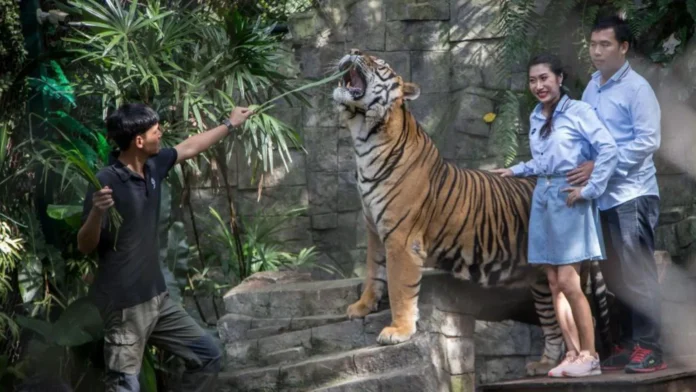
Seventy-two tigers died in the span of less than two weeks this month, across two facilities of Tiger Kingdom Chiang Mai, a park where visitors can touch and interact with the big cats.

The local livestock department said samples from the tigers showed canine distemper virus – though authorities have not confirmed how the outbreak happened.

Officials told a news conference on Tuesday the virus was no longer spreading and no more tigers were dying. No humans had been infected, they added.

The remains of the tigers have all been buried and a recommendation was made for the gravely ill tigers be euthanised, authorities said.

The big cats were among more than 240 tigers living across the two facilities at Tiger Kingdom Chiang Mai, according to local media.

Canine distemper virus is a highly contagious disease that attacks the host’s respiratory, gastrointestinal and nervous systems. While it is typically found among dogs, it can also infect big cats.

Besides canine distemper virus, the provincial livestock office in Chiang Mai said last week that samples from the tigers’ carcasses also tested positive for a bacteria associated with respiratory disease.

“By the time we realised they were sick, it was already too late,” Somchuan Ratanamungklanon, director of the national livestock department,previously told local media – noting that it was harder to detect sickness in tigers compared to animals like common household cats or dogs.

Somchuan told reporters on Tuesday that officials had collected samples from the tigers’ bodies, the chicken they eat and their surroundings.

The provincial livestock office had earlier said preliminary tests showed the tigers had been infected with feline parvovirus. Some local officials had also initially suspected the outbreak might have stemmed from contaminated raw chicken meat fed to the tigers, the Bangkok Post reported.

Raw chicken was also suspected as the cause of a major bird flu outbreak at a tiger zoo in Chonburi province in 2004. In that case, nearly 150 tigers died or were euthanised to prevent further spread of the influenza.

The disease control department said over the weekend that, while none of the veterinarians or other staff working in the Chiang Maitiger enclosures had fallen ill from canine distemper virus, they had been placed under observation for 21 days, Thai PBS reported.

Animal rights groups say this case highlights the poor living conditions of captive tigers used for entertainment in Thailand.

Wildlife Friends Foundation Thailand said in a statement that the tigers’ deaths exposed the “extreme vulnerability of captive wildlife facilities to infectious disease”.

“Tragedies like this would be far less likely to happen” if tourists “stayed away” from these attractions, Peta Asia said in a statement.

Tiger Kingdom Chiang Mai has been temporarily closed for two weeks as officials carry out disinfection work.

‘CSs have the right to engage in politics’: CS Wandayi defends involvement in ODM activities

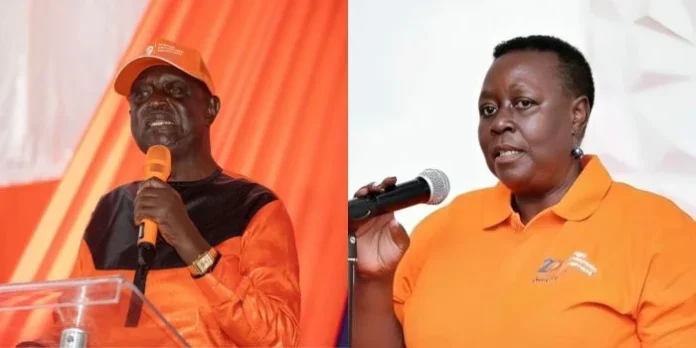
Energy and Petroleum Cabinet Secretary Opiyo Wandayi has defended his continued involvement in political activities despite serving in government, insisting that his actions are within the law and aimed at informing Kenyans about the administration’s work.

Speaking during an interview on Citizen TV on Tuesday, Wandayi dismissed the notion that his public engagements were tantamount to early campaigns for President William Ruto’s re-election.

He maintained that his role is to communicate the government’s achievements, leaving the final decision to Kenyans.

“You may choose to call it a campaign, but the fact is that I have been explaining to Kenyans what the government of President Ruto is doing for them and that if they feel satisfied, they vote for him again,” Wandayi stated.

At the same time, the CS reaffirmed his loyalty to the Orange Democratic Movement (ODM), saying he’s still a lifelong member of the party. 

“I am a life member of ODM and continue to participate actively in the affairs of the party. There is this misplaced notion that CSs should not participate in the affairs of political parties. The Constitution recognizes that CSs have the right to engage in political affairs,” he noted. 

Section 77(2) of the Constitution prohibits State officers from holding any office in a political party. However, Section 23 of the Leadership and Integrity Act gives Cabinet Secretaries the leeway to hold political views but are expected to remain non-partisan in the execution of their official duties. 

Wandayi further defended the government’s performance, highlighting progress in the energy sector.

“From August 2022 to date, we have connected 1.3 million households to electricity, a 15% jump from where it was; it’s monumental. We have seen many other things happening under this administration; therefore, I don’t think it is proper to even imagine that government work has been hampered in any way as a result of the activities that are going on out there,” he stated.

Wandayi also reminisced about the death of longtime ODM party leader and former Prime Minister Raila Odinga, describing a sense of loss among his allies.

“Most of us who were Raila’s political disciples feel orphaned. His passing on was unexpected, and so we are still trying to cope with that situation, but again, life must go on because we owe it to Kenyans to perpetuate Baba’s legacy by serving Kenyans,” he stated.

Source Citizen Digital

NTSA unveils Sh42 billion PPP plan for smart driving licences, instant fines to boost road safety

Star -The National Transport and Safety Authority (NTSA) has announced a major Public-Private Partnership (PPP) project aimed at transforming driver licensing, strengthening traffic law enforcement and improving road safety across the country.

In a public notice published in the weekly myGov newspaper, NTSA disclosed details of a strategic partnership with KCB Bank Kenya Limited and Pesa Print Limited for the design, supply, delivery, installation and maintenance of second-generation smart driving licences and associated digital enforcement services.

The ambitious project, valued at an estimated Sh42 billion in its initial phase, is expected to be financed entirely through private debt and equity over the first two to three years.

The partnership will run for 21 years under a strategic model provided for in the Public Private Partnerships Act.

NTSA said the project is part of the government’s broader digital transformation and road safety agenda anchored in Kenya Vision 2030, the Bottom-Up Economic Transformation Agenda (BETA), the National Road Safety Action Plan 2024-28 and the Fourth Medium-Term Plan (2023-27).

Established under the National Transport and Safety Authority Act of 2012, NTSA is mandated to regulate road transport, register and license motor vehicles, oversee driver training and testing, enforce road safety standards and advise government on transport policy.

The authority noted that the initiative responds to growing concerns over Kenya’s worsening road safety record and inefficiencies in the current driver licensing system.

“Kenya’s road transport and safety record is characterised by high levels of road fatalities, road indiscipline, poor driver licensing systems and weak enforcement of traffic violations,” NTSA said.

According to the agency’s statistics, road fatalities have risen sharply from 3,875 deaths in 2019 to more than 5,100 in 2024.

Beyond the human toll, road crashes are estimated to cost the economy about Sh450 billion annually, equivalent to nearly five per cent of the country’s Gross Domestic Product, through medical expenses, lost productivity and damage to property.

The authority also cited weak enforcement systems, inadequate speed monitoring infrastructure, low uptake of smart driving licences and persistent corruption as major challenges undermining road discipline.

Out of an estimated five million drivers in the country, only about 1.3 million have so far acquired smart driving licences, largely due to limited enrolment centres and equipment.

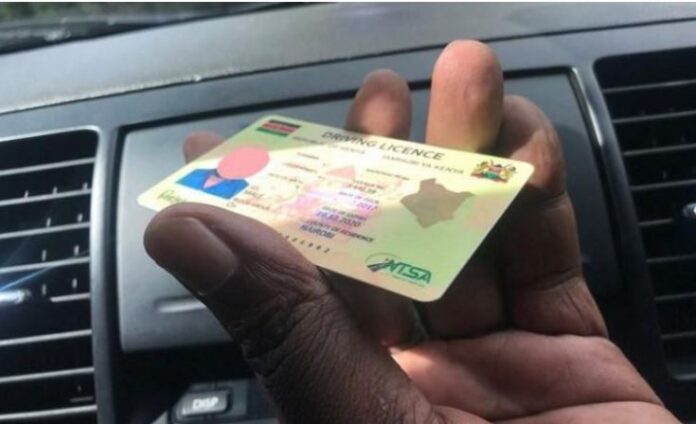
Under the new PPP arrangement, the consortium will modernise driver licensing through the production and nationwide distribution of secure electronic driving licences (e-DLs).

The project will involve the production of five million high-security polycarbonate smart cards every three years over the contract period.

To support enrolment, more than 102 centres will be established across the country, supported by over 390 enrolment kits and modern production systems capable of delivering licences within 24 to 48 hours.

In addition to card issuance, the project will introduce a comprehensive digital driver management system that tracks a driver’s lifecycle, including training, licensing history and a merit and demerit points system.

The digital platform will also support a mobile driving licence wallet, enabling motorists to access their credentials electronically and receive notifications related to compliance and enforcement.

A major component of the project is the automation of traffic law enforcement through the installation of 700 fixed speed cameras and 300 mobile speed enforcement units on major highways and urban roads.

These systems will be linked to a National Command and Control Centre to enable real-time monitoring of violations and improve enforcement efficiency.

Motorists found committing minor traffic offences will be issued instant fines under the Traffic (Minor Offences) Rules, 2016.

Payments will be integrated into digital platforms, including USSD, mobile money and banking systems.

The e-DL wallet will also support financial services such as payments, transfers, deposits, mobile money top-ups and balance enquiries through tokenised systems.

The authority said user charges for the electronic driving licence will remain at Sh3,000 for issuance, replacement or duplication, while fine amounts will be based on existing legal provisions.

Responsibilities under the partnership have been clearly defined.

Pesa Print will handle card design, pre-printing, personalisation, production management and system connectivity. KCB will support enrolment, distribution and issuance, while NTSA will oversee enforcement, regulatory compliance and data governance.

The project will be implemented in collaboration with key government agencies, including the National Treasury, the Ministry of Roads and Transport, the Ministry of Interior and National Administration, the National Police Service, the Office of the Director of Public Prosecutions and the Judiciary.

NTSA said the initiative is expected to deliver multiple benefits, including improved road discipline, enhanced enforcement, reduced corruption and faster service delivery.

The authority also anticipates a reduction in road crashes and related medical costs, decongestion of courts through automated penalties, improved management of public transport operations and enhanced government revenue collection.

At the end of the 21-year contract period, the project company will transfer ownership of core infrastructure, including speed cameras, command centre systems and enrolment equipment, to NTSA.

However, the private partners will retain ownership of non-core assets such as smart poles, vehicles and certain software components.

Implementation of the project will be guided by several laws, including the Constitution of Kenya, the NTSA Act, the Traffic Act, the Public Private Partnerships Act, the Public Finance Management Act and the Access to Information Act, among others.

The authority said the disclosure is intended to enhance transparency and public awareness regarding the project, in line with legal requirements governing PPP arrangements.

Motorists, boda boda riders, public service vehicle operators, cyclists and pedestrians have been identified as the primary end users and beneficiaries of the system.

Through the initiative, the government hopes to leverage private sector expertise and financing to modernise road safety management and reverse the rising trend of traffic fatalities.

NTSA urged the public and stakeholders to familiarise themselves with the project details as the country moves towards a more technology-driven, efficient and accountable road transport system.


US lawmakers find Nigeria ‘deadliest’ place for Christians

US lawmakers Wednesday said in their findings on the alleged persecution of Christians in Nigeria that the West African country was the “deadliest” place in the world to be a Christian.

A report on the findings also said that Christians were “subject to ongoing violent attacks” from armed militias and terrorist groups.

The report said blasphemy laws in Nigeria’s northern states are used to silence speech and dissent, target Christians and minorities, and “justify so-called ‘convictions’ without due process.”

igeria faces a complex security challenge from many different armed groups and thousands are killed annually. But the victims are both Christians and Muslims. 

Plus, other attacks also occur as part of conflicts between farmers and herders over dwindling resources like land. Other battles involve ransoms for kidnappings and sectarian tensions.

President Donald Trump last year designated Nigeria as a “Country of Particular Concern,” due to alleged violations of religious freedom. He said Christianity was facing an “existential threat” in Nigeria.

Nigeria, with a population of 237 million people, is roughly divided between a Muslim-majority north and a Christian-dominated south.

Northern Nigeria has remained affected by the decade-and-a-half-long Islamist insurgency led by Boko Haram and affiliates of the “Islamic State” group.

‘Sadistic’ pair behind bars for blowing up sheep

Two “frankly sadistic” agricultural students have been detained for beating a sheep to death, before inserting explosive bird scarers in its body, while filming the attack.

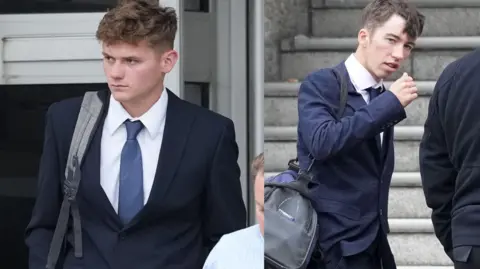
Leighton Ashby, 22 and from Beckett Road in Ashford, Kent, and Oakley Hollands, 20, of Mussenden Lane in Horton Kirby, Kent, appeared at Hove Crown Court on Monday.

At an earlier hearing the Plumpton College students had admitted killing the sheep in a field near Ditchling Beacon, East Sussex, on 2 November 2023.

Ashby was sentenced to two years in prison, while Hollands has been sent to a young offender institution for 20 months, with both disqualified from owning animals for 10 years.

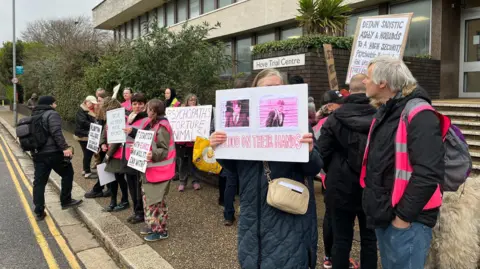
JULIETTE PARKIN/BBC About a dozen people, some wearing purple hi vis waistcoats and some holding up home made placards, stand outside Hove Trial Centre, a grey modern brutalist building.
Animal rights protesters gathered outside the court before the sentencing

In passing sentence, Judge Jeremy Gold told the two men: “The fact that you both come from farming backgrounds and were studying at Plumpton at the time makes your callous and frankly sadistic behaviour all the more alarming and difficult to comprehend.”

He said they had carried out the attack for their “own perverse satisfaction”.

Footage of Ashby carrying out the attack was found by police on Hollands’ phone, with the ear tags of the sheep that was killed found in a nearby property.

The judge told both the probation service regarded them “as presenting a high risk to animals in the future”.

Eddie Mitchell Two young men outside court in blue suits with bags over their shoulder

In a statement the college said Ashby and Holland’s behaviour had been “completely at odds with the core values and high standards upheld by everyone at Plumpton College”.

The statement added: “We remain committed to maintaining the highest standards of animal welfare, conduct, and professionalism expected of all our students.”

A group of animal rights protesters gathered outside the court ahead of sentencing.

Trump’s new tariff comes into effect at lower than expected rate

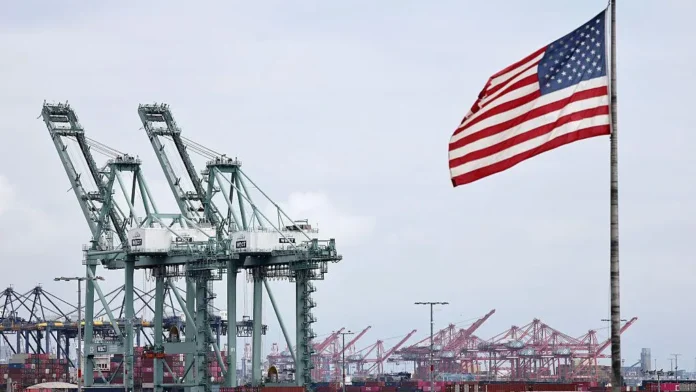
US President Donald Trump’s new global tariffs have come into effect at 10% despite a pledge to introduce them at a higher rate.

After the Supreme Court blocked many of his sweeping import taxes on Friday, the president said he would introduce a 10% global rate. He then said on Saturday that the rate would be 15%.

However, according to official documents, the tariffs have been set at the lower rate from Tuesday with no directive to increase the rate issued. The BBC has contacted the White House for comment.

The White House is working to update the rate to 15% to reflect Trump’s announcement, a White House official told Reuters, without saying when the change might come into force.

“I think it simply adds to the chaos and mess,” said Carsten Brzeski, an analyst with investment bank ING, referring to the fast-changing tariffs and their effects on businesses.

“In terms of uncertainty we’re back to where we were last year,” he told the BBC’s Today programme, adding there was now a higher risk that the US’s trading partners would retaliate.

“The risk of a real fully-fledged tariff war – trade war – escalation is clearly higher than last year,” he said.

An executive order signed by Trump on Friday said the temporary 10% import duty was intended to “address fundamental international payments problems and continue the Administration’s work to rebalance our trade relationships to benefit American workers, farmers, and manufacturers”.

The administration is applying the levy under Section 122 of the 1974 Trade Act, which allows the president to impose the charge for 150 days without congressional approval.

The president has argued that tariffs are necessary to reduce America’s trade deficit – the amount by which imports exceed exports. But the deficit reached a fresh high last year, widening by 2.1% compared to 2024 and hitting roughly $1.2 trillion (£890bn).

The US has already collected at least $130bn in tariffs using the 1977 International Emergency Economic Powers Act (IEEPA), according to the most recent official data.

On Friday, the Supreme Court said the president had overstepped his authority by introducing sweeping tariffs using IEEPA last year, a decision that raised the possibility that businesses could get billions of dollars in tariff refunds,

Global transportation and postal company FedEx filed a lawsuit on Monday for a “full refund” on the import taxes it has paid under the IEEPA.

Meanwhile, campaign group We Pay The Tariffs has said it represents over 900 US “demanding full, fast, and automatic refunds of unlawful IEEPA tariffs” in an open letter to the government.

However, experts have raised doubts about the likelihood of the US handing money back, with Trump saying on Friday the issue would be fought in the courts “for the next five years”.

Supreme Court justice Brett Kavanaugh said in the ruling the refund process was likely to be a “mess”.

Trump has been highly critical of the Supreme Court’s decision, calling it “ridiculous, poorly written, and extraordinarily anti-American”.

‘Good news, but will it stay that way?’

Fraser Smeaton, chief executive of fancy dress firm Morph Costumes, is a UK-based business that makes costumes in China and exports them to the US.

The business pays the Chinese tariff rate and he says he has not been able to invest as productively as he would want to because he’s had to keep money aside in case of changes in tariff policy.

“The fact that we’re at 10% rather than 20% is better than it was, but will it stay that way?” he asks.

Like many others, he says his business is pursuing a refund for the unlawful IEEPA tariffs, having kept track of “what we’ve paid and when we’ve paid it”.

Daniel Graham, managing director of UK-based tea business Birchall, says the unexpected lower tariff rate is welcome but the lack of clarity is not.

“Good news that it’s come in lower; bad news that it keeps changing,” he says.

The tea business founded by his great, great-grandfather in 1872 imports tea from Africa, packages it in the UK, and then exports it to countries including the US.

He says the firm has been able to deal with tariffs so far because tea is a lower-cost product than cars or other high-end goods, meaning the tariffs do not affect them as much.

However, if Trump’s tariffs were to go too high, he says the business would consider “different territories”.

‘We need to react’

On Monday, Trump threatened to impose higher tariffs on countries that “play games” with recent trade deals, following the Supreme Court’s ruling.

His warning came as countries around the world said they were evaluating what tariffs and trade deals would stand following the decision.

Britain’s Business and Trade Secretary Peter Kyle said he was confident the basic 10% tariff deal reached by the UK and US would still stand.

“It was the best deal and it remains the best deal, and the fundamental terms that we had negotiated with the United States remain in place,” he told a parliamentary committee on Tuesday.

The deal also carved out preferential terms for specific industries including vehicles and planes.

Kyle said higher tariffs were a “lose, lose” situation for both British and American businesses, but added the UK would still like to come to a full trade agreement with the US.

“We have maintained relations, conversations with counterparts, and we are… seeking other opportunities to move forward at pace,” he added.

The European Union said it would suspend its ratification of a deal struck over the summer.

“If we get worse conditions then we need to react,” said the chair of the European Parliament’s delegations for relations with the US, Brando Benifei, adding that the EU had asked the US for clarity over the tariffs.

“I think you should demand respect,” he told the Today programme. “My plea is that all the countries in the world that do not like that we are being treated this way… try to work a bit together.”

India also said it would defer previously scheduled talks to finalise a recent agreement.

US ambassador to France set for talks with foreign minister after row

By Bonface Mulyungi

BBC -The US ambassador to France, Charles Kushner, has reportedly assured French Foreign Minister Jean-Noel Barrot he will not interfere in the country’s affairs, after he failed to explain claims France had seen a “rise” in violence.

The pair spoke by phone on Tuesday after Barrot blocked Kushner, father of Donald Trump’s son-in-law Jared Kushner, from access to ministers in response to the US envoy’s apparent snubbing of a summons on Monday evening over his comments.

On Monday, Kushner had cited a prior engagement and sent a deputy instead of answering the summon himself.

The pair have reportedly agreed to meet face-to-face in the coming days. Neither has spoken publicly about Tuesday’s talks.

“[Barrot] reiterated the reasons that had led to the summons: France cannot accept any form of interference or manipulation of its national public debate by the authorities of a third country,” a member of the foreign minister’s team told French media about Tuesday’s call.

“The ambassador took note and expressed his willingness not to interfere in our public debate.”

The diplomatic row began last week, when the US embassy in France posted comments on social media about the murder of far-right nationalist Quentin Deranque, warning that “violent left-wing extremism is on the rise” in France.

Deranque, a 23-year-old maths student, died in hospital on 14 February – two days after being beaten by a gang of masked young men in Lyon, in an attack which ministers from France’s centre-right government blamed on “far-left” militants.

AFP A  young man called Quentin Deranque sits outside
Quentin Deranque came under attack near an event by a leading radical left politician in Lyon

The comments posted by the US embassy angered the French government, with Barrot saying over the weekend: “We reject any use of this tragedy, which has plunged a French family into mourning, for political ends.”

“We have no lessons to learn, particularly on the issue of violence, from the international reactionary movement.”

BBC News has approached the US embassy in France for comment.

Kushner’s failure to turn up on Monday worsened the situation, with the foreign ministry then accusing him of an “apparent failure to grasp the basic requirements of the ambassadorial mission”.

It said Barrot had requested Kushner “no longer be allowed direct access” to government ministers.

Prior to speaking to Kushner on Tuesday, Barrot told Franceinfo that his failure to answer his summons had been “a surprise”.

“When you have the honour of representing your country, the United States of America in France, as ambassador, you abide by the most basic customs of diplomacy and you respond to summonses from the foreign ministry,” said Barrot.

“We do not accept that foreign countries can come and interfere in, then insert themselves into, our national political debate, whatever the circumstances.”

It is not the first time Kushner has found himself in diplomatic hot water with the French government. Last year, he was summoned over what the foreign ministry said were unacceptable allegations of failing to tackle a surge in antisemitism.

Six men suspected of being involved in the fatal assault have been charged over Deranque’s death, while a parliamentary assistant for a deputy from the radical left France Unbowed (LFI) party has also been charged with complicity.

They were all members of, or close to, an organisation called La Jeune Garde (The Young Guard) which used to provide security for LFI before it was banned last year.

LFI leader Jean-Luc Mélenchon, who is a likely contender in next year’s presidential election, has said his party had “nothing to do with this story” and condemned “all forms of violence”.

“We express our consternation, but also our empathy and compassion for [Deranque’s] family and friends,” he said.

French President Emmanuel Macron held a meeting at the Élysée Palace on Tuesday, which he had earlier said would “assess all the violent action groups that are active and have links with political parties”.

Sources told French media after the meeting that the government had begun a process to close branches of La Jeune Garde that they suspected were trying to operate despite the ban.

M23 rebel spokesperson killed in Congo army drone strike, officials say

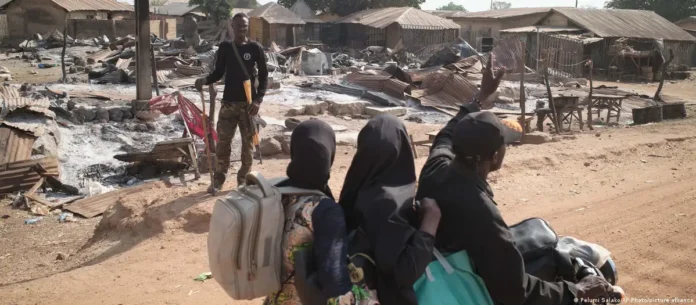
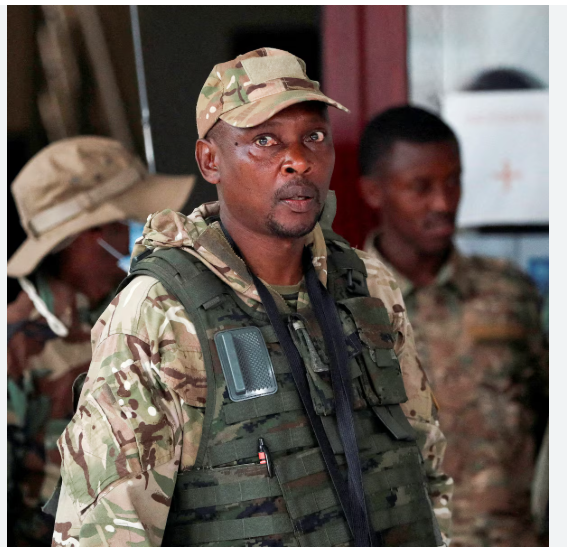
Willy Ngoma, a spokesperson for the Rwanda-backed M23 rebels fighting in eastern Congo, has been killed in a drone strike, a U.N. official and a rights group said Tuesday, escalating tensions over the region’s conflict after peace negotiations stalled.

Ngoma, a senior officer who was deeply involved in M23’s operations, was said to have been killed in a predawn drone strike near the North Kivu province’s mining town of Rubaya.

The U.N. official and a coordinator with the rights group working in the area spoke to The Associated Press on the condition of anonymity for fear of reprisals.

Rubaya residents told the AP that the drone strike targeted a spot that has in recent weeks served as an enclave for the M23.

The decades-long conflict escalated in January 2025 after the rebels made an unprecedented advance into the key cities of Goma and Bukavu, further expanding their control of several cities and towns in the hard-hit region. The conflict has created one of the world’s largest humanitarian crises, with more than 7 million people displaced.

It wasn’t immediately clear who carried out the drone strike near Rubaya, which is viewed by many in Congo as a setback to peace efforts that partners hoped would bring permanent peace and prevent a regional conflict.

The strike came weeks after Congo and the M23 rebels agreed to a ceasefire and methods of monitoring it with help from the U.N. mission in Congo. Both parties traded accusations of violating the terms of the truce.

U.S. President Donald Trump and Qatar have brokered peace efforts, but clashes have continued in recent weeks.

Create a free account, or log in.

Gain access to read this content, plus limited free content.

Yes! I would like to receive new content and updates.

Sponsored Ad

Ad 1
Ad 2
Ad 3
Ad 4
Ad 5
Ad 6