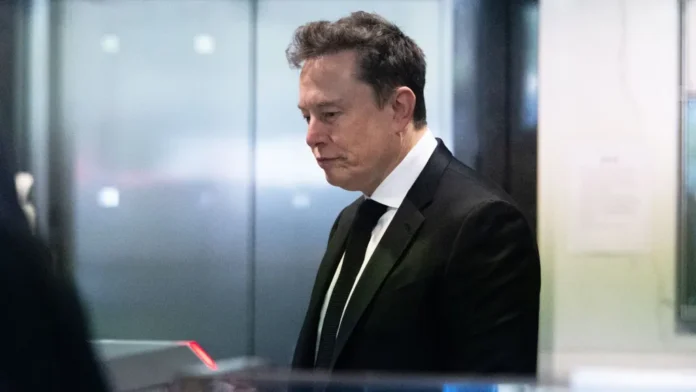
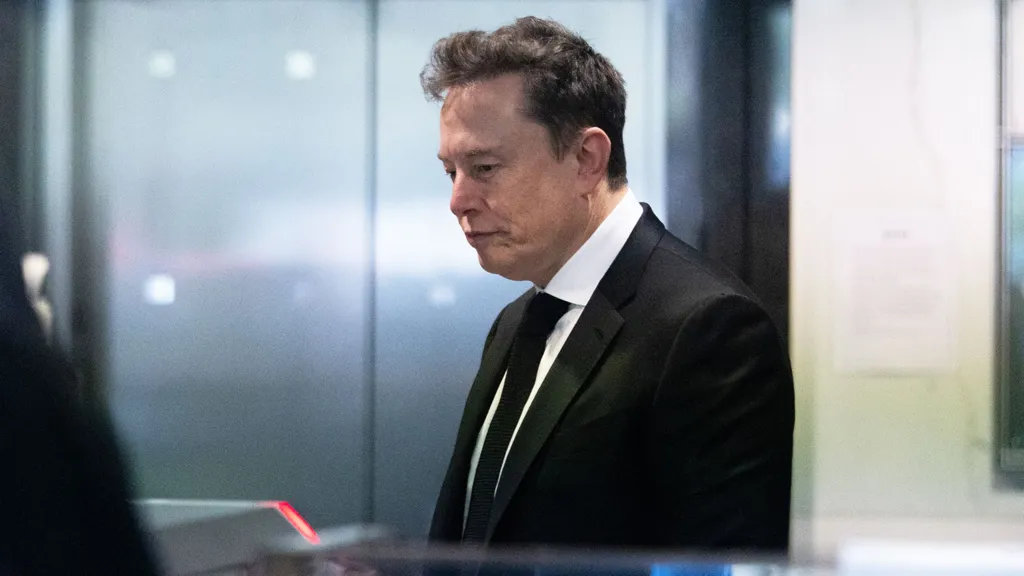
Tesla has valued its compensation for billionaire boss Elon Musk at a whopping $158bn (£117bn) in 2025 – according to regulatory filings submitted on Thursday – but also disclosed he will not be getting any of it.
Musk’s compensation reflects the firm’s estimate of what he would earn should he meet the terms of an astronomical pay deal approved by Tesla shareholders in November.
However, it only becomes payable if he hits ambitious milestones, including raising the company’s market value to $8.5tn, in which case Musk could be awarded shares worth up to $1tn.
Analysts say he has some way to go before doing that, meaning the monster pay package is nominal only, for now at least.
“Elon Musk isn’t actually going to pocket $158bn,” said Danni Hewson, head of financial analysis at AJ Bell.
“He’s still got a whole bunch of targets to hit and none of the milestones set out in the $1tn pay deal approved by shareholders last year were achieved in 2025.”
She told the BBC Musk’s compensation figures, disclosed in a filing with the US Securities and Exchange Commission (SEC) on Thursday, are “a promise he’ll receive that amount in Tesla shares for his work over the past year if he does manage to deliver”.
Musk must meet a range of ambitious operational milestones to justify the pay-out, including
Musk comfortably sits as the world’s richest person, at the time of writing.
His net worth is currently estimated to be worth $651bn by Bloomberg and $788bn by Forbes.
The respective estimates place his wealth far beyond that of other current or former big tech bosses, including Google founders Larry Page and Sergey Brin.
Hewson said this status, and the wealth of his other numerous firms, means while Musk does not receive a salary for his work at Tesla, “he can certainly bide his time”.
His firm SpaceX is also poised to become one of the most valuable publicly traded companies in the world.
The rocket-maker – which recently merged with Musk’s AI startup and X parent company xAI – is preparing for an initial public offering (IPO), which would allow its shares to be traded on the stock market.
Musk has also been arguing in court over the direction taken by rival firm, OpenAI, which he founded with its current boss Sam Altman in 2015.
In sometimes testy exchanges with OpenAI’s lawyers, and indeed the judge, he has argued Altman and fellow executive Greg Brockman “stole a charity” by pursuing profit-generating initiatives he felt went against its founding mission.
By George Ndeto, What began as a desperate search for a missing child has culminated in a breakthrough, following the arrest of the prime suspect behind the brutal murder of 11-year-old Glorious Kaiza Maore.
The minor was reported missing on March 15, 2026, after failing to return home from Sunday school practice, a disappearance that would later unravel into a chilling tale of cruelty.
Days later, in Manyani area, a horrifying discovery was made when children playing nearby stumbled upon a sack with a human hand protruding from it.
Police officers were alerted, and upon inspection, the lifeless body of the young girl was found inside, bound with a rope in a calculated attempt to conceal the crime.
A postmortem examination conducted at Coast General Teaching and Referral Hospital confirmed the worst: Glorious had been defiled before being strangled to death, a heart-wrenching violation of innocence.
Detectives from Kisauni immediately launched investigations, piecing together crucial leads that pointed to Anthony Juma, aka Kipara, as the prime suspect.
However, the suspect had fled, leaving behind an abandoned house where partially burnt clothes and beddings were recovered, evidence of a failed attempt to destroy crucial exhibits.
A manhunt ensued, and on April 12, 2026, the suspect was finally arrested, marking a significant breakthrough in the case. He was subsequently arraigned at the Shanzu Law Courts under a miscellaneous application, where detectives sought custodial orders to allow for completion of investigations.
On April 13, 2026, the court granted a 21-day custodial order, enabling investigators to finalise forensic analysis and strengthen the case ahead of prosecution.
The suspect, who is a Tanzanian national who operates locally as a garbage collector without formal identification, remains in custody as investigations continue, with the matter coming up for mention on May 4th May, 2026.
The Directorate of Criminal Investigations thanks members of the public for their cooperation and assures Kenyans that justice for the young victim remains a top priority. Courtesy DCI KENYA
US Defense Secretary Pete Hegseth has argued that the clock is paused on a deadline to seek approval from Congress for the US-Israeli war with Iran even as questions about whether a deal is any closer remain unanswered on Friday.
Friday is the 60th day since Trump formally notified Congress of the strikes against Iran on 2 March. US law requires a president to “terminate any use of United States Armed Forces” within 60 days of such a notification – without Congress’ permission.
A senior administration official said hostilities with Iran had “terminated”, emphasising a ceasefire has been in effect since early April.
Despite the ceasefire, the two sides have not yet reached a longer-term deal via talks, though Iranian media reported a new proposal from Tehran sent to Pakistan on Friday.
Iranian state news agency IRNAreported that a proposal for negotiations with the US was sent to Pakistan intermediaries. The news agency did not publish the details, and it’s unclear if the proposal has reached the US.
President Trump told reporters on Friday afternoon: “We just had a conversation with Iran. Let’s see what happens. But, I would say that I am not happy.”
He said a deal has been hard to reach in part because Iranian leadership was “very confused”, after a number of its top military officials were killed in the war.
Trump said he was briefed with options by US Central Command on Thursday, ranging from “blast the hell out of them and finish them forever” to “make a deal”.
Oil prices, which have increased sharply since Iran closed the Strait of Hormuz, dropped after news of Tehran’s latest offer.
The key shipping channel is still effectively closed – causing economic impacts around the world.
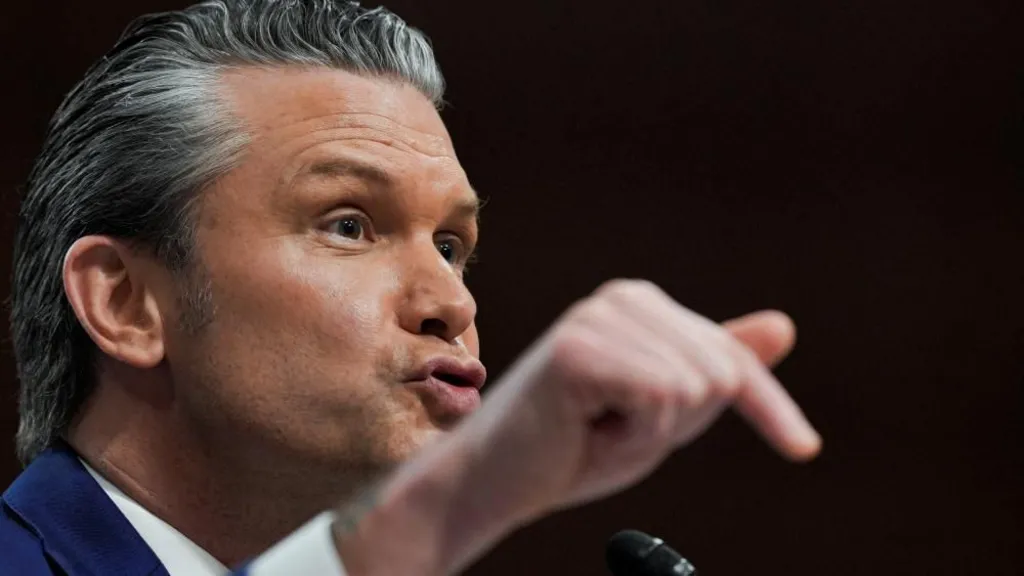
Hegseth defended the administration’s position on the deadline and ceasefire during questioning from members of the Senate, or upper chamber, on Thursday.
“We are in a ceasefire right now, which our understanding means the 60-day clock pauses or stops in a ceasefire,” he said.
The questioner, Democratic Senator Tim Kaine, responded: “I do not believe the statute would support that. I think the 60 days runs maybe tomorrow, and it’s going to pose a really important legal question for the administration there.”
The relevant piece of US law, the decades-old War Powers Resolution, makes certain requirements of a president “within sixty calendar days” of their use of US armed forces within a combat.
It requires them to end the use of those forces unless Congress makes a formal declaration of war or allows the president an extension, up to 30 days in length, for the “prompt removal” of troops.
The legislation was passed in 1973 to limit the ability of then-President Richard Nixon to continue waging war in Vietnam.
A senior Trump administration official said: “For War Powers Resolution purposes, the hostilities that began on Saturday, February 28 have terminated.”
The official highlighted that the initial two-week ceasefire had been extended, and said that there had been no exchange of fire between the US and Iran since 7 April.
Some experts have questioned the Trump administration’s interpretation of the legislation and whether legally a ceasefire is in effect.
“The secretary’s claim about hostilities coming to an end does not match up to the evidence,” said Prof Heather Brandon-Smith, from Georgetown University Law in Washington DC.
“Hostilities have not ceased. The US has instituted a blockade of Iranian ports. This is an act of war. This is hostility,” she said.
Brandon-Smith added that although the War Powers Resolution does not define “hostilities”, the term was deliberately used to capture a broad range of conduct.
The US blockade of Iranian ports “are clearly acts of hostilities that were intended to and do come under the War Powers Resolution,” she said.
Brandon-Smith stated that even if a ceasefire is legally in effect, it would not stop the clock on the 60-day timeframe.
“A ceasefire is not a permanent end to the conflict,” she said. “To my mind, a permanent end to the conflict is what would actually sort of close up the 60 days.”
Elisa Ewers, a national security and foreign policy expert at the Council on Foreign Relations, agrees.
“Even though there is a temporary ceasefire, US personnel are still in harm’s way,” Ewers said.
“Implementing the U.S. blockade is not without risk, and itself is hostilities. Given the fragility of the ceasefire and President Trump’s own messaging about resuming strikes on Iran, there is a risk that they may need to use force, and they have been and remain in hostilities,” she continued.
“If you moved all the assets that were introduced for these offensive operations out, and then at some point in the future decided to reintroduce them back in to conduct operations, would that reset the clock? Theoretically, probably,” she said.
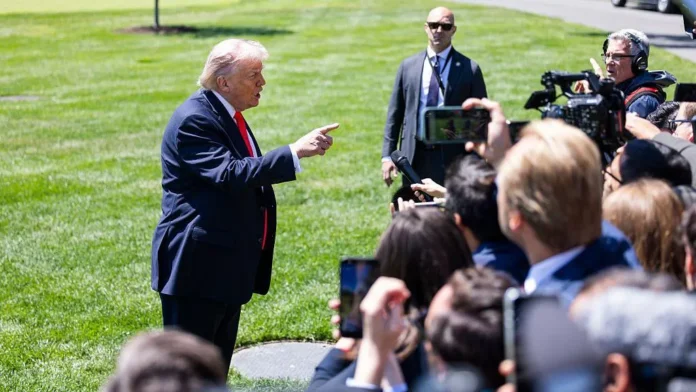
Speaking to reporters on the White House lawn on Friday, Trump said the War Powers Resolution has “never been adhered to”.
“Every other president considered it totally unconstitutional, and we agree with it,” Trump said, adding that “many presidents” have exceeded the 60-day mark.
The BBC’s US partner, CBS News, reported that administration officials were in active conversations with members of Congress about gaining congressional authorisation for the war.
In the case of Iran, Democratic-led attempts in both chambers of Congress to constrain Trump have repeatedly failed. Democrats have vowed to continue their efforts, saying the attempts are an opportunity to get lawmakers’ views on the record.
Most Republicans have opposed the Democratic efforts – though some have signalled they could reconsider their positions beyond the 60-day period.
Conflict was sparked across the Middle East after the US and Israel launched wide-ranging strikes on Iran, killing the country’s supreme leader. Iran responded by launching attacks on Israel and US-allied states in the Gulf.
The US and Israel have led Western opposition to Iran’s nuclear programme, claiming the country is seeking to develop a nuclear bomb – something Tehran has vehemently denied.
US media have given conflicting accounts of the options now being considered by Trump.
Hegseth also sparred with Democratic lawmakers in the House during another hearing on Wednesday.
During that session, one of the defence secretary’s top officials revealed that the operations in Iran had cost the US some $25bn (£18.5bn) so far.
Meanwhile, many Republicans on the House committee expressed support for the Pentagon, with congressman Carlos Gimenez of Florida saying he believed Iran was an existential threat to the US.
“When someone tells me for 47 years that they want to kill us, I think I am going to take them at their word,” he said. “I support our efforts to make sure that Iran never has a nuclear weapon.”
Veteran Kenyan gynaecologist and director at Nairobi Hospital, Dr Job Obwaka, has died at the age of 83.
His wife, Everose Obwaka, confirmed that he passed away at 7:00 pm at the same hospital where he had served for decades.
Hospital sources indicated that he was brought in unconscious and was pronounced dead on arrival.
Dr Obwaka’s death comes just weeks after a dramatic arrest on March 14, 2026, over allegations of falsifying the hospital’s members’ register and conflict of interest.
The incident triggered concern within the medical community, including a response from the Kenya Medical Practitioners and Dentists Union (KMPDU).
Two days after his arrest, on March 16, he was rushed to hospital in an ambulance after developing health complications while at the Milimani Law Courts, where he had been awaiting arraignment.
Dr Obwaka was widely regarded as a seasoned obstetrician and gynaecologist.
He ran the Gilead Women’s Centre located at the NSSF Building and was a prominent figure within the Nairobi Hospital board.
His death has drawn tributes from family, colleagues and members of the wider medical fraternity, many of whom have described him as a dedicated professional.
His recent arrest and detention, particularly given his advanced age, had sparked significant concern among healthcare professionals.
Further details regarding funeral arrangements are expected to be communicated by the family.
Residents of Narok County were treated to a rare and unexpected moment when former President Uhuru Kenyatta addressed them via a phone call during a Jubilee Party function, sparking excitement and nostalgia among supporters.
The brief interaction transformed what had begun as a routine political gathering into a lively and emotionally charged event, as cheers and chants erupted the moment his voice came through the speakers.
The event, held on Friday, May 1, 2026, brought together local leaders and Jubilee supporters for a Maa Delegates Conference and the homecoming celebration of Secretary General Moitalel Ole Kenta. Attendees were caught by surprise when they realized they would hear directly from the country’s fourth Head of State, even if remotely.
As soon as Kenyatta began speaking, the crowd responded with overwhelming enthusiasm. Some attendees rushed closer to the sound system, while others lifted their phones to capture the moment. The atmosphere reflected a strong sense of connection, with supporters audibly greeting him as if he were physically present.
In his brief remarks, Kenyatta thanked residents for their continued support of the Jubilee Party, urging unity and commitment to strengthening the party’s future.
The call came during an event also attended by Muhoho Kenyatta, whose rare public political appearance had already drawn attention. However, it was the former president’s voice that ultimately defined the moment.
Also present was Fred Matiang’i, the Jubilee Deputy Party Leader, who has recently taken on a more visible role within the party as it seeks to rebuild its grassroots support ahead of the 2027 General Election.
As the call ended, the excitement lingered, with many in attendance reflecting on the unexpected address that briefly brought back the presence of a familiar political figure.
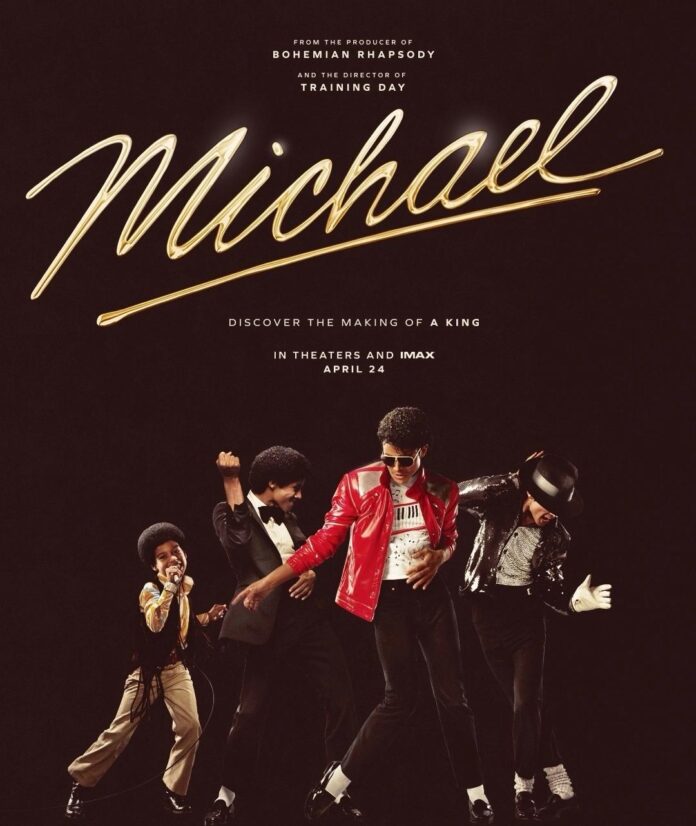
A sequel to the highly anticipated Michael Jackson biopic Michael could soon move into production, with studio executives signaling plans to continue the story following the film’s suspenseful ending.
According to Adam Fogelson, head of Lionsgate, discussions are underway for a follow-up installment, with filming potentially set to begin “this year or next.” The remarks come amid growing speculation among audiences eager to see the continuation of the King of Pop’s story on the big screen.
The first film, Michael, left many viewers with unanswered questions, ending on a dramatic note that hinted at further exploration of Michael Jackson’s life, career, and controversies. Its open-ended conclusion has fueled anticipation for a second installment.
While official details about the sequel’s storyline and cast remain limited, industry observers expect the next chapter to delve deeper into the later stages of Jackson’s life, including his global influence, personal struggles, and enduring legacy.
If confirmed, the sequel would position Michael as a multi-part cinematic project, reflecting both the complexity of Jackson’s life and the continued global interest in his story.
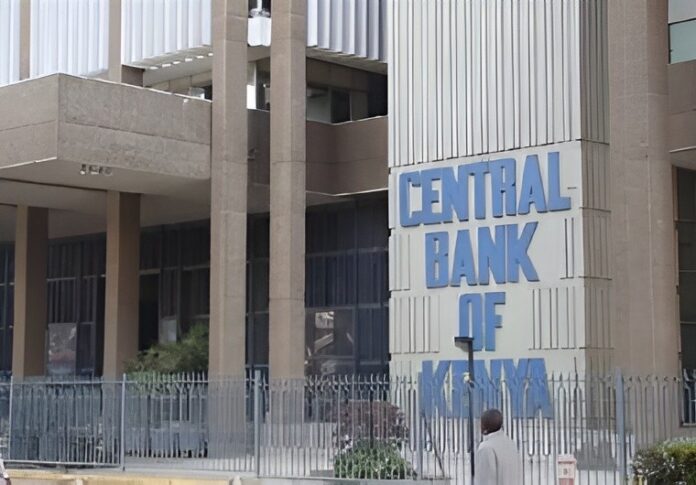
The Central Bank of Kenya has released its Weekly Bulletin for April 30, 2026, outlining key developments across Kenya’s monetary and financial sectors, with data pointing to moderate inflation, stable exchange rates, and evolving market conditions.
Inflation rose to 5.6 percent in April 2026, up from 4.4 percent recorded in March 2025, reflecting increased pressure largely driven by non-core items such as food and fuel. Core inflation remained relatively contained at 2.8 percent, suggesting underlying price stability despite external shocks.
Exchange rate data indicates that the Kenya shilling remained largely stable against major international currencies during the review period. The shilling averaged approximately Ksh129.26 against the US dollar, Ksh174.49 against the British pound, and Ksh151.23 against the euro for the week ending April 30.
Foreign exchange reserves stood at about USD 13.23 billion as of April 29, providing an import cover of approximately 5.6 months, a level considered adequate in supporting external stability.
In the money market, interbank activity showed a slight decline in volumes, with the Kenya Shilling Overnight Interbank Average (KESONIA) rate remaining stable at around 8.75 percent, reflecting balanced liquidity conditions in the banking sector.
On the government securities market, Treasury bill auctions recorded mixed performance. The 91-day paper saw strong demand, while the 182-day and 364-day tenors recorded relatively lower subscription levels. Interest rates edged upward across all tenors, indicating cautious investor sentiment.
The bulletin also highlights movements in the bond market, with yields showing gradual upward adjustments across different maturities, as reflected in the government securities yield curve.
Sectoral data on economic growth shows that services remained the main driver of GDP expansion, while agriculture experienced slower growth. Industry sectors, particularly construction and electricity, posted notable improvements, pointing to ongoing recovery in productive sectors.
The Central Bank notes that overall economic conditions remain stable, supported by prudent monetary policy, but cautions that global developments and domestic cost pressures will continue to shape inflation and market trends in the coming months.
The Central Bank of Kenya has accepted Ksh18.44 billion in the latest Treasury Bills auction held on May 4, 2026, falling short of the Ksh24.0 billion that had been offered.
The auction results show varied investor demand across the three tenors.
The 91-day Treasury Bill was oversubscribed, with Ksh8.01 billion accepted against an offer of Ksh4.0 billion, indicating strong demand for short-term securities.
The 182-day paper recorded lower uptake, with Ksh3.26 billion accepted out of the Ksh10.0 billion on offer.
The 364-day Treasury Bill attracted moderate demand, with Ksh7.18 billion accepted against the Ksh10.0 billion target.
Interest rates rose slightly across all tenors, with the weighted average rate for the 91-day bill at 8.0398%, the 182-day at 8.2115%, and the 364-day at 8.5133%.
The next Treasury Bills auction is scheduled for May 11, 2026.
Kenya’s inflation rate rose to 5.6% in April 2026, reflecting an increase in the cost of key goods and services across the economy.
Data from the Kenya National Bureau of Statistics shows that both core and non-core inflation contributed to the rise, with non-core items recording sharper price increases.
Core inflation stood at 2.8%, driven largely by higher transport and food costs. City bus and matatu fares recorded a significant increase of 20.0%, while beef with bone rose by 11.1% and sifted maize flour by 4.7%. Cooking oil prices increased slightly by 1.3%. However, some items registered declines, with fresh packaged milk dropping by 0.8% and sugar by 5.4%.
Non-core inflation, which captures more volatile items, rose to 13.4%, mainly due to sharp increases in food and fuel prices. Cabbages recorded the highest jump at 34.8%, followed by tomatoes at 32.6% and sukuma wiki at 23.6%. Diesel prices rose by 19.4%.
Electricity costs, however, provided some relief, with prices for 50 kilowatts declining by 2.0% and 200 kilowatts dropping by 3.8%.
The data indicates that rising food and transport costs continue to exert pressure on household budgets, even as some essential utilities show modest declines.
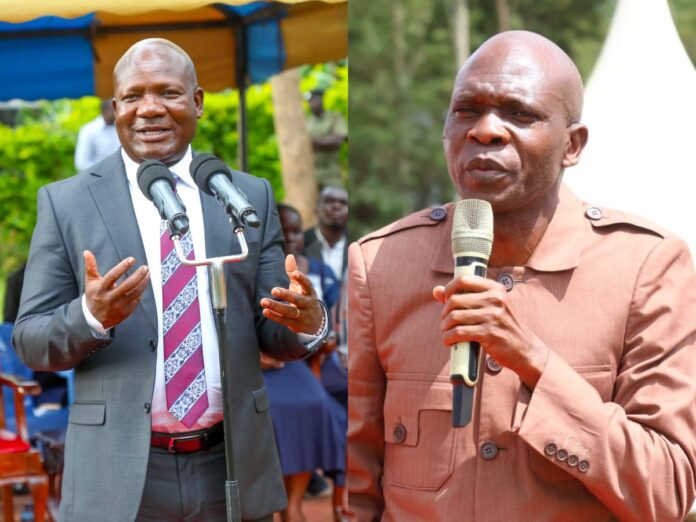
Kakamega Governor Fernandes Barasa has vowed that he will ensure Lugari MP Nabii Nabwera serves one term in Parliament.
While speaking during a forum in Lugari on Friday, May 1, 2026, the governor predicted a difficult political future for the first-term MP, urging him to draw lessons from former Shinyalu MP Justus Kizito, who was also known for frequently attacking the then Kakamega governor, Wycliffe Oparanya.
He accused Nabii Nabwera of spreading propaganda and blackmail within the public service, warning that such behaviour should not be extended to the Kakamega County government.
He further vowed that by 2027, he would ensure that Nabii Nabwera becomes a one-term MP.
“Mimi nitahakikisha Mheshimiwa Nabwera ni wantam. Enda uulize mbunge wa shinyalu wa zamani ambaye pia alipenda kupinga governor kile lilimfanyikia,” Barasa said.
The feud between Nabwera and Barasa has been escalating over time. Their conflict became evident during last year’s Orange Democratic Movement (ODM) Kakamega County elections, where they both contested for the county chairmanship position. Barasa won the election, while Nabwera protested the results, claiming that the process was rigged.
Since then, the two have not been on good terms. Despite Barasa being regarded as the ODM Kakamega chairman, Nabwera has continued to claim that he is the officeholder of that position.
This has seen him throw his weight behind Kakamega Woman Representative Elsie Muhanda, who is eyeing the Kakamega gubernatorial seat in 2027 to challenge Governor Barasa.
Their rivalry further deepened during the Linda Ground Kakamega chapter events, where both leaders held separate functions.
Nabwera held his event alongside Cooperatives Cabinet Secretary Oparanya, who is also at odds with Governor Barasa in Butere. On the other hand, Governor Barasa held a separate Linda Ground forum at Kakamega Golf Club, which was attended by ODM party leader Oburu Odinga.
On the other side, Oparanya and Barasa are also not on the same political page despite Oparanya having supported Barasa’s rise to the county leadership in 2022. Oparanya has since shifted his support to Elsie Muhanda and endorsed her to succeed Barasa in the upcoming elections.