With Israeli settler violence surging in the occupied West Bank, al-Mughayyir, north-east of Ramallah, has found itself on the frontline. It faces regular incursions by the Israeli army and has seen farmland seized by settlers who have built new outposts.
Marzoq Abu Naim from the village council says the settlers aim to force out Palestinians. “They’re doing it silently, not openly, it’s true. But this is annexation. We can’t reach our lands.”
Sitting among green rolling hills, studded with olive groves, most homes in al-Mughayir are in an area where Israel’s military controls security, but the internationally backed Palestinian Authority (PA) should provide basic services. Increasingly though, it cannot – it is mired in a deep economic crisis.
“When I go to them, they can’t give me the support I need,” Abu Naim says. “The Authority has no money!”
After the deadly 7 October Hamas-led attacks on Israel, some 100,000 Palestinians lost permits to work in Israel. On top of that, Israel is withholding tax transfers that it collects for the PA because of an ongoing dispute about Palestinian school texts and stipends to the families of those jailed or killed by Israel, including attackers.
The PA says it is now owed more than $4bn (£3bn; 3.4bn euros). It has been paying most public sector workers – including doctors, police officers and teachers – just 60% of their salaries. Its schools – where more than 600,000 children study – open just three days a week.
“It’s truly hard,” a mother-of-eight in al-Mughayyir tells me, explaining that the schools there also close when settlers or soldiers are nearby because of fears for the children.
“There is so much disruption that some children have reached fourth grade and still can’t read. We put them in private lessons with a teacher in the village. She starts with the alphabet so that they can learn to read from scratch.”
The North Carolina house fire that killed NASCAR star Denny Hamlin’s father and injured his mother has been ruled accidental, though investigators cannot determine what started it.
A report released Friday said the Dec. 28 fire originated in a bedroom, but the “cause of ignition” remains “undetermined.” The investigation concluded the fire was accidental.
Dennis Hamlin, 75, and his wife Mary Lou were found outside the home suffering from catastrophic injuries. Dennis later died. Mary Lou survived.
The home near Charlotte is owned by a company listing Denny Hamlin as manager.
Denny Hamlin has 60 Cup Series wins, including three Daytona 500 victories. He and Michael Jordan co-own the car that won this year’s Daytona 500 last weekend.
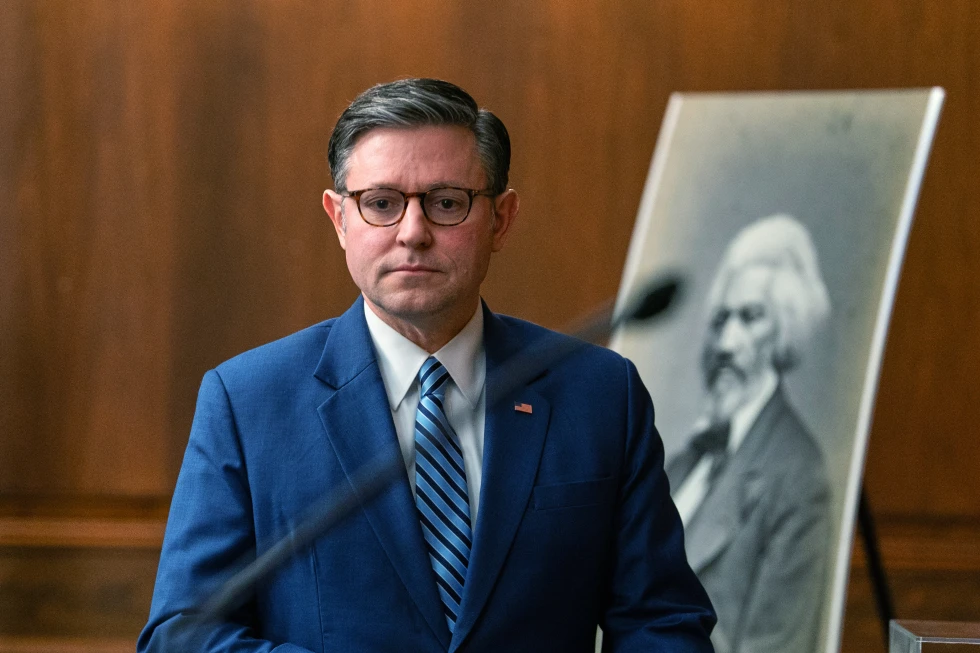
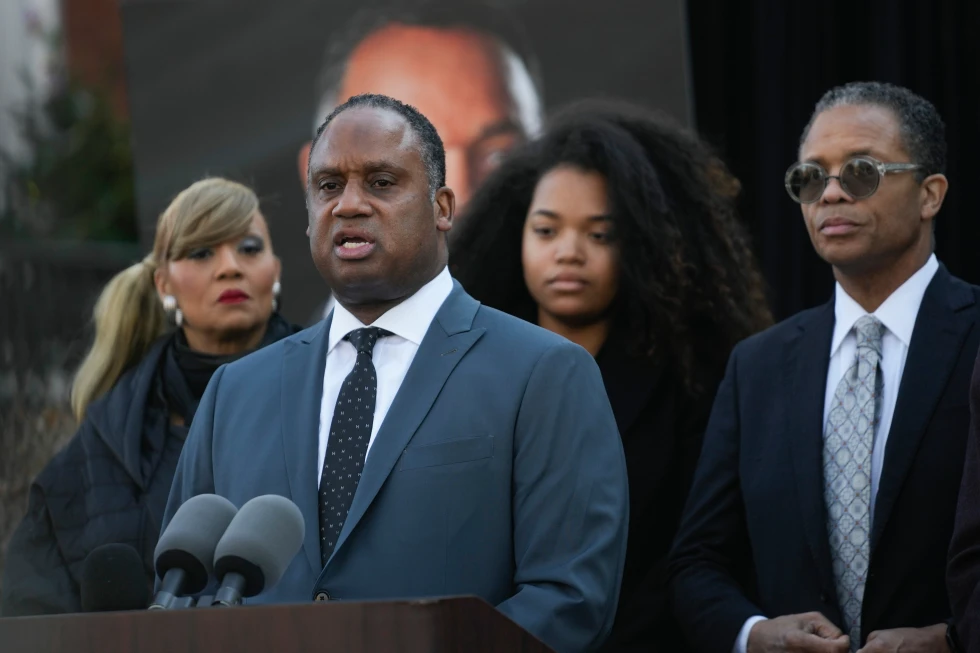
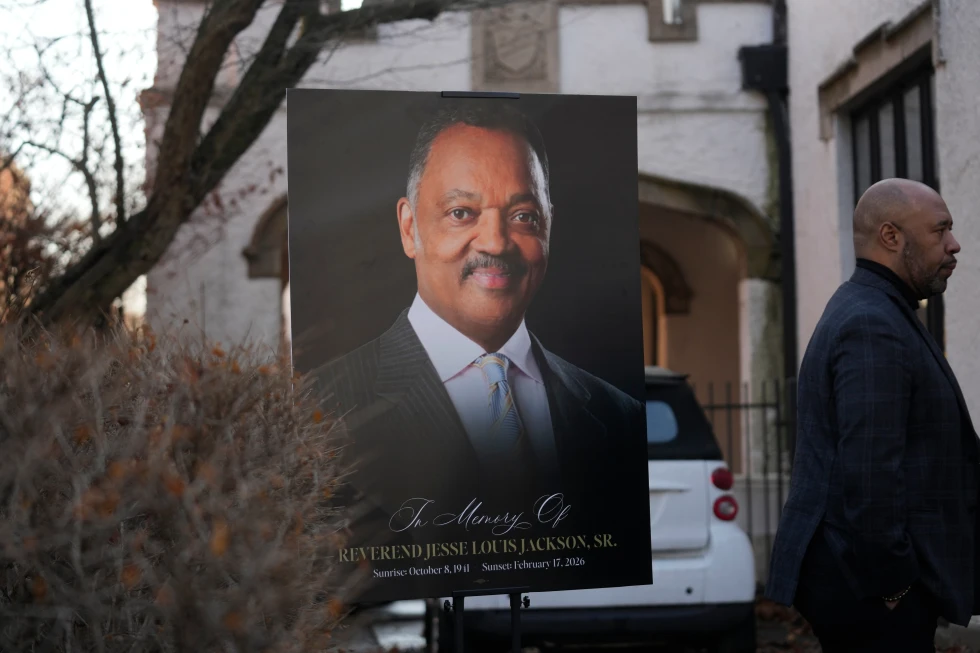
The late Rev. Jesse Jackson will not lie in honor in the U.S. Capitol Rotunda after House Speaker Mike Johnson’s office rejected a family request, citing precedent that the space is typically reserved for former presidents, military leaders and select officials.
The civil rights icon died this week at 84. His family, along with several House Democrats, had sought the commemoration.
Johnson’s office confirmed Friday it received and denied the request.
There is no specific rule governing who qualifies.
The decision requires concurrence from both the House and Senate. Recent requests for conservative activist Charlie Kirk and former Vice President Dick Cheney were also denied.
Jackson will be remembered elsewhere—but not under the Capitol dome.
Months before an 18-year-old committed one of Canada’s worst school shootings, OpenAI identified his account for “furtherance of violent activities” but decided not to alert police.
The company banned Jesse Van Rootselaar in June 2025 for violating its usage policy. But after internal debate, OpenAI determined the activity did not meet its threshold for law enforcement referral, which requires “imminent and credible risk of serious physical harm.”
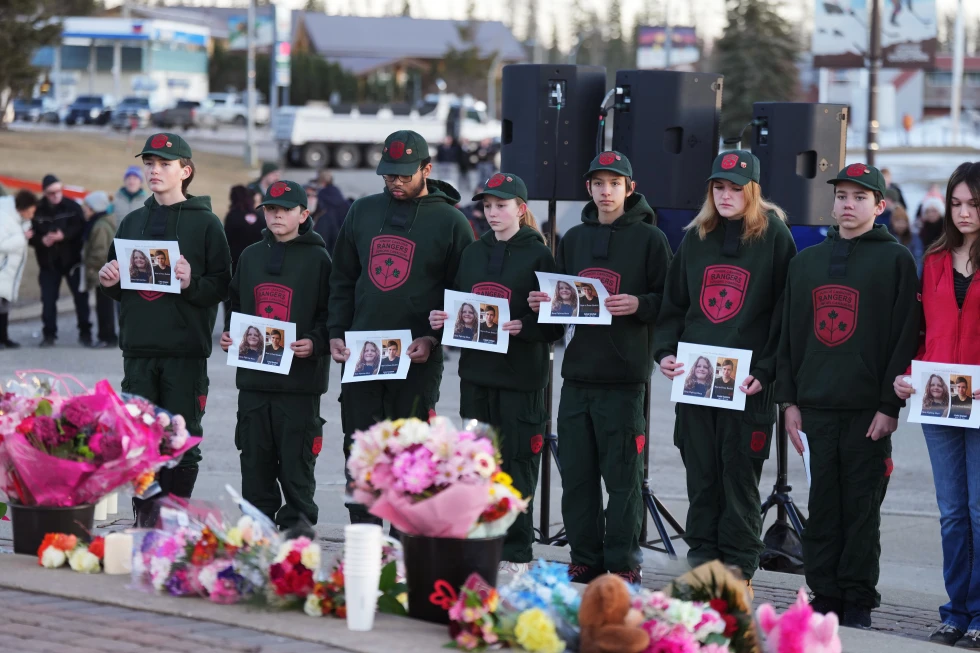
Last week, Van Rootselaar killed eight people in remote British Columbia before dying by suicide.
After the shooting, OpenAI reached out to the Royal Canadian Mounted Police with information about the individual and his ChatGPT use. The Wall Street Journal first reported the disclosure.
The case raises fresh questions about when tech platforms should report potentially violent users.
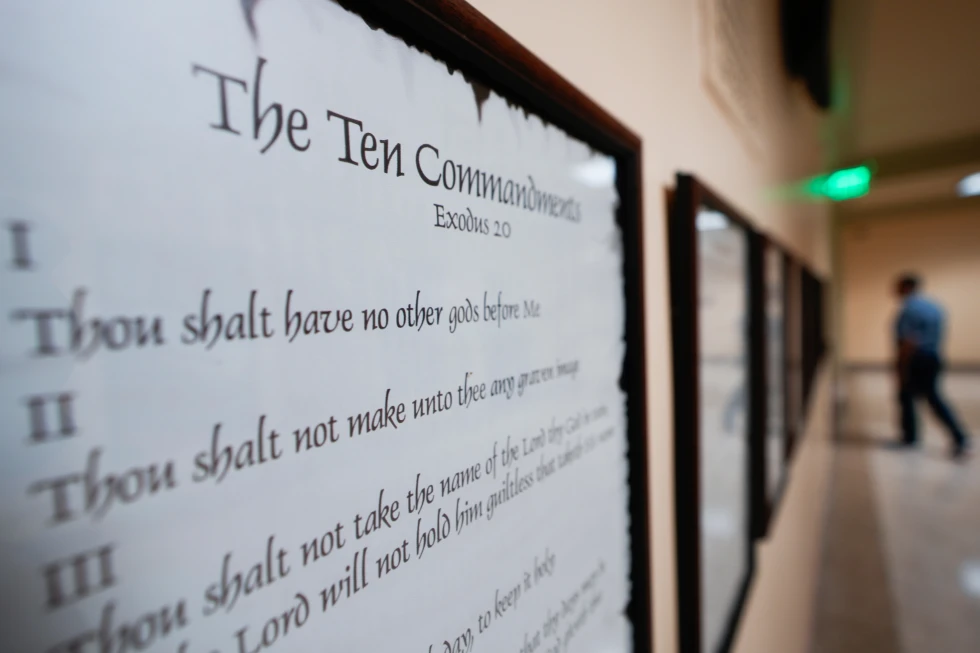
A federal appeals court on Friday cleared the way for Louisiana to require poster-sized displays of the Ten Commandments in every public school classroom, ruling it is too early to determine whether the law is unconstitutional.
The 5th U.S. Circuit Court of Appeals voted 12-6 to lift a preliminary injunction on the 2024 law, allowing it to take effect while legal challenges proceed.
Judges said key questions remain unanswered—how prominently will schools display the text? Will teachers refer to it? Will other historical documents also be posted? Without those specifics, the court lacked sufficient facts “to permit judicial judgment rather than speculation.”
In a concurring opinion, Circuit Judge James Ho, a Trump appointee, declared the law “is not just constitutional — it affirms our nation’s highest and most noble traditions.”
The ruling sets the stage for a likely showdown at the U.S. Supreme Court.
Few things have defined Donald Trump’s second term like tariffs. He has wielded them as both weapon and symbol, raising and lowering duties at will, rewriting global commerce, and daring anyone to stop him.
On Friday, someone did.
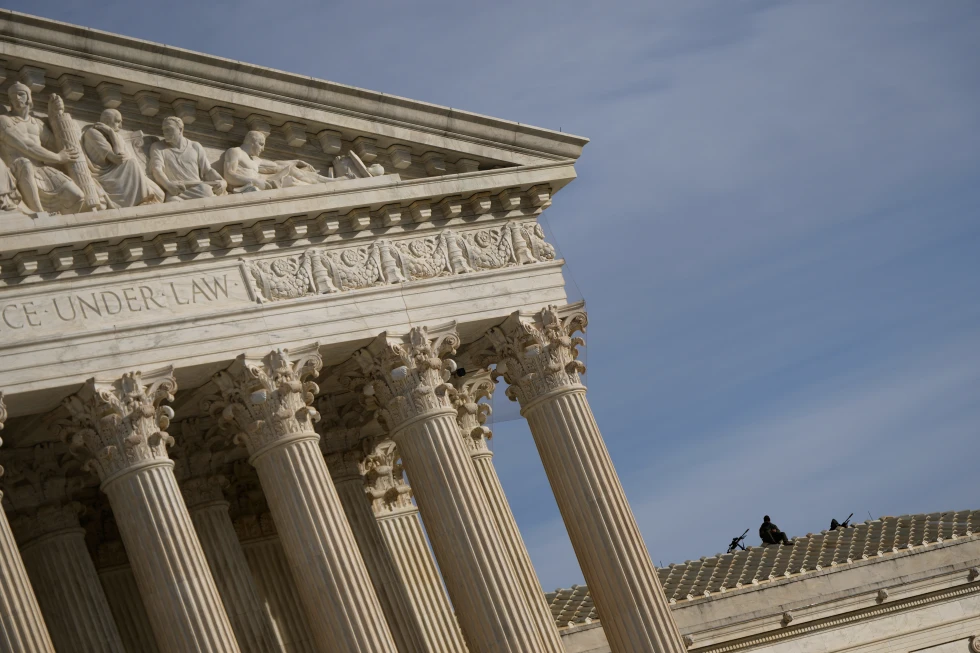
The Supreme Court struck down Trump’s sweeping global tariffs in a 6-3 ruling, marking a rare limit on a president who has spent more than a year aggressively expanding his own power.
The decision dismantled his signature economic policy and punctured the aura of invincibility around his trade agenda.
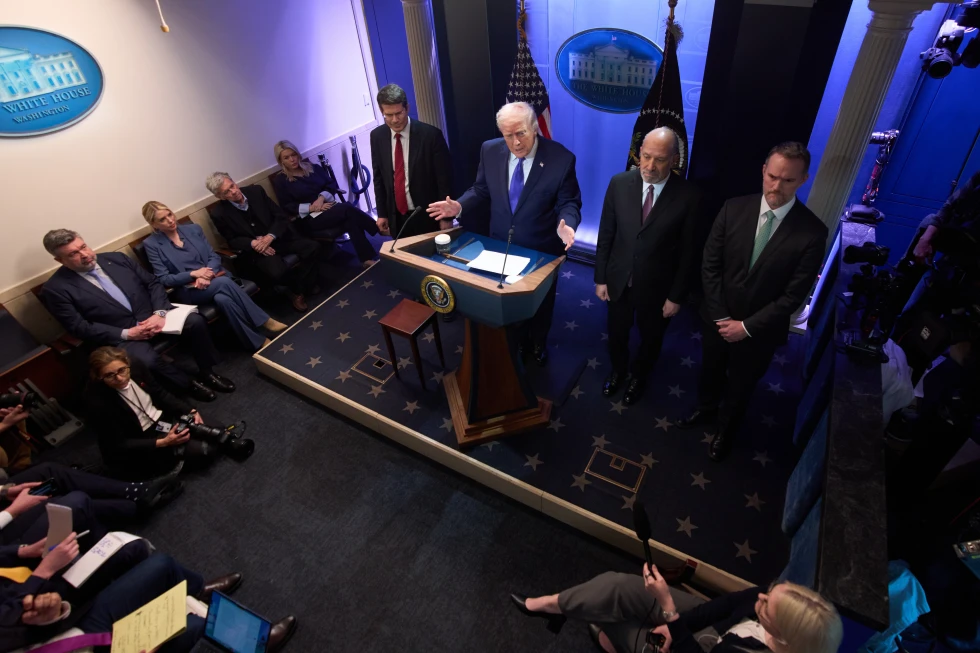
Trump refused to accept defeat. Hours later, he vowed to use other laws to impose alternative tariffs, claiming the ruling would bring “great certainty” to the economy.
But Friday opened a new chapter of uncertainty. Urgent questions remain: Will his replacement tariffs survive? And will companies ever see refunds for the estimated $175 billion in import taxes the court just invalidated?
The answers will likely prolong trade chaos through the midterms.
For now, Trump chose a familiar response: scorning the patriotism of those who defied him, even as the court made clear that no president is above the law.
President Donald Trump has long viewed the Supreme Court through a personal lens: three justices he appointed, three votes he could count on. On Friday, that vision shattered.
In a 6-3 ruling, the court struck down Trump’s sweeping global tariffs—his signature economic policy.
The decision was not just a policy defeat but a profound institutional rebuke, and for Trump, a deeply personal betrayal.
Hours after Chief Justice John Roberts delivered the opinion, a seething Trump took aim at the two justices he had placed on the bench.
“I’m ashamed of certain members of the court, absolutely ashamed, for not having the courage to do what’s right for the country,” Trump said, his unusual public attack underscoring the raw nerve the ruling had touched.
The case laid bare a fundamental clash: Trump’s expectation of personal fealty versus the court’s role as an independent check on presidential power. On Friday, the court drew a line—and even a president’s own picks refused to cross it.
A court has ordered that the incredible discovery of £1.8 million worth of gold bars can be retained by police under the Proceeds of Crime Act.
Officers stopped a man carrying the bars weighing more than 15kg in his hand luggage as he prepared to fly abroad in May 2025, Greater Manchester Police (GMP) said.
Following a months-long investigation by officers in the Economic and Cyber Crime Unit the force presented its case to Manchester Magistrates Court and the outcome is the biggest haul ever awarded to GMP.
Half of the funds will be invested into communities across Greater Manchester via the Asset Recovery Incentivisation Scheme (ARIS)
The latest ARIS programme saw 12 groups benefit, including a community boxing and sports club in Bolton that put on free classes for over 350 children and free-half term holiday camps, including meals.
“This case reflects our unwavering commitment to tackling all forms of money laundering, whether it involves cash, gold, or any other high value assets used to hide criminal profits,” said Det Insp Sarah Langley, from Greater Manchester Police.
“By targeting the movement of illicit wealth at every stage, we are dismantling the financial networks that allow organised crime to thrive.
“Our message is clear: whatever the form and wherever it is concealed, we will find it, we will seize it, and we will ensure that crime does not pay.”
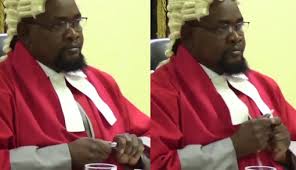
When Nyeri High Court Judge Kizito Magare pronounced the death sentence against Nicholas Macharia on Thursday, cameras captured a moment that quickly drew public attention.
Immediately after delivering the judgment, the judge broke his pen.
To many observers, the gesture appeared dramatic, symbolic and unusual.
Why would a judge break a pen? Is it required by law? What does it mean?
The act is neither theatrical nor accidental.
It is an old judicial tradition rooted in symbolism, history and the solemnity of capital punishment.
Understanding the gesture requires examining its origins, its meaning in modern courts and the broader legal context, particularly in Kenya, where the death penalty still exists in law but is rarely carried out.
The case that led to the ultimate sentence
Macharia, 35, was convicted of the murder of seven-year-old Tamara Blessing Kabura, an offence the court described as premeditated and executed with utter disregard for human life.
Court records showed that on May 24, last year, the Grade 1 pupil went missing from Nyeri Town open-air market, where her mother, Susan Wanjiru, operated a small business.
At about 6pm, the child encountered Macharia, a man known to her family.
Trusting and unsuspecting, she followed him to his house in Witemere.
There, the court heard, he sexually assaulted her, killed her and buried her body beneath his bed in an attempt to conceal the crime.
After a frantic two-day search, CCTV footage from a nearby spare parts shop captured Macharia walking with the child.
He was arrested on May 26 and led detectives to his house, where the body was recovered.
A postmortem conducted at the County Referral Hospital confirmed that the minor had suffered multiple injuries and had died after being assaulted and suffocated.
Macharia later recorded a confession with detectives admitting to the crime.
Evidence and victim impact
While delivering the judgment, Justice Magare said the prosecution had presented overwhelming evidence, including clothing recovered from the scene, CCTV footage, forensic analysis from the Government Chemist, cybercrime reports, photographs, a confession statement and medical assessment reports.
The court also considered the victim impact statement from the child’s mother.
Earlier in the proceedings, Wanjiru rejected an apology from the accused, describing the emotional devastation suffered by her family and the community.
Justice Magare noted that the crime had caused deep trauma beyond the immediate family.
Macharia was charged with murder contrary to Section 203 as read with Section 204 of the Penal Code.
Although he eventually pleaded guilty, the court ruled that the admission did not lessen the gravity of the offence.“Though you pleaded guilty, that plea of guilty does not by itself remove the seriousness of the sentence,” the judge said.
“It is a good thing to save judicial time, but the mere fact that time was saved in the hearing of this matter does not shorten the sentence. It may be useful in smaller cases, but for murder, that does not count.”
During mitigation, defence lawyer Mahugu Mbarire urged the court to consider a lesser sentence, arguing that the accused had no previous capital offence record and was capable of reform.
“He informs me that he is a proper candidate for rehabilitation and in need of counselling,” counsel submitted. “Essentially, the accused is not beyond reform and therefore the death sentence is not merited.”
The court was unmoved.
“In view of the circumstances and having considered the law and the objectives of sentencing, the ultimate penalty remains available and applicable,” Justice Magare ruled.
“Therefore, accordingly, I find that you are hereby sentenced to death,” he pronounced.
The prisons Act provides this was,” when any person is sentenced to death, he shall be hung by the neck until he is dead and the sentence shall be carried out in a manner as the commissioner shall direct.”
A death warrant shall be transmitted to the competent authority for signing and carrying out of the sentence after 30 days stay of execution.
“The sentence must reflect the offence, denounce the conduct in the strongest terms, protect society and serve as a deterrent measure.”
“You are hereby sentenced to death. A death warrant will be transmitted to the competent authority for execution within 30 days,” the judge ordered, while granting the convict 14 days to appeal.
The sentence was delivered in a packed courtroom and was received with relief by the victim’s family.
A man who was resuscitated by a GP on a train has appealed to trace her so he can say thank you for saving his life.
Ian Drewery, 69, was travelling back to London from visiting his son in Swindon in September 2025 when he suddenly collapsed.
The train stopped in Reading where station staff rushed a defibrillator on board for the mystery GP to use.
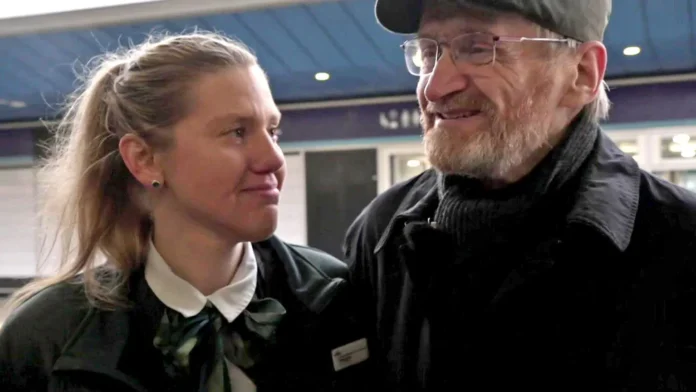
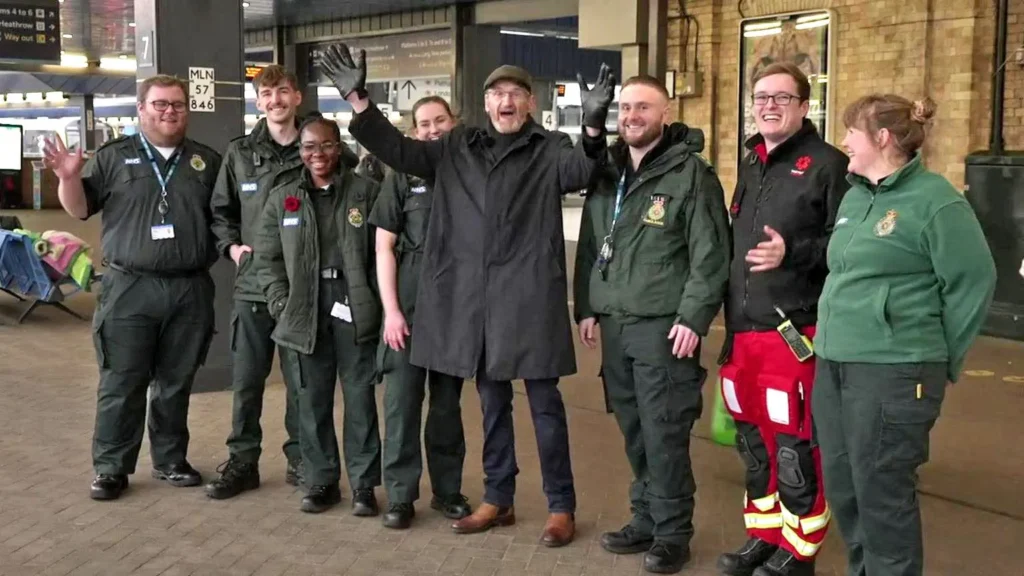
On a return visit to thank all those involved, Ian said: “I was in the right place at the right time, to be surrounded by the right people.”
Veronika Rogers, who was working on the GWR train on 14 September, was one of those who assisted.
She recalled that she told Ian: “I do not let you go. I was saying, ‘You are going to make it, you will be here with me.'”
At Reading Station, GWR worker Jack McIntyre said: “Veronika alerted me on the platform and it was quite extraordinary the way she came out and alerted all of us.
“We got the defib, got on the train, give it to the GP that was on the train and they worked on him.
“It is just extraordinary that he is here today.”
South Central Ambulance Service said the GP’s early CPR almost certainly saved Ian’s life.
He said: “It’s really good to be here, to meet that people that were involved in saving my life.
“That lady, she give me such effective CPR and I would not be here today were it not for her.
“If she’s listening or sees this, I truly would like her to get in touch with the BBC so we can arrange to meet.”