Sponsored Ad

Ad 1
Ad 2
Ad 3
Ad 4
Ad 5
Ad 6
25.6 C
Kenya
Friday, May 8, 2026
Home Blog Page 392

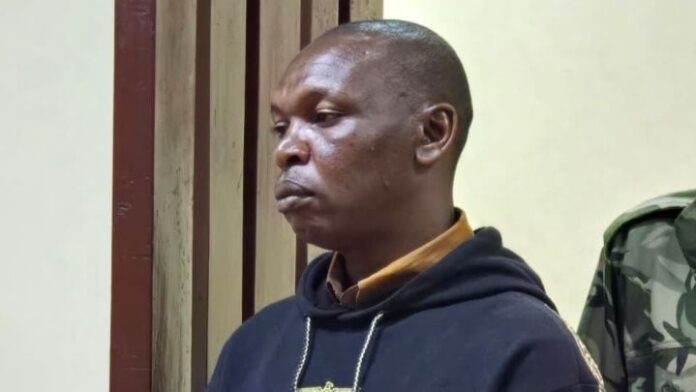
Nyeri Man Who Defiled, Killed and Buried 7-year-old Under His Bed Handed Death Sentence

The High Court in Nyeri has sentenced 35-year-old Nicholas Julius Macharia to death for the murder of seven-year-old Tamara Blessing Kabura.

While handing down the sentence on Thursday, February 19, Justice Magare Kizito addressed Macharia’s decision to plead guilty, noting that it did not lessen the gravity of the offence.

He argued that the admission of guilt may be useful in other cases but not for murder, especially one as heinous as his.

“Though you pleaded guilty, that plea of guilty does not by itself remove the seriousness of the sentence. It is a good thing to save judicial time, but the mere fact that time was saved in the hearing of this matter does not shorten the sentence. It may be useful in smaller cases, but for murder, that does not count,” he said.

Macharia was convicted over the killing of the Tamara, a Grade One pupil at Judah Academy was killed on May 24, 2025, within Nyeri Township.

The court heard that on the evening of her murder, the child met Macharia, a man familiar with her family through her mother and grandmother. 

Trusting him, she accompanied him to his house in Witemere, where he defiled her, killed her and concealed her body under his bed in an attempt to cover up the crime.

Tamara had earlier been reported missing by her mother, Susan Wanjiru, after she disappeared from the Nyeri Town open-air market, where Wanjiru runs a small business. 

A desperate two-day search ended after CCTV footage from a nearby car spare parts shop showed Macharia walking with the child towards his residence.

File image of Nicholas Julius Macharia in court

Detectives arrested Macharia on May 26, 2025, and he later led them to his house where the girl’s body was recovered. 

A post-mortem examination conducted at the County Referral Hospital mortuary on May 30, 2025, established that the minor had been defiled before being suffocated to death. 

Investigators told the court that Macharia had recorded a confession a day before the examination, admitting to committing the offence.

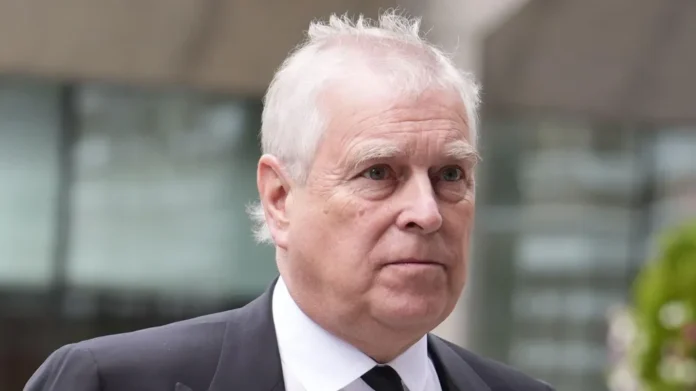
Andrew arrested on suspicion of misconduct in public office

Andrew Mountbatten-Windsor has been arrested on suspicion of misconduct in public office.

Thames Valley Police confirmed it had arrested a man in his 60s in Norfolk on Thursday and was carrying out searches at addresses in Berkshire and Norfolk. He remains in custody, it said.

King Charles III said the “law must take its course” in response to Andrew’s arrest, and that the police has his “full and wholehearted support and co-operation”. 

Police had previously said they were considering investigating Andrew over allegations relating to his association with the late sex offender Jeffrey Epstein.

They were reviewing allegations Andrew shared confidential material with the disgraced financier, after communications between the two were among files released by the US government.

This is the first time Andrew has been arrested. He has consistently and strenuously denied any wrongdoing.

Thames Valley Police said that, following a “thorough assessment”, a formal investigation had now been opened.

By Anthony Solly

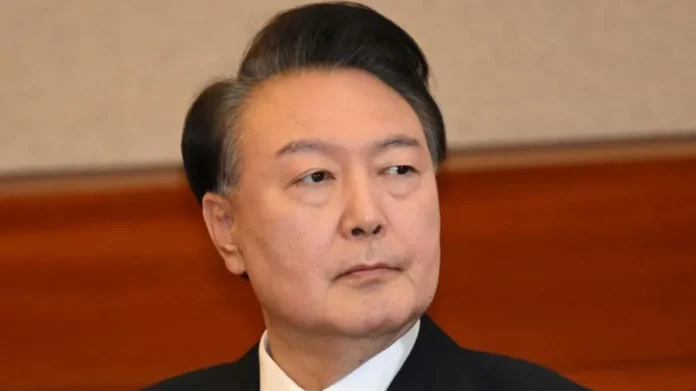
South Korea’s ex-president jailed for life over martial law attempt

South Korea’s ex-president Yoon Suk Yeol has been jailed for life for masterminding an insurrection by trying to impose military rule.

Yoon attempted to subvert the constitution by deploying military troops to seal off the National Assembly and ordering the arrest of politicians on 3 December 2024, a Seoul court ruled. His actions fundamentally damaged South Korea’s democracy and deserves a harsh punishment, presiding judge Ji Gwi-yeon told the court. 

Prosecutors had sought the death penalty.

Though it was short-lived, Yoon’s martial law order left the nation more polarised than ever, and those deep divisions were on full display as the sentencing took place.

Huge crowds of Yoon’s supporters gathered outside the court hours before the hearing, holding banners reading “Yoon, again”. Many of them broke down in tears following the verdict.

Also present were anti-Yoon protesters, rallying for him to be sentenced to death.

Yoon himself showed no emotion as he learned of his fate. His lawyers alleged that the verdict was not backed by evidence and accused the judge of following a “pre-written script”.

If either side launches an appeal, the case will go up to the Supreme Court, which means it could be months before the verdict is finalised.

By Anthony Solly

Legal Win for Government as Court Rejects Bid to Halt KPC Sale

The High Court of Kenya dismissed consolidated petitions on Thursday, 19 February 2026, that sought to block the privatization of the Kenya Pipeline Company (KPC).

This ruling by Justice Bahati Mwamuye provides major relief for the state by clearing the final legal hurdles to proceed with the planned sale of a 65% stake in the strategic energy asset. The court held that the privatization process followed constitutional and legal thresholds, including those outlined in Sessional Paper No. 2 of 2025.

Justice Mwamuye ruled that the Privatization Act, 2025 maintains adequate parliamentary oversight and does not grant unchecked power to the Executive.The bench rejected claims of a lack of transparency, finding that the framework substantially complied with laws regarding public participation and the management of state corporations.

The court clarified that employment-related concerns raised by the Kenya Petroleum and Oil Workers Union fall under the jurisdiction of the Employment and Labour Relations Court, allowing that specific union to seek redress there if needed.

The government aims to raise approximately KSh 106.3 billion through the sale to fund critical development projects and reduce national debt.The state has set a deadline of 31 March 2026 for KPC shares to be listed on the Nairobi Securities Exchange (NSE).

The government will retain a 35% shareholding, while offloading the majority stake to democratize ownership among Kenyans and institutional investors.

The petitions were originally filed by groups including the Consumer Federation of Kenya (COFEK) and opposition MPs who argued that KPC is a strategic national asset critical to energy security. The court, however, maintained that while public assets attract scrutiny, the law does not prohibit their privatization when due process is followed

By Anthony Solly

ECOWAS Community Court of Justice Delegation Pays Courtesy Visit to ECOWAS Resident Representative in Sierra Leone

In his welcome address, the Resident Representative highlighted the Office’s nationwide sensitization efforts across 12 districts in Sierra Leone, aligned with ECOWAS Vision 2050 and the Community’s 50th Anniversary activities.

He emphasized the importance of enhancing public awareness on the role of the three Arms of the Community Regional Governance Structure, including the Court, and ECOWAS institutions, while noting the need for careful handling of issues relating to Court judgments given their sensitive and political nature.

The President of the ECCJ expressed appreciation for the warm reception and institutional support.

He underscored the importance of strengthened communication and collaboration between the Community Court and the Representative Office, noting that both institutions form part of the same ECOWAS framework.

He encouraged the integration of Court information materials into district outreach activities to enhance public understanding of the Court’s mandate, particularly in relation to the protection of human rights and the rule of law within the Community.

Both sides reaffirmed their commitment to sustained cooperation and enhanced institutional visibility in Sierra Leone.

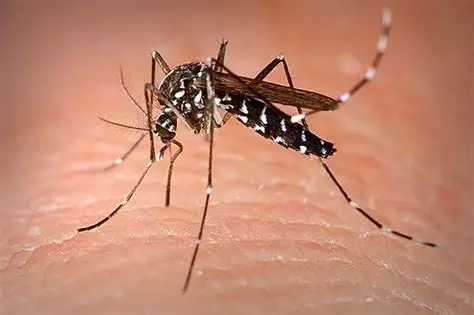
African Leaders Call for Sustainable Malaria Financing as Progress Stalls and Funding Crisis Deepens

Against a backdrop of stalled progress, declining international funding, and intensifying threats, African Heads of State and Government today issued a unified call for a new era of malaria financing at the 39th African Union Summit in Ethiopia. The African Union Malaria Progress Report 2025, presented by President Advocate Duma Gideon Boko of the Republic of Botswana and Chair of the African Leaders Malaria Alliance (ALMA) (www.ALMA2030.org), warns that without urgent action, the continent risks losing decades of hard-won gains against the disease.

Urgent action required as perfect storm intensifies

The 2025 report reveals that African Union Member States accounted for 270.8 million malaria cases (96% of the global total) and 594,119 deaths (97% of the global total) in 2024. Progress has stalled since 2015, and only five Member States have achieved the 2025  Catalytic Framework targets for reducing malaria incidence or mortality by 75%. These targets are part of the AU Catalytic Framework to End AIDS, TB and Eliminate Malaria in Africa by 2030.

The report warns that a 30% reduction in funding will result in 640 million fewer insecticide-treated nets, 146 million additional malaria cases, 397,000 additional deaths (75% among children under five), and a loss of $37 billion in GDP by 2030. Without urgent action, the report warns that malaria could resurge significantly, with cases potentially exceeding 400 million per year and deaths surpassing one million annually.

“The perfect storm of converging crises threatening malaria elimination has intensified. Official Development Assistance for health in Africa has declined by 70% in just four years, and the Eighth Replenishment of the Global Fund fell significantly short of its $18 billion target. We cannot allow these challenges to reverse decades of progress that have prevented 1.64 billion cases and saved 12.4 million lives since 2000.”

~ President Advocate Duma Gideon Boko, Republic of Botswana, Chair of ALMA

A new era of financing as Africa takes the lead

In response to the funding crisis, African leaders reaffirmed their commitment to domestic resource mobilisation, innovative financing and the development of national health financing sustainability plans. The report highlights that End Malaria Councils and Funds in 12 countries have now mobilised over $200 million through public-private partnerships, demonstrating the power of multisectoral collaboration. Establishing public-private partnerships is essential for delivering sustainable financing. These partnerships can unlock new investments, propelling progress not only toward malaria elimination but also toward universal health coverage. A whole-of-society approach, engaging the private sector, philanthropic foundations, high-net-worth individuals and the diaspora through a public private health accelerator, will reinforce domestic commitments and deliver a win-win partnership.

Countries across the continent are stepping up with increased domestic financing commitments for malaria in 2025. Leaders called on global partners to honour their commitments, renew the World Bank’s Malaria Booster Programme, and align support with national strategies. The original World Bank Malaria Booster Programme (2005-2010) committed over $1 billion with transformative results. Today, African leaders are urging a renewed programme to close funding gaps, deploy next-generation tools, strengthen community health worker programmes, and build climate-resilient health systems. Investing in malaria in this way will also strengthen primary health care, making our health systems more resilient to shock and put us on a path to defeating other health challenges such as neglected tropical diseases.

“Our approach has spanned the full spectrum of what it takes to beat this disease. Tanzania has invested in world-class research and is home to the Ifakara Health Institute, where our scientists are working at the frontier of new technologies, including gene drive–an innovative approach that aims to ensure mosquitoes can no longer transmit the malaria parasite. This is African science, conducted by African researchers, addressing an African challenge.”

~ H.E. Samia Suluhu Hassan, President of the United Republic of Tanzania

New, powerful next-generation tools gaining ground

Despite the challenges, the report highlights significant progress in deploying innovative tools. In 2025, 74% of insecticide-treated nets distributed across Africa were next-generation dual active-ingredient nets, up from just 20% in 2023. These nets are 45% more effective than pyrethroid-only nets against resistant mosquitoes.

Twenty-four countries have now introduced WHO-approved malaria vaccines for children under five, with 28.3 million doses distributed in 2025, up from 10.5 million in 2024. Additionally, WHO prequalified two spatial repellent products in 2025, marking the first new vector control intervention introduced in decades. A record 22 countries planned to implement seasonal malaria chemoprevention in 2025. The malaria innovation pipeline remains stronger than ever.

Promoting health sovereignty through local manufacturing

Leaders emphasised the importance of local manufacturing to ensure affordability, access, and supply chain resilience. Currently, Africa imports 99% of vaccines and 95% of medicines. The report highlights that Nigeria has entered into partnerships for local production of antimalarial treatments and rapid diagnostic tests, and is working to establish the first Africa-manufactured next-generation nets.

The African Medicines Agency, with 31 countries now ratified, and Regional Economic Communities are harmonising regulatory frameworks to accelerate the registration of new commodities across the continent.

“Full deployment of existing and new tools, combined with full funding, could save over 13.2 million lives over the next 15 years and boost African economies by over $140 billion. Every dollar invested in the Global Fund delivers $19 in returns. We have the tools. We need the resources.”

~ Dr. Michael Adekunle Charles, CEO, RBM Partnership to End Malaria

What must be done

The Heads of State and Government issued a clear call to action, urging all Member States to treat malaria as a central pillar of health sovereignty and economic transformation, protect and increase domestic and external funding, and fully implement the priorities of the Catalytic Framework through a Big Push Against Malaria.

Leaders called on international partners to fulfil commitments, align support with national strategies, and invest in the tools and systems that will secure a malaria-free future. They emphasised that the path ahead is challenging. Nevertheless, with determined leadership, the smart use of data, and sustained investment, Africa can bend the curve towards elimination and ensure that future generations grow up free from the threat of malaria.

“Kenya Has Proven It Can Host the World,” Affirms Rugby Africa President as HSBC SVNS 2 Draws over 15,000 Fans in Nairobi

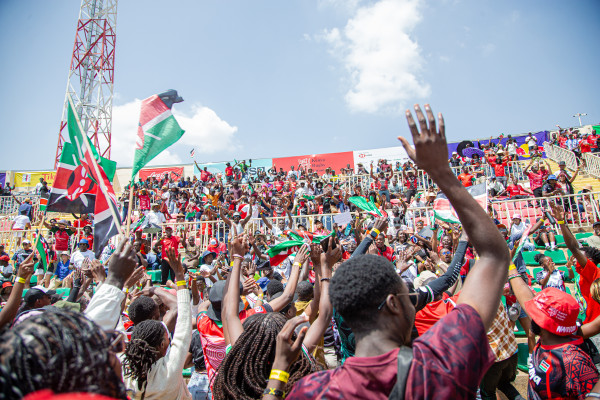
Herbert Mensah, President of Rugby Africa (www.RugbyAfrique.com), the continental governing body of rugby across Africa, and a member of World Rugby’s Executive Board, praised Kenya for delivering a world-class HSBC SVNS 2 tournament in Nairobi, describing the event as a statement of Africa’s readiness to host global rugby competitions.

Held at Nyayo National Stadium, the opening leg of HSBC SVNS 2 attracted over 15,000 fans across the weekend, alongside key dignitaries including Hon. Salim Mvurya, Kenya’s Cabinet Secretary for Youth Affairs, Creative Economy and Sports. The vibrant atmosphere and seamless organization reinforced Kenya’s reputation as one of Africa’s leading rugby nations.

The Nairobi leg featured 12 men’s and women’s international teams competing for promotion back to the revamped HSBC SVNS series. Kenya’s national men’s team, Shujaa, delivered a strong campaign, finishing third to secure a bronze medal and 16 points in the standings, behind Germany (20 points) and the USA (18 points).

Speaking following the tournament, Mensah commended Kenya Rugby Union and local authorities for their execution of the event.

“Impressively, it’s sold out,” said Mensah. “What do you expect? HSBC on African soil with the incredible Kenyans. This is what happens when you combine world-class rugby with passionate supporters.”

“Kenya has proven that it can host the world. The organization, the energy in the stadium, the government support, this is a blueprint for Africa. When Africa hosts, Africa delivers.”

The tournament also marked another milestone in Africa’s growing role within World Rugby’s global events strategy, with HSBC SVNS competitions now staged across multiple continents as part of a restructured pathway system.

“Africa is not the future of rugby, Africa is the now,” Mensah added. “When 15,000 people come to celebrate the sport, when leaders of government stand behind it, when young boys and girls see themselves on that stage, you are building something far greater than a tournament. You are building belief.”

Kenya’s hosting success aligns with Rugby Africa’s broader vision of positioning the continent as a key destination for international rugby. From packed stadiums to government partnership and broadcast reach, the Nairobi leg demonstrated the commercial and cultural potential of rugby events in Africa.

As the HSBC SVNS 2 series now moves to Montevideo and São Paulo, Kenya’s successful hosting of the opening leg sets a strong benchmark for future global rugby events on the continent.

The Nairobi tournament, held on 14–15 February 2026, reinforced Africa’s growing influence in the global rugby landscape as both competitors and capable hosts on the world stage.

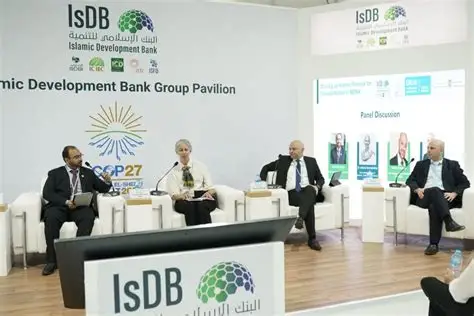
The Islamic Development Bank Institute (IsDBI) Announces Free Access to All eBooks During Ramadan and Eid al‑Fitr

The Islamic Development Bank Institute (IsDBI) (https://IsDBInstitute.org) is pleased to announce special complimentary access to all its e-books available on the online bookstore from 18 February to 3 April 2026, in celebration of Ramadan and Eid al‑Fitr.

During this period, IsDBI’s full collection of Islamic economics and finance publications will be available for free for reading through the IsDBI eBook Reader. Once downloaded to the user’s personal library on the Reader, the ebooks will remain permanently accessible even after the promotional period.

IsDBI’s extensive catalogue includes more than four decades of cutting‑edge research and insights designed to support professionals, policymakers, academics, and students.

In his comments on this occasion, Dr. Sami Al-Suwailem, Acting Director General of IsDBI, said, “We are delighted to invite professionals, researchers, and the public to take advantage of this opportunity to explore and benefit from a vast collection of knowledge and actionable insights. This initiative reflects IsDBI’s commitment to promoting knowledge sharing and intellectual dialogue.”

After the free‑access period ends on 3 April 2026, all ebooks that are paid publications on the online bookstore will revert to their original prices. Free titles will continue to remain free.

More information on the IsDBI eBook Reader is available here: https://isdbinstitute.org/ebook-reader-application/

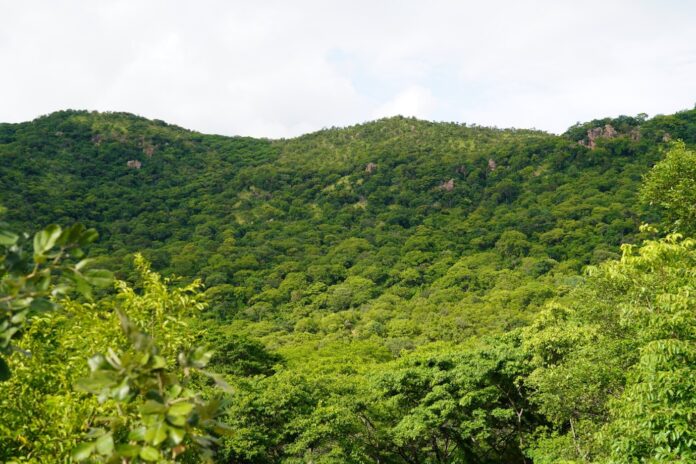
FAO strengthens traditional leaders’ capacities to drive Miombo woodlands restoration in Zimbabwe

The Food and Agriculture Organization of the United Nations (FAO), in collaboration with the Forestry Commission and the Ministry of Local Government and Public Works, concluded a week‑long series of capacity‑building workshops aimed at empowering traditional leaders in spearheading sustainable management and restoration of Miombo woodlands in Mudzi and Rushinga districts in Zimbabwe.

The workshops, held from 9 – 13 February 2026, equipped more than 200 traditional leaders and Community Resource Monitors with technical, legal, and governance skills to strengthen local natural resource management systems. This capacity‑building initiative forms part of the USD 5 million Zimbabwe–Mozambique Transboundary Integrated Sustainable Management of Miombo Woodlands Project, funded by the Italian Government through the Italian Agency for Development Cooperation (AICS).

“Traditional leaders including Chiefs, Headmen, and Village Heads are the cultural and administrative custodians of Zimbabwe’s rural livelihoods and landscapes. As such, they hold an essential role in shaping community behaviour, enforcing local laws, and driving environmental stewardship. Their involvement is therefore strategic to the success of the national Miombo restoration agenda in Southern Africa,” said Patrice Talla, FAO Subregional Coordinator for Southern Africa and Representative to Zimbabwe.  

The training sessions brought forward several important insights that will shape the ongoing restoration of Miombo woodlands. Participants underscored the critical role of indigenous knowledge systems, such as customary land‑use practices, seasonal indicators, and cultural norms, in guiding effective Miombo woodland conservation. Conservation methods rooted in this local wisdom were widely acknowledged as more sustainable and more readily embraced by communities.

The workshops also reinforced the legal authority of traditional leaders under the Traditional Leaders Act, encouraging them to fully exercise their mandate as local law enforcers responsible for ensuring compliance with both community rules and national forestry legislation. A recurring message throughout the sessions was that “a wise leader rides on local expertise,” emphasizing the importance of informed and culturally grounded decision‑making.

“Through these workshops, we were able to clarify the scientific principles behind Miombo woodlands management while also outlining the legal provisions that guide responsible natural resources use in Zimbabwe. Our mandate as the Forestry Commission is not only to provide technical expertise, but also to ensure that communities and traditional leaders fully understand the regulatory frameworks that protect our forests,” said Lucious Mujuru, Provincial Forestry Extension Manager at the Forestry Commission of Zimbabwe.

Traditional leaders further highlighted the need for participatory law‑making, stressing that communities must be involved in developing and enforcing natural resource regulations to build legitimacy and trust. The workshops also sought to strengthen collaboration among multiple institutions, including Rural District Councils, the Forestry Commission, Environmental Management Agency, the Zimbabwe Republic Police, and community monitors.

A firm stance was taken against corruption in land allocation, with leaders committing to uphold transparency and enforce punitive measures when necessary. Village Heads were ceremonially positioned as frontline custodians of natural resources, symbolically “given the bow and arrow” to reinforce their role as the eyes and ears of Chiefs.

“We are particularly grateful for the opportunity provided by Italy and FAO to bring our traditional leaders together and sensitise them on their vital roles in the protection and sustainable management of Miombo woodlands,” said Ropafadzo Mukonde from the Ministry of Local Government and Public Works.

“The Italian Cooperation places communities at the heart of sustainable natural resource management. We were therefore pleased to support this FAO-led training under the Miombo woodlands project, enabling traditional leaders and communities to strengthen their capacity to protect these ecosystems. Often described as the ecological ‘lungs’ of Southern Africa, the Miombo can only be preserved through the active engagement and leadership of local communities,” said Paolo Enrico Sertoli, Head of AICS Maputo Office (also covering Zimbabwe).

Throughout the capacity building sessions, stakeholders emphasized that protecting Miombo woodlands is a matter of national importance, vital for climate resilience, water security, biodiversity preservation, and rural livelihoods. The discourse also explored the economic benefits of well‑managed woodlands, noting that ecosystems rich in non‑timber forest products such as baobab and marula, along with improved soil health and carbon storage potential, generate significant long‑term value for local communities.

The sessions unanimously resolved to establish effective Resource Management Committees in each ward. These committees will be responsible for overseeing/monitoring natural resource use and reporting on compliance, developing locally appropriate rules and regulations in consultation with traditional and local leadership, and supporting enforcement efforts.

“We need to anchor our efforts at the grassroots level to foster a strong sense of ownership and ensure effective and sustainable natural resource management,” said Maxwell Phiri, Miombo National Project Coordinator at FAO.

Going forward, the project envisages strengthening of the existing Resource Management Committees, as well as facilitating their establishment in wards where they are not yet in place. These committees will be capacitated with practical skills to enhance effective natural resource governance and sustainable land management. Capacity-building support will include training in forest resource inventory and monitoring, value addition to Non-Timber Forest Products, fire prevention and management, seedling production, tree planting, and sustainable management of natural forests.

Embedding Protection from Sexual Exploitation and Abuse (PSEA) in ecosystems restoration

A dedicated session on PSEA was included in all the capacity‑building workshops, recognising the crucial role traditional leaders play in safeguarding their communities. Integrating PSEA into these workshops was essential because traditional leaders are often the first point of contact for community grievances and therefore must be equipped with the knowledge to uphold accountability, protect vulnerable groups, and promote ethical conduct in development initiatives.

“For traditional leaders whose influence shapes social norms, the trainings provided a critical platform to strengthen accountability systems at grassroots level. By equipping Chiefs, Headmen, and Village Heads with this knowledge, FAO helped reinforce community trust and safeguard the integrity of the Miombo restoration initiative,” said Leticia Njowola, FAO PSEA Country Focal Point.

Voices of the Traditional Leaders 

“This project is going to benefit my community in protecting Miombo woodlands and in turn, the Miombo woodlands improving our livelihoods, a mutual and symbiotic relationship between humans and the ecosystem. With these trainings, I am going to intensify my leadership in supporting the resource monitoring committees established in my wards. I rely on the coordination of my village heads to ensure the objectives of the Miombo restoration are met,” Chief Mukota, Mudzi district. 

“As a woman leading my community, this training has empowered me to confidently confront the challenges we face in protecting our Miombo woodlands. For many of us, this thematic area has long been seen as the domain of men, but today I feel equipped to break new ground and show that women, too, have a critical role to play in restoring our environment,” Chioniso Chichovhe, Village Headwoman, Ward 17, Mudzi District.

“As a cultural custodian, I carry a responsibility to my community and to the wider Miombo landscape shared by Zimbabwe and Mozambique. This training has strengthened my commitment to honour our shared history by leading restoration efforts and passing this knowledge throughout my district with the support of my village heads,” said Chief Makuni of Rushinga District.

Uganda: Committee tasks ministry to resolve former Management Training and Advisory Centre (MTAC) staff layoff woes

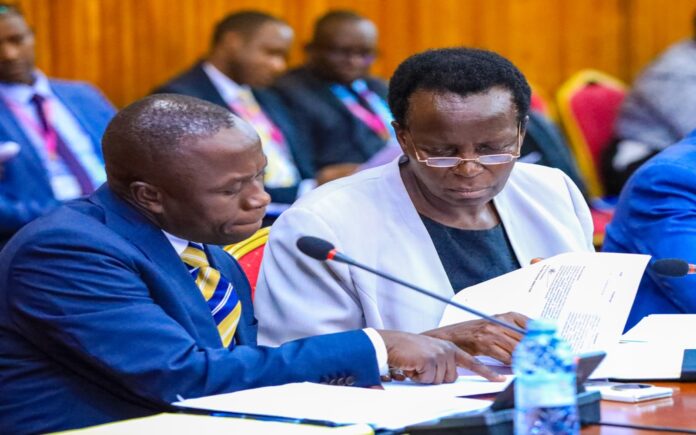
The Committee on Education and Sports has directed the Ministry of Education and Sports to address the plight of more than 60 former staff of the Management Training and Advisory Centre (MTAC).

MTAC was repealed under the Technical and Vocational Education and Training Act, 2025 and its functions transferred to Nakawa Vocational Training College. Under the law, MTAC’s assets, liabilities, students and staff were to be moved to Nakawa Vocational Training College as part of the transition.

While meeting officials from the ministry  led by the Minister of State for Sports , Hon. Peter Ogwang, , the Chairperson of the committee, Hon. James Kubeketerya, said more than 60 former staff of MTAC were left out during the transition.

“MTAC had staff and when the merger occurred, either these people were not absorbed. Why not just get a definite position on that?” he said.
Legislators tasked the ministry to urgently handle the grievances of the affected workers, following complaints that some employees were not absorbed into Nakawa Vocational Training College.

The Commissioner for Technical and Vocational Education and Training at the ministry, Loy Muhwezi said that following approval of the merger, MTAC ceased to exist and that within the ministry’s structure only Nakawa Vocational Training College is recognised. She added that the process of finalising the takeover is still ongoing.

Her disclosure that some staff may have been recruited illegally shortly before the merger drew sharp criticism from Members of Parliament.

Jonam County Member of Parliament, Hon. Emmanuel Ongiertho  faulted the ministry for weak supervision of the education sector, questioning how an institution could allegedly recruit staff irregularly without the ministry’s knowledge.

Hon. Silas Aogon (Independent, Kumi Municipality) called for investigations into both the allegedly irregular recruits and any ministry officials who may have failed to act.

Muhwezi requested for additional time to present a comprehensive report on the transition from MTAC to Nakawa Vocational Training College, prompting Nathan Itungo (Kashari South) to seek clarity on how far the process has progressed.

Ogwang urged the affected staff to formally submit details of their complaints to enable government to examine their claims.

“I also want to really ask you to help me with the information regarding that person because I have just been asking the Permanent Secretary whether she has received any of these complaints from their grid and it seems the answer is negative,” Ogwang said.

Create a free account, or log in.

Gain access to read this content, plus limited free content.

Yes! I would like to receive new content and updates.

Sponsored Ad

Ad 1
Ad 2
Ad 3
Ad 4
Ad 5
Ad 6