The Indigenous traditional owners of land in north-western Australia have been awarded a record A$150.1 million ($108.3m; £79.9m) payout after a court ruled one of the country’s most well-known billionaires mined their land without permission.
The verdict amounts to the biggest native title payout ever awarded in Australia, and concludes a protracted legal battle between the Yindjibarndi people and Andrew Forrest’s mining company Fortescue.
Since 2013, Fortescue’s mines have generated tens of billions of dollars in revenue by extracting iron ore from Yindjibarndi land in remote north Western Australia.
The Yindjibarndi group had sought A$1.8bn compensation.
That figure, they argued, would constitute 1% of the production value profit of the mines, as well as compensation for the loss of around 250 cultural sites and cultural connection to the land.
Acknowledging that the Yindjibarndi had a “deep and visceral connection” to their land which affected all aspects of their lives, Federal Court Justice Stephen Burley on Tuesday found Fortescue liable for economic loss valued at A$150,000 and cultural loss valued at A$150m.
Burley characterised the latter “as compensation for loss or diminution of traditional attachment to the land or connection to country and for loss of rights to gain spiritual sustenance from the land”.
The claim against Fortescue was first lodged in 2017, after a court awarded the Yindjibarndi Ngurra Aboriginal Corporation (YNAC) exclusive native title rights over a 2,700-sq km area in the mineral-rich Pilbara region.
At that time, Fortescue had already spent several years establishing its lucrative Solomon Hub mines on the land, with permission from both the government and a local Aboriginal representative group, but not from YNAC.
Failure to negotiate a land use agreement between YNAC and Fortescue led to the almost 20-year legal battle which culminated on Tuesday.
While the historic payout is almost three times the amount of the next biggest court-mandated compensation payout to native title owners in Australia, however, some elders expressed disappointment at the figure.
Speaking outside the court on Tuesday, Yindjibarndi elder Wendy Hubert described the payout as “peanuts” compared to the Fortescue’s immense earnings over the years, according to the Australian Broadcasting Corporation.
Those earnings for the mining company are expected to continue for at least another decade, before the mine is set to close in the mid-2040s.
As US troops withdrew from Somalia in the spring of 1994, a teenaged Muse Omar Jama began working as an exchange trader in Mogadishu’s Bakara market. More than three decades later, he still does the same job, but wonders for how much longer.
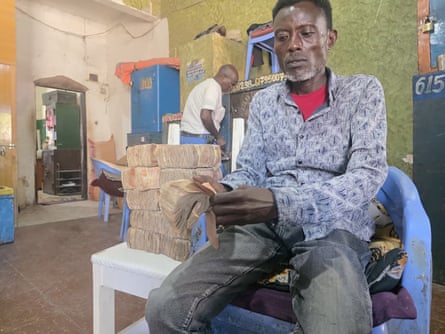
Jama, 49, sits in a plastic chair in the one-room office he shares with other traders. The auto-rickshaws speed by outside, but inside is quiet; the noise of bargaining has faded and the traders exchange few words between themselves.
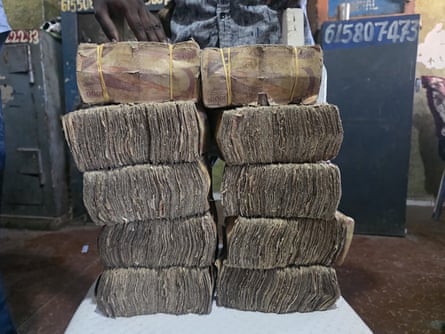
Their battered metal safes, filled with millions of Somali shillings, are closed and locked. The paper fortunes inside have suddenly become worthless. “It’s like we went bankrupt overnight,” says Jama.
Last month, fed up with greasy, ripped and aged banknotes, a handful of traders in Mogadishu decided they would no longer accept them. Soon businesses, shops and even bus drivers were following suit, and the decision quickly spread to regions outside the capital.
The impact on prices was immediate, pushing up everyday expenses such as groceries, medicines and public transport. A small bag of powdered milk, for example, more than doubled in price.
Amid global food price rises and Somalia’s ongoing drought, poor people are bearing the brunt of the effects of an economy that is becoming completely “dollarised”.
Somalia is one of the most remittance-dependent countries in the world. The diaspora sends billions annually – primarily in US dollars. These remittances flow into the economy via informal money-transfer operators, known as hawala in Arabic. The heavy presence of international bodies in Somalia – such as the UN, aid organisations, foreign forces and security firms – has further reinforced the use of US dollars.
Somalia has not printed any banknotes since 1991, when the then government of Siad Barre was overthrown, the central bank ceased to operate, and the country gained the infamous title of “failed state”. In the following years, the 1,000 Somali shilling note, the highest-value bill, became the only officially recognised money in circulation.
In the absence of an agreed unified currency amid factional conflict and politics – the breakaway territory of Somaliland launched its own shilling – the US dollar and phone transfers have become increasingly commonplace. Soon the only regions that accepted shillings were Mogadishu and some towns and districts in the country’s south.
With no new banknotes printed for years, many businesses will not take banknotes as they are in such poor condition. Photograph: Mohamed Gabobe
Before last month’s revolt from businesses, people from all walks of life would come to Jama’s office at Zoobe junction to exchange their shillings for dollars via mobile money, or vice versa, cashing in mobile remittances for Somali shillings.
Now, just like hundreds of thousands of others who are not paid in dollars through banks, Jama’s life has been turned upside down.
“Prior to the rejection of the Somali shilling, I was able to make enough to cover the basics such as rent, electricity and water,” says Jama. He now walks the three miles (5km) to work because he cannot use shillings on the bus.
“The rejection of the Somali shillings has hurt poor people the most, even the beggars. They used to be given a couple of thousand Somali shillings by passersby and for them, it was a form of survival that helped them purchase food and small goods but now the notes they have are worthless,” Jama says.
Jama says he now struggles to cover his basic needs and must walk into Mogadishu each day as the bus will no longer take shillings. Photograph: Mohamed Gabobe
“When they come to me trying to exchange their Somali shillings for mobile money in dollars, I have to turn them away because my safes, shelves and tables are already full of Somali shillings that I’m unable to exchange for US dollars anywhere.”
On 4 May, dozens of exchange traders staged a protest, waving wads of the old banknotes as they walked through the streets of Mogadishu, shouting: “Somalia is the only country without a currency.” Jama was too disillusioned to join them. “It doesn’t seem like things will ever be the same again. Our currency is dead and so is our way of life.”
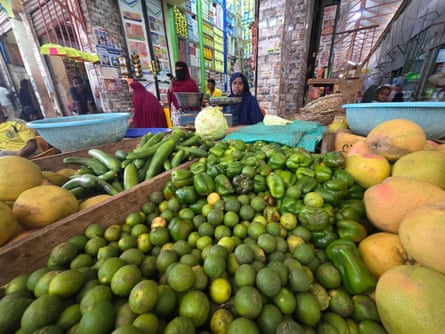
Asha Ali Ahmed, 39, who sells vegetables at what used to be her mother’s market stall in Mogadishu, has similar concerns. “We were raised off the earnings from this vegetable stand,” she says. “I would take the Somali shillings to [the farming town] Afgoye to buy vegetables, then return to Mogadishu and sell them in the market.”
Now farmers refuse to accept the shillings and request payments in mobile money instead, increasing vegetable prices. “Vegetables were already expensive because of the drought,” she says. “The rejection of the shilling only exacerbated our situation.”
Asha Ali Ahmed at the stall she took over from her mother. She says the switch to mobile money has pushed up the price of produce. Photograph: Mohamed Gabobe
Somalia is enduring a dire drought that has caused widespread crop failures, raising food prices and disrupting livelihoods. According to the World Food Programme, nearly a third of the country’s population, 6.5 million people, face severe hunger, and 2 million children under the age of five face acute malnutrition.
“Most people who bought vegetables from my stand were people that could only afford to make purchases in shillings. Paying with mobile money means they have to pay more, and most can’t afford to,” says Ahmed.
In a televised press conference, the federal government announced that the rejection of the Somali shilling would constitute a crime and ordered traders and businesses to continue accepting it.
But Jama and others doubt the ruling can be enforced by the fragile state. “The government’s decree to save the shilling is good but we need action to back the directive. There are no police, or anyone for that matter, helping us,” he says.
“What would help would be [for the government] to go to businesses and hold people accountable for refusing to accept the Somali shilling. Even fines would help,” he adds.
Jama leans back in his chair. Across the street, guards stand watch behind mounted machine guns at the ministry of foreign affairs. “Millions are going to suffer,” he says quietly. “More families will be pushed into poverty.”
The cruise ship hit by a deadly hantavirus outbreak headed to the Netherlands on Tuesday (May 12) after its last passengers disembarked in Spain’s Canary Islands, with at least seven of the evacuees testing positive for the virus.
Three people died after the rare virus that usually spreads among rodents was detected on board the MV Hondius, sparking a global health scare.
Among living patients, seven cases have been confirmed and an eighth is listed as “probable”, according to the WHO, the UN health body and certain national health authorities.
French officials said one woman who tested positive was hospitalized and in stable condition in intensive care.
No vaccines or specific treatments exist for the virus, but health officials have said the risk to the public is low and dismissed comparisons to the Covid-19 pandemic.
The Dutch-flagged ship was expected to arrive in Rotterdam on Sunday evening, according to its operator, where it will undergo disinfection procedures.
More than 25 crew members and medical staff were still on board the ship, which is carrying the body of a German passenger who died during the voyage, but all passengers have now disembarked.
“Mission accomplished,” Spanish Health Minister Monica Garcia Gomez said on the quay of the port of Granadilla de Abona, in Tenerife, where a two-day complex evacuation procedure began on Sunday (May 10).
“Between yesterday (May 10) and today, we have evacuated the 125 passengers and crew members from 23 countries, who have either already returned home or are in the process of being repatriated. The ship, as you can see, has just weighed anchor. It left the port today at 7pm,” she said on Monday (May 11).
The final cohort of 28 evacuees travelled on chartered buses to Tenerife South Airport and boarded two flights that landed in the Netherlands early on Tuesday.
One plane carried mostly crew members – 17 Filipinos, a Dutch national and a German – as well as a British doctor and two epidemiologists.
A second flight transported six other passengers – four Australians, a New Zealander and a Briton living in Australia – who would stay in a quarantine facility near the airport before being repatriated.
Wearing white medical overalls and facemasks, the evacuees disembarked from the air ambulance clutching white bags of their belongings, and walked into Eindhoven airport’s terminal.
Spanish authorities said the cruise ship, which was originally only authorised to anchor offshore for the evacuation on health and safety grounds, had docked in port because of unfavourable weather.
At a news conference at the port, World Health Organization chief Tedros Adhanom Ghebreyesus, who is due to meet the Spanish prime minister in Madrid on Tuesday, sought to reassure the passengers.
He said they were in good hands now and that the situation could have become difficult if they stayed on the ship, but added that this “is not another Covid”.
Search for contacts
Among the completed repatriations, a French woman – one of five evacuees from France placed in isolation in Paris – started to feel unwell on Sunday night, and “tests came back positive”, Health Minister Stephanie Rist said.
A Spanish passenger has also tested positive, the health ministry in Madrid said, adding that results for the 13 other Spanish evacuees were so far negative.
Spain’s health ministry defended the rigour of the evacuations, where medical teams escorted passengers from the ship to an airport on Tenerife under close supervision and following health checks.
“From the start, all the measures adopted have aimed at cutting the possible chains of transmission… all measures for prevention and control of transmission have been applied,” it said in a statement.
Of the five French passengers repatriated on Sunday, one woman who tested positive was placed in intensive care in stable condition, Prime Minister Sebastien Lecornu wrote on X.
In total, seven cases have been confirmed among living passengers, health officials have said.
Other suspected cases and potential close contacts with infected people are being investigated, with health authorities in several countries tracking passengers who had already disembarked from the ship, plus anyone who may have come into contact with them.
In a video shared on Monday by operator Oceanwide Expeditions, captain Jan Dobrogowski paid tribute to the “unity and quiet strength” of everyone on board and highlighted the “courage and selfless resolve” of the crew.
The MV Hondius left Argentina, where hantavirus is endemic, on April 1 for a cruise across the Atlantic Ocean to Cape Verde.
The WHO believes the first infection occurred before the start of the voyage, followed by transmission between humans on board the vessel.
But Argentine health officials have questioned whether the outbreak originated in the southern city of Ushuaia, based on the virus’s weeks-long incubation period and other factors. – AFP
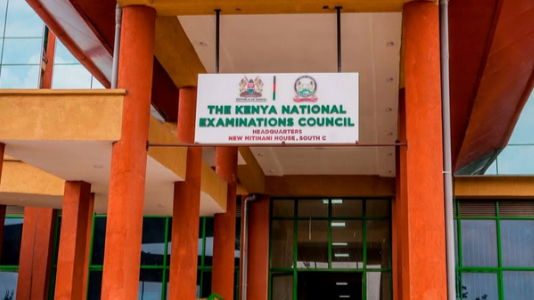
The Kenya National Examinations Council (KNEC) has issued a 10-day notice to principals with learners in Grade 10, directing them to register Senior School assessment centres through its online portal as part of preparations for the implementation of Competency-Based Assessments (CBA).
In a notice on Monday, May 11, KNEC said it has put in place the necessary measures to ensure that the implementation of Competency-Based Assessment aligns with the Competency-Based Education (CBE) framework currently being rolled out in schools across the country.
The council said the registration exercise is targeting all principals with learners in Senior School and is aimed at facilitating a smooth administration of assessments under the new education system.
“KNEC has put in place necessary measures to ensure that the implementation of Competency Based Assessment (CBA) is aligned with the Competency Based Education (CBE).
“In this regard, the Council hereby wishes to bring the following information to the attention of all Principals who have learners at Grade 10, in Senior School,” the notice read.
According to KNEC, principals are required to access the Senior School registration portal through the KNEC Senior School Portal using their current school code as both the username and password.
Upon logging into the system, schools will be prompted to update their phone numbers, which will then be used to receive a One-Time Password (OTP) for verification and access to the portal.
Principals will also be required to upload the school registration certificate before submitting the required information.
KNEC further noted that once the registration process is completed, the system will automatically generate a Universal Centre Code together with a School Registration Slip containing the institution’s details.
Schools are then expected to download and print the registration slip for record-keeping purposes.
File image of KNEC CEO David Njengere
The council also directed institutions that do not currently have a KNEC examination or assessment code to seek guidance through their respective Sub-County Directors of Education (SCDEs).
Such institutions have been advised to communicate with KNEC through the email address seniorschool@knec.ac.ke for further assistance.
KNEC stated that the registration portal officially opened on May 7 and will remain accessible until May 22.
After the closure of the registration window, successfully registered centres will be enabled to register their Grade 10 learners for Senior School assessments.
The historic Kamukunji Grounds in Nairobi, long regarded as one of Kenya’s most significant democracy landmarks, has undergone a major transformation under the Nairobi Rivers Regeneration Project, according to Interior Principal Secretary Raymond Omollo.
In a statement, Omollo said the revitalisation of the grounds represents the preservation of Kenya’s democratic history while creating new public and community spaces for future generations.
“A nation that preserves and honours its historical spaces safeguards the memory of its struggles, values and triumphs for future generations,” he said.
Kamukunji Grounds occupies a central place in Kenya’s political history, having served as a key site during the 1990 Saba Saba movement that pushed for the reintroduction of multi-party democracy and expanded civil liberties.
The grounds had for years suffered neglect and environmental degradation before the latest redevelopment efforts.
According to Omollo, the upgraded facility now combines heritage conservation, environmental restoration and community development.
Among the new facilities are an 11-aside football pitch, a semi seven-aside and multipurpose sports field, basketball courts, a boxing ring, improved walkways, children’s play areas and sanitation facilities.
The redevelopment also includes recreational amenities such as a mental health corner, outdoor gym, gazebos and landscaped green spaces.
Community infrastructure added to the site includes a resource centre with a library, a social hall, a digital museum, changing rooms, an indoor gym and an amphitheatre.
Omollo said the project has also created employment opportunities for hundreds of young people through construction, landscaping, environmental rehabilitation, maintenance and sports-related activities.
Beyond job creation, the project is expected to contribute to restoration of river ecosystems and expansion of green urban spaces within Nairobi.
“The State Department for Internal Security and National Administration continues to support the implementation of the project through coordination with local administration and community mobilisation,” the PS said.
He added that the initiative aligns with broader government programmes focused on environmental conservation, urban renewal and protection of public spaces.
The Water Resources Authority (WRA) has announced 120 job vacancies for eligible Kenyans.
In an advertisement on Tuesday, May 12, WRA invited interested candidates to apply for the positions.
“The Management of the Authority wishes to identify and recruit capable officers in the underlisted positions,” the advert read in part.
The vacancies include: Senior Water Resources Officer (Standards and Regulation), Water Resources Officer I (Standards and Regulation), Water Resources Officer II (Standards and Regulation), Water Resources Officer II (Permitting), Water Resources Assistant III (Permitting), Senior Hydrologist, Hydrologist I, Hydrologist II, Hydrological Assistant III, Geologist II, Chemist II, and Laboratory Technologist III.
Others are; Laboratory Technician III, Pollution Control Officer I, Water Resources Officer II (Research and Data Management), Water Resources Officer II (Enforcement and Compliance), Water Resources Assistant III (Enforcement and Compliance), Principal Water Resources Officer (Capacity Building), Water Resources Officer II (Capacity Building), Engineer II, Assistant Engineering Officer III, Community Engagement Officer II, Customer Care Assistant III and Legal Officer II.
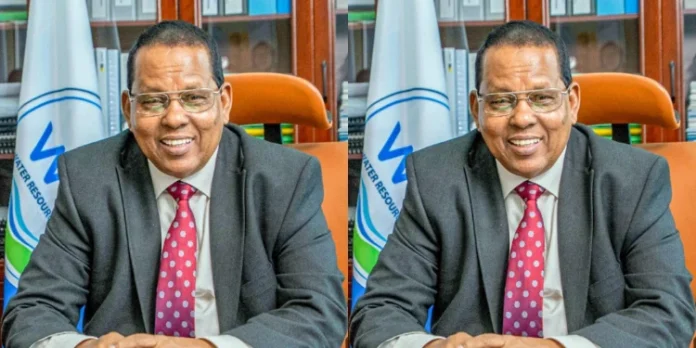
File image of WRA CEO Mohamed Shurie.
WRA is also seeking to fill the positions of: ICT Officer II, ICT Assistant III, Accounts/Revenue Officer II, Assistant Accountant/Revenue Officer III, Planning Officer II, Records and Information Management Officer II, Resource Mobilization Officer I, Assistant Office Administrator III, Driver II, Office Assistant I, and Office Assistant II.
How to Apply
Interested candidates are required to visit WRA’s website, www.wra.go.ke, and fill out and submit an online application form under the careers section.
Alternatively, applicants can deliver hard copies of their applications to the authority’s offices in the NHIF Building, 9th floor.
The deadline for submitting the applications is June 1, 2026.
Further, WRA said successful applicants will serve for a probationary period of six months, then convert to permanent and pensionable.
“Successful candidates will serve for a probationary period of six (6) months, thereafter convert to Permanent and Pensionable Terms of Service, subject to performance. Remuneration will be subject to the existing terms approved by the Salaries and Remuneration Commission,” the authority added.
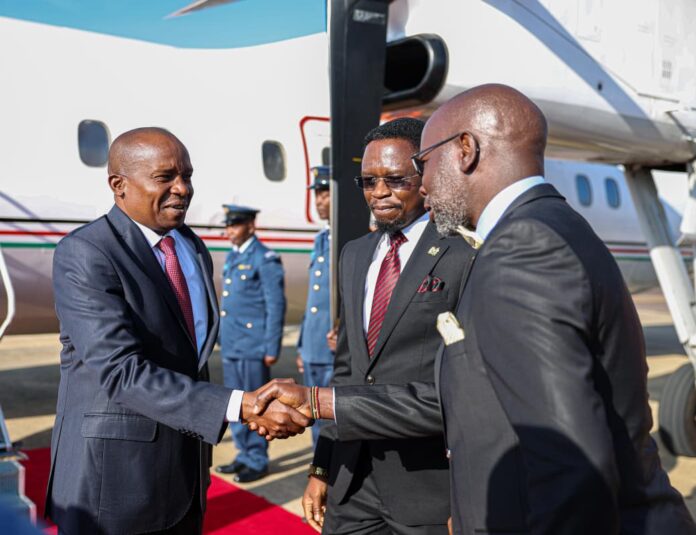
Deputy President Kithure Kindiki on Tuesday, May 12 morning, flew out of the country for Uganda.
In a statement, DP Kindiki said he will represent President William Ruto during the swearing-in of Ugandan President Yoweri Museveni at Kololo Grounds.
“Departed Nairobi for Entebbe, Uganda to represent Kenya and President William Ruto during the swearing in and inauguration of President Yoweri Museveni, Kololo Ceremonial Grounds,” Kindiki wrote.
President Museveni was re-elected for a seventh term in the general election held in January this year.
The 81-year-old won 71.65% of the vote, ahead of his main rival, Robert Kyagulanyi, popularly known as Bobi Wine, who garnered 24.72%.
File image of Deputy President Kithure Kindiki at JKIA.
Following the win, President Ruto congratulated Museveni and expressed readiness to continue working together for regional and continental development.
“Following the formal pronouncement of your re-election as the President of the Republic of Uganda last evening, 17 January, 2026, I convey, on behalf of the Government and people of the Republic of Kenya and my own behalf, my warm congratulations and best wishes to Your Excellency and to the great people of Uganda,” the statement read.
Ruto went on to describe Museveni’s victory as a clear reflection of public trust in his leadership and the ruling National Resistance Movement (NRM)
“Your decisive victory at the just concluded competitive General Election reflects the trust that the people of the Republic of Uganda have in your personal leadership and the confidence enjoyed by the NRM party. I am certain your re-election reinvigorates Your Excellency’s resolve to accelerate the transformation of your country,” the statement added.
Meanwhile, retired President Uhuru Kenyatta is also in Uganda to attend Museveni’s inauguration.
Uhuru arrived in Uganda on Monday, May 11, and was received by Kenyan Ambassador Kipkosgei Toroitic and Ugandan envoy, Ambassador Katureebe Tayebwa at the Entebbe Airport.
“H.E. President (Rtd) Uhuru Kenyatta, the 4th President of the Republic of Kenya, has arrived in Kampala to join fellow leaders, government officials, and dignitaries for the Presidential Inauguration Ceremony of H.E. President Yoweri Kaguta Museveni.
“President Museveni was re-elected during Uganda’s General Elections held on 15th January 2026. The inauguration ceremony is scheduled to take place tomorrow, 12th May 2026, in Kampala,” the statement read in part.
US President Donald Trump is expected to bring a host of top business and technology industry executives on his trip to China this week.
Among those set to join the president on his official trip to Beijing are Tim Cook of Apple, Elon Musk of Tesla and SpaceX, Larry Fink of BlackRock, as well as other executives from Meta, Visa, JP Morgan, Boeing, Cargill and more.
In total, 17 US executives will join Trump on the trip, a White House official with knowledge of the plans told the BBC.
The trip is seen as important for the US, as Trump will meet with President Xi Jinping at a time of growing economic and technological animosity between the two countries.
Absent from the list is Nvidia boss Jensen Huang, whose company is central to the rivalry between the US and China over computer chips and artificial intelligence (AI).
The BBC has contacted Nvidia for comment. Last week, Huang told business news channel CNBC that it would be a “privilege” to represent the US in China if he was invited on the trip.
It is also notable that Sanjay Mehrotra, the CEO of Micron Technology, will be part of Trump’s delegation.
His presence is interesting as Beijing restricted the use of some Micron chips in critical infrastructure in 2023 on national security grounds – a move the firm has said negatively impacted its business in China.
Semiconductors remain central to the US-China economic relationship, despite ongoing tensions over technology and export controls.
Chuck Robbins, chief executive and chairman of Cisco, had been invited to be a part of the trip “but is unable to due to earnings,” according to a company spokeswoman.
Together, the executives represent a swath of US business interests, from social media and consumer hardware, to computer chips and commercial manufacturing.
A spokeswoman for Illumina, a biotechnology company based in Californa, said Thaysen “is honored to be part of the delegation” and that the company hopes the trip will be “an opportunity to strengthen relationships and shape the future of precision medicine.”
Representatives of the other companies did not immediately respond to requests for comment.
Trump’s visit to China will be the first by a US president in nearly a decade and marks a key test of a fragile trade truce between the two countries, following a tit-for-tat trade war which saw them roll out tariffs which at times topped 100%.
The tariffs were paused in October 2025 after Trump’s last meeting with Xi, which took place in South Korea.
Looming large over the upcoming meeting will be the US and Israel’s war in Iran, which has already forced a delay to Trump and Xi’s meeting.
Trump is expected to push China, which relies on Iran for cheap oil, to help facilitate an agreement between Tehran and Washington to end the war.
China also wants the conflict to end. It has limited the supply of oil to the country, hitting the buying power of other countries around the world that import Chinese goods.
But China’s vast oil reserves and diverse energy supply have helped it so far in weathering the fallout of the war better than many neighbours.
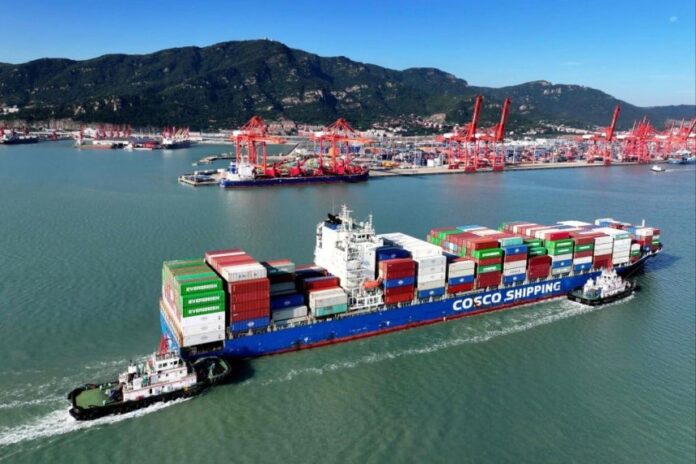
The first Kenyan exports under the zero-tariff regime established by China has arrived in the Asian country.
The 15,125 tonnes shipment by Quanzhou Danong Tea Import and Export Company Limited valued at Ksh 5.2 million ($40,000) arrived at Xiamen Port in Fujian Province on Tuesday.
According to the Ministry of Investment, Trade and Industry, the export represents the beginning of enhanced market access for Kenyan products under China’s preferential tariff arrangement aimed at supporting African exports and deepening economic cooperation between China and African nations.
Trade Principal Secretary Regina Ombam said the move demonstrates the growing strength of bilateral trade relations between Kenya and China and affirms Kenya’s position as a strategic trade and investment partner in Africa.
“The deal presents new opportunities for Kenyan farmers, manufacturers and exporters to expand their footprint in one of the world’s largest consumer markets,” said Ombam.
According to data by the Kenya National Bureau of Statistics (KNBS) exports to China fell to Ksh 16.9 billion last year from Ksh 26.3 billion reported in 2024.
Imports from mainland China on the other hand grew from Ksh 576 billion in 2024 to Ksh 671.2 billion a the trade between the two countries continue to favour the Asian economic giant.
In a bid to correct the trade imbalance that exists with low income countries especially in Africa, China introduced the zero-tariff regime on May 1, 2026 targeting 54 African countries including Kenya.
The preferential tariff arrangement is expected to lower the cost of entry and increase demand for locally produced goods.
Kenyan tea previously attracted a 15pc tariff before the implementation of the zero-tariff arrangement.
The export further underscores the government’s continued efforts to diversify export destinations, promote value addition and enhance the participation of Kenyan enterprises in international trade.
Ombam added that the government remains committed to supporting exporters in accessing new and emerging markets through strategic trade partnerships and favourable market access arrangements.
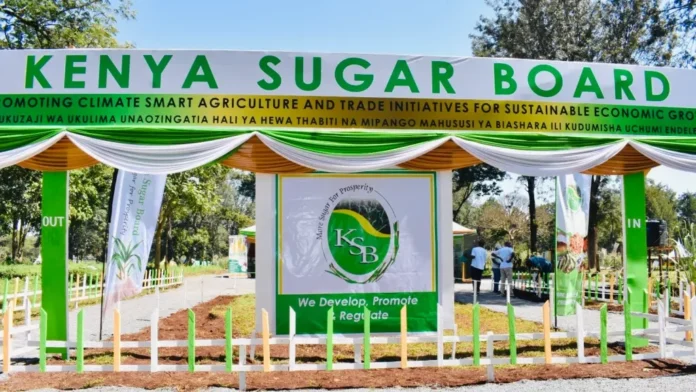
The Kenya Sugar Board has announced job opportunities for Field Enumerators ahead of the upcoming Grower Representative Elections exercise across several sugar-growing regions in the country.
In a notice on Tuesday, May 12, the board invited qualified applicants to apply for the short-term positions, which will support the verification and registration of sugarcane growers during the elections process.
According to the board, Field Enumerators’ duties will include verifying sugarcane grower documentation to confirm that only genuine farmers are registered, registering eligible growers at designated polling centres, and updating grower records where necessary.
The enumerators will also be tasked with accurately mapping growers to their respective polling centres to support an organized election process.
In addition, they will be required to uphold transparency, neutrality, and confidentiality while handling election-related activities and report any irregularities or disputes to supervisors for resolution.
The recruitment exercise is limited to applicants who either reside in or are adequately familiar with the listed wards.
In Kisumu County, the eligible wards are Awasi/Onjiko, Ahero, Miwani, and Masogo/Nyang’oma.
In Narok County, applications are open to residents familiar with Keyian, Kilgoris Central, Lolgorian, and Shankoe wards.
In Busia County, the listed wards include Kingandole, Namboboto, Bukhayo East, Bukhayo West, Chakol South, Chakol North, Amukura East, and Amukura West.
In Nandi County, the exercise will cover Sangalo/Kebulonik, Chepterwai, Kapkangani, and Kabujoi wards, while in Kericho County, eligible applicants should come from Chemilil/Chemase, Songhor/Soba, and Kapsimotwa wards.
File image of Jude Chesire
In Kakamega County, the listed wards are Chevaywa, Butsotso South, Bunyala Central, Shamberere, and East Kabras.
The recruitment will also target East Kanyamkago, West Kanyamkago, and South Kanyamkago wards in Migori County, as well as Kwabwai and Gem West wards in Homabay County.
To qualify for the positions, applicants must be aged 21 years and above, own an Android smartphone, and possess a minimum KCSE grade of C- (Minus).
Candidates are also expected to have good communication skills and strong knowledge of their local areas.
The Kenya Sugar Board stated that the engagement will be on a short-term contract basis aligned with election activities.
Successful applicants will receive a stipend of Ksh1,500 per assignment day, with the duration depending on field deployment timelines.
The board further noted that performance monitoring will be conducted throughout the exercise, warning that non-compliant enumerators may be replaced.
Applications must be submitted online through the Kenya Sugar Board recruitment portal; the deadline for applications is Wednesday, May 13, at midnight.
The board also cautioned applicants against making payments to any individual or organization, noting that the recruitment process is completely free of charge.
“All applicants, whether successful or unsuccessful, will receive feedback from the Kenya Sugar Board regarding the status of their application,” the notice stated.