Sponsored Ad

Ad 1
Ad 2
Ad 3
Ad 4
Ad 5
Ad 6
22.3 C
Kenya
Saturday, May 9, 2026
Home Blog Page 401

Sifuna opposes State House ‘Cooperation agreement’ between President Ruto and Sakaja

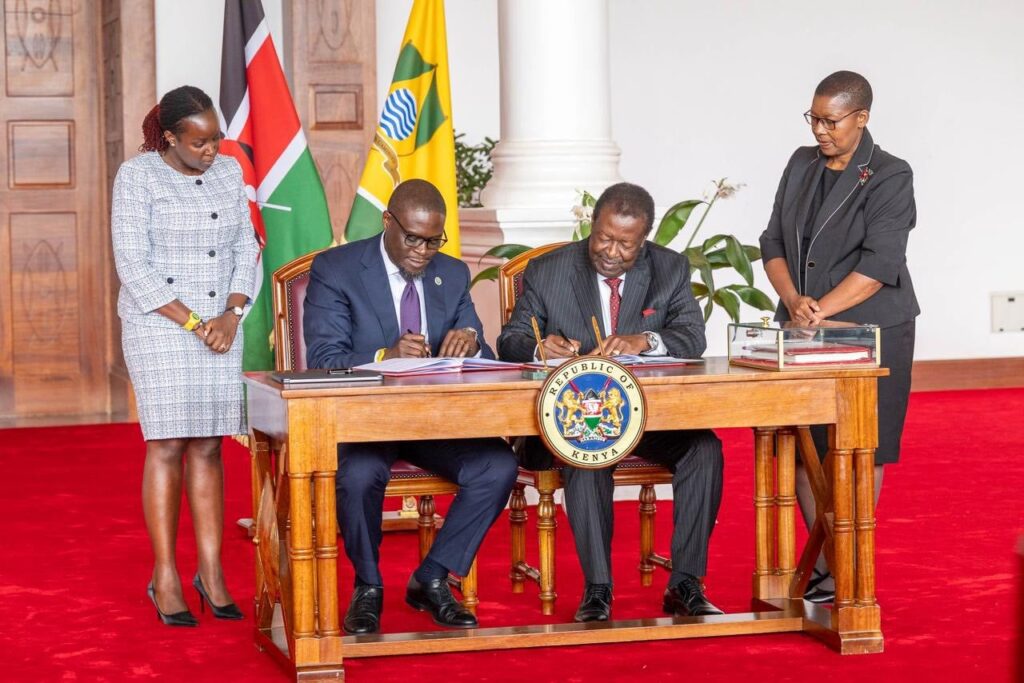
Nairobi Senator Edwin Sifuna has strongly opposed the newly signed “cooperation agreement” between President William Ruto and Johnson Sakaja, terming it unconstitutional, opaque, and a veiled takeover of Nairobi City County functions by the National Government.

Addressing the media on Wednesday, February 18, Senator Sifuna said the agreement violates the constitution as no public participation was undertaken before it was signed.

He argued that subjecting the agreement to public participation after it has already been signed is a disrespect to the Nairobi residents.

“I wish to state that my office was neither involved nor consulted before this decision was taken. Indeed, the so-called Cooperation agreement itself acknowledges that no Public Participation was conducted prior to the signing yesterday, a violation of the Constitution too egregious to ignore,” Sifuna stated.

Sifuna urged both the President and Governor Sakaja to suspend the agreement in the public interest and uphold constitutional safeguards.

Sifuna said the cooperation agreement between Nairobi County and the national government will complicate oversight and accountability processes by the assembly, Senate and the Office of the Auditor General.

“We want development, but only if undertaken in strict accordance with the constitution. This in fact is the very foundation of leadership. I urge both parties to shelve this agreement in the Public interest and maintain fidelity to the Constitution,” Sifuna concluded.

The Nairobi Senator also pointed out that the steering committee established to oversee the implementation of the agreement is dominated by people from the national government.
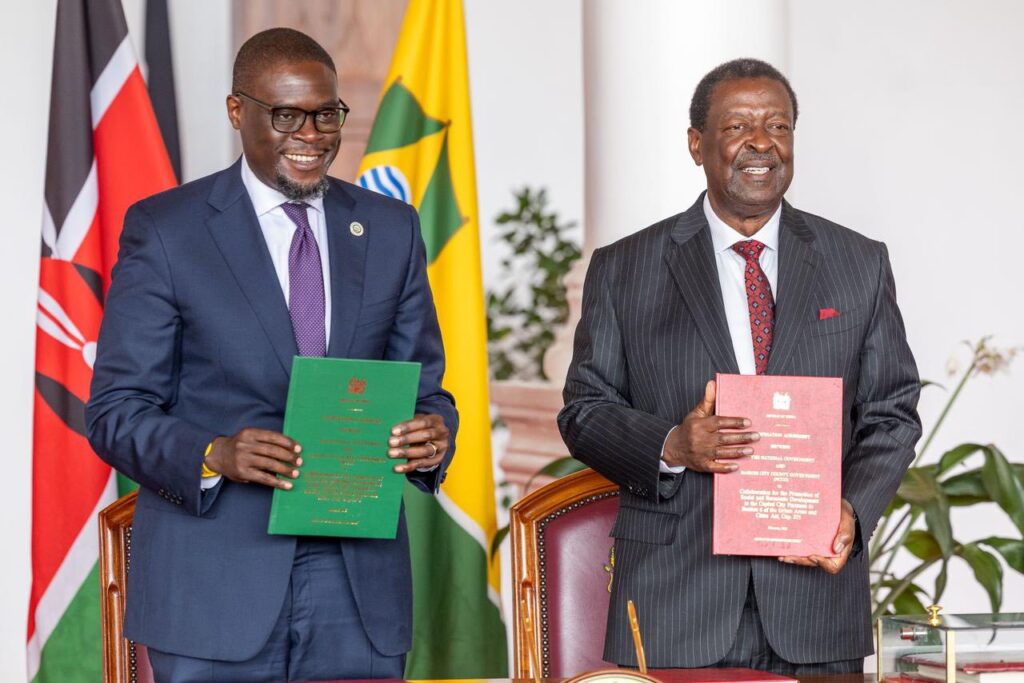
Sifuna claimed that Governor Sakaja will be subservient to Prime Cabinet Secretary Musalia Mudavadi, who is heading the committee.

“Of the 12 members of the committee, a whopping two-thirds are appointees of the national government.

“From its structure, the Governor will play subservient to the Prime Cabinet Secretary, making Sakaja the new Deputy Governor for all intents and purposes. This to me is not cooperation but takeover,” he argued.

The agreement is expected to take effect within two weeks, even as debate intensifies over its legality and implications for devolution in the capital.

Sifuna cited Articles 96 and 186 of the Constitution, alongside the County Governments Act and the Intergovernmental Relations Act, saying they clearly define the separation of powers between the two levels of government.

“Devolution was meant to work and thrive for the people, not to allow the national government to step in under the guise of rescue missions,” Sifuna said.

Sifuna questioned Ruto’s reliance on the Urban Areas and Cities Act to justify the agreement, noting that the President has been in top leadership for over a decade — first as Deputy President from 2013 and now as Head of State.

“He now says the agreement is 14 years late. Why the sudden urgency less than 18 months to the 2027 elections?” Sifuna posed.

The Senator criticized the absence of prior public participation, calling it “egregious” and unconstitutional. He argued that subjecting the agreement to public participation after signing it undermines democratic principles.

He also questioned the proposed 14-day window for public input, saying it is too short to facilitate meaningful engagement. Further, he claimed Clause 6.2 of the agreement limits public participation to “amendments,” effectively denying Nairobi residents the option to reject the agreement altogether.

Sifuna expressed concern over the composition of the steering committee tasked with overseeing implementation of the agreement. According to him, two-thirds of the 12-member committee are national government appointees.

“This is not cooperation but takeover,” he said, alleging that the structure makes Governor Sakaja subservient to the Prime Cabinet Secretary.
The Senator likened the agreement to the defunct Nairobi Metropolitan Services (NMS), which previously took over key county functions.

Sifuna recalled that NMS left behind KSh16 billion in pending bills and accused the national government of failing to clear debts owed to contractors.

He further claimed that national government institutions owe Nairobi over KSh100 billion in unpaid land rates and other dues, dismissing President Ruto’s pledge of KSh80 billion support as misleading.

The Senator criticized continued operations by Kenya Urban Roads Authority (KURA) and Kenya Rural Roads Authority (KeRRA) within Nairobi, arguing that roads fall squarely under county functions as outlined in the Fourth Schedule of the Constitution.

He referenced a 2025 Memorandum of Understanding between President Ruto and Raila Odinga, which proposed unbundling certain functions and dissolving the two agencies.

Instead of the cooperation agreement, Sifuna proposed immediate settlement of over Sh100 billion owed by national government agencies to Nairobi, full transfer of county functions and dissolution of KURA and KeRRA and use of conditional grants and the Commission on Revenue Allocation framework to channel additional funds to Nairobi.

He also wants a strict adherence to the Senate-approved revenue disbursement schedule, requiring monthly transfers by the 15th.
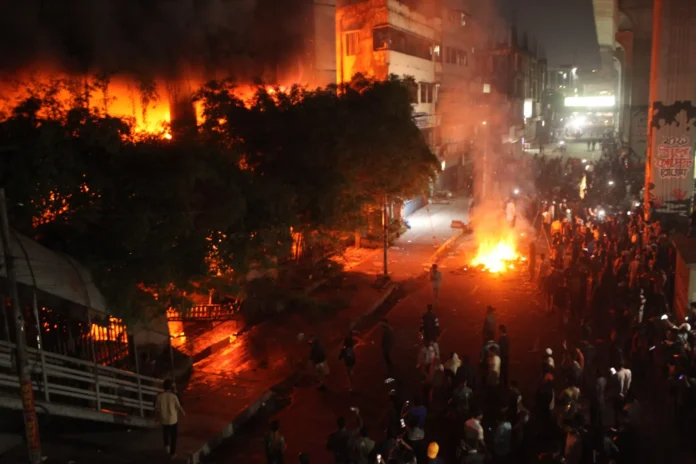

Bangladesh Mob Killing that Shocked the World Amid Election Violence

The mob killing that has recently “shocked the world” amid election-related violence in Bangladesh is the brutal lynching of Dipu Chandra Das, a 27-year-old Hindu garment worker.

The incident occurred on 18 December 2025 in the Mymensingh district, approximately two months before the national elections held on 12 February 2026.

Dipu Chandra Das was a junior quality inspector at the Pioneer Knitwear factory in Bhaluka. He was falsely accused of blasphemy (insulting the Prophet Muhammad) following a casual workplace conversation.

An angry mob of more than 1,000 people stormed the factory, dragged him out, and beat him to death. His body was then tied to a tree on a busy highway and set on fire in front of hundreds of onlookers.

The lynching took place during a period of intense national unrest following the death of student leader Sharif Osman Hadi, which sparked widespread riots and anti-India sentiment.

The brutality of the act, captured in widely circulated videos, sparked international condemnation from the United States State Department and the Indian government.

As of February 2026, the interim government led by Muhammad Yunus has provided 2.5 million taka ($21,000) in compensation to Das’s family and announced funding to build them a new home.

Police have arrested 22 people in connection with the murder, including factory managers and a local imam.

By Anthony Solly

New Twist as Russia Unable to Identify Man Accused of Circulating Non-Consensual Intimate Videos

Ghana’s government has revealed that Russian authorities are unable to confirm the identity or nationality of a man at the centre of viral intimate TikTok videos involving different women.

In a statement issued on Tuesday, February 17, Ghana’s Foreign Affairs Minister Samuel Okudzeto Ablakwa said the Russian Ambassador to Ghana Sergei Berdnikov had been summoned over the matter.

“The Ministry of Foreign Affairs confirms that the Ambassador of the Russian Federation to Ghana, His Excellency Sergei Berdnikov was summoned today, Tuesday, 17 February, 2026 on the instruction of the Honourable Minister for Foreign Affairs over the conduct of a supposed Russian national in unlawfully publishing sexually explicit images of Ghanaian women without their consent,” the statement read.

Ablakwa further disclosed that the ambassador acknowledged the seriousness of the issue and its wider implications.

“Ambassador Sergei Berdnikov acknowledged the violation of the privacy and dignity of the victims, and the larger cybercrime dimensions, while expressing the willingness of the Russian Federation to cooperate with the Republic of Ghana on the matter in issue,” the statement added.

However, the situation took a fresh twist after the Russian ambassador indicated they could not verify the suspect’s true identity.

“The Russian Ambassador, however, indicated that he is unable to confirm the nationality of the individual at the centre of the intimate viral videos, and further disclosed that the purported name making the rounds in the media is not a known Russian name and rather represents an inappropriate or vulgar expression in the Russian language,” the statement further read.

Ablakwa added that despite the uncertainty surrounding the suspect’s identity, the Russian Embassy had pledged support to Ghana’s investigations.

“Ambassador Sergei Berdnikov has pledged that the Embassy in Ghana is willing to share information on the matter to facilitate Ghana’s ongoing efforts aimed at apprehending the individual and bringing him to justice, within the context of our longstanding bilateral relations despite the absence of a legally binding extradition treaty,” the statement concluded.

File image of Ghana’s Foreign Affairs Minister Samuel Okudzeto Ablakwa and Russian Ambassador to Ghana Sergei Berdnikov

Meanwhile, the Directorate of Criminal Investigations (DCI) issued a statement addressing viral videos allegedly recorded and circulated by a suspected Russian TikToker involving Kenyan women. 

In an update on Tuesday, the agency raised alarm over serious privacy violations and possible criminal conduct linked to the non-consensual recording and sharing of intimate content online.

The investigative agency said the reported actions amount to grave breaches of constitutional rights and personal dignity.

“The Directorate of Criminal Investigations (DCI) has noted with grave concern the alleged non-consensual recording and subsequent circulation of intimate videos involving Kenyan women by a suspected Russian national.

“The DCI strongly condemns these reported acts, which constitute serious violations of privacy, personal dignity, and the rights of victims as enshrined in the Constitution of Kenya,” the statement read.

According to the DCI, the matter may involve multiple criminal offences under Kenyan law, particularly those relating to cybercrime and protection of vulnerable groups.

“Such conduct also amounts to technology-facilitated gender-based violence, exploitation, and potential offences under the Computer Misuse and Cybercrimes Act, the Penal Code, and other relevant statutes protecting women and children,” the statement added.

The agency confirmed that investigations are already underway, with specialized units deployed to handle the case.

“As the premier investigative agency in the country, the DCI has initiated a comprehensive inquiry into the matter. This includes: Immediate activation of specialized cybercrime and gender-based violence investigation units to gather evidence, trace digital footprints, and identify the suspect,” the statement continued.

The DCI further revealed that it is working with international partners due to the cross-border nature of the case and is pursuing all individuals linked to the content.

“Coordination with international law enforcement partners and relevant foreign authorities, given the cross-border elements involved and Pursuit of any individuals or entities involved in the recording, dissemination, or further circulation of the harmful content,” the statement further read.

The DCI called on affected women and any witnesses to assist with investigations, assuring them of confidentiality and respectful handling of their cases.

“The DCI urges the affected individuals, victims or witnesses to come forward and record statements at the DCI headquarters. All statements will be handled with the utmost confidentiality, dignity, sensitivity, and respect for the privacy and well-being of the complainants,” the statement noted.

Nairobi City Water Lists Estates Set For Water 24-Hour Supply Disruption

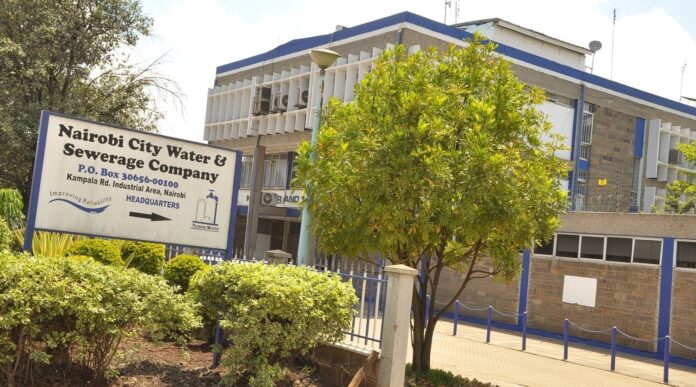
The Nairobi City Water and Sewerage Company (NCWSC) has announced that several neighborhoods across Nairobi will experience a 26-hour water supply interruption.

In a notice on Wednesday, February 18, NCWSC said it will temporarily shut down the Sasumua Water Treatment Plant from Friday, February 20, at 6:00 am to Saturday, February 21, at 8:00 am.

The company explained that the planned shutdown will facilitate essential works at the plant aimed at improving production efficiency.

“The Nairobi City Water and Sewerage Company will temporarily shut down the Sasumua Water Treatment Plant from 20th February 2026 at 06:00 am to 21st February 2026 at 08:00 am to carry out essential works aimed at improving production efficiency,” the notice read in part.

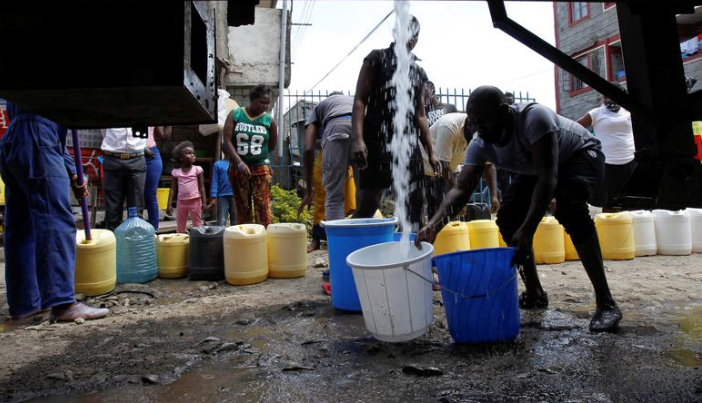
The exercise will disrupt water supply in Westlands, Lavington, Kileleshwa, the University of Nairobi vicinity, Kilimani, Dagoretti, Kawangware, Waithaka, Uthiru, and Mutuini.

File image of people fetching water.

Jamhuri, Upper Hill, the KNH vicinity, Kibera, Kang’ethe, Kangemi, Loresho, Lang’ata, Nairobi West, Madaraka, Karen, Ngara, and Gigiri will also be affected.

Nairobi Water urged customers in the listed estates to use available water sparingly during the interruption period and to store sufficient supplies in advance.

“We appeal to all affected customers to use the available water sparingly during this interruption period and to store sufficient quantities where possible. Any inconvenience is highly regretted,” the notice added.

The disruption comes days after NCWSC warned of mass water disconnections affecting Ministries, Departments, and Agencies (MDAs), as well as businesses and households.

In a notice issued on Friday, February 6, NCWSC gave defaulters a five-day ultimatum to clear any outstanding arrears or risk their water connection being disconnected.

“Nairobi City Water and Sewerage Company Limited (NCWSC), the licensed provider of water and sewerage services in Nairobi City County, continues its decisive enforcement campaign to recover longstanding overdue arrears from defaulting consumers.

“This exercise, which begins on 11th February 2026, targets all categories of customers to safeguard the financial health and long-term sustainability of water and sewerage services across the City,” noted NCWSC.

Government projects Sh370b in revenue from Lokichar oil fields

The Ministry of Treasury has projected up to Ksh371 billion in oil revenue as Parliament reviews the proposed Field Development Plan (FDP) for Blocks T6 and T7, with the project also expected to create more than 3,000 jobs.

Appearing before the National Assembly Departmental Committee on Energy and the Senate Standing Committee on Energy on Tuesday, February 16, National Treasury Cabinet Secretary John Mbadi defended the foundations of the oil development plan spearheaded by the Ministry of Energy and Petroleum.

Mbadi assured lawmakers that the project would not expose Kenya to public debt obligations under the Production Sharing Contract (PSC) framework.

“The FDP does not create any explicit or implicit public debt obligation for the Government. The financing of exploration, development and production remains solely the responsibility of the contractor under the PSC framework,” he told lawmakers.

According to Mbadi, the Treasury projects that Kenya could earn between $1.05 billion (Ksh136 billion) at $60 per barrel and $2.9 billion (Ksh371 billion) at $70 per barrel over the life of the project.

Direct revenues are expected from profit oil splits and government participation, while indirect revenues will benefit key state agencies. 

Kenya Pipeline Refinery Limited (KPRL) is projected to earn Ksh42.3 billion in storage and handling fees, while the Kenya Ports Authority (KPA) could generate Ksh41.9 billion from the New Kipevu Oil Jetty.

In addition, Mbadi said the project is estimated to generate over 3,000 direct, indirect and induced jobs, boosting PAYE collections and social security contributions.

“Oil revenues are expected to positively contribute to GDP growth through upstream, midstream and associated economic activities,” he said.

Treasury disclosed that contractors have sought fiscal concessions amounting to $1.331 billion (Ksh173 billion) under Project Specific Fiscal Terms (PSFTs). 

At a base oil price of $60 per barrel, Government net cash flow would decline from $3.485 billion under existing PSC terms to $1.047 billion if all tax requests and harmonisation adjustments were granted. 

Conversely, the contractor’s net free cash flow would shift from negative territory to a projected $497 million.

However, Mbadi stressed that any tax waivers must comply with the Constitution.

“Article 210 of the Constitution provides that no tax or licensing fee may be waived, varied or exempted except as provided by legislation,” he noted.

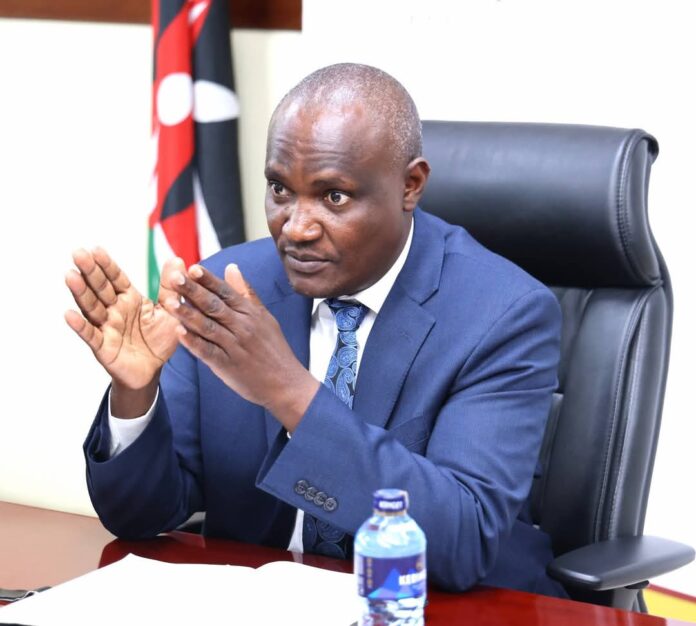
File image of John Mbadi

Mbadi said should the Government exercise its 20 percent back-in rights, it would contribute approximately $1.228 billion through the normal approval process. 

Government-funded enablers, including land, power, water, roads and crude oil handling infrastructure, are estimated at $433.4 million (Ksh56.3 billion) and are either budgeted for or at planning and feasibility stages.

On crude transportation, Mbadi backed a phased approach, beginning with trucking as an interim measure before transitioning to rail transport for efficiency and cost control.

“This phased approach ensures logistics arrangements are matched to production levels while protecting Kenya’s share of oil revenue from excessive transportation costs,” he stated.

The projected decommissioning cost of $331.8 million, plus associated interest, will be managed through a Decommissioning Fund as provided under the Petroleum Act, with contractors required to provide financial guarantees.

“This approach aligns with international best practice and ensures that adequate resources are set aside to meet end-of-life obligations,” he assured.

Raila’s long-serving aide discloses who Oketch Salah was to Baba

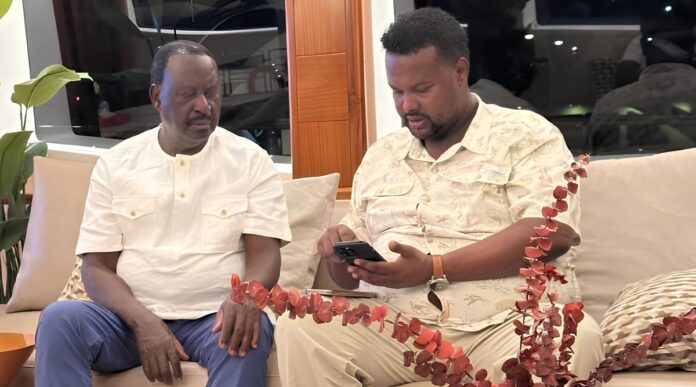
The late Raila Odinga’s aide Dennis Onyango has revealed that businessman Oketch Salah was the former Prime Minister’s friend.

Speaking on Tuesday, February 17, Onyango said everyone who worked around Raila knows Salah.

He disclosed that the former Prime Minister was with Salah on his last day in Kenya before departing for India, and that they left together.

“Everyone who worked around Raila knows Oketch Salah. I met him, traveled with him, and he was Raila’s friend. Why they were friends, I don’t know.

“On the final day when Raila was leaving for India, we were with Oketch Salah at Raila’s home in Karen, he brought a phone, and they left. While in India, I spoke to Raila directly on his phone and also through Salah’s phone,” said Onyango.

Onyango further stated that he did not know the nature of Raila’s friendship with Salah and was often sent to meet Salah or informed that they would be travelling together

“Why he was around Raila and what he was doing, I don’t know, but many times I was told to go to Oketch Salah and do this and that,” Onyango added.

His remarks come amid controversy surrounding Salah and his relationship with the late ODM leader.

On January 27, EALA MP Winnie Odinga condemned Salah’s claim that he was present at the time of her father’s death, describing it as a lie that raises serious concerns about his intentions.

“I have met Oketch Salah, but I’d like to believe nobody really knows him. A flat-out lie that you were there at the time of my father’s death and you were not, and talking about things that did not occur is quite dangerous and makes me question his intentions,” she said

The EALA MP went on to suggest that Salah’s statements were so troubling that they warranted either medical or criminal scrutiny.

“He should be rushed to either Mathare or DCI with immediate effect,” she added.

Following the remarks, Salah declared that he would not respond to the onslaught owing to the respect that he has for Mama Ida Odinga.

Kenya could earn up to Ksh 371B From Proposed oil development

The National Treasury projects Kenya could earn up to Sh371 billion ($2.9 billion) from the proposed Field Development Plan (FDP) for oil Blocks T6 and T7 in Turkana County. This peak revenue estimate assumes an average global oil price of $70 per barrel over the project’s lifespan.

According to Treasury Cabinet Secretary John Mbadi, the potential earnings are highly sensitive to market fluctuations:
At $70/barrel: Projected revenue of Sh371 billion ($2.9 billion).

At $60/barrel: Projected revenue drops to Sh136 billion ($1.05 billion).
At $50/barrel: Government earnings could fall further to approximately Sh53.3 billion ($411 million).

Commercial production is targeted to begin by December 2026, pending Parliamentary approval of the FDP.
Initial production is estimated at 20,000 barrels per day (bpd), eventually scaling up to 50,000 bpd.

The project involves an estimated $6 billion investment by the current contractor, Gulf Energy.State agencies are also expected to benefit, with Kenya Pipeline Company projected to earn Sh42.3 billion in storage and handling fees, and the Kenya Ports Authority earning Sh41.9 billion.

The project is expected to create over 3,000 direct and indirect jobs.

While the Treasury maintains the project will not add to public debt, the Auditor-General has raised concerns that proposed revisions to fiscal terms—specifically raising the cost-recovery ceiling to 85%—could delay and reduce the state’s share of profits.

Additionally, contractors have requested fiscal concessions totaling approximately Sh173 billion ($1.331 billion), which are currently under review.

By Anthony Solly

Kenya to Host 2026 World Farmers’ Organisation Annual Meeting

Kenya will host the 2026 Annual Meeting of the World Farmers’ Organization (WFO) from 8 to 11 June 2026.

The global event will be organized by Kenya National Farmers’ Federation (KENAFF) in partnership with the Ministry.

The meeting, themed “Future Fields: Investing in Farmers’ Organisations and Empowering Communities for Sustainable Agriculture,” will convene leaders from 65 countries, alongside policymakers, financiers, private sector players, scientists and multilateral agencies.

CS Sen. Mutahi Kagwe termed the hosting a great honor, noting that farming is now about commercial transformation, decent incomes, youth participation and technology.

He emphasized that food security and economic growth depend on putting farmers first.

WFO Secretary General Andrea Porro underscored the need for financing that directly reaches farmers and dignified incomes to sustain the profession, especially as countries grapple with attracting young farmers.

The meeting will spotlight youth engagement, digital innovation, soil health, fair trade and farmer-focused financing, while showcasing Kenya’s dynamic agricultural ecosystem.

The 2026 gathering is set to reinforce Kenya’s position as a continental and global leader in farmer-driven, technology-powered commercial agriculture.

KeNHA Appoints Luka Kipchumba Kimeli as New Director General

The Board of Directors of the Kenya National Highways Authority (KeNHA) has appointed Eng. Luka Kipchumba Kimeli as Director General, effective February 17, 2026.

In a notice on Wednesday, February 18, KeNHA Board Chairperson Winfridah Ngumi announced that Kimeli has been appointed as Director General, following consultations with Transport CS Davis Chirchir.

“The Board of Directors of the Kenya National Highways Authority (KeNHA), acting in consultation with the Cabinet Secretary, Ministry of Roads and Transport, is pleased to announce the appointment of Eng. Luka Kipchumba Kimeli as the Director General with effect from 17th February 2026,” read the notice in part.

Ngumi noted that the appointment of Kimeli followed a competitive and transparent recruitment process, conducted in accordance with the Kenya Roads Act, 2007, and relevant applicable public service procedures.

Kimeli boasts 27 years of experience in infrastructure development, strategic program delivery, and public sector leadership within the Roads sub-sector.

Ngumi expressed confidence that Kimeli will steer KeNHA ahead and help the authority deliver world-class highway infrastructure.

“The Board expresses full confidence in Eng. Kimeli’s capacity to steer the Authority towards greater efficiency, accountability, and service excellence in delivering safe, resilient, and world-class highway infrastructure that supports national growth and regional integration.

“The Board congratulates Eng. Kimeli on his appointment and assures him of its full support as he assumes office,” Ngumi stated.

Kimeli has been serving as the acting KeNHA Director General since July 11, 2025.

He was appointed to the position by the KeNHA board following the resignation of Kungu Ndungu.

“The Board of Directors hereby announces the acceptance of the resignation of Eng. Kungu Ndungu as Director General of the Kenya National Highways Authority, effective 11th July, 2025, and the appointment of Eng. Luka Kimeli as Acting Director General effective 11th July, 2025,” Ngumi said in a notice.

The KeNHA board, however, did not give details behind Ndungu’s departure from the authority.

DCI Urges Victims to Record Statements in Viral Videos Involving Russian National and Kenyan Women

The Directorate of Criminal Investigations (DCI) has issued a statement addressing viral videos allegedly recorded and circulated by a suspected Russian TikToker involving Kenyan women. 

In an update on Tuesday, February 17, the agency raised alarm over serious privacy violations and possible criminal conduct linked to the non-consensual recording and sharing of intimate content online.

The investigative agency said the reported actions amount to grave breaches of constitutional rights and personal dignity.

“The Directorate of Criminal Investigations (DCI) has noted with grave concern the alleged non-consensual recording and subsequent circulation of intimate videos involving Kenyan women by a suspected Russian national.

“The DCI strongly condemns these reported acts, which constitute serious violations of privacy, personal dignity, and the rights of victims as enshrined in the Constitution of Kenya,” the statement read.

According to the DCI, the matter may involve multiple criminal offences under Kenyan law, particularly those relating to cybercrime and protection of vulnerable groups.

“Such conduct also amounts to technology-facilitated gender-based violence, exploitation, and potential offences under the Computer Misuse and Cybercrimes Act, the Penal Code, and other relevant statutes protecting women and children,” the statement added.

The agency confirmed that investigations are already underway, with specialized units deployed to handle the case.

“As the premier investigative agency in the country, the DCI has initiated a comprehensive inquiry into the matter. This includes: Immediate activation of specialized cybercrime and gender-based violence investigation units to gather evidence, trace digital footprints, and identify the suspect,” the statement continued.

The DCI further revealed that it is working with international partners due to the cross-border nature of the case and is pursuing all individuals linked to the content.

“Coordination with international law enforcement partners and relevant foreign authorities, given the cross-border elements involved and Pursuit of any individuals or entities involved in the recording, dissemination, or further circulation of the harmful content,” the statement further read.

File image of DCI headquarters

The DCI called on affected women and any witnesses to assist with investigations, assuring them of confidentiality and respectful handling of their cases.

“The DCI urges the affected individuals, victims or witnesses to come forward and record statements at the DCI headquarters. All statements will be handled with the utmost confidentiality, dignity, sensitivity, and respect for the privacy and well-being of the complainants,” the statement noted.

The public was also cautioned against sharing or reposting the videos, with the agency warning of possible legal consequences.

“Members of the public are reminded that sharing, reposting, or further circulating such non-consensual intimate content perpetuates secondary victimization and may attract criminal liability under Kenyan law,” the statement concluded.

This comes a day after Gender Cabinet Secretary Hannah Cheptumo revealed that the government was working with international security agencies to arrest the Russian man. 

In a statement on Monday, February 16, Cheptumo condemned the actions against the foreigner, terming them a violation of human rights.

She also warned that anyone who was found working alongside the Russian would face the full force of the law.

“Relevant security, investigative and prosecutorial agencies have been directed to pursue the matter with urgency, including collaboration with international authorities, given the cross-border nature of the case.

“Any individual found culpable will face the full force of Kenyan law under the Penal Code, the Computer Misuse and Cybercrimes Act, and all relevant statutes protecting women and children,” she reiterated.

Cheptumo noted that the video recording not only violated the personal dignity and privacy of the victims but also attacked Kenyan national values, cultural integrity, and the safety of women and girls.

She cautioned Kenyans against sharing the videos by the Russian TikTokker.

“We further call upon members of the public to refrain from sharing or circulating harmful content, as doing so perpetuates abuse, undermines cultural values of respect, and may attract criminal liability,” she added.

In addition, Cheptumo pledged solidarity with the victims, all affected women and survivors of gender-based violence.

“Survivors are encouraged to confidentially seek support through the National Gender-Based Violence (GBV) Toll-Free Helpline 1195 for counselling, legal referral, psychosocial care and protection services,” she further said.

Create a free account, or log in.

Gain access to read this content, plus limited free content.

Yes! I would like to receive new content and updates.

Sponsored Ad

Ad 1
Ad 2
Ad 3
Ad 4
Ad 5
Ad 6