Sponsored Ad

Ad 1
Ad 2
Ad 3
Ad 4
Ad 5
Ad 6
30.5 C
Kenya
Saturday, May 9, 2026
Home Blog Page 409

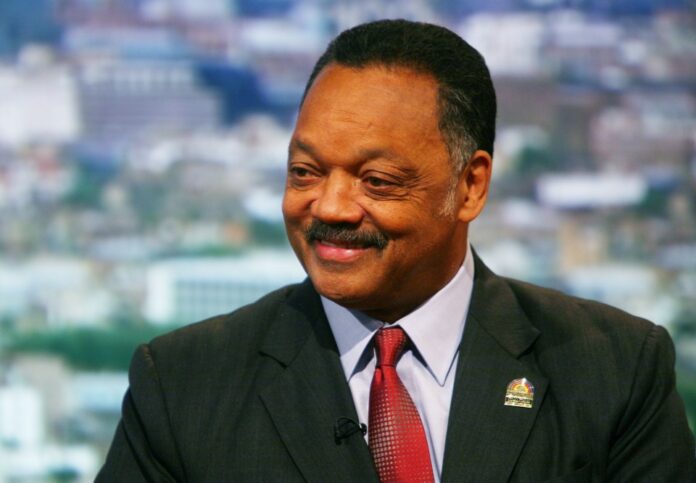
Civil Rights Icon Reverend Jesse Jackson dies at 84

The legendary civil rights icon, Reverend Jesse Jackson Sr., passed away peacefully on the morning of Tuesday, February 17, 2026, at the age of 84. His family confirmed his death in a statement, describing him as a “servant leader” who dedicated his life to the oppressed and the voiceless. 

Jackson died at his home, surrounded by his loved ones.While a specific cause of death was not immediately released, he had been battling progressive supranuclear palsy (PSP)—a rare neurodegenerative condition—for over a decade. He had also been diagnosed with Parkinson’s disease in 2017.

He was most recently hospitalised in November 2025 for observation related to his neurological condition. 

Rev. Jackson was one of the most influential figures in American history, serving as a bridge between the era of Dr. Martin Luther King Jr. and the modern political landscape. 

He marched alongside Dr. King in the 1960s and was present at the Lorraine Motel in Memphis when King was assassinated in 1968.

He made history with two groundbreaking bids for the Democratic presidential nomination in 1984 and 1988, building a “Rainbow Coalition” that mobilised millions of new voters.

Beyond the US, he was a renowned international negotiator, famously securing the release of US soldiers and political prisoners in regions like Syria, Cuba, and Yugoslavia. 

The Rainbow PUSH Coalition, which Jackson founded, stated that his “unwavering belief in justice, equality, and love uplifted millions”.

Public observances and a celebration of life service are being planned in Chicago, with details to be released shortly. 
He is survived by his wife, Jacqueline, and their children.

By Anthony Solly

IEBC Gazettes 23 Candidates For February 26 By-Elections

The stage is set for a high-stakes political showdown this February 26, as the IEBC officially clears 23 warriors to battle for four vacant thrones.

In the dusty expanses of Isiolo South, a heavy silence lingers after the passing of MP Mohamed Tubi Bidu, but the race to succeed him has just ignited.

Three contenders have stepped into the arena, with Tubi Mohamed (UDA) and Bina Mohamed (Jubilee) leading a fierce charge to claim the National Assembly seat.

Meanwhile, as the battle for the grassroots intensifies in the wards, Evurore Ward has become a crowded battlefield with 10 candidates jostling for the attention of over 26,000 voters.

In Muminji and West Kabras, the air is thick with the scent of campaign trails as 13 more hopefuls seek to fill the void left by ambitious predecessors.

The clock is ticking toward the February 23 deadline, the final hour when the megaphones must go silent and the posters stop fluttering.

Armed with the Candidates Registration Management System, the IEBC watches from the sidelines, ensuring every ballot is a true reflection of the people’s will.

By Anthony Solly

IEBC Responds to Rigging Allegations Linked to Voter Data Sharing Deal

The Independent Electoral and Boundaries Commission (IEBC) has rejected claims of voter register manipulation, reaffirming that its operations are conducted in full compliance with legal and constitutional requirements.

In a statement issued on 16 February 2026, the IEBC responded to accusations from Democratic Party leader Justin Muturi, who alleged that the Commission, in collaboration with state agencies, could misuse national identity data to influence the 2027 General Election.

Muturi specifically raised concerns about the potential manipulation of voter records, particularly regarding young Kenyans’ identity details.

The IEBC firmly denied these allegations, emphasising that all procedures for handling voter data are lawful, secure, and designed to maintain the integrity of the electoral process.

The Commission stated that its mandate, under Article 88(4) of the Constitution and the Elections Act, 2011, requires it to keep an accurate and up-to-date voter register.

To achieve this, the IEBC works closely with government bodies, including the National Registration Bureau, Civil Registration Services, and the Directorate of Immigration Services, to verify identity details, confirm passport information for Kenyans abroad, and remove deceased persons from the register.

While collaborating with these agencies, the IEBC assured the public that the voter register remains under its exclusive custody and control.

It further reiterated that data-sharing is conducted within the confines of the law, including adherence to the Data Protection Act, 2019, to prevent any form of fraud and ensure compliance with legal standards.

The Commission also called on political leaders to refrain from making unsubstantiated claims that could undermine public trust in the electoral system.

The IEBC warned that such rhetoric could damage confidence in both the Commission and the democratic process.

“You will not hide!” – Gachagua tells IG Kanja, threatening a 100,000 people march on Friday

Former Deputy President Rigathi Gachagua has attacked the Inspector General of Police, Douglas Kanja, for failing to arrest police officers who ambushed him at ACK Witima Church on Sunday, January 25, 2026.

Gachagua, who had gone to Kanja’s office to follow up with the police on the issue, alleged that the Inspector General went into hiding to avoid meeting with him and his fellow United Opposition leaders.

⁠“Tumefika pale akatorokea mlango ya nyuma. Anaogopa kukutana na sisi,” said Gachagua on Monday. (We got there and he left through the back door, afraid of meeting with us.)

The opposition team then held an impromptu political rally in Nyamakima, downtown Nairobi, where he told the police chief that he would be back on Friday, February 20, for another meeting.

However, Mr Gachagua, the leader of the Democracy for the Citizens Party (DCP), promised to marshal 100,000 Kenyans on Friday to march to IG Kanja’s office, saying he would bring the nation’s capital to a standstill.

“Tumemwambia siku ya ijumaa, saa tatu, tutakuja kwako na watu elfu mia moja kutoka jijini Nairobi,” said Gachagua.

Mr Gachagua is seeking justice over a January 25, 2026, incident at the ACK Witima Church, where police lobbed tear gas canisters into the church compound and inside the building during the service, which he was in attendance.

He labelled the attack as an assassination attempt on his life, sanctioned by President William Ruto and demanded that IG Kanja arrest the officers involved in the attack.

“This was an assassination attack targeted towards Rigathi Gachagua… a special squad of police officers called Nairobi Sierra of 12 officers, was dispatched to eliminate us in church,” Mr Gachagua said after the incident, giving the IG until February 15 to meet his demands.

On February 16, as promised, Rigathi and the United Opposition team marched to Harambee House to meet with the IG, who was nowhere to be found.

“Despite scheduling an appointment with leaders of the United Opposition to review and track progress on critical issues such as police brutality, church attacks, and violence against women and children, he chose instead the convenience of a hide-and-seek game, subjecting us to interactions with junior police officers,” an angry Gachagua said.

“His continued refusal to act on the violent attack at ACK Witima Church, coupled with the escalating attacks across our nation, confirms a deliberate strategy to shield perpetrators and normalise impunity.”

South African trio charged with Bolt driver’s murder filmed on dashcam

Three South Africans have been charged with murder following the killing of an e-hailing taxi driver, the manner of whose death, captured on dashcam footage, has shocked many people.

A video shared widely on social media shows a man and a woman tussling with the driver, Isaac Satlat, who they appeared to be robbing. Satlat tries to fight back before one of the passengers appears to strangle him until he goes limp.

The trio, who were arrested over the weekend, were in court in Pretoria on Monday and have since abandoned their bail applications. They were not asked to comment on the charges.

A fourth suspect later handed himself over to police on Monday.

He will appear in court on Tuesday, police said in a brief update after Dikeledi Mphela, 24, Goitsione Machidi, 25 and McClaren Mushwana, 30 made a brief appearance. All four also face robbery charges.

Satlat, 22, was a Nigerian national but, in a country that has often been blighted by xenophobic violence, his family said the attack was not linked to his nationality.

According to prosecutors, the accused ordered a ride on e-hailing platform Bolt last Wednesday using a number not registered in any of their names.

When the car arrived, Mphela and the fourth suspect allegedly got into the car while Machidi and Mushwana followed them in a separate car, authorities added.

They then “forced the deceased to stop the vehicle, strangled him to death and robbed him of his cell phone and vehicle which was later recovered”, the prosecuting authority’s spokesperson Lumka Mahanjana said.

There has been a growing number of reports of e-hailing drivers coming under attack in South Africa, with many drivers calling for greater protection, as the country grapples with high crime levels and one of the highest murder rates in the world.

The e-hailing partners’ council condemned Satlat’s killing, adding that it was not an “isolated incident”.

The organisation praised the role that the dashcam footage and social media played in capturing his murder but reiterated calls for “preventative security measures” to better protect drivers.

It also called on e-hailing companies to “vet and verify passengers to prevent criminals masquerading as customers”.

Numerous political parties and e-hailing drivers gathered outside the court house on Monday to protest against Satlat’s murder.

One driver called for the government to set up a task team to deal with the attacks on them, according to local broadcaster Newzroom Afrika.

He also called for the establishment of a system to compensate the families of drivers killed on the job. Spokesperson for the Satlat family Solomon Izang Ashoms said his relatives were left with unanswered questions.

“His dad is struggling, we’re very afraid for [him] because his blood pressure’s been shooting up [since the death],” Ashoms said.

The case against the three was postponed to next Monday.

Fake funeral suspects allegedly used hearse to smuggle charcoal in Malawi

Police in Malawi are searching for nine suspects who escaped from custody after being caught allegedly smuggling charcoal in a hearse disguised as part of a funeral procession.

Acting on a tip-off, forestry officials intercepted the vehicle at a roadblock near the main city of Blantyre. Inside, they found an empty coffin placed over several bags of charcoal, with an estimated value of $1,700 (£1,200), the Reuters news agency reported.

But a manager from the funeral service told the BBC that the hearse driver was returning from seeing a bereaved family when he bought the bags of fuel that were later confiscated.

The smuggling of charcoal, in high demand for cooking, is widespread in Malawi.

William Mitembe, a forestry official, told local media that the weekend’s operation was the “most complex illegal charcoal trafficking case in the country’s history”.

About 30 bags of charcoal concealed underneath an empty coffin were seized during a routine roadblock in Chikwawa district, about 40 km (25 miles) south of Blantyre, another forestry official, Hector Nkawihe, told Reuters.

But in an interview with the BBC, the company manager of the affected funeral service had a different version of events.

Patrick Dimba said that a hearse driver had been sent to a family with two coffins in order for them to select one.

It was on his way back with the remaining empty coffin that the driver bought 11 bags of charcoal.

According to Dimba, there were no other passengers in the hearse when it was stopped at the checkpoint.

However, a police spokesman told Reuters that nine suspects remain at large and have not yet been charged.

Nkawihe said the suspects were briefly detained, but later escaped custody leaving behind the impounded hearse.

“They face two charges of illegal possession of forestry products and transportation of the same,” he added.

If guilty, the suspects could face up to five years in prison or a fine.

The illegal charcoal trade is rampant in Malawi and a major driver of deforestation. Most Malawians rely on it for cooking due to frequent electricity blackouts.

Last month, Malawi’s energy regulator hiked petrol and diesel prices by more than 40%, marking the second time fuel costs gone up in four months.

President Peter Mutharika, who returned to power last year, has been trying to revive Malawi’s ailing economy.

Woman Arrested in Kisumu as Police Seize 395 Litres of Illicit Chang’aa

Police officers have intensified the fight against illicit alcohol in Kisumu County, staging a dramatic raid in Nyalenda B that ended with the arrest of a woman suspected of running a large-scale chang’aa business.

The security operation unfolded in the morning of February 16, 2026, when a multi-agency team led by the Kisumu County Police Commander, alongside senior officers from CCIO, DCIO, SCPC Kisumu Central, STAPOL Migosi, and STAPOL Nyalenda, descended on the Maembe Tatu area. 

Their target was the home of Linet Achieng Odhiambo, better known in the community as “Min Sharon”, a 42 year old businesswoman.

What began as a straightforward raid quickly turned into a tense standoff. Upon realizing the police presence, Odhiambo locked herself inside her house and refused to open the door. 

For nearly thirteen hours, officers maintained their position outside, waiting for her to comply. It was only at 7:30 in the evening that she finally surrendered, allowing police to enter and search the premises.

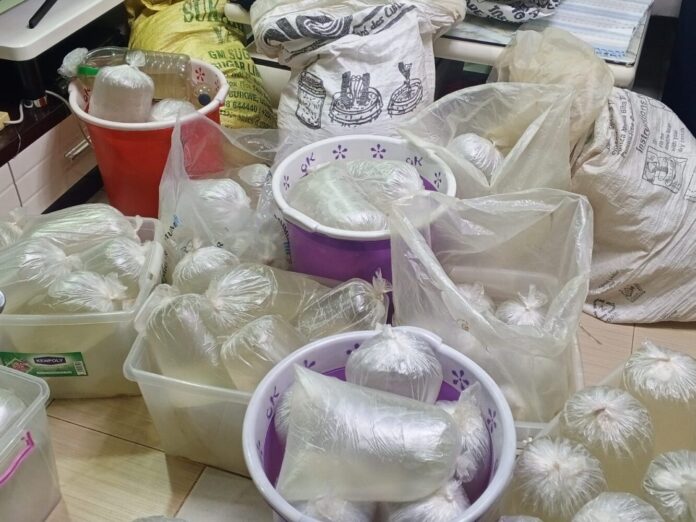
Inside, officers uncovered a staggering cache of illicit brew. Hidden in the kitchen, the store, the ceiling, and even beneath sofa cushions were 143 sachets of chang’aa, each containing about two liters, along with a plastic container holding 2.75 liters. 

In total, 395 liters of chang’aa were seized. Scenes of Crime personnel documented the evidence, underscoring the scale of the illegal trade.

Odhiambo was arrested and placed in custody at Nyalenda Police Station. She is expected to appear in court to face charges of possession of illicit brew, a crime that continues to undermine public health and safety in Kisumu.

For residents of Nyalenda, the raid was more than just a police operation, it was a moment of relief. Chang’aa, notorious for its potency and devastating effects, has long been linked to addiction, family breakdowns, and even fatalities. 

Community members expressed gratitude that authorities are taking firm action against those profiting from the misery of others.

Police have emphasized that this raid is part of a broader campaign to dismantle networks of illicit brew dealers across Kisumu County. 

Their commitment reflects growing concern over the social and economic toll of psychotropic substances, which often target vulnerable populations.

As Odhiambo awaits her day in court, the community watches closely, hoping that justice will not only punish offenders but also deter others from engaging in the illicit trade. 

For Kisumu, this crackdown is more than a single arrest, it is a step toward reclaiming the health, dignity, and future of its people.

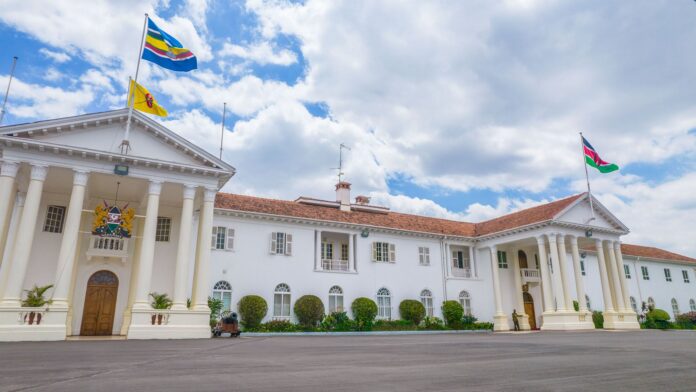
State House Blows Full-Year Budget in Seven Months

State House has spent Ksh 10.4 billion on its recurrent budget in the first seven months of the 2025/26 financial year, surpassing the full-year allocation of Ksh 7.7 billion.

This means the President’s office has already used more than 135 per cent of its annual recurrent funds with five months remaining before the fiscal year ends on June 30.

Recurrent expenditure covers essential day-to-day operations, including domestic and foreign travel, fuel, hospitality, maintenance, staff allowances, and administrative support. January alone saw a sharp spike, with Ksh 1.3 billion spent in the month, averaging more than Ksh 42 million per day.

“The surge in expenditure complicates fiscal planning and forces unanticipated reallocations,” the National Treasury said, noting that exceeding budget ceilings this early makes financial management more difficult.

The Office of the Deputy President has also exceeded its full-year recurrent allocation, overspending by Ksh 361.6 million. The two executive offices are the only government entities reported to have breached their annual ceilings this early in the financial year.

Financial analysts warn that early overspending reduces flexibility later in the year, especially if government revenues underperform. In response, the government is preparing a Ksh 262.9 billion supplementary budget to cover rising costs and revenue shortfalls.

Under the supplementary estimates, total government spending is set to rise to Ksh 4.532 trillion, up from the original Ksh 4.269 trillion approved by Parliament. Of this, recurrent spending will increase by Ksh 204.6 billion to Ksh 3.338 trillion, while development spending will rise by Ksh 58.3 billion to Ksh 707.3 billion.

The Controller of Budget has previously warned that rising recurrent costs, including salaries, allowances, debt repayment, and operational expenses, continue to squeeze funds for development, infrastructure, social programs, and county transfers.

The first half of the financial year has already seen spending on operations, maintenance, and debt servicing exceed projections, raising concerns about fiscal discipline and resource allocation for the remainder of the year.

Man pleads not guilty to ethanol possession amid courtroom protests

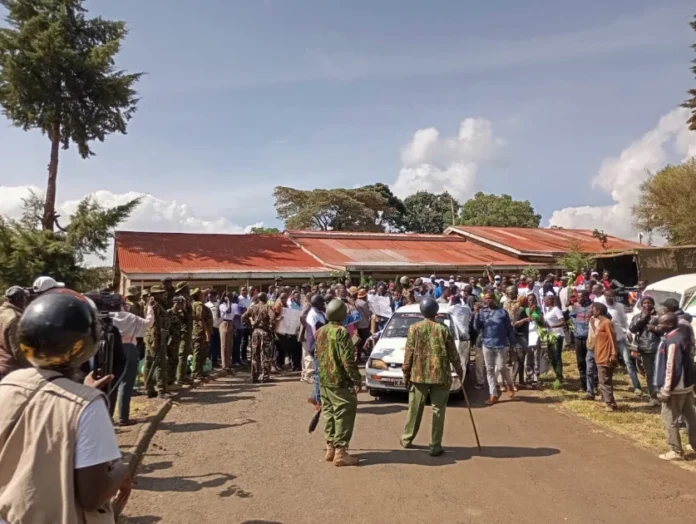
A man identified as James Nderitu denied charges of possessing illicit ethanol while residents of Eldama Ravine held protests at the local law courts on February 16, 2026. 

Nderitu was charged with being in possession of 255 litres of suspected uncustomed ethanol, valued at approximately Sh612,000.

The substance was found packed in ten 25-litre jerricans.

The suspect pleaded not guilty before Chief Magistrate Boaz Ombewa.

The court ordered Nderitu to be remanded in custody pending a bail hearing scheduled for February 18, 2026. 

Residents led by Lucy Mitei and Lawrence Bomet demonstrated at the court, citing the devastating impact of illicit brews on the community:

Protesters claimed the brews have led to the closure of local schools and numerous deaths among the youth.

The community is calling for stiffer penalties for distributors and has urged NACADA to provide rehabilitation support for those affected.

By Anthony Solly

Drones enter fray of DR Congo’s eastern conflict

Like in Ukraine, Sudan and the jihadist-plagued Sahel, drone warfare is tilting the balance of power in the Democratic Republic of Congo’s three-decade-long eastern conflict.

Their rising importance was confirmed in early February when the Rwanda-backed M23 militia claimed a brazen drone strike on “a military drone command centre” at the strategic Kisangani airport, hundreds of kilometres behind the front line.

Located between the capital Kinshasa in the west and the M23’s eastern fiefdom, Kisangani airport serves as a launch base for the Congolese army’s attack drones and Sukhoi fighter jets, both pillars of the government’s military strategy.

Courtesy of their superior training and weaponry, the M23 and its Rwandan allies have the upper hand on the ground.

Since the M23 took up arms again in 2021, that superiority has helped the militia seize swathes of land in the resource-rich east, including the key Congolese cities of Goma and Bukavu in early 2025.

But the Congolese army has kept relative control of the skies through the purchase of long-range attack drones, notably China’s CH4 model and the Turkish TAI Anka.

In response, the Rwandan army has deployed sophisticated GPS-scrambling systems along the border, which UN experts say is disrupting both civilian and humanitarian flights in the DRC.

Meanwhile foreign mercenaries, linked to an opaque network of private military companies — including some linked to an ally of US President Donald Trump — are present in the east to back up the Congolese army, with certain foreigners operating drones.

The DRC and Rwanda signed a peace deal in July at Trump’s urging, but it has failed to put a stop to the fighting, on the ground as in the skies.

– ‘Fewer constraints’ –

In a vast country largely devoid of paved roads, drone warfare “involves fewer operational constraints” than land assaults for the Congolese government, said Henry-Pacifique Mayala, a researcher at the Ebuteli institute in Kinshasa.

As a result, residents near Kisangani airport have had to become accustomed to the whirring of the drones taking off above their houses.

On the night of January 31 to February 1, several locals said they were woken up by a wave of detonations. Within 24 hours, eight drones attacked the airport and forced residents to flee, according to the provincial authorities.

While security sources believe the M23 had previously used explosive drones in its offensive on the eastern city of Uvira in December, the airport attack marked the first time the armed group had ever targeted Kisangani, around 400 kilometres (250 miles) from the front.

The government has yet to communicate on what model of drone and what type of munitions were used in the attack, fuelling rumours and speculation.

Observers have cast doubt on whether self-detonating explosive drones, typically lightweight and manoeuvrable, have the range to travel the hundreds of kilometres from the M23’s bases in the east to Kisangani.

According to security sources, the intelligence services believe a group snuck in close to the airport to launch the attack.

Of the dozens of armed groups at large in the eastern DRC, a number have obtained access to Elon Musk’s Starlink satellite internet network, to which “drones can easily be connected”, Mayala added.

– Foreign mercenaries –

Though the Congolese government has never publicly revealed which private military firms it employs, foreign mercenaries are clearly visible on the tarmac at Kisangani.

According to United Nations experts, the government directly recruited several former members of a mercenary firm to pilot the Chinese CH4 drones, after that company’s contract in Goma ended in July 2025.

Other soldiers-for-hire have been tasked with handling the Indian-made D4 anti-drone defence systems bought by the Congolese army in 2025, security sources believe.

According to the provincial authorities, the Kisangani airport attack was repelled with the help of foreign “partners”.

On top of that, fighters employed by companies linked to US businessman Erik Prince have likewise been deployed in the east, according to security and diplomatic sources.

A Trump ally and former Navy SEAL, Prince is the founder of the military contractor Blackwater, whose employees killed and injured dozens of civilians in Iraq.

A government source confirmed to AFP that an agreement involving the collection of mining taxes was signed with Prince.

The DRC has been accused of selling off the country’s mineral wealth to Washington as part of the peace process.


Create a free account, or log in.

Gain access to read this content, plus limited free content.

Yes! I would like to receive new content and updates.

Sponsored Ad

Ad 1
Ad 2
Ad 3
Ad 4
Ad 5
Ad 6