Sponsored Ad

Ad 1
Ad 2
Ad 3
Ad 4
Ad 5
Ad 6
30.5 C
Kenya
Saturday, May 9, 2026
Home Blog Page 411

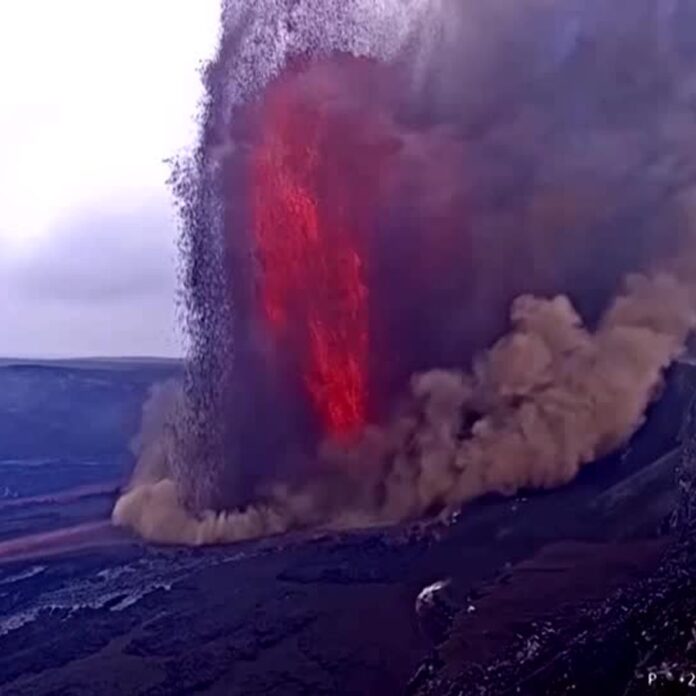
Hawaii’s Kilauea volcano erupts in glorious display

Kilauea volcano in Hawaii put on a show on Sunday (February 15), erupting in lava fountains and sending ash and smoke pluming over its openings.

The U.S. Geological Survey reported that this marked the volcano’s 42nd episode of lava fountaining, beginning at 1:50 p.m. (2350 GMT).

According to the National Weather Service, the plume from this eruption reached 35,000 feet above sea level.

Scientists with the USGS noted that the volcano has been experiencing intermittent eruptions since December 23, 2024. Activity has largely been concentrated at two vents—one to the north and another to the south—within the Halemaʻumaʻu crater.

Renowned for its persistent activity, Kilauea remains one of the most volcanically active sites on the planet.

Kenya Steps up Reforms to Exit Money Laundering Grey List

The government has intensified efforts to strengthen Kenya’s Anti-Money Laundering and Combating the Financing of Terrorism (AML/CFT) framework as it moves to address remaining gaps and restore full international confidence in the country’s financial system.

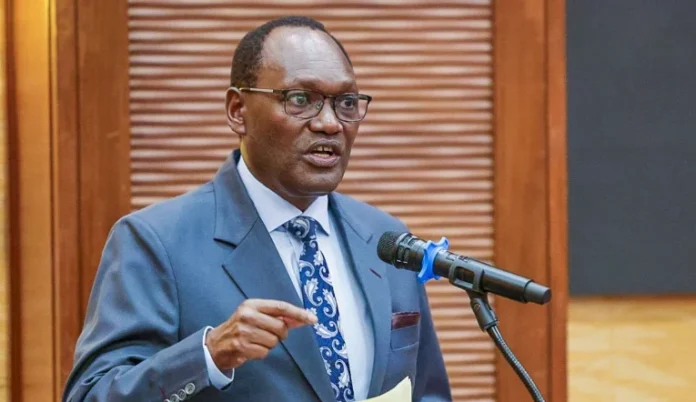
Principal Secretary for the National Treasury Dr Chris Kiptoo said on Tuesday that Kenya is making steady progress under the International Cooperation Review Group (ICRG) process, which is guiding the country’s exit from the Financial Action Task Force (FATF) Grey List.

The FATF Grey List, officially known as Jurisdictions under Increased Monitoring, identifies countries that are actively working with the Financial Action Task Force (FATF) to address strategic deficiencies in their regimes to counter money laundering, terrorist financing, and proliferation financing.

Speaking after a high-level meeting in Nairobi with principals of AML/CFT implementing agencies, Kiptoo said the government is focused on ensuring all outstanding reforms are completed. The meeting was held on behalf of Cabinet Secretary John Mbadi to review progress and agree on the next steps toward exiting the grey list.

“Kenya is accelerating reforms to strengthen its AML/CFT framework to address identified gaps and restore full international confidence in the country’s financial system,” Kiptoo said.

He highlighted major legislative and institutional milestones already achieved, including the enactment of the Anti-Money Laundering and Combating of Terrorism Financing Laws (Amendment) Act, 2025, and the Virtual Asset Service Providers (VASPs) Act, 2025. These laws, he said, have significantly strengthened Kenya’s ability to regulate financial flows and emerging digital asset platforms.

Other reforms include stronger institutional coordination, enhanced risk-based customer due diligence, improved reporting of suspicious transactions and closer inter-agency collaboration across key sectors of the economy.

PS Kiptoo said the government is now taking “decisive actions” to complete the remaining requirements under the ICRG action plan and secure Kenya’s removal from the FATF grey list.

Exiting the grey list is expected to improve investor confidence, ease cross-border transactions and strengthen Kenya’s standing in the global financial system.

NSSF Unveils New Contribution Rates, Maximum Deduction Hits Ksh12,960 Per Employee

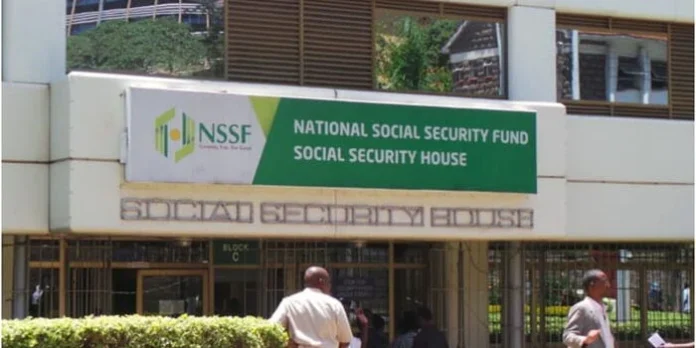
The National Social Security Fund (NSSF) has announced new contribution rates for employers as the implementation of the NSSF Act enters year four.

In a notice on Tuesday, February 17, NSSF said contribution rates for year three ended on January 31, 2026, paving the way for the fourth phase.

The fund directed all employers to deduct contributions from their employees in line with the new rates.

“The implementation of the NSSF Act is progressively being done in phases. As you are aware, according to the Third Schedule of the NSSF Act Cap 258, the implementation of Year 3 contribution rates ended on 31st January, 2026.

“Implementation of year 4 contribution rates come to effect in February 2026. Consequently, all Employers are hereby notified to make the deductions and pay Year 4 contributions as indicated below,” read the notice in part.

Screengrab image of the new NSSF rates. 

Under the new structure, employees earning Ksh9,000 per month will contribute 6 percent of their salary, capped at Ksh540, with their employers matching the same amount, bringing the maximum Tier I contribution to Ksh1,080.

Employees earning between Ksh9,000 and Ksh108,000 have been placed under the upper earnings limit (Tier II) category.

Contributions in this category are calculated at 6 percent of the difference between the upper and lower earning limits.

Both the employer and employee will each contribute a maximum of Ksh5,940 under this tier, resulting in a combined maximum Tier II contribution of Ksh11,880.

The overall maximum monthly NSSF contribution per employee under this category will now stand at Ksh12,960 starting February 2026. 

Further, NSSF urged employers to ensure all remittances are made by the 9th day of each subsequent month.

The new rates come months after President William Ruto revealed that NSSF has grown from Ksh320 billion to Ksh670 billion under a new contribution model.

Speaking in November 2025, the Head of State projected that the fund could reach Ksh1 trillion by June 2027.

The President also highlighted that Kenya would not need to borrow from other countries if it manages to strengthen its savings through the NSSF over the next 10 to 20 years.

“The money we had collected under NSSF for over 60 years was Ksh320 billion by December 2022. Since implementing the new model, it has grown to Ksh670 billion in just two years, doubling what was collected in 60 years.

“By June 2027, we expect the fund to reach Ksh1 trillion,” said President Ruto.

KLB Dismisses Claims That KICD Ordered Withdrawal of Its Books

The Kenya Literature Bureau (KLB) has moved to reassure schools, teachers, and stakeholders following claims suggesting that some of its curriculum books had been withdrawn from use.

In a notice on Tuesday, February 17, KLB noted that there has been no directive from the Kenya Institute of Curriculum Development (KICD) withdrawing any of its learning materials.

“Kenya Literature Bureau (KLB) wishes to inform all our customers, partners and stakeholders that none of our curriculum books have been withdrawn by the Kenya Institute of Curriculum Development (KICD),” the notice read.

KLB reassured the public that its curriculum publications remain officially recognized and have not been removed from the approved list.

“All our books, currently in circulation, are duly approved by KICD and remain valid for use in Kenyan schools,” the notice added.

This comes months after KICD released the official list of approved Grade 10 textbooks ahead of the rollout of Senior School under the Competency-Based Curriculum (CBC).

According to a notice issue on Tuesday, December 23, 2025, the approved books cover all pathways offered at Senior School, including Arts and Sports Science, Social Sciences, Humanities and Business Studies, Science, Technology, Engineering and Mathematics (STEM), Applied Sciences and Technical Studies.

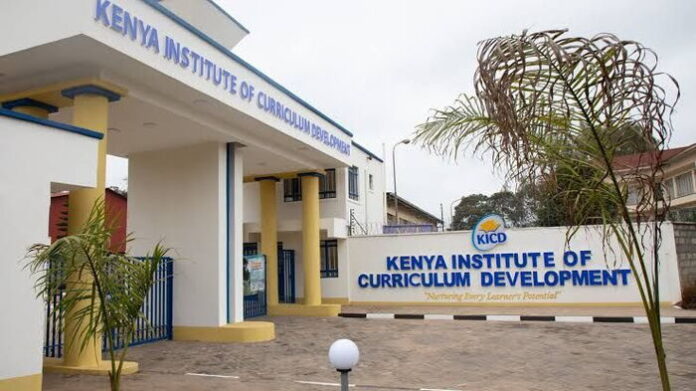
File image of the KICD Headquarters

KICD explained that Senior School represents the fourth level of basic education and comes after Pre-Primary, Primary and Junior School, with a strong focus on learner choice, interests and career pathways.

“Senior School is the fourth level of Basic Education in the Competency Based Curriculum (CBC) that learners shall proceed to after the Pre-Primary School, Primary School and Junior School levels. 

“The essence of Senior School is to offer learners a pre-tertiary/university/pre-career experience in which the learners have an opportunity to choose pathways and tracks where they shall have demonstrated interest and/or potential at the earlier levels,” the notice read.

KICD further noted that Senior School will span three years and is designed to prepare learners for higher education, training at the tertiary level.

“Senior School comprises three years of education for learners generally in the 16-18 years age bracket and lays the foundation for further education and training at the tertiary level and the world of work. 

“In the CBC vision, learners exiting this level are expected to be engaged, emposcered and ethical citizens ready to participate in the socio-economic development of the nation,” the notice added.

On the structure of learning areas, KICD stated that learners will undertake seven subjects, including four compulsory core areas, in line with recommendations by the Presidential Working Party on Educational Reforms.

“At this level, learners shall take seven (7) learning areas as recommended by the Presidential Working Party on Educational Reforms (PWPER, 2023). These shall comprise four core learning areas namely: English, Kiswahili, Essential Mathematics/Core Mathematics and Community Service Learning (CSL),” the notice further read.

KICD added that learners will choose between Core Mathematics and Essential Mathematics depending on their pathway, alongside three additional subjects guided by career interests and aptitude.

“Learners will choose between Core Mathematics (for learners pursuing the Science Technology Engineering and Mathematics Pathway) and Essential Mathematics (utilitarian skills for non-STEM learners). The leamner will select three learning areas depending on their career choice, aptitude, interest and personality with guidance by the career teacher at Senior School,” the notice read.

Opposition Leaders Outraged as IG Kanja Snubs Meeting

Opposition leaders, including Kalonzo Musyoka (Wiper), Rigathi Gachagua (Democracy for the Citizens Party), and Eugene Wamalwa (DAP-Kenya), expressed outrage on Monday, February 16, 2026, after Inspector General of Police Douglas Kanja failed to attend a scheduled meeting at Vigilance House. 

The leaders arrived expecting a direct engagement with Kanja to discuss a report he had reportedly promised regarding police excesses. Instead of Kanja or his deputies, the opposition was asked to meet with junior officers, an offer they flatly rejected before walking out.

Opposition figures claimed Kanja “fled” just before they arrived, allegedly under instructions from Interior Cabinet Secretary Kipchumba Murkomen and PS Raymond Omollo.

The meeting was intended to address the Othaya church attack (January 25, 2026), where tear gas was reportedly used during a service attended by Gachagua.

Recent violence at a Kitengela rally on February 15, which the opposition claims left two people dead and over 50 injured the ongoing cases of police abductions and political intimidation. 

The United Opposition has issued a fresh ultimatum to IG Kanja until Friday, February 20, 2026, to meet them in person.

The leaders have warned to escalate these human rights concerns to the International Criminal Court (ICC) if accountability is not provided.

The opposition maintains a threat of mass action if their demands for the arrest of officers involved in the Othaya incident are not met. 

By Anthony Solly

LSK campaigns come to an end as lawyers prepare for polls

The stage is set for the highly anticipated elections of the Law Society of Kenya (LSK), scheduled for February 19, 2026.

The campaign period officially comes to an end today, closing weeks of intense lobbying and nationwide engagements by candidates seeking to lead the legal fraternity.

Lawyers across the country will head to the polls to elect new leadership, including the President, Vice President and Council Members.

Those seeking the top position of President include Peter Wanyama, Charles Kanjama and Mwaura Kabata, all of whom have been actively campaigning on reform, accountability and strengthening the voice of the Bar.

This election comes at a significant political moment, as the country moves closer to the next General Elections, placing the legal body at the centre of key constitutional and governance conversations.

The current President, Faith Odhiambo’s tenure has been marked by strong advocacy on constitutional matters and members’ welfare, setting the tone for a defining election for the future of the LSK.

Candidates are now making their final appeals as members prepare to cast their votes.

Court Grants 14 Day Detention Request in U.S. Cybercrime Extradition Case Implicating Three Kenyans

By Andrew Kariuki

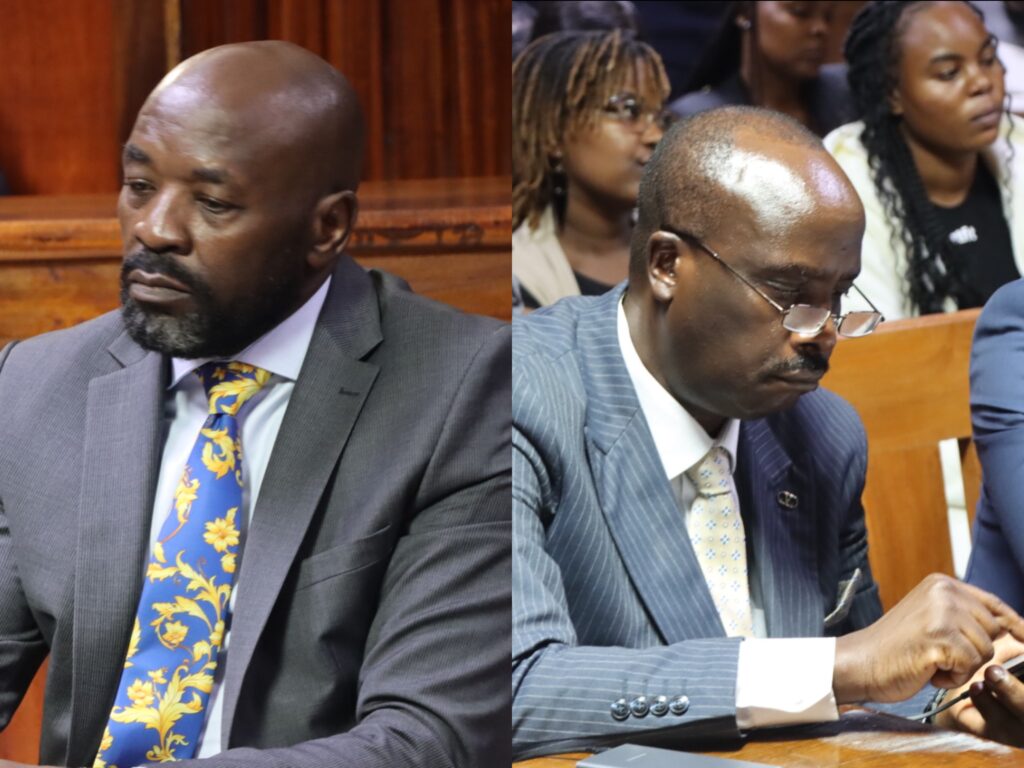
Three Kenyan nationals wanted by authorities in the United States over alleged cybercrime offences have opposed an application seeking to detain them in custody as authorities move to initiate extradition proceedings.

Peter Omari, Francis Osanyo and one other before the court are the subjects of an indictment issued by the U.S. District Court for the Eastern District of Virginia, where they face charges of conspiracy to commit computer intrusion, conspiracy to commit wire fraud, and aggravated identity theft, alongside related offences under U.S. law.

Court filings indicate that the indictment was returned by a federal grand jury in Richmond, Virginia, in November 2023 and a warrant of arrest was subsequently issued in Case No. 3:23-cr-153.

Before the Milimani Magistrates court, the Directorate of Criminal Investigations (DCI) had applied for orders to detain the three suspects at different Police Station for 14 days, arguing that the period is necessary to complete investigations and allow U.S. authorities to transmit a formal extradition request through diplomatic channels.

The prosecution further told the court that an INTERPOL Red Notice had already been issued and that the alleged offences correspond to crimes under Sections 28, 29 and 30 of Kenya’s Computer Misuse and Cybercrimes Act.

The application was, however, strongly opposed by the three respondents through their team of advocates; Cliff Ombeta, Ishmael Nyaribo, Stanley Kinyanjui, Danstan Omari among others who argued that the request for further detention lacks legal basis and even went as far as calling it unconstitutional for various reasons.

Ombeta submitted that the matter before the court does not amount to an extradition proceeding but is simply an application to hold the suspects in custody and as such, the State must demonstrate compelling reasons to justify denying them bail as required under Article 49 of the Constitution.

The defence also argued that their clients are unwell and that their rights and dignity have already been infringed, maintaining that holding them for 14 days without the option of bond or cash bail would be unlawful and punitive, especially in the absence of a formal extradition request.

They urged the court to decline the prosecution’s application.

The prosecution, on the other hand, maintained that the custodial orders are necessary to facilitate ongoing investigations, including securing electronic and financial evidence and to allow time for the formal extradition process to be initiated by U.S. authorities.

The court granted the 14 day detention orders but however denied the prosecution’s request to have them held in custody in separate police stations directing that they all be held at Kilimani Police Station.

Mention date on March 27, 2026.

Russian man accused of secretly filming women in Ghana and Kenya wanted.

Authorities in Kenya and Ghana are examining reports that a Russian man covertly filmed sexual encounters with women in the two African nations, then shared the footage online without their consent.

African and Russian media identified the suspect as a self-styled “pick-up artist” and online blogger in his 30s.

The reports claimed the man used a pair of sunglasses, fitted with a camera, to film some encounters and circulated them on social media, though officials have not confirmed this detail.

Ghana said it intends to request that the man be extradited from Russia, while Kenya’s government says it is pursuing the case “with urgency”

News reports allege that the suspect had travelled to Ghana to secretly film his interactions with women.

An initial investigation has established that the suspect has likely left the country, Ghana’s Ministry of Gender, Children and Social Protection said.

It added that the man’s departure would “not reduce the seriousness of the alleged conduct or the state’s responsibility to pursue accountability”.

Ghanaian Technology Minister Sam George said he had asked the Russian ambassador in the capital, Accra, for Moscow’s cooperation in getting justice for the victims.

However, Russia does not extradite its citizens, except in extreme circumstances.

On Monday, Russia’s embassy in Ghana said it had “taken note” of the reports, but did not state whether the Russian authorities would co-operate with Accra’s investigation.

George told the media that he had invited the Russian ambassador to discuss the alleged incident.

Earlier, the minister told reporters: “That gentleman will be looked for, we will activate every resource in our disposal working with Interpol.

“We will request the Russian authorities – and that is why I have invited the Russian ambassador – to work with our law enforcement.

“We want the gentleman to be brought back to Ghana, extradited to Ghana for him to face the rigours of our law.”

George said they would try the suspect in absentia if he failed to return to Ghana.

The same man has been accused of committing similar illegal acts in Kenya.

Hanna Cheptumo, Kenya’s minister of gender, culture and children services, described the incident as a “serious” case of gender-based violence.

In a statement on Monday, Cheptumo added: “Relevant security, investigative and prosecutorial agencies have been directed to pursue the matter with urgency, including collaboration with international authorities given the cross-border nature of the case.”

Under Kenya’s Computer Misuse and Cybercrimes Act of 2018, anyone who publishes intimate images of another person, with or without their consent, faces up to two years in prison.

Ghana also introduced new laws under the Cybersecurity Act 2020 to punish those who share nude photos or videos online, especially of women and children, often for revenge or blackmail. Perpetrators face up to 25 years in jail.

Authorities in Ghana have been paying increasing attention to online abuse, including sexual extortion and romance scams.

There has been an increase in arrests in recent years for these offences.

In 2022, a court sentenced a 22-year-old phone repairer, Solomon Doga, to 14 years in prison for sharing nude images of a Lebanese woman.

He pleaded guilty to sexual extortion and non-consensual sharing of intimate images.

Comedian Sammy Kioko’s row with Machakos county escalates after sharing a secretly recorded audio of a confrontation with the County Finance CEC over an alleged KSh. 19 million payment.

Sammy Kioko’s row with the county government of Machakos has escalated, with the comedian saying that he was mishandled when he went to demand payments.

Kioko staged another sit-down and captured his ordeal in a video, giving the public a rare glimpse of what he goes through every other time he goes to demand his money.

Kioko camped at the offices on Monday, February 17, 2026 and shared a video which revealed how he was mishandled by the County Officials.

The video captures the Machakos Minister in Charge of Finance angrily dismissing Kioko, with the comedian noting with concern that a leader who should listen to him and help in resolving the matter was the same one losing her temper and shouting and dismissing them.

In the video, Kioko addressed the Minister of Finance in the County who mishandled Kioko.

“Today I want to talk to Waziri wa Finance, Machakos County. Sijui tumekosea wapi madam? Sijui kwa nini uko na hasira hivo,” Kioko said before unleashing an audio of his interaction with the Minister.

He unleashed an audio to support his claims that they have in the past been roughed up and continue to face hostility and being mishandled whenever he goes to demand his money.

“Maisha yetu imesimama, tunataka tu pesa yetu,”Kioko is heard saying, with the Minister interrupting him.

“Si mimi nimesimamishaa (I am not the one who has stopped your lives),” the Minister says, adding that she is unwell before dismissing them and referring them to the Chief Officer in charge of Finance.

The comedian made it clear that all he wants is his money, dismissing claims that he is being used to push a political agenda.

“I don’t have money, I am not happy, and I am unwell,” the Minister is heard shouting at Kioko, refusing to listen to the comedian’s pleas for help.

“Frustrations speak loudly when solutions are the problem. Where did humanity even go? If that’s how the Minister of Finance can handle our situation with a lot of emotions, anger and intimidations how do we even get helped? The people meant to fix things are the ones breaking the,” Kioko lamented.

Man stabs another to death in phone dispute -Kisumu.

Police in Kisumu East are holding a 30-year-old man suspected of stabbing a man to death following a tussle over ownership of a mobile phone in Kibos market.

The suspect, Tom Odhiambo, is said to have stabbed Raphael Omondi, 40, in the chest using a kitchen knife during the brawl.

According to a police report, the duo were from a local drinking den where they disagreed over the ownership of a mobile phone.

The suspect is said to have caught up with Omondi along Kibos Chiga Road, where he stabbed him in the right chest, leaving him for dead.

Passersby who had witnessed the incident also descended on the suspect with kicks and blows. Police managed to rescue him.

The victim was rushed to Jaramogi Oginga Odinga Teaching and Referral Hospital, where he was pronounced dead on arrival following the heavy bleeding as a result of the stab wound.

The suspect is being held at Migosi police station and will be charged upon completion of investigations.

Create a free account, or log in.

Gain access to read this content, plus limited free content.

Yes! I would like to receive new content and updates.

Sponsored Ad

Ad 1
Ad 2
Ad 3
Ad 4
Ad 5
Ad 6