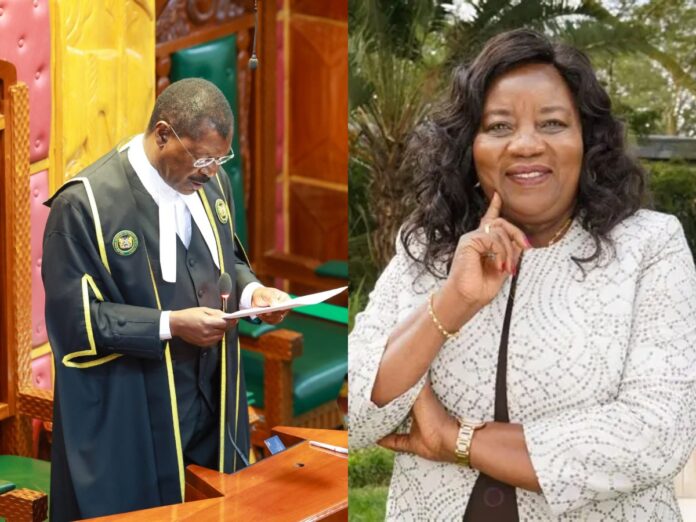
The National Assembly has received two messages from President William Ruto seeking parliamentary approval for the appointment of Ida Betty Odinga and Francis Meja to top State offices.
In a communication to the House on Tuesday, February 10, National Assembly Speaker Moses Wetang’ula informed MPs that Ida Odinga had been nominated for appointment as Kenya’s Permanent Representative to the United Nations Environment Programme (UNEP), while Meja has been nominated as Chairperson of the Public Service Commission (PSC).
“Pursuant to Article 132(2) of the Constitution and the relevant provisions of the Foreign Service Act, His Excellency the President has nominated Canon (Dr.) Ida Betty Odinga for appointment as Kenya’s Permanent Representative to UNEP,” said the Speaker.
Wetang’ula added that the President had also forwarded the name of Mr. Francis Meja for consideration as Chairperson of the PSC.
“The President now seeks the approval of the National Assembly on the appointment of the two distinguished nominees to the respective offices,” Wetang’ula stated.
The National Assembly Speaker directed that the nomination of Ida Odinga be referred to the Departmental Committee on Defence, Intelligence and Foreign Relations for consideration, while that of Meja is referred to the Departmental Committee on Labour.
Wetang’ula further directed the two committees to immediately commence the approval process, notify the nominees and the public of the time and place for the hearings, and table their reports within the stipulated timelines.
President Ruto, on January 23, nominated Mama Ida as the Kenyan Ambassador to the United Nations Environment Programme (UNEP).
In a communique on Friday, January 23, Head of Public Service Felix Koskei said the nomination has been forwarded to the National Assembly for consideration.
If approved, Mama Ida will replace Ababu Namwamba, who was reassigned to be the Kenyan High Commissioner to Kampala, Uganda.
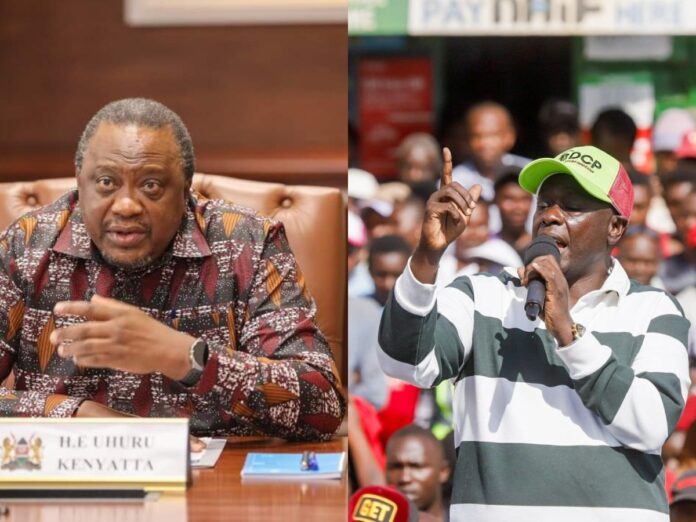
Democracy for the Citizens Party (DP) leader Rigathi Gachagua has declared that we will not allow former President Uhuru Kenyatta to be intimidated.
Speaking during a press conference on Tuesday, February 10, Gachagua accused President William Ruto and his administration of trying to silence Uhuru.
He claimed that Ruto was sending junior politicians to threaten Uhuru with the withdrawal of his serene package following his criticism of the Kenya Kwanza administration.
Gachagua stated that he was obligated to protect the former President at all costs.
“I will not allow Uhuru Kenyatta to be intimidated. I have a responsibility from the region to defend our son and Kingsman.”
PHOTO | COURTESY A file image of Rigathi Gachagua during a campaign rally.
“They are trying to intimidate him and sell him fear that he should not have a free political mind, interact with other political leaders, or have a political choice, and if he does so, they will take away his retirement benefits and his allowances,” he reiterated.
The DP party leader took on the leaders abusing Uhuru, stating that they had no moral authority to address Uhuru Kenyatta, whom he described as a statesman who deserves utmost respect.
“I don’t think Kenyatta can give up his constitutional obligations because of allowances. He is not a poor man. He is a Kenyan who has worked hard to make money and resoures and I don’t think he can be told to shut up,” he stated.
Gachagua vowed that should the United Opposition win the 2027 General Elections, they would reinstate Uhuru’s seerane package if Ruto and his associates made do with the threats.
The former DP claimed that the constant attacks on Uhuru is beause the Head of State has panicked over the inevitable unity of the Mount Kenya region.
“Ruto is in shock, confused, and has paniked beause ‘Wamtam’ is real. The Mount Kenya region that voted for him has now deserted him.
“He had hoped he would persuade Uhuru Kenyatta to assist him to divide the Mountain when he went to Ihaweri so that the region would not vote as a block.”
Gachagua confirmed that Uhuru was working with other leaders from the region to make sure that it is united ahead of the 2027 poll.
He also asked Ruto to stop blaming his predecessor for the challenges he is facing during his reign in office.
The DP party leader told Ruto that he messed up the country on his own by not living up to the promises he made during his campaign.
Leaders allied to the Head of State have on multiple occasions threatened to withdraw Uhuru’s retirement benefits, over what they claim is political backstabbing of his former Deputy.
Ruto’s personal aide, Farouk Kibet, specifically threatened to have the ehequer stop remitting money to the former President.
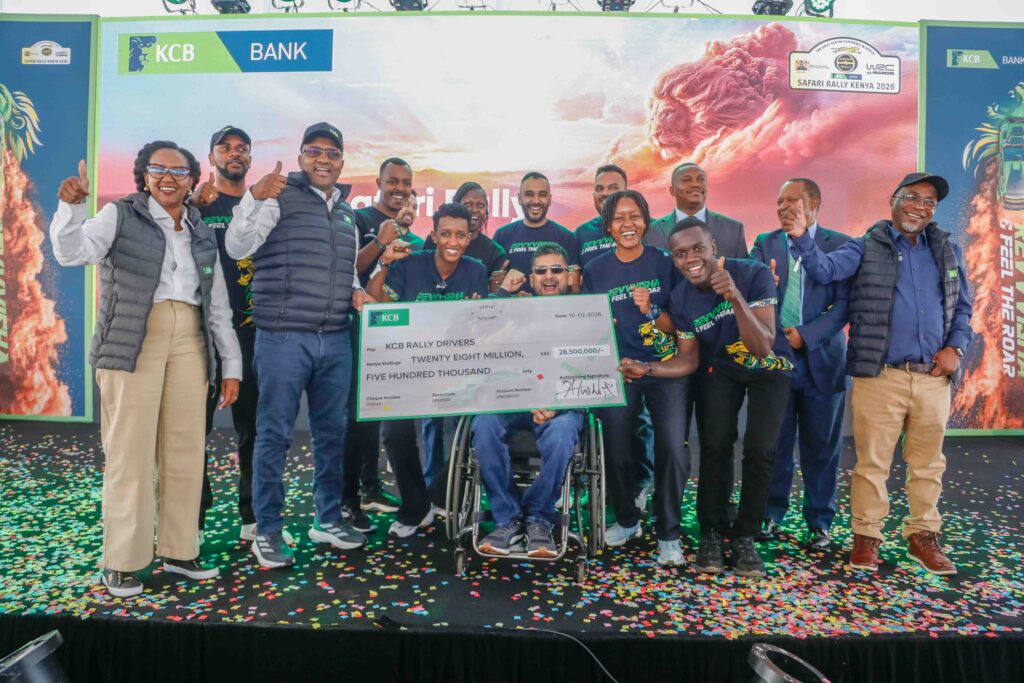
KCB Bank Kenya has set aside KShs. 227 million for the 2026 World Rally Championship (WRC) Safari Rally Kenya, marking the sixth consecutive year of sponsorship since the iconic rally made its historic return to Kenya.
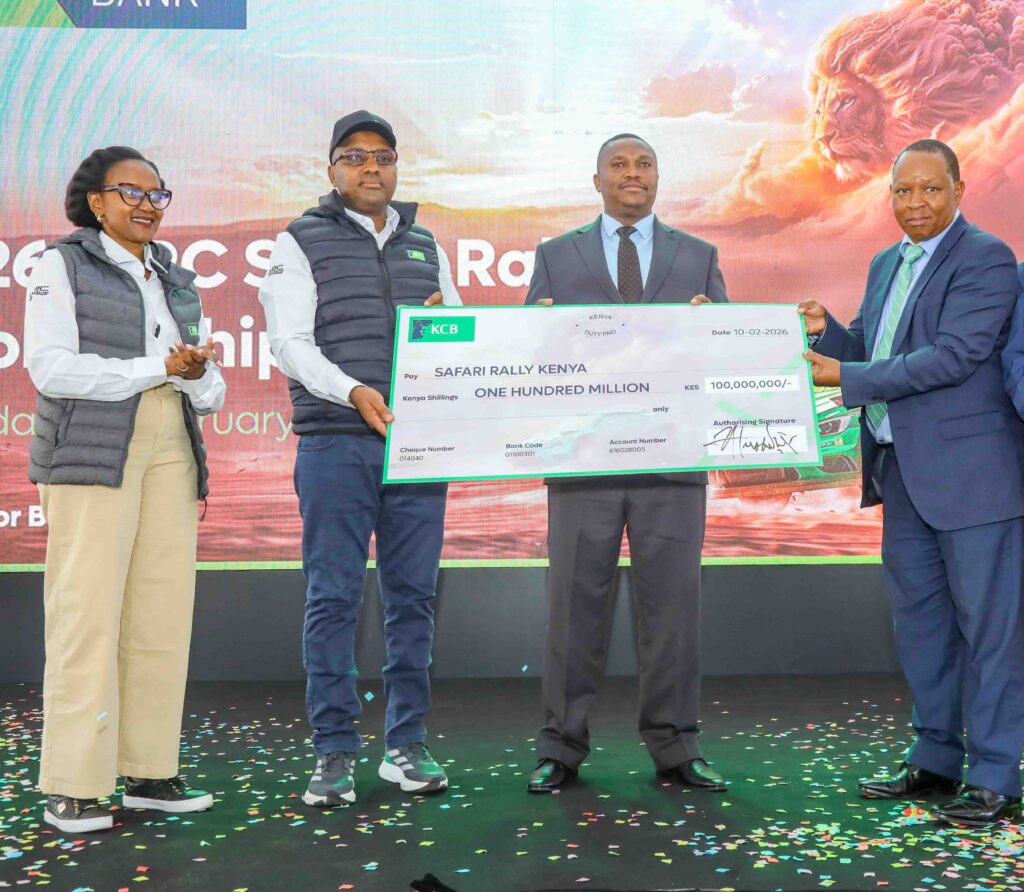
Of this sponsorship, KShs. 100 million will go directly to the Safari Rally Kenya, while KShs. 28.5 million will be spent on the 5 KCB-sponsored – Karan Patel, Nikhil Sachania, Tinashe Gatimu, Queen Kalimpinya from Rwanda, and Uganda’s Oscar Ntambi. The rest of the funds will be spent on activations and marketing.
This brings to the total KShs. 980 million, the amount of money the Bank has given towards the global showpiece since its return to the Kenyan soil in 2021 after a 19-year absence.
While presenting the sponsorship cheque to the Sports Principal Secretary, Elijah Mwangi Tuesday morning, KCB Group CEO Paul Russo said: “Our sponsorship demonstrates our commitment to driving sustainable impact, supporting local talent, and stimulating economic activity across tourism, trade, and enterprise among other sectors.”
“We are looking at continually building on our experience and scale in sports sponsorships across East Africa to further support talent for global, regional and in-country competitions across disciplines.”
KCB, a synonymous name in sports, has played a pivotal role in elevating the sports landscape in the country. In the past two decades, the Bank has spent over KShs. 5 billion on various sports disciplines, including motorsports, rugby, chess, volleyball, football, golf, and athletics. For motorsports specifically, the Bank has invested over KShs. 2 billion while also giving local drivers an opportunity to participate in local, regional, and international events.
The rally will cover a total competitive distance of 350.02 kilometers, supported by a liaison distance of 842.9 kilometers, in line with FIA requirements. The four-day event will be based in Naivasha, a move designed to meet the FIA 2026 sporting regulations on distances and crew working hours, moving away from the usual ceremonial flag off in Nairobi.
On Thursday, March 12, there will be a shakedown at the newly introduced Nawisa stage. This will be followed by a ceremonial flag off before the cars pass Camp Moran and Mzabibu stages. On Friday, March 13, cars will pass Camp Moran, Loldia, Geothermal, and Kedong. On Sunday, March 14, action will head to Soysambu, Elementaita, and Sleeping Warrior, before concluding with an autograph signing at Mzabibu.
Sunday, March 15, marks an electric day of action as cars rev off from Oserengoni, Hell’s Gate, before passing the Wolf Power Stage in the afternoon, culminating in the prize-giving ceremony.
“KCB’s sustained investment has helped grow local talent, attract global attention, and unlock opportunities for communities along the rally route. We commend the Bank for being a dependable partner in advancing sports development and youth empowerment in Kenya,” said PS Mwangi.
The Bank will embed sustainability at the heart of the rally, with an ambitious target of planting and growing 5,000 trees this year, in line with the government’s agenda to plant 15 billion trees by 2032. Additionally, KCB will engage over 60 high schools in a curated green debate series that seeks to inspire and engage the younger generation, at the same time promoting environmental consciousness.
“The Safari Rally continues to grow as a global sporting spectacle, attracting fans and competitors from around the world. We are proud to showcase Kenya on the international motorsport stage and to inspire the next generation of local talent,” said Safari Rally Kenya CEO, Charles Gacheru.
This year, the rally is expected to attract 50 local and international teams, with top manufacturers such as Toyota, Hyundai, Škoda, and M-Sport Ford confirmed to compete.
The entry list features some of the sport’s biggest names, including Sebastien Ogier, Thierry Neuville, defending Safari Rally champion Elfyn Evans, and Grégoire Munster, among others.
Marking the third round of the season, the event remains the ultimate test of survival in the WRC, where the wildlife is as unpredictable as the weather, with a refined schedule that packs 20 special stages into four days.
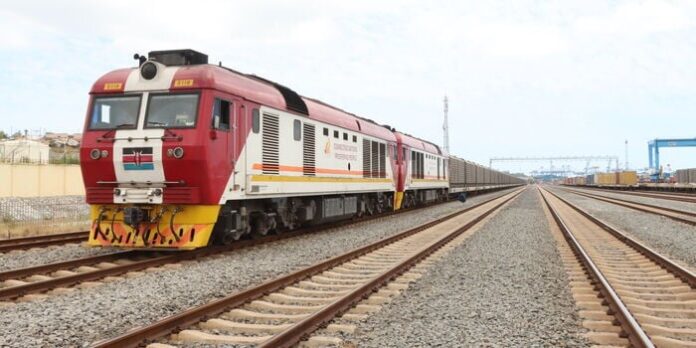
The High Court has extended interim orders in a constitutional petition filed by activist Okiaya Omtatah challenging the implementation of the Ngong–Riruta railway project.
The matter came up for mention on 10th February before Justice Bahati Mwamuye, during which the Kenya Railways Authority denied accusations that it had violated existing court orders.
Kenya Railways informed the court that activities taking place at the project site were limited to fencing the corridor for security reasons and did not amount to substantive construction or contempt of court.
In his directions, Justice Mwamuye stated that the interim orders had been varied but would remain in force until the close of business on February 26, 2026.
He clarified that the orders do not prohibit works aimed at preserving the project’s security, value, or utility.
“These orders take effect immediately, and the court will review the matter at the next appearance,” the judge said.
The court scheduled the petition for hearing on February 26, when it will consider compliance with the interim directions and assess developments relating to the contested railway project.
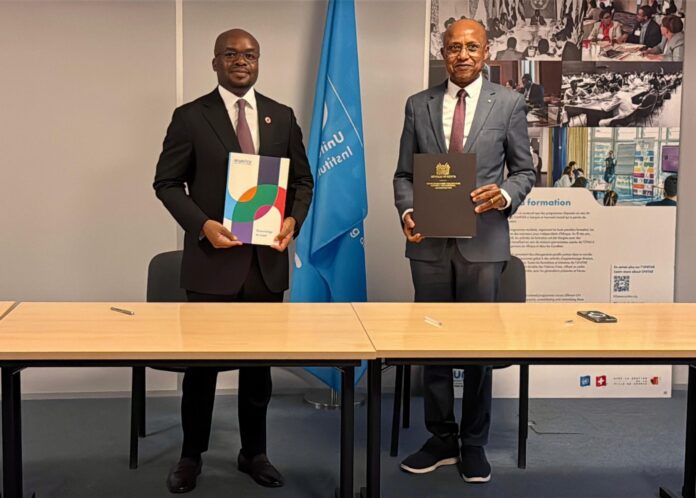
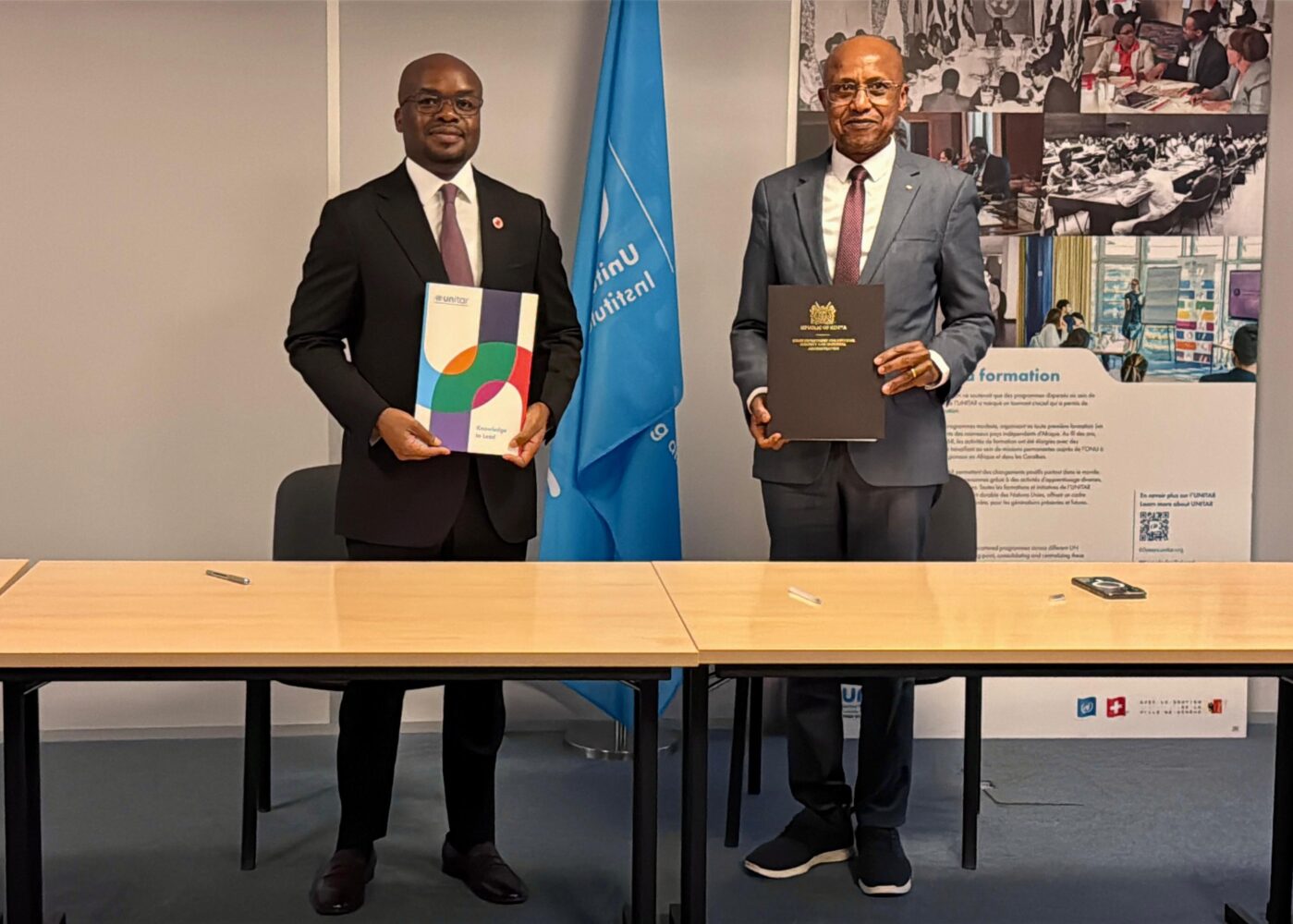
he Government of Kenya has signed a three-year Memorandum of Understanding (MoU) with the United Nations Institute for Training and Research (UNITAR) to strengthen training, research and institutional capacity for agencies responsible for internal security and public administration.
The agreement was signed in Geneva by Dr. Raymond Omollo, Principal Secretary in the State Department for Internal Security and National Administration, and Mr. Evariste Karambizi, Director of UNITAR’s Division for Peace.
The partnership targets coordinated capacity development for key institutions. These include National Government Administrative Officers (NGAOs), the Kenya Police Service, the Administration Police Service, the Directorate of Criminal Investigations, the Kenya Prisons Service and the Kenya Coast Guard Service.
According to the Ministry of Interior and National Administration, the collaboration will support professional skills development, policy-oriented research and institutional strengthening across the internal security ecosystem. The aim is to improve service delivery, enhance coordination and reinforce adherence to the rule of law.
UNITAR is a training arm of the United Nations established in 1963. It supports UN member states by providing learning solutions to strengthen governance, peace, security and sustainable development. The institute works with governments and public institutions to build capacities aligned with international standards and best practices.
Under the MoU, the two parties will collaborate on tailored training programmes, applied research and knowledge-sharing initiatives. These efforts are expected to address emerging security challenges, leadership development, public sector effectiveness and cross-agency coordination.
Kenya has in recent years prioritized capacity building within its security sector. The government has emphasized professionalization of services, respect for human rights and improved border and maritime security as part of broader national security reforms.
The inclusion of the Kenya Coast Guard Service reflects a growing focus on maritime security and the protection of Kenya’s territorial waters. The service works alongside other agencies to combat transnational crimes such as trafficking and illegal fishing.
Officials said the partnership with UNITAR will leverage international expertise and evidence-based approaches to support Kenya’s reform agenda. The MoU provides a framework for sustained engagement over the next three years, with implementation expected to involve multiple agencies and training institutions.
The agreement takes effect immediately and may be renewed subject to mutual consent.
Democracy for the Citizens Party (DCP) leader Rigathi Gachagua has dismissed calls for the United Opposition outfit, which he is part of, to reveal a presidential candidate for the 2027 elections.
During a press conference on Tuesday, February 10, Gachagua said the United Opposition will have one candidate from its coalition parties to face President William Ruto.
“There is no hurry. Mwai Kibaki was named as opposition flagbearer on October 14, 2002, when the election was on December 27, 2 months and 13 days apart. There is no hurry. We should not be in a hurry,” said Gachagua.
“We are committed to having a single Presidential candidate to face William Ruto. We want to ask for patience from the people of Kenya. Coalition building is a delicate affair,” he told the press.
While calling for patience, the DCP leader went on to castigate his former boss, President William Ruto, whom he labelled an enabler of corruption in public offices.
Gachagua welcomed a petition to ban political activities at State House, saying the presidential residence has been turned into a field for United Democratic Alliance (UDA) affairs.
“StateHouse has become a scene of crime. It has become centre of corruption and bribery,” he said, adding, “Ruto has abandoned the government. He is not thinking about government anymore. He is just thinking about re-election. State House is a campaign scene.”
Other than the presidency, the former Deputy President also claimed the National Assembly and Senate are corruption hotbeds.
“Ruto has enabled corruption; he is calling people to the lawns of State House and giving them bribes openly. Once the President has shown bribery is a way of life, the Senators have learnt from him,” said Gachagua.
“When I was being hounded out of office. The Senators who hounded me out of office were given Ksh.10 million each, and others Ksh.20 million. It is a den of corruption, so is the National Assembly,” he claimed.
The DCP leader accused President Ruto and his Deputy Kithure Kindiki of normalizing corruption by “going round the country bribing people with sacks of money.”
Senators in the Senate County Public Accounts Committee (CPAC) have fired back at governors over an ongoing tussle between the two leadership branches.
This comes after the Council of Governors (CoG) announced that governors will not appear before CPAC, alleging that they have been humiliated by Senators every time they appear for summons.
The Committee issued summons to Nandi, Laikipia, Lamu, Muranga and Tharaka Nithi governors on Monday after failing to appear to respond to audit queries.
During a committee session on Tuesday, where Narok Governor Patrick Keturet Ole Ntutu appeared, Senators censured Governors against avoiding being held accountable.
CPAC chairperson Moses Kajwang’, also Homa Bay Senator, said that Governors should not be entitled to avoid scrutiny on how they appropriate funds, asserting that they will scrutinize all governors to tame pilferage of government resources.
“It is not an option, it is not a favour, it is a duty we have to the public. Whether we like you or not we shall continue fighting for more resources to go to counties,” he said.
Nairobi Senator Edwin Sifuna stated that the move by CoG to snub summons is an indication of poor leadership in counties, at the expense of poor service delivery.
“What is oversight? If we give you the money, you use the money, you have to account for it. When we hear statements from the CoG saying they will not appear here because we embarrass them, they embarrass themselves by the things they have been doing with public money,” Sifuna stated.
“They come here unprepared [with] wrong documentation. They run away from their own documentation of finances.”
Citing the alarming incompetence among Governors, Sifuna cited an incident where a governor previously said that they could not read documents because they left their glasses at home.
On his part, Nandi Senator Samsom Cherargei said that some Governors are avoiding the summons because they are linked to corruption.
“When you buy seedlings of Ksh.59 million in a drought area like Mandera and when we ask why you prioritise that over water tracking, you say these seedlings are rain-fed,” he said.
“We will take no prisoners. Any Governor appearing here, we will deal with you on how you have allocated the money.”
The matter has even prompted a response from Senate Speaker Amason Kingi who said that the Senate will not cower from executing its mandate of ensuring that there is oversight over the allocation and appropriation of public funds.
“Should the Council of Governors have concerns regarding the conduct or operations of Senate Committees, established and legitimate institutional channels exist through which such concerns may be formally raised and addressed,” he said in a statement.
He added that the Senate audit committees are guided by Article 229 of the Constitution, which requires Parliament to consider and dispose of audit reports within three months of their receipt from the Auditor-General-by March 31.
He maintained that compliance with this constitutional timeline is not optional and any attempts to do so impedes the process of ensuring there is prudent use of public resources.
Meanwhile, the CoG has maintained that governors will not appear before CPAC until their concerns are addressed through a structured engagement between the leadership of the Senate and the Council.
A postmortem on the body of Sheryl Adhiambo, the 21-year-old girl allegedly shot by police in Huruma estate in Nairobi showed she died as a result of a single bullet wound to the head.
She was shot and killed in the head on Saturday night, sparking a two-day protest that turned violent.
Adhiambo was a student at the Kenya Medical Training College (KMTC).
The exercise, conducted by two pathologists, found that the bullet entered through the left side of Adhiambo’s head and exited from the back, rupturing the cerebral cavity.
The pathologists, Grace Midigo and Simon Omuok, said the injuries were fatal and that she could not have survived the trauma.
A group of activists and political actors present at the City Mortuary called for justice for the death. They demanded accountability from the officer involved in the shooting.
The Independent Policing Oversight Authority (IPOA) confirmed that it has deployed a Rapid Response Team to investigate the incident.
The team was present during the autopsy examination. Police too were present.
IPOA said the team is actively gathering evidence, interviewing witnesses, and analysing available exhibits to establish the circumstances surrounding Adhiambo’s death.
The student had finished her examination and was in the area to help her mother in fish business she runs there.
The National Police Service (NPS) explained events leading up to the shooting. A complainant reported at Huruma Police Station earlier that day that he had been attacked by five young men known to him, robbed of a silver chain and Sh1,800 in cash, and threatened with death.
Officers responding to the report arrested two suspects, with further investigations leading to the arrest of two additional suspects later in the evening.
Police said that during the second arrest, one of the suspects raised an alarm, prompting nearby youths to stone officers in an attempt to disrupt the operation.
The NPS stated that officers fired warning shots into the air to disperse the crowd, during which Adhiambo was fatally shot.
The service urged residents to allow due process to take its course and to refrain from further acts of lawlessness to help de-escalate tensions and restore calm as investigations continue.
The incident sparked protests in the area that left at least three vehicles torched. Several properties were destroyed in the Saturday night and Sunday protests.
Both the police and IPOA are investigating the shooting incident.
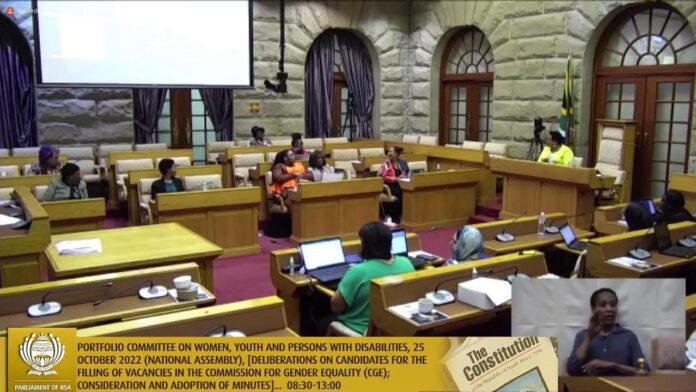
The Portfolio Committee on Women, Youth and Persons with Disabilities has expressed concern over the limited budget allocated for learners with special needs. During its oversight visit last Friday at Sibonile School for the Blind and Ekurhuleni School for the Deaf, the committee noted that the most pressing issue facing both schools is budget constraints.
The committee heard that the schools are struggling due to insufficient funding, which impacts the provision of quality education. At Sibonile School for the Blind, management highlighted a critical need for more specialised staff, including occupational and speech therapists.
Sibonile serves 167 learners with only one occupational therapist and one speech therapist. This is inadequate for the diverse needs of students, including those with visual impairments, autism spectrum disorders and severe disabilities. The principal emphasised the urgent need for caregivers to support high-needs learners, as the current staffing structure under the Department of Basic Education lacks provisions for such positions.
The committee called on the departments of basic education, health and social development to collaborate urgently to address these issues. They noted that the lack of inter-departmental cooperation exacerbates the challenges faced by these schools, particularly on funding, where the National Treasury must also be involved in discussions.
The principals of the schools told the committee they need more budget to support their learners and improve infrastructure. They pointed out that the educational environment for these children is far from normal, and systemic changes are needed to ensure their needs are met.
The Chairperson of the committee, Ms Liezl van der Merwe, said the committee is committed to advocating for children and persons with disabilities. During her opening remarks at Ekurhuleni School for the Deaf, Ms van der Merwe stressed the urgent need to address the systemic barriers that exclude individuals with disabilities from educational and economic opportunities.
The Chairperson also noted the findings from earlier reports by the South African Human Rights Commission, which showed significant gaps in resources and support for these schools.
The Liberal Democratic Party, LDP, has accused the Kenyan government of facilitating a monopoly in the glass manufacturing sector, warning that the policy failure is exposing the country to an estimated Ksh 1.7 billion in annual fiscal losses and placing more than 24,000 direct and indirect jobs at risk.
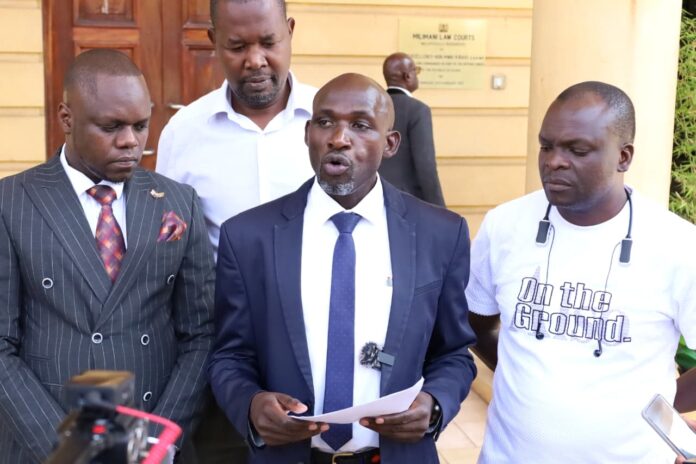
In a press statement issued on February 10, 2026, outside The Milimani Law Courts, LDP presidential aspirant Fred Ogola said local glass processors have been forced to source raw materials from a single supplier, KEDA Ceramics of Tanzania, at prices higher than prevailing global market rates.
Prof. Ogola argued that the arrangement undermines Kenya’s manufacturing competitiveness and contradicts the government’s stated economic transformation agenda, warning that inflated input costs could cripple local production and exports.
The concerns arise from a constitutional petition filed by businessman and registered float glass processor Peter Imbayi Indaso, who sued the Cabinet Secretary for Investment, Trade and Industry, the Kenya Revenue Authority (KRA) and the Attorney General.
In the petition, Indaso argued that the State violated the right to fair administrative action by failing to implement a statutory exemption provided for under the Finance Act 2025.
Under the Finance Act of 2025, a 35% excise duty was introduced on imported float glass, while registered local processors were to be exempted following verification by the Ministry of Industry.
Despite a ministry report approving ten companies for exemption, the petition states that none received formal communication, leading to the detention of their cargo and escalating storage and logistical costs.
Following the filing of the petition, the High Court issued interim orders directing the release of detained glass imports belonging to registered processors.
The orders, issued on December 22, 2025, by Justice Bahati Mwamuye, allowed the clearance of the shipments without immediate payment of excise duty, provided the processors secured the amounts through bank or insurance guarantees.
Prof. Ogola says the alleged monopoly has far-reaching consequences for ordinary Kenyans, including increased housing and construction costs, potential job losses as processors scale down operations, and the loss of an estimated Ksh 1.7 billion annually in taxes, levies and logistics-related revenue.
The party leader has called on the government to fully disclose the policy rationale behind the supply arrangement, identify beneficiaries, and outline safeguards to protect local industry and public revenue.
Prof. Ogola linked the issue to broader concerns about political accountability, warning that economic mismanagement has immediate consequences for workers and businesses.
“For workers losing jobs today, economic pain is immediate, not a 2027 campaign issue,” he said.
The LDP leader further claims that implementation of the exemption framework has been frustrated by administrative failures at the Ministry of Industry and the KRA, noting that the High Court has already directed the ministry to respond to the case and allow the release of exempted cargo under bond.
The party’s final call is for the restoration of fair competition, protection of jobs and strict implementation of existing economic laws to safeguard Kenya’s glass industry’s future.