Sponsored Ad

Ad 1
Ad 2
Ad 3
Ad 4
Ad 5
Ad 6
23.1 C
Kenya
Monday, May 11, 2026
Home Blog Page 455

Wananchi Group, Part of Axian Group, Hit With Ksh46.9 Million Insolvency Demand by CP Cables

By Andrew Kariuki

Wananchi Group (K) Limited has been issued with a statutory demand for payment of Ksh46.9 million, exposing the company to potential liquidation proceedings if the debt is not settled within the prescribed period.

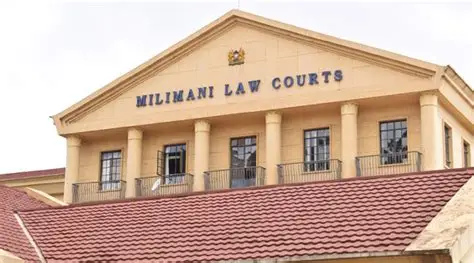
The demand was filed by CP Cables Limited under the Insolvency Act, 2015, and lodged before the Commercial and Tax Division of the High Court in Nairobi in Insolvency Cause No. E017 of 2026.

CP Cables contends that the amount constitutes an outstanding commercial debt owed by Wananchi and has given the company 21 days to either pay the sum, secure it to the creditor’s satisfaction, or demonstrate that there exists a valid dispute, counterclaim or set-off.

Court documents indicate that payment is to be made directly to CP Cables or through its advocates, Madhani Advocates LLP.

Failure to comply, the creditor warns, will trigger an application for liquidation orders against Wananchi.

The statutory demand, dated February 6, 2026, was issued pursuant to Section 384(1) of the Insolvency Act and the relevant regulations.

Under Kenyan insolvency law, non-compliance with a statutory demand within the stipulated period is deemed evidence that a company is unable to pay its debts as they fall due.

Wananchi operates the Zuku brand, offering pay television, broadband internet and digital services and is a subsidiary of Wananchi Group Holdings, which is majority-owned by Axian Telecom.

Axian Telecom, a Mauritius-based pan-African telecommunications group, has expanded its footprint in Kenya through Wananchi, positioning the firm as a major player in the country’s digital and fibre-optic services market.

The insolvency demand comes against the backdrop of mounting pressure on companies in the telecommunications and media sector, which continues to grapple with rising operational costs and intense competition.

Should Wananchi fail to respond within the 21-day statutory window, CP Cables would be entitled to move the High Court for liquidation orders, a development that could have far-reaching consequences for the company and its parent group.

Pharmacy Board flags 22% of health products as non-compliant

The Pharmacy and Poisons Board (PPB) has declared that 22 per cent of health products that were in circulation in Kenya in 2025 are now non-compliant after manufacturers or marketing authorisation holders failed to submit renewal applications by the December 31, 2025, deadline.

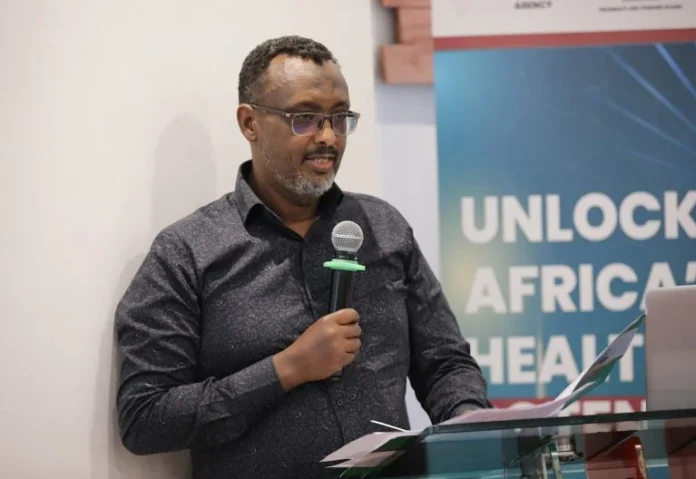
In a regulatory update issued on Friday, February 6, 2026, and signed by Acting Chief Executive Officer Ahmed Mohamed, the board said that out of 9,551 Health Products and Technologies (HPTs) retained and circulating in 2025, 78 per cent either hold valid marketing authorisations or have submitted renewal applications that are currently under review.

The remaining 22 per cent did not meet the renewal deadline and have consequently lost their lawful registration status.

According to the board, these products are no longer eligible for importation, manufacture or distribution in Kenya and must undergo fresh registration in line with applicable regulatory procedures.

“The remaining 22% of HPTs whose renewal applications were not submitted by the stipulated deadline are therefore non-compliant with the statutory and regulatory requirements,” read the statement in part.

The board stated that its mandate under the Pharmacy and Poisons Act, CAP 244, is to protect and promote public health by ensuring access to quality, safe and efficacious health products. Section 3A(c) of the Act empowers the Board to grant, vary, renew or withdraw marketing authorisations, subject to prescribed conditions.

Under Rule 10(1) of the Pharmacy and Poisons (Registration of Health Products and Technologies) Rules, 2022, a certificate of registration or renewal is valid for five years from the date of issuance, after which renewal is mandatory. Any product whose marketing authorisation expires without submission of a renewal application ceases to have lawful registration status.

The board required all marketing authorisation holders with expired or expiring registrations to submit renewal applications by December 31, 2025. As of February 1, 2026, all submitted applications had been screened for completeness.

The PPB noted that applications that passed screening have either progressed to technical evaluation or been issued with requests for additional information to assure continued product quality, safety and efficacy.

Stakeholders issued with screening queries are required to submit responses, with the screening phase expected to be completed within 60 working days from the date of submission.

On importation, the Board reiterated that Rule 3 of the Pharmacy and Poisons Rules, 2022, prohibits the importation of any HPT without a valid import licence. However, applications submitted before expiry and successfully screened may apply for import licences to ensure continuity of access to essential health products.

The board said it continues to apply risk-based regulatory oversight, allowing consideration of manufacturing sites with recently lapsed Good Manufacturing Practice certification where there is documented historical compliance and no reported quality defects or recalls.

GMP inspections are being scheduled based on risk prioritisation, product criticality and public health impact. In addition, the Board has extended GMP certification status for several eligible manufacturing sites.

The PPB has scheduled a stakeholder engagement session on March 4, 2026, to discuss issues affecting the pharmaceutical industry and promote regulatory compliance.

Govt Speaks After Kenyans Express Outrage Over Lack Of Cheaper Passport Applications

The government has finally addressed public anger after Kenyans complained about the abrupt disappearance of lower-cost passport options on the eCitizen portal, a move that left applicants with no choice but to pay higher application fees.

The controversy sparked widespread criticism online and calls for accountability from the authorities.

In a statement released on Friday, February 6, 2026, the Directorate of Immigration Services confirmed it was aware of concerns surrounding the missing A and B Series passport booklets on the eCitizen system, which had previously offered more affordable alternatives for applicants.

“Directorate of Immigration Services is apprised of concerns raised by passport applicants on the unavailability of A and B Series booklets in the eCitizen application portal,” the X post read.

The Directorate said it had put in place measures to ensure that all passport applications are processed promptly and without causing inconvenience to applicants, amid growing frustration over delays and increased costs.

The Ministry of Interior also issued a similar statement, confirming that it was aware of the concerns and reassuring Kenyans that efforts were underway to resolve the issue.

“We reaffirm our commitment to facilitate travel in line with our mandate as we make efforts to ensure that all passport series are available,” the Ministry said, while appealing for patience as the matter is addressed.

However, neither office explained the unavailability of the cheaper passport options, leaving questions over what triggered the situation.

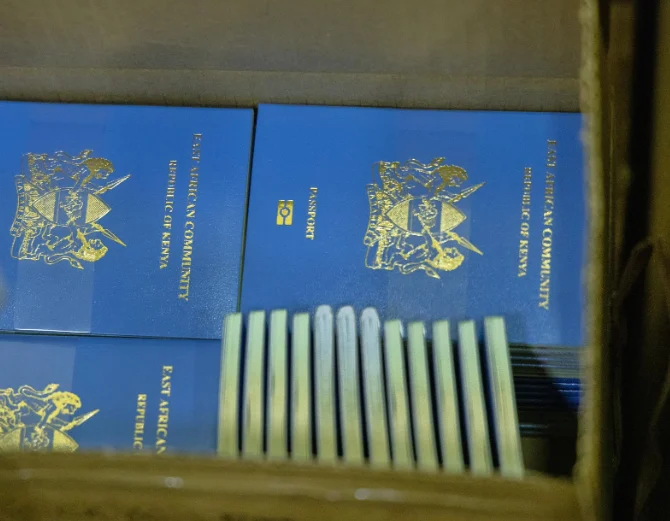
The development follows public scrutiny after Kenyans observed that the eCitizen portal now offers only the 66-page passport, priced at Ksh12,500, for both new applications and standard renewals.

 A review of the platform shows that the 50-page passport, which previously cost Ksh9,500, has been quietly removed, effectively leaving applicants with a single, more expensive option.

After Epstein fallout, UK leader Starmer faces hurdles and rivals as he battles to keep his job

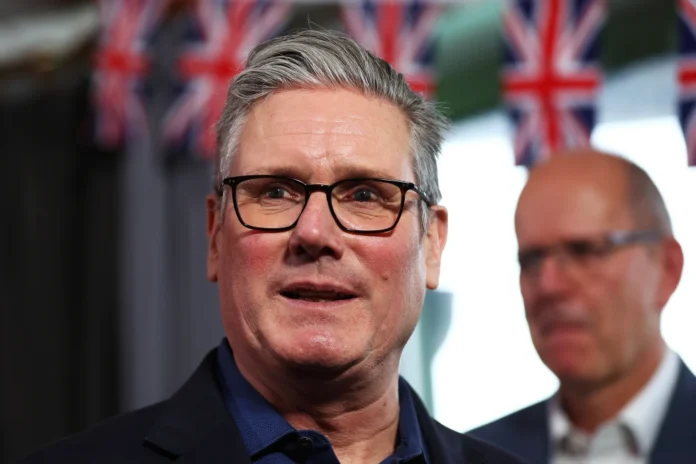
(AP) — British Prime Minister Keir Starmer is facing a battle to stay in post after the fallout from his decision in 2024 to appoint veteran politician Peter Mandelson as the U.K. ambassador to the U.S. despite the latter’s ties to late convicted sex offender Jeffrey Epstein.

Starmer’s judgment is in the spotlight like never before, especially after the release last week of millions of Epstein-related documents by the U.S. Justice Department showed how close those links were.

There’s widespread anger that the prime minister appointed Mandelson, a grandee of Starmer’s own Labour Party, to such a sensitive and high-profile post. Starmer had already sacked Mandelson after a first batch of emails were published in September, showing he remained friends with Epstein after the late financier’s 2008 conviction for sex offenses involving a minor.

But the emails made public this week show that Mandelson also passed on sensitive — and potentially market-moving — government information to the disgraced financier in 2009, when he was a member of the Labour Cabinet.

Starmer’s leadership has now been called into question. Several Labour lawmakers have said that he should quit, while others are clearly uncomfortable, following a series of missteps since the party returned to power in a landslide victory in July 2024.

Starmer is trying to fight back. He has apologized to the British public and to the victims of Epstein’s sex trafficking for believing what he has termed “Mandelson’s lies.”

There are a number of ways in which Starmer could go, some more straightforward than others.

The easiest way

The simplest option is that Starmer announces his intention to resign, triggering an election for the Labour leadership. A resignation could possibly come if a delegation of Cabinet members tell Starmer he has lost too much support within the party or if members of his government quit in protest.

Those considered to harbor leadership ambitions include Health Secretary Wes Streeting, Home Secretary Shabana Mahood and former deputy prime minister, Angela Rayner, who had to resign last year after admitting she didn’t pay enough tax on a house purchase. The problem for Rayner is that an investigation into that is ongoing.

But there’s no clear front-runner.

Andy Burnham, the popular mayor of Manchester who was blocked from standing at a special election in the city later this month, would not be eligible as the leader must come from the parliamentary party.

Whoever does run, the election would likely take weeks, with Starmer likely staying in post until that concludes.

Were Starmer decide to resign immediately, the Cabinet and Labour’s governing body would likely pick an interim leader to be prime minister, probably someone not standing to be Labour leader. Deputy Prime Minister David Lammy could fit the bill.

Under Labour’s rules, candidates must have the support of a fifth of the parliamentary party, which equates to 80 lawmakers.

Those meeting that threshold would then have to receive the support of 5% of the local constituency Labour parties or at three least party affiliates, of which two must be trade unions. Affiliates are groups or organizations that are deemed to have interests consistent with those of the Labour Party; including trade unions and co-operative and socialist societies.

Eligible members of the party and affiliates will then vote for the leader using an electoral system that ranks the candidates. The winner is the first candidate to secure over 50% of the vote.

King Charles III would then invite the winner to become prime minister and form a government.

The not so easy way

If Starmer does not resign, he could face a challenge, potentially from within his Cabinet.

Unlike the Conservative Party, which has a history of getting rid of leaders such as Margaret Thatcher in 1990 and Boris Johnson in 2022, Labour does not have that muscle memory. No Labour prime minister has ever been dislodged, though Tony Blair announced his plan to resign in 2007 after a series of low-level resignations.

Challengers would have to meet the eligibility thresholds above, but Starmer would automatically be on the ballot.

Starmer faces a series of hurdles in the weeks ahead. The first will probably come within days when files related to the vetting of Mandelson are published. Starmer will be hoping they show the scale of Mandelson’s lies. Should they not, that could be a point of high jeopardy for the prime minister.

Another potential pitfall could be the special election in Gorton and Denton on Feb. 26, traditionally a safe Labour seat. However, this time it will be a tough fight, with challenges from the anti-immigration Reform U.K. on the right and the Greens on the left.

The decision to bar Burnham from standing also poses a risk for Labour. Though he was blocked on the grounds that a Burnham victory would trigger a costly special election for the mayoralty in Manchester, critics claim that Starmer did not want to see a potentially dangerous rival back in the House of Commons.

After that comes a raft of elections in May. Many in Labour fear the party could lose power in Wales for the first time since the legislature was created in 1999, fall way short in Scotland and get battered in local elections in England.

It’s clear that Starmer faces a difficult landscape.

And that’s barring surprise developments that could further rock his premiership.

“Events, dear boy, events,” Harold Macmillan, prime minister between 1957 and 1963, said when asked what the greatest challenges for leaders were.

“Don’t Kill Our Dream, Stay Together!” Sen. Onyonka Tells United Opposition Leaders

Kisii Senator Richard Onyonka has urged former Deputy President Rigathi Gachagua not to kill the United Opposition dream.

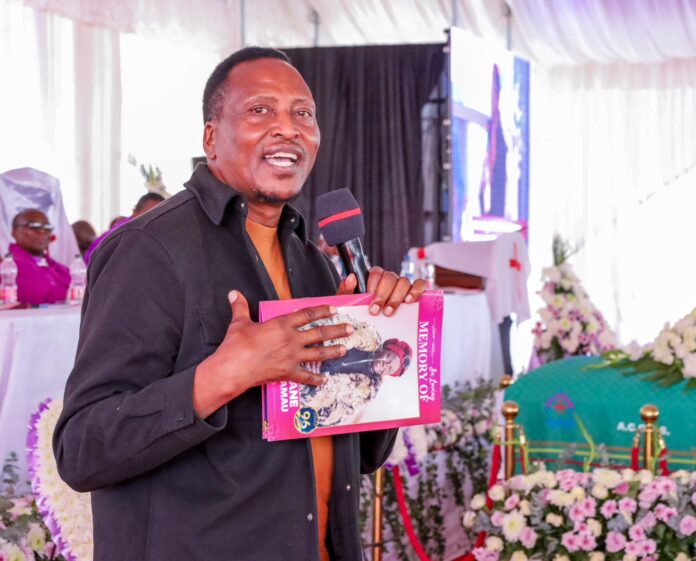
While speaking during the funeral of the mother of former Murang’a gubernatorial candidate Jamleck Kamau in Kigumo, on Friday, February 6, 2026, he pleaded with the Democracy for Citizens Party (DCP) leader not to kill the aspirations of the United Opposition.

He continued to stress the essence of unity among the opposition principals, urging them to work together.

According to him, if they fail to unite, they will be “hanged separately” by their main contender in 2027, President William Ruto, due to their lack of unity.

He went ahead to state that, as members of the United Opposition, their role is to follow in the footsteps of their party leaders and principals.

“Please, Mheshimiwa Gachagua, don’t kill our dream. Keep yourselves together. Carry Matiang’i with you, carry Martha Karua with you, and carry Justin Muturi with you. We are waiting for you to tell us where we are going, because if all of you do not do that, you will be hanged separately by William Ruto as we watch from outside the tent,” Onyonka stated.

This comes at a time when the United Opposition, which has now been rebranded as the United Alternative Government by Wiper leader Kalonzo Musyoka, is putting its heads together to strategise for the 2027 general election.

In the recent past, there have been evident internal conflicts within the opposition, where Gachagua appeared to be in wrangles with former Interior Cabinet Secretary and Jubilee Party leader Fred Matiang’i.

However, tensions seem to have eased, and the two now appear to be working together.

The United Opposition is set to hold a one- or two-day retreat starting on February 12, 2026, in order to deliberate on the coalition’s name and agree on the matrix they will use to choose their presidential flagbearer.

Despite the party principals each harbouring individual presidential ambitions and having been cleared and endorsed by their respective parties, with the latest being Democratic Party (DP) leader Justin Muturi who was cleared by his party to contest for the presidency.

They have all agreed that when the right time comes, they will shelve their individual aspirations and rally behind the chosen presidential candidate to face President William Ruto.

Gachagua threatens to disclose identities of those behind Othaya church attack

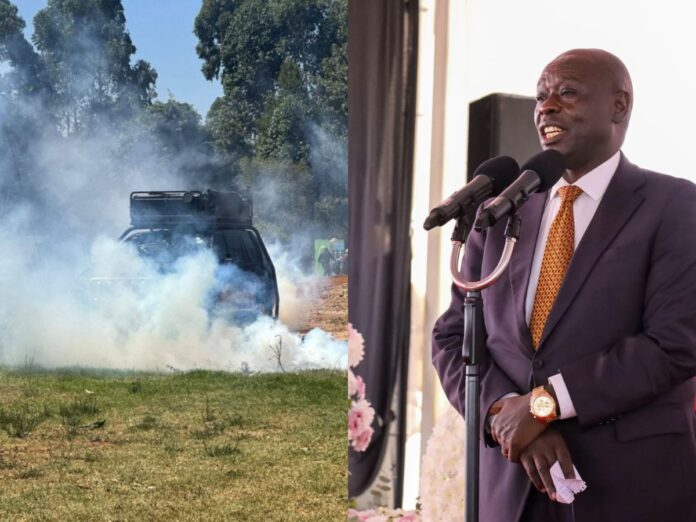
Former Deputy President Rigathi Gachagua has threatened to publicly reveal the identities of the assailants who attacked him during a church service in Witema, Othaya, on Sunday, January 25, 2026.

While speaking during the funeral of Jamleck Kamau’s mother in Kigumo, Murang’a County, on Friday, February 6, 2026, the Democracy for Citizens Party (DCP) leader stated that they have gathered sufficient evidence identifying the individuals responsible for the attack, which turned a once solemn church service into chaos and forced worshippers to flee the church premises.

Former Deputy President Rigathi Gachagua’s motorcade was attacked while in Othaya on Sunday, January 25, 2026. PHOTO/facebook.com/DPGachagua

He further claimed that they possess credible intelligence from internal sources and warned that they would release the information to the public if no action is taken.

According to Gachagua, they had already issued a two-week ultimatum to Inspector General of Police Douglas Kanja to take action against those involved. He warned that failure to act would compel him to make the identities public.

Hii information yote tumeipata, hata kutoka kwa marafiki wetu wa kigeni kwa sababu ya satellite images, na katika siku chache zijazo baada ya ile deadline ya tarehe 16 tutarelease hizo video tuonyeshe vile walituattack,” Gachagua said.

The remarks come days after the attack during the church service, which drew mixed reactions from the public. While some condemned the violence, others claimed the incident may have been stage-managed by Gachagua’s allies to gain public sympathy.

Several top government officials condemned the incident, led by Interior Cabinet Secretary Kipchumba Murkomen, who denounced the violence and tasked IG Douglas Kanja with initiating investigations into the attack on the DCP leader.

Deputy President Kithure Kindiki also weighed in, stating that violence and political chaos should never occur in places of worship.

Meanwhile, United Opposition leaders expressed solidarity with Gachagua, accompanying him to the Inspector General’s office at Vigilance House to present their complaints and demand action within two weeks.

They warned that failure to act could trigger mass demonstrations which, according to Gachagua, would surpass those previously organised by former Prime Minister Raila Odinga.

Robert Alai accuses Sifuna of publicly disrespecting Oburu as ODM rift widens

Kileleshwa MCA Robert Alai has sparked fresh controversy within the Orange Democratic Movement (ODM) by accusing Secretary General Edwin Sifuna of showing blatant disrespect toward acting Party Leader Oburu Oginga.

In a post on X on Thursday, Alai wrote: “Yaani Sifuna amedharau our Party Leader mpaka our party leader is reduced to engaging junior party leaders like Sifuna through press conferences?”

The tweet referenced a detailed statement issued earlier by Oburu, responding to Sifuna’s remarks during a February 3 interview on a local TV station.

Alai, a known internal critic within ODM, suggested that Sifuna’s public criticism had forced Oburu into the undignified position of defending party decisions through a formal statement.

In the interview, Sifuna questioned the legitimacy of certain party appointments, including Oburu’s installation as interim leader following Raila Odinga’s transition to the African Union Commission chairmanship.

Sifuna also cautioned against early coalition talks with President William Ruto’s United Democratic Alliance ahead of the 2027 elections, arguing that such discussions could compromise ODM’s ideological stance. Oburu’s response pushed back firmly, stressing that party policy is determined by constitutionally mandated organs, not by individual opinions.

Sifuna criticised the focus on regional representation in appointments, arguing that discussions had shifted from principles to claims about which regions benefit from government positions. He expressed concern that the debate was being framed around tribal lines rather than merit or fairness.

He also accused some leaders of adopting a transactional approach to power, comparing their behaviour to the language of dividing resources into shares. According to Sifuna, those who had previously criticised such practices were now engaging in similar conduct after experiencing government power.

Canada, France to open consulates in Greenland amid ongoing US threats

Canada and France will open diplomatic consulates in Greenland in a strong show of support for NATO ally Denmark and in the wake of US efforts to secure control of the Arctic island.

Canadian Foreign Minister Anita Anand travelled to Nuuk on Friday to open the consulate, which officials say could enhance cooperation on climate change and Inuit rights.

She was accompanied by Canada’s Indigenous governor general, Mary Simon.

France’s Ministry for Europe and Foreign Affairs said Jean-Noel Poirier also would take up his duties as consul general, making it the first European Union country to establish a consulate general in Greenland.

Poirier will be “tasked with working to deepen existing cooperation projects with Greenland in the cultural, scientific, and economic fields, while also strengthening political ties with the local authorities,” the ministry said.

“The first item on the agenda will be to listen to Greenlanders, to hear them, to let them explain in detail their position, and from our side to confirm to them our support, as much as they and the Danish side want,” Poirier told the AFP news agency.

Canada, which Trump has called upon to give up its sovereignty and become the 51st state of the US, pledged to open a consulate in Greenland in 2024, before Trump’s recent talk of a takeover, and the formal inauguration was delayed from November because of bad weather.

Since returning to the White House last year, Trump has insisted that Washington needs to control the strategic, mineral-rich Arctic island for security reasons.

Trump last month backed off threats to seize Greenland after saying he had struck a “framework” deal with NATO chief Mark Rutte to ensure greater US influence.

A US-Denmark-Greenland working group has been established to discuss Washington’s security concerns in the Arctic, but details have not been made public.

Iceland opened a consulate in Nuuk in 2013, while the United States, which had a consulate in the Greenlandic capital from 1940 to 1953, reopened its mission in 2020.

Iranian foreign minister says US talks in Oman a ‘good beginning’

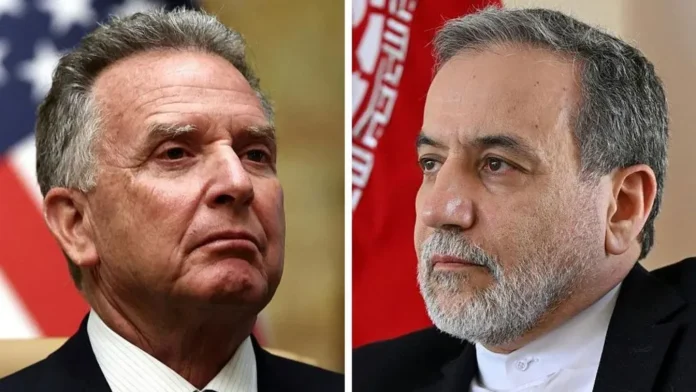
Senior US and Iranian officials have held talks in Oman amid a crisis that has raised fears of a military confrontation between the two countries.

The indirect discussions in the capital Muscat happened as the US military builds up its presence in the Middle East in response to Iran’s violent repression of nationwide anti-government protests last month, which human rights groups say killed many thousands of people.

Speaking on state television after the talks, Iranian Foreign Minister Araghchi said negotiators would return to their capitals for consultations, but described the meeting as a “good beginning”.

Iran had previously said the talks would be limited to its nuclear programme. The US, which is demanding Iran freezes its nuclear programme and discards its stockpile of enriched uranium, had said they should also involve Iran’s ballistic missiles and the country’s support for regional armed groups.

Earlier, Oman said its foreign minister had held separate talks with Araghchi, and US special envoy Steve Witkoff and President Trump’s son-in-law and emissary Jared Kushner.

It said the “consultations focused on preparing the appropriate conditions for resuming diplomatic and technical negotiations”.

The last round of talks between the US and Iran over the Iranian nuclear programme had been scheduled for last June but collapsed after Israel’s surprise attack on Iran.

In recent weeks, Trump has threatened to bomb Iran if it does not reach a deal. The US has sent thousands of troops and what Trump has described as an “armada” to the region, including an aircraft carrier along with other warships as well as fighter jets.

Iran has vowed to respond to an attack with force, threatening to strike American military assets in the Middle East and Israel.

For Iran’s embattled leaders, the talks could be the last chance to avert US military action that could further destabilise the regime, which analysts say is in its weakest position since it came to power following the 1979 Islamic Revolution.

Trump’s threats came as Iran’s security forces brutally repressed large-scale demonstrations, which were triggered by a deepening economic crisis, and saw protesters calling for the end of the Islamic Republic.

The Human Rights Activists News Agency, a Washington-based group, said it had confirmed at least 6,883 deaths, warning that the number could be much higher, and that more than 50,000 people had been arrested.

The current crisis has brought back to discussions the issue of Iran’s nuclear programme, which has been at the centre of a long-running dispute with the West.

For decades, Iran has said its programme is for peaceful purposes, while the US and Israel have accused it of being part of an effort to develop a weapon.

Iran says it has the right to enrich uranium in its own territory and has rejected calls for its stockpile of highly enriched uranium – 400kg (880lb) – to be transferred to a third country. The country says its uranium enrichment activity stopped after the US attacks last year.

Officials have indicated being open to concessions, which could include the creation of a regional consortium for uranium enrichment, as proposed during talks with the US that collapsed when Israel launched its surprise war last year.

At the same time, Iran says demands to limit the country’s ballistic missile programme and to end the support for proxies in the region – an alliance Tehran calls the “Axis of Resistance” that includes Hamas in Gaza, militias in Iraq, Hezbollah in Lebanon and the Houthis in Yemen – are unacceptable and a breach of its sovereignty.

On Tuesday, Iranian President Masoud Pezeshkian said he had instructed Araghchi to “pursue fair and equitable negotiations” with the US, “provided that a suitable environment exists”.

For the US, the meeting, depending on its outcome, could offer an off-ramp for Trump from his military threats.

Regional countries are concerned that a US strike could lead to a wider conflict or long-term chaos in Iran, and have warned that air power alone will not be able to topple the Iranian leadership.

Asked if Iran’s Supreme Leader Ayatollah Ali Khamenei should be worried, Trump told NBC News on Wednesday: “I would say he should be very worried. Yeah, he should be”.

US Secretary of State Marco Rubio said the discussions would have to go beyond the nuclear issue for “something meaningful” to be achieved.

“I’m not sure you can reach a deal with these guys, but we’re going to try to find out. We don’t see there’s any harm in trying to figure out if there’s something that can be done,” he said.

The talks, initially planned to be held in Istanbul, are an effort led by Egypt, Turkey and Qatar to defuse tensions.

Iran, however, asked at the last minute for the location of the meeting to be changed to Oman, which hosted discussions last year, and for it to be limited to Iranian and American officials.


CJ Koome hosts judge Okowa as Kenya backs bid for full ICJ term

Chief Justice Martha Koome, on Friday, hosted International Court of Justice (ICJ) Judge Phoebe Okowa for a courtesy meeting at her office.

The talks underscored the growing importance of cooperation between national and international judiciaries in strengthening the rule of law and judicial independence.

Judge Okowa, who is Kenya’s representative at the world’s highest court, is currently seeking election to a full term at the ICJ, following her election to serve the remainder of a vacant term. 

Her engagement with the CJ formed part of a series of high-level consultations as Kenya rallies institutional and diplomatic support for her bid.

In a statement after the meeting, CJ Koome said the engagement was “fruitful,” noting that it provided an opportunity to reflect on how national and international judicial systems can work together to advance justice in an increasingly interconnected world.

“Today, I held a courtesy meeting with Judge Phoebe Okowa of the International Court of Justice. We had a fruitful discussion on the evolving role of international courts in strengthening the rule of law and judicial independence,” Koome said.

The two jurists exchanged views on how international jurisprudence continues to shape domestic legal systems, particularly in an era where courts are increasingly confronted with complex constitutional questions, transnational disputes and the need to uphold the rule of law amid political and social pressures.

Koome noted that national courts do not operate in isolation, but are part of a broader global legal architecture that benefits from continuous engagement, shared experiences and mutual respect among judicial institutions.

Judge Okowa, an accomplished international law scholar and jurist, has been at the centre of Kenya’s renewed push to entrench its presence within global legal institutions.

Her quest for a full term at the ICJ has received backing across government and the legal fraternity, with leaders describing her candidature as a reflection of Kenya’s commitment to multilateralism and international law.

Last week, Judge Okowa was hosted by Foreign Affairs Principal Secretary Korir Sing’ei, who reaffirmed the government’s support for her bid and highlighted her credentials, integrity and contribution to international jurisprudence. 

The engagement formed part of broader diplomatic efforts aimed at securing international goodwill ahead of the election.

She has also held talks with President William Ruto at State House.

Her election to fill a mid-term vacancy, Ruto said, reflects the strong confidence of UN Member States in her credentials, experience, and integrity.

“Her success reflects not only personal excellence, but also our nation’s continued commitment to contributing distinguished professionals to the multilateral system,” Ruto said.

Friday’s meeting with the CJ further reinforced the Judiciary’s role in supporting Kenya’s international obligations and aspirations, while remaining firmly anchored in its constitutional mandate.

The talks also touched on the need to safeguard judicial independence, a principle both leaders agreed is central to public confidence in justice systems worldwide. 

Judge Okowa’s engagement with the CJ comes at a time when judiciaries globally are navigating increasing scrutiny, evolving legal norms and rising expectations from the public. 

The meeting was seen as a strong signal of Kenya’s unity across institutions in promoting the rule of law, both domestically and internationally, as the country continues to position itself as a key player in global judicial and legal affairs.

Create a free account, or log in.

Gain access to read this content, plus limited free content.

Yes! I would like to receive new content and updates.

Sponsored Ad

Ad 1
Ad 2
Ad 3
Ad 4
Ad 5
Ad 6