Sponsored Ad

Ad 1
Ad 2
Ad 3
Ad 4
Ad 5
Ad 6
21.3 C
Kenya
Wednesday, June 10, 2026
Home Blog Page 587

“Don’t Kill Our Dream, Stay Together!” Sen. Onyonka Tells United Opposition Leaders

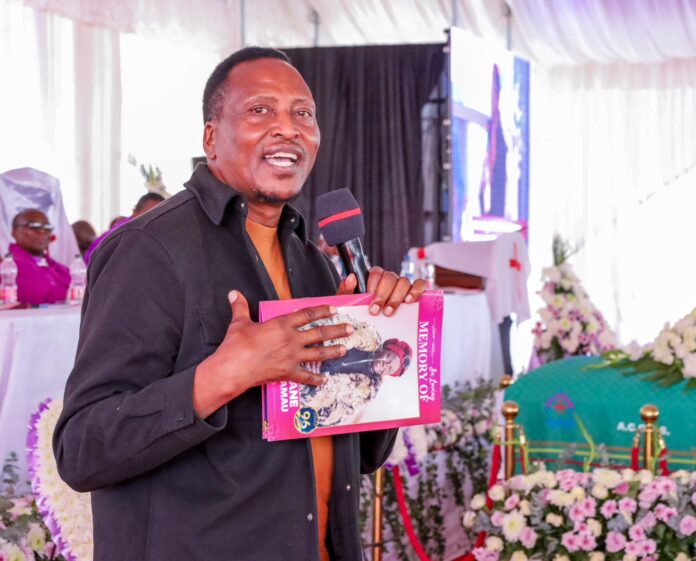
Kisii Senator Richard Onyonka has urged former Deputy President Rigathi Gachagua not to kill the United Opposition dream.

While speaking during the funeral of the mother of former Murang’a gubernatorial candidate Jamleck Kamau in Kigumo, on Friday, February 6, 2026, he pleaded with the Democracy for Citizens Party (DCP) leader not to kill the aspirations of the United Opposition.

He continued to stress the essence of unity among the opposition principals, urging them to work together.

According to him, if they fail to unite, they will be “hanged separately” by their main contender in 2027, President William Ruto, due to their lack of unity.

He went ahead to state that, as members of the United Opposition, their role is to follow in the footsteps of their party leaders and principals.

“Please, Mheshimiwa Gachagua, don’t kill our dream. Keep yourselves together. Carry Matiang’i with you, carry Martha Karua with you, and carry Justin Muturi with you. We are waiting for you to tell us where we are going, because if all of you do not do that, you will be hanged separately by William Ruto as we watch from outside the tent,” Onyonka stated.

This comes at a time when the United Opposition, which has now been rebranded as the United Alternative Government by Wiper leader Kalonzo Musyoka, is putting its heads together to strategise for the 2027 general election.

In the recent past, there have been evident internal conflicts within the opposition, where Gachagua appeared to be in wrangles with former Interior Cabinet Secretary and Jubilee Party leader Fred Matiang’i.

However, tensions seem to have eased, and the two now appear to be working together.

The United Opposition is set to hold a one- or two-day retreat starting on February 12, 2026, in order to deliberate on the coalition’s name and agree on the matrix they will use to choose their presidential flagbearer.

Despite the party principals each harbouring individual presidential ambitions and having been cleared and endorsed by their respective parties, with the latest being Democratic Party (DP) leader Justin Muturi who was cleared by his party to contest for the presidency.

They have all agreed that when the right time comes, they will shelve their individual aspirations and rally behind the chosen presidential candidate to face President William Ruto.

Gachagua threatens to disclose identities of those behind Othaya church attack

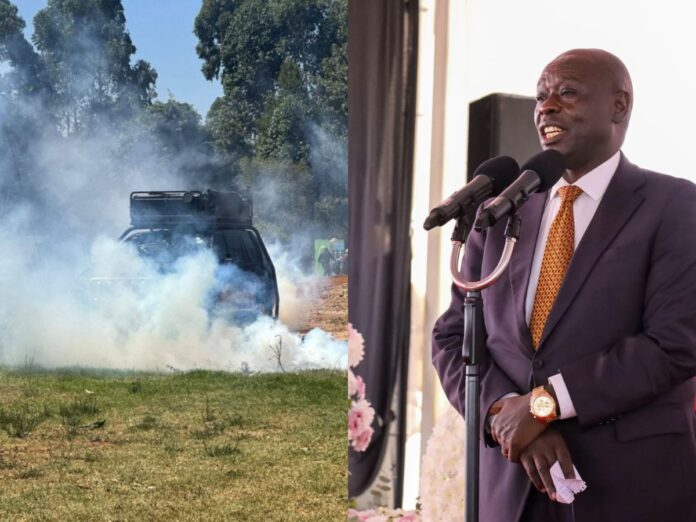
Former Deputy President Rigathi Gachagua has threatened to publicly reveal the identities of the assailants who attacked him during a church service in Witema, Othaya, on Sunday, January 25, 2026.

While speaking during the funeral of Jamleck Kamau’s mother in Kigumo, Murang’a County, on Friday, February 6, 2026, the Democracy for Citizens Party (DCP) leader stated that they have gathered sufficient evidence identifying the individuals responsible for the attack, which turned a once solemn church service into chaos and forced worshippers to flee the church premises.

Former Deputy President Rigathi Gachagua’s motorcade was attacked while in Othaya on Sunday, January 25, 2026. PHOTO/facebook.com/DPGachagua

He further claimed that they possess credible intelligence from internal sources and warned that they would release the information to the public if no action is taken.

According to Gachagua, they had already issued a two-week ultimatum to Inspector General of Police Douglas Kanja to take action against those involved. He warned that failure to act would compel him to make the identities public.

Hii information yote tumeipata, hata kutoka kwa marafiki wetu wa kigeni kwa sababu ya satellite images, na katika siku chache zijazo baada ya ile deadline ya tarehe 16 tutarelease hizo video tuonyeshe vile walituattack,” Gachagua said.

The remarks come days after the attack during the church service, which drew mixed reactions from the public. While some condemned the violence, others claimed the incident may have been stage-managed by Gachagua’s allies to gain public sympathy.

Several top government officials condemned the incident, led by Interior Cabinet Secretary Kipchumba Murkomen, who denounced the violence and tasked IG Douglas Kanja with initiating investigations into the attack on the DCP leader.

Deputy President Kithure Kindiki also weighed in, stating that violence and political chaos should never occur in places of worship.

Meanwhile, United Opposition leaders expressed solidarity with Gachagua, accompanying him to the Inspector General’s office at Vigilance House to present their complaints and demand action within two weeks.

They warned that failure to act could trigger mass demonstrations which, according to Gachagua, would surpass those previously organised by former Prime Minister Raila Odinga.

Robert Alai accuses Sifuna of publicly disrespecting Oburu as ODM rift widens

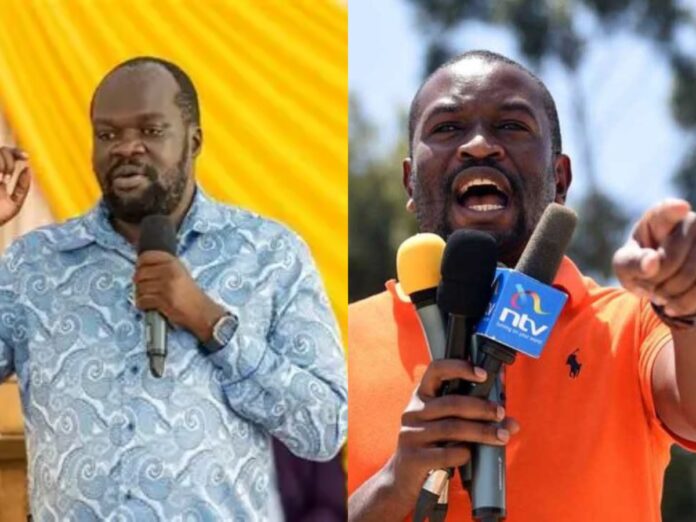
Kileleshwa MCA Robert Alai has sparked fresh controversy within the Orange Democratic Movement (ODM) by accusing Secretary General Edwin Sifuna of showing blatant disrespect toward acting Party Leader Oburu Oginga.

In a post on X on Thursday, Alai wrote: “Yaani Sifuna amedharau our Party Leader mpaka our party leader is reduced to engaging junior party leaders like Sifuna through press conferences?”

The tweet referenced a detailed statement issued earlier by Oburu, responding to Sifuna’s remarks during a February 3 interview on a local TV station.

Alai, a known internal critic within ODM, suggested that Sifuna’s public criticism had forced Oburu into the undignified position of defending party decisions through a formal statement.

In the interview, Sifuna questioned the legitimacy of certain party appointments, including Oburu’s installation as interim leader following Raila Odinga’s transition to the African Union Commission chairmanship.

Sifuna also cautioned against early coalition talks with President William Ruto’s United Democratic Alliance ahead of the 2027 elections, arguing that such discussions could compromise ODM’s ideological stance. Oburu’s response pushed back firmly, stressing that party policy is determined by constitutionally mandated organs, not by individual opinions.

Sifuna criticised the focus on regional representation in appointments, arguing that discussions had shifted from principles to claims about which regions benefit from government positions. He expressed concern that the debate was being framed around tribal lines rather than merit or fairness.

He also accused some leaders of adopting a transactional approach to power, comparing their behaviour to the language of dividing resources into shares. According to Sifuna, those who had previously criticised such practices were now engaging in similar conduct after experiencing government power.

Canada, France to open consulates in Greenland amid ongoing US threats

Canada and France will open diplomatic consulates in Greenland in a strong show of support for NATO ally Denmark and in the wake of US efforts to secure control of the Arctic island.

Canadian Foreign Minister Anita Anand travelled to Nuuk on Friday to open the consulate, which officials say could enhance cooperation on climate change and Inuit rights.

She was accompanied by Canada’s Indigenous governor general, Mary Simon.

France’s Ministry for Europe and Foreign Affairs said Jean-Noel Poirier also would take up his duties as consul general, making it the first European Union country to establish a consulate general in Greenland.

Poirier will be “tasked with working to deepen existing cooperation projects with Greenland in the cultural, scientific, and economic fields, while also strengthening political ties with the local authorities,” the ministry said.

“The first item on the agenda will be to listen to Greenlanders, to hear them, to let them explain in detail their position, and from our side to confirm to them our support, as much as they and the Danish side want,” Poirier told the AFP news agency.

Canada, which Trump has called upon to give up its sovereignty and become the 51st state of the US, pledged to open a consulate in Greenland in 2024, before Trump’s recent talk of a takeover, and the formal inauguration was delayed from November because of bad weather.

Since returning to the White House last year, Trump has insisted that Washington needs to control the strategic, mineral-rich Arctic island for security reasons.

Trump last month backed off threats to seize Greenland after saying he had struck a “framework” deal with NATO chief Mark Rutte to ensure greater US influence.

A US-Denmark-Greenland working group has been established to discuss Washington’s security concerns in the Arctic, but details have not been made public.

Iceland opened a consulate in Nuuk in 2013, while the United States, which had a consulate in the Greenlandic capital from 1940 to 1953, reopened its mission in 2020.

Iranian foreign minister says US talks in Oman a ‘good beginning’

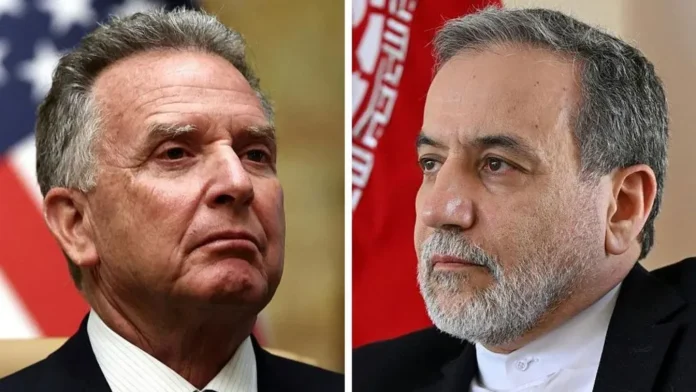
Senior US and Iranian officials have held talks in Oman amid a crisis that has raised fears of a military confrontation between the two countries.

The indirect discussions in the capital Muscat happened as the US military builds up its presence in the Middle East in response to Iran’s violent repression of nationwide anti-government protests last month, which human rights groups say killed many thousands of people.

Speaking on state television after the talks, Iranian Foreign Minister Araghchi said negotiators would return to their capitals for consultations, but described the meeting as a “good beginning”.

Iran had previously said the talks would be limited to its nuclear programme. The US, which is demanding Iran freezes its nuclear programme and discards its stockpile of enriched uranium, had said they should also involve Iran’s ballistic missiles and the country’s support for regional armed groups.

Earlier, Oman said its foreign minister had held separate talks with Araghchi, and US special envoy Steve Witkoff and President Trump’s son-in-law and emissary Jared Kushner.

It said the “consultations focused on preparing the appropriate conditions for resuming diplomatic and technical negotiations”.

The last round of talks between the US and Iran over the Iranian nuclear programme had been scheduled for last June but collapsed after Israel’s surprise attack on Iran.

In recent weeks, Trump has threatened to bomb Iran if it does not reach a deal. The US has sent thousands of troops and what Trump has described as an “armada” to the region, including an aircraft carrier along with other warships as well as fighter jets.

Iran has vowed to respond to an attack with force, threatening to strike American military assets in the Middle East and Israel.

For Iran’s embattled leaders, the talks could be the last chance to avert US military action that could further destabilise the regime, which analysts say is in its weakest position since it came to power following the 1979 Islamic Revolution.

Trump’s threats came as Iran’s security forces brutally repressed large-scale demonstrations, which were triggered by a deepening economic crisis, and saw protesters calling for the end of the Islamic Republic.

The Human Rights Activists News Agency, a Washington-based group, said it had confirmed at least 6,883 deaths, warning that the number could be much higher, and that more than 50,000 people had been arrested.

The current crisis has brought back to discussions the issue of Iran’s nuclear programme, which has been at the centre of a long-running dispute with the West.

For decades, Iran has said its programme is for peaceful purposes, while the US and Israel have accused it of being part of an effort to develop a weapon.

Iran says it has the right to enrich uranium in its own territory and has rejected calls for its stockpile of highly enriched uranium – 400kg (880lb) – to be transferred to a third country. The country says its uranium enrichment activity stopped after the US attacks last year.

Officials have indicated being open to concessions, which could include the creation of a regional consortium for uranium enrichment, as proposed during talks with the US that collapsed when Israel launched its surprise war last year.

At the same time, Iran says demands to limit the country’s ballistic missile programme and to end the support for proxies in the region – an alliance Tehran calls the “Axis of Resistance” that includes Hamas in Gaza, militias in Iraq, Hezbollah in Lebanon and the Houthis in Yemen – are unacceptable and a breach of its sovereignty.

On Tuesday, Iranian President Masoud Pezeshkian said he had instructed Araghchi to “pursue fair and equitable negotiations” with the US, “provided that a suitable environment exists”.

For the US, the meeting, depending on its outcome, could offer an off-ramp for Trump from his military threats.

Regional countries are concerned that a US strike could lead to a wider conflict or long-term chaos in Iran, and have warned that air power alone will not be able to topple the Iranian leadership.

Asked if Iran’s Supreme Leader Ayatollah Ali Khamenei should be worried, Trump told NBC News on Wednesday: “I would say he should be very worried. Yeah, he should be”.

US Secretary of State Marco Rubio said the discussions would have to go beyond the nuclear issue for “something meaningful” to be achieved.

“I’m not sure you can reach a deal with these guys, but we’re going to try to find out. We don’t see there’s any harm in trying to figure out if there’s something that can be done,” he said.

The talks, initially planned to be held in Istanbul, are an effort led by Egypt, Turkey and Qatar to defuse tensions.

Iran, however, asked at the last minute for the location of the meeting to be changed to Oman, which hosted discussions last year, and for it to be limited to Iranian and American officials.


CJ Koome hosts judge Okowa as Kenya backs bid for full ICJ term

Chief Justice Martha Koome, on Friday, hosted International Court of Justice (ICJ) Judge Phoebe Okowa for a courtesy meeting at her office.

The talks underscored the growing importance of cooperation between national and international judiciaries in strengthening the rule of law and judicial independence.

Judge Okowa, who is Kenya’s representative at the world’s highest court, is currently seeking election to a full term at the ICJ, following her election to serve the remainder of a vacant term. 

Her engagement with the CJ formed part of a series of high-level consultations as Kenya rallies institutional and diplomatic support for her bid.

In a statement after the meeting, CJ Koome said the engagement was “fruitful,” noting that it provided an opportunity to reflect on how national and international judicial systems can work together to advance justice in an increasingly interconnected world.

“Today, I held a courtesy meeting with Judge Phoebe Okowa of the International Court of Justice. We had a fruitful discussion on the evolving role of international courts in strengthening the rule of law and judicial independence,” Koome said.

The two jurists exchanged views on how international jurisprudence continues to shape domestic legal systems, particularly in an era where courts are increasingly confronted with complex constitutional questions, transnational disputes and the need to uphold the rule of law amid political and social pressures.

Koome noted that national courts do not operate in isolation, but are part of a broader global legal architecture that benefits from continuous engagement, shared experiences and mutual respect among judicial institutions.

Judge Okowa, an accomplished international law scholar and jurist, has been at the centre of Kenya’s renewed push to entrench its presence within global legal institutions.

Her quest for a full term at the ICJ has received backing across government and the legal fraternity, with leaders describing her candidature as a reflection of Kenya’s commitment to multilateralism and international law.

Last week, Judge Okowa was hosted by Foreign Affairs Principal Secretary Korir Sing’ei, who reaffirmed the government’s support for her bid and highlighted her credentials, integrity and contribution to international jurisprudence. 

The engagement formed part of broader diplomatic efforts aimed at securing international goodwill ahead of the election.

She has also held talks with President William Ruto at State House.

Her election to fill a mid-term vacancy, Ruto said, reflects the strong confidence of UN Member States in her credentials, experience, and integrity.

“Her success reflects not only personal excellence, but also our nation’s continued commitment to contributing distinguished professionals to the multilateral system,” Ruto said.

Friday’s meeting with the CJ further reinforced the Judiciary’s role in supporting Kenya’s international obligations and aspirations, while remaining firmly anchored in its constitutional mandate.

The talks also touched on the need to safeguard judicial independence, a principle both leaders agreed is central to public confidence in justice systems worldwide. 

Judge Okowa’s engagement with the CJ comes at a time when judiciaries globally are navigating increasing scrutiny, evolving legal norms and rising expectations from the public. 

The meeting was seen as a strong signal of Kenya’s unity across institutions in promoting the rule of law, both domestically and internationally, as the country continues to position itself as a key player in global judicial and legal affairs.

Kalonzo holds talks with powerful US Senator Coons during his America tour

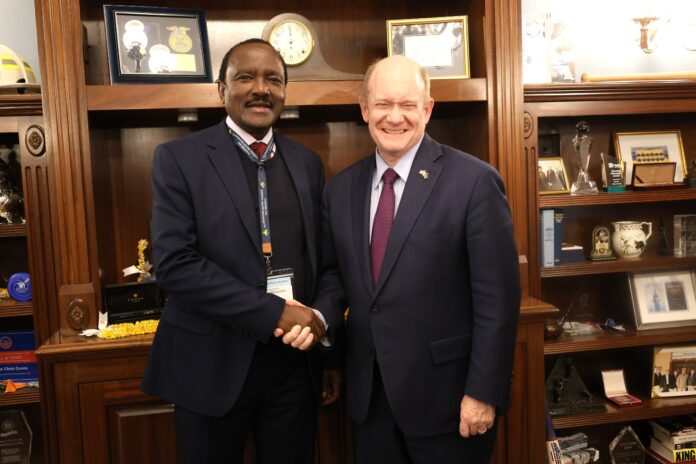
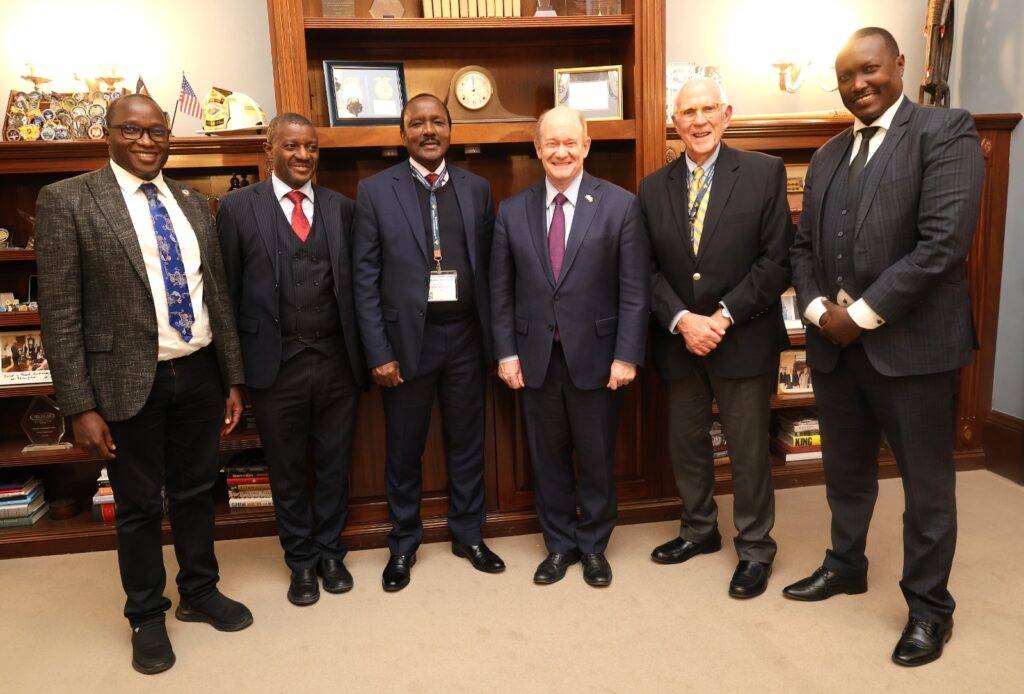
Wiper Democratic Movement leader Kalonzo Musyoka engaged Delaware Senator Christopher Andrew Coons in discussions at the Russell Senate Office Building immediately after the 74th National Prayer Breakfast.

In an X post dated February 6, 2026, Kalonzo described the meeting as a meaningful engagement focused on democratic governance, institutional strength, regional stability, and the enduring Kenya-United States partnership.

“I held a meaningful engagement with Delaware Senator Christopher Andrew Coons… Our discussion centered on democratic governance, institutional strength, regional stability, and the enduring partnership between Kenya and the United States of America.

“We reflected on the responsibility of leadership to remain anchored in values that uplift people, strengthen nations, and promote justice across societies,” Kalonzo said.

He was accompanied by Deputy Minority Leader in the National Assembly, Robert Mbui (Kathiani MP), Makueni County Senator Dan Maanzo, and Mukurweini MP John Kaguchia.

He emphasised that public service must be guided by conscience, integrity, and purpose. “When leadership is grounded in principle and guided by faith in what is right and just, nations move forward with clarity and hope,” he added.

Kalonzo highlighted that the discussions went beyond diplomacy, noting the importance of securing Kenya’s place in global conversations, building meaningful relationships, and ensuring the country remains respected and influential.

“These engagements are about more than diplomacy. They are about securing Kenya’s place in the community of nations, building relationships that matter, and ensuring that our country remains respected, heard, and influential on the global stage.”

Kalonzo also noted that Kenya must stand where conversations that shape the future of nations are held, promising to remain present, purposeful, and prepared.

Bitcoin falls to lowest level since Trump took office

The price of Bitcoin fell to its lowest level in 16 months despite US president Donald Trump’s personal and public support for cryptocurrency.

A single Bitcoin went as low as $60,000 (£44,000), its lowest level since September 2024, before rallying slightly.

The drop followed months of surging Bitcoin prices, which saw the cryptocurrency hit an all-time high of $122,200 in October 2025.

“Those who bet too big, borrowed too much or assumed prices only go up are now finding out the hard way what real market volatility and risk management look like,” Joshua Chu, co-chair of the Hong Kong Web3 Association told Reuters.

According to the Financial Conduct Authority (FCA), around 8% of UK adults were investing in crypto in 2025 – a drop of 4% from the year before.

But it said the typical amount of money held by individuals had now increased – with one in five holding between £1,000 and £5,000 in the digital currencies.

Among Trump’s first actions upon re-entering the White House in January 2025 was an executive order aimed at making the US the “crypto capital of the planet”.

In his first year back in office, Trump launched a personal brand of cryptocurrency, with the bulk of profits going into his own companies. And he continued his involvement with World Liberty Financial, an investment vehicle for other crypto assets that is owned by the Trump family.

By Anthony Solly

Irũngũ Houghton to Step Down as Amnesty International Kenya Executive Director in June

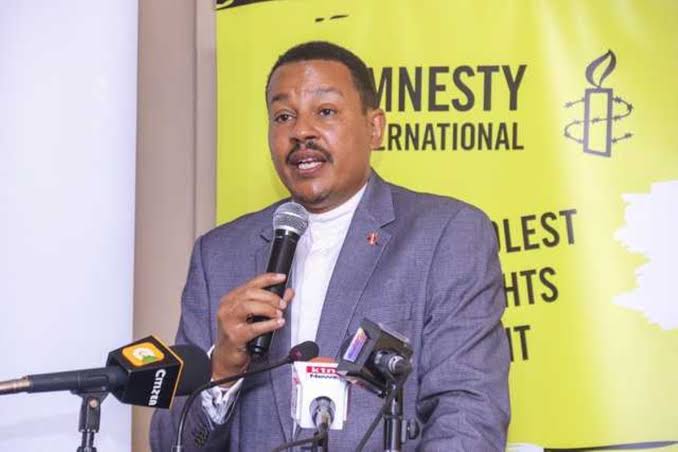
Irüngü Houghton will step down as Executive Director of Amnesty International Kenya in June 2026 after eight years at the helm.

In a statement on Friday, February 6, Amnesty International Kenya Board Chairperson Stellah Bosire made the announcement, describing his tenure as a period of major growth, structural reform, and strengthened independence.

She outlined the expansion of the organization’s grassroots base and financial stability achieved over the years.

“After eight transformative years of service, Irüngü Houghton will conclude his tenure as Executive Director of Amnesty International Kenya in June 2026.

“Under his relentless stewardship, our membership grew eightfold to establish 165 Circles of Conscience across 35 counties. This growth was matched by financial resilience. Our budget grew 150% and significantly diversified fuelled by the very people we serve through member subscriptions, individual giving and multi-year funders,” she said.

Bosire also highlighted institutional reforms under Houghton’s tenure that reshaped Amnesty Kenya’s governance model.

“Beyond the numbers, Irüngü’s time as Director leaves a deep institutional footprint. By fortifying our internal governance and establishing a Board directly elected by our members over this period, Amnesty Kenya has evolved into a truly democratic, independent Section within Amnesty International,” she added.

Bosire said the transition marks a new phase for the organization, with the recruitment of a new leader already underway.

“The Board, staff and outgoing Executive Director view this transition as a profound testament to our strength. Today, the Board is initiating a professional, competitive and fair recruitment process to identify the successor. We look forward to announcing the outcome of this search later this year,” she further said.

On his part, Houghton reflected on his time leading the human rights organization and the milestones achieved since 2018.

He recalled the commitments he made upon joining and said they had been fulfilled.

“As I approach the last lap and the end of my tenure as Amnesty International Kenya Executive Director in June, I feel only a sense of accomplishment and pride.

“When I joined in January 2018, I promised to grow membership, diversify funding, strengthen our campaigning muscle, and guide the transition from an International Secretariat office to an independent, democratic and member governed Section. We have delivered on every one of those promises,” he said.

File image of Irungu Houghton

Houghton expressed confidence in the transition process being overseen by the board, and affirmed his continued connection to Amnesty beyond his formal role.

“A smooth leadership transition is not just procedural, it is a sign of a confident and mature organization. I have no doubt that our Board will oversee a professional, fair and independent recruitment process.

“The best Amnesty staff never really leave. They remain members, supporters, and lifelong defenders of the movement’s mission. For me, this is certainly true. Last year, I became Amnesty Kenya’s first Life Member,” he added.

Houghton concluded by pointing to the broader human rights landscape and reaffirming his commitment to the movement.

“At a time when millions face threats to constitutional freedoms at home and the erosion of the international human rights system, Amnesty remains a vital force and a moral compass for us all.

“There will be time to share more in the coming months. For now, my appreciation, commitment and solidarity with all our members, supporters, staff and the wider movement of human rights defenders,” he stated.

Martha Karua questions IEBC appointment of Moses Sunkuli as acting CEO

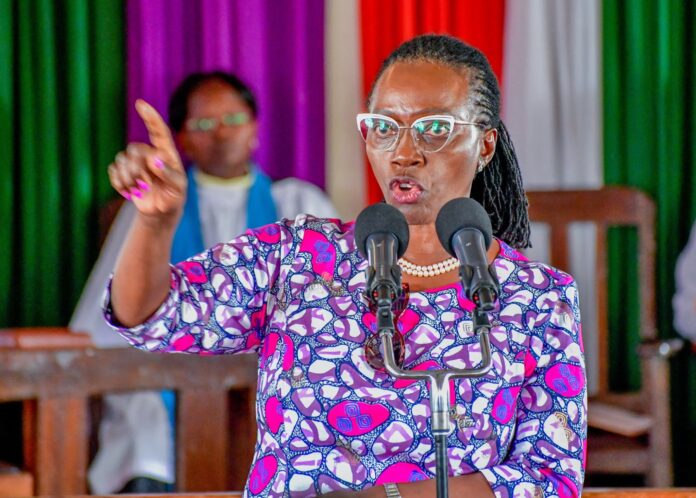
People’s Liberation Party (PLP) leader Martha Karua has raised questions over the process that led to the appointment of the Acting CEO at the Independent Electoral and Boundaries Commission (IEBC).

In a statement on Friday, February 6, Karua questioned why the commission chose to bypass the deputies of the former CEO in making the temporary appointment.

“Why would the Independent Electoral and Boundaries Commission (IEBC) bypass the two deputies of the former CEO in this appointment which is temporary? Is there something we are missing or is it mischief at play,” she said.

In a statement on Thursday, February 5, IEBC announced the appointment of Moses Ledama Sunkuli as its Acting Chief Executive Officer and Commission Secretary. 

IEBC chairman Erastus Edung Ethekon confirmed the leadership change and immediate effect of the appointment.

“The Independent Electoral and Boundaries Commission (IEBC) wishes to announce the appointment of Moses Ledama Sunkuli as the Acting Chief Executive Officer and Commission Secretary, effective immediately,” the statement read.

IEBC explained that the decision was made after the exit of former CEO Marjan Hussein Marjan and highlighted Sunkuli’s background within the institution.

“This appointment follows the exit of the former Chief Executive Officer. Sunkuli, who currently serves as the Commission’s Director of Electoral Operations, brings extensive experience and internal institutional knowledge to this role,” the statement added.

IEBC explained that the appointment is temporary as the recruitment process for a substantive CEO gets underway.

“Sunkuli will serve in an acting capacity for a period of six (6) months or until the recruitment and appointment of a substantive Chief Executive Officer is finalized.

“The Commission is committed to fast-tracking the recruitment of a substantive Chief Executive Officer/Commission Secretary and ensuring a seamless transition, while maintaining the highest standards of excellence in service delivery to the Kenyan people,” the statement concluded.

Create a free account, or log in.

Gain access to read this content, plus limited free content.

Yes! I would like to receive new content and updates.

Sponsored Ad

Ad 1
Ad 2
Ad 3
Ad 4
Ad 5
Ad 6