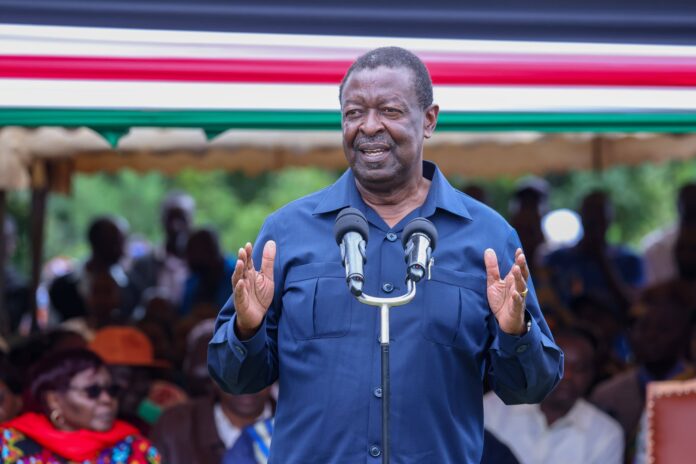
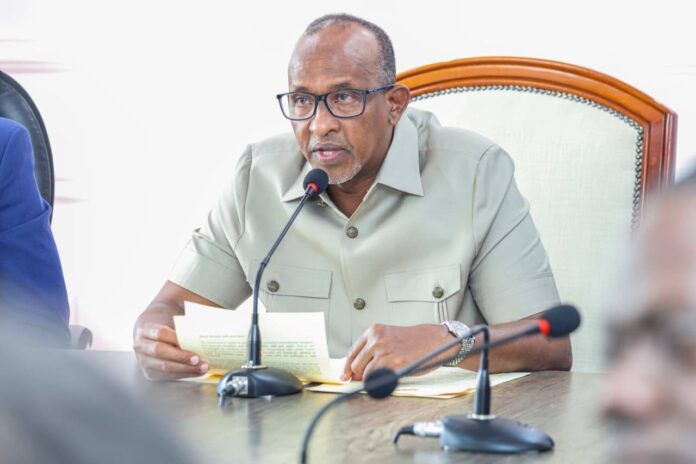
Mudavadi said this is a result of the normalcy of the global economy being systematically destabilized by cascading global shocks.
He said severe economic pressures driven by a combination of surging fuel prices as a result of the crisis in the conflict prone middle east coupled with other emerging global trends should be an awakening call to Kenyans.
“In the recent past humanity has been affected due to what is going on globally, affecting economies, livelihoods and destabilizing societies. Kenyans must realise that it is not going to be like instant coffee to fix some of the challenges we are facing now,” warned the Prime CS.
“It might not be business as usual in the next three or four months as a result of what is happening in the middle east, and the surge in oil prices is only one of the indicators that we should begin thinking of alternative solutions that will be available to make us survive.”
Mudavadi said these challenges are fueling widespread inflation, increasing transport and production costs, and threatening job security across the board.
He hence said Kenyans should be wary of the net effects, stop finger-pointing and rally together to find both medium and long-term solutions for sustainability.
Mudavadi, who also doubles as the Foreign Affairs CS, said from the COVID-19 shock that shook the world as well as the Russia-Ukraine war, many nations are yet to fully recover and stabilize their economies.
He was speaking when he officially closed the week-long Science, Technology, Research and Innovation week that was held at the Kenyatta International Convention Centre (KICC) in Nairobi.
“Advancements in solutions from skills in technology and innovation, based on enhanced science and research should be the central focus for us. We need to think outside the box to help society adjust to the global shocks through accelerated research and innovation.” said Mudavadi.
“We should begin thinking of what innovations we are bringing to the market and be honest with each other that the impact of these shocks, especially what is happening in the middle east, is going to be with us for sometimes.”
Mudavadi said not only Kenya but the globe is walking on a tight rope and fixing some of these challenges will not be like instant coffee.
He said the globe will be feeling more pressure in the near future and called on Kenyans to psychologically prepare for tougher times and embrace new ways of survival.
“Ramping up the whole idea of science and technology, therefore remains very important for us as a country. Research, science, technology and innovation remain to be essential drivers of Kenya’s economic transformation and inclusive growth,” he said.
The Prime CS said that Kenya is among the leading innovation-driven economies in Africa and the government is committed to enhance funding for research, science and innovation to at least two per cent of Kenya’s Gross Domestic Product to reflect a strong and growing foundation for the ecosystem.
He said President William Ruto has strategically placed science, technology and innovation at the core of Kenya’s socioeconomic transformation journey by effectively harnessing science, technology and innovation for sustainable development and societal transformation.
Mudavadi said scientific knowledge becomes more useful when it is transferred to communities, markets, industry, policy and the next generation.
“The task before us now is to build upon these possibilities deliberately, decisively and at scale to drive national growth and shared prosperity. It is equally important that we confront the constraints that continue to limit the full realization of our national science, technology and innovation potential as a driver of national development,” Mudavadi said.
“I am confident that the establishment of the State Department for Science, Research and Innovation will help resolve the coordination and governance issues. It will ensure that we collectively drive the changes required so that research informs policy, inventions are translated into market-ready innovations and science delivers measurable economic value in the daily lives of Kenyan citizens.”
The Prime CS also launched the Masterplan for Research Financing and Capacity Strengthening document, which is supported by the United Kingdom’s Foreign, Commonwealth and Development Office.
Present were Principal Secretaries Prof. Shaukat Abdulrazak (Science, Research and Innovation) and Beatrice Inyangala (Higher Education) among other distinguished scholars, researchers and innovators drawn from various sectors of the economy.
Waymo has now paused its self-driving car service in five US cities, in response to a software issue which has seen some vehicles enter flooded roads and get stuck.
The US firm recently issued a recall of thousands of robotaxis following an incident on 20 April in San Antonio, Texas when an empty Waymo vehicle entered a flooded road and was swept into a creek.
Following a similar incident in Atlanta, Georgia, a Waymo spokesperson said it had expanded the temporary pause to five cities – four in Texas as well as Atlanta – “out of an abundance of caution”.
The company told Reuters it had also suspended services on US freeways as it works to improve its cars’ performances in construction zones.
The company, which hopes to operate a robotaxi service in London later this year, told the BBC safety was its “highest priority”.
“We continue to closely monitor forecasts, alerts, and live weather conditions, and we will resume serving riders soon,” it said.
The software problem, which could allow vehicles “to slow and then drive into standing water on higher speed roadways” was highlighted in a letter posted on the National Highway Traffic Safety Administration website earlier this month.
In response, Waymo issued a voluntary recall of nearly 3,800 of its robotaxis that use the company’s fifth and sixth-generation automated driving systems, and said it was working on “additional software safeguards”.
Meanwhile, the firm has temporarily pulled its service on freeways in San Francisco, Los Angeles, Phoenix, and Miami, and said it was evaluating its cars’ performance in construction zones.
In a statement given to Reuters, the company said it expected to resume those routes soon.
Waymo is owned by Google’s parent company Alphabet, and says it provides more than 500,000 trips per week across multiple US cities including San Francisco, Austin and Miami.
Over the past year, several incidents with driverless cars have raised concerns over their safety.
In December 2025, a large power outage in San Francisco led Waymo taxis to stop working around the city, causing significant disruption.
And in April, a mass Apollo Go robotaxi outage in the Chinese city of Wuhan caused at least a hundred self-driving cars to stop mid-traffic.
South Korean police are seeking an arrest warrant for a YouTuber who allegedly faked evidence that defamed actor Kim Soo-hyun and fuelled a scandal which ended his career.
Authorities say the YouTuber had manipulated screenshots of text messages and shared an audio file made with AI to give the impression that the actor had dated actress Kim Sae-ron when she was still a minor.
The allegations surfaced last year, shortly after Kim Sae-ron killed herself at the age of 24.
The scandal shook the country and upended the career of Kim Soo-hyun, who is a household name in South Korea. The actor has consistently denied the allegations.
The YouTuber, Kim Se-ui, has since posted a video claiming the authorities’ allegations were a “subterfuge meant to disrupt his investigation”.
Months after Kim Sae-ron’s death, the YouTuber had posted online a voice recording in which the actress could be heard saying she had been dating Kim Soo-hyun since she was in middle school.
The YouTuber Kim Se-ui, who has nearly a million followers on his channel, had also presented screenshots of text messages purportedly sent between the actor and the actress.
Authorities now say that the voice recording was generated by AI.
They also allege that the YouTuber had manipulated screenshots of text messages sent from the actress’s phone to make it look like she had been texting Kim Soo-hyun.
The YouTuber had knowingly spread the false claims for financial gain, authorities say.
His actions “collapsed Kim Soo-hyun’s social base and his economic activities across the board, and destroyed the basis for his professional survival,” according to a police filing reported by news outlet JoongAng Ilbo.
Police also say Kim Soo-hyun is “still receiving psychiatric treatment”.
Kim Sae-ron herself was a victim of online hate by fans after she was fined for a 2022 drink-driving incident. Prior to that, she had been seen as one of the most promising young actresses in South Korea.
Soon after her death, rumours surfaced online alleging that Kim Soo-hyun dated her when she was just 15 years old. These gained traction after the YouTuber posted the texts and audio, and the actress’ family publicly backed him up.
Kim Soo-hyun’s agency initially denied the couple had ever dated.
The actor later admitted he had in fact dated the actress for a year – but only when she was an adult.
At a tearful press conference in March 2025, the actor insisted they had never dated while she was underage. “I can’t admit to something I didn’t do,” he said.
That month, he filed criminal complaints and lawsuits against the YouTuber and the actress’ family for making false accusations.
Since then Kim Soo-hyun – who once starred in multiple hit TV shows and advertisements – has not made any official public appearances.
The release of Knock-Off, a Disney+ series he had been working on when the scandal broke, has been indefinitely postponed.
Kim Soo-hyun and his agency have not yet commented on the authorities’ application for an arrest warrant on the YouTuber.
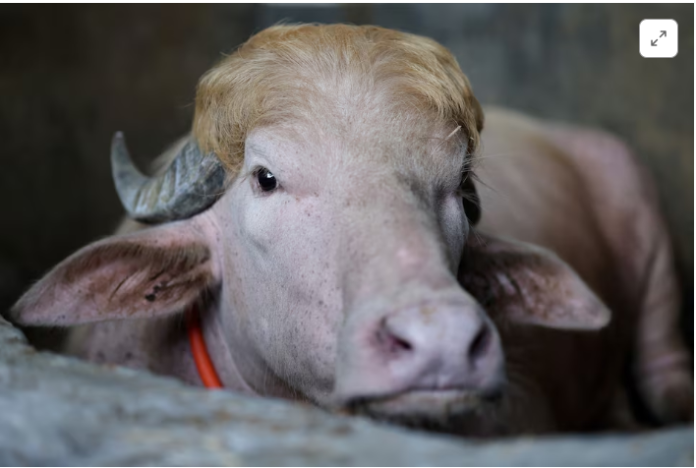
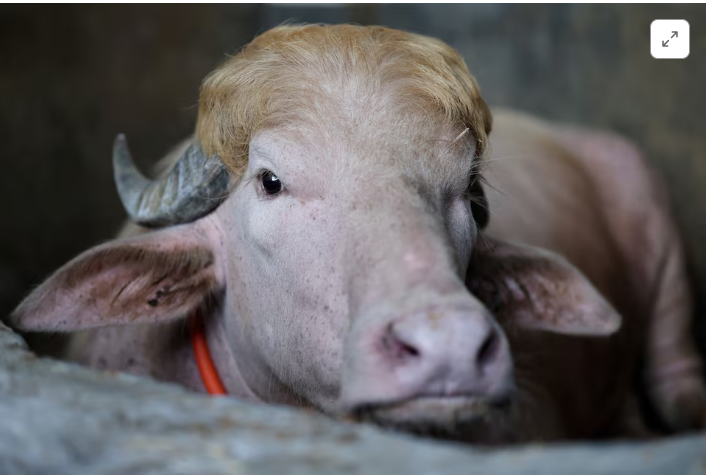
Dozens of people flocked to the farm daily, with many traveling from distant districts to pose for selfies and videos with the unusually coloured animal, which quickly went viral on social media.
“Despite its striking appearance, it is very calm by nature. It is an albino buffalo, and animals of this type are generally gentle and do not become aggressive unless provoked,” he added.
UNUSUAL ANIMALS GO VIRAL DURING EID FESTIVAL
Mridha said the buffalo required special care, including being bathed four times a day and fed four meals daily to keep it healthy and in good condition before Eid.
“It needed extra attention and care every day. The buffalo has already been delivered to a customer for sacrifice during Eid,” he said.
Albino buffaloes are considered rare in Bangladesh, where most buffaloes are dark-skinned. The animal’s cream-coloured body, pinkish nose and long blond hair made it stand out among thousands of cattle prepared for the Muslim festival of Eid al-Adha, when families traditionally sacrifice livestock.
In recent years, the Muslim-majority country has seen unusually large or distinctive sacrificial animals become viral Eid attractions, often given celebrity-inspired names to draw buyers and visitors.
The buffalo’s resemblance to Trump, combined with its size and gentle temperament, has made it one of this year’s biggest crowd-pullers.
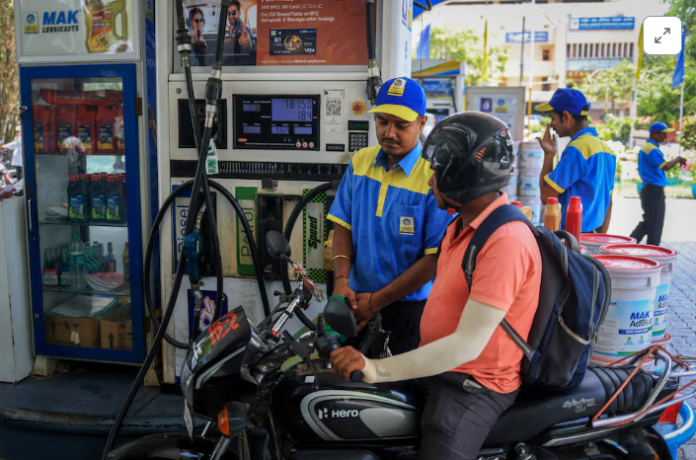
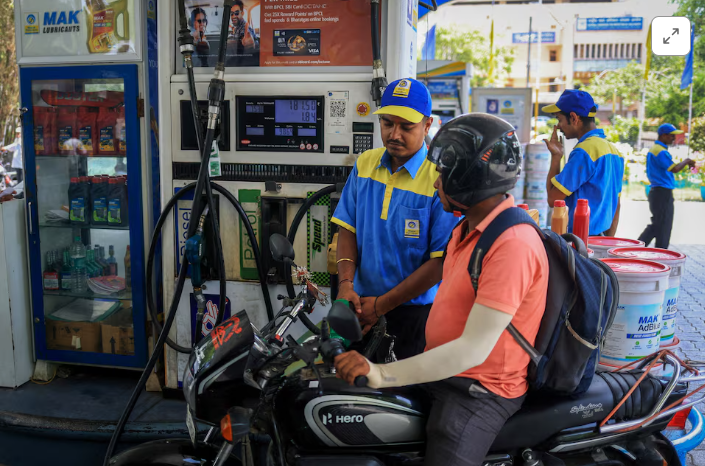
Indian state-owned fuel retailers raised petrol and diesel prices for the third time this month, dealers said on Saturday, as the companies look to recoup losses caused by elevated crude oil prices amid the Iran war.
India, the world’s third-largest importer and consumer of oil, was one of the last major economies to raise retail fuel prices after the U.S.-Israeli war on Iran triggered a surge in prices globally.
The price of fuel has become roughly 5 rupees more expensive over the three price increases. The fuel price rise announced on May 15 was India’s first in four years.
The companies are raising pump prices in a staggered manner, similar to the way they did in April 2022, when they increased retail prices after elections in some key states, including northern Uttar Pradesh.
Opposition parties have said the government headed by Prime Minister Narendra Modi had postponed the current price increases to try to win votes in recent state elections.
Still, sources at refiners have said more price increases are needed to recoup the losses.
Bharat Petroleum (BPCL.NS), opens new tab (BPCL) continues to incur a revenue loss of 25 to 30 rupees per litre on diesel and 10 to 14 rupees per litre on petrol despite the higher prices, the refiner’s chairman said earlier this week.
India’s oil ministry has said the government has no plans to provide financial support for refiners.
BPCL, Indian Oil Corp (IOC.NS), opens new tab and Hindustan Petroleum (HPCL.NS), opens new tab together control more than 90% of a network of 103,000 fuel stations and tend to set prices in tandem.
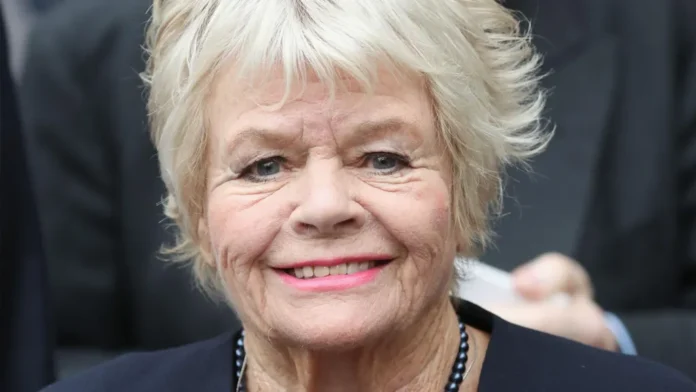
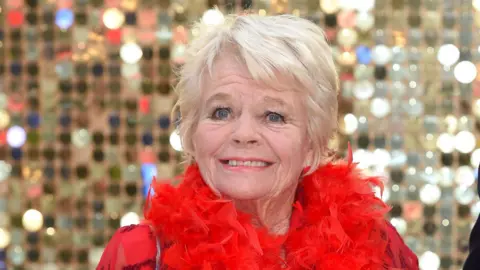
TV presenter Judith Chalmers, who hosted ITV’s long-running travel show Wish You Were Here…?, has died at the age of 90.
Her family said: “After living an extraordinary life that involved over 60 years in broadcasting and countless adventures all over the globe, Judy sadly passed away last night, surrounded by the family she loved so much after suffering with Alzheimer’s for some years.”
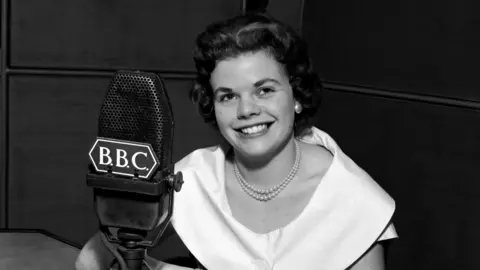
Chalmers also presented programmes including Come Dancing, ITV’s Good Afternoon, and BBC radio programmes including Woman’s Hour and her own Radio 2 show.
According to ITV News, they said her health had been declining for some time and she had become seriously ill in recent weeks, giving them time to be together with her.
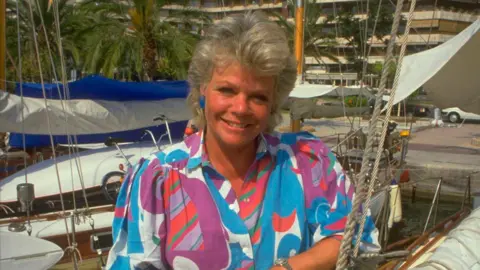
She took viewers to holiday destinations on Wish You Were Here…?
Chalmers began presenting ITV’s primetime show Wish You Were Here…? in 1974, continuing until 2003.
An ITV spokesman said: “As the host of Wish You Were Here…? for four decades, Judith Chalmers became one of the most beloved faces of British broadcasting.
“Her indelible contribution to television made Judith a national treasure and a lasting favourite amongst our audience, and we send our deepest sympathies to her family and friends at this very sad time.”
Chalmers began her career on children’s BBC and television programmes
Born in Gatley near Manchester, Chalmers began her career at the age of just 13, when she was chosen to present radio programme Children’s Hour from the city.
She made the leap to the small screen in the 1950s on Children’s Television Club, a forerunner of Blue Peter.
She then moved to London and was an on-screen announcer for BBC TV. After fronting a number of programmes for the corporation, she moved to ITV, where she presented daytime magazine shows.
They included Good Afternoon and Afternoon Plus, the latter of which featured among other things the first TV appearances by Dame Mary Berry, who was then cookery editor of Home and Freezer Digest.
Meanwhile, she travelled the world for Wish You Were Here…?, which gave viewers a snapshot of different holiday destinations and became a popular fixture in the schedules.
Chalmers also fronted events including Miss World, and presented a daily morning show on BBC Radio 2 in the early 1990s.
Chalmers was made an OBE in 1994.
She was married to sports presenter Neil Durden-Smith, and they had two sons.
In 2008, one of their sons, TV presenter Mark Durden-Smith, hosted a new version of her most famous show, called Wish You Were Here…? Now & Then, which revisited locations from the original programme.
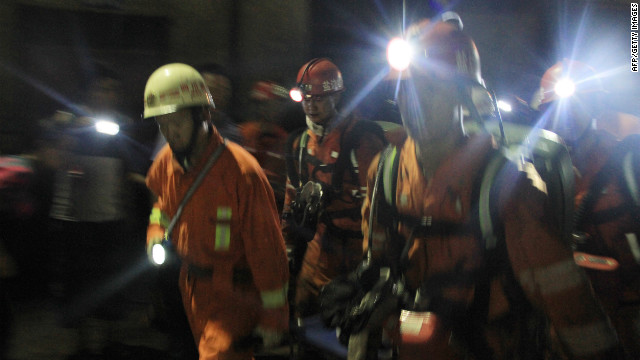
The blast happened at 19:29 local time on Friday (11:29 GMT) at a coal mine in Shanxi, with 247 workers reportedly on duty at the time of the incident.
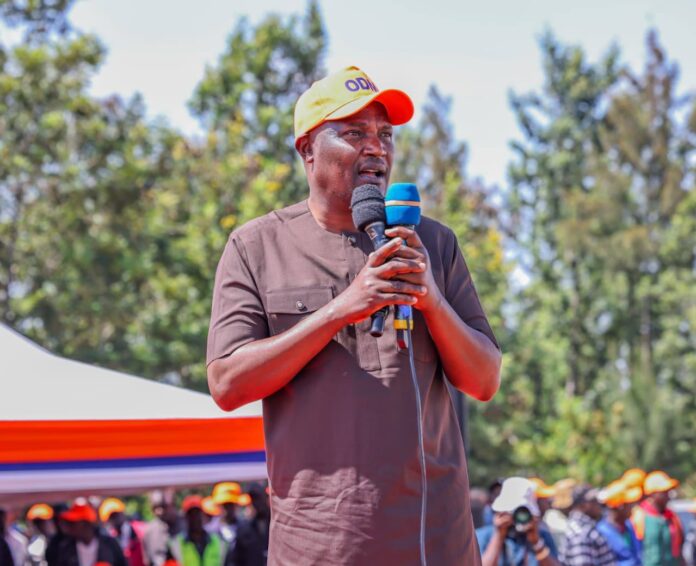
Treasury Cabinet Secretary John Mbadi has stirred fresh political debate after urging leaders from Nyanza and Western Kenya to begin early political realignment aimed at producing the country’s next president in 2032.
Mbadi said it was time for other regions outside the traditional power centres to unite and position themselves for the presidency after 2027.
He said the two regions must also produce a president when President William Ruto concludes his final term in office.
”It cannot be that 65 years after independence there are only two communities which have produced presidents of this country,” he stated in remarks that are likely to fuel national political conversation ahead of the next election cycle.
Mbadi noted that since independence, Kenya’s presidency has largely alternated between leaders from the Kikuyu and Kalenjin communities, arguing that it was time for other regions to be considered in national leadership.
“Kikuyus and Kalenjins have produced presidents of this country. We must tell them 2032, we don’t want to see a Kikuyu or a Kalenjin. We must allow other communities. We are 42 communities in this country, and each one of us has the capacity, competence and ability to lead this country,” he said.
He further claimed that several political leaders from Western Kenya already have ambitions for the top seat, naming key figures in the political landscape.
“I know Speaker Wetang’ula has ambitions, I know Musalia Mudavadi has ambitions, I also have ambitions, Wanga has ambitions and others also have ambitions,” Mbadi stated.
The Treasury CS called for early political consultations among leaders from the region, insisting that unity would be key in mounting a serious presidential bid in future elections.
“We must sit down and plan properly. If we are serious, then we must start now, not later,” he said.
Mbadi’s remarks are expected to generate political ripples, particularly in the Mount Kenya region, which is already seen as positioning itself for a possible presidential succession bid after President William Ruto’s expected second term concludes in 2032.
The remarks also come amid growing early political realignments across the country, as leaders quietly position themselves ahead of 2027.
ODM has been pushing to have the position of the deputy president ahead of 2027 in exchange for their support for President Ruto.
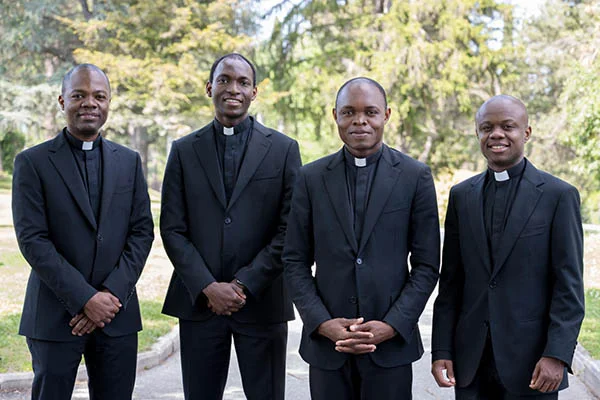
On Saturday 23 May 2026, four Nigerians will be ordained priests of the Opus Dei Prelature. The four men practiced different professions before this new adventure. They come from different backgrounds and in this article we share their responses to some questions designed to help you know them better.
To get us started, could you kindly introduce yourself?
Augustine: My name is Augustine Ufoegbune Onyekachi. I am from Isele-Uku in Delta State. I was born on August 28, 1988. Catholics normally remember my birthday easily because it falls on the feast day of Saint Augustine, which is why my parents gave me the name. I am the fifth of six siblings, and my family has been Catholic for three generations.
Anthony: I am Anthony Oluchukwu Momah, and my confirmation name is Alphonsus, though I hardly use it. I was born on October 24, 1991, in Shomolu local government area of Lagos State. I am from Ubulu-Uku in the Aniocha South local government area of Delta State.
Tobe: My name is Tobe Attoh. I was born on September 18, 1995, in Lagos. I am the third of four children. I grew up in Lagos as well, but I am from Asaba in Delta State.
Charles: My name is Charles Ozoene, from Ngwo in Enugu State, Nigeria. I was born on October 8, 1985 into a large family, the seventh of nine children and I grew up in Ibute Ameke Ngwo.
What is one thing about you that people would be surprised to learn?
Augustine: I would say that I am actually a bit reserved. Realizing this pushed me to actively step out of my comfort zone. When I was working as a teacher at Whitesands School, it really forced me to launch out, meet new people, and engage closely with my colleagues and students to build up my confidence.
Anthony: I don’t know if it’s a massive surprise, but if I look at my hobbies, people might be interested to know how much I’ve leaned into sports. I run, play football and I have increasingly developed an appetite for trying out different sports.
Tobe: I am a massive Batman fan. I’ve been a big fan of Batman since I was about 14 years old. I’m also an Arsenal fan and in the year of my ordination, we won the Premier League Trophy.
Charles: I would say that I’m someone who doesn’t like to rush things. I like to think things through beforehand. My parents sometimes call me “Charlie Menthol” because of my calm nature. My Igbo name is Ejike, which is a reminder not to use human force to do things, but to relax and allow the wind of grace to carry me.
What are your hobbies or talents?
Augustine: I play football and I jog. Since moving to Europe, I’ve also picked up a few new hobbies, specifically hiking and a bit of cycling.
Anthony: Aside from running and football, I’ve tried my hand at tennis and table tennis. When I was living in Spain, I did a bit of cycling as well. Additionally, I love singing. That trait comes directly from my family; I started singing when I was very small. In the 2024 Priestly Ordination, we sang the Igbo offertory song “Ezi Chukwu” that received a lot of traction because the choir was majorly Europeans (we were only two Nigerians in that Choir).
Tobe: I love football. I also enjoy watching movies, and I like to read quite a bit—especially a good book or a captivating novel. I also like to go on long walks when possible. Just a couple of Sundays ago, some friends and I went on a walking pilgrimage to visit the seven major basilicas in Rome, which was a beautiful experience.
Charles: When I moved to Spain, I finally had the courage to explore my interest in music and started learning the organ; I can now read sheet music. I also love playing football because it allows me to rest while fully engaging my brain and body. More recently, I’ve been playing Tennis, and I also enjoy cycling.
Tobe on a hiking trip with some other members of the Work.
What kind of music, movies, or books do you enjoy?
Augustine: I love the Classics. In terms of books, I deeply enjoy historical works because they help me situate myself within a specific context—Paul Johnson’s History of the World is a favorite. When I moved to Spain, reading Cervantes’ Don Quixote de la Mancha was a true eye-opener for me because the use of parables heavily mirrors traditional African storytelling. I also love Dostoevsky’s The Brothers Karamazov, Alessandro Manzoni’s The Betrothed, and, of course, our very own Chinua Achebe.
Anthony: I lean heavily toward gospel and classical music. I love sacred music and singing in choirs, though generally speaking, I can appreciate any good music. For movies, I enjoy classical films like The Lord of the Rings and The Hobbit. I don’t read a vast amount of literature, but I love diving into a well-written story.
Tobe: To be honest, I will watch just about any movie that tells a good story, regardless of the genre—whether it’s action or drama. It’s the same for books; if it’s a nice narrative, I’ll read it. Over the past year, I’ve read several historical books. I read one about the mid-twentieth-century troubles in Northern Ireland after we watched a series about it, which prompted me to read more history books, specifically about Nigeria. And, of course, I am a massive Harry Potter fan. I have read, watched and listened to Harry Potter.
Charles: For movies, I enjoy dramas that genuinely reflect humanity. Any decent, human-centered story appeals to me because true human experiences always carry an element of respect and dignity. Musically, I love listening to traditional Igbo music. My dad used to listen to these tracks, and hearing them places me in contact with his sacrifices and the memories of my village. It is a great anchor for my faith.
What University did you attend and what Profession were you practicing?
Augustine: I attended the University of Benin (UNIBEN), where I studied Educational Management and Economics. Afterward, I became a teacher at Whitesands School, teaching Civic Education, Business Studies, and Economics. I loved teaching because my goal was to help students internalize the values rather than just memorize them. In Civic Education, I made politics engaging by assigning legislative roles to my junior classes (JSS1 as House of Reps, JSS2 as House of Assembly, and JSS3 as Senators) and introducing the Nigerian Constitution. In Business Studies, I emphasized that every career—from medicine to engineering—requires business ethics and a commercial mindset. To make it real, we held a career day where students dressed as their future professions, and they even started drafting practical business plans in JSS1 to show them that education extends far beyond passing exams.
Anthony: I studied Chemistry at UNIBEN. My elder siblings went there as well, so they paved the way for me. After graduating, I didn’t actually work as a chemist; my only real lab experience was during an undergraduate internship. Instead, I worked at the Institute for Industrial Technology (IIT) as a program coordinator for about two years. Afterward, I did various part-time roles, including tutoring at Whitesands School, assisting at a NGO Educational Cooperation Society ECS, while serving as the secretary for the Regional Center of Studies.
Tobe: I studied Law at the University of Lagos (UNILAG) and subsequently attended the Nigerian Law School at the Lagos campus. After being called to the bar, I practiced as a lawyer for roughly ten months before heading to Spain to begin my theological studies.
Charles: I also completed my undergraduate studies in University of Benin (UNIBEN), where I studied Medical Laboratory Science, and for several years I worked as a laboratory scientist in Niger Foundation Hospital in Enugu State.
How did you meet Opus Dei?
Augustine: It happened while I was preparing for my post-UME exams. My dad suggested I move closer to the university environment to stay informed and attend preparatory classes. I stayed with a friend, and one Sunday, I visited the university chaplaincy. There, I ran into an old friend named Victor, who had been my altar servers’ president when my family lived in Cross River State. He told me about a place nearby where I could go to confession without waiting in a long queue, which turned out to be the Isiuwa Study Centre. I started frequenting their Saturday activities, noticed a computer programming course on their notice board, and enrolled. Through prayer and growth in my interior life, I eventually discerned my vocation. I asked to be admitted into Opus Dei as a numerary member on the 10th of May 2013.
Anthony: I first came across Opus Dei in Lagos after finishing secondary school when I read The Way. A female colleague of my dad was reading it, and I borrowed it from her. However, I didn’t know about the Work’s formational activities until I went to university in Benin. I was looking for regular spiritual direction and confession, which I couldn’t easily secure with the university chaplains due to their busy schedules. I heard that a priest was readily available at the Isiuwa Study Centre, so I started attending activities there during my second year of university and eventually joined Opus Dei in 2013.
Tobe: I met the Work thanks to my mom. Before my younger sister was born, my mom came home from work one day and made an incredibly delicious dessert for the family. She revealed she had learned the recipe at an Opus Dei center for women, so my brothers and I enthusiastically encouraged her to keep going since good things came out of there! Eventually, my brothers started attending the youth clubs at Helmbridge Study Center, and I followed suit, even receiving my First Holy Communion there. I later attended Whitesands School, and by my second year at UNILAG in 2015, I asked to join the Work as a numerary. The previous year, I had the privilege of being in Spain for Don Alvaro’s Beatification which I think reinforced my convictions.
Charles: My first real encounter was during an evening Mass at the University of Benin. During the announcements, I noticed a fellow student, Kosi, holding a small book titled The Way. I was intrigued and accepted his invitation to learn more. Through this providential “book apostolate,” Kosi eventually brought me to a center of Opus Dei, where I found far more than just books. At the center, I discovered a silence unlike any I had known: a silence that listened, questioned, purified, and invited. “There I became convinced that listening is indispensable to the discernment of any vocation. In that silence, I wrestled with the great questions of life — suffering, purpose, work, and the meaning of vocation. I began to sense that God was asking something of me, though I hesitated, waiting for a sign. Yet God continued to ignite the chispa — the spark — through people, books, and circumstances.
My admission to university, my habit of daily Mass, and the unexpected gift of The Way were all part of a divine choreography. As the call became clearer, I found myself asking God, half in fear and half in awe: “Are You sure it is me — and not another Charles?” Eventually, with trembling joy, I wrote the letter to join Opus Dei as a numerary in 2012. I thought that was the end of the story. I was wrong. It was only the beginning.
Choir rendition of Ezi Chukwu in the 2024 Priestly ordination.
What was the most striking thing to you about Opus Dei?
Augustine: Coming from a family of hard workers, I always held the belief that one must work well. My dad strictly emphasized that. What struck me about Opus Dei was taking that concept a step further: it wasn’t just about working well, but about serving God, your family, and your neighbor through that work. The idea of supernaturalizing daily professional work completely captured my attention.
Anthony: My very first striking impression was the immense solemnity and atmosphere of recollection in the center’s oratory. In a way, the ambience and environment reminded me of the Catholic secondary school I attended, and that ambiance truly resonated with me.
Tobe: For me, it is family life—how genuinely close we are to one another. Additionally, the charism itself is beautifully attractive because it reminds everyone that God wants us to be happy right here on earth and then forever in heaven. To achieve that, you don’t have to do anything extraordinary; God meets us directly in the middle of our ordinary, everyday lives.
Charles: The profound family atmosphere, the warm reception, and the patience of everyone there stood out immensely. It helped me realize that the Work is truly supernatural.
How hard was it to leave your previous profession to study for the priesthood? What did you have to give up?
Augustine: In the end, no matter what you study, everyone is a teacher—even a Priest. Moving from being a teacher in charge of a class of 35 or 600 boys to caring for the souls of thousands of people felt like a natural continuation. The teaching profession heavily prepared me for this because teachers act in loco parentis (in place of parents). Similarly, a priest acts in the name of God to dispense the sacraments and accompany people through life from marriage and birth until their final moments. It is simply a deeper way of serving others.
Anthony: Given the professional transition I had already made—moving away from IIT to manage a center of studies and care for the people there—the step towards heading to Spain wasn’t completely jarring. I had already oriented my mind toward attending to people. Honestly, what I found most difficult happened much earlier, when I had to leave my university choir to accommodate formational activities. Coming from a musical family, that was a real sacrifice, but I knew I had to prioritize my formation.
Tobe: Because God is incredibly generous, you can never truly outdo Him. What you give up is nothing compared to what you receive. I didn’t give up much, to be fair – I had a young legal career and a bright future ahead of me. The transition was smooth, and any sacrifice is eclipsed by what God has given me in return.
Charles: In the letters I had written to the Father, I had always said I was available for anything. I had never thought that I would be asked to study for the priesthood, it didn’t even cross my mind. When I was asked, it was a real shock. I had to ask someone to help write the letter to the Father – while I dictated – because I couldn’t write.
What were some major cultural shocks you had in Europe?
Augustine: We Nigerians are full of radiant energy; we hail each other loudly and make friends instantly. In northern Spain, where I lived first, the people are a bit more reserved initially. They take their time to build a friendship, but once that bond is formed, they open their doors completely and become friends for life. The other culture shock was the children. In Nigeria, kids are often shy around adults, but in Europe, they are incredibly audacious. They will spot you on the street and boldly test you with math questions like “7 x 5,” or demand to know if you support Madrid or Barcelona!
Anthony: For me, it happened during my first weeks in Pamplona, Spain. I arrived in July 2019 right during the festival of San Fermín. I had never left Nigeria before, so seeing millions of Spaniards gathered in the city square dressed in white and red, running from bulls, and watching fireworks was overwhelming. The sheer volume of people—which was about six times the normal population of the city—was a massive shock to my system.
Tobe: The biggest adjustment for me wasn’t the language, but the winter cold! That was the absolute biggest challenge. The language is tough, but with time, patience, and practice, it comes to you. The food also took some adapting since there are certain European dishes I’m still not crazy about, but you get used to it.
Charles: The biggest cultural shock hit me the moment I arrived in Spain to study theology at the University of Navarra. I got there and realized I could not even say my own name in Spanish! I had initially wondered how I would ever learn the language. Thankfully, the people at the center and University were incredibly patient. When I finally strung together my first complete sentence in Spanish, I told myself: “Any human being on earth can learn any language.”
Tobe, Charles, Anthony and Augustine with other Nigerians in Rome.
Let’s be honest, did you ever adapt to the food in Rome?
Augustine: Yes, I am deeply enjoying the food here. The pizza, the carbonara, the pasta—it is all wonderful. And don’t get me started on the gelato! Even the fruit is amazing; the oranges here are actually bright orange, unlike our green ones back home, and the apples are as big as your fist.
Anthony: Yes, I did. In Pamplona, I only ate Nigerian food once when a friend invited me out to a Nigerian restaurant. But I never actively craved it or felt out of place. Rome is different from Spain; Italian culinary culture revolves around pasta and pizza, and the city has several Nigerian restaurants. Once in a while, the residents here gather for a Nigerian reunion to share a home-cooked meal, which is always nice.
Tobe: Almost entirely, yes. There are still a few things that are difficult for me to enjoy, but for the most part, I’ve adapted well. When you are served something you aren’t completely crazy about, you just view it as a small moment of mortification and eat it gracefully!
Charles: To be completely honest, I eat anything! Growing up as the seventh of nine children taught us that we needed to survive, so we ate whatever was provided. So, adapting to the food in Rome was never an issue for me.
Tobe cooking Paella.
Living so close to the Vatican, the Pope and the Father must feel surreal. Can you share one unforgettable moment from your time there?
Augustine: A moment that completely struck me was last year on May 8, when Pope Leo XIV was elected. Our university is very close to the Vatican, and on that Thursday, I was heading home when someone mentioned seeing white smoke. I ran to St. Peter’s Square. While waiting, someone made a beautiful remark: “This is one of the rare times children are waiting for the birth of their father.” It was incredibly emotional, and his first speech was delivered straight from the heart. Regarding the Father, you know, when you join Opus Dei, you just hear “the Father, the Father, the Father, the Father,” but being here, meeting him so many times, having get-togethers with him, cracking jokes, and telling him things about, my family, my region, and generally my apostolate, has built a beautiful closeness that moves me to pray for him constantly because I know he’s carrying a lot of load. And also now, being in the Priestly Society of the Holy Cross, I am here to also help him in this double side of the coin of holiness and apostolate, which is the main goal of Opus Dei.
Augustine waiting for the Pope to be announced after the white smoke.
Anthony: One of the first things you do when you arrive is visit St. Peter’s to say the Creed, and then go to the Prelatic Church of Our Lady of Peace to pray at the tomb of Saint Josemaría. Also, being part of the massive Papal audiences and attending Mass at St. Peter’s Square with people from all over the world is a beautiful experience. My get-togethers with the Father have also been wonderful; he is a man of few words who listens intently, encourages us, and truly embodies the role of a father caring for his family.
Tobe: The election of Pope Leo XIV was unforgettable. Five of us went to St. Peter’s Square that Thursday, and it was highly providential because one of our companions was scheduled to leave Rome that very day to take up a caretaking role at a Conference center outside the city. We were praying he would at least see the white smoke before leaving, and he was actually the first one in our group to spot it! It was highly emotional. Coincidentally, an American student in our group had spent the entire year reading the letters of Leo XIII and the works of St. Augustine as a personal project, only for the new Pope to be named Leo XIV and be an Augustinian himself! Furthermore, living in Rome makes seeing the Pope so accessible; you just jump on the subway.
Charles: It is definitely surreal. A moment I will forever etch in my memory is shaking hands with Pope Francis. It was incredible! Closeness to the Father has been uniquely special. He radiates such deep peace and Fatherly warmth. An unforgettable memory happened during my 40th birthday celebration here in Rome. We had a get-together, and as the Father saw us (the two celebrants) he embraced us, he was so relaxed that he literally suspended himself on our shoulders—his legs were completely off the ground! It was a beautiful, human moment.
Charles with the Father on his 40th birthday.
As you prepare for the Priestly Ordination, what is going through your mind?
Augustine: I am praying a lot for my country, Nigeria, and for peace in the world. I carry a strong weight in my heart for the challenges back home. I recognize that those of us here are sustained by the prayers of so many “prayer warriors”—our parents, relatives, and friends who have supported us. I am asking God to help me be an instrument of unity and deep peace for everyone I encounter.
Anthony: My mind is focused on being entirely disposed to what God, the Church, and the Work expect of me. I am asking everyone for their prayers, and I am praying for the grace to renew this daily disposition. With the feast of Pentecost approaching, I am asking the Holy Spirit to make me a docile instrument in His hands.
Tobe: To be honest, nothing much, though. I’m happy, grateful to God for the gift I’m going to receive, and praying that I’m a good instrument in his hands.
Charles: What occupies my mind the most is the immense duty to look after souls. I am constantly asking God to make me malleable, receptive, and a clean channel for His grace. I absolutely do not want to be an obstacle to anyone’s spiritual growth. Sometimes I still ask God, “Am I truly ready?” But I find peace knowing that I am not relying on human force; through His grace, I can be a useful instrument.
With the Vicar of Opus Dei in Nigeria Fr Tony Odoh.
What do you hope people feel when they meet you as a priest?
Augustine: I pray that through my actions, people see Christ and not me. I frequently return to the words of Saint John the Baptist: “He must increase, but I must decrease.” I want to be among people as Christ was—as one who serves.
Anthony: I hope they see me as a friend, and as a true instrument of Christ and His Church.
Tobe: I want to transmit the love of Christ that I myself have received.
Any Last words?
Augustine: I would say that it is entirely worthwhile. Regardless of the circumstances we face or the challenges that arise—even, one might say, if the sky were falling—nothing is truly lost. Whatever we sow through our prayers, our apostolate, and the love we show to our families and friends creates ripples that resonate across time.
No matter the difficulties, every short prayer and every effort to bring a soul closer to God is worth it. Even if the person seems indifferent. We must keep praying, just as many of us are sustained here by the intercession of others. We should pray for everyone, especially those in need, and for the perseverance of those in marriage, the priesthood, religious life, or celibacy so that we may build what Pope Paul VI called the “civilization of love.” Ultimately, God doesn’t lose battles; every good act we perform today echoes in eternity, for everything we do is for His glory.
Anthony: I want to give immense kudos to the work being done in Nigeria. It is a challenging environment, but the dedication of the people gives massive hope to the Church and the Work. We are all supporting each other through the communion of saints, our prayers, and our daily sacrifices.
Tobe: Thanks to everyone who in one way is supporting us and praying for us, we count on your prayers.
Charles: I am overjoyed that my parents will be traveling to Rome for the first time to witness my ordination. I am deeply grateful to Opus Dei for finding me. Opus Dei has done incredible work in my soul, and I pray God continues that transformation. Finally, I want to emphasize that unity has always been fundamental to holiness. Holiness that is not oriented toward union with others is a fake holiness, because the Church is one, holy, catholic, and apostolic.
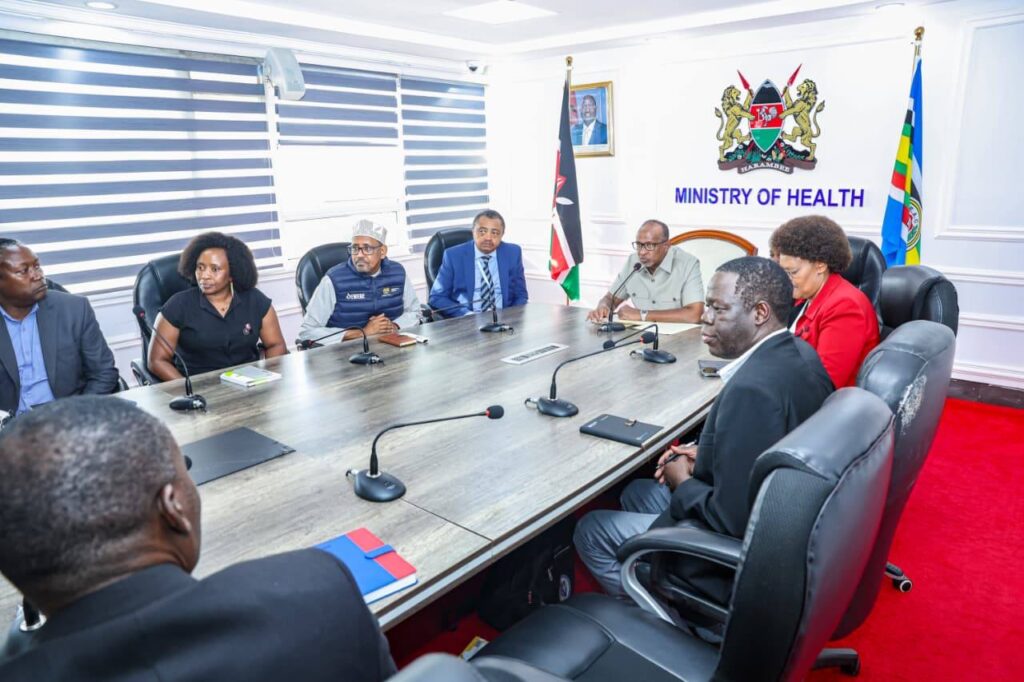
Health Cabinet Secretary Aden Duale has confirmed that three suspected cases of the Ebola virus have turned negative in the latest measures aimed at strengthening the country’s readiness against potential cross-border transmission.
In a press briefing on Friday, CS Duale assured the public that Kenya has no reported cases of the Ebola virus.
He pointed out that the three cases stemmed from individuals with recent travel history from the Democratic Republic of Congo (DRC) who presented themselves to health facilities upon arrival.
“Through surveillance systems, three individuals with recent travel history from DRC presented themselves to health facilities. They were isolated and tested for Ebola with all results returning negative. 4 additional contacts who accompanied them were tested and assessed and found negative,” he stated.
The CS revealed that the government has intensified screening at border points, noting that over 42,000 travelers had undergone the screening process including 2,965 within the last 24 hours.
He noted that Kenya has designated four national laboratories for Ebola testing comprising the National Public Health lab, Kenya Medical Research Institute (KEMRI) labs in Nairobi and Kisumu and a mobile lab for rapid deployment where necessary.
Further, the Ministry identified 22 high-risk counties at risk of the virus, noting that 118 rapid response personnel were on standby to provide assistance across the country.
“The Ministry has identified 22 high-risk counties. We have placed 118 rapid response personnel on standby. We have sensitised over 880 national and county healthcare workers on Ebola preparedness response,” Duale remarked.