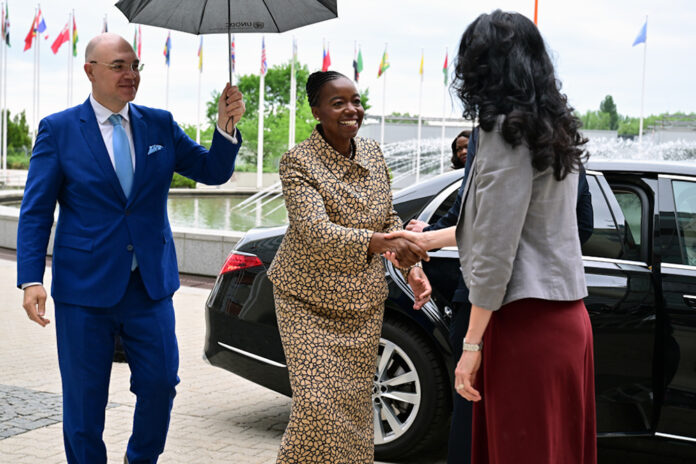
Kenyan diplomat Dr. Monica Juma has officially assumed office as Director-General of the United Nations Office at Vienna (UNOV) and Executive Director of the United Nations Office on Drugs and Crime (UNODC).
Dr. Juma took over the role on Monday, with the rank of United Nations Under-Secretary-General, becoming one of the most senior African officials within the UN system.
The United Nations Office at Vienna is one of the UN’s four major headquarters globally and hosts several international agencies dealing with global security, nuclear cooperation, crime prevention, governance, and sustainable development.
In her first public remarks after assuming office, Dr. Juma expressed gratitude and commitment to advancing the UN’s global mandate on justice and security.
“I am deeply proud and honoured to start my first day as Director-General/Executive Director of the UN Office at Vienna,” she said.
“I look forward to leading the UN’s work in addressing the challenges of drugs, organized crime, corruption and terrorism, for a safer and more just world,” she added.
Dr. Juma brings extensive experience in governance, diplomacy, security, and international affairs spanning decades in both government and academia.
She most recently served as Kenya’s first-ever National Security Adviser and Secretary to the National Security Council between 2022 and 2026.
Before that, she held several high-profile Cabinet positions in Kenya, including Cabinet Secretary for Defence, Foreign Affairs, and Energy, while also serving as Acting Cabinet Secretary for Petroleum and Mining between 2018 and 2022.
She also previously served as Principal Secretary in the Ministries of Foreign Affairs, Interior, and Defence between 2013 and 2018.
On the diplomatic front, Dr. Juma served as Kenya’s Ambassador to Ethiopia and Djibouti and Permanent Representative to the African Union, IGAD, and the United Nations Economic Commission for Africa between 2010 and 2013.
Beyond government service, she has held several academic and policy research positions, including at the African Centre for Strategic Studies at the National Defence University in Washington DC, the University of Pretoria, and the Africa Institute of South Africa.
Dr. Juma holds a PhD from the University of Oxford, where she also earned a Certificate in Refugee Studies, in addition to Master’s and Bachelor’s degrees in Government and Public Administration from the University of Nairobi.
Her appointment has been viewed as recognition of Kenya’s growing diplomatic influence globally and Africa’s increasing role within international governance institutions.
At UNOV and UNODC, she is expected to spearhead global efforts against transnational organised crime, corruption, terrorism financing, cybercrime, illicit trafficking, and drug-related challenges while promoting justice and international cooperation.
Former Deputy President Rigathi Gachagua has criticized the government over what he termed as silence following the killing of PCEA minister Rev. Julius Ndumia, raising concerns over the safety of church leaders and the country’s security situation.
Speaking at the late Rev. Ndumia burial ceremomy in Tetu, Nyeri, Gachagua questioned why senior government officials like the Inspector General had not publicly addressed the matter despite the Presbyterian Church of East Africa being one of the largest churches in the country.
“It is unacceptable that the government is silent in such matters,” Gachagua said, arguing that the church has historically played a major role in the country’s development through education, healthcare, and social programs.
The former Deputy President directly questioned President William Ruto over the lack of public condemnation following the cleric’s death.
“What happened to the love you had for PCEA? How comes our minister has been killed and you are saying nothing?” he posed.
Gachagua also faulted members of the Cabinet, including officials in the Interior Ministry, saying their silence had only deepened anxiety within the church and among worshippers.
He warned that if answers are not provided, church leaders might be forced to seek accountability directly from security agencies.
“When worse comes to worst, we will storm the office of the Inspector General to demand answers,” he said, adding that both clergy and their families deserve protection and assurance of safety.
He further called on police in Nakuru to intensify investigations into the killing, urging authorities to review CCTV footage reportedly captured within the area.
According to him, residents had indicated that surveillance footage exists and could provide critical leads into the murder investigation.
Gachagua insisted that churches must remain safe spaces at all times, warning against a situation where religious leaders begin living in fear.
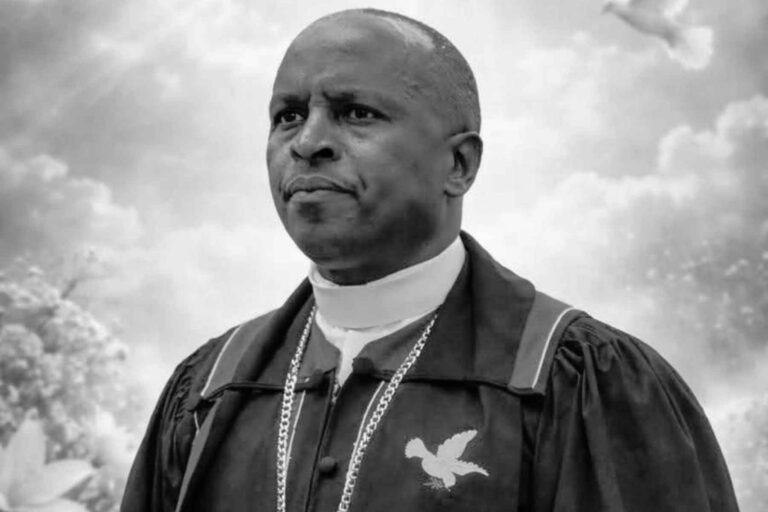
Rev. Julius Ndumia, a minister at PCEA Tabuga Parish in Bahati, Nakuru County, was found murdered at his residence within the church compound on May 3, 2026.
Investigators later revealed that he suffered severe head injuries and signs of suffocation during the attack.
The killing shocked residents and church members, with a church security guard also left seriously injured during the incident. Detectives have since arrested two suspects as investigations continue.
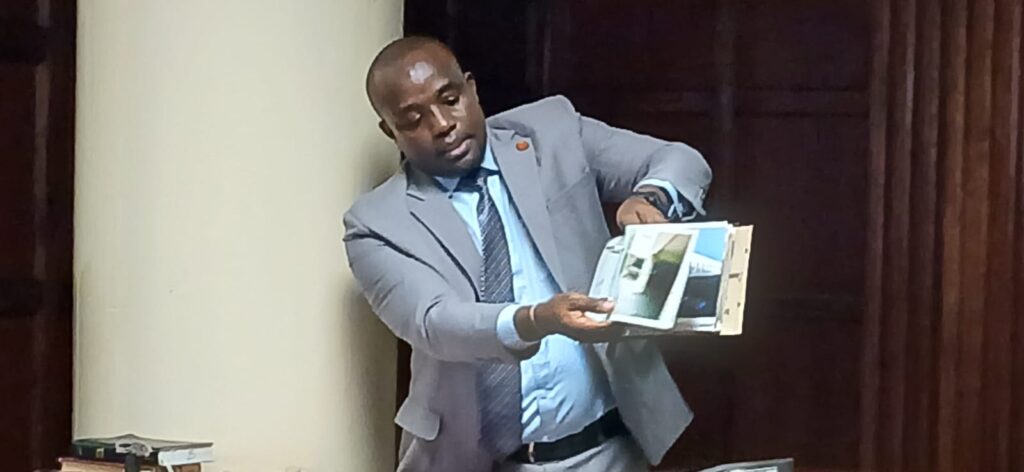
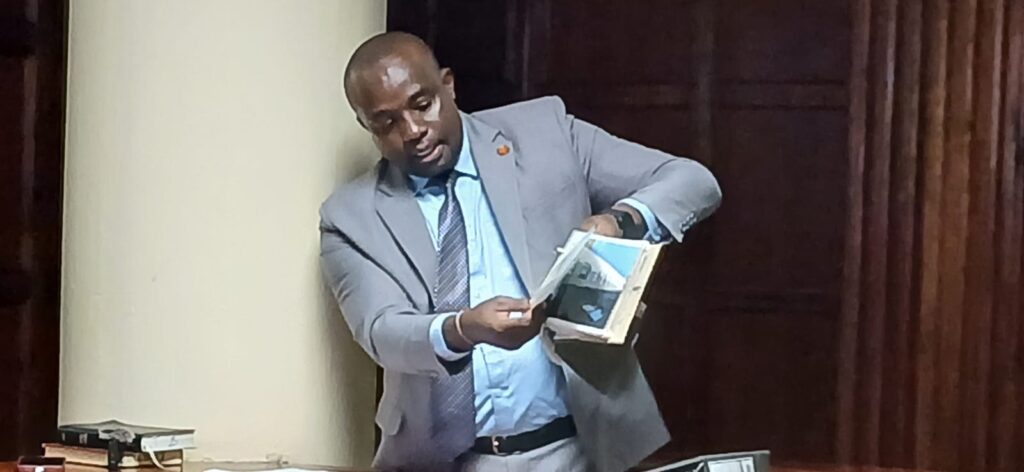
Fresh details emerged at the Milimani Magistrates Court during the ongoing inquest into the death of Jeff Mwathi after a crime scene officer faced intense cross-examination over the condition of apartment 10M, blood stains at the scene, the apartment window grills and photographs produced before court.
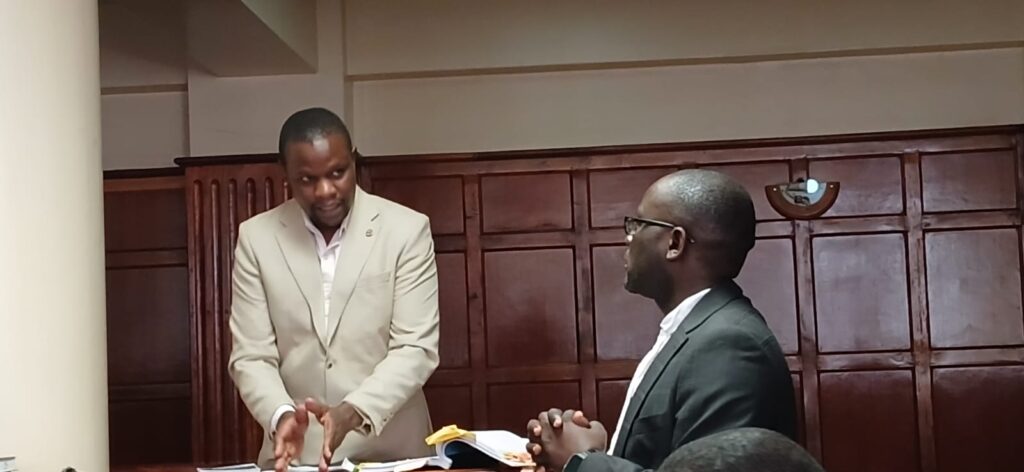
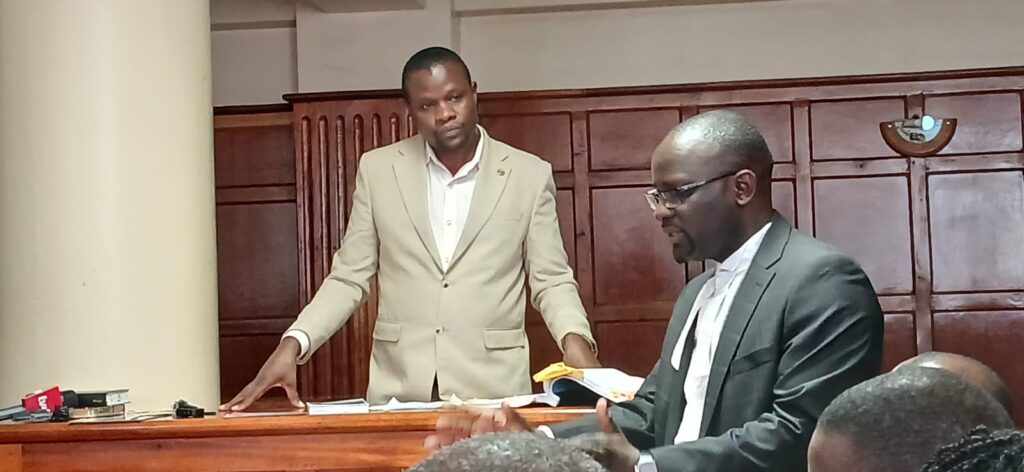
The proceedings took place before Rose Ndombi on Monday, May 11, 2026, with lawyer Danstan Omari appearing for the family of the deceased.
Advocate Duncan Okatch appeared for DJ Fatxo and other interested parties in the matter.
Chief Inspector Mureithi, attached to Kasarani Police Station and involved in processing the crime scene, was extensively questioned on the state of the apartment, the position of the body, blood stains found at the scene and the photographs captured during investigations.
While under cross-examination, the officer told the court he arrived at the scene on February 22 at approximately 10 a.m. after receiving instructions from the OCS and investigating officers.
“I arrived at the scene on the 22nd of February at around 10 a.m,” he testified.
He stated that officers from Kasarani Police Station and DCI personnel had already secured the scene before his arrival.
“The first responders were mostly officers from Kasarani Police Station and DCI officers,” he said.
The officer also described the condition of a phone allegedly recovered at the scene, telling court it was severely damaged.
“The phone, as the photographs are showing, it was shattered, it was not intact,” he testified.
The witness further confirmed observing blood stains on upper wall sections near the rooftop area.
“I mean the walls above the roof,” he stated when asked where the blood stains were located.
However, he admitted he never measured the exact distance from the ground.
“Unfortunately, my lady, I did not measure the distance. It is approximately around 11 feet from the ground,” he told court.
The witness defended his decision to photograph both the rooftop and ground floor areas, stating it formed part of standard crime scene procedure.
“It was part of my procedure to document the entire general view of the primary scene,” he testified.
“So I documented both the ground floor and the roof area. As we process a crime scene, you have to document the entire place.”
The officer confirmed that investigators informed him they believed Jeff Mwathi exited through a specific window in apartment 10M.
“They believed that he gained access through that window. Therefore, I had to document it as part of my procedure,” he testified.
The court heard that the window was only partially open.
“The window was partially open, my lady,” the witness said.
He clarified that only one side of the window was open while the other side remained shut and further stated that the entire window was covered by metal grills.
A major issue during cross-examination revolved around the dimensions of the grills and whether a person could physically pass through them.
The officer admitted he never measured the spaces between the grills.
“I did not have the resources to measure the distance of the grills,” he told the court.
He further admitted that even when he returned to the scene on February 23, he still did not take measurements.
The witness described the grills as having “rectangular and square grills” but maintained he did not establish the exact spacing between them.
However, when informed that another investigating officer had allegedly measured the grills and found them to be “100 by 30,” the witness stated he believed a person with Jeff Mwathi’s body size could fit through the spacing.
“The deceased might have fallen from the 10th floor bearing that the two larger grills might have fit someone his size. However we can not determine circumstance in which preceded the fall,” he testified.
In separate testimony referenced before court, another witness allegedly stated that grills marked “C” and “K” were wider than the others.
When pressed on the exact route allegedly used by the deceased, the officer admitted he could not determine the precise opening allegedly used.
“Unfortunately my lady I can’t tell which gap he jumped through,” he testified.
He further stated that he did not observe any marks, torn clothing or signs of force on any of the five grill sections examined.
The court also heard details about the bedroom layout.
According to the officer, the room had only one bed together with beddings and a guitar placed next to a shoe rack.
However, he admitted he never photographed the guitar, explaining that it had no visible blood stains and was not damaged.
The officer further described the condition of the bed.
“The bed is not neat the bedsheets are not well arranged,” he testified.
He estimated that the bed was approximately two feet from the ground and around three to four feet from the window, though he admitted he never measured either distance.
The officer also told the court that the bed’s position made it possible to access the window.
The witness reiterated that Jeff Mwathi’s clothing appeared displaced when the body was found.
“As per the photos, the clothing is not intact,” he testified.
He stated that the trousers were found below the ankles.
During questioning by Danstan Omari, the officer maintained that it was still possible for someone to jump through the window while trousers were around the ankles despite restricted movement.
“One can jump with the head then push with the hands,” the witness stated.
The officer also confirmed before court that he personally lifted Jeff Mwathi’s shirt in order to photograph injuries on the deceased’s back.
He further admitted that while he either took or supervised the taking of the photographs produced before court, the images were not dated, creating uncertainty regarding the exact time they were captured.
The witness also described the apartment interior, stating that he documented multiple rooms and observed furniture, a television, shoes, a cooker and a bottle of water.
However, he testified that he did not observe any alcoholic drinks, glasses, dishes or plates within the sitting room or dining area.
When asked whether there were dishes present, he responded:
“None was found.”
At the conclusion of the testimony, 48 crime scene photographs together with the officer’s report and certificate were marked as exhibits before court.
The inquest into Jeff Mwathi’s death continues before the Milimani Magistrates Court.
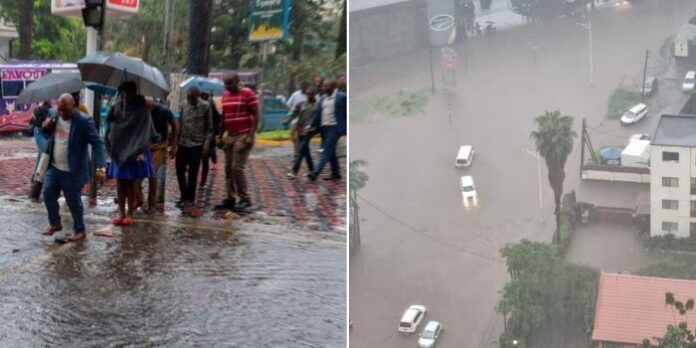
The Kenya Meteorological Department has issued a heavy rainfall alert for several regions across the country, warning that downpours are expected to persist over the coming days
In a notice on Monday, May 11, Kenya Met said rains are expected to continue in the Highlands East and West of the Rift Valley, the Lake Victoria Basin, the Rift Valley, parts of the Coast, and Northwestern Kenya.
The department warned that heavy rainfall events may occur in some parts of the Highlands East and West of the Rift Valley, the Lake Victoria Basin, and the Rift Valley during the first half of the forecast period.
However, the intensity of the rainfall is expected to reduce from May 15, 2026.
Kenyans have also been advised to remain cautious as the rains continue, particularly in flood-prone and landslide-prone areas.
Members of the public were urged to avoid walking or driving through moving water and to avoid sheltering under trees or near grilled windows during storms.
The weather agency further called on residents living in low-lying and landslide-prone areas to exercise caution due to the ongoing heavy rains.
File image of a flooded road
At the same time, daytime temperatures exceeding 30 degrees Celsius are expected in the Coast region, parts of the Southeastern Lowlands, and Northeastern and Northwestern Kenya.
Meanwhile, night-time temperatures below 10 degrees Celsius are likely to be experienced in some parts of the Highlands East of the Rift Valley, the Central Rift Valley, and areas near Mount Kilimanjaro.
Kenya Power has announced scheduled power interruptions in parts of eight counties on Tuesday, May 12.
In a statement on Monday, May 11, the company said the outages are meant to facilitate routine maintenance and upgrade works.
In Nairobi County, the outages will affect customers in Airport North Road, Kasarani, Kilimani and sections around Makueni Road and Othaya Road.
Along Airport North Road, electricity supply will be interrupted from 8:00 a.m. to 5:00 p.m. in Whole of Nyayo Estate Phase 1, Embakasi Jua Kali, Baraka Estate, Simba Estate, Airport Staff Quarters, Embakasi Police, Donholm Phase 8, Harambee Sacco Estate, Jacaranda Estate, Oyster Estate, St. Caramel School, Baraka Estate Phase 1 and 2, Green Span Mall, parts of Soweto, Embakasi Garrison Married Quarters and adjacent customers.
In Kasarani, the outage scheduled between 9:00 a.m. and 5:00 p.m. will affect customers along Thika Road, Garden City, Uhai Neema, KISE, ICIPE, Kasarani Police, Sports View Hotel, Seasons, Clay City, Muirigo, Kasarani Health Centre, Warren Concrete, Kasarani, Sports View Drive Estate and adjacent customers.
Parts of Kilimani set to be affected include sections of Jabavu Road, Kilimani Police Station, Mtito Andei Road, Theta Lane, Mukuyu Lane, parts of Lenana Road and adjacent customers.
Areas around Makueni Road and Othaya Road will also experience interruptions from 9:00 a.m. to 5:00 p.m.
The affected areas include parts of Nyeri Road, Holy Trinity Catholic Church, Vihiga Road, Vihiga Close, Kikambala Road, Suguta Road, Mwingi Road, Othaya Road, Mogoiri Road, Kaputei Gardens, Hamisi Road, Mazeras Road, Mbooni Road, Makueni Road, Ndoto Road and adjacent customers.
File image of Kenya Power technicians
In Makueni County, areas in Sultan will experience outages between 9:00 a.m. and 5:00 p.m.
The affected areas include parts of Sultan Town, Muka/Major Muiu Quarry, Kasikeu Market, Kandolo Secondary School, Kavuthu Market, Nduluni Market, Mutyambua Market, Barazani Market and adjacent customers.
Parts of Uasin Gishu County will also be affected.
Areas listed under Imbinga, Ivugwi and Likuyani include Imbinga, Ivugwi, Likuyani, Everglade, Lugulu, St. Francis, Mapera, Sango, Mawe Tatu, Soysambu, Kosoki, Kongoni and adjacent customers.
In Siaya County, electricity interruptions will affect Akala Market, Kaudha Primary School, Kaudha Gold, Wangbith Primary School, Oboch Primary and Secondary School, Opande Primary School, Oseno Primary School, Rachare Primary School, Opapla Dispensary, Ojola Primary School, Malele Secondary School and adjacent customers.
Customers in parts of Kirinyaga County around Githure Market will also experience outages.
The affected areas include Gakuyu-ini Coffee Factory, Kiandumu Market, Kamwana Market, Ngariama Secondary School, St. Marys Polytechnic, Kabiroini Village, Githure Centre, Kiangoi Village, Kibai Village, Kathunguri Village and adjacent customers.
In Nyeri County, the outage will affect Munyu, Warazo Jet, Kimahuri, Meeting Point Kimahuri, Ndathi, Jabiru, Kimahuri Dispensary, Mapema Market, Mountain Lodge Hotel, Mountain Lodge Fisheries and adjacent customers.
Meanwhile, in Kilifi County, parts of Kibokoni including Ocean Ports, King Fisher, Afraid Hospital, Majivuni and adjacent customers will be affected.
The interruptions will also extend to parts of Kwale County including Kwale Town, Kwale County Offices, Kwale Referral Hospital, Golini, Ziwani, Culture and adjacent customers.
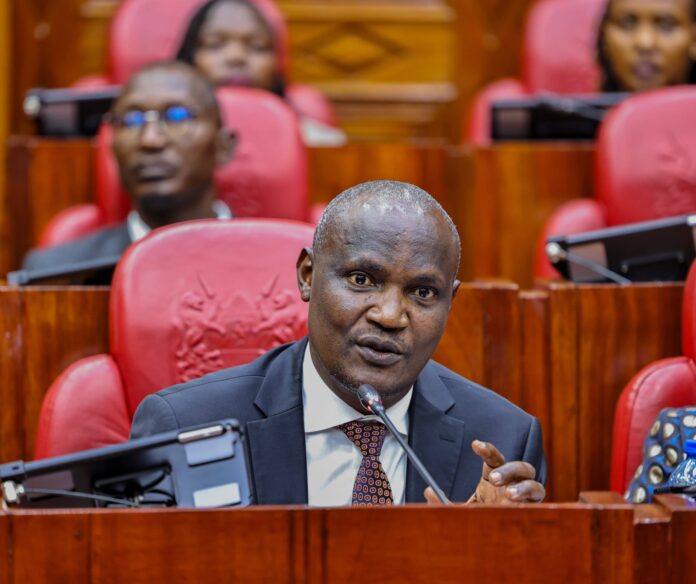
Treasury Cabinet Secretary John Mbadi has announced that the proposal to impose a five percent presumptive tax on mitumba imports has been dropped.
Speaking during a press conference on Monday, May 11, CS Mbadi revealed that the National Assembly had rejected the proposal and that it could be left out of the final draft of the Finance Bill 2026.
However, he intimated that he will still push for the proposal to be effected as it was intended to benefit mitumba traders. The CS argued that the tax proposal was demonised before people understood what it meant.
“On the taxation around mitumba, I have noticed that it has been dropped out of the final bill that has come from the National Assembly,” he stated.
“Of course, the final bill comes from there. Our proposal was to have it, and I still insist that we should,” he stated.
The Treasury Boss claimed that he hosted a contingent of mitumba traders at the National Treasury, and the decision to impose the 5 percent presumptive tax was reached.
A file footage of a Kenyan looking at mitumba clothes at a market.
He explained that the levy would be minimal to the traders in comparison to the money they would spend to accurately file their taxes.
“They expressed frustration with regard to the current taxation arrangement because when you bring mitumba into the country, there are some taxes that should be paid at the point of entry, and then you follow it through with more taxes, including income tax.
“They are saying that it is cumbersome because in their line of business, the requirement of filing returns and even engaging accountants to calculate how much profit they make so that they are taxed on that is too costly for them,” the CS explained.
As such, Mbadi explained that apart from 16 percent value added tax on the imported goods, the government would only charge the traders 1.5 percent of the value of the goods as income tax
The government would then assume that the traders would make a profit worth 5 percent of the value of the imported goods. This profit is now what will be subjected to 30 percent taxation as income tax.
“For income tax, we deem 5 percent of the customs value as profit, and then we tax that 5 percent at 30 percent to give you 1.5 percent. This becomes the final tax, and nobody will go after the business people again,” he explained.
The CS added that claims that the cost of mitumba clothes would rise following the new tax were far from the truth.
In an earlier response to concerns by former Law Society of Kenya (LSK) President Faith Odhiambo, officials from Treasury clarified that under the new proposal, the fragmented tax structure in the mitumba business was consolidated into a single predictable process.
The officials explained that the proposal eliminated multiple taxation points across the trade chain, reduced administrative complexity and eased compliance for traders.
Liverpool have released images of a planned memorial to late forward Diogo Jota and his brother Andre Silva, following their deaths last summer.
Jota, 28, and 25-year-old Andre Silva, who played for Portuguese second division club Penafiel, died in a car crash on 3 July in the Spanish province of Zamora.
The sculpture features a flowing heart design – a nod to the Portugal international’s goal celebration – the two brothers’ shirt numbers, 20 and 30, plus the lyrics to Jota’s song, which is sung by Liverpool fans in the 20th minute at every game.
Titled ‘Forever 20’, the club says , externalit celebrates Jota and Andre Silva’s “lives, their bond, and the love and respect felt by family, team-mates and supporters across the world”.
The memorial, which will be located at Anfield on 97 Avenue, has recycled the physical tributes left outside Anfield since Jota’s death by fans paying their respects and incorporated them into the stone plinth.
Liverpool have not yet announced when it will be unveiled but will reveal the date in the future.
Jota joined the Reds from Wolves in 2020 and scored 65 goals in 182 appearances for the club, winning the Premier League, FA Cup and two League Cups during his time on Merseyside.
West Ham are set to contact referees’ body the Professional Game Match Officials (PGMO) over their late equaliser being disallowed against Arsenal.
The Hammers had appeared to have dealt a significant blow to the Gunners’ title hopes – as well as boosting their own Premier League survival prospects – when Callum Wilson struck in stoppage time on Sunday.
But after a video assistant referee (VAR) review, the goal was ruled out for a foul by Pablo on Arsenal goalkeeper David Raya.
West Ham will raise concerns and request further explanation from PGMO following the controversial decision.
BBC Sport understands they will also request the audio between referee Chris Kavanagh and VAR Darren England.
The Gunners went on to win 1-0, taking them five points clear of Manchester City at the top of the Premier League and making West Ham‘s future that bit more uncertain – as they sit in 18th place, with Tottenham Hotspur a point above them before the host Leeds on Monday.
Former England and Manchester United striker Wayne Rooney believes VAR “did a really good job” in disallowing the goal.
“It’s a clear foul,” Rooney said on the Wayne Rooney Show.
“You’re going to obviously get a lot of people saying they think it should have stood because it’s controversial and probably all the [Manchester] City players, staff, fans are going to say it should have stood. And then you’re going to get all the Tottenham fans, players, staff saying it shouldn’t have stood and of course the Arsenal fans and stuff.
“But it’s a clear foul. I think you can clearly see the arm crosses his face and it impacts him getting to the ball. So I think it’s the right decision.
“It’s the one time I actually think VAR has done a really good job in such an important game.”
Despite being satisfied the correct decision was made, Rooney lamented the advantage goalkeepers get inside their own area.
“I think where VAR is consistent and the referees are consistent – and I hate it – is you go anywhere near the goalkeeper and it’s a foul,” he said.
“You go anywhere near the goalkeeper and you give a foul. Throughout my career as a player, I’ve had a dislike for goalkeepers because of that reason. I think because (…) they can jump with their arms and so they have got a big advantage and normally they come out with their knees and the studs down your back and stuff.
“But I think it is consistent with goalkeepers that [if] you go near them, they normally get a free-kick.”
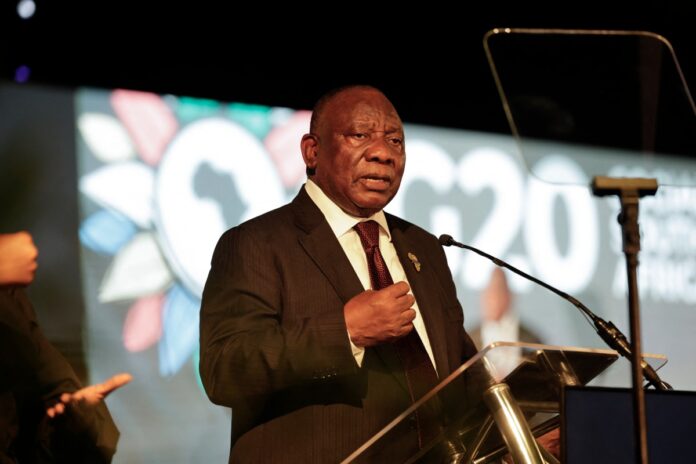
South Africa's President Cyril Ramaphosa speaks during the G20 Social Summit in Boksburg on November 20, 2025. (Photo by EMMANUEL CROSET / AFP)
South African President Cyril Ramaphosa has condemned recent violent protests and attacks targeting foreign nationals in parts of the country, describing those behind the unrest as “opportunists” exploiting legitimate socio-economic grievances.
In a public address issued on Monday, Ramaphosa said the violent acts being recorded in some communities do not represent the South African government or the majority of citizens.
He stressed that individuals involved in stopping people, conducting searches, or checking identities without legal authority were engaging in unlawful conduct.
“These are the acts of opportunists who are exploiting the legitimate grievances, particularly those of the poor, under the false guise of ‘community activism.
“Some of these people are assuming functions that only state officials are permitted to perform. Such lawlessness will not be tolerated, regardless of who the perpetrators or victims are,” he said.
The president, however, maintained that South Africa must continue to address illegal immigration in a lawful and structured manner, warning that undocumented migration places pressure on public services and worsens unemployment.
“In a country with high unemployment, some employers are exploiting undocumented, cheaper foreign labour over hiring citizens and paying them legal wages.
“This is fuelling social tension and undermining labour protection laws,” he said.
Ramaphosa noted that the government was strengthening border security through the Border Management Authority and deploying the military to curb illegal crossings.
According to him, about 450,000 attempted illegal entries were intercepted in the past financial year.
He also confirmed ongoing immigration enforcement actions, including arrests and deportations of undocumented migrants, alongside reforms to the country’s migration system.
“We are stepping up workplace enforcement against employers who hire undocumented foreign nationals in violation of labour and immigration laws,” he said.
The president added that South Africa would also deploy up to 10,000 labour inspectors to improve compliance with employment and immigration regulations.
He urged both citizens and foreign nationals to comply with South African laws, warning that illegal activities involving fake documentation, bribery, or exploitation of public services would be prosecuted.
“Everyone in South Africa is bound by the same laws,” he said.
“We must make it clear that there is no place for xenophobia, ethnic mobilisation, intolerance or violence.”
Ramaphosa also defended South Africa’s refugee and migration framework, noting that the country continues to uphold human rights while managing immigration pressures.
He highlighted South Africa’s role in African integration, saying millions of visitors from across the continent enter the country annually for tourism, education, and trade.
“South Africa continues to play its part in deepening African integration and solidarity,” he said.
He called for cooperation between countries to address migration challenges and urged restraint amid rising tensions.
The remarks come amid renewed anti-foreigner protests and reported incidents of looting and violence in parts of Durban, Cape Town, East London, and KwaZulu-Natal.
Recall that the Nigerians in Diaspora Commission has advised Nigerians in South Africa to avoid confrontations, stay alert, and monitor official updates as authorities continue to manage the situation.
The commission further urged Nigerian business owners to take precautionary measures.
NiDCOM noted that the Nigerian Consulate in Johannesburg remains operational and is working with South African authorities to ensure the safety of citizens.
The commission also disclosed that the Minister of State for Foreign Affairs, Bianca Odumegwu-Ojukwu, is engaging with her South African counterpart over the situation.
The Nigerian Federal Government on Wednesday announced a ban on honorary degree holders prefixing “Dr” to their names in official, academic, or professional usage.
The government also established the National Research and Development Fund, with an annual allocation of $500 million.
These decisions were disclosed by the Minister of Education, Dr. Tunji Alausa, while briefing State House correspondents on the two memoranda he presented to the Federal Executive Council, FEC, at its meeting last Thursday, which were approved.
He said the FEC approved a uniform policy for the award and use of honorary degrees by Nigerian universities.
Alausa, who was flanked by the Minister of State for Education, Prof. Suwaiba Ahmad, said the use of “Dr.” by people who do not merit it is an abuse of the doctorate degree.
He said the use of the title by such recipients constitutes a misrepresentation of academic credentials that would henceforth be treated as academic fraud, with attendant legal and reputational consequences.
The policy, he explained, is designed to end what he described as decades of indiscriminate conferment of the degrees for political patronage and financial gain, and to restore public confidence in the integrity of academic titles.
He said: “The recent trend we’ve seen with the award of honorary degrees has revealed a growing abuse and politicisation of this academic privilege.
“We’ve seen awards being used for political patronage, for financial gain, as well as the conferment of awards on serving public officials, which, as part of the ethics of honorary degree awards, should not happen.”
Under the new policy, recipients of honorary degrees may no longer prefix “Dr” to their names.