Home Blog Page 6037

Does alcohol have an undisclosed African heritage?

Wines and Spirits

Alcohol is the most widely used psychoactive substance in the world. But where was the first alcoholic beverage brewed and consumed?

The answer isn’t clear because traces of alcohol don’t preserve well in the archaeological record. Containers like skin bags and wooden vessels that were likely used to hold alcohol don’t survive indefinitely. This poses a problem because residue analysis relies on the preservation of containers and implements.

The earliest evidence of alcohol comes from starch granules, either wheat or barley, transformed by fermentation. These were found in Raqefet Cave in Israel and are dated to 13,000 years ago. Chemical traces of alcohol have been detected in containers from Neolithic China. These were used in the seventh millennium B.C.E for the storage and dispensing of a fermented drink made of rice, honey and fruit. Early evidence of wine has been found in Northern Iran and dated to the mid-sixth millennium B.C.E.

Where does the African continent fit into the story of alcohol? Until now the search for early evidence of alcohol has fixated on residue analysis. But I tried a different route – I looked at the role of honey, because honey and bee-related products were being used and consumed 40,000 years ago by people living in southern Africa.

First, I conducted a fermentation experiment in which alcohol is produced by combining honey, water and moerwortel (Glia prolifera).

The procedure and combination of ingredients follows an indigenous method, as was conveyed to the botanist Carl Thunberg by indigenous Khoe-San informants in the 18th century. Results of this experiment are contextualised using ethnohistorical and early traveller testimonies that suggest widespread use of honey-alcohol combined with plant material for psychotropic and medicinal purposes. This included kanna (Sceletium tortuosum), which produced a ‘spiked’ honey drink known as khadi.

Controlled fermentation may have emerged as early as the Middle Stone Age (which started about 280,000 years ago and ended between 50,000 and 25,000 years ago) together with manifestations of complex behaviour and mental processing that was cognisant and capable of using a suite of complementary botanical, technical and chemical methods for various applications. These included making arrow poison and the synthesis of compound materials for the manufacture of mastics, adhesives and pigment.

The results of this study have been published in Southern Africa Humanities.

From this research I conclude that honey was the most likely catalyst that allowed controlled fermentation to commence at a very early date in Africa, with the weight of probability pointing to southern Africa.

The background

In my research, I’ve also provided an explanatory framework that encompasses a Middle Stone Age and deep-time perspective. This helps to explain the related themes of honey bees in southern San mythology, pictorial expression and fermentation practices.


Read more: Lessons from Africa on how to build resilient bee colonies


Fragments of knowledge about honey fermentation are retained in ethnohistoric accounts and among communities that continue to use honey to make alcohol, to this day. The association between alcohol, honey and bees has pre-historical antecedents. We see this in the form of rock paintings that feature bee-related themes. Mythology, widespread among the San of southern Africa, considers bees, wax and honey to have magical qualities.

The cognitive requirements necessary to support an understanding of chemical and technical processes (such as fermentation) are manifested in the last 100,000 years in the Middle Stone Age in southern Africa. These processes include bow hunting, about 60,000 years ago; the use of ochre compound, interpreted as paint, around 100,000 years ago, and arrow poison, 24,000 years ago. Arrow poison was possibly used even earlier.

Intentionally controlled fermentation fits comfortably within these techno-behaviours but leaves no archaeological trace.

What we do have, though, is a parcel of beeswax. This tells us that honey and bee products were being used and consumed 40,000 years ago in southern Africa by people living at Border Cave, near the present Eswatini (Swaziland) border.


Read more: How we deduced that our ancestors liked roast vegetables too


The Border Cave beeswax is an important biomarker: (1) it is the oldest known example of the use of beeswax anywhere; (2) it makes explicit the connection between honey, bees and plant poison.
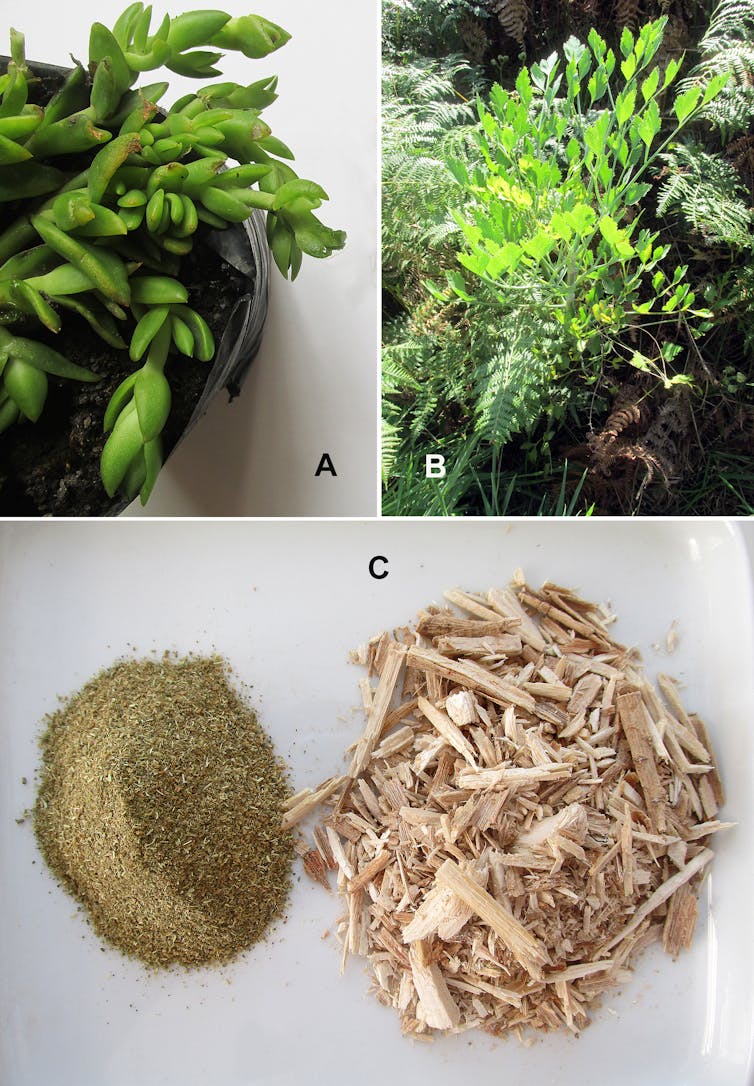
Ingredients for an indigenous fermentation experiment, combining honey and plant adjuncts. (a) kanna; (b) moerwortel; (c) ground kanna and chopped moerwortel. Photographs © Neil Rusch
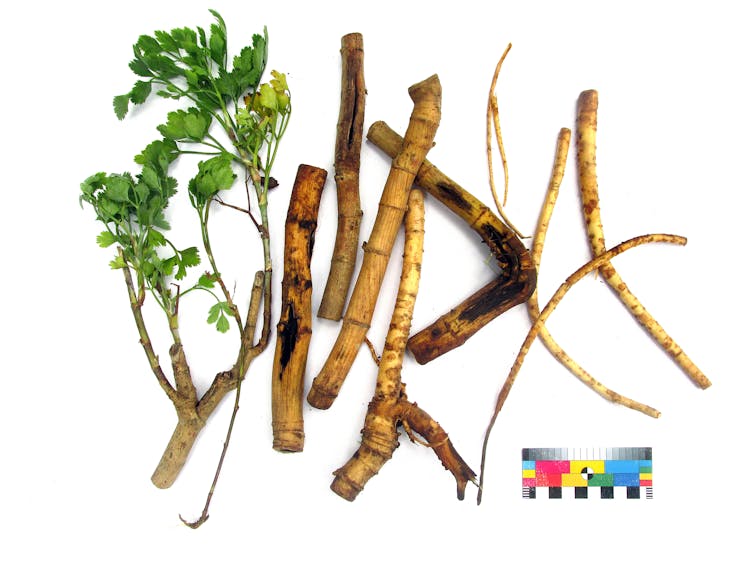
Moerwortel root, stem and leaves. Photograph © Neil Rusch

From this information it is reasonable to infer that controlled fermentation arose on the African continent alongside bow hunting and the use of poison tipped arrows, some time between 60,000 and 24,000 years ago.

Within this time bracket, what is certain is that at 40,000 years ago early people were using and consuming bee products.

Does this mean that fermentation of honey-alcohol was attempted 40,000 years ago? We cannot know for sure. All we can say is that the conditions were highly conducive.

Ongoing questions

Honey is the most likely catalyst that allowed controlled fermentation to commence at a very early date in Africa, with the weight of probability pointing to southern Africa, given current evidence. And chemical analysis of the Border Cave beeswax provides added incentive for continuing investigation.The Conversation

Neil Rusch, Research Associate, University of the Witwatersrand

This article is republished from The Conversation under a Creative Commons license. Read the original article.

Manchester United scrap friendly with Stoke City after Michael O’Neill tests positive for Covid-19

Game was scheduled for Tuesday morning but was called off less than an h after Stoke City manager Michael O’Neill was confirmed to have tested positive for Covid-19 after the latest round of testing on Monday.

The planned practice match was cancelled at short notice on Tuesday once the situation became apparent.

Stoke had arrived at United’s Carrington training base and were in the academy building when they found out.

O’Neill, 50, had tested negative in the previous five rounds of testing.

Stoke said the former Northern Ireland boss will now follow the relevant guidance and have a period of isolation.

The Championship club also confirmed on Tuesday that O’Neill will be in regular virtual contact with his coaching staff and players.

Assistant manager Billy McKinlay will take charge of training as the Potters prepare for their game against Reading on June 20.

City sit 17th in the Championship, three points above the relegation zone.

Roger Federer to miss rest of 2020 after further knee operation

Roger Federer will miss the rest of the 2020 season after having a further operation on his right knee.

The 20-time Grand Slam winner had the initial arthroscopic surgery in February but said he suffered a “setback” with his rehabilitation.

Professional tennis has been suspended since March because of the coronavirus pandemic.

“I will look forward to seeing everyone back on tour at the start of the 2021 season.” the 38-year-old Swiss said.

Federer has not played since losing to Novak Djokovic in the Australian Open semi-finals in January.

In 2016 he missed the majority of the season with a knee injury, but returned the following year to win the Australian Open and Wimbledon.

“A few weeks ago, having experienced a setback during my initial rehabilitation, I had to have an additional quick arthroscopic procedure on my right knee,” Federer said on Twitter on Wednesday.

“Now, much like I did leading up to the 2017 season, I plan to take the necessary time to be 100% ready to play at my highest level.”

The ATP Tour is currently shut down until at least the end of July because of the pandemic, with the US Open currently scheduled to start on 31 August and the French Open beginning on 20 September.

League One and League Two clubs vote to end 2019/20 season

League One and League Two clubs have voted to end the 2019/20 season early due to the coronavirus pandemic.

Using an unweighted point per game system, Coventry and Rotherham are promoted to the Championship, while Swindon, Crewe and Plymouth go up to League One.

Wycombe, Portsmouth, Oxford and Fleetwood will compete in the League One play-offs as Cheltenham Town, Exeter, Colchester and Northampton will do the same in the fourth tier.

Meanwhile, Southend, Bolton and controversially Tranmere, who had a game in hand on their relegation rivals AFC Wimbledon, are relegated to League Two.

Bottom-placed Stevenage will be relegated from the fourth tier if the National League can give assurances their 2020/21 campaign will go ahead.

On the vote to use an unweighted points per game system, EFL chair Rick Parry said: “Whilst it has always remained the board’s position to play the remainder of the season where possible, the decision reached at today’s meeting follows a full and considered consultation period with our member clubs.

“The board has endeavoured to listen to all views and alternative approaches but understands that the decisions taken will not be met with universal satisfaction from all clubs.

“Today’s outcome ensures that the League and its clubs remains as faithful as possible to the previously agreed Regulations and that there is consistency in the approach adopted across the EFL in all divisions if required.

“It is clear that the challenges facing the League from the outbreak of the COVID-19 pandemic are unprecedented and I thank the contribution of EFL clubs in making this important determination.”

EFL matches have been suspended since March 13.

But the Championship season is set to resume on June 20, with clubs playing nine games in the space of 33 days.

IOC confirms protest ban remains

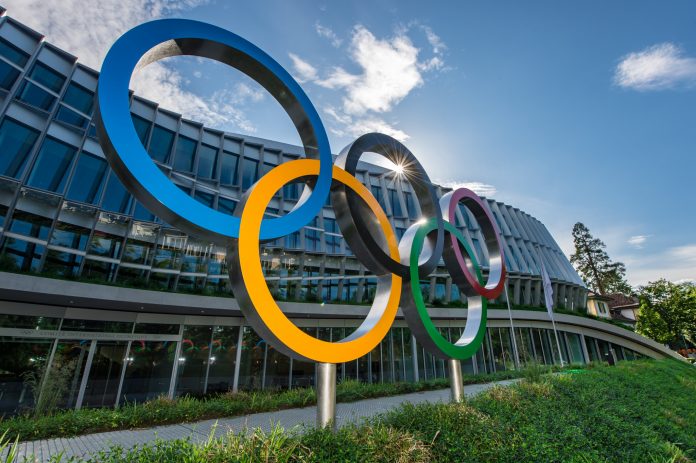
The International Olympic Committee (IOC) has confirmed that athletes are still banned from protesting at the Games after several sports moved to allow protests in the wake of George Floyd’s death in police custody, the Telegraph has reported.

Rule 50 of the Olympic Charter states “no kind of demonstration or political, religious or racial propaganda is permitted in any Olympic sites, venues or other areas.”

Athletes who breach the rule are subject to discipline on a case-by-case basis and the IOC issued guidelines in January clarifying that banned protests include taking a knee and other gestures.

The IOC told the Telegraph the guidelines were still in place and that it would not speculate on “hypothetical cases 13 months before the Olympic Games”, the newspaper said.

Floyd, a 46-year-old African-American man, died after a white Minneapolis police officer pressed his knee into Floyd’s neck for nearly nine minutes on May 25.

His death sparked worldwide protests against racial injustice, with several soccer players in Germany’s Bundesliga delivering their own messages of support during games.

World governing body FIFA, which has shown zero tolerance for players expressing their views on the field, has asked competition organizers to use “common sense” regarding protests over Floyd’s death.

NFL Commissioner Roger Goodell, who was widely criticized for the league’s handling of Colin Kaepernick’s kneeling protests in 2016, said on Friday the NFL had made mistakes in not listening to players and encouraged them to speak out and “peacefully protest”.

Anti-racism movements are expected to be discussed at an IOC executive board meeting on Wednesday.

While athlete protests at the Olympics are rare, at the 1968 Mexico City Games black U.S. sprinters Tommie Smith and John Carlos bowed their heads and raised black-gloved fists on the podium to protest racial inequality.

At Rio 2016, Ethiopian marathon runner Feyisa Lilesa raised his arms and crossed his wrists when crossing the finish line to show support for his Oromo tribe’s protests over government plans to reallocate farmland.

Life of Pierre Nkurunzinza: Feared and Loved ‘rebel’

The late Pierre Nkurunziza was loved and feared in equal measure – loved by those who felt he lived up to his promises when he was elected after the civil war, and feared by his political opponents.

When the former rebel leader took office in 2005, at the age of 40, the country that had been brutally torn apart by an ethnic conflict that had killed about 300,000 over a decade.

Young, optimistic and charismatic, he managed to live up to everyone’s expectations by uniting people and rebuilding the economy. Between 2006 and 2011, the president – known for his preaching and love of football – received seven international awards for his peace-building efforts.

But after a decade in power, his reputation took a nose dive and the unity he had built collapsed when he organised a referendum to allow him to stand for a third term. Deadly protests erupted, there was a coup attempt and hundreds of thousands of people fled the country.

After this he only left the country officially once – by car to neighbouring Tanzania. The UN accused him of oppressing the opposition and killing and abducting opponents, accusations vehemently denied by Burundi’s government.

Despite suspicions that he planned to stay on for a fourth term, he did not stand in elections in May, which were held despite coronavirus.

He and his wife Denise, who had five children together and adopted several others, regularly organised prayer gatherings – and the man who was to become Burundi’s “supreme guide to patriotism” put all his successes down to God, including what he said the country’s success against Covid-19.

Women’s soccer team calls for repeal of kneeling ban

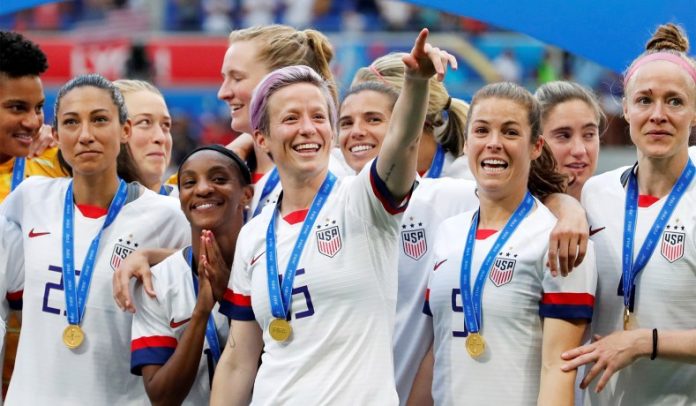
The U.S. women’s national team has called on the United States Soccer Federation (USSF) to repeal a policy forbidding players from kneeling during the national anthem and issue an apology to black players and fans.

The USSF will hold a special meeting on Tuesday to consider scrapping the rule, which requires players to “stand respectfully during the playing of national anthems at any event in which the Federation is represented”.

Kneeling has become a symbol of the fight against police brutality used by protesters who have flooded the streets of U.S. cities following the death of George Floyd, a black man who died in police custody in Minneapolis last month.

“The Federation should immediately repeal the ‘Anthem Policy’, publish a statement acknowledging the policy was wrong when it was adopted, and issue an apology to our black players and supporters,” said the statement issued by the United States Women’s National Team Players Association on Monday.

“Further, we believe the Federation should lay out its plans on how it will now support the message and movement it tried to silence four years ago.”

The USSF told Reuters in an email earlier on Monday that a vote could come following Tuesday’s conference call, or on Friday at the quarterly executive board meeting.

The policy was put in place in 2017 after USWNT player Megan Rapinoe took a knee during the playing of the anthem prior to a match against Thailand the previous year.

Quarterback Colin Kaepernick popularised the gesture of kneeling during pre-game renditions of “The Star-Spangled Banner” in 2016 while a member of the NFL’s San Francisco 49ers.

The move by the USSF to reconsider its position comes after NFL Commissioner Roger Goodell said last week the league had made a mistake by not listening to players and encouraged them to speak out and protest peacefully.

Hoffenheim sack coach Schreuder over planning differences

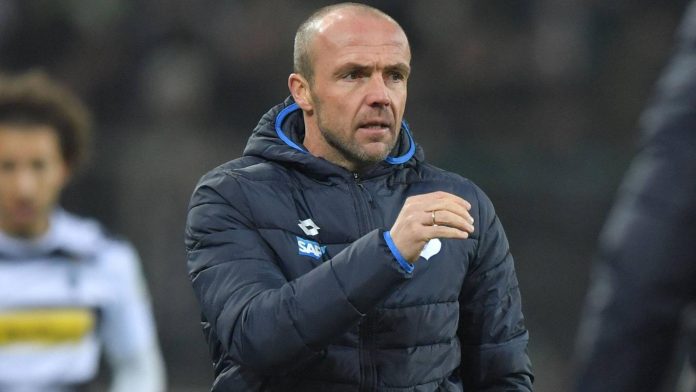
26.11.2016, Fussball GER, 1. Bundesliga Saison 2016 2017, 12. Spieltag, Borussia Moenchengladbach - TSG 1899 Hoffenheim 1:1, Co Trainer Alfred Schreuder (TSG Hoffenheim) 26 11 2016 Football ger 1 Bundesliga Season 2016 2017 12 Matchday Borussia Moenchengladbach TSG 1899 Hoffenheim 1 1 Co team manager Alfred Schreuder TSG Hoffenheim

Hoffenheim have sacked coach Alfred Schreuder four games before the end of the season over differences in the way they believe the team should develop, the Bundesliga club said on Tuesday.

Schreuder, who had a contract to 2022, had arrived at the start of the season from Ajax Amsterdam. His assistant and brother Dick Schreuder will also leave.

“In important issues of detail we had different opinions so that the collaboration past the season end made no sense,” sports director Alexander Rosen said in a statement.

Hoffenheim are in seventh place on 43 points and battling for a Europa League place next season. Other coaches from within the club would steer the side through the remaining games.

“Unfortunately we could not agree on a common path for the future of the team,” Schreuder said. “I regret this development but it is not unusual to have different opinions in your professional life.”

New Zealand’s Super Rugby teams get cash boost ahead of domestic competition

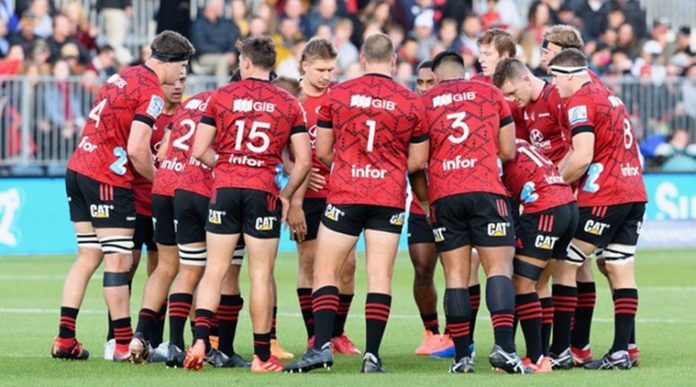
WELLINGTON – New Zealand’s five Super Rugby teams received a financial boost on Thursday thanks to a NZ$1.25 million ($801,875) cash injection from the government as part of a wider funding package to help professional sport deal with the COVID-19 fallout.

The funds are part of NZ$4.6 million in disbursements handed out to the country’s small group of pro sports organizations on Thursday, with Netball New Zealand receiving the biggest grant of NZ$2.2 million to help run the top-tier competition.

The cash injection comes as New Zealand’s Super Rugby sides prepare for the start of a 10-week domestic competition on June 13.

“Our Super Rugby clubs, along with all areas of rugby and different sectors of New Zealand have been facing incredible financial challenges brought on by the COVID-19 pandemic,” New Zealand Rugby CEO Mark Robinson said in a statement.

“This generous government package will help them kick off and compete in Super Rugby Aotearoa with real momentum.”

The Wellington Phoenix, who compete in Australian Soccer’s A-league, received NZ$950,000 while rugby league’s New Zealand Warriors were given NZ$200,000.

The government allocated NZ$265 million in last month’s budget to help the entire sports industry get back on its feet after the pandemic badly affected broadcast, commercial and ticket revenues.

No more “rotten apples” for Manchester United

Ole Gunnar Solskjaer: Manchester United manager says he will avoid buying ‘rotten apples’

Manchester United Manager Ole Gunnar Solskjaer says he will avoid adding “rotten apples” to his squad and insists new signings must reflect his personality.

Solskjaer signed Harry MaguireDaniel James and Aaron Wan-Bissaka in his first summer transfer window as United boss in an attempt to shape a new-look team around a core of ambitious, young British players.

Portugal international Bruno Fernandes then arrived at Old Trafford from Sporting Lisbon in January – followed by the loan signing of Nigeria striker Odion Ighalo – and United continue to be linked with more domestic and foreign talent this summer

Despite the coronavirus pandemic potentially affecting any big-money transfers this year, Solskjaer says any player he adds to his squad in the future will have to buy into the club’s collective philosophy.

“I did feel that I was professional and did feel privileged to play for Manchester United,” Solskjaer said

“I wouldn’t be able to look at myself if I didn’t know I’d given everything for my team-mates and my manager.

“That’s what I also now look for in players that we sign or we bring up from the youth team. You have to have a good personality and that you are professional because one rotten apple in the basket will make the others rotten.

So for me it’s about building a team that will reflect me and my coaching staff’s personalities and views. Of course there are standards because we want to win. We are in the business to win.

“But the first step to be a Manchester United player and person, you have to be humble enough to know you always have to work hard. Never give in and always do your best, 100 per cent effort is required every day and don’t think you are better than you are.

“You still have to play with that confidence at the same time. It’s a fine balance but that is what is going to make the difference when we want to get to the championship again that we want to win.”

‘More academy stars will break through’

Solskjaer has also promoted academy prospects to the first team and given prominent roles to Brandon Williams, Scott McTominay and Mason Greenwood during his first full season in charge.

The younger members of the senior squad have thrived under the Norwegian’s tutelage, and he believes more will break through from the academy soon.

“I think we’ve always been built on youth and young players coming through and there’s always going to be one or two special kids coming through the youth system at Manchester United. We do have a couple who I’m sure that we will see in the next couple of years,” Solskjaer said.

“I don’t want to put pressure on them in giving the names now because I don’t think it’s fair but there’s a few that we believe are going to make it as first-team players at Manchester United.

“Of course, you can see Mason Greenwood now and Brandon Williams, Marcus Rashford, Jesse Lingard, Scott McTominay, Paul Pogba’s been in the system, so has Andreas Pereira.

“It’s fantastic to see those kids be successful and we think that we’re going to see a few more coming through.”

United are due to face Tottenham in the Premier League on June 19 – in their first match since beating LASK 5-0 in the Europa League on March 12.

The victory in Austria stretched United’s unbeaten run to 11 matches before football was suspended due to the coronavirus pandemic, but Solskjaer is confident they can continue where they left off.

“The first game is two weeks away so we need to step up the training and get an edge to our game again,” the United boss told the club’s official website. “Everyone knows that we will have to be at our best, have to be focused against Tottenham.

“We know it’s a big game for everyone. We had Chelsea when we started the league this season so I’m confident that our players can go into the Tottenham game with that mentality of going there to play a very good game of football.

“Training has been about recapping what we did well, tweaking maybe one or two things and looking at some new ideas, but hopefully we can see a lot of what we saw towards the end before the lockdown.”