Home Blog Page 6053

Bundesliga RESULTS: Bayern Munich and Borussia Dortmund win.

Kai Havertz netted his second brace in as many games, helping Bayer Leverkusen to a 3-1 victory at high-flying Borussia Monchengladbach on Saturday.


Havertz, 20, delivered a cheeky finish to slot the visitors in front on seven minutes, and it was his penalty which restored their lead after Marcus Thuram scored a thumping equalizer. Sven Bender’s goal sealed the win for Leverkusen.

Meanwhile, Timo Werner bagged a hat-trick in RB Leipzig’s 5-0 win over Mainz on Sunday.

It took the Germany international’s tally to 24 Bundesliga goals for the season, a new personal best.

Mainz will not want to play Leipzig for a while after being on the end of an 8-0 thrashing last November.

Elsewhere, Borussia Dortmund continued to show no sign of rust following the restart, cruising to a 2-0 victory over ten-man Wolfsburg.

Raphael Guerreiro finished off a fine team move, netting his third goal since the Bundesliga’s resumption last week, before Achraf Hakimi made it two.

England star Jadon Sancho came off the bench and made an impression, nutmegging a defender five seconds after coming on and then setting up the second goal.

Wolfsburg’s task was rendered impossible late on when Felix Klaus saw red for a nasty challenge after a VAR review.

The result put Dortmund a point behind leaders Bayern Munich but the Bavarians restored their four-point cushion with a 5-2 win at home to Eintracht Frankfurt.

It was an entertaining contest at the Allianz Arena with goals from Leon Goretzka, Thomas Muller and a strike from Robert Lewandowski early in the second-half giving the home side a commanding 3-0 lead.

Two quick goals from Martin Hinteregger dragged Frankfurt right back into it but Hansi Flick’s men stepped things up once again and scored two more times – first from Alphonso Davies and then Hinteregger turned the ball into his own net.

Meanwhile, there was a crucial win for Werder Bremen, who claimed a surprise win over Freiburg.

And on Friday night, east met west in the Berlin derby as Hertha Berlin locked horns with rivals Union Berlin.

Last year, a clash between the teams descended into chaos with players having to hold back ultras from entering the pitch.

This one wasn’t quite so hectic but Hertha emphatically claimed bragging rights in the capital, scoring four second-half goals to romp to a 4-0 win.

In the final game of the weekend, Koln remarkably scored in the 88th and 91st minute to salvage a 2-2 draw against relegation-threatened Fortuna Duesseldorf.

Bundesliga results

Hertha Berlin 4-0 Union Berlin (Friday)

Freiburg 0-1 Werder Bremen

Paderborn 1-1 Hoffenheim

Wolfsburg 0-2 Borussia Dortmund

Monchengladbach 1-3 Bayer Leverkusen

Bayern Munich 5-2 Eintracht Frankfurt

Schalke 0-3 Augsburg

Mainz 0-5 RB Leipzig

Koln 2-2 Fortuna Duesseldorf

La Liga could resume with Betis-Sevilla behind closed doors derby on 11 June

A behind closed doors derby between Real Betis and Sevilla could restart the La Liga season on 11 June.

La Liga chief Javier Tebas told Spanish TV he hoped the match can be “a tribute to all the people who have died”.

However, Tebas also warned footballers to “be careful with their actions” after four Sevilla players apologized for breaking rules on social gathering.

Ever Banega, Lucas Ocampos, Franco Vazquez and Luuk de Jong were pictured at a party at the weekend.

Spain has eased its strict lockdown rules, but gatherings of more than 10 people are still not allowed.

“Players are an example to society and should be careful with their actions,” Tebas said. “I call on all footballers to not act like this. We have to be very careful because a lot of people’s jobs are at stake.”

On Saturday, Spanish Prime Minister Pedro Sanchez gave permission for the country’s top two divisions to resume from 8 June.

La Liga players started training in groups of no more than 10 last week.

Football in Spain was suspended on 12 March because of the coronavirus pandemic and Tebas said the next objective was to progress to full training.

“Right now that’s our main goal, and if we can achieve that then we can start to bring forward the return of the competition. Our aim is to be able to announce the first four rounds of fixtures next week,” he added.

“The government’s announcement took us by surprise but it shows that professional football is very important to this country.”

Champions Barcelona lead La Liga by two points over nearest challengers Real Madrid with 11 matches remaining.

The players in the top two divisions were only able to return to individual training in early May after being tested for the virus.

Five players tested positive for the virus across Spain’s top two divisions and went into isolation prior to the first phase of group training being allowed from 18 May.

Meanwhile, Portugal’s Primeira Liga will resume on 3 June, with Portimonense against Gil Vicente and Famalicao hosting leaders Porto.

Porto lead rivals Benfica by a point with 10 rounds left.

Top of Form

Narok clashes claim 2 lives, GSU Officers Deployed to Narok

narok gsu officers
GSU Officers on Patrol

The Ministry of Interior and Coordination has deployed a contingent of GSU Officers at Olooloipanki and Oloruashi in Narok South after fresh clashes between two communities were reported – By Gerald Gekara.

According to police reports, a man instigated violence after he claimed a cow had been stolen, forcing his community to storm homesteads in the neighboring community in search of the animal.

As a result of his actions, two people were killed and three others seriously injured. He has so far been arrested.

Narok County Commissioner Samuel Kimiti, accompanied by a security committee from Narok investigated the incident, and managed to calm the warring communities.

However, the skirmishes continued after a bodaboda rider was attacked and killed while riding to Ololunga. The violence left two people dead, while another two were admitted at Kenyatta National Hospital and Narok Referral Hospital.

Area MP Korei ole Lemein plead with the two communities to stop fighting just because of one cow and urged politicians desist from inciting the communities against each other.

The officers are expected to conduct a disarmament exercise and maintain order in the affected villages.

British Army soldiers donate 30 tonnes of food to Nanyuki residents

british army in kenya
British Soldiers from the BATUK barracks in Nanyuki, Laikipia County

A consignment of British soldiers training in Laikipia county have donated foodstuffs to the county government to boost the Lisha Jamii Programme – By Gerald Gekara.

The 30 tonnes of food donated to the county will be delivered to communities in Majengo, Likki, and the poorest districts in Nanyuki.

Under the Lisha Jamii Initiative, the Laikipia county government is in corporation with the National COVID-19 committee, in order to cushion families from the effects of partial lock-downs that have left families in hunger.

A consignment of British soldiers training in Laikipia county have donated foodstuffs to the county government to boost the Lisha Jamii Programme

British Army Training in Kenya (BATUK) is a training support unit based in Nanyuki. BATUK provides demanding training to exercising units preparing to deploy on operations.

Under the agreement with the Kenyan Government, up to six infantry battalions per year carry out eight-week exercises in Kenya.

Ichungwa warns of poisonous donations from a fake ‘Ruto Foundation’

william ruto donation
The white land cruiser spotted distributing food in Kikuyu consituency

Kikuyu MP Kimani Ichung’wa is on the spot after he warned Kikuyu constituency residents of expired food donations branded Deputy President William Ruto’s Foundation – By Gerald Gekara.

According to sources, the donations were distributed at around 6 p.m on Sunday.

Ichungwa disclosed that neither he nor the deputy president was the source of the poisonous donations.

However, just days ago, Deputy President William Ruto donated food through his William Ruto Foundation accompanied by Ichung’wa in Nachu Ward, Kiambu County.

William Ruto distributes foodstuffs to residents in Kikuyu Constituency on May 20 | Photo Courtesy

“We are committed to ensuring that vulnerable Kenyans are supported during this tough period of the Covid-19 crisis besides coming up with broad plans that will facilitate the country’s rapid recovery from the disease,” a statement from Ruto read.

Ichungwa’s gesture was received with mixed reactions, with a greater section of Kenyans feeling the move was orchestrated to propel hate towards the deputy president, in light of the recent squabbles in his Jubilee party.

William Ruto distributes foodstuffs to residents in Kikuyu Constituency on May 20 | Photo Courtesy

On the other hand, the deputy president may have walked himself into murky waters being that he has been actively involved in donations that have not passed through the COVID-19 Emergency Response Fund.

In the heavily criticized Kibera donations by ODM leader Raila Odinga, the Health ministry directed that all donations should be delivered through the comittee set up by the President.

However, politicians have continued to distribute donations through their own means, completely defying the guidelines set by the Health Ministry.

La Liga gets green light to restart season on June 8

La Liga has been given the green light to restart from June 8, following guidelines from Spain’s Ministry of Health – By Sky Sports

Football in Spain was suspended on March 23, with Barcelona two points ahead of Real Madrid in La Liga with all teams left with 11 matches still to play. “We shouldn’t have any problems playing on Mondays across the eleven rounds of matches we have left to play.

“I hope for some sense from the Spanish Football Federation on this, because it’s very important for us to be able to give both our national and international broadcasters, and fans across the world, football on as many days as possible to ensure as little disruption as possible.”

Spain has also begun to relax one of Europe’s strictest lockdowns, with the provinces of Madrid and Barcelona set to allow gatherings of up to 10 people from Monday as they move into the first phase of a de-escalation.

Two Hull City and Bournemouth players contract coronavirus

hull city stadium
Hull City Stadium, UK

Championship side Hull City have confirmed two people at the club have tested positive for coronavirus – By BBC

The English Football League earlier said there were two positive cases out of more than 1,000 players and staff tested at the 24 second-tier clubs.

With Championship clubs set to return to training on Monday, a total of 1,014 tests were undertaken on players and staff over the past 72 hours, with all but the two at the Tigers coming back negative.

In the Premier League an unnamed Bournemouth player was one of two new coronavirus cases discovered by the latest round of top-flight tests – taking the overall total of positive results to eight.

The tests, which are being funded by the clubs and will not affect NHS testing, are not 100% accurate but meet government and NHS standards.

Many refugees living in Nairobi struggle to survive because of COVID-19

A woman walks past a police armed vehicle in Eastleigh
A woman walks past a police armed vehicle in Eastleigh - Nairobi’s “little Mogadishu” Photo by Billy Mutai/SOPA Images/LightRocket via Getty Images
Photo by Billy Mutai/SOPA Images/LightRocket via Getty Images Naohiko Omata, University of Oxford

The economic impact of COVID-19 is being felt across the world. This also applies to refugees.

For about eight years a team of researchers in the Refugee Economies Programme at the Oxford Refugee Studies Centre has been carrying out studies in East Africa. We work closely with refugees as our research assistants.

Since the global pandemic began, we have been speaking with these research assistants to understand better the impact that COVID-19 is having on refugees living in Nairobi, Kenya’s capital. The assistants – primarily from Congolese and Somali refugee communities – are people who are well-networked with fellow refugees. They include community leaders, staff members of aid organisations, pastors and representatives of community-based organisations.

All of the assistants reported primarily on the acute economic challenges that the crisis has caused for Nairobi’s refugees.

Nairobi hosts about 81,000 refugees. Despite Kenya’s encampment policy which prohibits refugees from leaving camps, Nairobi has been a home for refugees for many years. By moving to the city, refugees largely give up their access to humanitarian assistance. However, they choose to live in Nairobi to gain better access to economic opportunities and social services, such as education and health.

In order to work in the formal sector, refugees must obtain a work permit. But these are rarely issued. This means refugees are largely excluded from formal labour markets and are heavily reliant on informal urban economies.

To curb the spread of COVID-19, Kenya has implemented a dusk to dawn curfew and lockdowns which restrict people’s movements in and out of certain counties, and parts of Nairobi. These severely constrain mobility. As a result many urban refugees are unable to pursue their livelihoods in the same ways as before.

They have few savings and depend on the day-to-day cash they generate from street vending. They now face a struggle to buy food every day. And they have the added challenge of being excluded from other channels of support.

Refugee livelihoods

Hawking, though prohibited by the Nairobi City Council, is the most common way they earn a living. A considerable number of Congolese refugees sell bitenge (African textiles) or mobile phone credit on the busy streets of Nairobi. They often venture out of the capital to other cities to explore less competitive markets.

Somali refugees typically sell clothing, tea and snacks in Eastleigh – Nairobi’s so-called “little Mogadishu” – because of the large number of Somalis who live and do business here.

Alongside informal businesses, mutual assistance between refugees is crucial for survival. When they run out of cash or food, they visit friends, neighbours, churches or mosques to get help. Some fortunate refugees also benefit from remittances sent by friends or relatives living abroad. As these examples show, for self-settled refugees in Nairobi, both mobility and various networks are key for their day-to-day survival.

Over the last several weeks, I have been communicating with our research assistants through phone, Skype, emails or WhatsApp to gather information.

From these reports we have learnt that hawkers in particular are suffering from movement restrictions and far fewer customers. Many hawkers used to take advantage of the evening hours – between 5pm and 8pm – when city council patrols would disappear. But the curfew starts at 7pm and most people on the streets now vanish at around 5pm to 6pm.

In addition, remittance pipelines appear to be dwindling. According to our research in 2017, 43% of Somali refugees received remittances. The annual median amount of remittances sent was Ksh252,000 (about US$2,500). But one Somali research assistant reported that Hawala – a money transfer system – has become “empty”. Although some remittance recipients are still getting regular support from abroad, many others have lost financial support as the pandemic-induced economic crisis also hits their remitters abroad.

Finally, our research assistants note that collective economic activities have also been disturbed by the COVID-19 lockdown. For instance, Somali refugee business people often organise ayuto – credit groups that would regularly put money together for mutual financial assistance. Now, due to business closures and restricted movements, many of these communal finance mechanisms aren’t working.

Our refugee research assistants also reported that although the Kenyan government has started to assist some vulnerable Kenyan families with food and a small cash stipend via Mpesa – the mobile money network in Kenya – refugees are excluded from government support by their legal status. One assistant reported that a group of refugees who enquired were explicitly told by government officials: “UNHCR (United Nations High Commissioner for Refugees) is responsible for refugees, so go to UNHCR.”

Coping

To cope, refugees rely on solidarity. Among Somali refugees, those who are less affected are trying to help vulnerable community members. In the Congolese community, pastors collect food and cash donations and redistribute them to the most vulnerable refugees with the help of community-based organisations. Pastors are also providing counselling.

But all the research assistants we spoke to are concerned about how long they can sustain these informal support mechanisms. Ad hoc refugee-led initiatives are almost entirely reliant on benevolent donations from refugees themselves.

After the health risks of COVID-19 are finally mitigated, the question of how to best assist refugees’ economic recovery should be a primary concern for refugee-assisting agencies. Needs-based aid, such as giving food and non-food items, is definitely necessary and important. But reconstruction of livelihood strategies after COVID-19 needs a long-term vision and different approaches.The Conversation

Naohiko Omata, Senior Research Officer, University of Oxford

This article is republished from The Conversation under a Creative Commons license. Read the original article.


Nairobi mass testing yields, as Kenya’s coronavirus cases soar to 1,214

kenya CORONAVIRUS UPDATE 24

Health Ministry says the ongoing mass testing in the country is going on as planned, even as Kenya continues to record new coronavirus infections – By Gerald Gekara

In the last 24 hours, Kenya’s Ministry of Health has reported an additional 22 cases of coronavirus raising the total to 1,214. This is from 1,108 samples tested.

Out of the new cases, 10 were recorded in Nairobi, 9 in Mombasa, and 1 each from Kwale, Taita Taveta, and Nakuru counties.

2 cases were recorded in Mathare and Kibera estates, while Embakasi West, Makadara, Langata, Eastleigh, Ruaraka and Westlands each registering 1 case.

In Mombasa, 5 of the new cases were reported in Mvita, while Changamwe, Jomvu, Likoni, and Nyali each reporting 1 case.

17 of the new cases were males and 5 females while age group distribution was between 24 and 73yrs.

3 more patients have been discharged, raising Kenya’s toll to 383 people, while one person succumbed to covid-19, raising Kenya’s death toll to 51.

Health CAS Dr. Rashid Aman has reiterated that Kenyans should continue to exercise caution even as the country contemplates on easing coronavirus restrictions.

“Our fight against is not yet over. We are aware of what these measures have caused in terms of inconvenience including religious activities. The partial lockdown measures will not go on longer than necessary. They will be reviewed but Kenyans must comply with containment measures,” the Health CAS said.

He also added that Kenyans should attend the mass testing exercise, promising that those found with the virus will be taken care of by the government.

Unity among African states will accelerate the victory against COVID-19 – Experts say

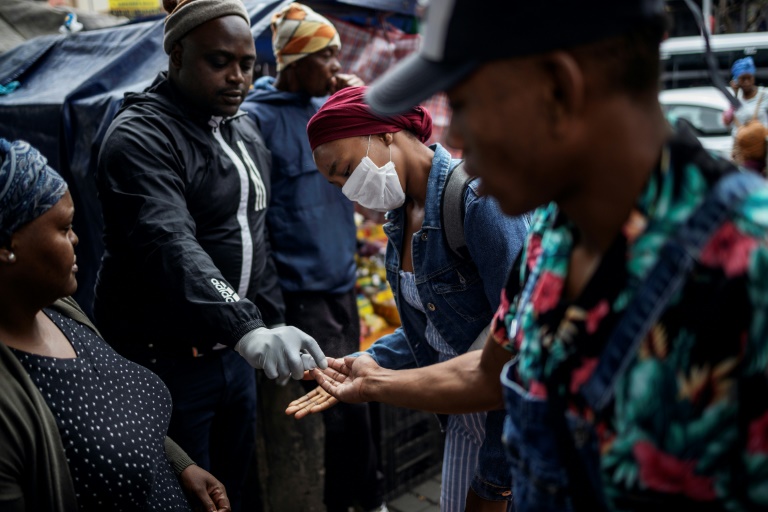
African man sharing sanitizer with others
African man sharing sanitizer with his fellow country men | PHOTO COURTESY

As Coronavirus continues to spread with speed with the focus now turning to the readiness of health systems in African in the face of the virus.  The supply of health services, equipment, and qualified personnel, is the main concern -” Dr. Abdiqani Sheikh Omar

As a pandemic of great magnitude that has occurred in our modern period, COVID-19 is calling upon the global community to rethink and shift the way we design and manage our healthcare, economic, transportation, political and social systems.

Africa should further promote solidarity it possesses, mass awareness, especially in rural areas, and mass testing of populations.

The fight against coronavirus in a fight against a virus but also a fight against misinformation.

Community members have a key role in fighting COVID-19 so it is important that we help them get accurate information and follow the prevention guidelines given by the Ministry of Health.

Early action consisting of case identification, tracing and containment measures, clear and transparent communication with the public, and resource mobilization is critical precisely because most health systems on the continent are fragile and likely unable to absorb the shock of a global pandemic.

Africa’s experience in the handling and treatment of viral outbreaks like Ebola should be a source of knowledge as to how the world should react to pandemics. The experience is also helpful in the search for vaccines and medicines.

Given the gravity of the COVID-19 threat, global cooperation should aim at synergising these resources and further strengthening Africa’s capacity.

The coronavirus pandemic has once again proven the common destiny of the human race. Hence, the global cooperation in search of a solution for COVID-19 should be an embodiment of that crucial principle. Such a path should leave no corner of the world behind.

While Africa should systematically engage with the rest of the world in combatting COVID-19, the global community should appropriately recognize its contribution and those of others. 

The writer, Dr. Abdiqani Sheikh Omar is a Senior WASH Strategic Policy Advisor at the Ministry of Energy & Water in Somalia and Former Director General at Ministry of Women & Human Rights